
Reviewed · TICKETS
Brighton: Royal Pavilion Admission Ticket
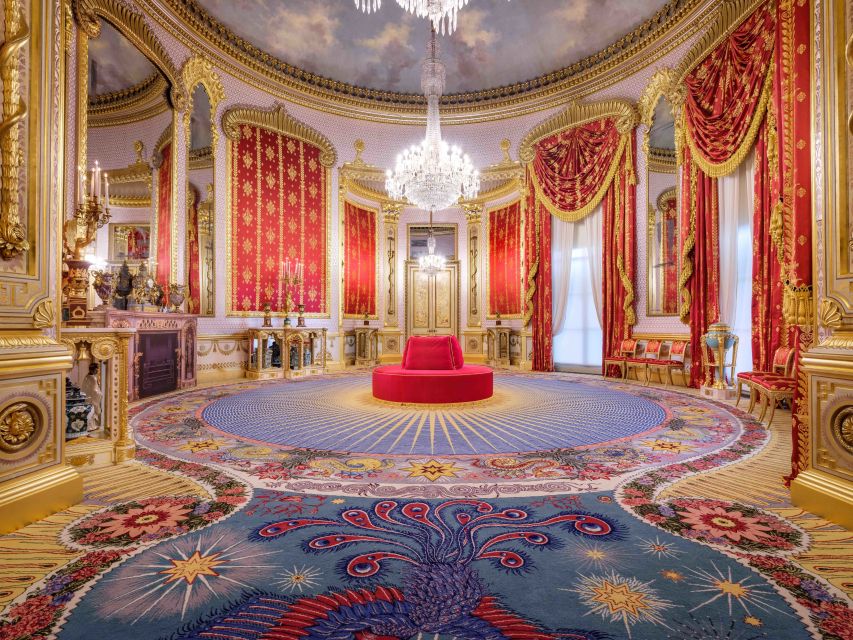
Brighton’s strangest palace is worth stepping inside. The Royal Pavilion pairs Chinese-inspired interiors with a very British seaside setting, and I love the way its unusual design keeps surprising you from room to room. I also like that the admission includes both the grand state rooms and the gardens, giving you more than a quick look at a famous facade. The main drawback is practical: there is no passenger lift, and cameras, food, drinks, large bags, and mobility scooters are not allowed inside.
This is a self-guided visit, but you will not be left to figure everything out alone. Stewards in the rooms offer useful explanations, and an audio guide adds context about the building and its royal occupants. Allow enough time to look closely, since the Banqueting Room, Music Room, Saloon, and Great Kitchen are packed with details that are easy to miss on a rushed visit.
In This Review
- Key points to know before you go
- Why the Royal Pavilion feels so different
- Entering through the Royal Pavilion Garden
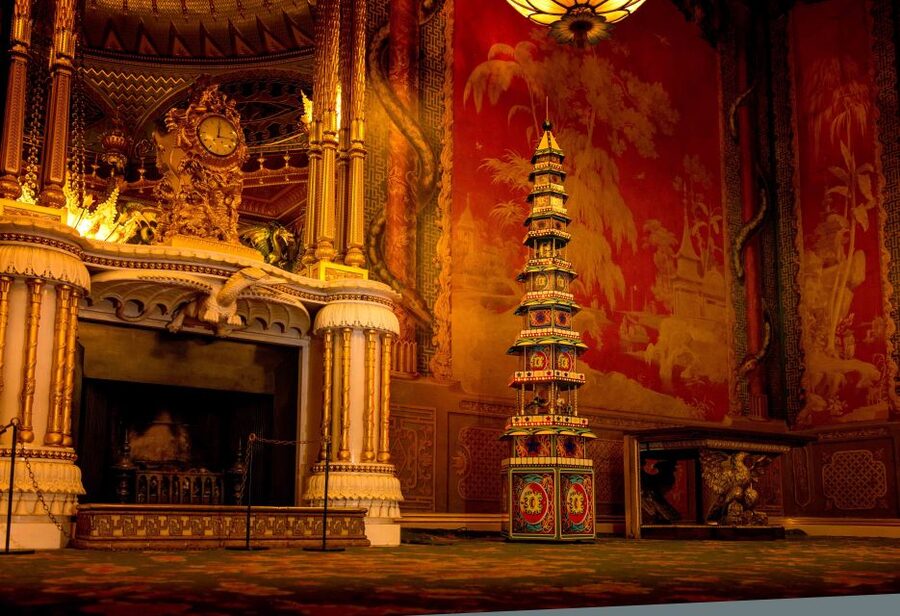
- The Banqueting Room and the royal art of excess
- The Music Room and the recently restored Saloon
- The Great Kitchen reveals the work behind the spectacle
- Upstairs rooms and Queen Victoria’s bedroom
- The First World War hospital chapter
- Audio guide, stewards, and the pace of the visit
- What the admission price gives you
- Crowds, comfort, and practical restrictions
- Who will enjoy the Royal Pavilion most
- Should you book the Royal Pavilion admission ticket?
- FAQ
- Where is the entrance to the Royal Pavilion?
- How long is the Royal Pavilion ticket valid?
- What does the ticket include?
- Is the Royal Pavilion wheelchair accessible?
- Can mobility scooters enter the Royal Pavilion?
- Are manual wheelchairs available?
- Can I bring a camera inside?
- Can I bring food or drinks?
- Are pets allowed?
- Do children need an accompanying adult?
Key points to know before you go
- The interior is unlike a normal British palace: Expect Chinese-inspired decoration, bold colors, ornate ceilings, dragons, chandeliers, and unusual furnishings.
- The restored 1823 design is the main attraction: The visit presents the Pavilion as royal guests would have seen it in the 1820s.
- The Banqueting Room and Saloon are the visual high points: These rooms contain some of the most spectacular decoration and restored features.
- The visit also covers the First World War: You will learn how the building served as a hospital for Indian soldiers.
- The ticket is valid for one day: You can take your time with the rooms, gardens, and displays rather than racing through.
- Access needs planning: The building is wheelchair accessible, but there is no passenger lift, non-folding wheelchairs and mobility scooters are not permitted inside, and stairs lead to the first floor.
Why the Royal Pavilion feels so different
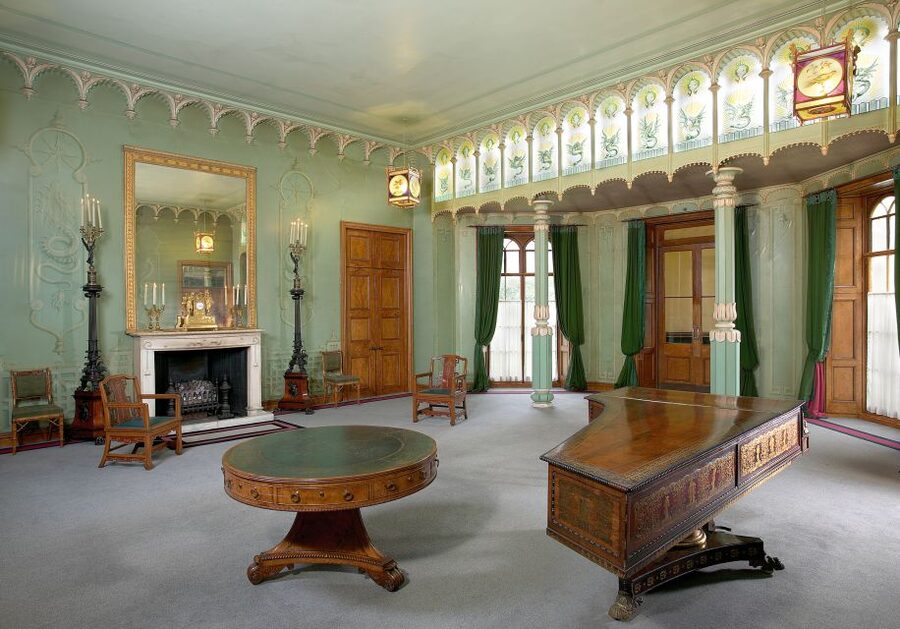
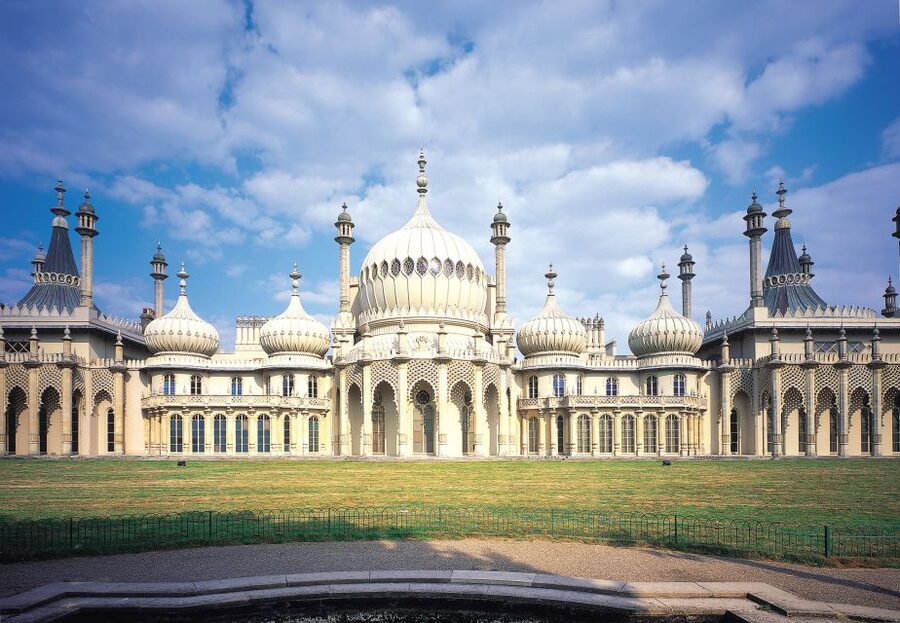
The Royal Pavilion is not a restrained country house with rows of portraits and polished wood. Its exterior already hints at something unusual, with domes, minarets, and an exotic silhouette in the center of Brighton. Inside, the effect becomes even more dramatic.
The building was completed by architect John Nash, and its design reflects the taste of the Prince Regent, later George IV. The Pavilion was restored to its original 1823 appearance, so you get a strong sense of the building at its most theatrical. This is a palace designed to impress, entertain, and show off.
I find the lack of visual restraint part of the fun. You may move from a room with lavish decorative detail into another with a completely different mood. Bright colors, elaborate patterns, furniture, chandeliers, and carved decoration compete for your attention. If you prefer quiet Georgian simplicity, the Pavilion may feel excessive. If you enjoy architecture and interior design, it is likely to be the reason you remember Brighton.
The story also goes beyond royal luxury. The building later served civic purposes and became a military hospital during the First World War, treating Indian soldiers. That change in use gives the visit more weight. You are not only looking at a palace frozen in one period. You are seeing a building that adapted to very different chapters of British history.
A few more trips worth a look before you book
- From Brighton: Seven Sisters and South Downs Tour
★ 4.9 · 746 reviews - SEA LIFE Brighton Admission Ticket
★ 4.0 · 468 reviews - Brighton Bar Crawl
★ 5.0 · 377 reviews
Entering through the Royal Pavilion Garden
Admission is through the Royal Pavilion Garden, reached from Pavilion Buildings, New Road, or Church Street. This is useful to know because the grand exterior can make the entrance seem more complicated than it is. Follow the signs into the garden rather than searching for a separate entrance on the palace facade.
Start by looking at the building from outside. The gardens help you appreciate how startling the Pavilion must have seemed when set against the more familiar architecture of Brighton. You can also get your bearings here before entering the rooms.
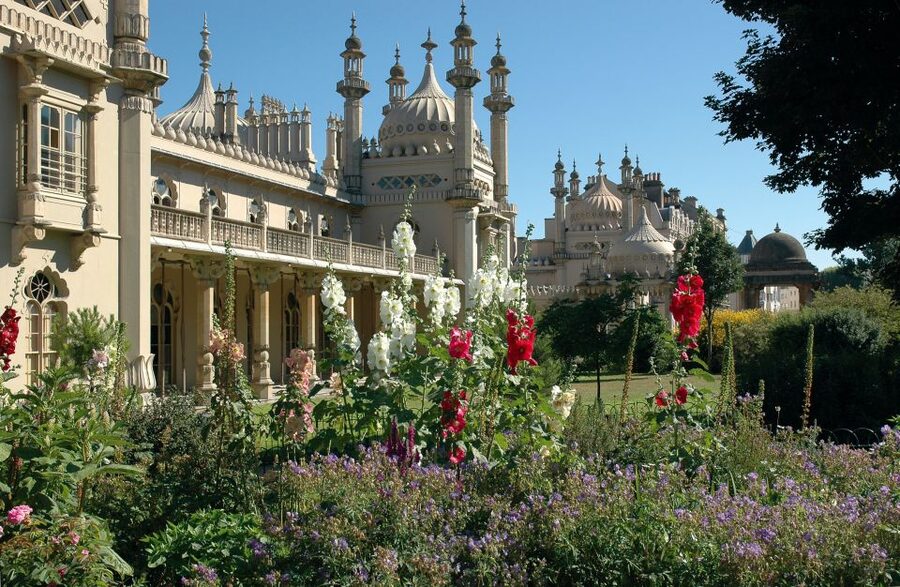
The garden is part of the appeal, not just a waiting area. It provides an open view of the domes and decorative exterior, and it gives you a break after the richly decorated rooms. Some visitors spend only a few minutes outside, but I would save time for a proper stroll.
The grounds are landscaped, with views back toward the Pavilion. They work well at the beginning or end of your visit. If the interiors feel visually crowded, a few minutes in the garden helps you process what you have seen.
The Banqueting Room and the royal art of excess
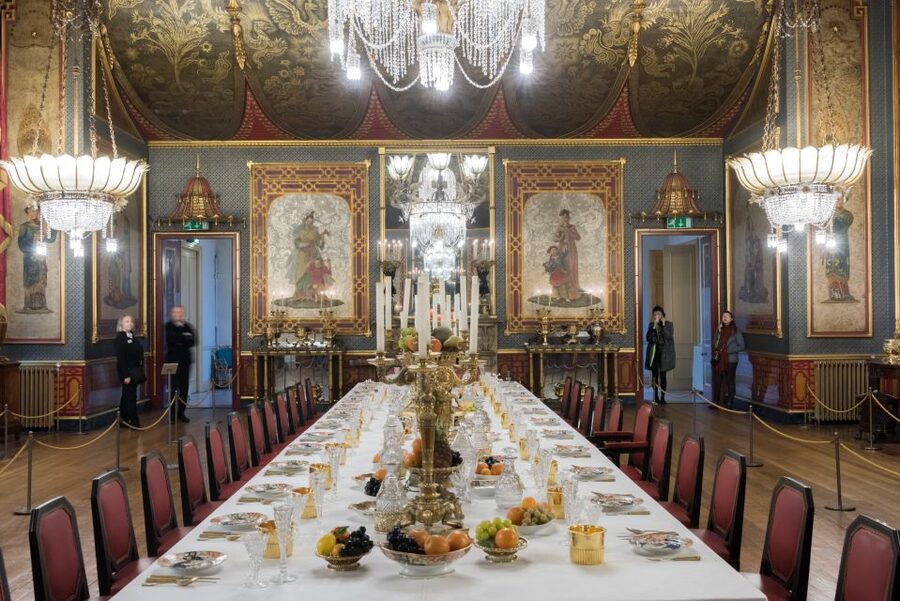
The Banqueting Room is one of the rooms most likely to stop you in your tracks. Its scale, decoration, and ceiling treatment show how the Pavilion was used for display as much as for practical living.
Look upward as soon as you enter. The ceilings and chandeliers are among the details that make this room memorable, and it is easy to focus on the furniture while missing the work above your head. Give yourself a moment before reading the room information. First impressions matter here.
The room helps explain the lifestyle the Pavilion was built to support. Dining was not simply about eating. It was a carefully staged event, surrounded by objects and decoration intended to signal status and taste.
You will find royal artifacts and furnishings throughout the route. Their value is not just in age or appearance. Together, they show how a royal interior was arranged for ceremony, entertainment, and the careful management of impressions.
The Music Room and the recently restored Saloon
The Music Room is another major highlight. Its decoration continues the Pavilion’s Chinese-inspired theme, with strong color and elaborate detail. If you enjoy interiors, this is a room to inspect slowly rather than pass through while following the main route.
The recently restored Saloon is especially important because restoration work is still part of the Pavilion’s story. The work completed so far gives you a chance to see how specialists preserve a fragile historic interior while keeping the rooms open to the public.
Restoration is not always invisible. At times, you may notice that work continues or that some facilities feel more modern and plain than the palace rooms. That contrast is worth accepting. A building this elaborate needs constant care, and the ongoing work helps protect what you came to see.
The Saloon, Banqueting Room, and Music Room are the strongest reasons to pay for admission rather than simply admire the Pavilion from outside. The exterior is famous, but the interiors explain why the building has such a strong reputation.
A different sort of outing around Brighton:
- Brighton: City Sightseeing Hop-On Hop-Off Bus Tour
★ 4.5 · 352 reviews - Brighton: Zip Wire Experience Ticket
★ 4.5 · 260 reviews - The Brighton story – walking tour
★ 5.0 · 251 reviews - From Brighton: Seven Sisters Boat Tour
★ 4.9 · 169 reviews
The Great Kitchen reveals the work behind the spectacle
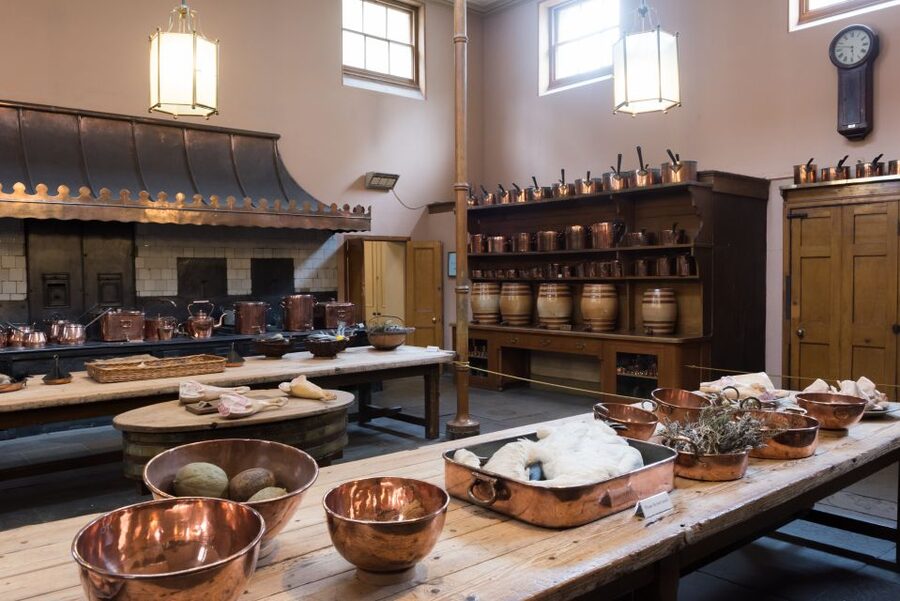
The Great Kitchen adds an important change of pace. After the richly decorated royal rooms, it shows the practical side of maintaining a palace and serving elaborate meals.
Pay attention to the working conditions described in this part of the visit. The kitchen could become extremely hot, and the staff working there had to manage demanding conditions while preparing food for royal dining. This is a useful reminder that grand entertaining depended on a large amount of unseen labor.
The kitchen also helps balance the visit. Without it, the Pavilion could seem like a collection of extravagant rooms. With it, you get a clearer picture of the people and systems needed to keep royal life running.
Room stewards can add useful detail here, so do not be shy about asking questions. Staff have been praised for explaining how the building operated, and the personal touch can make the historical information easier to remember.
Upstairs rooms and Queen Victoria’s bedroom
The route continues upstairs, where you can see more domestic and royal rooms, including Queen Victoria’s bedroom. These rooms feel different from the grand entertaining spaces because they give you a better idea of private royal life.
The first floor requires stairs. There is no passenger lift in the building, so anyone unable to climb stairs can instead watch a video of the first-floor rooms in the AV room. The ground-floor rooms still provide plenty to see, but this is an important limitation to consider before booking.
The upstairs rooms also help place the Pavilion across different royal periods. The building is closely associated with George IV and the Prince Regent, but Queen Victoria’s bedroom shows its continued royal use and changing role.
Expect a slower pace upstairs if you want to read the displays and look at furnishings. The attraction is not a quick walk-through attraction with one single view. It rewards attention, particularly if you enjoy comparing formal public rooms with more personal spaces.
The First World War hospital chapter
The Pavilion’s use as a military hospital during the First World War is one of the most valuable parts of its story. Indian soldiers were treated here, adding a serious and often overlooked chapter to the building’s history.
This section changes the tone of the visit. You move from royal entertainment and decorative ambition to wartime service and medical care. It shows how a building made for royalty could be put to a very different public use.
I appreciate this context because it keeps the Pavilion from becoming a simple celebration of royal luxury. The building has been part palace, civic space, and hospital. Each role adds meaning to the rooms you are walking through.
Take time with this part even if your main interest is architecture. It connects Brighton’s famous landmark to a wider history of the First World War and the Indian soldiers treated in Britain.
Audio guide, stewards, and the pace of the visit
You can explore independently, but the visit is made stronger by the information available along the route. The audio guide explains the rooms and the history of the Pavilion, and it is particularly helpful when you want more than a visual impression.
Room stewards are another strong part of the experience. They can explain furnishings, restoration, and the way different spaces were used. Several visitors have found that conversations with staff added detail that they would not have picked up from signs alone.
The best approach is to combine both. Use the audio guide for the broad story, then ask a steward about one detail that catches your eye. That way, the visit stays flexible instead of turning into a fixed lecture.
Plan on using much of your day if you enjoy reading, listening, and returning to the gardens. The ticket is valid for one day, so you are not forced into a short timed visit. At $26 per person, the value is strongest for anyone willing to spend several hours with the building rather than treating it as a quick photo stop.
What the admission price gives you
At $26, this is not the cheapest attraction in Brighton, but it is a fair price for a major historic building with extensive interiors, gardens, artifacts, and historical displays. The ticket covers one day of admission, which gives you room to move at your own pace.
The value depends on your interests. If you mainly want to see the outside, you can appreciate much of the Pavilion without paying. If you care about architecture, royal history, restoration, or unusual interiors, going inside changes the experience completely.
I would also factor in the quality of the presentation. The building has been restored with care, and the route is clearly organized. Helpful staff, an audio guide, and the range of rooms make the admission feel more substantial than a simple entry ticket.
The cafe and gift shop are separate parts of the visit, but they can make the outing feel complete. One visitor particularly enjoyed the cafe food, while another praised the gift shop for its quality and prices. Facilities such as the toilets are clean, though they may feel less polished than the historic rooms.
Crowds, comfort, and practical restrictions
The Pavilion can be pleasantly calm, but crowd levels vary. A large school group or busy period can make movement through some rooms awkward, especially because the route passes through narrow historic spaces. If you want the quietest experience possible, check availability and consider choosing a less busy starting time.
You cannot bring cameras, food, drinks, luggage, or large bags inside. This matters if you are visiting Brighton with shopping or a day bag. Pets are not allowed, although assistance dogs are permitted.
Mobility scooters cannot enter the building. Some manual wheelchairs are available on arrival, but they cannot be reserved in advance. Non-folding wheelchairs are not allowed, so check your needs before you go.
The attraction is wheelchair accessible in a limited, carefully defined sense. Ground-floor access is available, but there is no passenger lift to the first floor. Children under 14 must be accompanied by someone over 16.
Who will enjoy the Royal Pavilion most
I would recommend the Pavilion to anyone who likes unusual architecture, decorative arts, royal stories, or buildings with more than one historical role. It is especially good for visitors who enjoy looking closely at ceilings, chandeliers, furnishings, and restoration details.
Families can also have a good time, particularly if children enjoy visual details. The building’s dragons and dramatic rooms can give younger visitors something to search for, though the amount of historical reading may suit older children better.
It works well for a first visit to Brighton, but repeat visitors can still find plenty to appreciate. The Pavilion’s rooms are so visually busy that you are likely to notice something new on a second visit. People interested in the First World War should also allow time for the hospital story.
You may want to skip it if stairs are a serious problem and you specifically want to see the first floor, or if ornate interiors leave you cold. The Pavilion is not understated. It asks you to enjoy excess.
Should you book the Royal Pavilion admission ticket?
Yes, if you want to understand why this building is Brighton’s signature landmark. The outside is memorable, but the interior rooms, restoration work, royal artifacts, and First World War hospital story give the Pavilion its real substance.
Book it if you enjoy quirky architecture and lavish rooms, and plan to spend more than a quick hour inside. The $26 price is reasonable when you use the full one-day admission, explore the gardens, listen to the audio guide, and speak with the room stewards.
Think twice if you need step-free access to every room, want to take photographs indoors, or are carrying large bags. For most visitors, though, the Royal Pavilion is one of Brighton’s best history stops: unusual, carefully preserved, and genuinely unlike any other British palace.
FAQ
Where is the entrance to the Royal Pavilion?
Entrance is through the Royal Pavilion Garden. You can access it from Pavilion Buildings, New Road, or Church Street.
How long is the Royal Pavilion ticket valid?
The admission ticket is valid for one day.
What does the ticket include?
It includes one-day admission to the Royal Pavilion, including its preserved rooms and access to the gardens as part of the visit.
Is the Royal Pavilion wheelchair accessible?
The building offers wheelchair access, but there is no passenger lift. Visitors who cannot climb stairs can watch a video of the first floor in the AV room.
Can mobility scooters enter the Royal Pavilion?
No. Mobility scooters are not allowed inside the building.
Are manual wheelchairs available?
Some manual wheelchairs can be requested when you arrive, but they cannot be pre-booked.
Can I bring a camera inside?
No. Cameras are not allowed inside the Royal Pavilion.
Can I bring food or drinks?
No. Food and drinks are not allowed inside the building.
Are pets allowed?
Pets are not allowed, but assistance dogs are permitted.
Do children need an accompanying adult?
Yes. Children under 14 must be accompanied by a person aged over 16.
Recently added around Brighton
- Brighton Cocktail Tours★ 5.0 · 55 reviews
- 25 Shot Clay Shooting Experience★ 5.0 · 61 reviews
- Stonehenge and Bath – Day Tour from Brighton★ 4.5 · 68 reviews
- From Brighton: Isle of Wight Full-Day Trip via Portsmouth★ 4.7 · 77 reviews
- From Brighton: Stonehenge and Bath Full-Day Trip★ 4.7 · 87 reviews
- Sussex Vineyard & Winery Bus Tour on Iconic Vintage London Bus★ 4.5 · 89 reviews
- Brighton City Bike Tour★ 4.9 · 106 reviews
- Brighton City Tour★ 5.0 · 115 reviews
Tickets, compared.






Buckingham Palace: The State Rooms Entrance Ticket
Read our review →

Tower of London and Crown Jewels Exhibition Ticket
Read our review →Browse the lists this tour appears in