
Reviewed · TICKETS
Canterbury Cathedral: Entry Ticket with Audio Guide
History is written into every stone here. Canterbury Cathedral gives you 1,400 years of English religious and political history in one remarkable complex, from Augustine’s arrival in 597 to the murder of Thomas Becket and the pilgrimage tradition celebrated in Chaucer’s Canterbury Tales. I especially like the freedom to move at your own pace, and the included audio guide adds the background that the bare walls cannot provide.
I also like that the ticket reaches beyond the main church. The Chapter House, Great Cloister, gardens, and up to three exhibitions make this more than a quick look inside a famous cathedral. The main drawback is navigation: the audio guide is detailed, but several parts are not clearly numbered, so you may need to pause, backtrack, or choose the next section yourself.
At $31 per person, this is not a cheap church visit. Still, it can be good value if you allow two or three hours, or longer, and take time with the precincts as well as the cathedral interior. A few audio devices have caused trouble, so check yours before walking away from the desk.
In This Review
- Key points to know before you go
- Why Canterbury Cathedral Matters
- Starting With the Nave and High Ceilings
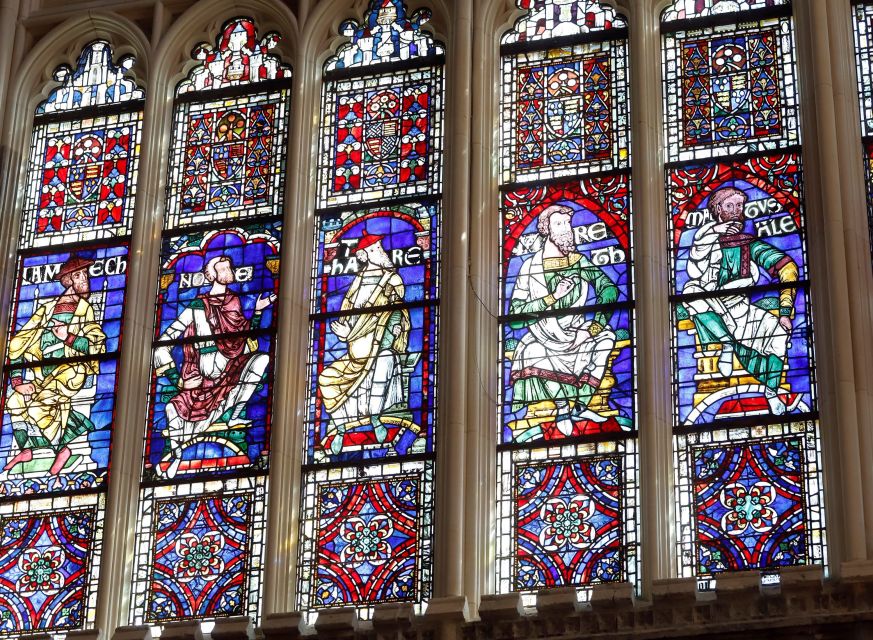
- The Stained Glass: Give It Your Time
- Chapter House and the Great Cloister
- Gardens, Ruins, and Exhibitions
- How Good Is the Audio Guide?
- How Long Should You Allow?
- Access and Arrival Tips
- Is the $31 Price Fair?
- Who Will Enjoy This Visit Most?
- Should You Book Canterbury Cathedral With the Audio Guide?
- FAQ
- What does the Canterbury Cathedral ticket include?
- Which languages are available for the audio guide?
- How long is the Canterbury Cathedral ticket valid?
- Is Canterbury Cathedral wheelchair accessible?
- Can children visit Canterbury Cathedral alone?
- What items are not allowed inside?
Key points to know before you go
- The cathedral covers 1,400 years of English history, beginning with Augustine’s mission in 597.
- The oldest stained glass is a major highlight, with windows dating back among the earliest in the world.
- The audio guide is included in English, French, German, or Japanese, with a handset and headphones supplied.
- Your ticket covers more than the nave, including the Chapter House, Great Cloister, three gardens, and up to three exhibitions.
- Plan for at least two hours, though the cathedral and grounds can occupy three hours or more.
- Allow extra time to find audio stops, since the route and location numbers are not always obvious.
Why Canterbury Cathedral Matters

Canterbury Cathedral is the mother church of the worldwide Anglican Communion and the seat of the Archbishop of Canterbury. That gives the building an importance beyond its size or decoration. You are entering a place that has shaped English Christianity for centuries.
The story begins in 597, when Pope Gregory the Great sent Augustine to England as a missionary. Augustine established his seat, or cathedra, in Canterbury and became England’s first Archbishop. The cathedral’s present form came through repeated building and rebuilding, with each period adding its own style.
This is why the architecture feels layered rather than uniform. Medieval builders altered the church after fires, changing tastes, and practical needs. After a major fire in 1174, parts were rebuilt in the new Perpendicular Gothic style. You can read that history overhead, in the arches, stonework, windows, and changing proportions.
The cathedral also became one of Europe’s leading pilgrimage centers after miracles were associated with the site. Thomas Becket’s shrine drew pilgrims from across the continent, and Geoffrey Chaucer later turned the journey into one of England’s best-known literary works. The building is therefore a religious site, a political stage, an architectural record, and a stop on the story of medieval travel.
A few more trips worth a look before you book
- London: Emirates Stadium Entry Ticket and Audio Guide
★ 4.7 · 5,513 reviews - Westminster Abbey Entrance Ticket Including Audio Guide
★ 4.0 · 661 reviews - London: British Museum Audio Tour & Priority Entrance Ticket
★ 4.5 · 631 reviews
Starting With the Nave and High Ceilings
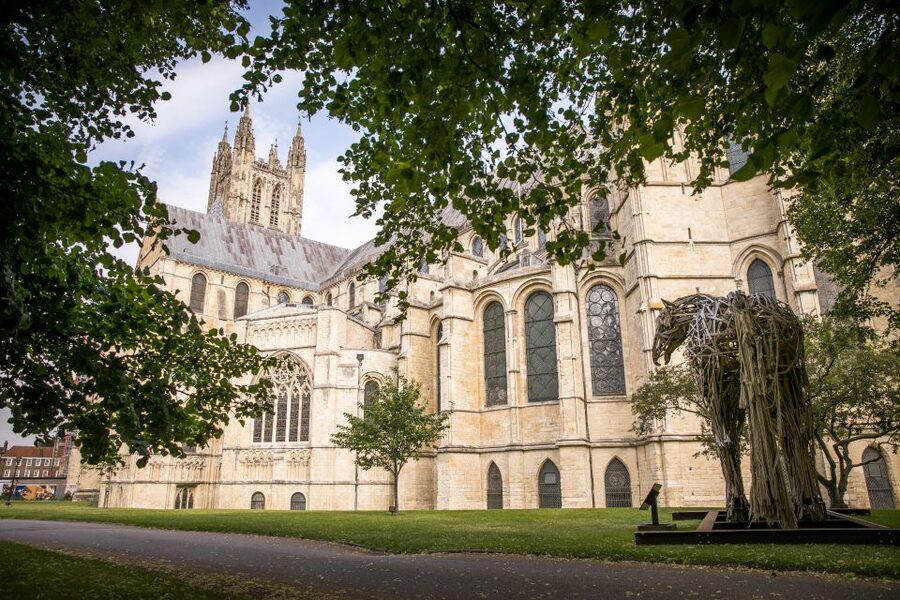
Present your voucher at the cathedral and follow directions to the desk for your media guide and headset. This part is fairly simple, although the equipment collection and return process may feel less polished than the cathedral itself.
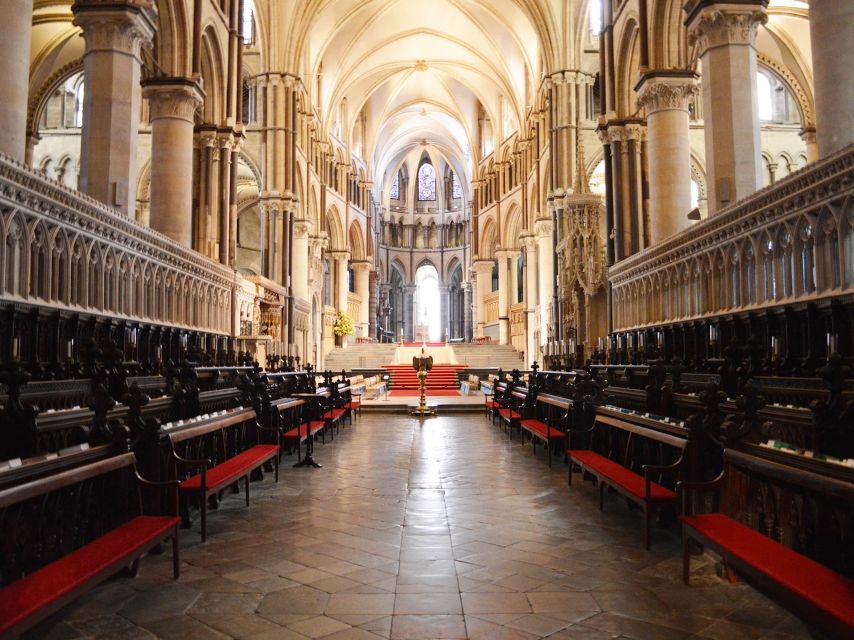
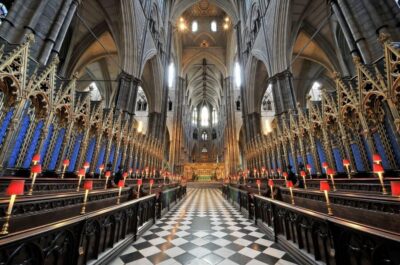
Once you enter the main church, give yourself a moment before starting the commentary. The scale is the first thing you notice. High ceilings, long views, stone columns, and colored light make the interior easy to admire even if you know little about medieval architecture.
The audio guide helps turn that visual impact into a story. It explains the people connected with the cathedral, including royals, monks, and martyrs, and links the building to events that changed England. That context matters. Without it, you may see beautiful stone and glass but miss why a particular chapel, tomb, or passage matters.
The guide is self-paced, which is one of the strongest parts of this ticket. You can stop the commentary, look upward, sit quietly, or move on when you are ready. Some sections offer suggestions about where to go next, but the route is not always perfectly clear. I would keep the handset in hand and check the guide before moving across the building.
The audio commentary is generally praised for being clear, thorough, and easy to pause. One useful feature is the presence of natural breaks between segments. You can listen to one section, absorb it, then continue without feeling pushed along by a group schedule.
The Stained Glass: Give It Your Time
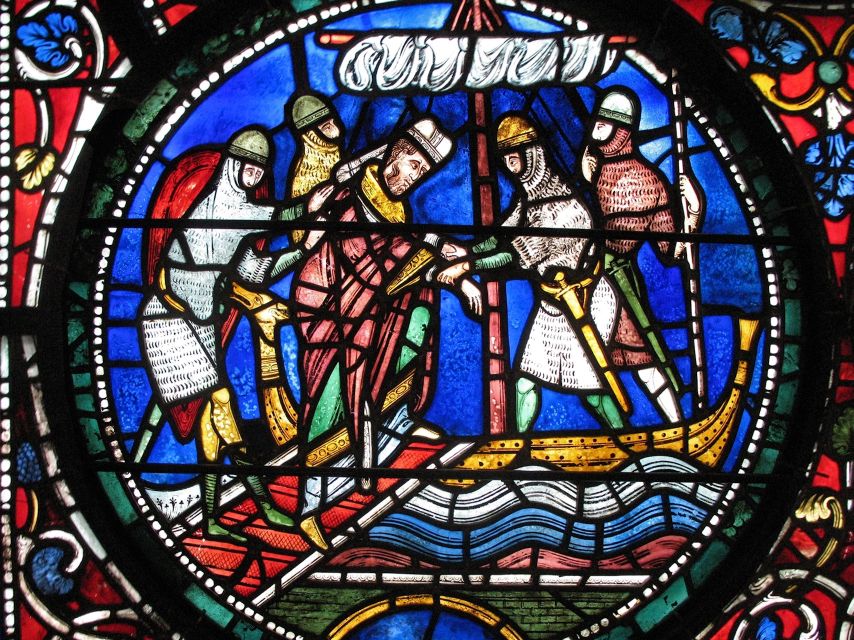
The cathedral’s stained-glass windows deserve more than a quick glance. Some are among the oldest in the world, and the color changes as the light passes through the glass. Even if you are not an expert in medieval art, the windows provide a direct connection with the people who worshipped and traveled here centuries ago.
This is a good place to use the audio guide selectively. You do not need to listen to every word before looking up. Start with the visual details, then play the relevant section and return your eyes to the glass. The best experience comes from combining the explanation with a slow look at the scenes and fragments around you.
The guide also helps explain why the windows are important, rather than treating them as simple decoration. Their age, subject matter, and survival through rebuilding give them unusual value. You may find that this becomes one of the most memorable parts of the visit, especially if you prefer art and architecture to formal religious history.
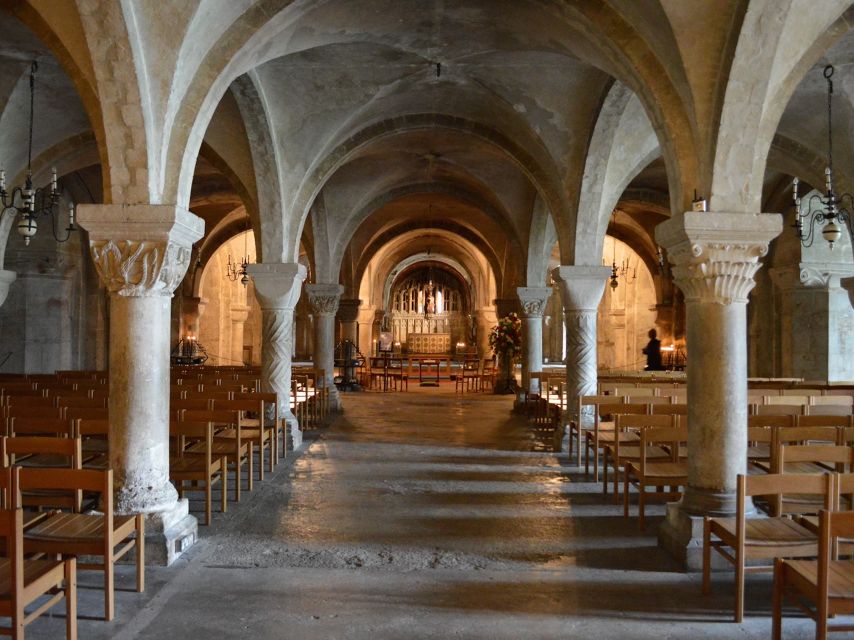
Photography rules matter here and throughout the building. Commercial photography is not permitted, and no photography or video recording is allowed in the crypt. Keep your attention on the windows instead of trying to document every angle.
Chapter House and the Great Cloister
The ticket includes access to the historic Chapter House, where the ceiling is a special feature. This was an important room for the cathedral community, and its detailed design gives you a sense of the care once given to spaces that were not part of the main worship area.
The Chapter House is worth treating as a separate stop, not just a room you pass through. Look up, listen to its commentary, and take in the craftsmanship. The changing scale of the rooms helps you understand how the cathedral worked as a living religious institution.
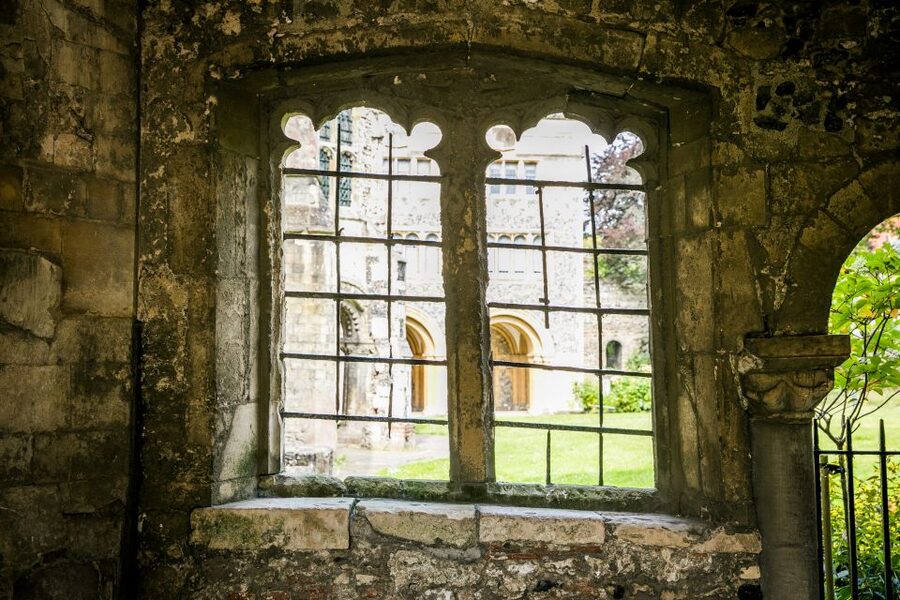
The Great Cloister is more atmospheric. For centuries, monks walked these covered passages, and the stone corridors still feel quieter than the main church. The cloister gives you a break from the tall, open interior and lets you notice smaller details in the arches, surfaces, and views toward the surrounding buildings.
This is also one of the areas where the audio route can become confusing. The information is useful, but the physical location of each stop does not always match an obvious number on the walls. If you find yourself hearing about something you cannot see, stop and use the guide’s next-section options rather than wandering too far.
A different sort of outing around the UK:
- London: The London Eye Entry Ticket
★ 4.6 · 35,875 reviews - From London: Harry Potter Warner Bros Studio Tour
★ 4.7 · 26,588 reviews - London: Westminster to Greenwich River Thames Cruise
★ 4.5 · 22,836 reviews - Magical London: Harry Potter Guided Walking Tour
★ 4.7 · 22,044 reviews
Gardens, Ruins, and Exhibitions
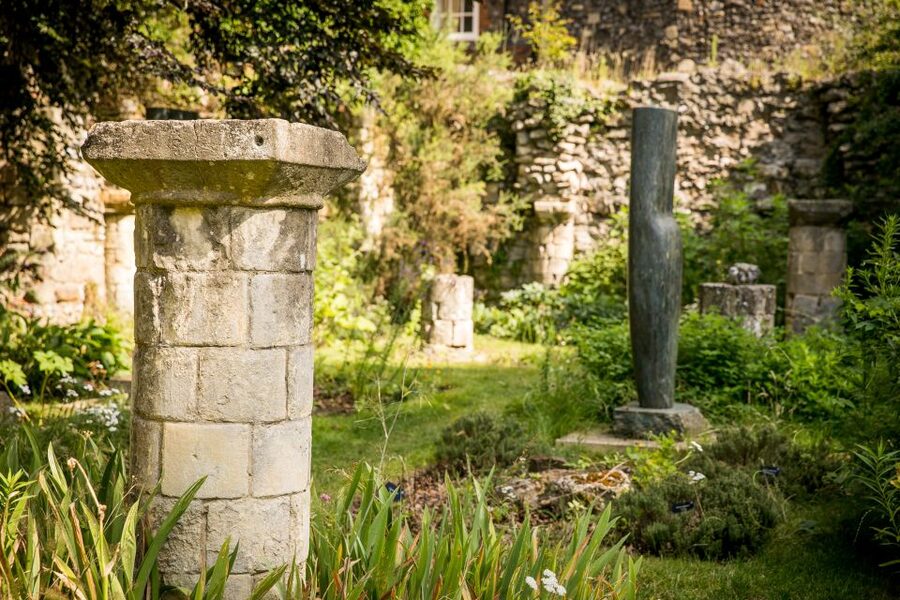
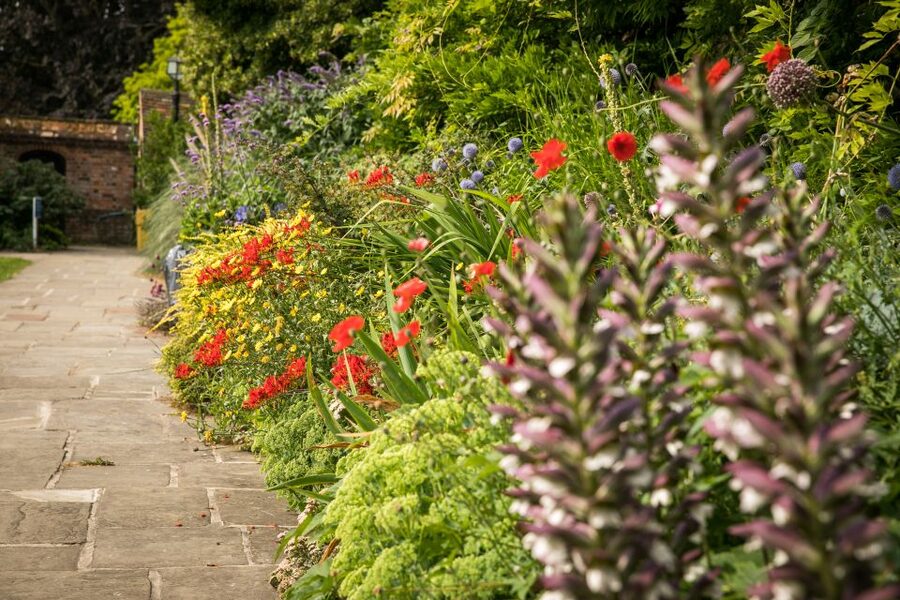
The cathedral precincts include three public gardens, including a reimagining of a medieval Herbarium. These outdoor spaces add variety to the visit and make the ticket feel broader than a standard cathedral admission.
The Herbarium is especially useful for understanding how plants were connected with medieval life and medicine. It is not just a patch of greenery beside the church. It offers another way to picture the daily world around the cathedral, where religious practice, study, healing, and food production were closely linked.
You can also walk through historic ruins and atmospheric precincts. These areas help you see the cathedral as part of a wider complex rather than a single isolated building. If you have already spent an hour inside, the outdoor sections give your eyes and mind a welcome change.
Up to three exhibitions are included around the site. The exact exhibitions may vary, so check what is open when you arrive. They can be useful if you want more detail than the main audio route provides, but they also add time. I would not rush through them simply to claim every included feature.
A practical point: some areas may close at short notice. Services, events, conservation work, or other needs can affect access. The cathedral remains worth visiting even if one section is unavailable, but keep your schedule flexible.
How Good Is the Audio Guide?
The audio guide is the heart of this ticket. It comes with a handset and headphones, and the available languages are English, French, German, and Japanese. For many people, it changes the cathedral from a beautiful building into a place with human stories and clear historical links.
I like self-guided audio here because Canterbury has too much to absorb in one fixed route. You can linger at the stained glass, skip a topic that does not interest you, or pause for quiet. You are not tied to the pace of a live group.
The main weakness is organization. Several sections refer to suggested next points, yet the cathedral does not always provide matching numbers or clear visual markers. This has led to backtracking and uncertainty about where to stand. If you want a perfectly signposted tour, you may find the system frustrating.
Equipment reliability is another practical concern. A few devices have crashed, and one visitor received a unit that was not charged. The problem is not universal, but I would test the handset and headphones immediately. If the screen freezes, the sound cuts out, or the battery appears weak, return to the desk before beginning.
There has also been occasional confusion about returning the equipment. Follow the staff’s directions carefully and do not assume that any exit desk accepts the set. These are small problems, but they can interrupt the final minutes of an otherwise calm visit.
How Long Should You Allow?

The ticket is valid for one day, so you do not need to race through the cathedral. Most people should allow at least two hours for the main church, audio guide, Chapter House, cloister, and some outdoor areas.
Three hours is a better target if you enjoy architecture, stained glass, or medieval history. One visitor spent two hours inside and outside and found that worthwhile, while others stayed for three hours or more. A six-hour visit is possible if you move slowly, attend exhibitions, spend time in the gardens, and take breaks.
The advantage of a full-day ticket is flexibility. You can leave the site and return during the valid period if the admission terms at the entrance allow it, but confirm the day’s arrangements with staff. Do not plan your entire schedule around seeing every area, since closures can occur.
Children under 16 must remain with an adult at all times. Food and drinks are not allowed, and large bags or luggage cannot be brought in. The cathedral also prohibits weapons, sharp objects, smoking, pets other than assistance dogs, scooters, skateboards, skates, fireworks, and throwing toys.
Access and Arrival Tips
The cathedral is in Canterbury, in South East England. Public car parks are close by, while parking at the cathedral is for Blue Badge holders only and depends on availability.
The site is wheelchair accessible, but it is not uniformly smooth. Some floors are uneven, some entryways have stone steps, and other areas have access ramps. Lighting levels in the museum can vary, so take care when moving between brighter and darker spaces.
Random bag searches may take place at entry. Leaving large bags and luggage elsewhere will make your arrival easier and reduce the chance of being delayed. Children’s sit-on wheeled toys are not allowed inside.
The activity is described as a small group limited to nine participants, but the main experience is self-guided rather than a conventional escorted tour. English, French, German, and Japanese speaking hosts or greeters may assist at the entrance and guide desk.
Is the $31 Price Fair?
At $31, the ticket asks you to commit more than you would for a casual church visit. The price makes better sense when you use the full access: cathedral, Chapter House, Great Cloister, gardens, exhibitions, and audio guide.
I consider it fair value for a history-minded visitor who plans to stay two or three hours. The audio guide is particularly important because the building’s meaning is not always obvious from its architecture alone. Without some explanation, you could miss the links between Augustine, the archbishops, pilgrimage, Becket, Chaucer, and the rebuilding after the 1174 fire.
The value drops if you only want a quick look at the nave. In that case, the ticket may feel expensive, especially if a service or temporary closure limits your route. Check the opening information and allow enough time to use the included features.
Free cancellation up to 24 hours in advance and reserve-now, pay-later booking add useful flexibility. Those terms help if your Canterbury plans depend on weather, train timing, or a changeable day in England.
Who Will Enjoy This Visit Most?
I would recommend this experience to you if you like architecture, religious history, medieval England, stained glass, or literary connections. It also suits independent visitors who prefer to choose their own pace rather than follow a guide holding up a flag.
Families can make it work, but younger children may not enjoy the long commentary or the need to remain with an adult. The outdoor precincts and gardens provide some variety, though the cathedral still rewards patience and quiet attention.
You may prefer a live guide if you want a clear route and the chance to ask questions. The self-guided format gives freedom, but it also places the responsibility for navigation on you. For the best result, use the audio guide as a framework, not a command. Pause often and look around.
Should You Book Canterbury Cathedral With the Audio Guide?
Yes, if you want the cathedral’s stories as well as its stone and glass. The building is extraordinary on its own, but the commentary gives shape to the people, events, and religious traditions behind it.
Book it if you can spare at least two hours, want access to the wider precincts, and are comfortable with a self-guided route that can be slightly confusing. Check the handset before setting off, and do not be shy about asking staff for help.
Skip the audio option only if you want a brief, quiet visit or strongly prefer a fully guided tour. For most history and architecture lovers, the included commentary, broad access, and freedom to linger make the $31 worthwhile.
FAQ
What does the Canterbury Cathedral ticket include?
It includes cathedral entry, a handset, headphones, and an audio guide. You also receive access to the Chapter House, Great Cloister, three public gardens, and up to three exhibitions around the site.
Which languages are available for the audio guide?
The audio guide is available in English, French, German, and Japanese.
How long is the Canterbury Cathedral ticket valid?
The ticket is valid for one day. Check availability for the starting times and confirm any same-day reentry details with cathedral staff.
Is Canterbury Cathedral wheelchair accessible?
Yes, the cathedral is wheelchair accessible. Some floors are uneven, some entrances have stone steps, and some areas have access ramps. Museum lighting levels may vary.
Can children visit Canterbury Cathedral alone?
No. Children under 16 must be accompanied by an adult at all times.
What items are not allowed inside?
Weapons, sharp objects, food, drinks, luggage, large bags, pets other than assistance dogs, skateboards, scooters, fireworks, skates, and throwing toys are not allowed. Children’s sit-on wheeled toys are also prohibited.
Recently added around the UK
- Cairngorms & Whisky Day Tour from Inverness Including Admission★ 5.0 · 55 reviews
- PRIVATE HIRE 45 min Speedboat Tour – Embankment/Westminster Pier★ 5.0 · 55 reviews
- Fantastic Creatures of Edinburgh, and where to find them!★ 4.5 · 55 reviews
- E-bike excursion exploring the Purbecks★ 5.0 · 55 reviews
- From Edinburgh: Islay and The Whisky Coast 4-Day Tour★ 4.9 · 55 reviews
- ‘A Wee Pedal’s’ Family Friendly Cycle Tour to Edinburgh’s Coast★ 5.0 · 55 reviews
- Private Tour of London’s Historic Pubs★ 5.0 · 55 reviews
- From London: Glastonbury and Cheddar Gorge Guided Day Trip★ 4.8 · 55 reviews
Tickets, compared.




Buckingham Palace: The State Rooms Entrance Ticket
Read our review →

Tower of London and Crown Jewels Exhibition Ticket
Read our review →Browse the lists this tour appears in