
Reviewed · ABERDEEN TOURS
Coastal Villages of Aberdeenshire
Scotland’s coast is best seen slowly. This full-day trip from Aberdeen links tiny fishing villages, rough cliff paths, old harbours, lighthouses, and wildlife spots that are awkward to reach without a car. I especially like the small group of no more than seven and the chance to walk from Gardenstown toward Crovie. I also like the mix of film history, local stories, seabirds, and seals. The main thing to check before booking is lunch, since the tour details give conflicting information about whether it is included.
The day runs for about eight hours, beginning at 9 a.m. beside the William Wallace Statue on Union Terrace. Guides such as Alex, Jamie, Jacqueline, and Jackie have been praised for their warmth, local stories, humor, and careful driving on narrow roads. Expect a scenic day with plenty of stops, though fog, wind, rain, and changing tides can affect what you see.
In This Review
- Key details before you book
- Why this coast makes a fine day from Aberdeen
- Gardenstown and Crovie: red cliffs and quiet harbours
- Pennan and the Local Hero connection
- Fraserburgh: fishing, lighthouses, and a working harbour
- Bullers of Buchan: the wildest view of the day
- Collieston and the story of smuggling
- Newburgh Seal Beach: a wildlife-focused finish
- Timing, transport, and physical effort
- Is the $143.63 price good value?
- Who will enjoy this tour most?
- Should you book the Aberdeenshire coast?
- FAQ
- Where does the tour start and finish?
- What time does the tour begin?
- How many people can join the tour?
- Is lunch included?
- Is the Gardenstown to Crovie walk always possible?
- What is included in the tour?
Key details before you book
- Gardenstown to Crovie walk: A short coastal path links two remote cliff-foot fishing villages, but the walk depends on the tide.
- Pennan’s famous phone box: The tiny village appeared as Ferness in the film Local Hero, making its red telephone box a popular photo stop.
- Fraserburgh’s working harbour: You see an active fishing town, Kinnaird Head lighthouse, the Wine Tower, and a foghorn.
- Bullers of Buchan seabirds: A collapsed sea cave and high cliffs create one of the day’s most dramatic stops.
- Newburgh seal colony: Around 400 seals may be visible on the sandbanks at the mouth of the River Ythan.
- Small-group value: The maximum of seven makes the day more personal and allows some flexibility when conditions permit.
Why this coast makes a fine day from Aberdeen
Aberdeen has plenty to keep you busy, but the coast north of the city feels like another Scotland. The road leaves the urban setting and reaches villages built against red sandstone cliffs, broad beaches, dunes, and exposed headlands.
I like this trip because it is not only a string of photo stops. You get a sense of how fishing shaped these communities, why certain harbours mattered, and how the sea could support a family one year and threaten it the next. Stories about lobster pots, herring, smuggling, lighthouse building, farming, and North Sea oil help connect the scenery to daily life.
The small vehicle matters. With seven people or fewer, you spend less time loading a large coach and more time talking with the guide. Several guides have been praised for sharing personal knowledge of Aberdeen and northeast Scotland. Alex is described as a former educator, while Jamie is praised for mixing local history with personal stories and humor.
The tour is not a private excursion by default, but the small size gives it a friendly feel. One booking even became a private outing when only one person joined, allowing the guide to adjust the day. That flexibility should not be expected every time, but it shows the benefit of a very small group.
A few more trips worth a look before you book
- Loch Ness and the Highlands 1-Day Tour from Aberdeen
★ 4.8 · 340 reviews - From Aberdeen: Dunnottar Castle and Cairngorms Day Trip
★ 4.8 · 329 reviews - From Aberdeen: Balmoral Estate & Royal Deeside Tour
★ 4.9 · 243 reviews
Gardenstown and Crovie: red cliffs and quiet harbours
Gardenstown is a strong opening stop. The village sits beneath red sandstone cliffs, with a harbour, a beach, and views across the Moray Firth. Small fishing boats still sit in the harbour, and you might see lobster pots being prepared on the quayside.
The Salmon House contains a Heritage Centre, adding a local perspective to the scenery. Gardenstown recently marked its 300th naming anniversary, so the village has a long story behind its compact appearance.
You have about an hour here, which gives you time to look around rather than simply step out for a quick photograph. The most worthwhile option is the coastal path toward Crovie, an 18th-century fishing village made up of one narrow row of houses. Many homes face the sea with their gable ends, a practical design shaped by the tight strip between cliff and water.
The walk is one of the day’s best moments, but it comes with a condition: the tide must allow it. Wear shoes suitable for a short coastal walk and do not assume the path will be available in all conditions. If the route is closed by the tide, Gardenstown still offers a harbour, beach, and excellent views.
You might also spot dolphins or other wildlife in the Moray Firth, though sightings are never guaranteed. The appeal here is the calm, remote setting. This is a place for looking, listening, and taking your time.
Pennan and the Local Hero connection
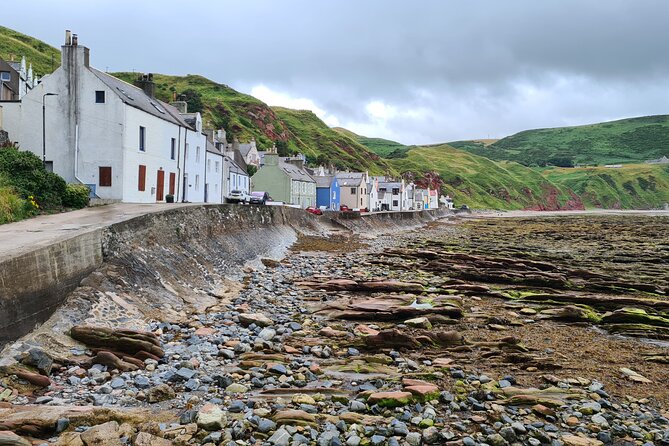
Pennan is smaller and even quieter. It began as an 18th-century fishing village, and its houses line a pebble beach beneath the surrounding slopes. Colourful window frames add charm, but the village feels more appealing for its setting and silence than for any grand attraction.
You get about 30 minutes here. That is enough to stroll along the shore, photograph the houses, and see the red telephone box associated with Local Hero. The film used Pennan as the fictional village of Ferness, and film fans still make the trip to stand beside the booth.
You do not need to have seen the film to enjoy Pennan, but watching it before the tour would add meaning to this short stop. The phone box is a small detail, not a major museum or formal attraction. If you expect a full film exhibit, you may find the visit brief.
For me, Pennan works because it shows how a real working village can become part of popular culture without losing its simple coastal character. The village is not an elaborate attraction. It is a peaceful place with a memorable screen connection.
Fraserburgh: fishing, lighthouses, and a working harbour
Fraserburgh gives the day a change of pace. Instead of a tiny village, you reach an active harbour town with a strong connection to fishing and the Fraser family, who bought the lands of Philorth in 1504.
Kinnaird Head Castle was later changed into one of the northeast’s first lighthouses in 1787. You have time to walk around the headland and see the lighthouse, Wine Tower, and foghorn while looking across the harbour.
This stop helps balance the prettier village scenes. Fraserburgh is not simply preserved for visitors. It remains a working place, and its industrial character may appeal to you if you want to see present-day coastal life rather than only postcard views.
You have about an hour here, including time for lunch and refreshments. The lunch arrangements need checking before departure. One part of the information says lunch is provided, while another says lunch is not included. Several accounts describe stopping in Peterhead for fish and chips, and one guide was a native of Peterhead. Since the stated lunch details do not match, confirm exactly what you must pay for and where the stop will be made.
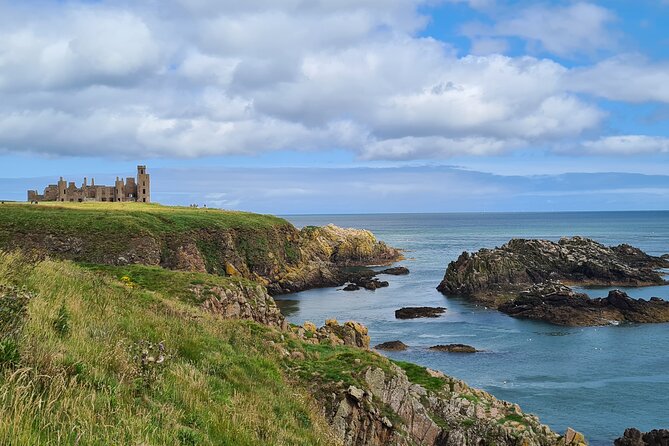
Some outings may include nearby or additional stops, such as Peterhead, Duff House, or Slains Castle, depending on the day and guide. These should be treated as possible variations, not guaranteed parts of the published plan.
A different sort of outing around the UK:
- London: The London Eye Entry Ticket
★ 4.6 · 35,875 reviews - From London: Harry Potter Warner Bros Studio Tour
★ 4.7 · 26,588 reviews - London: Westminster to Greenwich River Thames Cruise
★ 4.5 · 22,836 reviews - Magical London: Harry Potter Guided Walking Tour
★ 4.7 · 22,044 reviews
Bullers of Buchan: the wildest view of the day
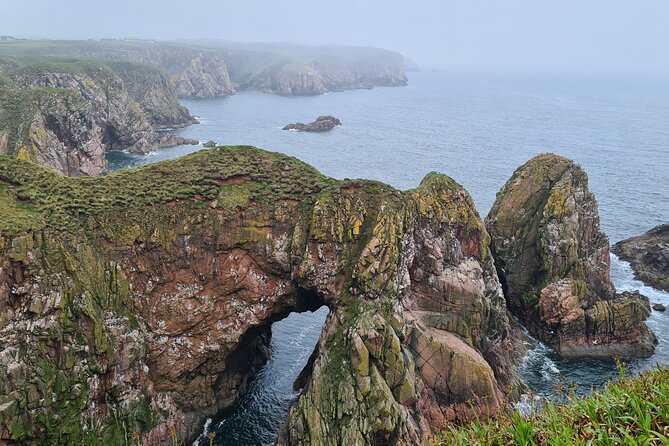
The Bullers of Buchan is where the coast turns dramatic. The name refers to both a small hamlet and a collapsed sea cave. The cave forms an almost circular opening about 30 metres deep, with seawater rushing in through a natural arch.
You have about 30 minutes to walk out, take photographs, and look down into the chasm. The cliffs provide nesting sites for kittiwakes, puffins, fulmars, shags, razorbills, guillemots, herring gulls, and great black-backed gulls during spring.
The birdlife is a major reason to value this stop, but timing and weather matter. Puffins are seasonal and not assured. Strong winds can make the headland feel thrilling, but they can also make it uncomfortable. Keep away from cliff edges and follow your guide’s advice.
This is not a polished attraction with extensive facilities. Its value comes from the raw setting, the sound of the sea, and the chance to see nesting birds in their natural surroundings. Bring a warm layer even on a mild day.
Collieston and the story of smuggling
Collieston offers a smaller, more intimate coastal scene. It was the first safe harbour along more than 15 miles of beaches and dunes north of Aberdeen, making it important to local fishing communities.
Herring, haddock, whiting, and cod supported the village in the 17th century. Collieston was also known for salted and sun-dried haddock and whiting, called Collieston speldings.
The caves and coves around the village gave smugglers useful places to hide. Your guide tells the story of Phillip Kennedy and his attempts to evade the exciseman. These tales add character to the view, turning a small bay into a place with secrets and danger.
There is a sea arch, a small bay, and distant views toward Aberdeen. The stop lasts about 30 minutes and is a good chance for photographs. Admission is not included, although the supplied details do not identify a specific paid attraction at this point. Ask the guide what, if anything, requires payment on the day.
Newburgh Seal Beach: a wildlife-focused finish
Newburgh is an excellent final stop because it shifts attention from villages and human history to wildlife. At the mouth of the River Ythan, sandbanks provide resting places for a colony of around 400 seals.
You have about an hour here. The seals are often seen lounging on the sandbanks, and the estuary and dunes attract many birds. Newburgh is also known for one of Europe’s largest populations of eider ducks.
Bring binoculars if you have them, though the seals may be visible without specialist equipment. Sightings depend on the animals, tides, and weather, but the scale of the colony gives this stop real appeal.
The beach also shows why the day works as a whole. You begin with small fishing villages and finish with a broad estuary full of wildlife. The route is not just about scenic villages. It gives you several ways to understand the northeast coast.
Timing, transport, and physical effort
The experience lasts about eight hours and returns to the William Wallace Statue on Union Terrace in Aberdeen. WiFi is available onboard, though you will probably spend much of the day looking out the window or walking at the stops.
You should have a moderate level of physical fitness. Most visits are manageable, but Gardenstown to Crovie can involve a coastal walk, and Bullers of Buchan requires walking near exposed cliffs. The tour is not designed as a demanding hike, yet it is not entirely step-free sightseeing from the vehicle.
The roads can be narrow and winding. That is one reason the tour has practical value. You can enjoy remote places without having to concentrate on driving, finding parking, or navigating unfamiliar coastal roads. Several guides have been praised for driving confidently in these conditions.
Weather is the main variable. Fog can hide parts of the coast, and wind or rain may reduce the comfort of the walks. Still, stormy weather can make the sea and cliffs memorable in their own way. Pack waterproof clothing, sturdy shoes, and layers.
Is the $143.63 price good value?
At $143.63 per person, this is not the cheapest way to spend a day in Scotland. The value depends on how you would otherwise reach these places.
A rental car brings fuel, insurance, navigation, parking, and the strain of driving on unfamiliar roads. Public transport will not easily connect all six stops in one day. This tour handles the long distances and gives you a local guide who can explain what you are seeing.
The small group adds value. A seven-person limit is a real advantage over a large coach, especially at tiny villages where a big group can overwhelm the setting. It also gives you a better chance to ask questions and hear local stories.
Lunch is the one price concern. The information supplied says both that lunch is provided and that lunch is not included. Budget for your own meal until the provider confirms otherwise. Admission is generally free at the listed stops, and the tour includes onboard WiFi.
Who will enjoy this tour most?
I would choose this day if you want a broad introduction to coastal Aberdeenshire without renting a car. It suits people who enjoy village walks, local history, film locations, wildlife, lighthouses, and open sea views.
It is also a good fit for first-time visitors to the area. The guides bring together details about fishing, farming, oil exploration, smuggling, and family life, giving you more than a simple drive past pretty places.
You may want a different outing if you prefer long hikes, extended time at one location, or a tightly fixed schedule. Six stops in eight hours means some visits are short, especially Pennan, Bullers of Buchan, and Collieston. The day is varied, but you will not have hours to explore each village.
The tour is offered in English, and service animals are allowed. Free cancellation is available up to 24 hours before the 9 a.m. start time. The meeting point is easy to find at the William Wallace Statue on Union Terrace.
Should you book the Aberdeenshire coast?
Book it if you want to see the parts of northeast Scotland that are difficult to reach independently. Gardenstown, Crovie, Pennan, Bullers of Buchan, and Newburgh each offer something different, and the small vehicle keeps the day personal.
I would confirm the lunch arrangement before paying, and I would pack for poor weather even if the forecast looks kind. If you can accept short stops, changeable conditions, and the possibility of tide-related adjustments, this is a very good use of a day in Aberdeen.
FAQ
Where does the tour start and finish?
It starts and ends at the William Wallace Statue on Union Terrace, Aberdeen AB10 1NP, UK.
What time does the tour begin?
The tour starts at 9 a.m. and lasts approximately eight hours.
How many people can join the tour?
The maximum group size is seven people.
Is lunch included?
The supplied tour information is inconsistent. One section says lunch is provided, while another says lunch is not included. Confirm the arrangement with Grampian Escapes Tours Ltd before departure.
Is the Gardenstown to Crovie walk always possible?
The walk is available if the tide allows. Conditions may affect access to the coastal path.
What is included in the tour?
Onboard WiFi is included. Admission is listed as free at most stops, while lunch and any applicable admission at Collieston are not clearly included in the supplied details.
Recently added around the UK
- Cairngorms & Whisky Day Tour from Inverness Including Admission★ 5.0 · 55 reviews
- PRIVATE HIRE 45 min Speedboat Tour – Embankment/Westminster Pier★ 5.0 · 55 reviews
- From Edinburgh: Islay and The Whisky Coast 4-Day Tour★ 4.9 · 55 reviews
- Fantastic Creatures of Edinburgh, and where to find them!★ 4.5 · 55 reviews
- E-bike excursion exploring the Purbecks★ 5.0 · 55 reviews
- ‘A Wee Pedal’s’ Family Friendly Cycle Tour to Edinburgh’s Coast★ 5.0 · 55 reviews
- Private Tour of London’s Historic Pubs★ 5.0 · 55 reviews
- Private Belfast Troubles Cab Tour Adventure 2hrs Personal Guide★ 5.0 · 55 reviews
Aberdeen Tours, compared.
Loch Ness and the Highlands 1-Day Tour from Aberdeen
Read our review →
Dunnottar Castle and Royal Deeside Small-Group Tour from Aberdeen
Read our review →
Loch Ness and the Highlands Small-Group Day Tour from Aberdeen
Read our review →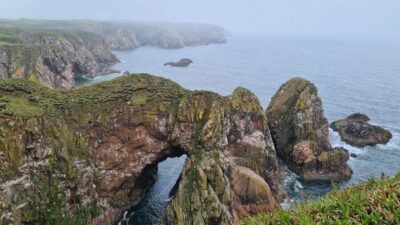
Browse the lists this tour appears in