Reviewed · TICKETS
Day Entry Ticket
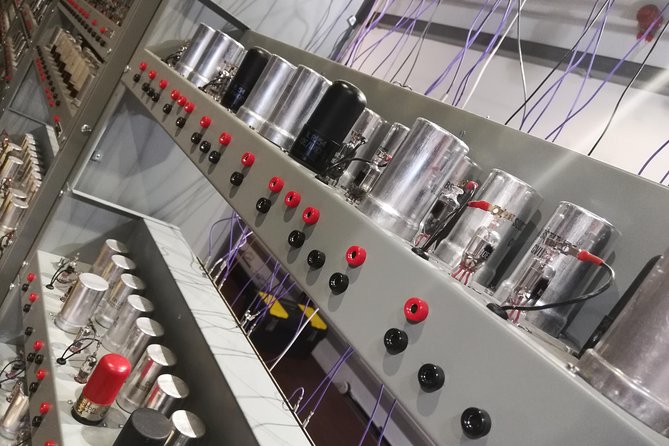
Computers come alive here. The National Museum of Computing in Milton Keynes brings wartime codebreaking machines, early mainframes, personal computers, and retro games together in one working collection. I like the hands-on spirit and the chance to see rebuilt machines operate, not just sit behind glass. I also like the friendly staff, who explain complex subjects in plain language. The main caution is easy to miss: this is a separate museum from Bletchley Park, even though both are on the same site.
Plan on spending two to six hours, depending on how closely you read the displays and how long you stay with the demonstrations. The admission price of about $20.83 per person is fair for a specialist museum with the world’s largest collection of working historic computers, but only if computing history interests you. If you expect the full Bletchley Park experience, you could buy the wrong ticket and pay again.
In This Review
- Key points to know before you go
- Why this small-looking museum matters
- Start with wartime codebreaking machines
- Follow the jump to mainframes and large systems
- Home computers, games, and the machines you remember
- The staff make difficult subjects easier
- Separate your TNMOC ticket from Bletchley Park
- How much time and money should you allow?
- Practical comfort and access
- Who will enjoy this visit most?
- Should you book the National Museum of Computing?
- FAQ
- Where is the National Museum of Computing?
- How much does admission cost?
- How long does a visit take?
- What does the ticket include?
- Is this ticket also valid for Bletchley Park?
- What are the opening hours?
- Is a mobile ticket available?
- In what language is the experience offered?
- Can I cancel for a refund?
Key points to know before you go
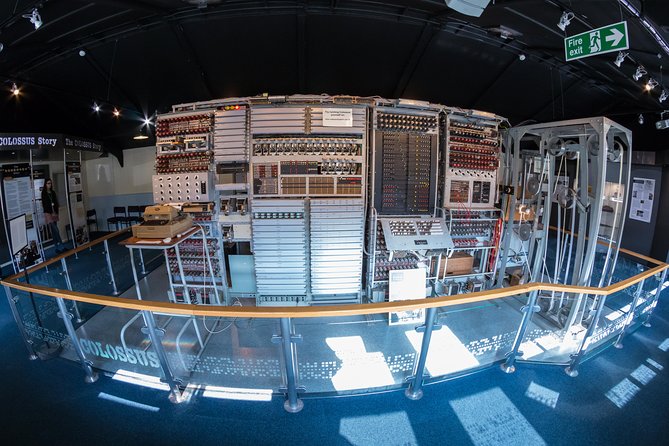
- See working versions of the Bombe and Colossus: Demonstrations help you understand the size and purpose of these wartime machines.
- Trace computing from the 1940s to today: The displays move from Enigma and Lorenz to mainframes, home computers, games, mobile devices, and the internet.
- Allow two to six hours: A quick visit is possible, but the collection rewards patience and curiosity.
- Keep the two museums straight: TNMOC and Bletchley Park are separate attractions with separate admission.
- Expect a specialist museum: History fans, technology enthusiasts, and anyone curious about how computers developed will get the most from it.
- Use the practical facilities: Mobile tickets, sensory maps, light refreshments, outside seating, and access for service animals make the visit easier to manage.
Why this small-looking museum matters
The National Museum of Computing tells the story of machines that changed warfare, business, education, entertainment, and daily life. It begins with huge wartime systems and ends with the technologies that led to modern mobile computing and the internet.
That span is the museum’s real strength. You are not looking at one famous invention in isolation. You are following a chain of ideas, from codebreaking equipment and room-sized systems to machines that eventually became small enough for homes, pockets, and desktops.
I especially like that the collection is built around working historic computers. A static machine can look like an odd cabinet full of wires. A working machine gives you a better sense of its purpose, limits, noise, and scale. The talks and demonstrations of the rebuilt Bombe and Colossus are likely to be the high point for many people.
The museum has also been recognised as one of England’s top 100 irreplaceable places. That description makes sense once you understand the breadth of the collection. It is not simply a room of old electronics. It preserves the working story of computing, including machines that helped shape major events.
A few more trips worth a look before you book
- London: The London Eye Entry Ticket
★ 4.6 · 35,875 reviews - London: Tower Bridge Entry Ticket
★ 4.7 · 15,560 reviews - London: Westminster Abbey Entrance Ticket
★ 4.6 · 11,254 reviews
Start with wartime codebreaking machines
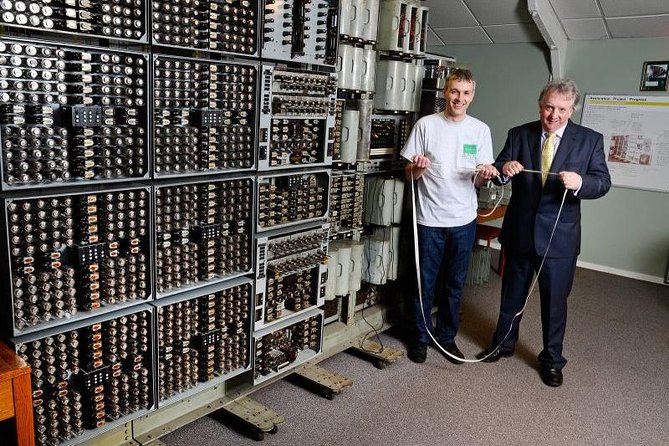
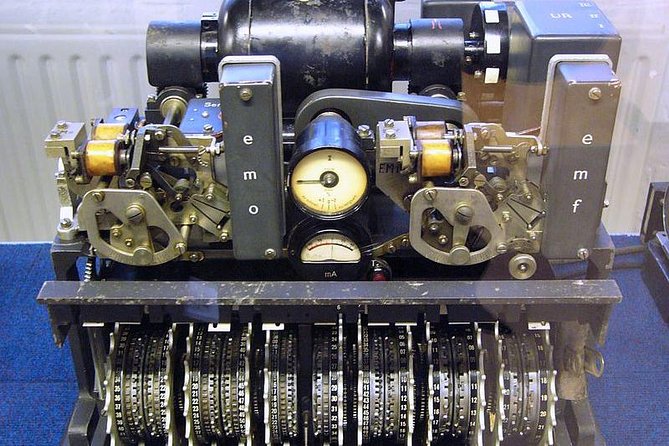
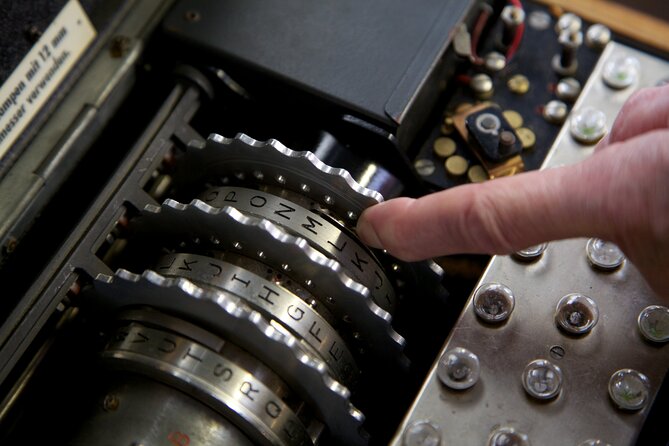
The earliest section takes you into the 1940s, with the Turing-Welchman Bombe, Enigma, Lorenz, and Colossus. These names may be familiar from books and films, but the machines make the story much more concrete.
The Bombe is connected with the work of Alan Turing and other computing pioneers. Seeing a rebuilt version in operation helps you grasp the mechanical effort behind codebreaking. The achievement was not just a clever idea on paper. It required machinery, organisation, technical skill, and relentless work.
Colossus gives you another view of wartime computing. It was built for a different codebreaking task and represents a major step toward electronic computing. Demonstrations matter here because the machine’s scale and operation are hard to picture from a label alone.
You should try to attend the talks if they are running during your visit. The clearest praise for this part of the museum focuses on the demonstrations, especially the rebuilt Bombe and Colossus in motion. A short explanation beside a working machine can turn an abstract wartime story into something you can follow.
This section will suit history fans even if they are not computer specialists. The displays connect technical development with the people and pressures of the Second World War. You can admire the ingenuity involved without needing an engineering background.
Follow the jump to mainframes and large systems
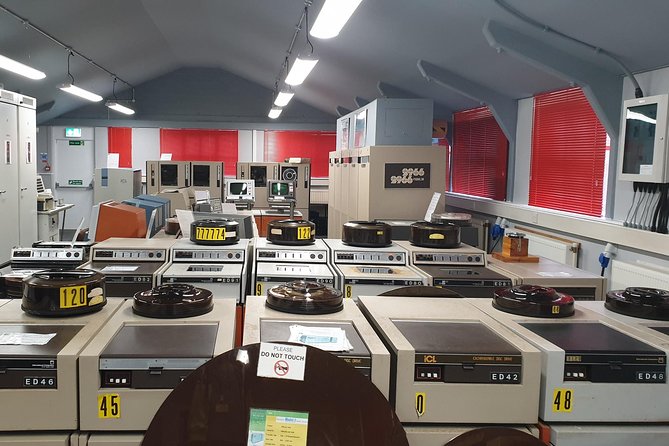
After the wartime machines, the collection moves through the 1950s, 1960s, and 1970s. Here, computers become part of a wider story about institutions, business, research, and national infrastructure.
The large systems and mainframes show how far computing was from the pocket-sized devices you carry today. They occupied serious space and demanded careful operation. For younger visitors, this can be the most surprising part of the museum. The word computer sounds familiar, but these machines belonged to a very different physical world.
I find this middle section important because it prevents the usual story from becoming too simple. Computing did not leap directly from Colossus to the smartphone. There were decades of development involving larger systems, changing designs, and new ways for people to use machines.
Take your time with the labels here. The point is not only to identify old equipment. Try to notice the change in scale and purpose as the displays progress. The museum works best when you treat it as a timeline, not a collection of unrelated objects.
Some visitors may find this section more technical than the wartime displays or retro games. That is a fair limitation. If your interest is mainly Alan Turing, Enigma, or Second World War history, you may spend less time with the mainframes. If you want the full story of computing, this is essential.
Home computers, games, and the machines you remember
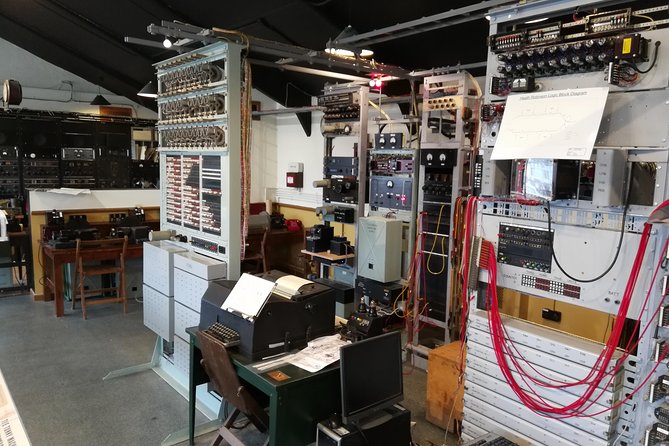
The later displays follow the rise of personal computing, retro games, mobile computing, and the internet. This is where the museum becomes especially approachable for people who remember their first home computer or game console.
The retro games section adds fun without losing the historical purpose. You may find yourself staying longer than expected, especially if an old machine brings back memories of early gaming. For younger visitors, these displays show how limited hardware still produced memorable entertainment.
Personal computers also help explain the shift in computing culture. Earlier systems belonged mainly to governments, companies, universities, and specialist organisations. Home machines brought computing into ordinary living spaces and made it something people could explore for themselves.
The move toward mobile computing and the internet brings the timeline closer to the present. It gives you a useful reminder that today’s connected devices grew from many earlier stages. The museum does not need to rely on futuristic displays to make that point. The sequence of machines does the work.
I like this part for mixed-age groups. Older family members may recognise machines from their youth, while younger people can see how quickly hardware changed. The game area also gives the visit a lighter finish after the more serious wartime and mainframe sections.
A different sort of outing around the UK:
- From London: Harry Potter Warner Bros Studio Tour
★ 4.7 · 26,588 reviews - London: Westminster to Greenwich River Thames Cruise
★ 4.5 · 22,836 reviews - Magical London: Harry Potter Guided Walking Tour
★ 4.7 · 22,044 reviews - London: Madame Tussauds London
★ 4.6 · 20,915 reviews
The staff make difficult subjects easier
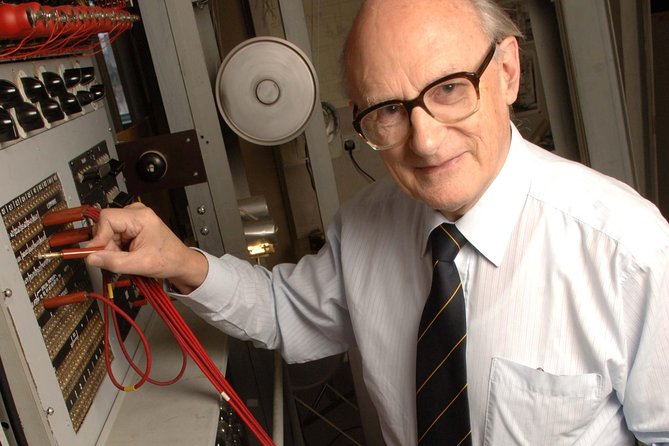
The museum’s staff are one of its strongest assets. They are described as friendly, patient, and deeply familiar with the machines and their history. That matters in a museum where a label alone cannot always explain why a particular device was important.
Do not be shy about asking questions. The technical displays can look intimidating, but the staff are there to make them understandable. Their explanations are particularly useful around the rebuilt wartime machines, where the difference between Bombe, Enigma, Lorenz, and Colossus may not be obvious at first.
This human element gives the museum a sense of purpose. You are not simply walking past old equipment. You have a chance to hear why the machines mattered, what problems they solved, and how they fit into the development of computing.
The experience is likely to be strongest when a demonstration or staff explanation is available. A quiet self-guided visit can still work, but the talks add meaning and make the large machines easier to appreciate.
Separate your TNMOC ticket from Bletchley Park
This is the practical point most likely to save you trouble. The National Museum of Computing is a separate museum from Bletchley Park, despite being associated with the same location and wartime story.
A ticket for this experience covers admission to TNMOC. It does not cover admission to Bletchley Park. The distinction can be confusing because both attractions relate to codebreaking and computing, and both are connected with the Bletchley Park site.
Check the attraction name carefully before paying. If your main goal is the wider Bletchley Park visit, you need the correct Bletchley Park admission. If you want working historic computers, Colossus, the Bombe, mainframes, and retro technology, this TNMOC ticket is the relevant one.
The two museums can complement each other, but they are not interchangeable. TNMOC has a strong focus on working machines and the development of computing. Bletchley Park offers a different visit. Keeping that distinction clear avoids the kind of costly confusion that can spoil an otherwise excellent day.
How much time and money should you allow?
The listed price is about $20.83 per person. For a specialist collection of this size, that is reasonable if you expect to spend several hours and make use of the demonstrations, staff explanations, and interactive areas.
The value is weaker if you plan to rush through in under an hour. You can certainly see the major machines quickly, but the museum’s appeal comes from connecting the sections. The longer two to six hour estimate gives you room to read, ask questions, watch demonstrations, and spend time with the games.
Skip-the-line entry is offered as part of the booking, which can help create a smoother arrival. The experience is available with a mobile ticket, so you do not need to depend on a printed confirmation. Confirmation is sent at the time of booking.
The museum is offered in English. That is important because much of the value comes from the explanations, talks, and technical context. If you are comfortable reading and listening in English, you can get the full benefit of the visit.
Opening hours provided for the period from November 1, 2023, through February 3, 2027, are Tuesday from 10:30 a.m. to 5 p.m. Check the exact date and hours when planning, since the supplied schedule lists Tuesday hours only.
Practical comfort and access
The museum is near public transportation, which makes it more practical for a visit to the Milton Keynes and Bletchley area. Specific transport routes are not provided, so check your route before setting out.
A cafe offers light refreshments, and outside seating is available. That is useful during a longer visit, especially if you are combining this museum with other sightseeing nearby. You can plan a pause without needing to leave the site for a full meal.
Sensory maps are available. Service animals are allowed, and most people can participate. These details make the museum more welcoming, although you should contact the provider directly if you have access needs beyond the information given.
Free cancellation is available when you cancel at least 24 hours before the local start time. Cancellations or changes made inside that 24-hour window are not accepted for a refund.
Who will enjoy this visit most?
I would recommend TNMOC first to anyone interested in Alan Turing, wartime codebreaking, engineering, personal computers, or the history of the internet. It also suits people who enjoy seeing how familiar technology developed over time.
Families can find plenty to share, especially in the retro games area. A child who is not drawn to wartime history may still connect with the old games and unusual machines. Older family members may enjoy recognising early computers and comparing them with modern devices.
History fans should not dismiss the museum as purely technical. The Bombe, Enigma, Lorenz, and Colossus displays connect directly with the Second World War and the people who worked on difficult codebreaking problems.
The main audience limitation is simple: this is not a general-purpose attraction. If you have little interest in technology, machinery, or wartime computing, some sections may feel slow. The staff can help, but no explanation can turn every mainframe into a personal passion.
Should you book the National Museum of Computing?
Yes, if you want to see working historic computers and understand how computing developed from wartime codebreaking to the internet. The rebuilt Bombe and Colossus demonstrations, patient staff, and broad timeline give the museum real substance.
Book with care if you are also visiting Bletchley Park. Confirm that you are buying admission to TNMOC, not expecting this ticket to cover both museums. At about $20.83, the ticket is good value for a two to six hour visit, but only when you choose the right attraction for your interests.
FAQ
Where is the National Museum of Computing?
The museum is in Milton Keynes, England, in the Bletchley Park area.
How much does admission cost?
The listed price is $20.83 per person.
How long does a visit take?
The approximate duration is two to six hours.
What does the ticket include?
Admission to The National Museum of Computing is included.
Is this ticket also valid for Bletchley Park?
No. The National Museum of Computing and Bletchley Park are separate museums with separate admission.
What are the opening hours?
The provided opening schedule lists Tuesday from 10:30 a.m. to 5 p.m., covering November 1, 2023, through February 3, 2027.
Is a mobile ticket available?
Yes. The experience offers a mobile ticket.
In what language is the experience offered?
It is offered in English.
Can I cancel for a refund?
Yes, you can cancel for a full refund at least 24 hours before the experience start time. Changes or cancellations made less than 24 hours before the start time are not accepted for a refund.
Recently added around the UK
- Cairngorms & Whisky Day Tour from Inverness Including Admission★ 5.0 · 55 reviews
- PRIVATE HIRE 45 min Speedboat Tour – Embankment/Westminster Pier★ 5.0 · 55 reviews
- From Edinburgh: Islay and The Whisky Coast 4-Day Tour★ 4.9 · 55 reviews
- Fantastic Creatures of Edinburgh, and where to find them!★ 4.5 · 55 reviews
- E-bike excursion exploring the Purbecks★ 5.0 · 55 reviews
- Private Tour of London’s Historic Pubs★ 5.0 · 55 reviews
- ‘A Wee Pedal’s’ Family Friendly Cycle Tour to Edinburgh’s Coast★ 5.0 · 55 reviews
- From London: Glastonbury and Cheddar Gorge Guided Day Trip★ 4.8 · 55 reviews
Tickets, compared.




Buckingham Palace: The State Rooms Entrance Ticket
Read our review →