
Reviewed · JACK THE RIPPER TOURS
London: The Original Jack the Ripper Walking Tour
Whitechapel still keeps its secrets. This two-hour walk brings 1888 London to life through real crime scenes, victim stories, suspect theories, and the streets where the case unfolded. I especially like the focus on the women behind the headlines and the way guides connect the murders to poverty, policing, and Victorian life. The main drawback is clear: this is an outdoor tour with graphic details and images, so cold weather and sensitive stomachs may test your resolve.
I also like the strong guide-led format. Martin Cheng, Ivan, Nic, Bettina, Anna, Gabby, and others have earned praise for clear storytelling, humor, and thoughtful answers. The tour can be lively without turning the murdered women into a sideshow, though some group questions may slow the pace if people are shy or unsure of the answers.
In This Review
- Key points to know before you go
- Why Jack the Ripper still draws a crowd
- Starting at Altab Ali Park
- Christ Church Spitalfields and the Victorian city
- Spitalfields Market and the crowded East End
- Mitre Square, the clearest crime-scene stop
- Brick Lane and the changing East End
- Petticoat Lane and the final stretch
- Finishing near the Ten Bells Pub
- The guides make or break the evening
- Is $25 a fair price?
- Who should book this walking tour?
- Should you book it?
- FAQ
- Where does the Jack the Ripper walking tour start?
- Which Underground station is nearest?
- How long does the tour last?
- Which places does the tour visit?
- Is the tour suitable for children?
- Is the tour wheelchair accessible?
- What languages are available?
Key points to know before you go
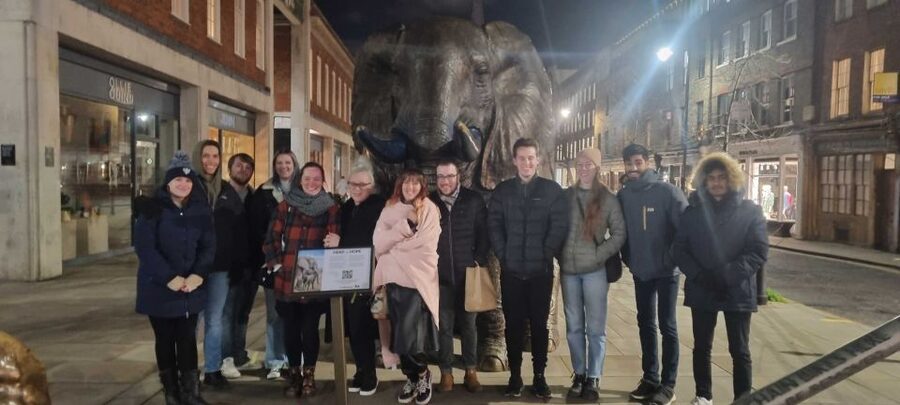
- Real Whitechapel locations: Walk past Mitre Square, Brick Lane, Petticoat Lane, Spitalfields Market, and the Ten Bells Pub.
- Victims come first: The better parts of the tour place the women’s lives and the conditions of Victorian Whitechapel ahead of lurid mystery.
- Strong storytelling: Guides such as Martin, Ivan, Nic, Gabby, and Bettina are praised for facts, humor, and engaging delivery.
- A $25 evening activity: Two hours of guided walking and local context makes this a fair-value choice in central London.
- Graphic content: Photographs and descriptions can be gruesome, and children under 12 cannot join.
- Outdoor city walk: Wear comfortable shoes and dress for rain, wind, or cold.
Why Jack the Ripper still draws a crowd
Few London mysteries have lasted as long as the Jack the Ripper case. In 1888, a series of murders in Whitechapel shocked Britain, filled newspapers, and exposed the harsh conditions faced by poor Londoners. The killer was never identified with certainty, which leaves room for suspects, theories, false leads, and endless argument.
That mystery is the hook, but the strongest reason to take this walk is the setting. You are not sitting in a museum looking at old photographs. You are moving through East London streets while a guide explains where evidence was found, how the police worked, and why Whitechapel became the center of attention.
I appreciate that the tour also looks beyond the killer. The women who died were not simply characters in a crime story. Their lives, work, housing, and vulnerability help explain the neighborhood and the social pressures of Victorian London.
The tour also places the case in a wider cultural setting. Your guide discusses how Victorian anxieties and newspaper crime stories helped shape enduring figures such as Sherlock Holmes. That connection gives you more than a list of suspects. It shows how late 19th-century London became fascinated by deduction, hidden identities, urban danger, and the modern detective.
More Walking Tours in London
- Magical London: Harry Potter Guided Walking Tour
★ 4.7 · 22,044 reviews - Tour for Muggles The Ultimate Harry Potter Walking Tour in London
★ 5.0 · 4,684 reviews - London Jack The Ripper Guided Walking Tour
★ 5.0 · 3,131 reviews
Starting at Altab Ali Park
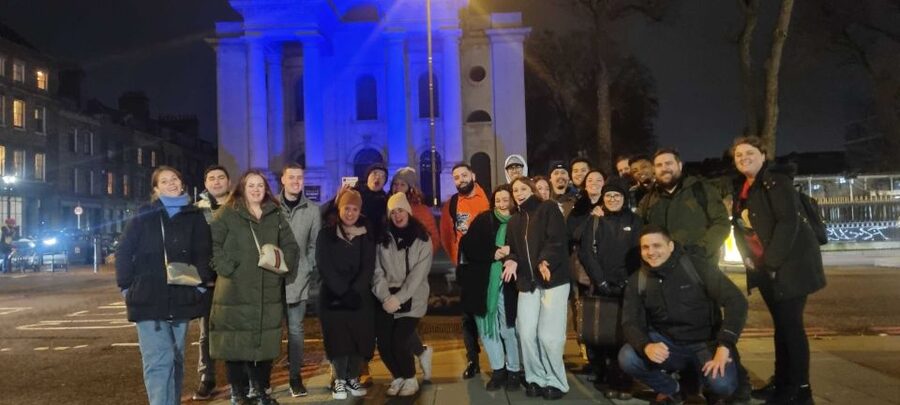
The meeting point is at the west entrance to Altab Ali Park, beside the large iron arch on the corner of White Church Lane and Whitechapel High Street. Look for the guide holding a blue flag.
Aldgate East is the nearest Underground station, which makes the meeting point fairly easy to reach. Give yourself a few minutes to find the correct park entrance. Whitechapel has several busy streets and transport stops, so arriving early is wiser than racing in at the last moment.
The opening location also provides a useful change in perspective. The park is named for Altab Ali, a Bangladeshi garment worker murdered in 1978, and the area reflects East London’s long story of migration and hardship. The tour itself focuses on Victorian Whitechapel, but the meeting point reminds you that this neighborhood’s past did not end in 1888.
Your guide sets up the case before the group moves off. Expect photographs, details from the investigation, and questions about the likely killer. Some guides use light costume or theatrical touches. Martin Cheng, for example, was praised for creating atmosphere without becoming overly dramatic.
Christ Church Spitalfields and the Victorian city
The route passes by Christ Church Spitalfields, one of the area’s most striking landmarks. Built for a growing 18th-century population, the church reflects the sharp contrasts of East London: grand architecture near crowded, poor streets.
You do not get a full church visit as part of the tour, so think of this stop as visual context rather than a formal sightseeing break. Your guide uses the surrounding streets to explain how Whitechapel looked and functioned during the period of the murders.
This is where the tour can move beyond simple crime trivia. Victorian London was a city of wealth, industry, overcrowding, and limited support for people living on the edge. The guide explains everyday life in the neighborhood, giving you a better sense of why the case caused such fear and why the victims were particularly vulnerable.
The best guides also separate fact from assumption. Matthew praised Bettina for stressing what is actually known instead of presenting every theory as truth. That approach matters here. Jack the Ripper has attracted so much fiction that it is easy to confuse newspaper claims, later books, and solid evidence.
Spitalfields Market and the crowded East End
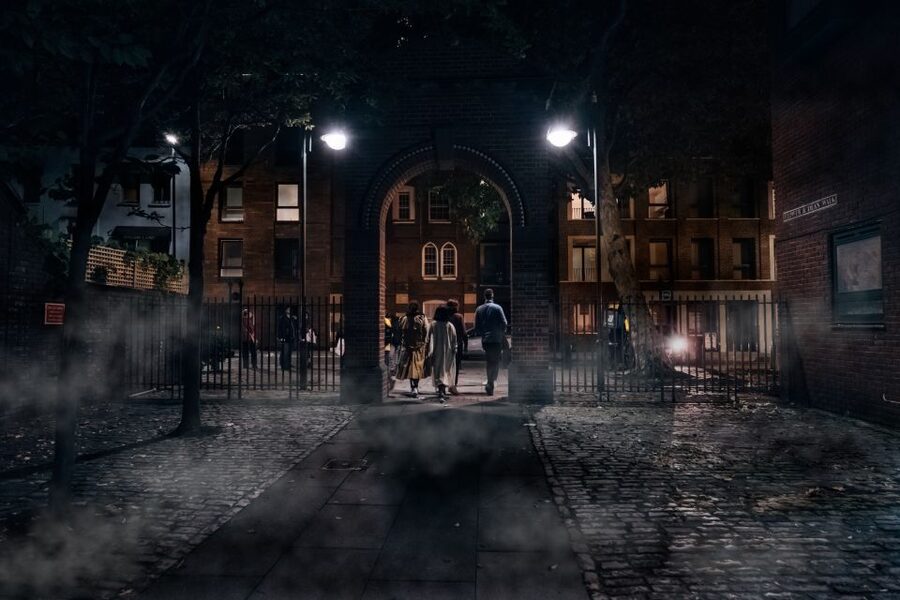
Old Spitalfields Market is another pass-by stop. Today it is a popular place for food, shopping, and a break from sightseeing. During the Victorian period, the wider area was tied to trade, lodging houses, street commerce, and a dense working population.
You will not stop for food or drinks during the tour, and neither is included in the $25 price. That is not a major problem, but it helps to plan around it. You could eat before the walk or save a meal for afterward, though the tour ends near the Ten Bells Pub rather than functioning as a pub crawl.
Spitalfields also helps explain the gap between modern London and the world being discussed. The streets are still recognizable in places, but the social conditions have changed greatly. Your guide may use old photographs to show how the same area once looked. One participant specifically praised the photographs for helping the group picture Whitechapel in the 1880s.
This part of the walk can feel busy, especially around market areas and main roads. Guides such as Gabby have been praised for speaking clearly enough for people at the back of the group. Stay close and keep an ear open when traffic noise rises.
More Jack the Ripper Walks:
- London Jack the Ripper Guided Tour with Ripper-Vision
★ 4.5 · 4,840 reviews - London: Jack the Ripper Small Group Tour
★ 4.7 · 3,159 reviews - German Language : Original Jack the Ripper Tour
★ 4.6 · 1,805 reviews - London: Jack the Ripper Walking Tour – Ripper Vision Tours
★ 4.5 · 1,752 reviews
Mitre Square, the clearest crime-scene stop
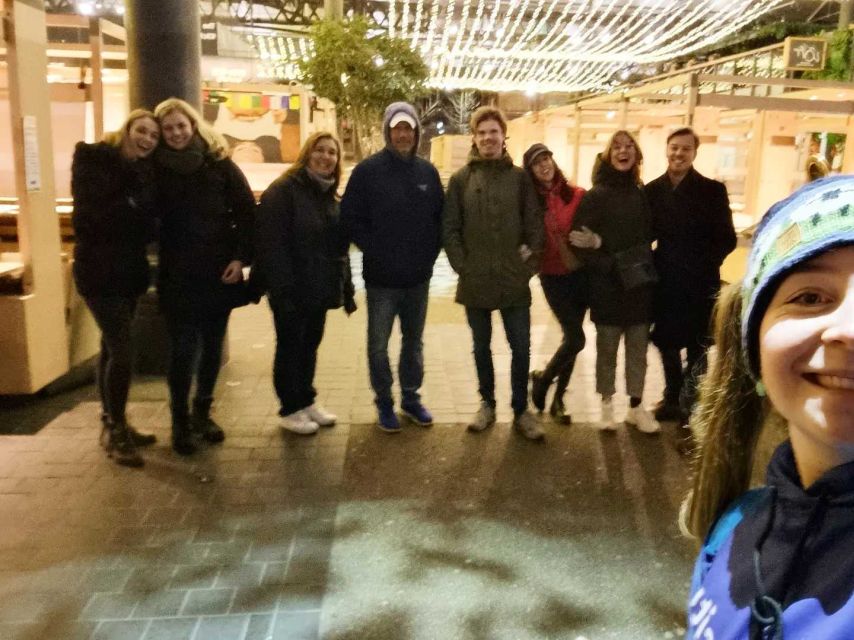
Mitre Square is one of the most important locations on the route. It is connected with the murder of Catherine Eddowes, one of the victims commonly linked to the Ripper case.
This is not a preserved crime scene. Modern London has changed the surroundings, and you should not expect an untouched Victorian alley. The value comes from standing in the area while your guide explains the known sequence of events, the evidence, and the police response.
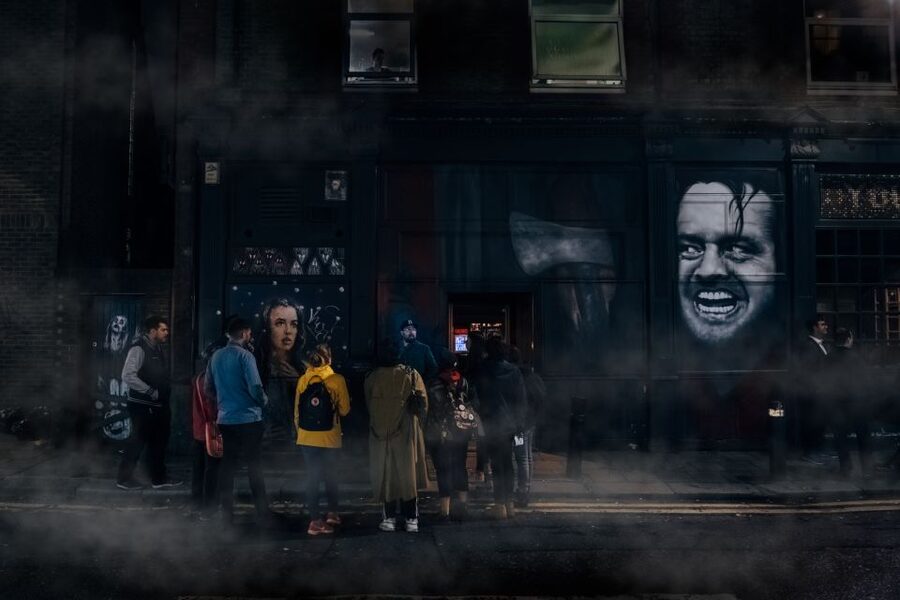
The guide may show photographic material and discuss the injuries in direct detail. The content is factual but can be upsetting. Several people have praised the tour for handling the victims with respect, yet the presentation remains graphic. If you are uncomfortable with crime-scene images, this is the point where you may want to look away or step slightly aside.
Mitre Square is also where the group weighs competing explanations. Was the killer familiar with the area? How quickly could he have moved? What evidence was found, and how reliable was it? You are encouraged to think through the case rather than simply accept a final answer, because there is no proven final answer.
Brick Lane and the changing East End

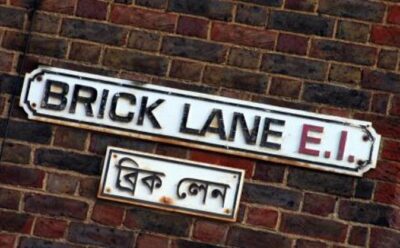
The walk continues through Brick Lane, now known for food, markets, street art, and independent shops. It is one of the clearest examples of how modern East London sits on top of older layers of migration, work, and poverty.
The tour is not a general Brick Lane food walk, so do not expect tasting stops. Instead, the street gives the guide another way to discuss the East End as a place shaped by movement and survival.
I like this part because it keeps the evening from becoming a string of murders. The wider neighborhood matters. You learn why certain streets were crowded, how people found work, and why policing a district like Whitechapel was difficult.
Nic has received especially warm praise for combining facts with humor and inviting the group to take part. That balance is useful on a dark subject. Too much drama would feel cheap, while a completely dry lecture could make two hours drag. The strongest delivery keeps the mystery alive but does not forget the human cost.
Petticoat Lane and the final stretch
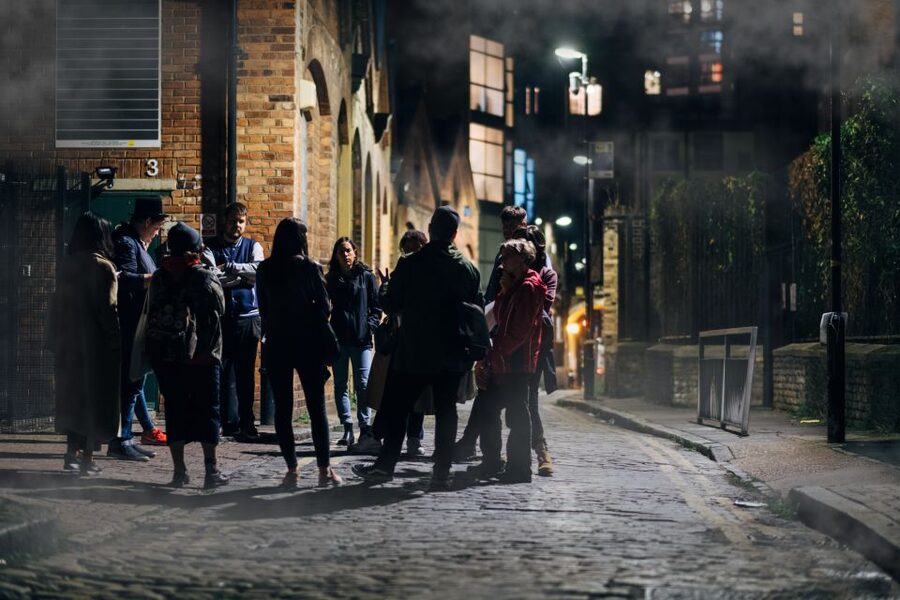
Petticoat Lane is another local landmark along the route. Like Brick Lane and Spitalfields, it helps show East London as a place of markets, street trade, and working lives.
The walk between these stops is as important as the named locations. You move through ordinary public paths rather than special sets or indoor exhibits. There are no major stairs or steep inclines, but pavement conditions vary. If you have limited mobility, the tour is listed as wheelchair accessible, yet uneven public paths are worth keeping in mind.
This is also the point when the guide may revisit the main suspects. You will hear why certain men were accused, what evidence appeared to support each theory, and where the case remained weak. The point is not to force a solution. It is to show how quickly suspicion can become accepted as fact.
Some guides use questions to involve the group. That can be fun if you enjoy solving mysteries, but it may occasionally slow the walk. If nobody knows an answer, a direct explanation is usually more useful than a long guessing game. This is a small issue, not a major flaw, and the overall pace is generally praised.
Finishing near the Ten Bells Pub
The tour ends at the Ten Bells Pub in Spitalfields. The pub is closely tied to the Jack the Ripper story and gives the walk a fitting final setting.
You do not receive drinks or food, and the experience does not include a pub visit as a formal part of the ticket. Still, ending here gives you a natural place to continue the evening if you want to sit down and discuss the theories.
The final talk is often one of the strongest moments. Your guide pulls together the victims, suspects, police work, newspaper coverage, and the question of what can actually be proved. Several people have said the final presentation was especially effective, and one visitor reported that a longer-than-expected experience passed quickly because the guide kept the material engaging.
The ending also brings you back to the limits of the case. You may leave with a favorite theory, but not a confirmed identity. That is the honest outcome, and it is better than a forced conclusion.
The guides make or break the evening
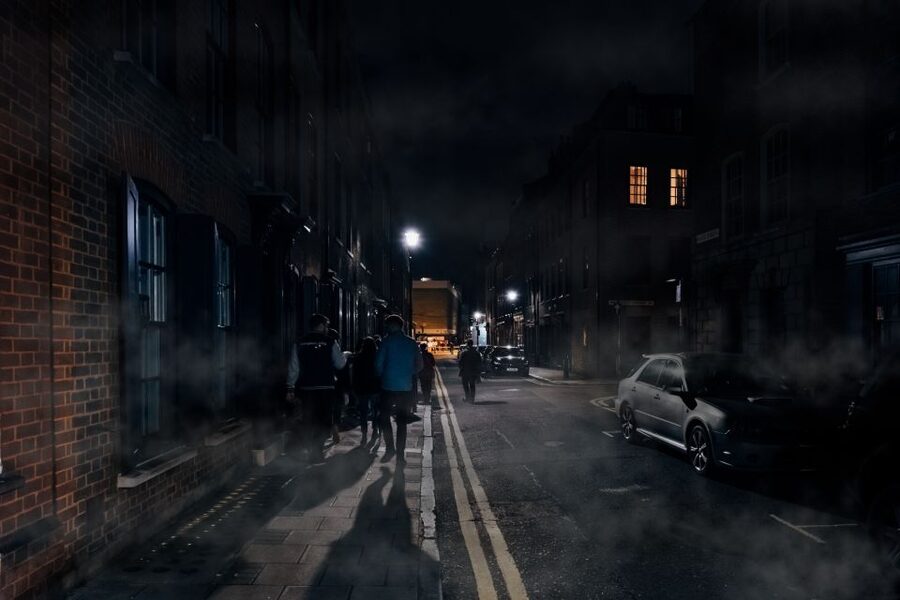
The subject is naturally dramatic, but the guide determines whether the tour feels thoughtful or tacky. The strongest guides balance clear facts, atmosphere, and respect for the victims.
Martin Cheng has been praised for detailed knowledge, group interaction, and a tasteful period costume. Ivan is often singled out for an engaging delivery and for correcting old myths. Nic is described as a skilled storyteller who makes the two hours pass quickly. Gabby has been praised for both her suspect knowledge and her ability to project her voice in noisy streets.
Bettina, Anna, Marisol, Gemma, Christophe, Marc, Andrew, and others have also received strong praise for warmth, humor, and clear explanations. Guide assignments can change, so you should not book solely to receive one particular person. The consistent pattern is a lively, fact-filled presentation rather than a quiet historical lecture.
Tours are available in English, Spanish, Italian, French, and German. That makes the experience useful for mixed-language groups, though you should check the available starting time and language when booking.
Is $25 a fair price?
At $25 per person, this is a reasonable London activity if you want two hours of guided storytelling in a central neighborhood. You are paying for a live guide, local context, photographs, and access to several locations that would mean little without explanation.
It is not the best value if you want indoor attractions, food, drinks, or a full museum experience. The route is entirely outdoors, and some of the places are viewed from public streets rather than entered.
For a short evening activity, though, the price works well. You cover several East End districts, hear the case explained in detail, and gain a better sense of Victorian London. The high rating of 4.7 from 7,833 reviews reflects broad satisfaction, especially with the guides and the quality of the storytelling.
Who should book this walking tour?
I would recommend it to true-crime fans, Sherlock Holmes readers, history buffs, and anyone who enjoys solving a mystery while walking through the place where it happened. It also suits couples, friends, and families with older teenagers who can handle graphic material.
Children under 12 are not allowed. Anyone under 18 must be accompanied by an adult. The photographs and descriptions are not softened for younger audiences, so read that warning seriously.
Wear comfortable shoes and weather-appropriate clothing. The tour lasts two hours, takes place outdoors, and includes city noise, uneven paths, and stops where you may stand while listening. Wheelchair access is provided, but varying pavement conditions may still matter if you have limited mobility.
Should you book it?
Book this tour if you want the Jack the Ripper story tied to real streets, social conditions, and documented evidence. I especially value its attention to the victims and its effort to separate facts from old myths.
Skip it if graphic crime details are not for you, or if you want a relaxed sightseeing walk with little standing and no disturbing material. For most curious adults and older teenagers, $25 buys a focused, atmospheric look at Whitechapel, with guides who bring plenty of energy and care to a difficult subject.
FAQ
Where does the Jack the Ripper walking tour start?
It starts at the west entrance to Altab Ali Park, beside the large iron arch on the corner of White Church Lane and Whitechapel High Street. The guide holds a blue flag.
Which Underground station is nearest?
Aldgate East Station is the nearest Underground station to the meeting point.
How long does the tour last?
The walking tour lasts two hours.
Which places does the tour visit?
The route includes Christ Church Spitalfields, Old Spitalfields Market, Mitre Square, Brick Lane, Petticoat Lane, and the Ten Bells Pub. Several locations are passed from public streets rather than entered.
Is the tour suitable for children?
Children under 12 are not permitted. Participants under 18 must be accompanied by an adult because the tour contains graphic descriptions and visual material.
Is the tour wheelchair accessible?
The activity is listed as wheelchair accessible. It has no stairs or many inclines, but public paths have varying conditions that may matter for people with limited mobility.
What languages are available?
The tour is available in English, Spanish, Italian, French, and German. Availability can depend on the selected departure.
Recently added around London
- PRIVATE HIRE 45 min Speedboat Tour – Embankment/Westminster Pier★ 5.0 · 55 reviews
- Private Tour of London’s Historic Pubs★ 5.0 · 55 reviews
- From London: Glastonbury and Cheddar Gorge Guided Day Trip★ 4.8 · 55 reviews
- London: Kew to Westminster River Thames Cruise★ 4.2 · 55 reviews
- Gatwick Airport Taxi – Private Transfer to/from London★ 5.0 · 55 reviews
- London by Night – Tootbus Sightseeing Tour★ 3.5 · 55 reviews
- London: Tower of London After Hours Tour and Key Ceremony★ 4.8 · 56 reviews
- From London: Cotswolds Guided Trip Including Bourton-on-the-Water★ 4.5 · 56 reviews
Jack the Ripper Tours, compared.
London Jack the Ripper Guided Tour with Ripper-Vision
Read our review →
German Language : Original Jack the Ripper Tour
Read our review →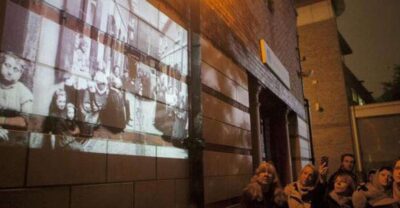
Jack the Ripper Walking Tour – Ripper Vision Tours
Read our review →
Ultimate Jack the Ripper : Guided Tour of London
Read our review →
Browse the lists this tour appears in