Reviewed · TICKETS
Portsmouth: The D-Day Story Entry Ticket
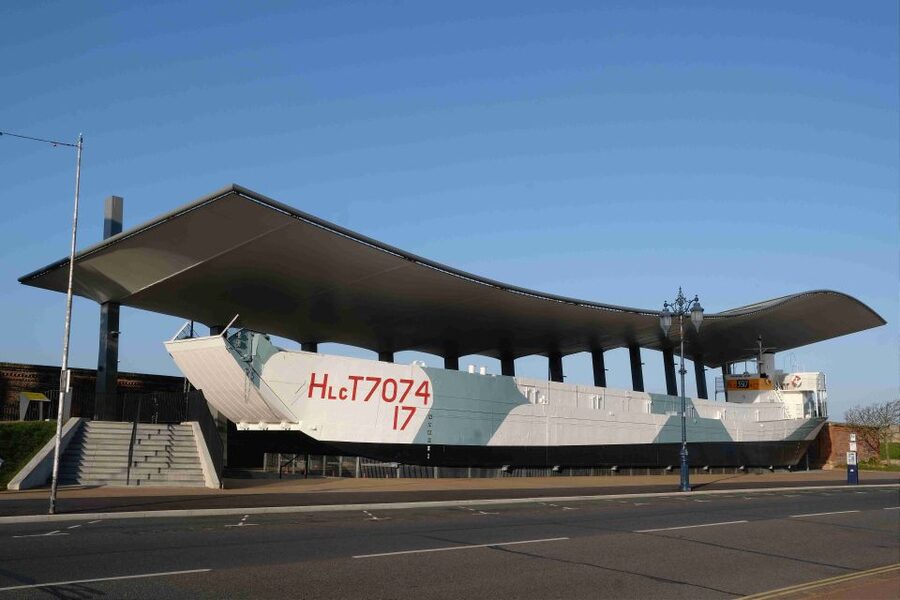
History feels close here. Portsmouth’s D-Day Story gives you a clear, human account of the June 1944 invasion, from secret planning to the soldiers and civilians caught up in it. I especially like the last surviving landing craft tank, LCT 7074, and the moving Overlord Embroidery, which brings the scale of the campaign down to a personal level.
I also like the museum’s careful use of veterans’ film accounts, objects, and interactive displays. The main drawback is simple: this is much larger than a quick stop. Two hours can feel rushed, and some visitors find the display cabinets repetitive or the embroidery gallery rather dim.
In This Review
- Key things to know before you go
- Arriving at Clarence Esplanade in Southsea
- Boarding LCT 7074 with ten tanks aboard
- Following the plan behind D-Day
- Meeting the people behind the operation
- The Overlord Embroidery and its 34 panels
- How long should you spend inside?
- Is the $19 ticket good value?
- What I would do differently on a first visit
- Who should book The D-Day Story?
- FAQ
- Where is The D-Day Story located?
- What does the admission ticket include?
- How much does entry cost?
- How long is the ticket valid?
- How long should I allow for a visit?
- What are the museum’s opening hours?
- What are the final entry times?
- Is The D-Day Story wheelchair accessible?
- Can I cancel or pay later?
Key things to know before you go
- LCT 7074 carries the story onto the water: Walk aboard the last surviving landing craft tank used on D-Day and see Sherman and Churchill tanks inside.
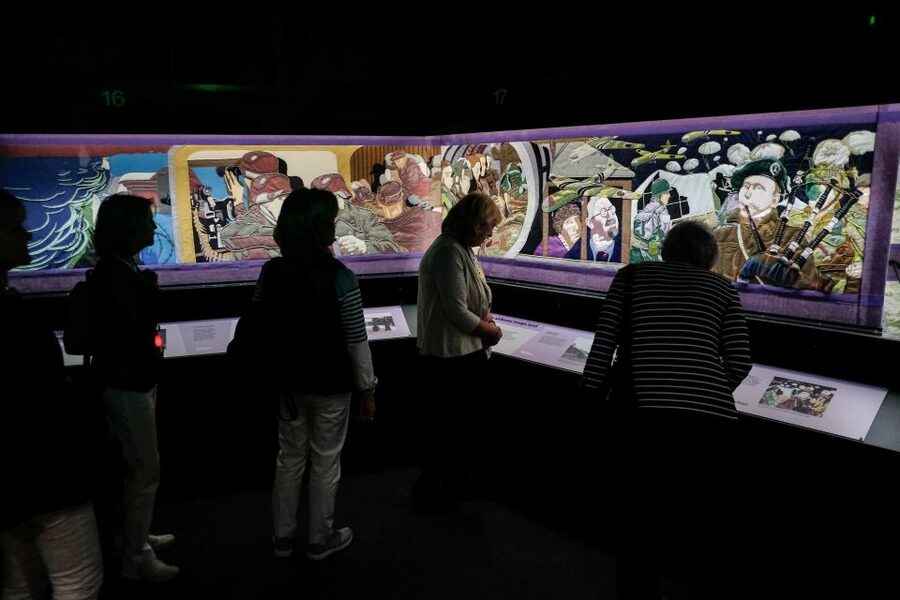
- The Overlord Embroidery is the emotional finale: Its 34 hand-stitched panels tell the story of D-Day and the Battle of Normandy.
- Plan for two to three hours: You can move faster, but the films, personal accounts, objects, and interactive displays deserve time.
- The museum covers people as well as military plans: You hear about men, women, children, resistance workers, commanders, and civilians.
- It is focused tightly on D-Day: That makes the story easy to follow, though visitors seeking a broad Second World War museum may find the subject narrow.
- The ticket costs about $19 per person: For a full day of access, the preserved landing craft, and the main museum, that is a fair price for a serious history visit.
Arriving at Clarence Esplanade in Southsea
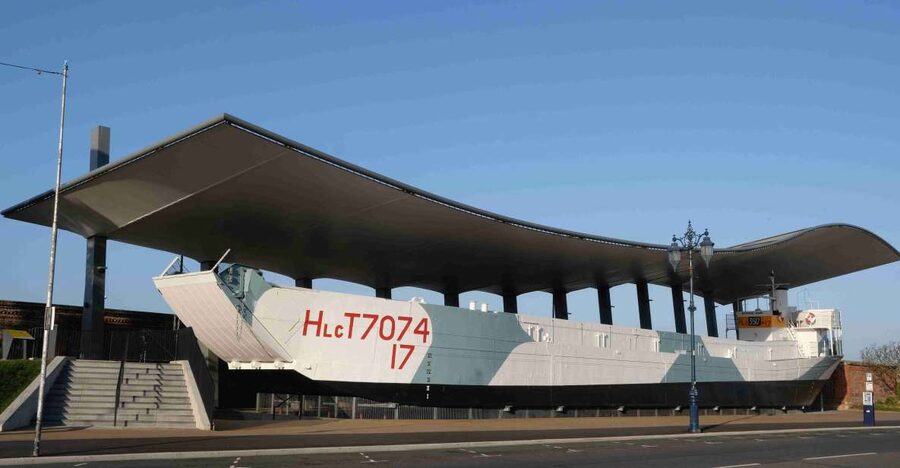
The D-Day Story sits at Clarence Esplanade in Southsea, Portsmouth, with the address Portsmouth PO5 3NT. Its setting by the seafront adds useful context. You are not looking at D-Day in an abstract room far from the coast. The museum is in a city closely tied to the wartime departure for Normandy.
Allow more time than the ticket’s one-day validity might suggest. The ticket gives you access for the day, but the practical visit is best planned as a two to three hour museum stop. One visitor found that two hours was not enough, while another said the museum could occupy an entire day if you take in the details carefully.
The building is wheelchair accessible. If you arrive by car, parking directly outside has been described as inexpensive, though the exact charge is not provided here. A cafe and gift shop add a useful pause before or after the galleries.
Opening hours change with the season:
- From 1 April to 30 September, the museum is open from 10am to 5:30pm.
- From 1 October to 31 March, it is open from 10am to 5pm.
- Between April and September, the last entry to LCT 7074 is at 4pm, and the last entry to the galleries is at 4:30pm.
- Between October and March, the last entry to LCT 7074 is at 3:30pm, and the last gallery entry is at 4pm.
Those final entry times matter. If you arrive late, you may get inside but lose the landing craft, which is one of the most memorable parts of the visit. I would start with the LCT if your arrival is close to the afternoon cutoff.
A few more trips worth a look before you book
- London: The London Eye Entry Ticket
★ 4.6 · 35,875 reviews - London: Tower Bridge Entry Ticket
★ 4.7 · 15,560 reviews - London: Westminster Abbey Entrance Ticket
★ 4.6 · 11,254 reviews
Boarding LCT 7074 with ten tanks aboard
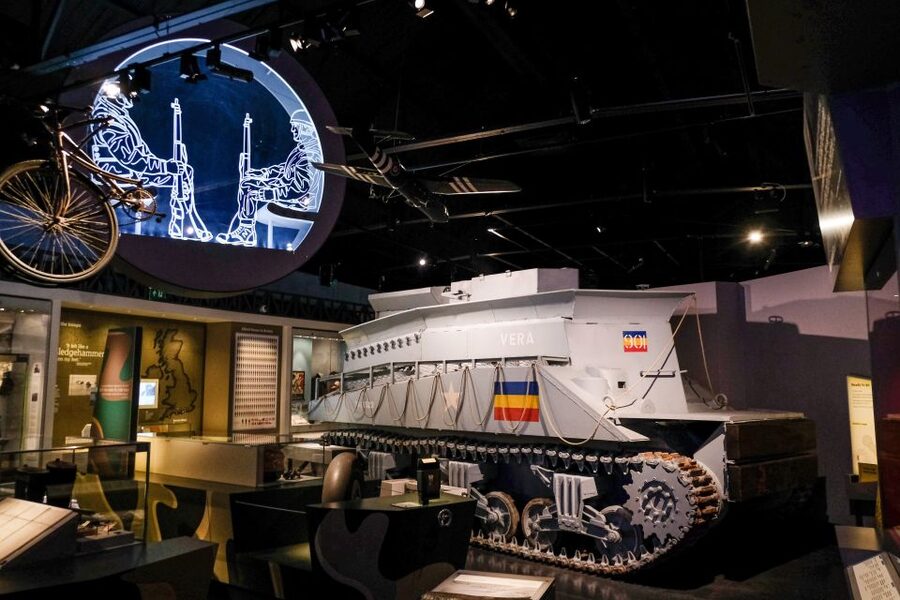
The landing craft is the museum’s strongest physical experience. LCT 7074 is the last surviving landing craft tank, and it carried ten tanks to Normandy on D-Day. Walking aboard helps you grasp the cramped, practical nature of the crossing far better than a drawing or scale model can.
Inside, the Sherman and Churchill tanks show what the craft looked like when loaded with vehicles. The tanks are large, heavy machines, yet the landing craft suddenly feels tight around them. You get a direct sense of the equipment, men, and pressure packed into a vessel whose job was to reach the shore, open its doors, and send armored vehicles into combat.
That moment when the landing craft doors opened was a powerful image for several visitors. The exhibit cannot recreate the noise, danger, or movement of D-Day, but the enclosed space and tanks offer a useful physical impression of what the sailors and soldiers faced.
Volunteer guides are often present on the LCT. They have been praised for explaining the vessel and answering questions, and one guide took extra time to explain what life was like for the sailors aboard. Do not hurry past them if someone is available. The human details can make the ship much easier to understand.
There is one practical issue. The craft is not simply another gallery with labels on a wall, so your visit may be affected by the last boarding time. From October through March, you need to be aboard by 3:30pm. In the warmer months, the last entry is 4pm.
Following the plan behind D-Day
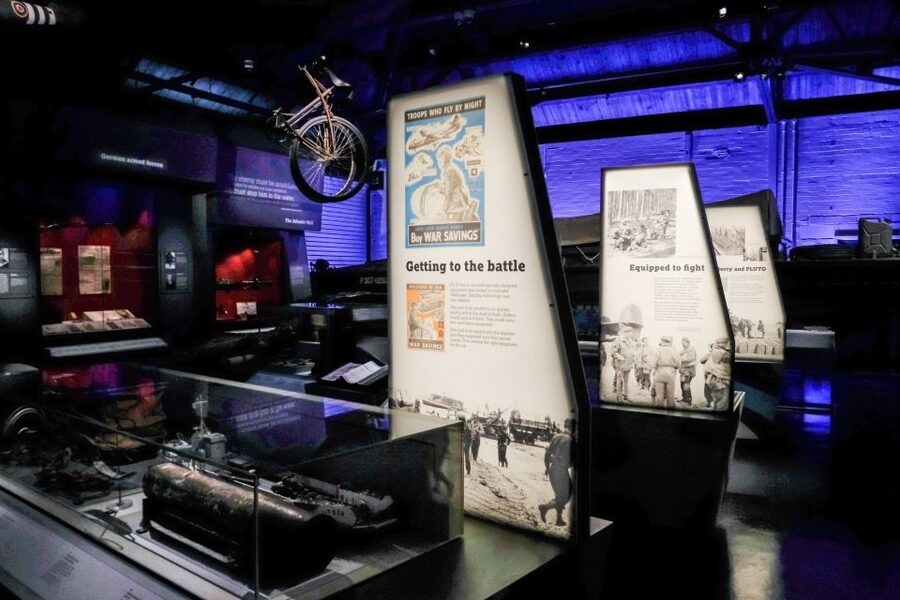
The museum’s central strength is its explanation of The Plan. D-Day was not just a dramatic landing on a beach. It required decisions about where and when to cross the Channel, how to move men and equipment, and how to keep German forces from understanding the real target.
The displays explain the secrecy and deception used by Allied planners. That material gives you the missing middle ground between a map of Normandy and the events seen in wartime film. You begin to understand how many choices had to work at once, and how much depended on timing.
I like this part because it does not treat military success as a simple matter of courage. Courage mattered, but so did weather, supply lines, transport, intelligence, planning, and the ability to mislead the enemy. The museum shows how preparation shaped what happened on 6 June 1944.
The information is presented through exhibits, interactives, video, and personal accounts. The layout is generally clear and easy to follow, although the number of display cabinets can become tiring after a while. If you read every label, you will need more time than you might expect.
A free audio guide can add useful detail. It is especially helpful if you want more explanation than the labels provide, or if you prefer to move through the galleries at your own pace. Bring patience rather than trying to race from one numbered item to the next.
Meeting the people behind the operation
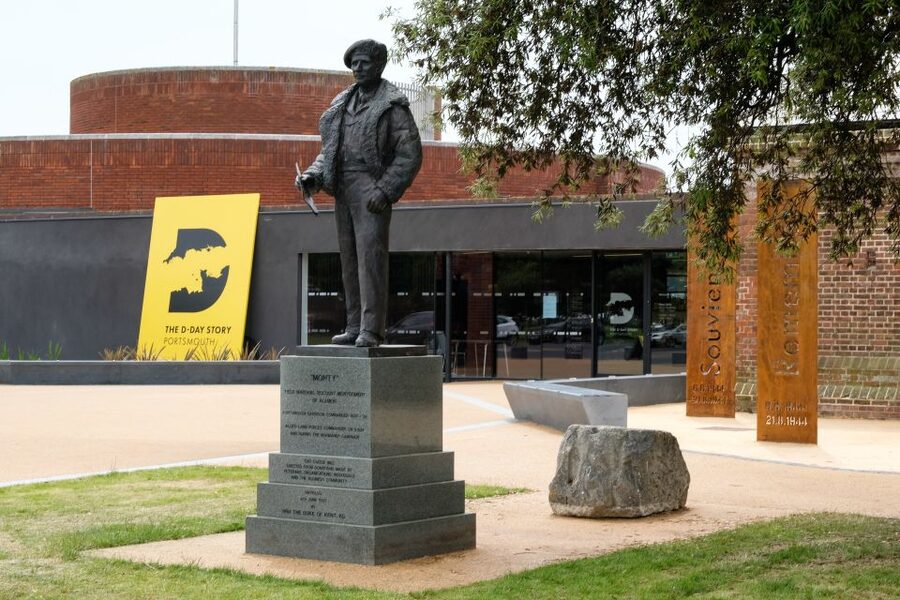
The museum does not tell D-Day only through generals and battle maps. It includes the experiences of men, women, and children who lived through the invasion and its effects. Veterans’ film clips give the displays a direct human voice.
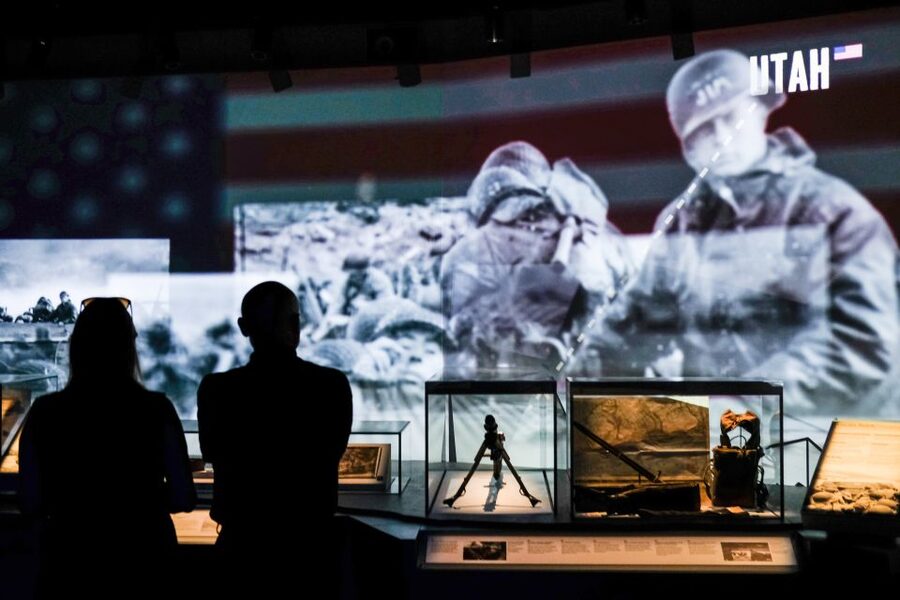
These films are among the most affecting parts of the visit. A piece of equipment can explain what was used, but a personal account can show what it felt like to wait, travel, land, fight, or live with uncertainty. The museum also covers the people involved in planning and resistance work, not just those who carried weapons.
That wider view makes the visit useful for families and younger visitors who may know D-Day only as a date in a textbook. The displays connect the military operation to ordinary people and show how far its impact reached.
The tone is serious without being sensational. You will see brave actions and ingenious planning, but the museum also gives you room to think about fear, loss, and the limited chances of survival faced by many servicemen. Several visitors described the experience as moving as well as informative.
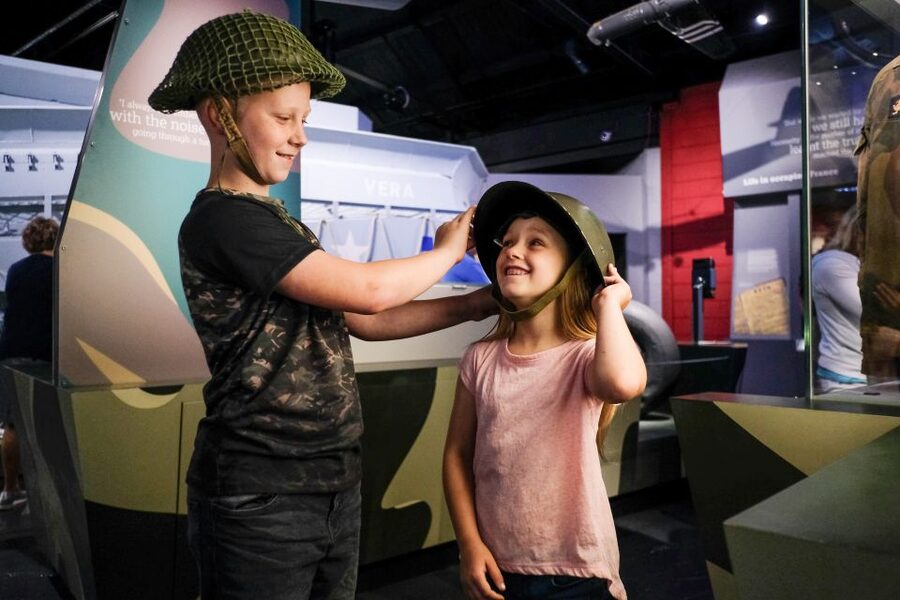
Very young children may not get much from the detailed text and serious subject matter. Older children, teenagers, and adults with an interest in history should find plenty to hold their attention, particularly if they use the interactive elements and watch the films.
A different sort of outing around the UK:
- From London: Harry Potter Warner Bros Studio Tour
★ 4.7 · 26,588 reviews - London: Westminster to Greenwich River Thames Cruise
★ 4.5 · 22,836 reviews - Magical London: Harry Potter Guided Walking Tour
★ 4.7 · 22,044 reviews - London: Madame Tussauds London
★ 4.6 · 20,915 reviews
The Overlord Embroidery and its 34 panels
Save time for the Overlord Embroidery. It tells the story of D-Day and the Battle of Normandy across 34 hand-stitched panels. Technically, it is an appliqué work rather than a traditional woven tapestry, but the important point is what it does: it turns a vast military campaign into a long, visual narrative.
This is the museum’s most distinctive art object. You can follow the story through scenes that show the preparation, invasion, and fighting that followed. The panels reward slow looking, especially after you have seen the objects and films explaining the campaign.
Many visitors consider it the highlight of the museum. I understand why. After the machinery, maps, cabinets, and video accounts, the embroidery offers a quieter way to process what you have learned. Its hand-worked scenes ask you to look at faces, movement, and small details rather than simply absorb facts.
The lighting is deliberately low, which helps protect the work but can make it harder to see. One visitor found the panels difficult to appreciate in the dim gallery. Give your eyes time to adjust, and do not treat this room as a quick final corridor.
How long should you spend inside?
For a proper visit, plan on two to three hours. That gives you enough time for LCT 7074, the main galleries, the film material, and the Overlord Embroidery without having to sprint.
You could spend longer if you read every display, listen carefully to the audio guide, or stop for each personal account. One visitor said it was possible to spend all day there, while another regretted arriving without enough time to explore properly.
A sensible order is:
- Check the LCT boarding time when you arrive.
- Visit the landing craft and examine the tanks.
- Work through the galleries on planning, deception, and the invasion.
- Watch selected veteran and civilian accounts.
- Finish with the Overlord Embroidery.
- Take a break at the cafe or browse the gift shop.
You do not need to force yourself through every numbered cabinet. If the detail begins to blur, focus on the major sections and return to the displays that catch your attention. The museum is more rewarding when you allow the story to unfold at a steady pace.
Is the $19 ticket good value?
At about $19 per person, the ticket is fairly priced for what you receive. You get access to both the museum and LCT 7074, not just a single room of objects. The one-day validity also means you are not under pressure to finish every section in one continuous visit, although the opening hours still set the practical limit.
The value is strongest if you have a real interest in Second World War history, military planning, or personal accounts of wartime life. The landing craft alone gives the visit something that a standard museum gallery cannot provide.
It is less suitable if you want a broad survey of the whole war or a short, highly visual attraction that takes less than an hour. Some of the cabinets contain a lot of information, and visitors who prefer large physical exhibits may wish there were more objects on display.
For families, the value depends on age and interest. The subject is serious, but the tanks, film footage, and interactive displays can help older children connect with the story. The cafe is useful if you need a pause, and the gift shop offers books on D-Day and wider Second World War subjects.
The booking terms are also flexible. You can cancel up to 24 hours in advance for a full refund, and you can reserve now and pay later. That helps if your Portsmouth plans may change.
What I would do differently on a first visit
I would avoid arriving late in the afternoon. The museum galleries remain open slightly later than the landing craft, so a late start can leave you seeing only part of the experience.
I would also allow extra time for the Overlord Embroidery. It is easy to spend most of the visit on the military displays and then reach the final room when you are tired. That would be a mistake. The low lighting and large number of panels call for a slower visit.
Use the free audio guide if you want more context. Staff and volunteers are friendly and willing to answer questions, particularly aboard the landing craft. If you have a family member who served during the war, or who remembers the Blitz and wartime life, the personal accounts may make the visit especially meaningful.
Finally, wear something comfortable and bring a little patience. The museum can feel cold to some visitors, and the amount of information is greater than the modest ticket price might suggest.
Who should book The D-Day Story?
I would recommend it to anyone with an interest in D-Day, military history, Portsmouth, or the personal experience of war. It is also a good choice for older children and teenagers studying the Second World War, since it explains both the operation and the people affected by it.
I would be more cautious for families with very young children, visitors with only an hour to spare, or anyone looking for a broad museum covering every stage of the war. The focus here is narrow by design, and the detailed presentation rewards time.
Book it if you can give the museum at least two hours and arrive early enough to board LCT 7074. The combination of the landing craft, veteran footage, planning displays, and Overlord Embroidery makes this one of Portsmouth’s most worthwhile history visits. Just do not mistake a $19 entry ticket for a quick stop. The museum asks for attention, and it gives you a much better understanding of what D-Day required in return.
FAQ
Where is The D-Day Story located?
It is at Clarence Esplanade, Southsea, Portsmouth PO5 3NT, in South East England.
What does the admission ticket include?
The ticket includes admission to The D-Day Story, including the museum galleries and access aboard LCT 7074.
How much does entry cost?
The listed price is about $19 per person.
How long is the ticket valid?
The ticket is valid for one day.
How long should I allow for a visit?
Allow at least two to three hours. The displays contain enough detail to keep you longer if you read the labels, watch the films, and spend time with the Overlord Embroidery.
What are the museum’s opening hours?
From 1 April to 30 September, it is open from 10am to 5:30pm. From 1 October to 31 March, it is open from 10am to 5pm.
What are the final entry times?
From April through September, the last entry aboard LCT 7074 is 4pm, and the last museum gallery entry is 4:30pm. From October through March, the final LCT entry is 3:30pm, and the final gallery entry is 4pm.
Is The D-Day Story wheelchair accessible?
Yes, the museum is wheelchair accessible.
Can I cancel or pay later?
You can cancel up to 24 hours in advance for a full refund. You can also reserve now and pay later.
Recently added around the UK
- Cairngorms & Whisky Day Tour from Inverness Including Admission★ 5.0 · 55 reviews
- PRIVATE HIRE 45 min Speedboat Tour – Embankment/Westminster Pier★ 5.0 · 55 reviews
- From Edinburgh: Islay and The Whisky Coast 4-Day Tour★ 4.9 · 55 reviews
- Fantastic Creatures of Edinburgh, and where to find them!★ 4.5 · 55 reviews
- E-bike excursion exploring the Purbecks★ 5.0 · 55 reviews
- ‘A Wee Pedal’s’ Family Friendly Cycle Tour to Edinburgh’s Coast★ 5.0 · 55 reviews
- Private Tour of London’s Historic Pubs★ 5.0 · 55 reviews
- From London: Glastonbury and Cheddar Gorge Guided Day Trip★ 4.8 · 55 reviews
Tickets, compared.




Buckingham Palace: The State Rooms Entrance Ticket
Read our review →