
Reviewed · TICKETS
Royal Observatory Greenwich & Prime Meridian Entrance Ticket
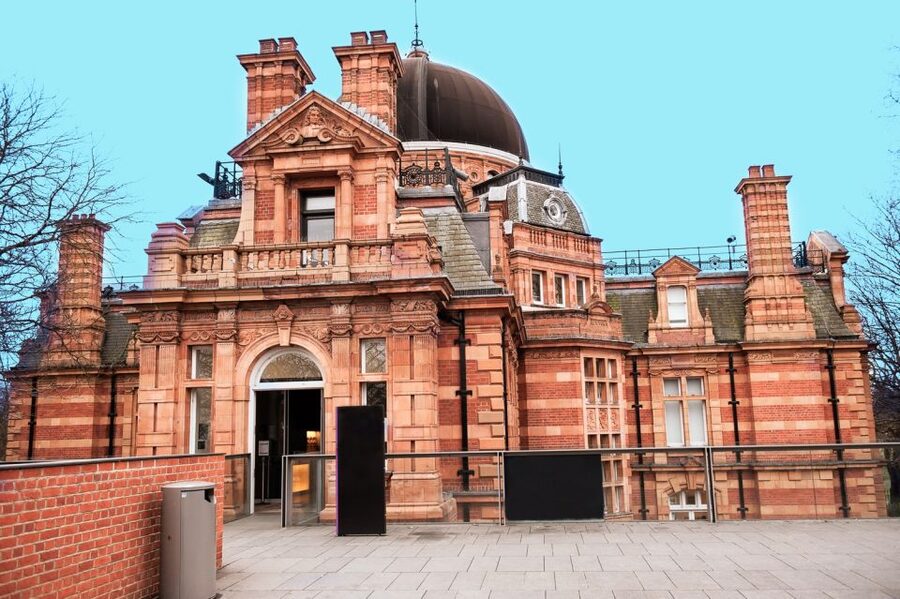
Stand on two halves of Earth. The Royal Observatory Greenwich gives you that wonderfully odd photo opportunity, one foot east and one west, while also explaining how people learned to measure time, longitude, and distance at sea. I like the historic Flamsteed House and its Christopher Wren-designed Octagon Room, and I like the hilltop view across Greenwich Park, the Thames, and London. The main catch is the steep walk uphill, which can be tiring if you have mobility concerns.
This is a self-guided visit, not a formal tour with a guide leading you from room to room. Your ticket costs $32.33 per person and is valid for one day, with a downloadable audio guide available in eight languages. The planetarium costs extra, and the attraction is more focused on timekeeping, navigation, and the Meridian Line than on looking through telescopes at stars.
In This Review
- Key points to know before you go
- Why Greenwich changed the way the world tells time
- Reaching the Observatory through Greenwich Park
- The Prime Meridian Line and the classic Greenwich photograph
- Flamsteed House and the Octagon Room
- Exhibits about clocks, navigation, and scientific problem solving
- The Astronomy Centre and the meteorite from space
- The London view from the hilltop
- How long to allow and what else to see nearby
- Is the $32.33 ticket good value?
- Who should book this Greenwich experience?
- Should you book the Royal Observatory ticket?
- FAQ
- Where does the Royal Observatory experience start and end?
- Is the visit guided?
- Is the Prime Meridian Line included in the ticket?
- Is the planetarium show included?
- How long is the ticket valid?
- Is the Royal Observatory wheelchair accessible?
Key points to know before you go
- The Meridian Line is the main photo stop: Put one foot in the eastern hemisphere and one in the western hemisphere at longitude zero.
- The hill matters: Greenwich Park is beautiful, but the climb to the Observatory is steep from several approaches, including the pier.
- Timekeeping is the real theme: Expect strong exhibits about longitude, navigation, marine clocks, and the work of John Harrison.
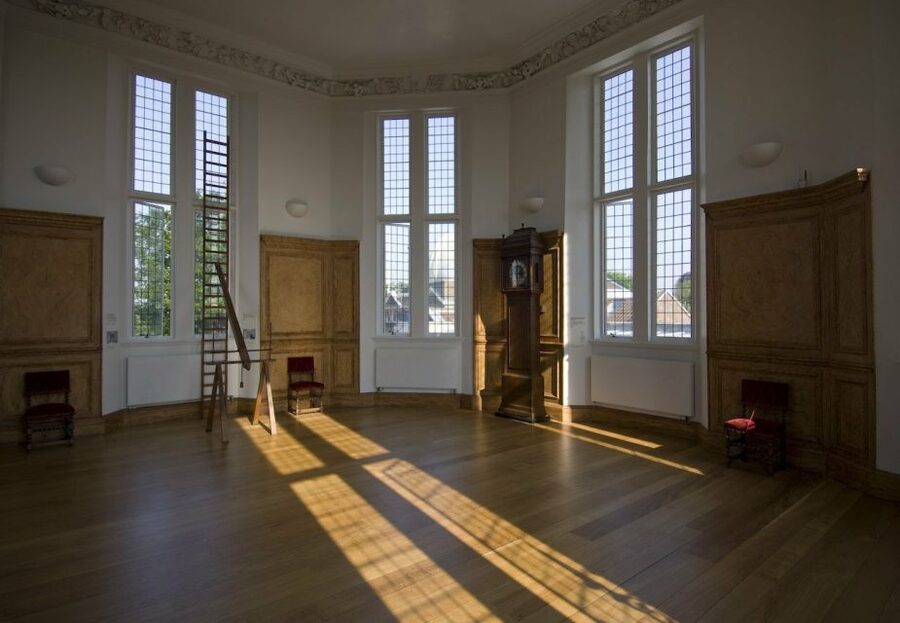
- Flamsteed House feels special: The Octagon Room, designed by Sir Christopher Wren, is one of the best-preserved interiors associated with him in London.
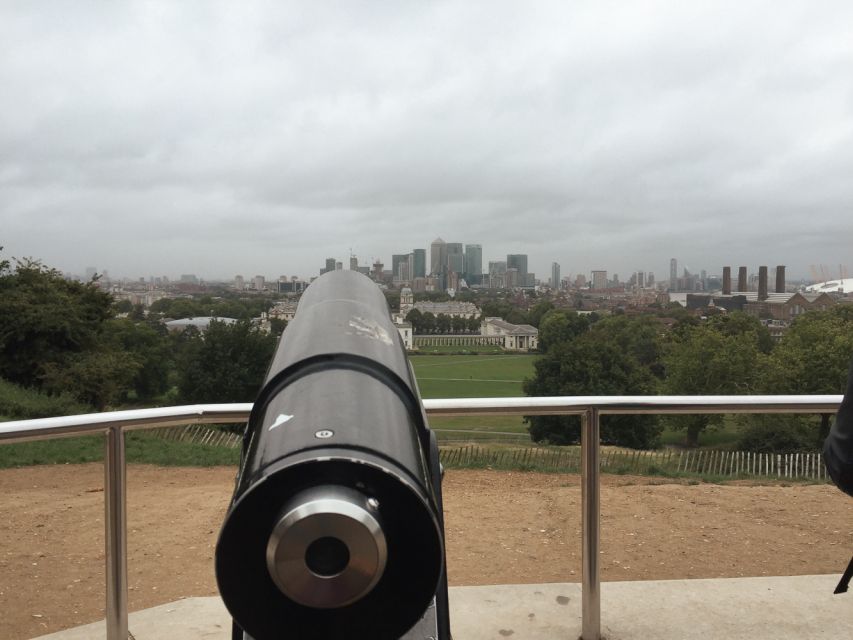
- The view is part of the ticket: From the hilltop, you can look over royal Greenwich Park, the River Thames, the City of London, and Canary Wharf.
- The planetarium is separate: You can add a show if space is available, but it is not included in this entrance ticket.
Why Greenwich changed the way the world tells time
The Royal Observatory was established in the 17th century to help solve a serious practical problem: sailors needed a dependable way to work out where they were at sea. Finding latitude was fairly manageable by studying the height of the sun or stars. Longitude was much harder, because it depended on knowing the exact time at a fixed reference point.
That problem shaped the work carried out at Greenwich. Astronomers mapped the stars with great care, while inventors worked on clocks that could keep accurate time during long sea voyages. The subject may sound technical at first, but the displays connect it to real journeys, naval travel, and the safety of ships.
I find this focus more satisfying than a simple astronomy attraction. You are not just looking at old instruments. You are seeing why accurate time mattered, and how scientific work at Greenwich helped turn the oceans into something that could be charted with greater confidence.
The Greenwich Meridian became the world’s Prime Meridian in 1884. That decision gave Greenwich a permanent place in the global system of longitude and time zones. The marked line you see today is therefore both a scientific reference and a famous London photo stop.
More Tickets in London
- London: The London Eye Entry Ticket
★ 4.6 · 35,875 reviews - London: Tower Bridge Entry Ticket
★ 4.7 · 15,560 reviews - London: Westminster Abbey Entrance Ticket
★ 4.6 · 11,254 reviews
Reaching the Observatory through Greenwich Park
The Royal Observatory sits at the top of a hill inside Greenwich Park. That setting is one of the best parts of the visit, but it also shapes how much energy you need before you even reach the entrance.
If you arrive from the Greenwich pier, expect a steep uphill walk. The same issue can affect you after a rail journey from Heathrow followed by walking to the site. Cutty Sark Station may appear to be the obvious choice, but signs from the station can be confusing, and the remaining walk is longer than some people expect.
I suggest allowing extra time for the approach rather than treating the Observatory as a quick stop beside a station. The climb gives you attractive park surroundings and a sense of arriving at a hilltop institution, but it is not ideal for everyone.
The activity is listed as wheelchair accessible, though the hill and outdoor approach deserve careful thought if you use a wheelchair, walk with difficulty, or are traveling with an older family member. The practical details about the approach are not as clear as they could be, so contact the attraction before booking if you need precise access information.
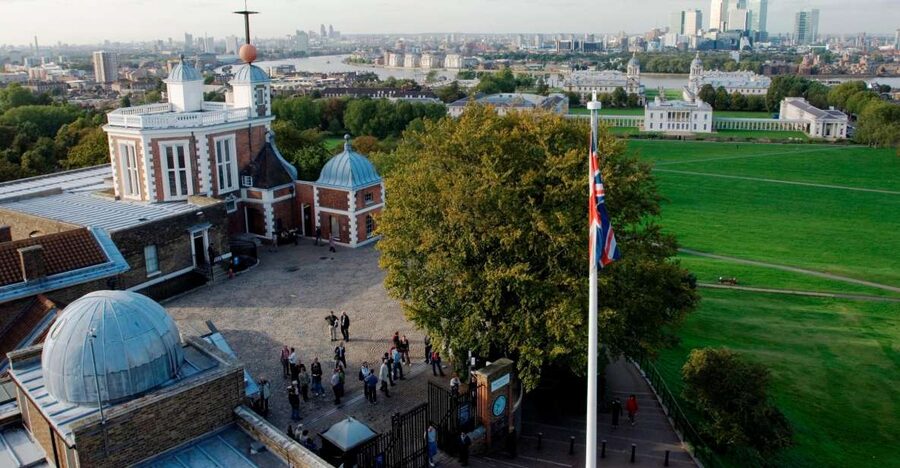
Once you reach the top, the effort pays off. You have open views over Greenwich Park and London, with the River Thames leading your eye toward the modern city. Canary Wharf is especially easy to pick out, and the view is a fine reason to visit even if your interest in astronomy is modest.
The Prime Meridian Line and the classic Greenwich photograph
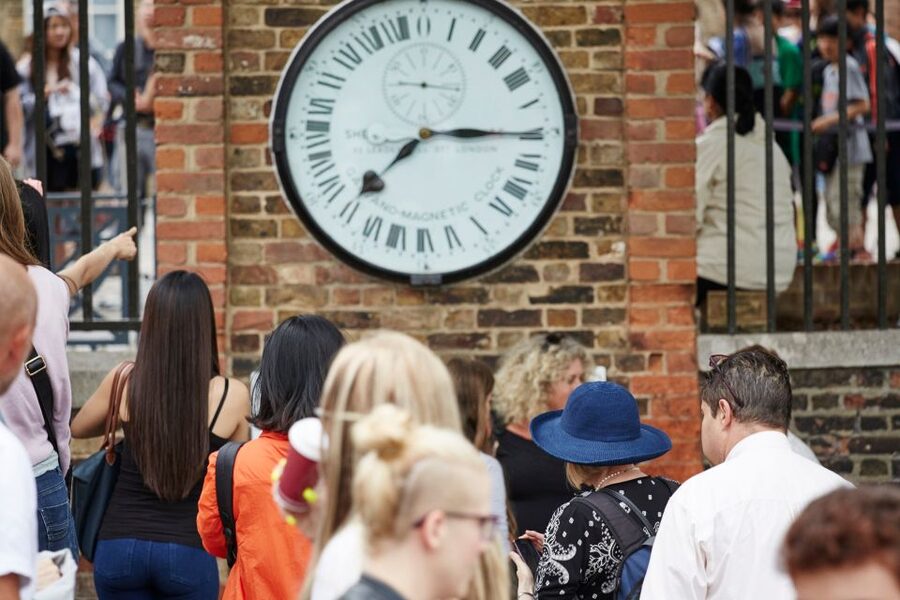
The Meridian Line is the most instantly recognizable part of the experience. Here, longitude zero is marked so you can place one foot in the eastern hemisphere and one in the western hemisphere.
The idea is simple, but it is fun. You are taking part in a small geographical ritual that makes an abstract line feel physical. It works particularly well with teenagers, families, and anyone who enjoys turning a scientific concept into a photograph.
Do not expect the line itself to be the entire attraction. The photo takes only a few minutes, and queues or nearby visitors can affect how long you spend at the mark. The real value comes from pairing the photograph with the exhibits explaining why this line was selected and how longitude became a tool for navigation.
It is also worth remembering that the Meridian Line is famous because of its historical role, not because you can feel a physical division between two sides of Earth. The line does not produce a dramatic change in the air beneath your feet. Its importance comes from the agreement to use it as the starting point for measuring longitude.
That distinction makes the visit more interesting. You are not simply collecting a novelty photograph. You are seeing how an agreed reference point helped organize maps, clocks, charts, and global travel.
Flamsteed House and the Octagon Room
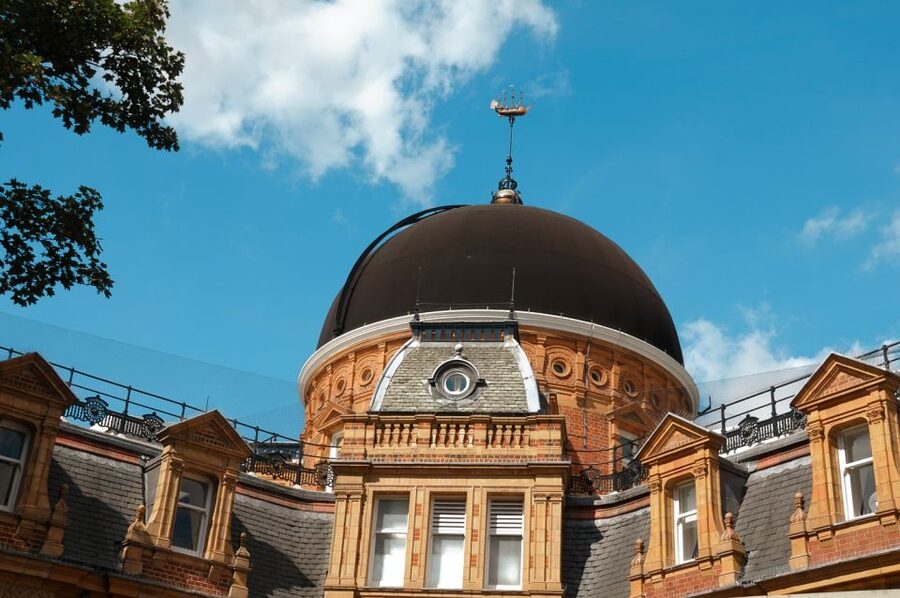
Flamsteed House is the historic core of the Observatory. It was designed by Sir Christopher Wren and includes the Octagon Room, one of his best-preserved interiors in London.
The room gives the visit a strong sense of place. Instead of wandering through a modern science center with no connection to its past, you are entering rooms associated with the early work of royal astronomers. The building helps you picture astronomy as careful, patient work carried out with instruments, calculations, and repeated observation.
The Royal Observatory is linked with figures including John Harrison, Isaac Newton, Edmond Halley, James Bradley, and George Airy. You will learn about their discoveries and inventions through the displays, with particular attention to the challenges of time and navigation.
I especially like the John Harrison story because it gives the science a human scale. His marine clocks were designed to help sailors keep accurate time at sea, and the displays show how an object that looks like a clock can carry enormous importance for navigation.
Some visitors find the visit more about latitude, longitude, and life inside the historic house than about stars and planets. That is a fair expectation to set. If you want a classic observatory experience centered on viewing celestial objects, this ticket may feel different from what you imagined.
A few more trips worth a look before you book
- From London: Harry Potter Warner Bros Studio Tour
★ 4.7 · 26,588 reviews - London: Westminster to Greenwich River Thames Cruise
★ 4.5 · 22,836 reviews - Magical London: Harry Potter Guided Walking Tour
★ 4.7 · 22,044 reviews - London: Madame Tussauds London
★ 4.6 · 20,915 reviews
Exhibits about clocks, navigation, and scientific problem solving
The strongest exhibits explain how people calculated time and position before modern electronic systems. The subject becomes much easier to follow when you connect it to a sailor trying to cross an ocean without losing track of location.
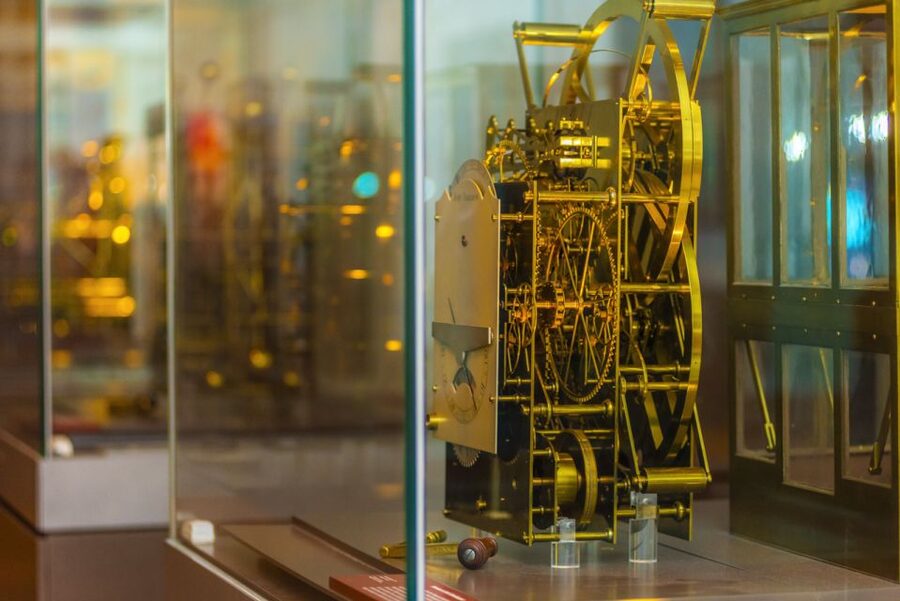
The marine clocks are a highlight. Their purpose was not merely to display the time elegantly. They had to help preserve a reference time while ships moved, rocked, and faced changing conditions at sea.
I would give these displays time rather than rushing to the Meridian Line and leaving. The famous photograph is the hook, but the clock story provides the substance. It explains why the Observatory mattered beyond its hilltop location.
The attraction also presents work associated with major astronomers and scientists. You may find the material particularly rewarding if you enjoy the history of geography, navigation, engineering, or measurement. It can also work well for teenagers because the central question is easy to grasp: how do you know where you are when there is no land nearby?
A downloadable guide supports the self-guided visit in English, Spanish, Chinese, French, German, Italian, Korean, and Portuguese. It lets you move at your own pace, which is useful if one person in your group wants to linger over the clocks while another is more interested in the building or the view.
Some people prefer a live explanation. The ticket does not include a guide, though staff talks or free explanations may sometimes be available on site. A few visitors have found the audio equipment or multimedia element less dependable than expected, so bring a charged phone if you plan to use the online guide.
The Astronomy Centre and the meteorite from space
The modern Astronomy Centre gives the historic rooms a contemporary counterpoint. Here, the subject shifts from old navigation problems to the larger story of space and the universe.
One memorable feature is the chance to touch a meteorite said to be 4.5 billion years old. That is a strong moment for children and adults alike because it turns an enormous number into something you can approach physically.
The centre is a good reason not to think of the Royal Observatory as only an old building and a line on the pavement. You get a mix of preserved rooms, scientific instruments, explanatory displays, and modern material about space.
Still, keep your expectations in check. The included ticket does not cover a planetarium show. If you want the full space presentation, you need to buy a separate ticket at the Observatory, subject to availability.
That extra option can be worthwhile for a family or anyone who wants a more visual presentation of astronomy. If your main aim is the Meridian Line and historic timekeeping, you may decide the basic entrance ticket is enough.
The London view from the hilltop
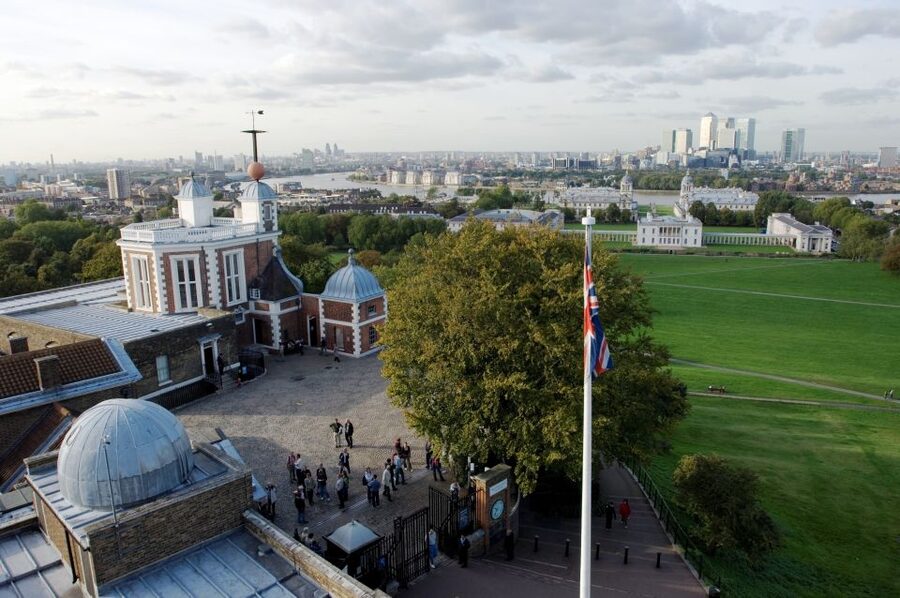
The view is not a minor bonus. From the Observatory, you can look down over Greenwich Park and across London, with the Thames cutting through the city.
The position gives you a useful contrast between old and new. The park and historic buildings sit below you, while the City of London and Canary Wharf show the scale and shape of modern London. On a clear day, the outlook can be one of the most rewarding parts of a Greenwich visit.
I would plan a little time simply to look outward. The exhibits require concentration, while the view gives you a chance to reset. It also helps explain why this location has such a strong identity: the Observatory is tied to both the scientific measurement of the world and the physical geography of London.
Greenwich Park itself is worth treating as part of the outing. You can make the climb more enjoyable by slowing down rather than viewing it as an annoying transfer between transport and attraction. The hill is real, but so is the reward at the top.
How long to allow and what else to see nearby
Your ticket is valid for one day, so you are not forced into a tightly timed visit. The booking information asks you to check availability for starting times, but the entrance time may be flexible in practice. Electronic tickets also make arrival simple.
The Observatory works best as part of a larger Greenwich day. It is close to the National Maritime Museum, the Greenwich shopping area, and the Cutty Sark area. A river cruise can also bring you to Greenwich, though the walk from the pier to the hilltop is steep.
If you only want to stand on the Meridian Line, you can make the visit fairly focused. If you want to understand the clocks, explore Flamsteed House, use the audio guide, enjoy the view, and consider the Astronomy Centre, give yourself a fuller block of time.
The exact visit length depends on how much you read and whether you add a planetarium show. The one-day validity is useful because you can build the Observatory into a broader Greenwich plan rather than racing through every room.
Is the $32.33 ticket good value?
At $32.33 per person, this is not a bargain-priced photo stop. The value depends on how much you want from the visit.
I think the price is fair if you care about the Meridian Line, historic science, London views, and the story of navigation. You are paying for access to a major historic site, the preserved rooms, the exhibits, the Astronomy Centre, and a downloadable multilingual guide.
The ticket is less compelling if you only want a quick picture at longitude zero. The photograph is memorable, but it takes little time, and the steep walk adds effort. In that case, the attraction needs to fit into a wider Greenwich day for the cost to feel worthwhile.
The separate planetarium charge also affects the budget. Families should calculate the total cost before arriving, especially if a show is part of the plan. On the other hand, the basic ticket gives you enough material to make a worthwhile visit without adding the show.
The high rating of 4.5 from 1,095 reviews reflects a broad appeal, especially for the view, the Meridian Line, the historic rooms, and the clear connection to time and longitude. The most consistent strengths are the setting and the sense of learning something useful rather than merely seeing a famous object.
Who should book this Greenwich experience?
I would recommend it to anyone interested in geography, navigation, clocks, engineering, astronomy, or the history of London. It is also a good choice for teenagers, since the Meridian Line offers an easy hook and the navigation story gives the science a practical purpose.
Families can enjoy the photograph, the meteorite, the open park setting, and the chance to move through the site at their own speed. The audio guide in several languages makes it easier to include different members of a group.
You should think twice if steep hills are a serious problem, or if you expect a hands-on telescope experience focused mainly on stars. The attraction is more about the measurement of Earth and time than about nighttime observation.
I also recommend it for repeat visitors to Greenwich. The exhibits and audio guide can reveal more on a second visit, and the surrounding park, museums, shops, and riverfront make it easy to build a fresh outing around the Observatory.
Should you book the Royal Observatory ticket?
Book it if standing on the Prime Meridian sounds fun and you want the story behind it. The best parts are not just the famous line, but the preserved Octagon Room, John Harrison’s marine clocks, the 4.5-billion-year-old meteorite, and the broad London view from the hill.
Plan carefully if you have limited mobility, allow time for the climb, and do not assume the planetarium is included. For most visitors, the ticket is strongest as part of a full Greenwich day, not as a quick standalone stop.
FAQ
Where does the Royal Observatory experience start and end?
The visit starts at the Royal Observatory Greenwich and ends back at the same meeting point.
Is the visit guided?
No. This is a self-guided visit. A downloadable audio guide is available in English, Spanish, Chinese, French, German, Italian, Korean, and Portuguese.
Is the Prime Meridian Line included in the ticket?
Yes. Entry to the Royal Observatory and the Prime Meridian Line is included.
Is the planetarium show included?
No. A planetarium show requires a separate ticket and is not included with this entrance ticket.
How long is the ticket valid?
The ticket is valid for one day. You should check availability for the available starting times.
Is the Royal Observatory wheelchair accessible?
The activity is listed as wheelchair accessible, but the approach through Greenwich Park can involve a steep hill. If you have mobility concerns, check the access details before booking.
Recently added around London
- PRIVATE HIRE 45 min Speedboat Tour – Embankment/Westminster Pier★ 5.0 · 55 reviews
- Private Tour of London’s Historic Pubs★ 5.0 · 55 reviews
- From London: Glastonbury and Cheddar Gorge Guided Day Trip★ 4.8 · 55 reviews
- Gatwick Airport Taxi – Private Transfer to/from London★ 5.0 · 55 reviews
- London: Kew to Westminster River Thames Cruise★ 4.2 · 55 reviews
- London by Night – Tootbus Sightseeing Tour★ 3.5 · 55 reviews
- London: Tower of London After Hours Tour and Key Ceremony★ 4.8 · 56 reviews
- From London: Cotswolds Guided Trip Including Bourton-on-the-Water★ 4.5 · 56 reviews
Tickets, compared.





Buckingham Palace: The State Rooms Entrance Ticket
Read our review →

Tower of London and Crown Jewels Exhibition Ticket
Read our review →Browse the lists this tour appears in