
Reviewed · WORKSHOPS
Taster Surfing Lesson in Bude
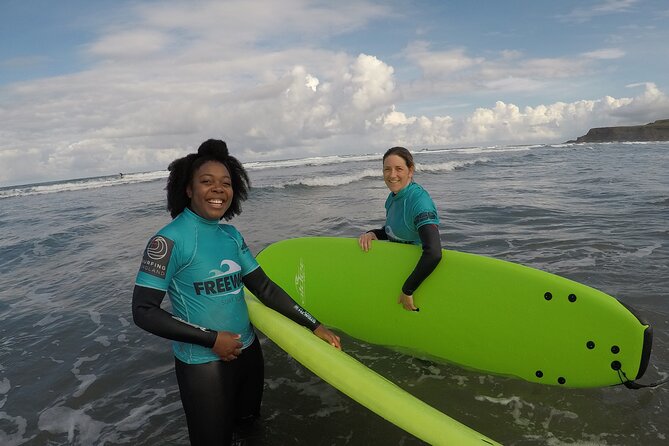
Catch your first wave in north Cornwall. This two-hour surfing lesson at Widemouth Bay gives beginners a clear, friendly introduction to the sport, with a wetsuit, board, beach instruction, warm-up, and plenty of time in the water. I like the small maximum group of six, which gives instructor attention real value, and I like the choice of morning or afternoon sessions. The main thing to consider is that surfing depends on the sea and weather, so you may not get perfect waves every time.
Freewave Surf Academy keeps the plan simple: meet at its beach base, get fitted with equipment, learn the basics on sand, then try the real thing. Past sessions have helped children as young as nine stand up, while adults and teenagers have also found the lesson approachable. Still, you need a moderate level of fitness and must be comfortable taking part in an active beach activity.
In This Review
- Key points to know before you book
- Why Widemouth Bay is a good place to start
- The first 30 minutes: fitting up and getting safe
- Getting into the water with an instructor
- What the two-hour timing really gives you
- The instructors make the difference
- Weather, waves, and the honest drawback
- Is $62.50 good value?
- Who should book this lesson?
- Practical tips for a smoother session
- Should you book the Freewave taster lesson?
- FAQ
- Where does the surfing lesson start?
- Where does the experience finish?
- How long does the lesson last?
- What equipment is provided?
- Is the lesson held in English?
- How many people can join the lesson?
- Are morning and afternoon sessions available?
- What happens if poor weather cancels the lesson?
Key points to know before you book
- Small groups capped at six: You get a better chance of personal help than in a large beach class.
- Widemouth Bay setting: The lesson takes place on one of north Cornwall’s well-known surf beaches near Bude.
- Wetsuit and board provided: A thick wetsuit helps take the edge off Cornwall’s changeable conditions.
- Two-hour beginner format: You cover safety, technique, warm-up, and water practice in one compact session.
- Morning or afternoon choices: You can fit the lesson around other Bude plans.
- Flexible weather arrangements: Poor conditions may lead to a new date or a full refund.
Why Widemouth Bay is a good place to start
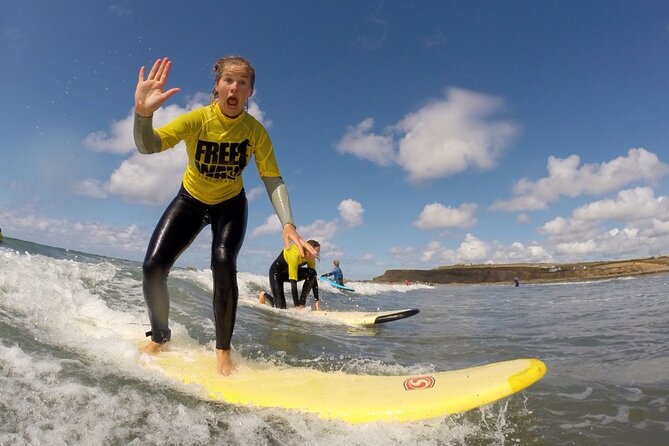
Widemouth Bay gives you the right kind of setting for a first lesson: open sand, Atlantic swell, and enough room for a group to work through the basics. You meet the Freewave Surf Academy team at its base at Widemouth Bay, Bude, EX23 0AD, then walk down to the water with your equipment.
That walk matters more than it sounds. You do not simply arrive and get pushed into the sea. The lesson moves in sensible stages, beginning with equipment and a beach briefing before you tackle the waves. If you are nervous, this gradual start gives you time to get used to the board, the wetsuit, and the idea of lying on moving water.
The setting also lets anyone not taking part watch from the beach. One parent was able to take photographs without getting in the way of the lesson, which is useful if you are booking for a child or teenager.
Widemouth Bay is not a warm-water resort. Cornwall’s sea can feel brisk, and the thick wetsuit is an important part of the experience rather than a minor extra. You should expect a practical outfit that helps you stay in the water long enough to learn, though no wetsuit can make an Atlantic session feel tropical.
A few more trips worth a look before you book
- London: Traditional English Scone Making and Tea Workshop
★ 5.0 · 702 reviews - York: Chocolate Bar Making Workshop at York Cocoa Works
★ 4.7 · 401 reviews - Surf Lesson
★ 5.0 · 349 reviews
The first 30 minutes: fitting up and getting safe
Your first task is to meet the instructor and get a suitably sized wetsuit and surfboard. The equipment is included, so you do not need to arrive with a board or build your own kit list around specialist gear.
Once changed, you walk onto the sand for the safety and instruction talk. This is where the lesson earns its keep. Surfing is not only about standing up. You need to understand how to handle the board, where to position yourself, how to respond to waves, and how to stay aware of the people around you.
The safety chat is followed by a proper warm-up. That is useful for two reasons. It prepares your body for paddling and getting to your feet, and it gives you a few more minutes to settle your nerves before the first attempt.
The instructors keep the directions short and practical. Marco, Reuben, Sally, Ned, Mark, Robin, and other Freewave staff are named in the experience feedback, and the repeated praise is for clear guidance and a friendly manner. Reuben in particular helped a first-time 11-year-old choose suitable waves while keeping a close eye on changing conditions.
You should not expect a long classroom lecture. The point is to learn enough on the beach to make your time in the water useful. That balance suits beginners who want action, but anyone hoping for a detailed technical course may find this introductory format fairly brisk.
Getting into the water with an instructor
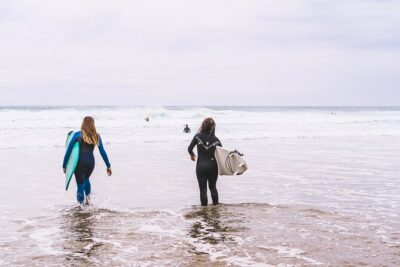
After the warm-up, you carry the board into the surf and begin trying the basic movements. The goal is to catch a small wave, keep the board stable, and move from lying down to standing at the right moment.
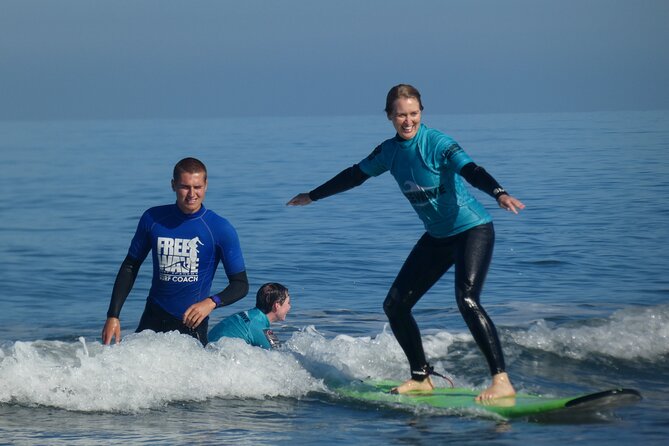
This is the part where the small group matters most. A maximum of six people gives the instructor a workable chance to see what each person is doing and offer corrections. It does not guarantee constant one-to-one coaching, but it is a far better arrangement than being one of a large crowd scattered along the beach.
The instructors also adjust their help to the conditions. In one session, waves grew larger than expected, and Reuben helped a young beginner continue learning while staying safe. In another, Marco assisted each member of a family group, helping adults and children catch waves within the first few tries.
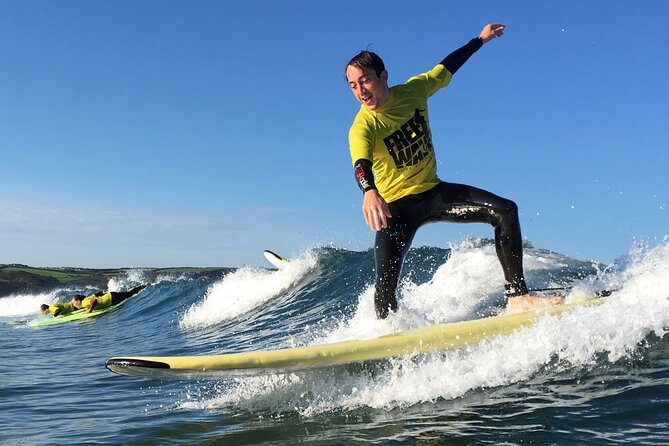
You may stand up quickly. Several beginners did, including children with no previous surfing experience. But treat that as an encouraging possibility, not a promise. Your result will depend on the waves, your balance, your fitness, and how comfortable you feel in the sea.
The lesson is designed to give everyone a taste of surfing, not to turn you into a polished surfer in two hours. If you manage one clean stand-up, you will have a satisfying first win. If you spend more time learning to paddle, position the board, or handle the whitewater, you are still building the right foundation.
What the two-hour timing really gives you
Two hours is a good length for a first attempt. It is long enough to cover equipment, safety, warm-up, beach instruction, and water time without turning the session into an exhausting half-day commitment.
You should allow for the fact that not all of those two hours are spent standing on a board. The fitting process, walk to the beach, briefing, and warm-up are necessary parts of learning safely. The practical water time comes after those steps.
That format works well for a holiday schedule. You can choose a morning or afternoon session, leaving time for Bude, the coast, or a meal before or after. A session can also act as a trial run before you decide if you want to rent a board and practice independently. One family continued the next day with rented boards after enjoying the lesson.
The trade-off is intensity. You will be working hard, even if the lesson feels playful. Surfing asks you to paddle, push up, balance, and repeatedly get back on the board. A moderate fitness level is required, and you should not book this expecting a passive sightseeing activity.
A different sort of outing around the UK:
- London: The London Eye Entry Ticket
★ 4.6 · 35,875 reviews - From London: Harry Potter Warner Bros Studio Tour
★ 4.7 · 26,588 reviews - London: Westminster to Greenwich River Thames Cruise
★ 4.5 · 22,836 reviews - Magical London: Harry Potter Guided Walking Tour
★ 4.7 · 22,044 reviews
The instructors make the difference
The strongest part of this experience is the teaching. The instructors are described as friendly, approachable, clear, and attentive to safety. Those qualities are especially important when you are trying a sport that can feel awkward at first.
Marco helped one adult beginner stand on the board by the end of the session. He also worked with a mixed family group, giving the children extra confidence while making sure everyone received instruction. Reuben helped an 11-year-old select better waves and adapt as conditions changed.
Robin also received praise for giving two girls support suited to their different abilities. That is a useful sign for families, since children in the same booking may not progress at the same speed.
The academy has also shown flexibility when plans change. One customer had a family problem a few days before the lesson and was able to move the booking after contacting Robin on WhatsApp. You should not assume every late change will be accepted, but the provider appears willing to help when it has room to do so.
Communication before the session is another practical plus. Read the pre-arrival messages carefully, especially if you are visiting in warmer weather. The beach car park can fill up, so arriving early is sensible. The meeting point is near public transportation, and your mobile ticket provides confirmation at booking.
Weather, waves, and the honest drawback
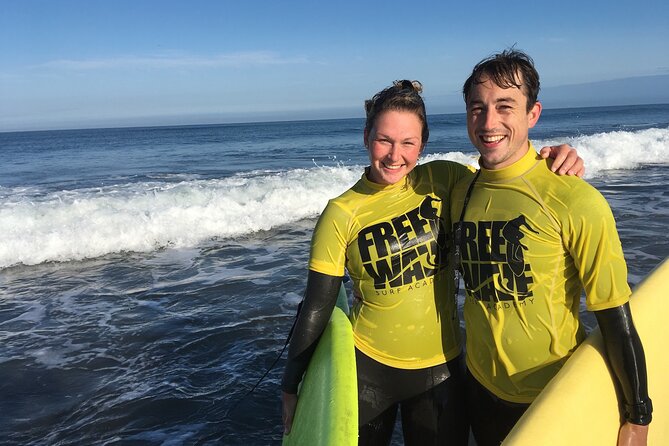
Cornwall’s weather can change quickly. That is part of the fun, but it also means you cannot control the quality of the surf. One group had poor weather and still enjoyed the lesson, helped by the instructor’s attitude and the warmth of the wetsuits.
Flat waves are a different issue. If the sea does not offer useful surf, the session may need to change. Freewave has offered alternative arrangements, including a coasteering experience in one case, but you should not assume that coasteering is included in this surfing booking.
The formal policy is clear: if poor weather causes cancellation, you can choose another date or receive a full refund. The activity also requires a minimum number of participants, so a cancellation for that reason brings the same choice of a new date, another experience, or a full refund.
You can cancel for a full refund if you do so at least 24 hours before the start time. Inside that window, payment is not refunded and changes are not accepted. Since the experience is weather-dependent, booking early in your Bude stay gives you more room to move the session if conditions turn poor.
Is $62.50 good value?
At $62.50 per person, this is not the cheapest way to spend two hours at the beach. It is fair value if you are new to surfing and want instruction, equipment, safety guidance, and a small group in one package.
Buying or renting a board without instruction may cost less, but it also leaves you to work out the basics yourself. A first lesson helps you avoid wasting the best part of a beach day lying on the board in the wrong place or trying to stand at the wrong moment.
The value is strongest for families and small groups. Children and teenagers can receive direct help, and adults do not have to stand on the sand wondering what to do next. The cap of six is especially useful here.
The price is less attractive if you already surf confidently. This is a taster lesson, so experienced surfers may find the instruction too basic. It also may not suit you if you want a guaranteed long ride, private coaching, or a full progression course.
The 100 percent recommendation rate and five-star overall score point to a consistently well-liked experience, but I would still judge the price against your goals. You are paying for a well-managed first step, not a guaranteed perfect wave.
Who should book this lesson?
I would choose this lesson if you are:
- A complete beginner who wants a friendly introduction
- An adult who has always wanted to try surfing
- A family with children or teenagers
- A small group that wants to learn together
- Someone who has surfed before but wants to refresh the basics
- A visitor with only two hours to spare
The age range shown in the feedback is encouraging. Children aged nine and 11 managed to take part, and teenagers also enjoyed the small-group format. The official requirement is a moderate fitness level, so you should be ready for active time in the water.
I would think twice if you dislike cold water, have very limited mobility, or need a fully predictable outdoor activity. The sea decides the final conditions, and the lesson may be moved if the weather is unsuitable.
Practical tips for a smoother session
Read every pre-arrival message. The instructions include useful local advice, and the car park may fill on warmer days.
Arrive early enough to find the meeting point and deal with parking without rushing. The marked Freewave van is easy to identify at the beach, according to the practical arrival guidance shared by participants.
Choose the session time that matches your energy. A morning class can leave your afternoon open, while an afternoon class may work better if you want a slower start. Both morning and afternoon options are available.
Keep your expectations modest. Your first success might be standing for a second, steering a little, or simply catching a wave without falling immediately. Those small steps are the real purpose of a taster lesson.
If you are booking for children, let them know that falling is normal. The instructors can help them choose suitable waves, but the child still needs to listen, paddle, and try again.
Should you book the Freewave taster lesson?
Yes, if you want a well-organized first taste of surfing at Bude’s Widemouth Bay. I like the small groups, warm equipment, simple two-hour structure, and strong attention to safety. The teaching also appears adaptable, with instructors such as Marco and Reuben helping both nervous beginners and energetic children make progress.
Book it early in your Cornwall stay, especially if your schedule is tight. That gives you time to move the session if the weather fails you. If you already surf or want advanced coaching, spend your money on a longer or more specialized lesson instead.
For everyone else, $62.50 buys a useful introduction, a chance to stand on a board, and a lively way to meet the north Cornwall surf. Just remember that the Atlantic gets the final vote.
FAQ
Where does the surfing lesson start?
The lesson starts at Freewave Surf Academy, Widemouth Bay, Bude, Cornwall, EX23 0AD, UK.
Where does the experience finish?
The activity ends back at the meeting point.
How long does the lesson last?
The lesson lasts approximately two hours.
What equipment is provided?
A suitably sized wetsuit and surfboard are provided for the lesson.
Is the lesson held in English?
Yes. The experience is offered in English.
How many people can join the lesson?
The activity has a maximum group size of six participants.
Are morning and afternoon sessions available?
Yes. You can choose between morning and afternoon sessions.
What happens if poor weather cancels the lesson?
You will be offered a different date or a full refund if the experience is canceled because of poor weather.
Recently added around the UK
- Cairngorms & Whisky Day Tour from Inverness Including Admission★ 5.0 · 55 reviews
- PRIVATE HIRE 45 min Speedboat Tour – Embankment/Westminster Pier★ 5.0 · 55 reviews
- From Edinburgh: Islay and The Whisky Coast 4-Day Tour★ 4.9 · 55 reviews
- Fantastic Creatures of Edinburgh, and where to find them!★ 4.5 · 55 reviews
- E-bike excursion exploring the Purbecks★ 5.0 · 55 reviews
- ‘A Wee Pedal’s’ Family Friendly Cycle Tour to Edinburgh’s Coast★ 5.0 · 55 reviews
- Private Tour of London’s Historic Pubs★ 5.0 · 55 reviews
- From London: Glastonbury and Cheddar Gorge Guided Day Trip★ 4.8 · 55 reviews
Workshops, compared.
Traditional English Scone Making and Tea Workshop
Read our review →
Chocolate Bar Making Workshop at York Cocoa Works
Read our review →
East End Street Art Tour and Spray Painting Workshop
Read our review →London Traditional English Scone Making and Tea Workshop
Read our review →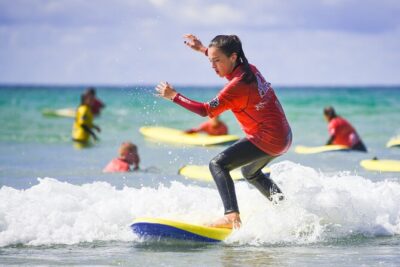
Browse the lists this tour appears in