
Reviewed · YORK TOURS
The Best of York on Foot in a Small Group
York reveals its past at street level. This 90-minute walking tour links Roman remains, medieval lanes, ruined abbey walls, and York Minster in one compact route. I like the small group limit of eight, which makes it easier to hear the guide and ask questions. I also like the multimedia pictures on the guides’ iPads, especially when old ruins need a little help from the present day. The main limitation is clear: this is an outdoor introduction, not a ticketed visit inside York Minster or any museum.
The route works especially well if you have only one full day in York. Guides such as Alfred and Sarah are praised for bringing the city’s many eras together rather than treating each building as an isolated sight. At $27.74 per person, the tour offers a useful first look, though you will need to budget separately if you want to enter the cathedral or explore museums afterward.
In This Review
- Key points before you book
- Why this short York walk works
- St. Mary’s Abbey: a powerful opening among the ruins
- Museum Gardens: where Roman York begins
- York Minster: the great exterior view
- Stonegate and the snickelways
- The Shambles: a memorable finish
- The guides make the difference
- Pace, group size, and the one-day visitor
- What the $27.74 price really buys
- Booking timing and cancellation
- Who should choose this York experience?
- Should you book The Best of York on Foot?
- FAQ
- How long does The Best of York on Foot tour last?
- How many people can join the tour?
- Is York Minster admission included?
- Does the tour include museum admission?
- What language is the tour offered in?
- Where does the tour finish?
- Can I cancel for a full refund?
Key points before you book
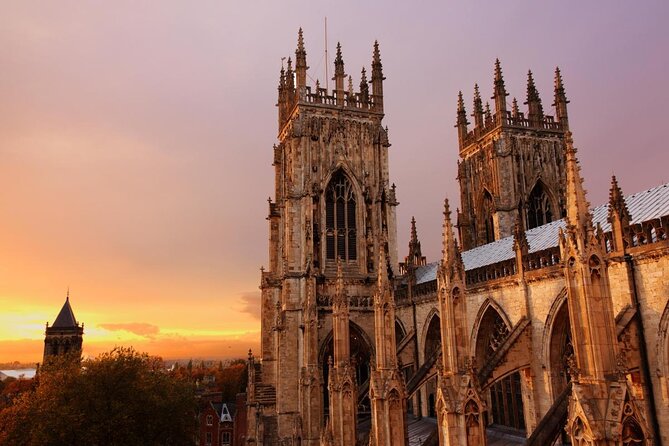
- Roman York appears in the Museum Gardens: You see the remains of the fortress linked with the city’s earliest foundations.
- The small group is a real advantage: The usual maximum is eight people, creating space for questions and personal attention.
- York Minster is viewed from outside: The walk explains the cathedral’s importance, but admission to the interior is not included.
- The route ends beside the Shambles: You finish at Whip-Ma-Whop-Ma-Gate, right in the center of town.
- Guides use pictures as well as words: iPad illustrations help you understand buildings and ruins as they once looked.
- It covers a lot without becoming a marathon: The walk lasts about an hour and a half and includes five main stops.
Why this short York walk works
York can be confusing at first. Its streets carry Roman, medieval, religious, and later layers, often within a few minutes of one another. You may see a church wall, a Roman remnant, a timber-framed lane, and the soaring Minster almost at once. That is exciting, but it is also easy to miss the connections if you simply wander with a map.
This tour gives you a clear framework. You move through several important places while the guide explains how the city changed over time and why so much of its older fabric survived. The route is short enough to fit before lunch, after arriving by train, or at the start of a one-day visit.
I especially value the way the guides connect buildings to a larger story. Alfred is frequently praised for his storytelling and enthusiasm, while Sarah is noted for her clear explanations, personal communication, and useful suggestions for other things to do. Charlotte is also described as adapting the walk to the interests of the group. That flexibility matters in a group of eight, where questions do not have to be rushed.
The walk is not designed as a deep architectural study or a specialist Roman tour. Instead, you get a well-paced orientation to central York. If you want a broad understanding before exploring on your own, this is the right scale.
A few more trips worth a look before you book
- Mad Alice’s The Bloody Tour of York -Best Tour Award Europe
★ 5.0 · 2,749 reviews - York: Daytime Sightseeing Boat Cruise with Live Commentary
★ 4.2 · 2,618 reviews - Comedy Horror Show: York Ghost Bus Tour
★ 4.4 · 2,496 reviews
St. Mary’s Abbey: a powerful opening among the ruins
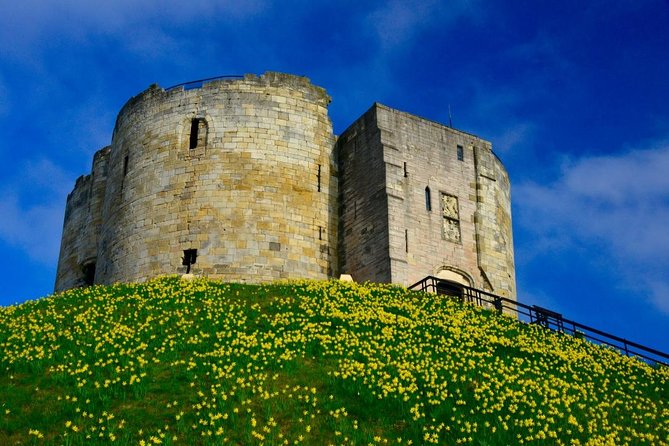
The first stop is St. Mary’s Abbey, the remains of what was the largest abbey in northern England. The scale of the ruins gives the tour an immediate sense of importance. This is not a quick look at a stray stone wall. You are introduced to a major religious foundation whose surviving remains help explain York’s medieval influence.
The stop lasts about 10 minutes and has no admission charge. That makes it an efficient beginning, since you can focus on the setting and the explanation rather than dealing with tickets.
Here, the guide’s visual material can be especially useful. Ruins often demand imagination. A picture on an iPad can help you picture the complete building, making the remaining arches and walls easier to read. The guides also use the physical site as an illustration, pointing out how the remains fit into the modern city.
You should expect a stop rather than a full exploration of the abbey grounds. Ten minutes is enough for an introduction and some photographs, but not for a long, quiet wander. If you are drawn to religious architecture, you may want to return later with more time.
Museum Gardens: where Roman York begins
From St. Mary’s Abbey, the walk continues to Museum Gardens, a Victorian botanic garden containing the standing remains of the Roman fortress. This is one of the tour’s most useful historical links because it takes you back to the place where York began.
The setting also helps explain why York feels so layered. The garden is not simply an attractive green space. It contains visible evidence of the Roman settlement within a later Victorian setting, with the abbey ruins nearby. In just a short distance, you encounter several periods without needing to travel across the city.
Again, the stop is around 10 minutes and free to enter. The guide’s task here is to make the Roman remains meaningful rather than letting them become background scenery. A good explanation can show you what the fortress meant to the city and why its position mattered.
This stop may appeal most to you if you enjoy seeing history in place rather than only inside a museum case. The drawback is that the tour cannot spend long on every period. You get the Roman foundation as part of the city’s larger story, not a full account of Roman York.
York Minster: the great exterior view
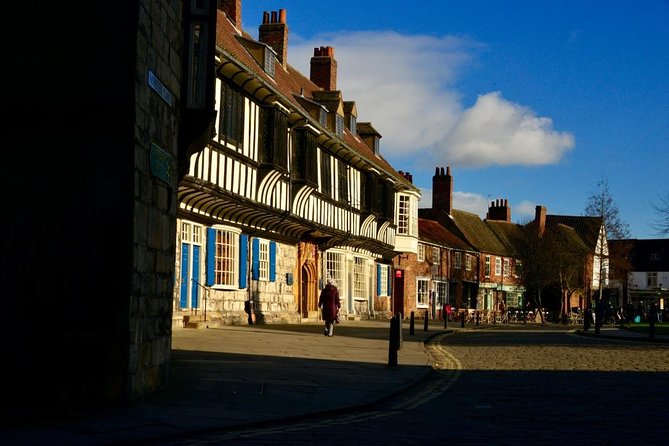
York Minster is the route’s grandest landmark. It is described as the largest medieval Gothic cathedral in northern Europe, and even an exterior explanation gives you plenty to take in. The cathedral’s size and detail provide a strong contrast to the smaller lanes and fragments encountered elsewhere.
The tour spends about 10 minutes here. That is enough for an introduction to the building and its place in York, but the admission fee is not included. The walk stays outdoors, so you should not book it expecting entry to the cathedral.
This distinction is important when comparing the price with other York activities. At $27.74, you are paying for a guided overview of the city, not a cathedral ticket. If the Minster is your main reason for visiting York, plan a separate visit and allow extra time for the interior.
I like the way this stop fits into the route. The Minster is not treated as the entire story of York. It becomes one major chapter among several, alongside Roman remains, abbey ruins, and medieval streets. That broader view helps you understand why the city feels older than any single building.
A different sort of outing around York:
- Ghost Bus Tour of York
★ 4.5 · 2,404 reviews - Shadows of York: Ghost Walk and Horrible History.
★ 5.0 · 1,403 reviews - Private Historical Walking Tour of York
★ 5.0 · 1,324 reviews - Daytime Sightseeing Boat Cruise in York
★ 4.5 · 1,256 reviews
Stonegate and the snickelways
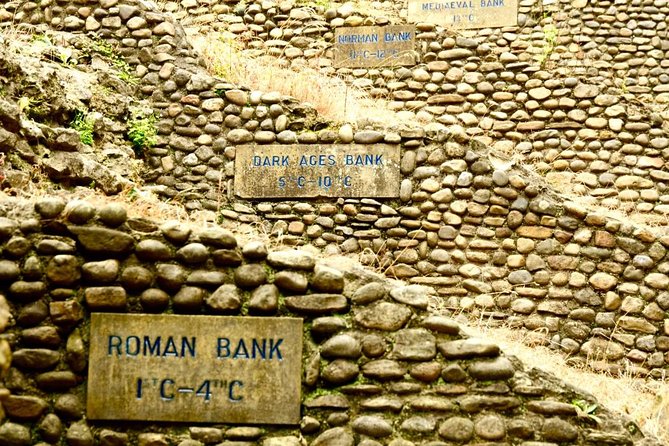
Stonegate brings you into one of York’s most atmospheric medieval areas. The route explores the narrow shortcuts known as snickelways, a local term for the small passages and lanes that cut through the old city.
This is where the walk becomes less about one famous monument and more about how people moved through York. The lanes can be easy to miss when you are exploring alone, especially when the most obvious route is crowded or focused on the main street. A local guide can point out the connections and explain how these shortcuts fit into the older street plan.
The stop lasts about 10 minutes and is free. You will have opportunities for photographs, but the real value is learning to look down side lanes and through openings you might otherwise ignore.
The route is still a walking tour through an active city center. Passageways can be narrow, and the group may need to pause so everyone can hear. The small size helps here. A group capped at eight is easier to gather in a confined space than a large tour party.
The Shambles: a memorable finish

The walk ends at the Shambles, one of York’s best-preserved medieval streets and one of the city’s most famous sights. Its close-set historic buildings and narrow roadway make it a natural finale. The street is also widely associated with the inspiration for Diagon Alley, which adds a modern popular-culture connection to its medieval character.
The tour ends at Whip-Ma-Whop-Ma-Gate, at the end of the Shambles. That is a useful finish because you are left in the center of town, close to shops, food, and more sightseeing. You can continue exploring immediately rather than finding your way back to a distant starting point.
Do not expect the Shambles stop to feel like a private visit. It is a well-known street, and the tour takes place in the public center. The guide’s contribution is helping you notice the details and understand the street’s place in York’s development.
For many people, this will be the most instantly recognizable part of the walk. I think it works better after the earlier stops, though. By the time you reach the Shambles, you have seen enough of York’s past to understand that this is not an isolated medieval display. It belongs to a city with Roman foundations and centuries of change around it.
The guides make the difference
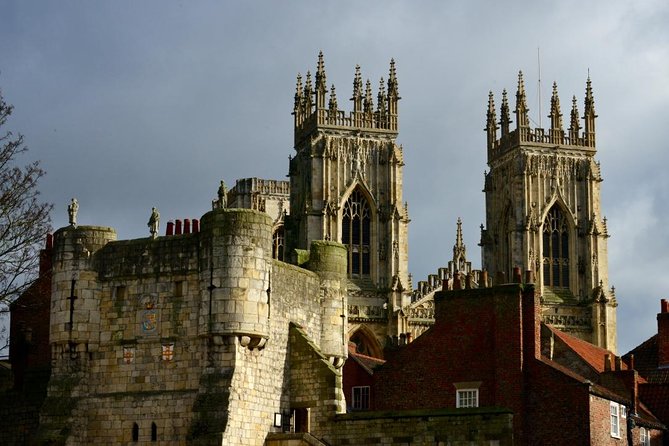
A short city walk rises or falls on the guide. The strongest feedback for this experience centers on the guides’ storytelling, warmth, and ability to answer questions.
Alfred is repeatedly praised for making York’s past entertaining and easy to follow. He is also noted for learning everyone’s names, which says something about the tone of the experience. Rather than simply speaking at a crowd, he aims to make the walk feel like a shared conversation.
Sarah is praised for her clear historical background and for tailoring the experience to the people present. She has also offered suggestions for meals, further activities, and even reading connected with York. That kind of extra advice can be valuable if your visit is brief and you need help deciding what to do next.
Charlotte is described as accommodating and attentive to individual interests. Ferah also receives praise for being personable and well informed. Since guides can vary, your experience will depend partly on who leads your departure, but the repeated pattern is encouraging: enthusiastic local presenters who enjoy explaining their city.
The use of iPads adds something practical. Images can show how older buildings and ruins once appeared, helping you make sense of what remains. This is more useful than a stream of dates, especially for younger participants or anyone who finds architectural history hard to picture.
Pace, group size, and the one-day visitor
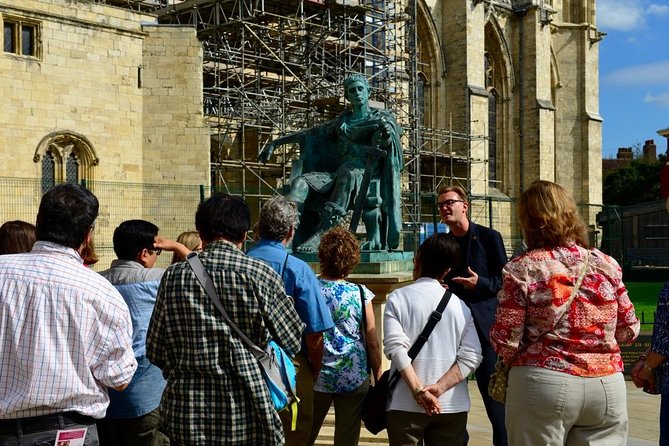
The walk lasts about 90 minutes and follows an easy central route in the sense that it is a sightseeing walk rather than a strenuous hike. Still, you should be comfortable being on your feet and moving between stops.
The group is capped at eight people. One piece of feedback describes a group of 10 being accommodated after a train delay, but the stated limit for the activity is eight. That small size is one of the strongest reasons to choose this tour over a large city walk. You are more likely to hear the guide, ask a question, and receive an answer that relates to your interests.
The route suits many ages, though very young children may not gain much from a concentrated history talk. Teenagers, adults, and older children who can follow a guided explanation are more likely to enjoy it. The tour is also suitable for most participants, and service animals are allowed.
The meeting point is in York at YO1 7DS, and the walk finishes at Whip-Ma-Whop-Ma-Gate, YO1. It is near public transportation, but the supplied details do not identify a specific station or bus stop. You will receive confirmation and meeting instructions when booking, and Sarah’s practice of contacting participants on the morning helps reduce the chance of starting in the wrong place.
What the $27.74 price really buys
At $27.74 per person, this is not the cheapest way to spend 90 minutes in York, since you can walk through the city center for free. The value comes from the interpretation: someone organizes the route, identifies what matters, explains the connections, and answers questions as you go.
You also receive a complimentary map of York. That is a modest inclusion, but it can help you continue independently after the tour. The walk ends in a useful location, so you can use the map to plan your next stop without retracing the route.
The price looks strongest for a first visit, especially if you have only one full day. A good orientation can prevent you from spending half your morning wandering between sights without understanding what you are seeing. It is also useful for people who prefer a personal guide but do not want the cost of a private tour.
The value is weaker if you want interior access. Entrance fees are excluded, and the tour does not include museums or York Minster. Think of this as a compact guided introduction, then add the paid sights that interest you most.
Booking timing and cancellation
The experience is booked, on average, 33 days ahead, so reserving early is sensible if your dates are fixed. The small capacity means fewer places than on a large group walk.
Free cancellation is available up to 24 hours before the start time for a full refund. Cancellations or changes made less than 24 hours before the start are not accepted for a refund, and the cut-off follows local time.
Who should choose this York experience?
I would choose this tour if you are visiting York for the first time, have limited time, or want a strong introduction before exploring independently. It is also a good fit if you enjoy local stories, visible architecture, and a guide who can respond to questions.
It may not suit you if you want to spend a long time inside York Minster, browse museum collections, or study one period in detail. You will need separate tickets and extra time for those interests.
Families can make it work, especially with older children and teenagers. The supplied feedback includes a moody teenager who enjoyed the experience, which is a useful sign for parents. Very young children may find 90 minutes of historical explanation demanding.
Should you book The Best of York on Foot?
Book it if you want a personal, well-paced introduction to York’s main layers. The combination of Roman remains, St. Mary’s Abbey, York Minster, Stonegate, and the Shambles gives you a sound first map of the city. Alfred, Sarah, Charlotte, and the other guides are praised for enthusiasm, clear storytelling, and attention to the people in the group.
Skip it if your priority is going inside the cathedral or spending unhurried time at museums. For everyone else, $27.74 is a fair price for a compact orientation that can make the rest of your York visit easier and more rewarding.
FAQ
How long does The Best of York on Foot tour last?
The tour lasts approximately 1 hour and 30 minutes.
How many people can join the tour?
The activity has a maximum group size of eight travelers.
Is York Minster admission included?
No. The tour views York Minster from outside, and admission to the cathedral is not included.
Does the tour include museum admission?
No. Museums and other entrance fees are not included because the experience takes place outdoors.
What language is the tour offered in?
The tour is offered in English.
Where does the tour finish?
The walk ends at Whip-Ma-Whop-Ma-Gate in York, at the end of the Shambles.
Can I cancel for a full refund?
Yes. You can cancel at least 24 hours before the experience starts for a full refund. Changes or cancellations made less than 24 hours before the start are not accepted for a refund.
Recently added around York
- York: Wizard Walk of York Tour – Magic, Comedy & Family Fun★ 4.8 · 57 reviews
- York: Hop-on Hop-off Sightseeing Bus Tour★ 4.6 · 61 reviews
- Private Viking Walk of York★ 5.0 · 64 reviews
- York: “All Creatures Great and Small” Yorkshire Dales Tour★ 4.9 · 65 reviews
- Historical Pub Walking Tour in York★ 5.0 · 67 reviews
- All Creatures Great & Small tour from York★ 5.0 · 71 reviews
- Dark Tales of York. Private ghost tours.★ 5.0 · 72 reviews
- Small group Tasting Tour of York★ 5.0 · 74 reviews
York Tours, compared.

Mad Alice’s The Bloody Tour of York -Best Tour Award Europe
Read our review →
Daytime Sightseeing Boat Cruise with Live Commentary
Read our review →

Shadows of York: Ghost Walk and Horrible History.
Read our review →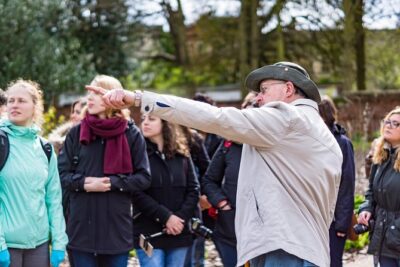


Browse the lists this tour appears in