
Reviewed · FOOD & DRINK
Twinings 2-Hour Tea Tasting Masterclass in London
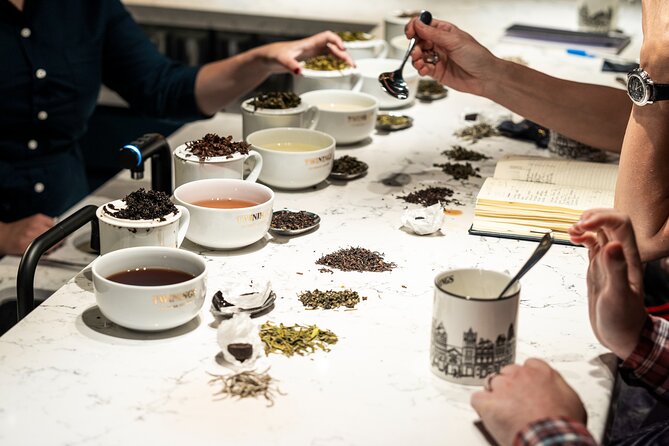
Tea tells London’s story. This two-hour Twinings masterclass at 216 Strand combines tea history, production, and guided tasting in a way that feels more useful than a quick shop visit. I especially like the chance to sample all six main tea categories, and I like the small-group format, which allows plenty of questions. The main consideration is simple: at $69.45 per person, this is a serious tasting class, not a cheap cup of tea.
The setting adds some character, with the class held in a clean, stylish basement bar connected with the Twinings experience. Guides including Alessandra, Liam, Rachel, Rosie, and Angelo have been praised for making the lesson lively and approachable. Book at least a few weeks ahead if your dates are fixed, since this experience averages 28 days of advance booking.
In This Review
- Key points to know before booking
- What happens at 216 Strand
- Tea’s journey from bud to cup
- Six cups, six different tea experiences
- The instructors make or break the lesson
- Is $69.45 good value?
- Who will enjoy this most?
- Practical details for a smooth visit
- The main strengths and limitations
- Should you book the Twinings tea masterclass?
- FAQ
- Where does the Twinings tea tasting take place?
- How long does the masterclass last?
- Where does the class finish?
- How many people can join the class?
- Which teas are included in the tasting?
- Is the experience offered in English?
- Is a mobile ticket available?
- Are service animals allowed?
- What is the cancellation policy?
Key points to know before booking
- Six tea categories in one sitting: Taste white, yellow, green, oolong, black, and Pu’erh teas.
- A tiny class setting: The stated maximum is five people, though one account described a group of six.
- More than a tasting: You learn how tea grows, is processed, reached Britain, and is assessed by professionals.
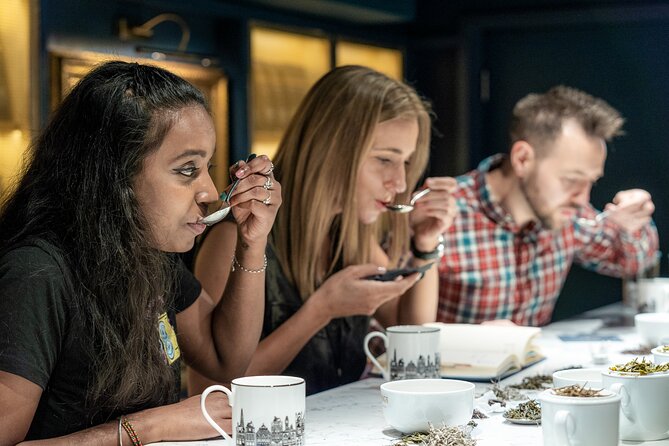
- A hands-on sensory lesson: You smell, taste, and slurp tea while considering appearance, aroma, flavor, mouthfeel, and aftertaste.
- Strong teaching is central: Alessandra, Liam, Rachel, Rosie, and Angelo are all praised for warmth, humor, and clear explanations.
- A useful London location: The class begins and ends at 216 Strand, close to public transport and easy to pair with central London sightseeing.
What happens at 216 Strand
The experience begins at 216 Strand, Temple, London WC2R 1AP. That address matters because Twinings is not an isolated countryside tea farm or a formal afternoon tea hotel. You are entering a London tea institution in the middle of a central sightseeing day.
The exact room setup can vary, but one account places the class in a basement at a smart, clean bar. That gives the lesson a more intimate feel than a large demonstration room. The group is advertised as no more than five people, although a class described by one participant had six. Either way, this is designed to be small enough for conversation.
I would arrive with your questions ready. The class is built around interaction, and the best value comes from asking why one tea tastes grassy, smoky, floral, malty, or earthy. A larger group could make that harder, but the small format should give you a fair chance to speak with the instructor.
The class ends back at the same meeting point. That makes planning easy. You can follow it with a walk along the Strand, continue toward Covent Garden, or stay near the shop for tea shopping while the lesson is fresh in your mind.
More Food Tours in London
- London Bridge & Borough Market Food Tour with 7 Authentic Dishes
★ 5.0 · 1,972 reviews - London Foodie Adventure:More than 10 dishes with Sherpa Food Tour
★ 5.0 · 932 reviews - Eating London: Twilight Soho VIP Food & Drinks Tour
★ 5.0 · 590 reviews
Tea’s journey from bud to cup
The first part of the class explains where tea comes from and how it moves from plant to finished drink. You learn about the tea plant, its buds, and the stages that shape the final cup.
This is where the class separates tea categories in a useful way. White, yellow, green, oolong, black, and Pu’erh are not simply six unrelated flavors. They reflect different approaches to production and handling. The lesson connects those methods to the color, aroma, taste, and texture you experience later.
The information is aimed at ordinary tea drinkers, not just industry specialists. Several instructors are praised for explaining complicated subjects in an easy, funny way. Rosie, in particular, is described as cheerful and interactive, while Liam is praised for keeping the class moving without dull patches. That teaching style matters because tea production can become a dry lecture if it is presented as a list of technical terms.
You also learn how tea arrived in Britain and how it became part of British culture. This gives the tasting a local focus. You are not simply trying imported leaves in a London room. You are looking at how a drink from distant growing regions became tied to British daily life and commercial history.
The class also covers Twinings itself. One participant arrived knowing very little about the brand and left with a clearer understanding of its background and the way tea quality is considered. If you already buy Twinings regularly, this section may add useful context. If you do not, it still helps explain why a brand shop would devote two hours to tea education.
Six cups, six different tea experiences
The tasting includes the six recognized categories listed for the class:
- White tea
- Yellow tea
- Green tea
- Oolong tea
- Black tea
- Pu’erh tea
The order of tasting is not stated, so I would not expect a fixed sequence beyond the instructor’s plan. What is clear is that the tasting is guided rather than served as six anonymous cups.
You are asked to look at the tea, smell it, taste it, and describe what you notice. The lesson offers vocabulary for discussing appearance, aroma, flavor, mouthfeel, and aftertaste. That turns a casual drink into a practical sensory exercise.
You also learn how professionals slurp. It may feel slightly comic at first, but the method helps move the tea across your palate and brings air into the tasting process. This is one of the class’s more memorable hands-on details, especially if you normally drink tea quickly without thinking about it.
The six styles offer a useful range. White tea can introduce a lighter profile, while green tea shows a different side of the leaf. Oolong sits between familiar categories in a way that can be new to many drinkers. Black tea may feel more familiar in Britain, while Pu’erh provides an earthier and less routine finish. Yellow tea is also less commonly encountered in everyday tea bags.
The point is not to declare one style the winner. It is to notice how production changes the cup. You leave better able to describe what you like, which is especially helpful when buying loose-leaf tea later.
The instructors make or break the lesson
A tasting class needs good tea, but the teacher determines whether two hours feels generous or slow. Here, the teaching is one of the strongest parts of the experience.
Alessandra is praised for answering questions with confidence and for giving the same level of attention even when only one person had booked. That is a good sign for solo visitors or anyone worried about being lost in a group setting.
Liam is described as engaging, funny, and enthusiastic about the subject. Rachel receives similar praise for being personable and clear. Rosie is singled out for her cheerful style, while Angelo is credited with explaining the tea trade and its effect on British culture in a way that made the sensory side more enjoyable.
These names matter because instructors may vary by date. You should not assume a particular teacher will lead your session unless the booking details confirm it. Still, the range of positive comments suggests that the experience depends on a consistent teaching approach rather than one lucky guide.
The best instructors here seem to avoid showing off. They explain the subject in plain language, invite you to describe what you taste, and add humor where the material might otherwise become heavy. That suits beginners, while experienced tea drinkers can use the question time to ask more specific things.
A different sort of outing around London:
- London: The London Eye Entry Ticket
★ 4.6 · 35,875 reviews - From London: Harry Potter Warner Bros Studio Tour
★ 4.7 · 26,588 reviews - London: Westminster to Greenwich River Thames Cruise
★ 4.5 · 22,836 reviews - Magical London: Harry Potter Guided Walking Tour
★ 4.7 · 22,044 reviews
Is $69.45 good value?
At $69.45 per person, the class costs more than a standard London tea break. You are paying for instruction, six tastings, a small group, a central location, and access to a structured lesson rather than just a drink and a pastry.
The value is strongest if you want to understand tea. You learn a framework you can reuse: inspect the leaf, consider the aroma, taste carefully, and think about mouthfeel and finish. That knowledge can change how you shop and brew at home.
The price is less appealing if you mainly want afternoon tea, a souvenir, or a quick Twinings visit. You could spend far less on tea in London if all you want is refreshment. This is a class, and the price makes more sense when you treat it as a short food-and-drink course.
One useful extra is a product discount after the class, as described in the experience information. That may help if you plan to buy tea afterward, though the exact discount terms are not provided. One participant also wished for more shopping time after learning what to look for. If shopping matters to you, allow extra time after the lesson rather than expecting the class itself to include a long retail session.
Who will enjoy this most?
I would recommend this to tea drinkers who want more than familiar English breakfast tea. It is also a good choice for curious beginners because the teaching starts with basic questions: where tea comes from, how it is made, and how Britain adopted it.
The class works well for a mixed-age group. One family described it as their favorite London activity across three generations, which makes sense: the tasting is seated, social, and easy to follow without requiring a high level of fitness or specialist knowledge.
It can also work for a birthday gift or a different kind of date. One participant bought the class for a fiancé’s birthday, and the recipient enjoyed trying teas they had never heard of. The two-hour length is practical too. It is long enough to cover the subject properly, but short enough to fit into a busy London itinerary.
You do not need to be a committed tea drinker. Some of the appeal comes from learning how a major British habit developed. Still, someone who dislikes tasting unfamiliar drinks may find the six-cup format less rewarding.
Practical details for a smooth visit
The experience is offered in English and includes a mobile ticket. Confirmation arrives when you book, so keep the ticket available on your phone.
The start and end point is 216 Strand, Temple, London WC2R 1AP. The location is near public transportation, but the supplied details do not specify which stations or lines are most convenient. Check your route on the day and allow enough time to find the entrance.
The advertised maximum is five people. Because one description records a group of six, I would treat the class as intimate but not rely on an exact headcount. A small class is valuable here because tasting vocabulary can feel awkward when everyone is expected to speak. You get more room to ask questions and compare impressions.
Service animals are allowed. The activity ends at the meeting point, and free cancellation is available if you cancel at least 24 hours before the local start time. Cancellations or changes inside that window are not accepted for a refund.
The main strengths and limitations
The strongest feature is the combination of instruction and tasting. You are not handed six cups with a few brand notes. You learn how tea is grown and processed, then use your senses to assess it.
The teachers are another major strength. The repeated praise for Alessandra, Liam, Rachel, Rosie, and Angelo points to a class that is warm rather than stiff. Humor matters when you are being asked to sniff, slurp, and describe a drink in front of strangers.
The small setting is also important. It makes the class feel more personal and gives you a better chance to ask questions. The downside is the price. At nearly $70, you should want education as much as refreshment.
The other limitation is that the exact atmosphere may depend on the day’s guide and group. One account describes six people rather than the stated maximum of five, and the available reviews describe both solo and family bookings. That variety is not a problem, but it means you cannot predict the precise social feel.
Should you book the Twinings tea masterclass?
Book it if you want a focused, unusual London activity with real instruction. The 4.9 rating from 105 reviews and 98 percent recommendation rate fit the experience’s strongest qualities: clear teaching, varied tea, a friendly atmosphere, and a lesson that stays interesting for two hours.
I would especially choose it for a tea lover, a curious first-time taster, or someone seeking a thoughtful gift. I would skip it if you only want a traditional afternoon tea or a quick cup near the Strand.
For most people who enjoy learning through food and drink, this is a well-sized experience with a clear payoff. You leave with six new reference points, a better vocabulary, and a sharper sense of what is in your teacup.
FAQ
Where does the Twinings tea tasting take place?
The class starts at 216 Strand, Temple, London WC2R 1AP, UK.
How long does the masterclass last?
The experience lasts approximately two hours.
Where does the class finish?
The activity ends back at the meeting point at 216 Strand.
How many people can join the class?
The stated maximum is five travelers. One class description recorded a group of six, so the exact number may vary.
Which teas are included in the tasting?
You taste white, yellow, green, oolong, black, and Pu’erh teas.
Is the experience offered in English?
Yes. The masterclass is offered in English.
Is a mobile ticket available?
Yes. The experience includes a mobile ticket, and confirmation is received at booking.
Are service animals allowed?
Yes, service animals are allowed.
What is the cancellation policy?
You can cancel for a full refund up to 24 hours before the experience start time. Cancellations and changes made less than 24 hours before the start are not accepted for a refund.
More 2-Hour Experiences
- London: Ghastly Ghosts 2-Hour Walking Tour
★ 4.9 · 794 reviews - James Bond Shooting Locations 2-Hour Walking Tour of London
★ 4.7 · 332 reviews - 2-Hour Jack the Ripper Small Group Walking Tour in London
★ 4.5 · 160 reviews - London: 2-Hour Historic Pub Tour
★ 4.9 · 133 reviews
Recently added around London
- PRIVATE HIRE 45 min Speedboat Tour – Embankment/Westminster Pier★ 5.0 · 55 reviews
- Private Tour of London’s Historic Pubs★ 5.0 · 55 reviews
- From London: Glastonbury and Cheddar Gorge Guided Day Trip★ 4.8 · 55 reviews
- Gatwick Airport Taxi – Private Transfer to/from London★ 5.0 · 55 reviews
- London: Kew to Westminster River Thames Cruise★ 4.2 · 55 reviews
- London by Night – Tootbus Sightseeing Tour★ 3.5 · 55 reviews
- London: Tower of London After Hours Tour and Key Ceremony★ 4.8 · 56 reviews
- From London: Cotswolds Guided Trip Including Bourton-on-the-Water★ 4.5 · 56 reviews
Food & Drink, compared.

London Bridge & Borough Market Food Tour with 7 Authentic Dishes
Read our review →
Edinburgh Food Tour with Scotch, Haggis, a Secret Dish & More
Read our review →
Scotch Whisky Tasting & Stories — Bespoke Whisky Lounge
Read our review →
London Foodie Adventure:More than 10 dishes with Sherpa Food Tour
Read our review →

Eating London: Twilight Soho VIP Food & Drinks Tour
Read our review →
East London Indian Food Tour with 8+ Authentic Food Tastings
Read our review →Browse the lists this tour appears in