Reviewed · PRIVATE
Winston Churchill’s London and The Churchill War Rooms – A Private Tour.
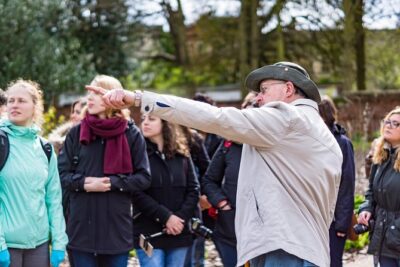
Churchill’s London is hiding in plain sight. This private walking tour connects the places where Winston Churchill lived, dressed, smoked, governed, and built his public life before ending at the original underground War Rooms. I especially like the personal guide and the way the route links ordinary streets with major events. I also like the private format, which lets you ask questions and shape the discussion around your interests.
The main drawback is clear: your guide does not remain inside the War Rooms. Richard escorts you in, gives an introduction, explains how to make the most of the museum, and then leaves you to explore on your own. The walking portion can also feel fast paced, and it lasts roughly two and a half to three hours, so comfortable shoes matter.
In This Review
- At a glance: what makes this tour different
- Starting at The Ritz and meeting Churchill’s younger self
- Savile Row, Jermyn Street, and Churchill’s expensive tastes
- The romper suit at Turnbull & Asser
- Churchill’s hats and cigars on St James’s
- Spencer House and the Churchill family story
- Marriage, Parliament, and the route to power
- Downing Street and a traditional pub
- Entering the Churchill War Rooms
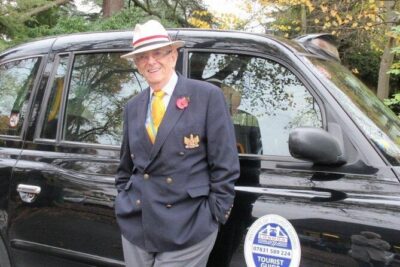
- Richard Graham’s guiding style
- Is $284.73 per person good value?
- Who should book this Churchill experience?
- Should you book it?
- FAQ
- Where does the tour begin?
- Where does the tour end?
- How long does the experience take?
- Is admission to the Churchill War Rooms included?
- Does the guide stay inside the War Rooms?
- Is this a private tour?
- Is the tour offered in English?
- Can service animals join the tour?
At a glance: what makes this tour different
- Churchill’s private London: See homes, tailors, hatters, cigar merchants, and political landmarks tied to his life.
- A guide who personalizes the walk: Richard Graham asks what you want to learn and adjusts the conversation to suit your group.
- Original wartime rooms: Enter the underground headquarters where Churchill directed Britain during the Second World War.
- A full private group: Only your party joins the tour, making questions and pacing easier.
- A useful historical lead-in: The walk gives you context before the War Rooms museum, so the bunker displays are easier to understand.
- A self-guided finish: Richard leaves you inside the War Rooms, allowing you to continue at your own pace.
Starting at The Ritz and meeting Churchill’s younger self
The tour begins outside The Ritz London on Piccadilly. From there, the story starts not with the famous wartime prime minister, but with a young Winston Churchill trying to establish himself in London.
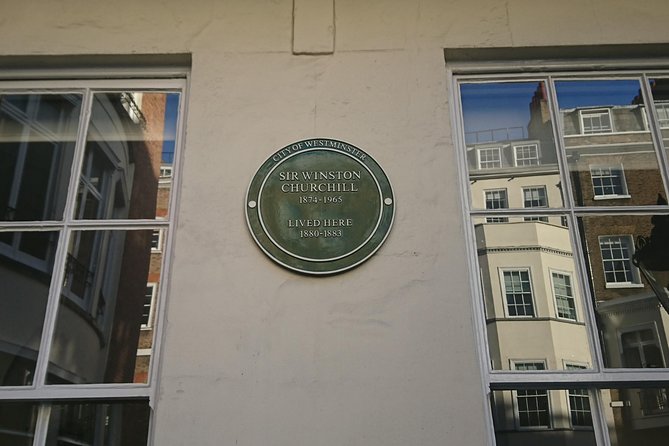
In Mayfair, you see the bachelor residence associated with Churchill and the home he later created with Clementine. This is a useful opening because it places Churchill in a social and personal setting before the familiar images of wartime speeches and cigar smoke.
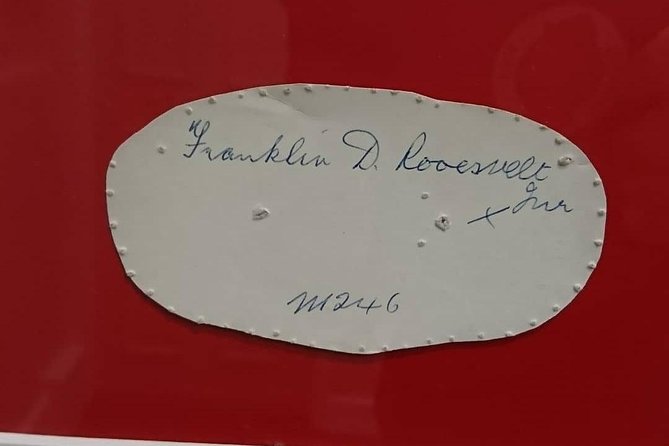
The tour also visits the Allies Statue, where Churchill and Franklin Roosevelt are shown together. It is a good photo stop and a quick reminder that Churchill’s story is tied not only to Britain, but also to the wartime partnership between Britain and the United States.
The Mayfair section takes about 20 minutes. Admission is free at this stop, and the emphasis is on explanation rather than entering private buildings.
A few more trips worth a look before you book
- London: The London Eye Entry Ticket
★ 4.6 · 35,875 reviews - From London: Harry Potter Warner Bros Studio Tour
★ 4.7 · 26,588 reviews - London: Westminster to Greenwich River Thames Cruise
★ 4.5 · 22,836 reviews
Savile Row, Jermyn Street, and Churchill’s expensive tastes
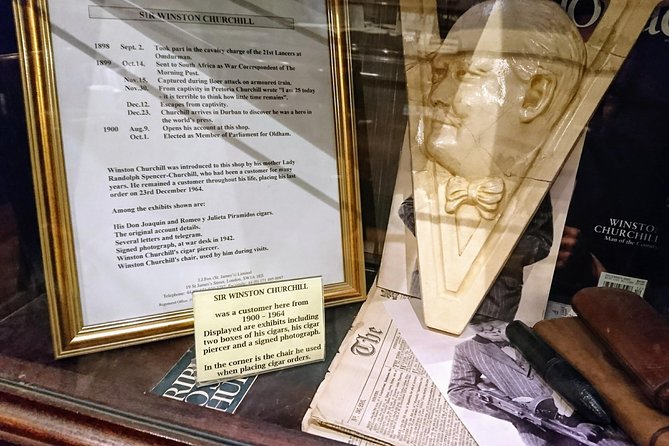
Churchill cared about clothes, and the route uses his shopping habits to show a more human side of him. At Henry Poole and Company on Savile Row, you learn about the tailor’s long connection with the Churchill family.
Henry Poole made suits for Churchill’s father, Lord Randolph Churchill, and produced many suits for Winston. The shop is also linked with Churchill’s famous pinstriped suit, seen in the well-known photograph of him holding a Tommy gun. One of the more amusing details concerns cigar stubs left in the pockets when suits returned for alterations. Churchill’s clothing was formal, but his habits were not always tidy.
The connection reaches into modern popular culture too. Henry Poole made Gary Oldman’s suits for the film The Darkest Hour. You do not receive an admission ticket here, but the exterior and the stories make the stop worthwhile for anyone interested in British style, cinema, or social history.
Jermyn Street continues the theme. This polished St James shopping street is associated with high-end men’s clothing, cologne, food, and accessories. You pass shops connected with Churchill’s preferred aftershaves and his favorite cheesemonger. The route also touches the James Bond connection, since the street is known for the clothing and scents associated with the fictional spy.
I like this section because it avoids presenting Churchill as a stone monument. His taste in clothes, hats, food, and cigars gives you a picture of a particular man with strong preferences and a large personality.
The romper suit at Turnbull & Asser
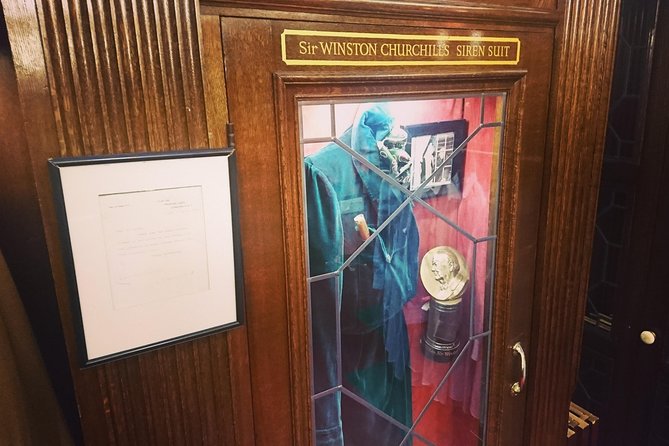
Turnbull & Asser was Churchill’s shirt maker, and the stop explains one of his most recognizable practical garments: the romper suit, also called the siren suit.
Churchill had these comfortable one-piece outfits made for use at Chartwell, his country home, and during the cold nights of air raids. The garment suited his need for comfort without giving up his preference for a distinctive appearance. It is a small detail, but it helps explain how Churchill presented himself during a period when ordinary clothing often had to serve a practical purpose.
Turnbull & Asser also has a royal connection. It was the first company to receive a Royal Warrant from Prince Charles. The stop lasts about 10 minutes and is viewed from the street rather than treated as a shopping appointment.
Churchill’s hats and cigars on St James’s
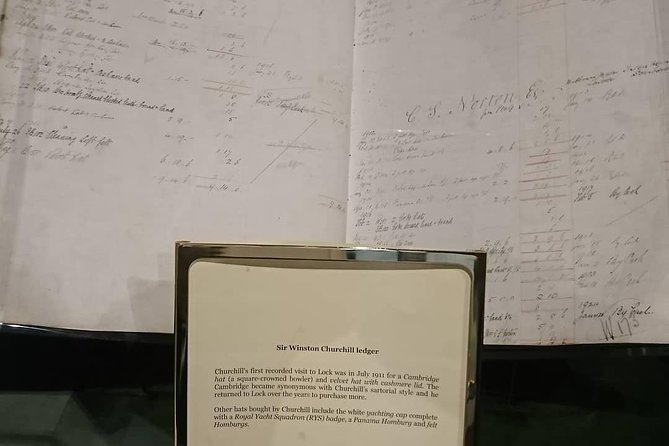
At Lock & Co. Hatters, the focus shifts to another part of Churchill’s public image. Founded in 1676, Lock & Co. is described as the world’s oldest hat shop. Churchill adopted the Cambridge and Homburg hats associated with the company as part of his trademark look.
Together with the cigar, the hats helped create an instantly recognizable silhouette. That visual identity mattered in photographs and public appearances, but the tour also shows that these were items Churchill genuinely used rather than props added later by mythmakers.
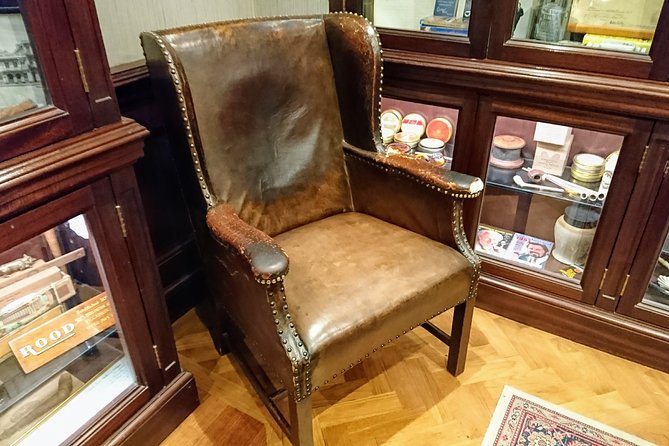
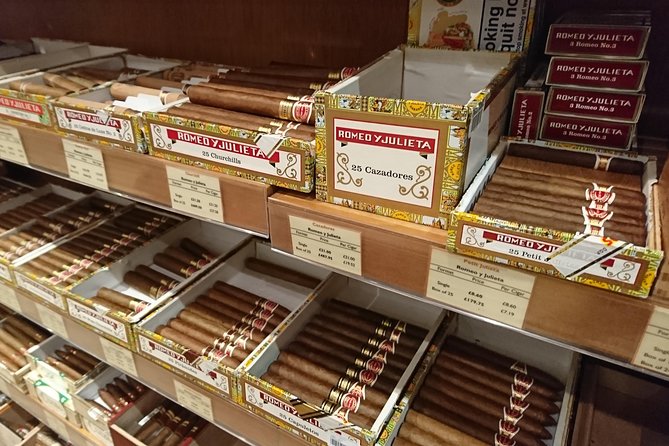
The cigar stop at James J. Fox and Robert Lewis is one of the route’s more unusual moments. Churchill favored Romeo y Julieta cigars, and at the merchant where he bought them, you can see the chair connected with him. The upstairs lounge may also allow a cigar sample, as described for the experience.
This is a particularly good stop for cigar enthusiasts, though it may be less appealing if you do not smoke. The cigar sample is not the reason to book the tour, but it adds a memorable physical link to Churchill’s daily habits.
A different sort of outing around London:
- Magical London: Harry Potter Guided Walking Tour
★ 4.7 · 22,044 reviews - London: Madame Tussauds London
★ 4.6 · 20,915 reviews - Stonehenge, Windsor Castle, and Bath from London
★ 4.5 · 18,662 reviews - London: Warner Bros. Studio Tour with Transfers
★ 4.7 · 17,586 reviews
Spencer House and the Churchill family story
At Spencer House, the guide explains Churchill’s family background and his connection to the Spencer-Churchill name. Churchill was born at Blenheim Palace in 1874, but his early London years are tied to the smaller house next door to Spencer House.
This part of the walk broadens the story beyond the Second World War. You hear about Churchill’s ancestors, his father Lord Randolph Churchill, and his relationship to the Spencer family line associated with Diana Spencer, later Princess Diana.
The stop lasts around 10 minutes. It is especially useful if you know Churchill mainly as a prime minister and wartime leader. His family connections, aristocratic background, and early London years help explain the world in which he grew up, though they do not excuse every part of his later political record.
Marriage, Parliament, and the route to power
At St Margaret’s Church beside Westminster Abbey, the guide points out where Winston Churchill married Clementine Hozier on September 12, 1908. The church was known as the parish church of the House of Commons and was used for important celebrations, memorials, and services during Churchill’s lifetime.
This is a short stop, about five minutes, but it gives the walk an important personal pause. The tour has already covered clothes, family, and social habits. Here, you see the beginning of Churchill’s long marriage and the personal partnership that remained central to his life.
Across from the Houses of Parliament, a statue of Churchill faces the building he valued so highly. This is where the guide spends more time on his political career, including the fact that Churchill declined both a peerage and a dukedom because accepting them would have prevented him, or his male descendants, from serving in the House of Commons.
The Parliament stop takes about 10 minutes, and admission is not included because the tour does not take you inside. The value here comes from the guide’s anecdotes and political context, not from an interior visit.
Downing Street and a traditional pub
At 10 Downing Street, you see the official home of the prime minister. The door Churchill walked through as prime minister in 1940 is preserved inside the Churchill War Rooms, creating a direct link between this street scene and the museum at the end.
The tour then pauses outside The Red Lion on Parliament Street. This pub has served every prime minister a drink, including Churchill. The stop reflects his fondness for tradition and alcohol without turning the subject into a simple joke. Churchill’s drinking is part of his public image, but the guide uses it as one detail in a much larger portrait.
These stops are brief, around 10 minutes each. They are also practical orientation points, bringing you closer to the War Rooms and the heart of Britain’s government.
Entering the Churchill War Rooms
The final stop is the Churchill War Rooms, the underground headquarters used by the British government during the Second World War. Churchill entered the Cabinet War Room in May 1940 and declared that this was the room from which he would direct the war.
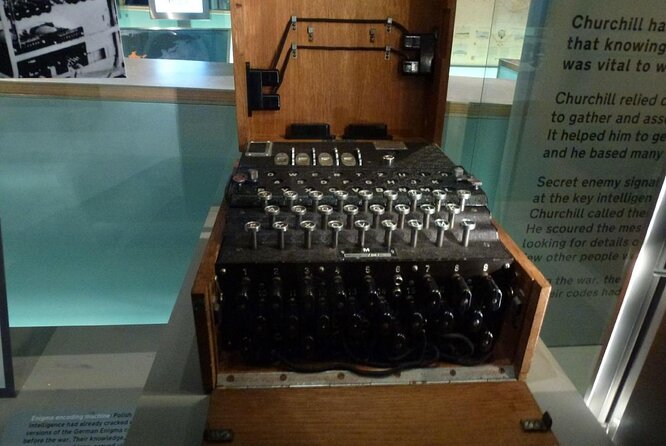
The complex was locked in 1945 and left largely as it was. Maps, charts, telephones, stationery, ashtrays, and other objects remain in place. That physical condition gives the site unusual force. You are not looking at a modern reconstruction designed to suggest wartime work. You are seeing rooms preserved after the people who used them walked away.
The former administration wing contains the Churchill Museum, which follows his life and career and displays personal belongings. This section is broader than the bunker itself, so plan to spend time with both the wartime rooms and the biographical material.
Your ticket is included. Richard escorts you through the entrance with skip-the-line access, gives you an introduction, and explains how to navigate the site. He then leaves you inside to continue independently.
That arrangement is important to understand before booking. If you want a guide beside you for every room, this is not that experience. If you prefer to explore a museum at your own speed, the arrangement works well. You can pause at maps, read displays carefully, or move on when you have had enough.
The passageways and rooms can be cramped, and the layout may feel confusing at first. If people in your group move at different speeds, agree on a meeting plan before entering. Phone communication may not work reliably inside, and there is no reentry if someone leaves before the rest of the group.
Richard Graham’s guiding style
Richard Graham receives especially strong praise for his storytelling, preparation, and command of Churchill’s life. He is described as able to answer detailed questions while also adding wider British history and useful side stories.
The best feature of a private guide is not simply the extra attention. It is the ability to adjust the route’s emphasis. Richard asks what you want to learn and where you are from, then shapes the conversation around your interests. One family also found that he adjusted the walk to suit physical limitations.
The tone appears friendly rather than formal. You get a guided history lesson, but the experience is also conversational. That matters on a route with many short stops, since the guide’s explanations connect the pieces instead of leaving you with a string of disconnected addresses.
The walk is not strenuous according to the available information, but it is long. One account describes it as a three-hour walk, while the complete experience is listed at roughly three to four hours. Allow extra time inside the War Rooms if you want to see the museum properly.
Is $284.73 per person good value?
At $284.73 per person, this is not a budget walking tour. You are paying for a private experience, a dedicated guide, and entry to the Churchill War Rooms rather than a standard group walk.
The value depends on your interest. If Churchill, British political history, or the Second World War is high on your list, the price is easier to justify because the guide turns scattered locations into one connected story. The private format also works well for families, couples, and small groups that want to ask many questions.
The cost is harder to justify if you only want a quick introduction to Churchill or mainly want to see the War Rooms. You could spend your time at the museum on your own, but you would miss the Mayfair, St James, Spencer House, Parliament, and Downing Street context.
Group discounts are available, and only your party takes part. Multiple daily start times make it easier to fit the tour into a London schedule. Confirmation is provided at booking, mobile tickets are available, and service animals are welcome.
The experience has a 5 out of 5 rating from 107 reviews, with 100 percent recommending it. That strong record matches the main strengths: Richard’s storytelling, the private format, and the useful preparation before the museum.
Who should book this Churchill experience?
I would recommend it most strongly to anyone who already has a strong interest in Churchill or wants more than a museum visit. It is also a good choice for families with teenagers, since the guide can answer questions and make the political story easier to follow.
History fans who already know the broad outline of Churchill’s life may enjoy the smaller details: the tailor stories, the hats, the cigar merchant, the family connections, and the preserved Downing Street door.
You should think twice if you dislike walking, prefer a slow pace, or expect the guide to stay with you inside the War Rooms. The tour is also less suitable for someone who wants a general London sightseeing route, since nearly every stop serves the Churchill theme.
Free cancellation is available up to 24 hours before the start time. Cancellations made less than 24 hours before the experience are not refunded, and late changes are not accepted.
Should you book it?
Book this tour if you want Churchill’s London to feel like a connected story rather than a list of famous names. The strongest part is the private walk with Richard Graham, who brings together Churchill’s family, clothes, habits, marriage, politics, and wartime leadership.
The key decision is the War Rooms format. Richard gets you inside, introduces the site, and leaves you to explore independently. For many people, that is ideal. If you need a guide beside you throughout the bunker, choose another option.
For history-minded visitors, the price buys more than entry. It buys context, conversation, and access to places you might pass without noticing. For a Churchill enthusiast, this is one of the more focused ways to understand the man before stepping into the rooms where his wartime government worked.
FAQ
Where does the tour begin?
The tour begins at The Ritz London, 150 Piccadilly, London W1J 9BR.
Where does the tour end?
The tour ends at the Churchill War Rooms on King Charles Street, London SW1A 2AQ.
How long does the experience take?
The advertised duration is approximately three to four hours. The walking portion takes roughly two and a half to three hours, followed by time at the Churchill War Rooms.
Is admission to the Churchill War Rooms included?
Yes. Entry to the Churchill War Rooms is included in the tour price.
Does the guide stay inside the War Rooms?
No. Richard escorts you into the War Rooms, provides an introduction and practical advice, then leaves you to explore the site independently.
Is this a private tour?
Yes. Only your group participates in the private tour.
Is the tour offered in English?
Yes. The tour is offered in English.
Can service animals join the tour?
Yes. Service animals are allowed.
Recently added around London
- PRIVATE HIRE 45 min Speedboat Tour – Embankment/Westminster Pier★ 5.0 · 55 reviews
- Private Tour of London’s Historic Pubs★ 5.0 · 55 reviews
- From London: Glastonbury and Cheddar Gorge Guided Day Trip★ 4.8 · 55 reviews
- London: Kew to Westminster River Thames Cruise★ 4.2 · 55 reviews
- Gatwick Airport Taxi – Private Transfer to/from London★ 5.0 · 55 reviews
- London by Night – Tootbus Sightseeing Tour★ 3.5 · 55 reviews
- London: Tower of London After Hours Tour and Key Ceremony★ 4.8 · 56 reviews
- Palaces, Parliament & Power: A Walking Tour of London’s Royal City★ 5.0 · 56 reviews
Private, compared.
The Premier Classic London: Private 4-Hour Tour in a Black Cab
Read our review →
Stonehenge Inner Circle Private Tour from London with Bath Visit
Read our review →
Tower of London Entry & Beefeater Private Audience
Read our review →