
Reviewed · OXFORD TOURS
Women and Queer Histories Tour – by Uncomfortable Oxford™
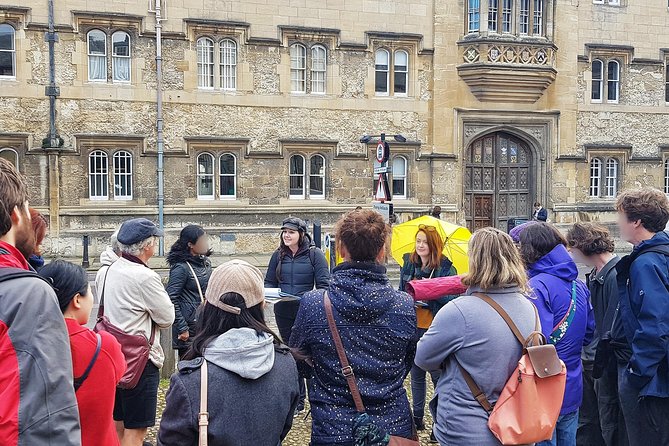
Oxford has stories beyond its famous colleges. This 90-minute walking tour examines women’s rights, queer lives, childcare, masculinity, and the policing of women through streets and buildings that most city tours pass without comment. I like its focus on personal experience, and I like that small groups of no more than 15 make room for real questions. The main consideration is that the subject matter can be challenging, not light sightseeing.
You begin at the Radcliffe Observatory Quarter and finish in central Oxford at the Clarendon Building. I also like the discussion-led style, which gives you space to consider difficult questions rather than simply receive a fixed script. Still, the tour covers seven stops in a short time, so anyone wanting a slow architectural tour or extended college visits should choose something else.
In This Review
- Key points to know before booking
- Why this Oxford walk feels different
- Starting at the old hospital site
- Somerville College and women entering the university
- St Paul’s Nursery and the practical cost of academic life
- The War Memorial Garden and Laurence Michael Dillon
- Lamb and Flag Passage: masculinity in old Oxford
- Wadham College and the many images of women
- The Clarendon Building and policing women
- The discussion format is part of the experience
- Price, timing, and practical value
- Who will appreciate this tour most?
- Final verdict: should you book it?
- FAQ
- How long does the Women and Queer Histories Tour last?
- Where does the tour begin?
- Where does the tour end?
- What subjects does the tour cover?
- How large is the tour group?
- Can I cancel for a full refund?
Key points to know before booking
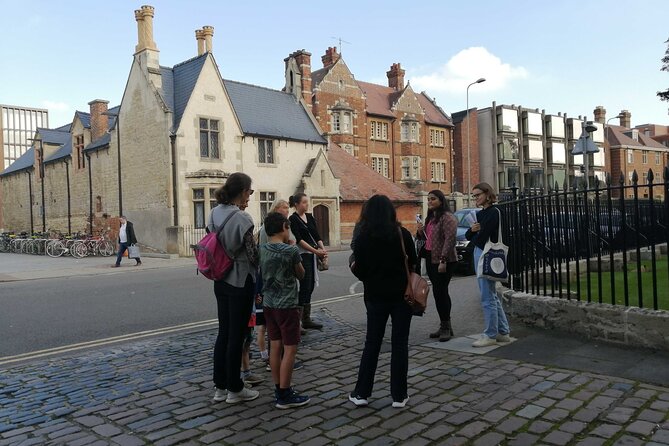
- Seven stops, one clear route: Walk from the Radcliffe Observatory Quarter to the Clarendon Building through northern and central Oxford.
- Women’s rights are central: Somerville College, St Paul’s Nursery, Wadham College, and the Clarendon Building each reveal different barriers faced by women.
- Queer history has a dedicated stop: The War Memorial Garden introduces the story of Laurence Michael Dillon and the history of trans people.
- Small groups help the conversation: The maximum group size is 15, so you have a better chance to ask questions.
- Student-led and interactive: Guides are University of Oxford students who use questions and discussion to draw people into the subject.
- Good value for curious visitors: At $27.54 per person, the price is reasonable for a focused walking tour with no admission fees at the stops.
Why this Oxford walk feels different
Traditional Oxford tours often point toward grand colleges, famous scholars, and photogenic stonework. This walk asks you to look again. Who was allowed into these institutions? Who cared for children while academics worked? Which lives were recorded, and which were left out of the buildings and official stories?
That change in viewpoint is the real appeal. You still move through attractive and historic parts of Oxford, but the architecture becomes evidence rather than decoration. A college entrance can prompt a discussion about exclusion. A nursery can reveal the practical barriers facing women in academic life. A passage associated with old Oxford becomes a place to examine masculinity in both the university and the town.
The guides are University of Oxford students, and the format depends on their ability to explain, listen, and encourage discussion. The strongest feedback emphasizes those qualities. Devika is praised for her presentation, personality, and ability to involve the whole group. Julie is described as engaging and well informed, while Olivia and Waqar are praised for making difficult subjects approachable. Cameron is noted for his energy during another Uncomfortable Oxford walk.
Guide assignments can change, so you should not book expecting one particular person. The useful point is the teaching style: friendly, prepared, and willing to let the group think aloud.
A few more trips worth a look before you book
- Oxford University Walking Tour With University Alumni Guide
★ 5.0 · 6,905 reviews - Oxford: University and City Walking Tour with Alumni Guide
★ 4.7 · 4,429 reviews - Oxford: City and University Tour, including college entry
★ 4.5 · 2,243 reviews
Starting at the old hospital site

The tour begins at the Radcliffe Observatory Quarter on Woodstock Road, at the old hospital site. This is more than a convenient meeting point. The opening discussion considers why the histories of some communities are hard to find in the built environment.
That is a smart way to begin. Before you hear individual stories, you are asked to think about what a city chooses to preserve. Buildings can survive for centuries while the people who worked, studied, lived, or struggled there disappear from public memory. The first stop gives you a set of questions that stays useful for the rest of the walk.
There is no admission charge at this stop. Because the tour starts outside, you should be prepared for normal walking-tour conditions rather than an indoor presentation. The route is near public transportation, which helps if you are arriving from elsewhere in Oxford.
Somerville College and women entering the university
Outside Somerville College, the focus shifts to women who first attended Oxford. The college is one of Oxford’s best-known women’s colleges, making it a fitting location for a conversation about the difficulties women faced when entering university life.
The value here is the contrast between Oxford’s polished image and the obstacles behind it. A women’s college may look like a permanent part of the university today, but the discussion places it in the context of resistance and limited access. You are encouraged to think about education not as an automatic right, but as something many women had to fight to obtain.
The stop lasts about 10 minutes. You will not tour the college interiors, and that matters if your main aim is to see rooms, chapels, or collections. The reward is different: the college becomes a starting point for thinking about who Oxford was built to serve.
St Paul’s Nursery and the practical cost of academic life
At St Paul’s Nursery, the group discusses access to childcare and the academic barriers connected to it. This stop is particularly effective because it moves the subject from abstract rights to everyday logistics.
Education and employment are often discussed as if determination alone is enough. Childcare changes that equation. If support is absent, expensive, or difficult to reach, academic work becomes harder to sustain. The nursery provides a place to consider how institutions can either widen access or quietly keep people out.
The tour’s attention to childcare is one of its most useful features. It adds a practical layer to the discussion of women’s rights. You are not only asked who could study, but also who could manage the work surrounding study.
This is another short stop, about 10 minutes. The pace keeps the tour moving, but it also means the guide must explain a complex issue clearly and economically. Expect an introduction to the subject rather than a long lecture.
A different sort of outing around Oxford:
- Oxford: Harry Potter Walking Tour Including New College
★ 4.6 · 1,446 reviews - 1.5-hour Oxford City and University Walking Tour
★ 4.5 · 1,383 reviews - Oxford Official University & City Tour
★ 5.0 · 1,134 reviews - City Sightseeing Oxford Hop-On Hop-Off Bus Tour
★ 4.5 · 1,042 reviews
The War Memorial Garden and Laurence Michael Dillon
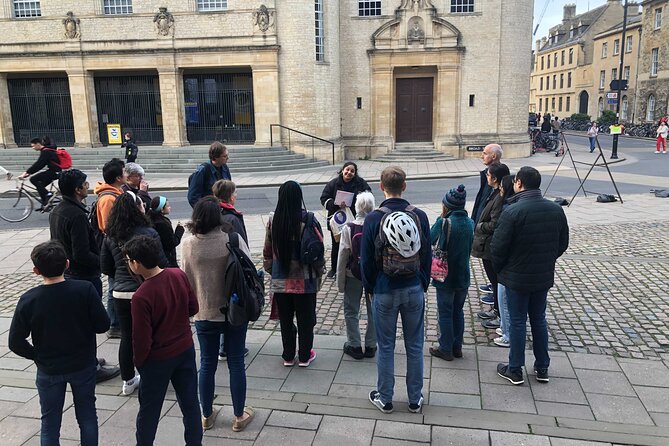
The War Memorial Garden introduces the history of trans people through the story of Laurence Michael Dillon. This is the tour’s clearest focus on queer history and gives the wider discussion a specific human point of reference.
Personal stories can change the way you read a city. Instead of treating queer history as a separate topic, the tour connects it to institutions, public space, and the question of whose life is considered part of Oxford’s story. Dillon’s story helps make the subject concrete while also opening a larger conversation about the visibility of trans people in historical accounts.
This stop lasts about 10 minutes. The guide’s handling of the topic matters, and the tour’s discussion format gives you room to ask for clarification or consider the issues with the group. The approach is thoughtful rather than sensational. Still, the subject can feel uncomfortable, particularly for visitors who prefer history presented without debate or difficult moral questions.
Lamb and Flag Passage: masculinity in old Oxford
At Lamb and Flag Passage, the route enters older parts of the city. The subject turns toward masculinity in Oxford, looking at both the university and the town.
This is a useful broadening of the tour. Women’s and queer histories are not only about women and queer people. They are also shaped by the expectations placed on men, by ideas of authority, and by the social divide between university life and the wider city. A narrow passage in the old center becomes a setting for thinking about how masculine behavior has been formed and judged.
The stop lasts about 15 minutes, giving the guide more time than at some earlier locations. You may find this section especially interesting if you want to understand Oxford as a place shared by students, academics, workers, residents, and businesses, not simply as a collection of colleges.
It is also one of the route’s more atmospheric moments. You are walking through an older urban setting while considering social behavior that may not be visible in the stonework. That contrast is central to the Uncomfortable Oxford approach.
Wadham College and the many images of women
Outside Wadham College, the tour examines representations of women from the early modern period. The subjects include women from wealthy and humble backgrounds, which keeps the discussion from treating women as one uniform social group.
That distinction matters. Class affects how people are represented, remembered, and able to move through institutions. Looking at images of women can reveal both admiration and control, as well as the difference between the idealized woman presented in art and the lives of ordinary women.
The stop lasts about 15 minutes. You will be looking at representations connected with the college rather than entering for a full visit. As with Somerville, the building is a prompt for discussion rather than the entire attraction.
I find this kind of stop valuable because it asks you to inspect familiar symbols. A carved figure, portrait, or decorative image can appear harmless until you ask what it says about power, status, virtue, and gender. The guide helps connect those visual details to wider social patterns.
The Clarendon Building and policing women
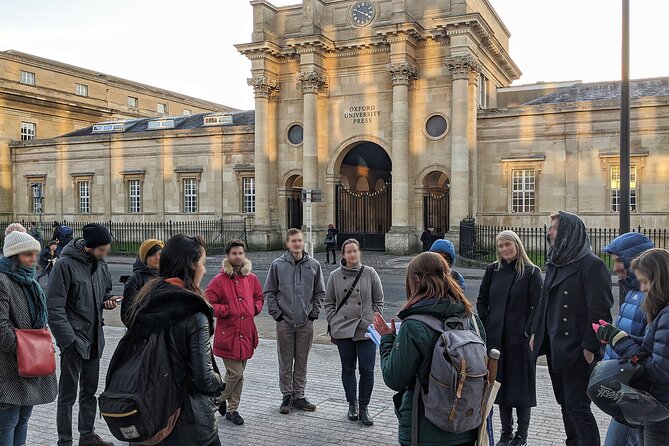
The final stop is the Clarendon Building on Broad Street, the historic office of the vice-chancellor. Here, the tour examines the policing of women in the city.
Ending at this location gives the walk a strong sense of direction. The route has moved from access to education, childcare, trans history, masculinity, and representation toward institutional authority. The question becomes not only who belongs in Oxford, but who has been monitored, disciplined, or judged in public life.
The tour ends outside the Clarendon Building in the city center. That is convenient if you are continuing to Oxford’s central colleges, shops, cafés, or other sightseeing. It also means you finish close to the heart of the city rather than returning to the starting point.
This final section may be the most politically direct. The tour does not try to make Oxford comfortable at every turn. Its purpose is to show how attractive public spaces can carry difficult stories and how official authority has affected women’s lives.
The discussion format is part of the experience
The guides do not simply recite dates and names. Questions are used to involve the group, and the strongest reactions to this format describe it as respectful, stimulating, and open to different ideas.
That makes the tour feel closer to a walking seminar than a conventional sightseeing circuit. You may be asked for your opinion, invited to interpret a place, or encouraged to consider how an uncomfortable legacy should be handled today. The guide still provides information, but the group’s responses become part of the experience.
I like this format for visitors who enjoy thinking out loud. It can make the 90 minutes feel full without requiring a long route. People who prefer a quiet, uninterrupted narration may find the interaction less comfortable.
The format also places responsibility on participants. Listen carefully, avoid dominating the conversation, and allow room for different experiences. The best version of this tour depends on a group willing to be curious and respectful.
Price, timing, and practical value
At $27.54 per person, this is a fair price for a 90-minute specialist tour in Oxford. The stops do not charge admission, so you are paying for the guide’s preparation, interpretation, route design, and ability to lead a sensitive discussion.
The tour is not the cheapest way to see Oxford if you only want exterior photographs. But it offers something a standard city walk may not: a focused account of women’s rights and queer lives, tied to specific places. The small group limit of 15 also improves the value. You are less likely to be lost in a crowd, and questions have a better chance of being heard.
Group discounts are available, which may help if you are booking for several people. A mobile ticket keeps the arrangements simple. Confirmation is provided when you book.
Plan for roughly an hour and a half on foot. The route begins on Woodstock Road and ends at Broad Street, so you should allow for your own transport to the starting point and onward plans from the city center. Since the tour takes place outdoors, sensible walking shoes and clothing suited to Oxford weather are practical choices, though the supplied information does not specify a dress code or weather policy.
Free cancellation is available if you cancel at least 24 hours before the start time. Inside that window, the payment is not refunded, and changes are not accepted.
Who will appreciate this tour most?
This is a strong choice for you if you:
- Want to see Oxford beyond famous college interiors
- Care about feminism, women’s rights, or queer history
- Prefer discussion and interpretation to a memorized sightseeing script
- Enjoy asking questions and hearing different points of view
- Have already seen the main city sights and want a new angle
- Are comfortable with difficult subjects and incomplete answers
It can also work well for a college group or an educational event. One group booking found the tour useful for learning about Oxford and its past while leaving participants with new questions. That is an accurate description of the experience’s aim: it informs you, but it does not pretend every issue has a neat solution.
You may want another tour if you are visiting Oxford for the first time and have not yet seen its basic landmarks. This walk does not focus on classic highlights, interior visits, or broad architectural history. It is also not a casual stroll designed mainly for photographs.
Final verdict: should you book it?
Book this tour if you want Oxford to become more complicated, more human, and more honest. The route is short, the group is limited, and the subjects are specific enough to give the walk a clear purpose.
I would especially recommend it after a conventional Oxford tour. Once you have admired the colleges, this experience asks what those institutions meant to people who were excluded, controlled, overlooked, or represented only in limited ways.
At $27.54, it offers good value for a thoughtful specialist walk. Just arrive ready to participate, and do not expect a polished list of famous names. You will get a questioning look at Oxford, led by students who aim to make the city’s less visible stories part of the conversation.
FAQ
How long does the Women and Queer Histories Tour last?
The tour lasts approximately 1 hour and 30 minutes.
Where does the tour begin?
It begins at the Radcliffe Observatory Quarter, Woodstock Road, Oxford OX2 6GG, at the old hospital site.
Where does the tour end?
The tour ends in the city center outside the Clarendon Building, 48 Broad Street, Oxford OX1 3AZ.
What subjects does the tour cover?
It covers women’s rights, feminism, access to education and childcare, queer lives, trans history, masculinity, representations of women, and the policing of women.
How large is the tour group?
The maximum group size is 15 people.
Can I cancel for a full refund?
Yes. You can receive a full refund if you cancel at least 24 hours before the experience begins. Cancellations or changes made within 24 hours are not accepted for a refund.
Recently added around Oxford
- Stonehenge and Bath Tour from Oxford★ 4.5 · 56 reviews
- Oxford: Official CS Lewis and JRR Tolkien Walking Tour★ 4.5 · 63 reviews
- Oxford: Evening Sightseeing River Cruise with a Cocktail★ 4.8 · 66 reviews
- New College Oxford Harry Potter Insights PRIVATE TOUR Daily★ 5.0 · 67 reviews
- Tours of Oxford private walking tours for the Discerning Traveler★ 5.0 · 70 reviews
- Explore the Hidden Gems of Cotswolds Private Tour★ 5.0 · 72 reviews
- Small and Exclusive Oxford Highlights Tour★ 5.0 · 79 reviews
- Harry Potter PUBLIC Tour + Self Guided Christ church Daily 12.45★ 5.0 · 82 reviews
Oxford Tours, compared.

Oxford University Walking Tour With University Alumni Guide
Read our review →
University and City Walking Tour with Alumni Guide
Read our review →
City and University Tour, including college entry
Read our review →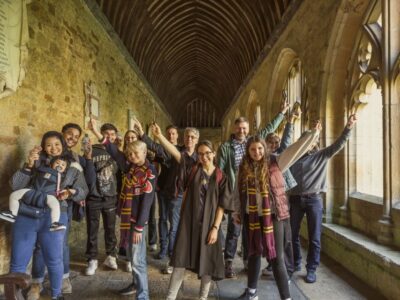
Harry Potter Walking Tour Including New College
Read our review →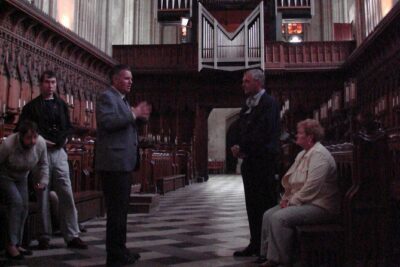
1.5-hour Oxford City and University Walking Tour
Read our review →

City Sightseeing Oxford Hop-On Hop-Off Bus Tour
Read our review →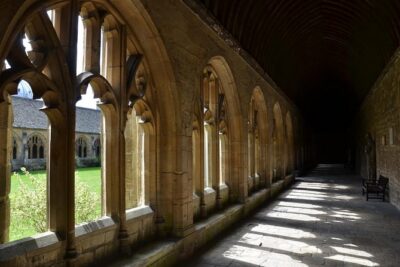
Harry Potter Walking Tour of Oxford Including New College
Read our review →Browse the lists this tour appears in