
Reviewed · WALKING TOURS
Booze, Brothels & The Bard: A Walking Tour of London’s Bawdy Borough
London has a darker side. This two-hour Southwark walk brings it out through stories of old prisons, beer halls, theaters, outcasts, writers, and the people who lived beyond the city’s respectable boundaries. I like the tour’s clear sense of place, and I like that it connects Shakespeare and Dickens to real streets rather than treating them as names on a plaque. The small group limit of 15 also gives the guide room to answer questions.
The main drawback is pace. With 11 stops in about two hours, you spend roughly five minutes at each listed location. I would choose this tour for storytelling and orientation, not for lengthy visits inside museums, churches, markets, or the Globe.
In This Review
- Key points to know before booking
- Why Southwark makes such a good walking-tour setting
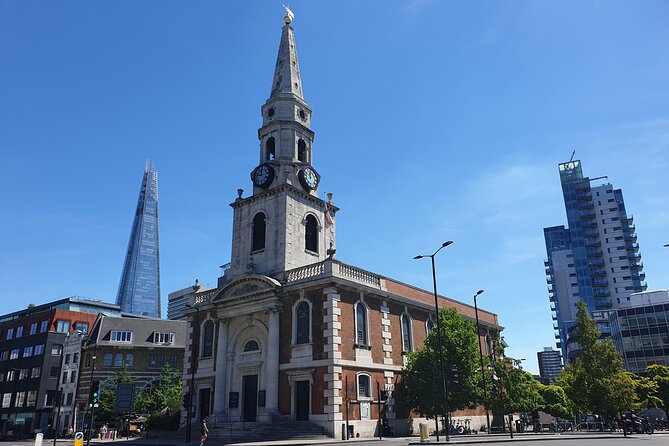
- Starting at St George the Martyr and Marshalsea Prison
- Crossbones Graveyard and Southwark’s outcast dead
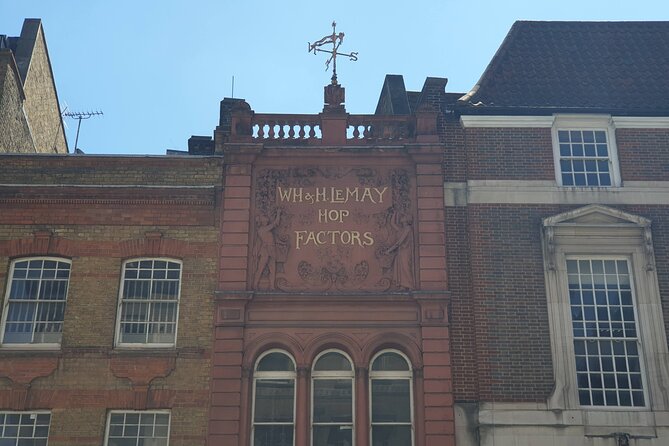
- The Hop Exchange and London’s old beer trade
- The George, the last surviving galleried coaching inn
- Old Operating Theatre Museum and Herb Garret
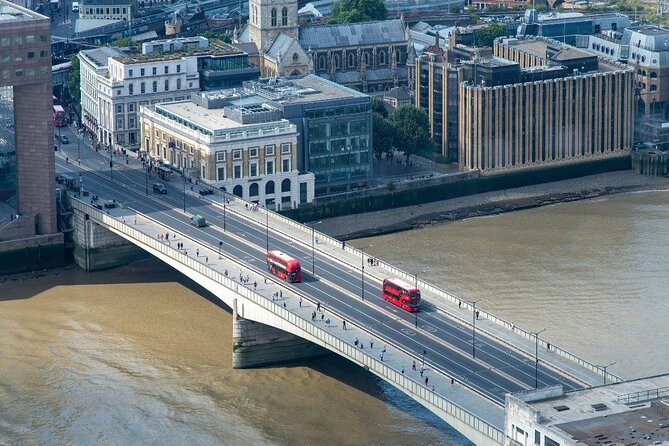
- London Bridge and the crossing that shaped Southwark
- Southwark Cathedral and a much older borough
- Borough Market, food, trade, and everyday London
- Winchester Palace and medieval power
- The Clink Prison and the business of punishment
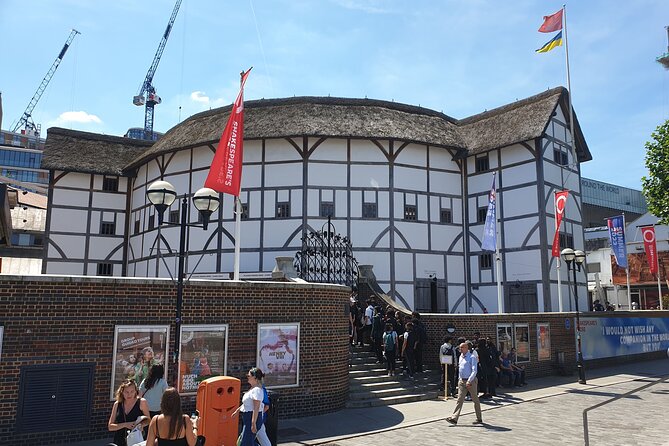
- Shakespeare’s Globe, where the walk ends
- Guide quality, group size, and the pace of the walk
- Price, booking timing, and who should choose it
- Should you book Booze, Brothels & The Bard?
- FAQ
- How long is the walking tour?
- How much does the tour cost?
- What language is the tour offered in?
- What is the maximum group size?
- Where does the tour start?
- Where does the tour end?
- Is a guide included?
- Does the tour visit Borough Market and Shakespeare’s Globe?
- Can I cancel for a full refund?
Key points to know before booking
- Southwark’s underbelly takes center stage: Expect stories tied to prisons, prostitution, drinking, poverty, theater, and the people pushed outside polite society.
- Shakespeare is only part of the story: The route also touches Dickens, medieval church life, coaching inns, surgery, and the old beer trade.
- Eleven stops fit into two hours: Each location gets a short explanation, so plan to return later if you want a proper visit.
- Tom is a memorable guide: He is described as punctual, friendly, engaging, and deeply familiar with the area’s past.
- The group stays small: A maximum of 15 people makes personal attention more likely than on a large city walking tour.
- The finish is well placed: You end at Shakespeare’s Globe, close to the Thames and several major South Bank sights.
Why Southwark makes such a good walking-tour setting
Southwark was once London’s rough-edged southern neighbor, separated from the City by the Thames and London Bridge. That position helped make it a place for inns, theaters, markets, prisons, taverns, and other businesses that did not fit neatly inside the City’s rules.
That mix gives this tour its character. You are not simply walking from one famous building to another. You are following the old social fault lines of London. The route shows how entertainment, commerce, crime, religion, medicine, and poverty often shared the same few streets.
I especially like the way the tour links grand names with ordinary lives. Shakespeare’s Globe is the obvious headline, but the route also asks you to think about prisoners, sex workers, poor families, patients, prisoners, market sellers, and the people buried without much ceremony. That makes Southwark feel less like a backdrop and more like a living part of London’s story.
The tour is offered in English and includes a walking guide. Its price is about $27.78 per person. For a two-hour walk, that is a reasonable rate if you want a guided introduction and lively interpretation. It is less attractive if you plan to measure value by the number of attractions you enter, since the schedule allows only brief stops.
More Walking Tours in London
- Magical London: Harry Potter Guided Walking Tour
★ 4.7 · 22,044 reviews - London: The Original Jack the Ripper Walking Tour
★ 4.7 · 7,833 reviews - Tour for Muggles The Ultimate Harry Potter Walking Tour in London
★ 5.0 · 4,684 reviews
Starting at St George the Martyr and Marshalsea Prison
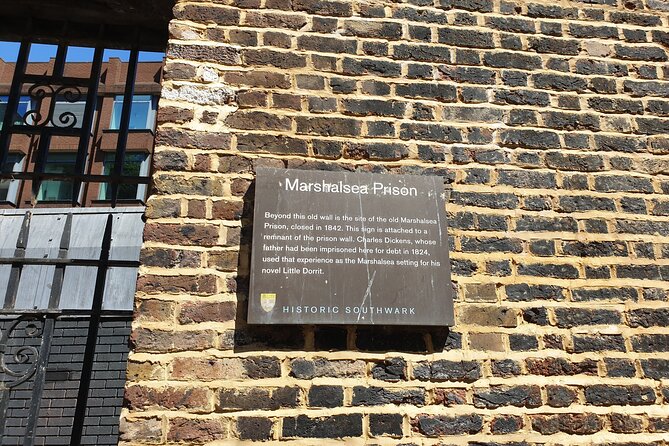
The walk begins on Borough High Street near St George the Martyr. The church is tied to the remains of Marshalsea Prison, one of London’s notorious debtors’ prisons. Only part of the old prison survives, so this opening stop is more about reading the street and understanding the site than touring a complete prison complex.
This is an effective beginning because it sets the tone right away. Southwark’s story includes people trapped by debt, law, poverty, and social rank. The prison’s surviving fragment gives the guide a solid physical point from which to explain how confinement shaped everyday life.
You get about five minutes here. I would not expect a long architectural inspection or an extended church visit. Treat it as a compact introduction, then let the guide fill in the human details.
Crossbones Graveyard and Southwark’s outcast dead
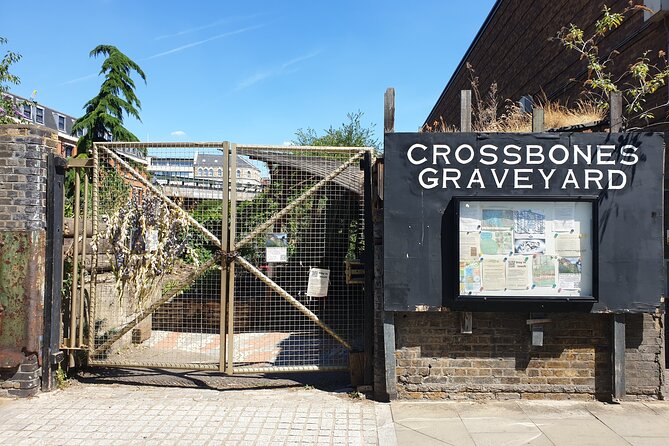
Crossbones Graveyard and Garden of Remembrance is one of the route’s most affecting stops. It is associated with thousands of people buried outside the accepted social order, including the outcast dead of Southwark.
The site gives the tour a quieter pause after the prison story. It helps explain that the old borough was not only a place of pleasure and vice. It was also where poor people and marginalized communities often ended up, in life and in death.
Again, the scheduled stop is short. You will have time to understand the significance of the place, but not to linger over every memorial detail. If this site matters to you, note it down and return at another time.
The Hop Exchange and London’s old beer trade
At the Hop Exchange, the focus shifts from human hardship to commerce. The building is described as the largest surviving reminder of Southwark’s beer trade, making it a useful clue to the borough’s economic past.
Beer was not a side issue in old London. It supported trade, work, transport, inns, and social life. The Hop Exchange helps you see how drinking culture was tied to business, not just taverns and rowdy behavior.
This stop also explains why the tour’s title begins with booze. The point is not simply to list old drinking places. It is to show how brewing and trade helped shape the district you are walking through.
A different sort of outing around London:
- London: The London Eye Entry Ticket
★ 4.6 · 35,875 reviews - From London: Harry Potter Warner Bros Studio Tour
★ 4.7 · 26,588 reviews - London: Westminster to Greenwich River Thames Cruise
★ 4.5 · 22,836 reviews - London: Madame Tussauds London
★ 4.6 · 20,915 reviews
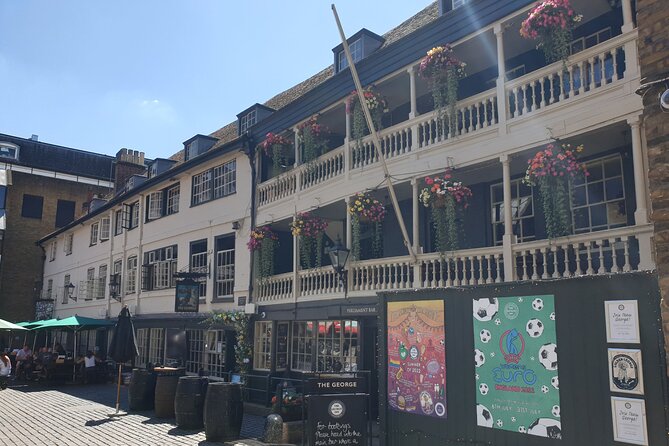
The George, the last surviving galleried coaching inn
The George is one of the route’s most visually appealing stops. It is identified as London’s last surviving galleried coaching inn, a type of building once associated with stagecoach travel and busy urban lodging.
The inn offers a glimpse of a London before modern hotels and rail travel. Its galleries and courtyard arrangement made sense in an age when coaches, horses, porters, and overnight passengers filled the scene.
I like this stop because it connects architecture to movement. Southwark was a gateway for people arriving from outside London, and coaching inns served as places to sleep, eat, exchange news, and meet strangers. In a tour centered on bawdy stories, The George adds a useful layer of ordinary travel and trade.
The short timing means you should expect an explanation and a look around rather than a full guided building tour.
Old Operating Theatre Museum and Herb Garret
The Old Operating Theatre Museum and Herb Garret brings medicine into the story. It is identified as Europe’s oldest surviving operating theater, an unusually specific and memorable fact.
This stop shows another side of old London life: surgery before modern hospitals, anesthesia, and medical systems as we know them. The location also helps broaden the tour beyond Shakespeare and scandal. Southwark was a place where people came for treatment, work, entertainment, punishment, and trade.
You should pay attention to whether the guide is pointing out the museum from outside or discussing its place in the area’s story during this short stop. The tour includes a guide, but the supplied details do not promise a separate museum admission or a long interior visit. If you want to see the operating theater properly, plan extra time on your own.
London Bridge and the crossing that shaped Southwark
London Bridge is the best-known landmark on the route. The stop is brief, but its importance is easy to understand. For centuries, the bridge was the key connection between the City of London and Southwark.
That crossing helped bring people, money, goods, travelers, performers, and trouble into the borough. It also explains why Southwark developed such a lively and unruly reputation. The bridge was not just a view for a postcard. It was the route through which London and the wider country met.
This part of the walk may be busy, depending on conditions, so stay close to the guide and listen carefully. The route gives you context that you might miss if you simply cross the bridge on your own.
Southwark Cathedral and a much older borough
Southwark Cathedral offers a change of mood. It is described as London’s oldest surviving Gothic church, giving the route a major religious and architectural landmark alongside its prisons, inns, and theaters.
The cathedral reminds you that Southwark was not only associated with vice. It had a long religious life and served communities long before the modern visitor arrived for food markets and theater.
The contrast is valuable. In a few streets, you can move from stories of prisoners and outcasts to a place of worship with centuries of institutional memory. That tension is one of the pleasures of the tour.
With only about five minutes here, you will get the guide’s main points and an exterior orientation. I would not book this walk expecting a full cathedral tour.
Borough Market, food, trade, and everyday London
Borough Market is one of the most useful stops for modern visitors because it combines the past with the present. The market is described as a one-thousand-year-old food market, and its continued role gives you a direct connection between old Southwark and today’s London.
I like stopping here because food makes history easier to grasp. Markets reveal what people bought, sold, cooked, carried, and shared. They also show how a district can change while keeping its basic purpose as a place of exchange.
The market can be busy, and five minutes is not enough to browse properly or eat a full meal. Think of this as an introduction. You can return after the tour when you are free to choose a stall, inspect the produce, and take your time.
Winchester Palace and medieval power
The remains of Winchester Palace are a reminder that Southwark was not always a low-status district. The palace was once one of the most prestigious homes in medieval England.
This stop adds political and religious power to the walk. It helps correct the easy assumption that Southwark was always merely a place for taverns, theaters, and vice. The surviving remains may be fragmentary, but fragments can be useful when a guide explains what once occupied the site.
I would pay attention to the contrast between the palace’s former prestige and the later reputation of the surrounding borough. The tour works best when you see these locations as layers rather than separate attractions.
The Clink Prison and the business of punishment
The Clink Prison Museum marks the site of the notorious Clink Prison. The name has entered the English language as a nickname for jail, which tells you how strongly the prison’s reputation traveled.
This stop returns the tour to law and punishment. It also fits the larger Southwark pattern: people came here for entertainment, trade, lodging, worship, and imprisonment. The borough’s institutions were packed close together, and the route makes that connection clear.
The schedule allows only a short stop. If you want museum exhibits or a more detailed look at prison life, you will need to visit separately. The walking tour gives you the setting and the story, not a full museum session.
Shakespeare’s Globe, where the walk ends
The tour finishes at Shakespeare’s Globe Theatre on New Globe Walk. This reconstruction of Shakespeare’s Globe is the natural finale, but it does not swallow the rest of the route.
That is important. You first see the social world that made theater possible: inns, markets, crowds, trade, poverty, and a district willing to host entertainment outside the City’s tighter control. By the time you reach the Globe, Shakespeare’s theater feels connected to the whole borough rather than isolated as a literary shrine.
The end point also makes practical sense. You can continue exploring the South Bank, visit the Globe separately, walk beside the Thames, or return to Borough Market. The tour does not include a Globe performance or a separate theater admission, so check your plans if you want to go inside.
Guide quality, group size, and the pace of the walk
The strongest praise centers on the guiding. Tom is singled out as punctual, friendly, sympathetic, engaging, and passionate about the area. His style appears to rely on colorful stories and clear explanations, which suits a route filled with unusual names and half-visible remains.
That matters here. Many of the stops are not grand buildings with obvious meaning. Crossbones, the Hop Exchange, Winchester Palace, and the surviving Marshalsea fragment benefit from a guide who can explain what you are seeing and why it matters.
The group limit is 15 people. That is small enough for personal attention without making the walk feel private or expensive. You should still expect a city walk with short pauses, not a private seminar at every site.
The two-hour length works well for an introduction. It is long enough to cover a lot of ground without taking over your day. The tradeoff is that the tour moves quickly. One strong point from the feedback is that the walk can feel like a series of brief views, and you may wish for more time at certain places.
Price, booking timing, and who should choose it
At $27.78 per person, I consider the tour good value for a visitor who wants interpretation, local context, and an unusual route through central London. You are paying for the guide’s selection and storytelling, not simply access to buildings.
The tour is booked about 35 days ahead on average, so I would reserve early if your London dates are fixed. It uses a mobile ticket, runs in English, and starts on Borough High Street, near public transportation. The endpoint is Shakespeare’s Globe at 21 New Globe Walk.
Most people can participate, according to the supplied information. Still, this is a walking tour with 11 stops, so choose sensible shoes and allow enough time to stay with the group. The exact walking distance and surface details are not provided, so ask the operator if you have specific mobility concerns.
Free cancellation is available up to 24 hours before the start time for a full refund. Changes or cancellations inside that window are not accepted for a refund. The tour also requires a minimum number of participants, and if that minimum is not reached, you are offered another date or experience, or a full refund.
Should you book Booze, Brothels & The Bard?
I would book this tour if you have already seen London’s major landmarks and want a more human, slightly mischievous look at the city. It suits readers who enjoy Shakespeare, Dickens, old prisons, literary connections, social history, and stories about how ordinary people lived.
I would also recommend it for a first visit if you want a useful Southwark orientation before exploring Borough Market, the Globe, and the Thames on your own. The guide can give you the context that turns a collection of buildings into a connected district.
I would skip it if your main goal is extended time inside museums or churches. The short pauses are the price of covering so much ground. For most people, though, the mix of strong guiding, a maximum group size of 15, a convenient finish, and a modest price makes this a smart addition to a London itinerary.
FAQ
How long is the walking tour?
The experience lasts approximately two hours.
How much does the tour cost?
The listed price is $27.78 per person.
What language is the tour offered in?
The tour is offered in English.
What is the maximum group size?
The tour has a maximum of 15 travelers.
Where does the tour start?
The meeting point is on Borough High Street, London SE1 1JX, United Kingdom.
Where does the tour end?
The tour ends at Shakespeare’s Globe, 21 New Globe Walk, London SE1 9DT.
Is a guide included?
Yes. A walking tour guide is included.
Does the tour visit Borough Market and Shakespeare’s Globe?
Both Borough Market and the reconstructed Shakespeare’s Globe Theatre are included as stops on the route. The details provided do not promise extended interior visits or separate admissions.
Can I cancel for a full refund?
Yes. You can cancel at least 24 hours before the experience start time for a full refund. Cancellations or changes made less than 24 hours before the start time are not refundable.
Recently added around London
- PRIVATE HIRE 45 min Speedboat Tour – Embankment/Westminster Pier★ 5.0 · 55 reviews
- Private Tour of London’s Historic Pubs★ 5.0 · 55 reviews
- From London: Glastonbury and Cheddar Gorge Guided Day Trip★ 4.8 · 55 reviews
- Gatwick Airport Taxi – Private Transfer to/from London★ 5.0 · 55 reviews
- London: Kew to Westminster River Thames Cruise★ 4.2 · 55 reviews
- London by Night – Tootbus Sightseeing Tour★ 3.5 · 55 reviews
- London: Tower of London After Hours Tour and Key Ceremony★ 4.8 · 56 reviews
- From London: Cotswolds Guided Trip Including Bourton-on-the-Water★ 4.5 · 56 reviews
Walking Tours, compared.
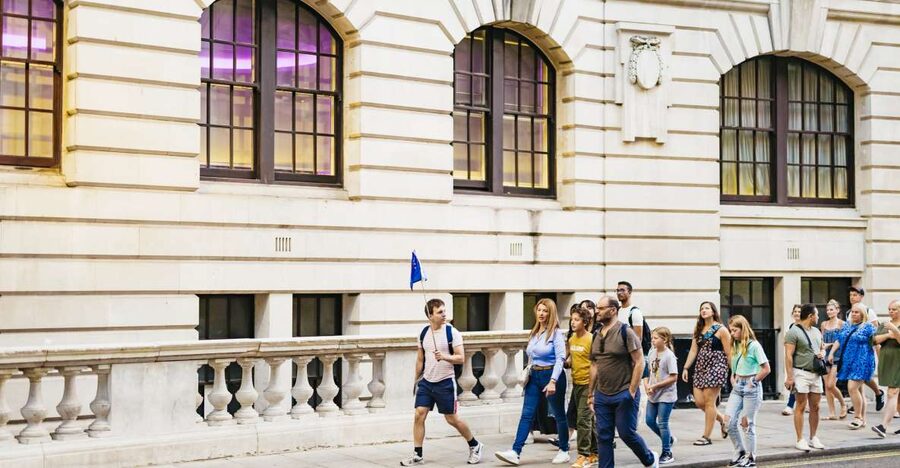
Magical London: Harry Potter Guided Walking Tour
Read our review →
Underground Vaults Walking Tour in Edinburgh Old Town
Read our review →
Oxford University Walking Tour With University Alumni Guide
Read our review →
Edinburgh Castle: Guided Walking Tour with Entry Ticket
Read our review →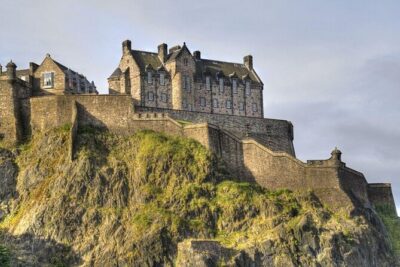
Edinburgh Castle Guided Walking Tour in English
Read our review →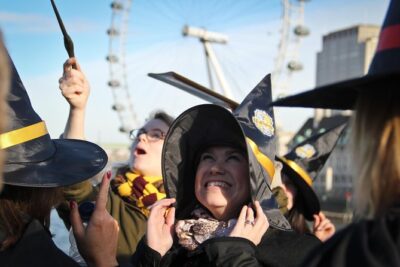
Tour for Muggles The Ultimate Harry Potter Walking Tour in London
Read our review →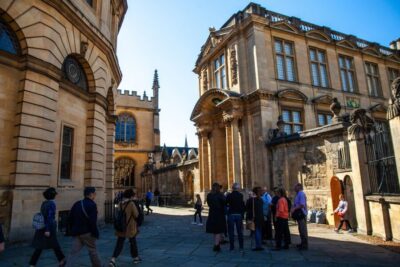
University and City Walking Tour with Alumni Guide
Read our review →Browse the lists this tour appears in