
Reviewed · WALKING TOURS
Burnings, Butchery & Black Death: A Walking Tour of London’s Bloody Past
London’s darkest stories hide in plain sight. This two-hour walk links plague, public punishment, fires, war damage, hospitals, and old drinking places across the Smithfield and Clerkenwell area. I especially like the small groups of no more than 15 and the way the route avoids the usual Jack the Ripper script. Guide Tom earns repeated praise for his clear delivery, humor, and ability to connect a street corner with a thousand years of city life.
I also like the value. At $27.73 per person, you get a tightly packed history walk with ten stops, including London’s oldest surviving parish church and one of the city’s oldest hospitals. The main consideration is the subject matter: plague, executions, butchery, open sewers, and ghost hysteria are not light lunchtime fare. The walk also depends on good weather.
In This Review
- Key points to know before you book
- Why this dark London walk works
- Starting at Aldersgate and entering the old City
- The Charterhouse and Smithfield’s butchery
- St John’s Gate and the old religious orders
- Cloth Fair, William Wallace, and stories in narrow streets
- St Bartholomew the Great, London’s oldest surviving parish church
- The Golden Boy and London’s Great Fire
- Holborn Viaduct and the buried River Fleet
- Ye Olde Mitre and the tour’s pub ending
- St Bartholomew’s Hospital and a final layer of medicine
- Tom’s guiding style and the value of a small group
- Price, timing, and who will enjoy it
- Should you book Burnings, Butchery & Black Death?
- FAQ
- Where does the tour start?
- Where does the tour finish?
- How long does the tour last?
- How much does the tour cost?
- How many people can join the tour?
- Is the tour offered in English?
- Is admission to any attraction included?
- Can I cancel for a full refund?
Key points to know before you book
- A thousand years in two hours: The route moves from a fourteenth-century monastery and plague pit to Victorian sanitation.
- Tom is a major part of the appeal: His storytelling, humor, and local knowledge receive especially strong praise.
- Smithfield is the heart of the walk: Markets, hospitals, churches, and narrow lanes reveal layers of London most people pass without noticing.
- The route skips the tired Jack the Ripper routine: You get a broader look at London’s darker past.
- The group limit is 15 people: That matters on busy streets and helps you hear the guide.
- It ends near Farringdon Station: The finish at Ely Place makes it easy to continue exploring or reach public transport.
Why this dark London walk works
This is not a tour of London’s most famous postcard sights. You will not spend two hours circling Buckingham Palace or waiting for a view of Tower Bridge. Instead, you walk through a compact part of the City of London and Clerkenwell, where old churches, market buildings, lanes, memorials, and pubs sit close together.
That compact route is a real strength. You cover a remarkable span of time without spending much of the tour simply getting from one landmark to another. The stories move from the Middle Ages through the Great Fire of 1666, Victorian public health, wartime damage, and even later ghost folklore.
The title promises blood, and the walk delivers it, but the best material is not gore for its own sake. The butchery at Smithfield leads into the growth of London’s meat trade. The plague pit points to the city’s religious institutions and recurring epidemics. The River Fleet story shows how a natural waterway became a public health problem.
I also appreciate the tour’s sense of place. A narrow alley or a modest plaque can carry as much weight as a grand monument when the guide explains what happened there. Several people who already knew London well found parts of the route they had never noticed before.
More Walking Tours in London
- Magical London: Harry Potter Guided Walking Tour
★ 4.7 · 22,044 reviews - London: The Original Jack the Ripper Walking Tour
★ 4.7 · 7,833 reviews - Tour for Muggles The Ultimate Harry Potter Walking Tour in London
★ 5.0 · 4,684 reviews
Starting at Aldersgate and entering the old City
The meeting point is outside Underground Ltd on Aldersgate Street, near the Barbican area, at London EC1A 4JA. The route finishes on Ely Place, around the corner from Farringdon Station. Since the walk stays near public transport, it fits neatly into a day of sightseeing in central London.
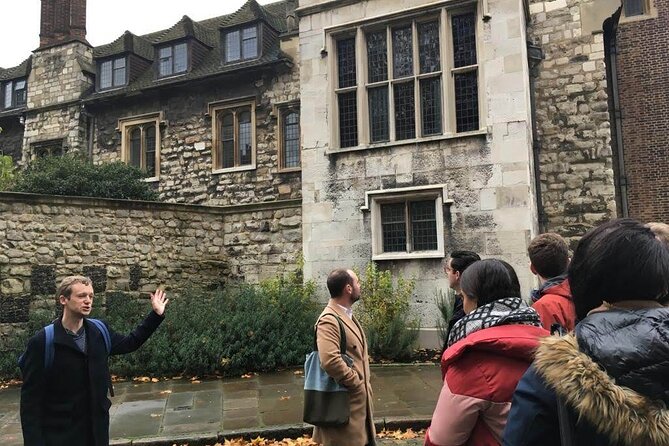
The opening section sets the tone at the Charterhouse. This fourteenth-century monastery also connects to a plague pit, giving you an early look at how religion, death, and urban space overlapped in medieval London. The stop lasts about ten minutes, so expect a focused explanation rather than a long visit.
You will want comfortable shoes. The tour lasts about two hours and passes through city streets and narrow lanes. The route is described as not especially taxing, but you are still on your feet for the full experience.
The Charterhouse and Smithfield’s butchery
At Smithfield Market, the tour shifts from plague to food and commerce. Smithfield is a meat market with about a thousand years of history, making it one of the clearest places to understand how London fed itself.
This is where the title’s butchery becomes more than a shock word. A meat market affects smells, noise, work, trade, public order, and the shape of nearby streets. You get a sense of how practical business created an area that could also feel grim and dangerous.
The stop is scheduled for about ten minutes. That is enough to place the market in context, though not enough for an extended market visit or a detailed food tour. If you want to explore Smithfield at length, leave extra time before or after the walk.
The tour also brings in more recent history, including bomb attacks during the Blitz. That blend of medieval violence and twentieth-century warfare helps you see London as a city repeatedly damaged, rebuilt, and reused.
St John’s Gate and the old religious orders
St John’s Gate was home to the medieval Knights Hospitallers. The building gives the walk a useful change of pace after the market. Here, the story turns toward medieval religious and military institutions.
You do not need prior knowledge of the Knights Hospitallers to enjoy this stop. Tom’s role is to explain why the site mattered and how its past connects with later London institutions. The walk also touches on the origins of St John Ambulance, giving this old religious site a link to a familiar modern organization.
This is one of the places where a good guide makes a large difference. The building itself may not explain its whole story from the pavement. A guide who can connect its medieval use with its later influence gives you a reason to look twice.
A different sort of outing around London:
- London: The London Eye Entry Ticket
★ 4.6 · 35,875 reviews - From London: Harry Potter Warner Bros Studio Tour
★ 4.7 · 26,588 reviews - London: Westminster to Greenwich River Thames Cruise
★ 4.5 · 22,836 reviews - London: Madame Tussauds London
★ 4.6 · 20,915 reviews
Cloth Fair, William Wallace, and stories in narrow streets
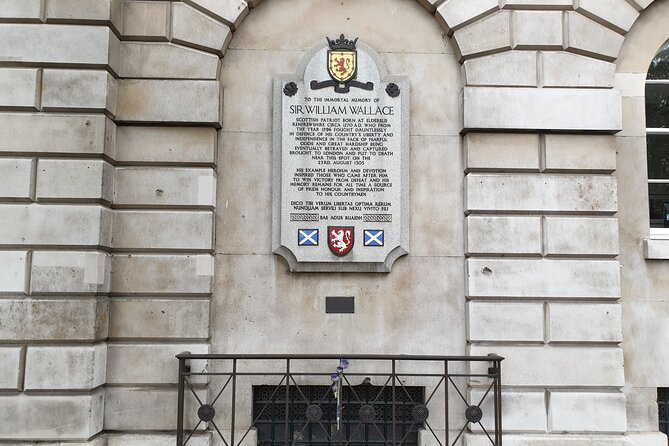
Cloth Fair is described as a quiet alley with a noisy past. That contrast captures the appeal of this tour. The lane may feel small and peaceful now, but its name and location point toward the crowded, working city that came before.
Ten-minute stops can sometimes feel rushed, but here the short format keeps the walk moving. You get a strong story, then continue to another nearby layer of the city instead of standing in one place for too long.
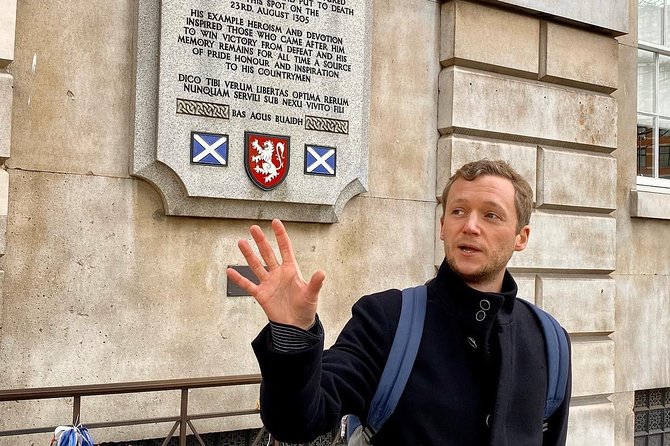
The William Wallace Memorial adds another surprise. Wallace, known widely as Braveheart, is remembered here in London, away from the Scottish locations most people connect with him. The stop shows how national history can appear in unexpected corners of the city.
This is also a good part of the route for people who like film and popular culture. The tour includes occasional references to filming locations, but these are extra details rather than the main theme.
St Bartholomew the Great, London’s oldest surviving parish church
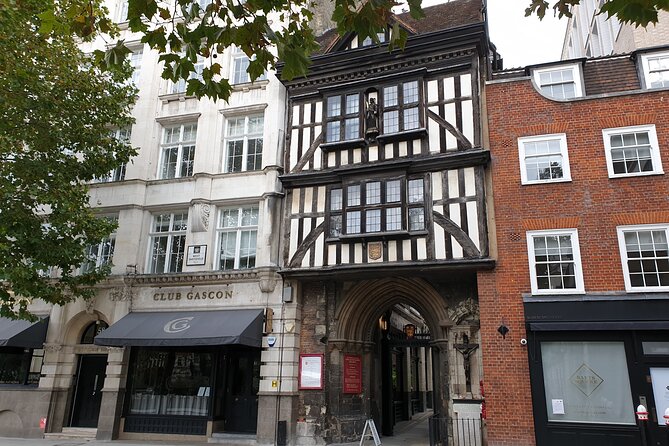
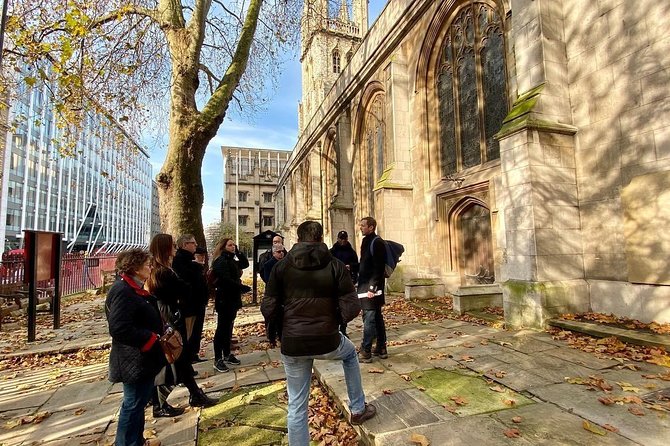
Church of St Bartholomew the Great is one of the major stops. It is described as London’s oldest surviving parish church, and admission is included in the tour.
The church gives you a chance to move from street-level stories into a historic interior. That change matters. You are not only hearing about old London, you are seeing a surviving place where its past remains part of the present city.
The stop is about ten minutes, so this is not a long church visit. You should expect the guide to focus on the church’s place in the route and its age rather than provide a full architectural lecture.
For me, this is one of the best-value elements of the experience because admission is included and the church adds visual depth to the walk. The combination of an old interior, nearby lanes, the market, and the hospital makes this section particularly strong.
The Golden Boy and London’s Great Fire
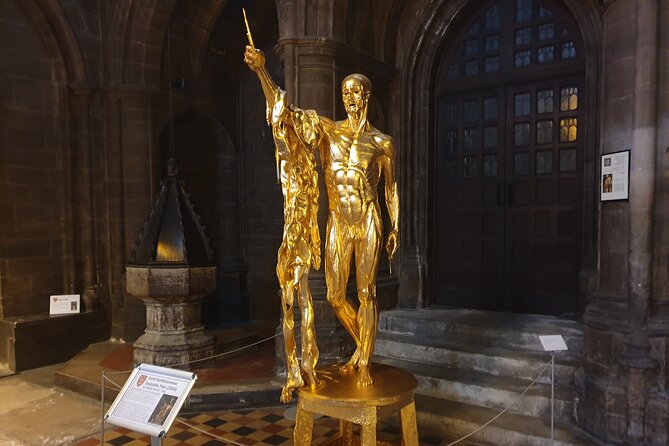
The Golden Boy of Pye Corner marks the place where the Great Fire of 1666 died out. The monument also connects to eighteenth-century ghost hysteria, giving the stop two different kinds of fear: one born from a citywide disaster, the other from public belief and rumor.
This is a useful reminder that London’s dark past is not limited to murder stories. Fire, disease, superstition, and poor urban planning shaped daily life just as powerfully.
The Golden Boy is a brief stop, but it helps you understand how the Great Fire remains written into the city’s streets. The story also works well as a transition from older religious and market history toward the problems of a rapidly growing metropolis.
Holborn Viaduct and the buried River Fleet
At Holborn Viaduct, you hear about the River Fleet, described as Victorian London’s largest open-air sewer. It is a strong example of how a city can hide the infrastructure that once defined it.
Today, you may see a major road crossing and an ordinary urban junction. The guide’s story brings attention to what is no longer visible. That is a recurring feature of this walk: London’s past often survives as a name, a building line, or a clue beneath modern traffic.
The Fleet story also gives the tour practical historical value. It explains why sanitation became such a serious urban issue and why London had to rethink the relationship between water, waste, housing, and public health.
If you prefer grand monuments, this may be a less visually dramatic stop. If you enjoy understanding how cities function, it is one of the most rewarding.
Ye Olde Mitre and the tour’s pub ending
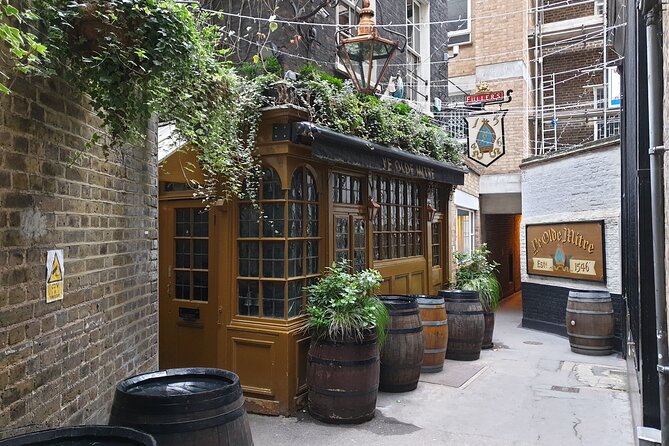
Ye Olde Mitre is tucked down an alleyway and is described as a hidden pub with a strong atmosphere. The tour ends on Ely Place, close to Farringdon Station, and the pub is a natural place to continue the day.
The tour itself includes the guide-led experience, not a meal or drinks. Still, the pub adds a practical bonus because it gives you a nearby option for food after the walk. One especially useful detail is the recommendation of cheese toasties and pork pies, both associated with the pub stop.
I like this ending because it keeps the history grounded. After plague pits, executions, old markets, and sewers, you finish somewhere ordinary and social. A historic pub is also a fitting place to compare notes and decide which part of the walk you want to investigate further.
Do not assume the pub stop means a guaranteed lunch or reserved table. Treat it as a place you can consider after the guided walk.
St Bartholomew’s Hospital and a final layer of medicine
Saint Bartholomew’s Hospital Museum is the oldest surviving hospital in the country. It completes the walk’s medical thread, which began with plague and continues through the city’s long efforts to care for the sick.
The museum itself is listed as a stop, but admission is not listed as included. The included admission specifically applies to St Bartholomew’s Great. That distinction matters if you are planning your spending, so ask the guide or venue about museum entry if you want to go inside beyond the tour visit.
This final stop helps explain why the area contains so many institutions tied to illness, injury, religion, and death. It also keeps the tour from becoming a parade of grim anecdotes. You see how London responded to suffering, not only how people suffered.
Tom’s guiding style and the value of a small group
Tom is repeatedly praised for being clear, approachable, humorous, and well-informed. He also makes an effort to get to know the people in the group and answers questions about the area, restaurants, and pubs.
That personal style matters on a history walk. The subject covers a lot of ground, and a dry delivery could turn the tour into a list of dates. Tom’s ability to use quick wit and connect old stories with modern life helps the material stick.
The group limit is 15 people. That is small enough for you to hear the guide on city streets and ask questions without having to push toward the front. It also supports the tour’s focus on narrow alleys and less obvious locations.
The strongest praise is aimed at the guiding rather than at comfort or luxury. This is a walking tour, not a premium vehicle experience. You pay for access to local interpretation and a carefully linked route.
Price, timing, and who will enjoy it
At $27.73 per person, the price is fair for a two-hour small-group walk in central London. The value is strongest if you care about stories and context, especially because several stops would be easy to pass without noticing.
I would not book this as a general introduction to London. If this is your first hour in the city, you may prefer a tour that covers major landmarks and basic orientation. This experience works better once you want a more unusual view of London or have already seen the headline sights.
I would recommend it to:
- People interested in medieval and Victorian London
- Anyone who likes urban history, old churches, hospitals, and markets
- Repeat visitors who want streets beyond the standard sightseeing circuit
- People tired of tours focused mainly on Jack the Ripper
- Small groups who prefer a guide-led walk with time for questions
The subject can be unsettling. Plague, public executions, butchery, bomb attacks, and sewage are part of the experience. If you want a gentle stroll with cheerful stories, choose something else.
The tour is offered in English and uses a mobile ticket. Service animals are allowed, and most people can participate. Good weather is required, so wear shoes suitable for a two-hour walk and keep your schedule flexible enough to handle a weather change.
Free cancellation is available up to 24 hours before the start time for a full refund. If poor weather cancels the experience, you are offered another date or a full refund.
Should you book Burnings, Butchery & Black Death?
Yes, if you want smart, dark, local history rather than a standard London highlights tour. The route is compact, the price is reasonable, and the ten stops give you a surprising amount of context in two hours.
Book it especially if Tom is leading your departure, since his storytelling is a major part of the experience. You should also book if you enjoy finding old churches, alleys, markets, hospitals, and pubs that do not announce their importance from the street.
Skip it if grim subjects put you off or if you need a slow-paced tour with long visits inside each site. For the right audience, though, this is a memorable way to see how London’s worst problems helped shape the city you see today.
FAQ
Where does the tour start?
It starts at Underground Ltd on Aldersgate Street, Barbican, London EC1A 4JA, UK.
Where does the tour finish?
It finishes on Ely Place, around the corner from Farringdon Station.
How long does the tour last?
The walk lasts approximately two hours.
How much does the tour cost?
The listed price is $27.73 per person.
How many people can join the tour?
The tour has a maximum group size of 15 people.
Is the tour offered in English?
Yes, the tour is offered in English.
Is admission to any attraction included?
Admission to Church of St Bartholomew the Great is included. The other listed stops are free, or no admission ticket is listed.
Can I cancel for a full refund?
Yes. You can cancel at least 24 hours before the start time for a full refund. Poor weather may lead to a different date or a full refund.
Recently added around London
- PRIVATE HIRE 45 min Speedboat Tour – Embankment/Westminster Pier★ 5.0 · 55 reviews
- Private Tour of London’s Historic Pubs★ 5.0 · 55 reviews
- From London: Glastonbury and Cheddar Gorge Guided Day Trip★ 4.8 · 55 reviews
- London: Kew to Westminster River Thames Cruise★ 4.2 · 55 reviews
- Gatwick Airport Taxi – Private Transfer to/from London★ 5.0 · 55 reviews
- London by Night – Tootbus Sightseeing Tour★ 3.5 · 55 reviews
- London: Tower of London After Hours Tour and Key Ceremony★ 4.8 · 56 reviews
- From London: Cotswolds Guided Trip Including Bourton-on-the-Water★ 4.5 · 56 reviews
Walking Tours, compared.
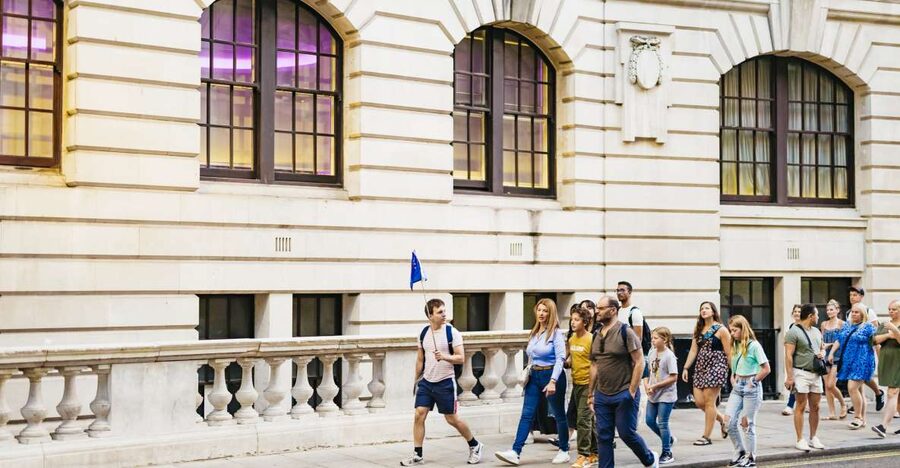
Magical London: Harry Potter Guided Walking Tour
Read our review →
Underground Vaults Walking Tour in Edinburgh Old Town
Read our review →
Oxford University Walking Tour With University Alumni Guide
Read our review →
Edinburgh Castle: Guided Walking Tour with Entry Ticket
Read our review →
Edinburgh Castle Guided Walking Tour in English
Read our review →
Tour for Muggles The Ultimate Harry Potter Walking Tour in London
Read our review →
University and City Walking Tour with Alumni Guide
Read our review →Browse the lists this tour appears in