
Reviewed · HISTORICAL TOURS
Durham History Tour
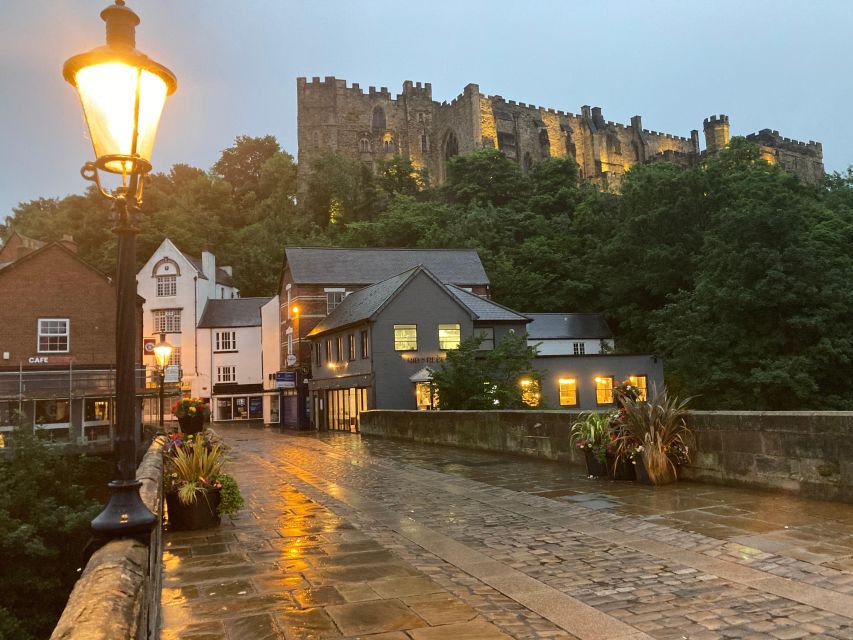
Durham reveals itself best on foot. This 90-minute walk links the city’s two great showpieces, Durham Castle and Cathedral, with bridges, river paths, the Bailey and Palace Green. I like the route because it gives you both grand views and small local stories, while guide Peter brings an easy, personal warmth to the past. The only catch is that you do not enter any buildings, so you will need a separate visit to see inside the cathedral or castle.
I also like the sensible pace and compact length. At $24 per person, you get a useful introduction without giving up half a day, and Peter often adds practical tips about places to eat and visit. If rain is in the forecast, bring a coat: this is a proper walking tour, with no indoor shelter built into the route.
In This Review
- Key points to know before you book
- Why a 90-minute walk works so well in Durham
- Starting in the Market Place with the black umbrella
- Two bridges and Durham’s riverside paths
- The Prince Bishops and Durham’s medieval power
- Walking the South and North Bailey
- Palace Green and the final view of the cathedral
- What the guide adds to the experience
- Price, pace and overall value at $24
- Who should book the Durham History Tour?
- Should you book it?
- FAQ
- How long is the Durham History Tour?
- How much does the tour cost?
- Where does the tour meet?
- Where does the tour finish?
- Does the tour enter Durham Cathedral or Durham Castle?
- What language is the tour conducted in?
- Are dogs allowed?
- Can I cancel the booking?
Key points to know before you book
- The route begins at the Man on the Horse statue: Look for the guide with a black umbrella in Durham Market Place.
- Peter is the guide to look out for: His relaxed delivery, local pride and sense of humour are among the tour’s biggest strengths.
- You see Durham from several angles: Bridges, riverside paths, the South and North Bailey, Palace Green and the cathedral doors all feature.
- The tour ends beside Durham Cathedral: From there, it is only a four-minute walk back to the Market Place.
- The focus is stories, not interior visits: You learn about the Prince Bishops, the city’s founding and its people, but you do not go inside attractions.
- Dogs are welcome: That makes this a handy choice if you are exploring Durham with a four-legged companion.
Why a 90-minute walk works so well in Durham
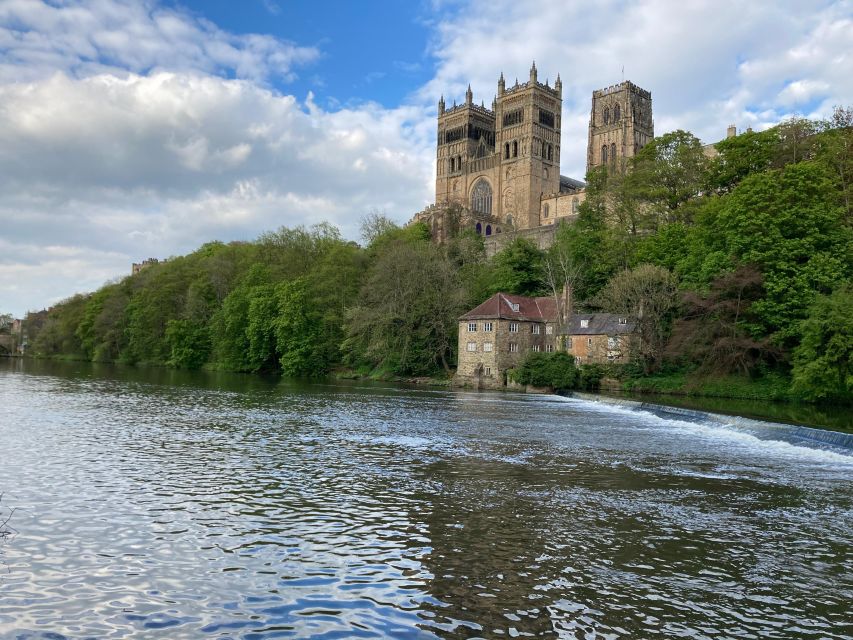
Durham can look simple on a map. The Market Place sits at the center, and the cathedral and castle rise nearby. Yet the city’s history is easier to understand once you connect its river, bridges, university quarter and hilltop core on foot.
That is where this tour earns its price. You are not just pointed toward the cathedral and told it is old. The route explains how Durham developed, why the medieval church leaders held unusual power, and how the city’s famous buildings fit into its wider story.
The length is another advantage. Ninety minutes gives Peter time to build a clear picture of Durham without turning the walk into a tiring history lecture. You can ask questions, pause for views and still have much of the day left for the cathedral, castle, cafés or your next stop.
I would treat this as an orientation walk rather than the whole Durham experience. It gives you the framework. You then use that framework to explore the city on your own.
More History Tours:
- London Small Group Tour of Historical Pubs
★ 5.0 · 10,422 reviews - A History of Terror – Belfast City Centre Walking Tour
★ 5.0 · 2,883 reviews - Old Town Walking Tour History and Tales in Edinburgh
★ 5.0 · 2,168 reviews
Starting in the Market Place with the black umbrella
The meeting point is the Man on the Horse statue in the Market Place, the city’s central gathering place. Look for a black umbrella, which makes the guide easier to spot among people heading through the square.
Starting here is practical. You are in the heart of Durham, close to shops, cafés and the route back to the cathedral. It also gives Peter a natural place to explain how the modern city connects with its older center.
The opening part focuses on Durham’s beginnings and the people who shaped it. The emphasis is not only on famous buildings. You hear stories about the city’s characters, its turning points and the forces behind its growth.
Peter’s style suits this start. He is not described as a formal lecturer, and that is a plus for a short city walk. His delivery is friendly, conversational and open to questions. Several people praised his humour, patience and ability to make history easy to follow.
If you prefer a tour with a strict script and constant movement, this may feel more relaxed than expected. If you like being able to ask about something you have just noticed, the informal approach should work well.
Two bridges and Durham’s riverside paths
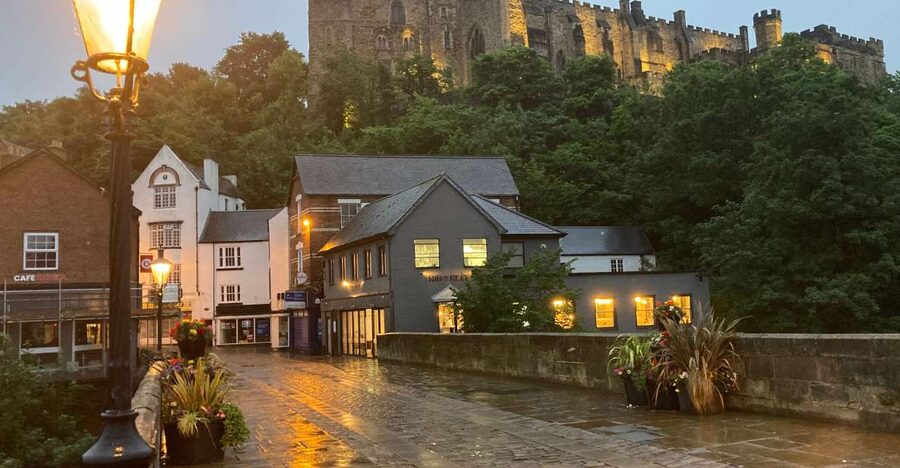
From the Market Place, the route takes in two historic bridges and quieter walkways beside the river. This is one of the best parts of the experience because Durham’s setting begins to make sense from the ground.
The river is not just a pleasant backdrop. It helps explain why the city feels so distinctive, with its historic center gathered around a high central area. As you walk, you get changing views of the old city and a clearer sense of how the bridges connect different parts of Durham.
The riverside section also gives the tour some breathing room. After the activity of the Market Place, the quieter path lets you listen without the same level of street noise. You can expect a mix of views, movement and stories rather than a stop-by-stop march between monuments.
Peter’s use of geography is a useful part of his guiding. One person specifically praised the way he used geography to explain events and unusual stories. That matters in Durham, where the shape of the city helps explain what you are seeing.
The main practical point is footwear. The walk is described as easy and manageable, but it still includes bridges, riverside paths and the Bailey. Comfortable shoes are the sensible choice, and weather can affect how enjoyable the outdoor sections feel.
The Prince Bishops and Durham’s medieval power
The tour’s medieval section centers on the Prince Bishops, one of Durham’s most distinctive themes. You do not need a specialist background to follow it. Peter presents the subject through stories and clear explanations, making the political and religious past feel connected to the places around you.
This is where the tour adds value beyond a self-guided stroll. On your own, you may see a grand cathedral, an imposing castle and attractive streets. With Peter, you get a reason to connect those sights with the unusual authority once held by Durham’s church leaders.
The focus is also on people and events, not just dates. That makes the material easier to remember. The history becomes a sequence of decisions, conflicts and personalities rather than a list to absorb before moving on.
You should expect some storytelling rather than a full academic account. A 90-minute tour cannot cover every part of County Durham’s past. Its job is to give you a strong introduction to the city and point out the themes worth exploring later.
That balance seems to suit the experience. The strongest praise centers on Peter making Durham’s history come alive, while one four-star assessment appreciated the mix of history, geography and stories about people past and present. That is a fair description of what the tour aims to do.
A different sort of outing around the UK:
- London: The London Eye Entry Ticket
★ 4.6 · 35,875 reviews - From London: Harry Potter Warner Bros Studio Tour
★ 4.7 · 26,588 reviews - London: Westminster to Greenwich River Thames Cruise
★ 4.5 · 22,836 reviews - Magical London: Harry Potter Guided Walking Tour
★ 4.7 · 22,044 reviews
Walking the South and North Bailey
The route continues along the South and North Bailey, the streets associated with Durham University. This section shows you a different side of the city. The grand medieval core gives way to an active university setting, yet the historic character remains close at hand.
The Bailey is especially useful for understanding how Durham functions today. You are not looking only at monuments preserved behind ropes. You are walking through streets that remain part of everyday city life, with the university woven into the old center.
Peter’s local perspective is helpful here. He knows Durham as his home county, not simply as a collection of attractions, and that wider connection comes through in the way he talks about the city. He may also offer ideas for what to do after the tour, including food and cafés.
Those recommendations can be a practical bonus. Two people specifically noted that Peter’s suggestions led to enjoyable meals in Durham. They are not a formal part of the tour, but they can help you turn a short walk into a better day in the city.
The Bailey section may not suit anyone expecting nonstop landmark views. Some of the pleasure comes from seeing how the historic center is used now. I would value it as a part of the city’s character, not as a photo stop every few minutes.
Palace Green and the final view of the cathedral
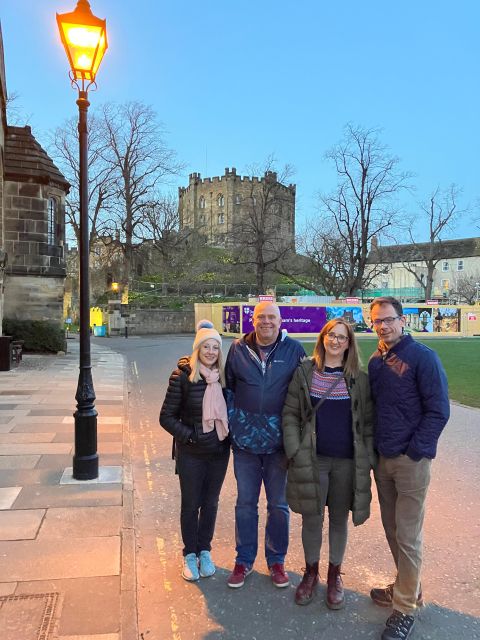
The walk finishes on Palace Green, at the center of Durham’s UNESCO World Heritage Site. This is the natural grand finale, with Durham Cathedral and Durham Castle forming the essential pair of sights.
Ending here is smart. The tour builds from the ordinary city center, through bridges and riverside paths, and finishes among Durham’s most important historic buildings. By the time you reach Palace Green, you have heard enough context to look at the cathedral and castle with more understanding.
The tour ends at the doors of Durham Cathedral. This is a strong stopping point, but remember that the group does not enter. You can continue inside afterward on your own if it is open, or simply pause outside and take in the setting before returning to the Market Place.
The return is easy. The cathedral doors are only about four minutes from the starting point, so you are not left trying to find your way back across unfamiliar streets. That is useful if you have a train, meal booking or another timed plan.
For me, the final stop works best as a handoff. Peter gives you the background, then you decide how much more time to spend inside the cathedral, around the castle or elsewhere in Durham.
What the guide adds to the experience
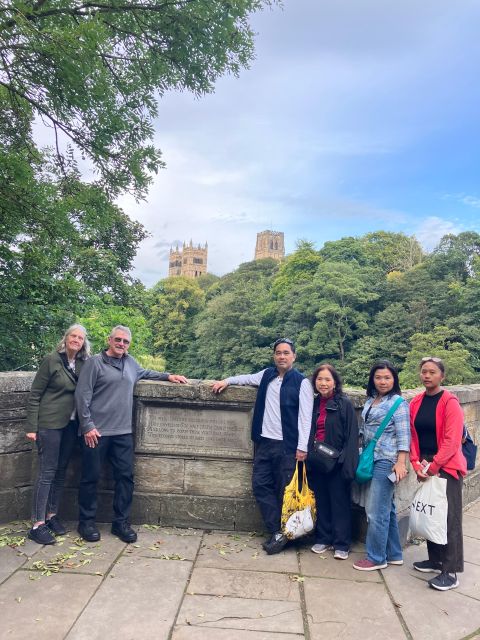
The clearest pattern in the feedback is Peter’s way with people. He is repeatedly praised for being friendly, engaging, funny, patient and clear. One person called him quietly engaging, which suggests he does not need to dominate the group to hold its attention.
That matters on a history walk. Facts alone can make a city feel flat. Peter’s appeal is that he links information with stories and a visible affection for Durham. His enthusiasm for both the city and the wider county gives the walk a sense of place.
He also seems comfortable adjusting to the group. One person described a tailored experience, while another appreciated being able to ask plenty of questions. That flexibility is useful for mixed groups, especially when some people want architecture and others are more interested in local characters or modern Durham.
The tour is in English, with a live guide. If English is not your first language, the relaxed pace and clear communication may help, but there is no alternate language listed.
Price, pace and overall value at $24
At $24 per person, this is a reasonable spend for a focused introduction to Durham. You are paying for a live guide, a carefully arranged walking route and local interpretation, not admission to the cathedral or castle.
That distinction is important. If you want a tour that includes entry tickets, this is not it. But if you plan to visit the cathedral separately, the walk helps you get more from that visit by explaining what you are looking at first.
The pace appears to be one of the strongest practical features. People describe it as easy, relaxed and well judged, with enough time for stories and questions. The 90-minute format also works well before lunch, after arrival in Durham or as an afternoon activity.
Weather is the main variable. The route is outdoors, and one person enjoyed it despite drizzle. Still, Durham’s bridges and riverside paths are more pleasant in dry weather, so check the forecast and dress for the conditions.
Dogs are welcome, another small point that can make the decision easier. You will need to keep in mind that the tour does not enter buildings, but that limitation also makes bringing a dog possible.
You can cancel up to 24 hours before the start for a full refund. The reserve-now, pay-later option lets you hold a place without paying immediately, which is useful when your Durham plans are still shifting.
Who should book the Durham History Tour?
I would choose this tour if you are visiting Durham for the first time and want the city to make sense quickly. It is also a good fit if you enjoy local stories, church and civic history, riverside walks and guides who welcome questions.
It suits couples, families and small groups looking for a manageable activity. Dogs are welcome, and the route is described as easy paced. The tour also works well for anyone who wants practical suggestions for cafés, restaurants and other places to visit afterward.
You may want something else if you need step-free certainty, a fully indoor activity or entry into Durham Cathedral and Castle as part of the same booking. The supplied information does not provide detailed accessibility specifications, so contact the provider if that is important for you.
I would also avoid packing the rest of your day too tightly. The walk lasts 90 minutes, but you may want extra time at Palace Green or the cathedral once the tour ends.
Should you book it?
Book it if you want a friendly, story-led introduction to Durham in a short amount of time. Peter’s local insight, the easy pace and the route from Market Place to Palace Green make this more useful than simply wandering between the main sights.
The best plan is to take the tour early in your visit, then return to Durham Cathedral or explore the castle area afterward. At $24, it offers good value for the context and orientation, as long as you understand that attraction entry is not included.
FAQ
How long is the Durham History Tour?
The tour lasts 1.5 hours, or 90 minutes.
How much does the tour cost?
The price is $24 per person.
Where does the tour meet?
Meet at the Man on the Horse statue in Durham Market Place. Look for a black umbrella.
Where does the tour finish?
The walk finishes at the doors of Durham Cathedral on Palace Green. The cathedral is about a four-minute walk from the Market Place starting point.
Does the tour enter Durham Cathedral or Durham Castle?
No. The tour does not enter any buildings or attractions.
What language is the tour conducted in?
The live guided tour is conducted in English.
Are dogs allowed?
Yes. Dogs are welcome on the tour.
Can I cancel the booking?
Yes. You can cancel up to 24 hours in advance for a full refund. You can also reserve now and pay later.
Recently added around the UK
- Cairngorms & Whisky Day Tour from Inverness Including Admission★ 5.0 · 55 reviews
- PRIVATE HIRE 45 min Speedboat Tour – Embankment/Westminster Pier★ 5.0 · 55 reviews
- From Edinburgh: Islay and The Whisky Coast 4-Day Tour★ 4.9 · 55 reviews
- Fantastic Creatures of Edinburgh, and where to find them!★ 4.5 · 55 reviews
- E-bike excursion exploring the Purbecks★ 5.0 · 55 reviews
- ‘A Wee Pedal’s’ Family Friendly Cycle Tour to Edinburgh’s Coast★ 5.0 · 55 reviews
- Private Tour of London’s Historic Pubs★ 5.0 · 55 reviews
- From London: Glastonbury and Cheddar Gorge Guided Day Trip★ 4.8 · 55 reviews
Historical Tours, compared.
A History of Terror – Belfast City Centre Walking Tour
Read our review →
Old Town Walking Tour History and Tales in Edinburgh
Read our review →
Shadows of York: Ghost Walk and Horrible History.
Read our review →
Multi-Sensory Small-Group Historic Vaults Tour in Edinburgh
Read our review →
Browse the lists this tour appears in