
Reviewed · HISTORICAL TOURS
A History of Terror – Belfast City Centre Walking Tour
Belfast’s pavements carry difficult stories. This 2.5-hour walk brings The Troubles into focus through specific streets, memorials, attacks, and personal memories. I like the clear historical timeline, which begins with the roots of the conflict and ends with Belfast’s fragile peace. I also like the use of headsets, especially in a group of up to 25 people. The main consideration is emotional: some stops concern bombings, deaths, and painful memories, so this is not a light sightseeing stroll.
The route is flat and only about 1.5 miles, but you spend plenty of time standing and listening. Guides such as James, Anne, Mylie, Róisín, Rory, Chris, and Rorey have been praised for making difficult material understandable and personal. Still, one reported equipment failure made it hard for part of a group to hear, so staying near the guide is wise.
In This Review
- Key points to know before you book
- Why this Belfast walking tour matters
- Starting at City Hall with the roots of the conflict
- Donegall Place and the city’s security cordon
- Castle Lane and the reality of daily life
- The Spirit of Belfast and a turning point in 1971
- The Cathedral Quarter, street art, and the path to peace
- Ann Street and policing during The Troubles
- The Beacon of Hope and Belfast today
- Guide style, group size, and sound quality
- Weather, walking, and the real value of $36.06
- Who should take this tour
- Should you book A History of Terror?
- FAQ
- Where does the tour start?
- What time does the tour begin?
- Where does the tour end?
- How much walking is involved?
- Is the tour suitable for children?
- What happens if the weather is poor?
Key points to know before you book
- A focused look at The Troubles: The tour explains how long-running British and Irish tensions led to violence in the late 1960s and how the peace process developed.
- Seven central Belfast stops: You visit City Hall, Donegall Place, Castle Lane, the Spirit of Belfast, the Cathedral Quarter, Ann Street, and the Beacon of Hope.
- Mostly standing, not strenuous walking: The route is flat, with no hills or steps, but comfortable shoes and weather protection still matter.
- Personal stories add weight: Several guides draw on memories of growing up in Belfast during the conflict, putting names and human experiences beside the political facts.
- A balanced presentation: The tour aims to explain both British and Irish viewpoints without telling you what conclusion to reach.
- Good value at $36.06: For a small amount of walking and two and a half hours of guided context, the price is fair if Belfast’s modern history matters to you.
Why this Belfast walking tour matters
Belfast can look easy to read at first. City Hall, shopping streets, pubs, public art, and the Cathedral Quarter make it feel like a compact city break destination. Yet many ordinary corners carry memories of violence that are not obvious to a first-time visitor.
This tour gives you a framework for understanding those places. Instead of seeing The Troubles as a long list of dates and labels, you follow the story through streets where attacks happened, where security measures changed daily life, and where Belfast’s present-day peace was slowly built.
I value that approach because it links politics to normal routines. A shopping street becomes a place where people once faced danger. A police station becomes a clue to how the city was governed. A modern artwork beside the River Lagan becomes a way to discuss both loss and hope.
The tone is serious but not sensational. The best guides keep the focus on people and consequences rather than treating violence as a spectacle. The material can still be upsetting, particularly at the locations connected with deaths, but the tour’s purpose is understanding.
More City Tours in Belfast
- Private Black Taxi Belfast City Tour
★ 5.0 · 2,188 reviews - City Sightseeing Belfast Hop-On Hop-Off Bus Tour
★ 4.5 · 2,012 reviews - Belfast Eclectic Walking City Center Experience, The Marti Way
★ 5.0 · 348 reviews
Starting at City Hall with the roots of the conflict
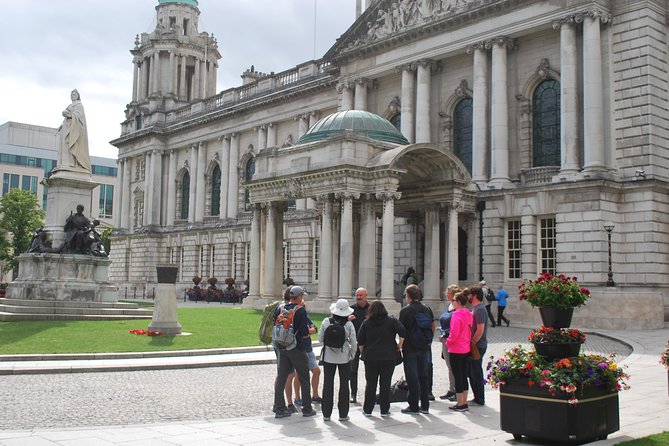
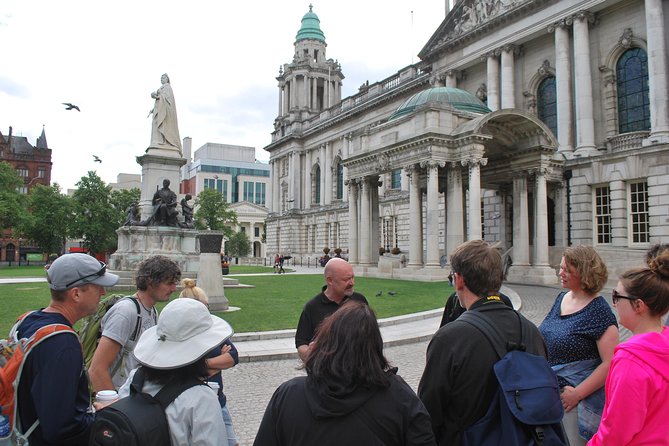
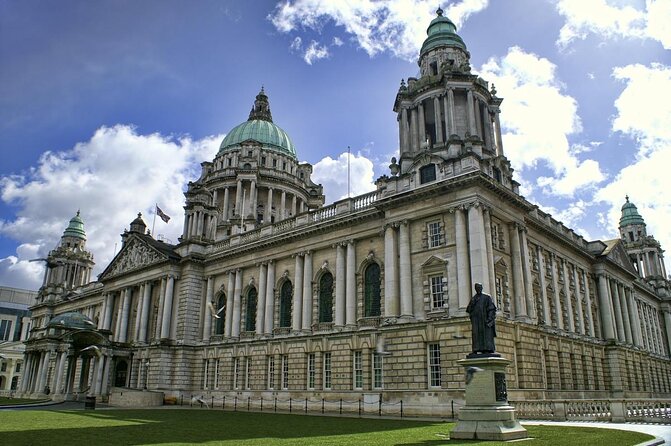
Meet at Belfast City Hall in Donegall Square North at 10:30 a.m. The tour begins in the grounds, where the guide sets out the long relationship between Britain and Ireland before explaining how The Troubles began in the late 1960s.
This opening takes about 20 minutes, and it is important not to rush it. If you arrive knowing little about Northern Ireland, the introduction gives you the basic terms and political background needed for the rest of the walk. It also helps explain why religious identity, nationality, and political loyalty became so closely linked.
The guide’s job here is not simply to recite a timeline. The strongest presentations, such as those praised for James, Anne, and Róisín, connect the wider dispute to ordinary life in Belfast. Róisín, in particular, has been described as a passionate storyteller who experienced parts of the period firsthand. Anne has also shared memories of being a child during the conflict.
That personal connection can make the opening more affecting. It can also mean that the delivery varies with the guide. Most of the praise points to warm, clear, and balanced presentations, but you should expect a human account rather than a detached lecture.
Donegall Place and the city’s security cordon
The next stop is Donegall Place, now one of Belfast’s main shopping streets. The contrast is deliberate. Shops and everyday city traffic make it easy to forget that this area once saw a nightclub bombing in 1971 and the tragic events that followed.
The guide explains the attack, its consequences, and the introduction of the Ring of Steel. This security system changed how people entered and moved around central Belfast. It is a useful reminder that the conflict was not confined to distant neighborhoods or isolated incidents. The city center itself was shaped by fear, checks, barriers, and the threat of sudden violence.
You spend around 15 minutes here. There is no admission charge, since every stop is outdoors, but the experience depends on the guide’s explanation. Look around as you listen. The ordinary setting is part of the lesson.
For some people, this stop may feel stark. You are not visiting a museum with a controlled display. You are standing in a public street while hearing about real attacks and deaths. The guide’s sensitivity matters, and the strongest accounts treat the subject with care.
Castle Lane and the reality of daily life
At Castle Lane, the tour moves into Belfast’s pedestrian shopping area. The guide uses this busy setting to explain what life felt like at the height of The Troubles and discusses an event that remains firmly remembered.
This is one of the tour’s most effective ideas: placing difficult history in the middle of normal city life. You may be standing among shops and passing pedestrians, yet the guide asks you to picture the same area under very different conditions.
The stop lasts about 15 minutes. The walking between locations is short, so much of the experience involves standing in one place while the story develops. One useful point from the available feedback is that this tour involves more listening than walking. If you expect a brisk city stroll, adjust your expectations.
That is not necessarily a weakness. The limited distance leaves room for detail, names, and context. It also makes the tour manageable for most people, provided you can stand for several minutes at a time.
More Walking Tours in Belfast
- Belfast Political Tour-Conflicting Stories Walking Tour
★ 4.5 · 459 reviews - Best of Belfast Walking Tour
★ 5.0 · 399 reviews - Belfast Troubles Murals Street Art and Peace Wall Walking Tour
★ 5.0 · 163 reviews - The Real Eclectic Belfast City Walking Tour/Experience.
★ 5.0 · 152 reviews
The Spirit of Belfast and a turning point in 1971
The Spirit of Belfast sculpture is known locally by the playful nickname the Onion Rings. Its intended message is resilience, but here it becomes the setting for a serious account of events that began in a nearby bar in 1971.
The guide explains how those events helped push Northern Ireland into a rapidly worsening cycle of violence. This stop lasts about 15 minutes and adds another piece to the timeline begun at City Hall.
Public art can sometimes feel disconnected from difficult history. Here, the sculpture gives the tour a visual marker and a chance to discuss how Belfast presents itself today. The city is not pretending its past never happened. Instead, modern public spaces sit beside memories that still matter.
The tone remains factual and personal. Several accounts praise guides for giving names and voices to victims rather than treating the period as a political game. That is an important difference. You are encouraged to understand the people affected, not simply memorize which group supported which position.
The Cathedral Quarter, street art, and the path to peace
The route then passes through the Cathedral Quarter, Belfast’s cultural and nightlife district. Today, its streets and alleys contain street art, bars, and nightspots. The tour uses this regenerated area to discuss further events and the beginnings of the path to peace.
This is a strong midpoint because it shows change without pretending that change erased the past. The contrast between nightlife and memories of the 1970s can be jarring, but it also shows how much Belfast has altered.
The stop lasts about 20 minutes. You will hear more about important events, then begin to shift toward the peace process and the city’s present. Guides who have been praised for linking past and present do particularly well here. Mylie, for example, has been described as engaging, personable, and able to connect Belfast’s history with current life.
The Cathedral Quarter is also one of the more visually interesting parts of the route. Even if you are mainly interested in politics, the street art and changing streetscape help you see Belfast as a living city rather than a historical case study.
Ann Street and policing during The Troubles
At Ann Street, the group pauses beside Belfast’s largest police station. The guide explains how Northern Ireland was policed during The Troubles, how policing changed after the peace agreement, and how Brexit may affect borders.
This stop takes about 15 minutes and broadens the discussion beyond attacks and political divisions. Policing shaped how people experienced the city every day, and the subject can help you understand why security, trust, and identity remain sensitive issues.
The Brexit discussion gives the tour a present-day connection. The guide does not only look backward. You also consider how borders and political arrangements may affect Northern Ireland’s future.
This is another point where a balanced guide is essential. The tour is intended to present the facts and competing perspectives without directing you toward a political answer. A strong guide will help you see why the subject remains complicated.
The Beacon of Hope and Belfast today
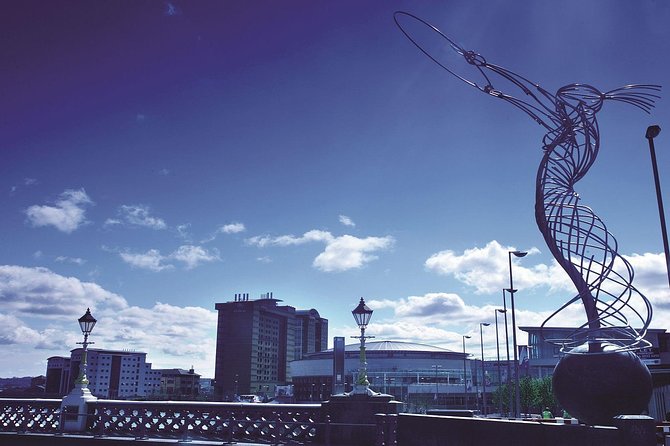
The final stop is at the Beacon of Hope on Oxford Street, beside the River Lagan. The tour ends here after about 20 minutes of discussion comparing present-day Belfast with one of its darkest periods.
The sculpture is presented as a symbol of resilience and regeneration. From this riverside setting, the guide explains how peace was achieved, why it remains fragile, and what the future may hold.
This ending gives the walk a needed sense of direction. The tour does not leave you only with images of bombs, barricades, and grief. It asks you to consider what changed and how difficult peace was built.
From the Beacon of Hope, City Hall is about a five-minute walk away. That makes the finish convenient if you want to continue exploring central Belfast, return to your hotel, or stop for lunch.
Guide style, group size, and sound quality
The tour allows a maximum of 25 people, which is large enough to create energy but small enough to keep the group together on city streets. Headsets are included so you can hear the guide clearly while walking or standing near traffic and other city noise.
Most of the praise focuses on the guides. James is repeatedly described as warm, enthusiastic, and highly informed about The Troubles. Mylie has been praised for an engaging delivery and a strong grasp of both history and present-day Belfast. Anne receives similar credit for combining personal experience with clear explanations.
Róisín has been singled out for emotional storytelling, while Chris is praised for giving a balanced account of the terror years. One particularly useful point is that a guide does not need to have been born in Belfast to present the subject well. A guide described as American won over a skeptical participant within moments through strong preparation and a fair approach.
There is one clear practical warning. One group reported that the guide’s speaker stopped working halfway through the tour and that people at the back could not hear. This appears to be an isolated problem, but it is sensible to stay near the guide and speak up quickly if the sound fails.
Weather, walking, and the real value of $36.06
At $36.06 per person, the tour is fairly priced for two and a half hours with a local guide and audio equipment. You are paying for interpretation, not attractions or transport. The value rises if you want a serious introduction to Belfast before visiting other sites.
The route is approximately 1.5 miles and completely flat. There are no hills or steps, so the physical effort is modest. Still, expect frequent stops and periods of standing rather than continuous walking.
Belfast weather can change quickly. The tour runs in all weather unless conditions force cancellation, so bring a waterproof jacket and warm clothing in winter. Comfortable shoes are sensible even on a flat route.
The minimum age is 12. Service animals are allowed, and the tour is near public transport. Most people can take part, but the emotional subject matter is the more important consideration than the physical demands.
Free cancellation is available up to 24 hours before the 10:30 a.m. start for a full refund. Changes or cancellations inside that period are not accepted for a refund. If poor weather causes the operator to cancel, you are offered another date or a full refund.
Who should take this tour
I would choose this tour early in a Belfast visit if you want to understand the city before exploring it on your own. The walk gives names, dates, places, and political context that can make later visits more meaningful.
It suits adults and young people aged 12 and above who can handle serious material. It is especially useful for anyone arriving with only a vague idea of The Troubles, or with a one-sided understanding shaped by family, nationality, or the media.
It may not suit you if you want a cheerful introduction to Belfast’s architecture, shopping, or pub scene. The Cathedral Quarter appears on the route, but the focus is violence, politics, policing, and peace. You also need to be comfortable standing outdoors in possible rain.
Should you book A History of Terror?
Yes, if Belfast’s recent past is one of your reasons for visiting. The tour is thoughtful, direct, and grounded in real places rather than abstract dates. Its best guides, including James, Anne, Mylie, Róisín, and Chris, make the subject personal without turning it into a partisan speech.
The strongest reasons to book are the balanced presentation, the firsthand memories, and the useful route through central Belfast. The main cautions are the heavy subject matter, outdoor standing, and the possibility of an audio problem in a larger group.
At $36.06, I consider it good value for a serious two-and-a-half-hour introduction. Put on sensible shoes, bring a waterproof layer, stay close enough to hear, and give yourself time afterward to think about what you have learned.
FAQ
Where does the tour start?
It starts at Belfast City Hall, Donegall Square North, Belfast BT1 5GS.
What time does the tour begin?
The tour starts at 10:30 a.m.
Where does the tour end?
It ends at the Beacon of Hope on Oxford Street, Belfast BT1 3NB. From there, City Hall is about a five-minute walk away.
How much walking is involved?
The route covers approximately 1.5 miles. Belfast city center is flat, with no hills or steps, though comfortable footwear is recommended.
Is the tour suitable for children?
The minimum age is 12 years.
What happens if the weather is poor?
The tour normally takes place regardless of weather, so a waterproof jacket and warm clothing are recommended. If the operator cancels because of poor weather, you can choose another date or receive a full refund.
More History Tours
- Private Political History & Murals Tour Belfast
★ 5.0 · 182 reviews - Belfast Political/history/troubles private taxi/cab tour
★ 5.0 · 69 reviews - London Small Group Tour of Historical Pubs
★ 5.0 · 10,422 reviews - Old Town Walking Tour History and Tales in Edinburgh
★ 5.0 · 2,168 reviews
Recently added around Belfast
- Private Belfast Troubles Cab Tour Adventure 2hrs Personal Guide★ 5.0 · 55 reviews
- Giants Causeway private tour from Belfast★ 5.0 · 57 reviews
- Giants Causeway Tour from Belfast + FREE Belfast Mural Tour★ 5.0 · 59 reviews
- Belfast Titanic Museum and Sighseeing Tour★ 4.5 · 59 reviews
- Belfast’s Sensory Cocktail Experience with 4 Cocktails★ 5.0 · 61 reviews
- Belfast Music and Street Art Small Group Guided Experience★ 4.5 · 62 reviews
- Private Giants Causeway Tour From Belfast★ 5.0 · 67 reviews
- IRA Troubles Conflict Private Tour Museum Graves Murals and Political Analysis★ 5.0 · 67 reviews
Historical Tours, compared.
Old Town Walking Tour History and Tales in Edinburgh
Read our review →
Shadows of York: Ghost Walk and Horrible History.
Read our review →
Multi-Sensory Small-Group Historic Vaults Tour in Edinburgh
Read our review →
Browse the lists this tour appears in