
Reviewed · WALKING TOURS
Belfast Political Tour-Conflicting Stories Walking Tour
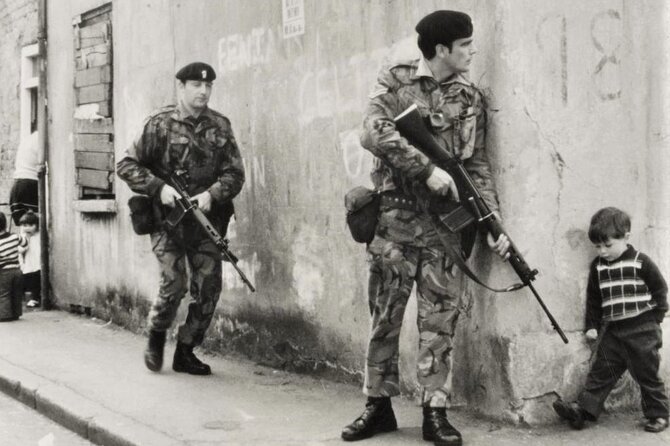
History here is written on walls. This three-hour Belfast walk takes you through the Falls and Shankill districts, where political murals and memorials explain the conflict from Republican and Loyalist viewpoints. I like the tour’s two-guide format, especially the personal accounts from people who lived through the Troubles. I also like that it reaches places a standard city walk can miss, including Bombay Street, the Bayardo memorial, and the Peace Wall gates.
The main drawback is that this is a serious outdoor walk, not a polished sightseeing show. Some stories are painful, some opinions are blunt, and the quality depends partly on which guides lead the two sections. Busy roads can make hearing difficult, so stay close to the guide and ask questions if you miss a point.
In This Review
- Key points at a glance
- Why this Belfast walk matters
- Starting at Divis Tower and entering the Falls area
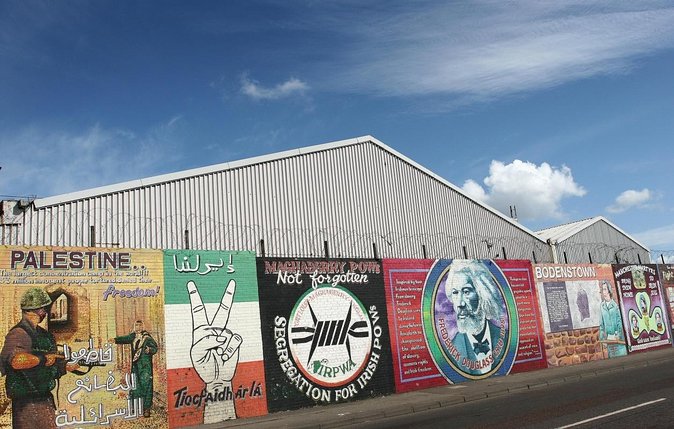
- The International Wall
- The Bobby Sands mural
- D Company memorial garden and Bombay Street
- Crossing toward Shankill Road
- Shankill Road through a Loyalist lens
- Shankill Memorial Garden
- Bayardo and Frizzells
- UVF and Somme memorials
- The value of hearing personal accounts
- Walking conditions, group size, and timing
- Is $36.05 good value?
- Who should book this experience?
- Getting back after the Shankill Road finish
- Should you book the Belfast Political Tour?
- FAQ
- How long is the Belfast Political Tour?
- Where does the tour start?
- Where does the tour finish?
- How much does the tour cost?
- Is the tour offered in English?
- Can I cancel for a full refund?
Key points at a glance
- Two guides, two viewpoints: Hear Republican and Loyalist accounts from people with direct experience of Belfast’s conflict.
- A full three hours on foot: The Falls Road and Shankill Road sections each take about 90 minutes, with plenty of standing at street-side sites.
- Murals with meaning: See the International Wall, Bobby Sands mural, D Company memorial garden, UVF memorial, Somme memorial, and more.
- The Peace Wall is still part of daily life: You can learn how separation between the communities continues, including the reported nightly closing of some gates.
- Strong value at $36.05: There are no extra admission fees, and the price pays for a focused local guide experience rather than a large sightseeing bus.
- Dress for Belfast weather: Wind can make the walk feel colder than expected. Wear sturdy shoes and bring water.
Why this Belfast walk matters
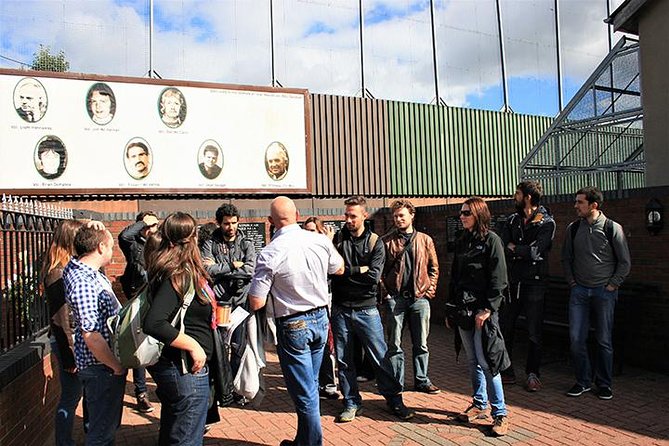
Belfast’s recent past is not tucked away in a museum. It is visible in street names, flags, memorial gardens, painted walls, and barriers that still divide neighborhoods. The tour helps you read those signs without pretending the story has one neat answer.
You begin near Divis Tower in West Belfast and finish on Lower Shankill Road. That route gives the walk a clear shape. First, you hear the Republican or Nationalist account around the Falls area. Then you cross toward the Loyalist or Unionist side and hear how the same decades looked from there.
That structure is the heart of the experience. A single guide can give you useful facts, but two guides with opposing backgrounds show why memory in Belfast remains so contested. The point is not to pick a winner. The point is to understand why two communities can remember the same street, bombing, or death in entirely different ways.
The guides are also open to questions. Past tours have included guides named Paul, Ian, Jack, and Mark, though the exact pair can vary. One first-hand account described Jack explaining the Republican side and Mark presenting the Unionist view. Another praised Paul and Ian for handling the complexity of the Troubles with passion and care.
Do not expect every comment to fit comfortably with your own politics. That discomfort is part of the lesson. The best approach is to listen carefully, separate personal memory from historical fact, and ask respectful questions.
More Walking Tours in Belfast
- A History of Terror – Belfast City Centre Walking Tour
★ 5.0 · 2,883 reviews - Best of Belfast Walking Tour
★ 5.0 · 399 reviews - Belfast Eclectic Walking City Center Experience, The Marti Way
★ 5.0 · 348 reviews
Starting at Divis Tower and entering the Falls area
The meeting point is Divis Tower, Belfast BT12 4QA. This is a useful landmark, but give yourself enough time to find it. The tour begins in the West Belfast area rather than at the central tourist district, so check your route before setting out.
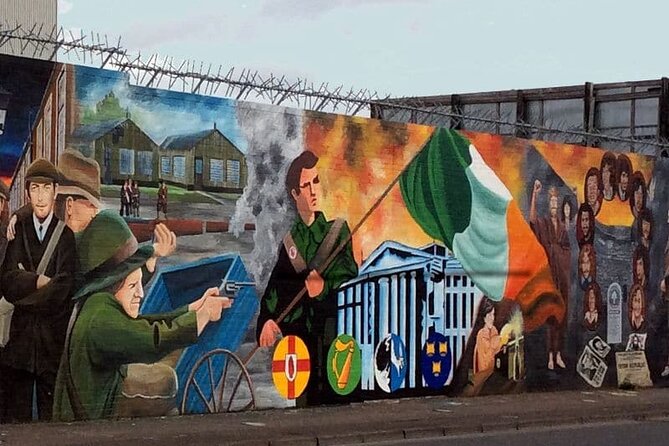
The first 90 minutes focus on the Nationalist area around Falls Road. You will move between murals, memorials, and places linked to the conflict. The walk includes the International Wall, the Bobby Sands mural, the D Company memorial garden, and Bombay Street.
The sites are free to visit, but the guide gives them context. That matters because a mural can be easy to photograph and hard to understand. Names, symbols, flags, and portraits carry political messages that are not always obvious if you are seeing them for the first time.
The International Wall
The International Wall is one of the most visually striking parts of the opening section. Its murals connect Belfast’s political struggle with wider causes and movements. You will see how public art became a way to express identity, solidarity, anger, and political aims.
Take time to look beyond the largest image. The guide may explain why certain figures or causes appear there and how the wall has changed over time. This is also a good place to ask about the difference between a memorial, a political statement, and propaganda. In Belfast, those categories can overlap.
The Bobby Sands mural
The Bobby Sands mural introduces one of the most important Republican symbols in Belfast. Sands was an IRA member, hunger striker, and elected Member of Parliament who died in 1981. The mural is not simply a portrait. It reflects Republican remembrance and the way Sands remains part of the political identity of the Falls area.
The value here comes from hearing how the image is viewed locally, rather than treating it as a quick photo stop. You may not agree with the political message, but the guide helps explain why it has such force.
A different sort of outing around Belfast:
- Titanic Belfast Entrance Ticket: Titanic Visitor Experience Including SS Nomadic
★ 4.5 · 3,698 reviews - Cab Tours Belfast Famous Black Taxi Tours
★ 5.0 · 3,633 reviews - Game of Thrones and Giant’s Causeway Full-Day Tour from Belfast
★ 5.0 · 2,291 reviews - Private Black Taxi Belfast City Tour
★ 5.0 · 2,188 reviews
D Company memorial garden and Bombay Street
The D Company memorial garden adds another layer of personal memory. Memorial spaces often name people and events that official accounts compress into a few lines. Here, the guide connects names and symbols with the lives of people who lived in the area.
Bombay Street is especially important because it shows how violence affected ordinary residential streets. The stop helps move the story away from leaders and armed groups and toward families, homes, and neighborhood fear. That shift is one of the strongest parts of the tour.
The pace is moderate. You walk between stops, then spend time listening, so this is not a fast march through the district. Still, you are outside for the entire first half. Comfortable shoes matter, even though the route is not described as hilly.
Crossing toward Shankill Road
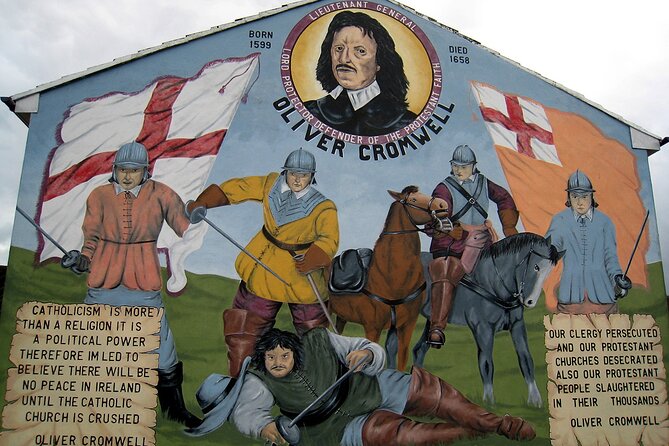
The Peace Wall forms the physical and emotional center of the walk. The tour visits locations on both sides of the barrier between Falls and Shankill Roads, allowing you to see how close the neighborhoods are geographically and how separate they can feel socially.
The wall is not just a relic. You may hear that some gates still close at night, reportedly around 8 p.m. That detail can be startling. A structure associated with the past remains part of present-day movement and security.
You can also sign the Peace Wall if you bring a pen or marker. Treat this as a personal choice, not a required ritual. Many people leave messages of hope, but the wall also reflects how unfinished the peace process can feel.
The crossing point is a good moment to pause and think about what the physical barrier means. Removing it might seem like an obvious step toward unity, yet the guides can show why residents may not see the issue in such simple terms. Safety, trust, identity, and political control all enter the discussion.
Shankill Road through a Loyalist lens
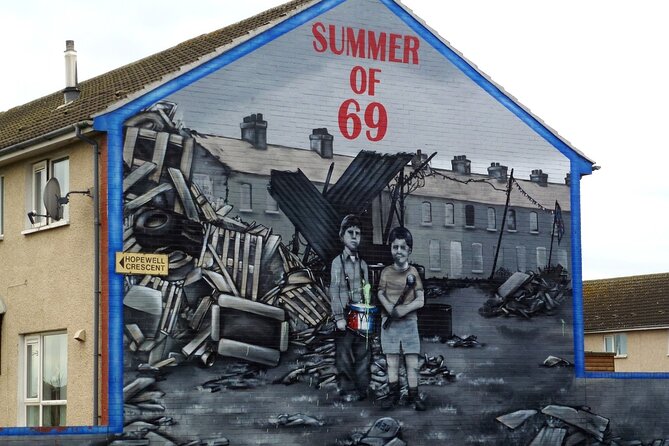
The second 90-minute section takes place around Shankill Road. Here, you hear the Loyalist or Unionist interpretation of the Troubles and see memorials connected to that community.
Stops include the Shankill Memorial Garden, the Bayardo bombing site, a UVF memorial, the former Frizzells Fish Shop bombing location, and the Somme memorial. As on the Falls side, the guide links murals and memorials to real people and specific events.
Shankill Memorial Garden
The Shankill Memorial Garden focuses attention on losses remembered within the Loyalist community. The guide may discuss childhood friends, neighbors, and family members affected by killings and bombings. This personal scale is important because it counters the habit of describing the conflict only through political labels.
You may find the second half more emotionally difficult than the first. One guide might emphasize attacks on civilians and the deaths of people who had no role in the armed conflict. Listen for how the guide builds a community story from those losses.
Bayardo and Frizzells
The Bayardo bombing and Frizzells Fish Shop site show how violence could strike everyday places. A bar, shop, or street corner becomes a memorial because people were killed there. These stops can feel stark, particularly when the guide names victims and explains what happened.
The setting can also create a practical problem. Parts of the route run beside active roads with buses, trucks, and other traffic. A large group standing on a pavement may have trouble hearing every sentence. Stay near the speaker, and do not hesitate to ask the guide to repeat a detail.
UVF and Somme memorials
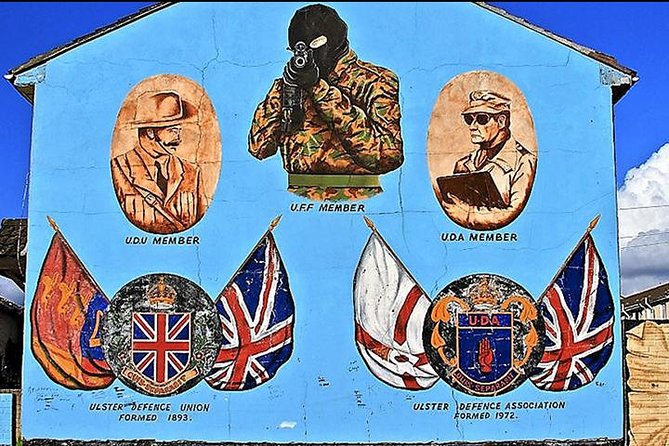
The UVF memorial presents a difficult subject directly. You will encounter symbols connected to a loyalist paramilitary organization and hear how that community remembers its dead. The guide’s job is not to make every action acceptable. It is to explain how the memorial fits into the community’s political memory.
The Somme memorial adds an older historical reference to the walk. It points toward the Unionist connection with British identity and military service. This helps explain why the two sides do not simply disagree about current politics. They also draw on different stories about ancestry, loyalty, sacrifice, and belonging.
The value of hearing personal accounts
The strongest reason to book this tour is the access to lived experience. The former political prisoners and politically involved guides do not speak like neutral textbook narrators. Their accounts can be passionate, partial, and sometimes uncomfortable.
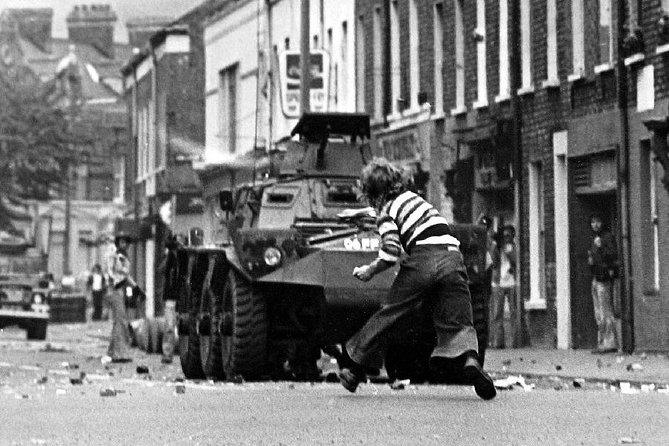
That is not a flaw by itself. A polished version of the Troubles can leave you with dates but no feel for how the conflict shaped daily life. Personal stories show why distrust survived the ceasefires and why old identities remain strong.
At the same time, you should keep your critical thinking switched on. A first-hand account is valuable, but it is still one person’s account. The two-part format helps because you hear more than one side, but the tour does not promise a final verdict or a full academic history.
Some people leave with more questions than answers. That is a fair result for a subject that remains politically active. You may find yourself discussing the walk later over a drink, especially the question of why the Peace Wall remains and what lasting peace should look like.
Walking conditions, group size, and timing
The tour lasts about three hours and has a maximum group size of 20. That is small enough for a more personal feel, though a full group can still gather tightly around a mural or memorial.
You will be walking and standing outdoors for the full session. Reviews describe the route as manageable and without hills, but the distance is still significant because it combines two 90-minute walks. Wear comfortable footwear and bring a warm layer. Belfast wind can make a mild day feel cold, especially beside open streets and walls.
Water is sensible, and a small snack can help. One tour account included a comfort break early in the Shankill section, with a chance to buy a drink, but do not treat that as a substitute for preparing yourself.
Weather may affect the schedule. If poor conditions force cancellation, you can be offered another date or a full refund. If you need to cancel, the full refund deadline is at least 24 hours before the start time.
The tour is offered in English, uses a mobile ticket, and permits service animals. It is near public transport, and most people can participate, but anyone with difficulty walking or standing for extended periods should consider the three-hour outdoor format carefully.
Is $36.05 good value?
At $36.05 per person, the price is fair for a three-hour specialist walk. You are paying for two local guides, two community perspectives, and access to an organized route through places that would be hard to interpret on your own.
There are no admission charges at the stops, but that does not make the tour itself unnecessary. The value is in the explanation. Without a guide, you might recognize Bobby Sands or spot a paramilitary emblem, but you would miss much of the meaning and the personal cost behind it.
The two-guide format also gives this tour an advantage over a basic city history walk. You are not just hearing a timeline. You are hearing how different communities remember the same period.
The main value warning is consistency. Most accounts describe the walk as thoughtful, detailed, and authentic, but a small number report weak delivery, poor sound, or a missing second guide. One booking had to be refunded because a guide failed to appear and no replacement was arranged. Another person found the road noise and muffled microphone made the talk hard to follow.
Those problems appear to be exceptions, but they are worth keeping in mind. If you cannot hear, speak up early. If one half of the promised format is missing, contact the operator or booking company promptly.
Who should book this experience?
I would recommend this tour if you want to understand how the Troubles still shape Belfast’s neighborhoods. It is especially useful for first-time visitors who have seen the murals online but want to know what they represent.
It suits people who:
- Want direct accounts rather than a purely academic presentation
- Can listen to opposing political views without needing a simple answer
- Are comfortable with emotional stories about murder, bombing, and loss
- Enjoy walking tours more than bus-based sightseeing
- Want to see Falls Road and Shankill Road in one organized outing
It may not suit you if you want a light introduction to Belfast, a quick photo tour, or a guide who avoids political opinions. The route is also a poor match for anyone who dislikes outdoor walking in cold or windy weather.
Getting back after the Shankill Road finish
The tour ends at 154 Shankill Road, Belfast BT13 2BE, near Lower Shankill Road. From there, it is about an eight-minute walk back to the starting point and roughly 15 minutes to Belfast city center.
The guide can help with directions or assist in arranging a taxi. Since the walk finishes away from the central tourist area, plan your next activity with that short return journey in mind.
Should you book the Belfast Political Tour?
Book it if you want the political heart of Belfast explained by people connected to the communities involved. The two viewpoints, the memorial sites, and the direct discussion of the Peace Wall make this far more useful than simply driving past the murals.
Go with an open mind, warm clothing, good shoes, and patience for strong opinions. I would also book ahead, since the tour is often reserved about a month before the date. If you want a neat story with heroes on one side and villains on the other, choose something else. If you want a challenging, human look at why Belfast’s past still matters, this is a very good use of three hours.
FAQ
How long is the Belfast Political Tour?
The experience lasts approximately three hours. It includes about 90 minutes around the Falls area and another 90 minutes around Shankill Road.
Where does the tour start?
The meeting point is Divis Tower, Belfast BT12 4QA, UK.
Where does the tour finish?
The walk ends at 154 Shankill Road, Belfast BT13 2BE, near Lower Shankill Road.
How much does the tour cost?
The listed price is $36.05 per person. The mural and memorial stops do not charge separate admission fees.
Is the tour offered in English?
Yes. The tour is offered in English and uses a mobile ticket.
Can I cancel for a full refund?
Yes, if you cancel at least 24 hours before the experience start time. Cancellations made less than 24 hours in advance are not refunded. If poor weather causes the operator to cancel, you can receive another date or a full refund.
Recently added around Belfast
- Private Belfast Troubles Cab Tour Adventure 2hrs Personal Guide★ 5.0 · 55 reviews
- Giants Causeway private tour from Belfast★ 5.0 · 57 reviews
- Giants Causeway Tour from Belfast + FREE Belfast Mural Tour★ 5.0 · 59 reviews
- Belfast Titanic Museum and Sighseeing Tour★ 4.5 · 59 reviews
- Belfast’s Sensory Cocktail Experience with 4 Cocktails★ 5.0 · 61 reviews
- Belfast Music and Street Art Small Group Guided Experience★ 4.5 · 62 reviews
- Private Giants Causeway Tour From Belfast★ 5.0 · 67 reviews
- IRA Troubles Conflict Private Tour Museum Graves Murals and Political Analysis★ 5.0 · 67 reviews
Walking Tours, compared.
Magical London: Harry Potter Guided Walking Tour
Read our review →
Underground Vaults Walking Tour in Edinburgh Old Town
Read our review →

Oxford University Walking Tour With University Alumni Guide
Read our review →
Edinburgh Castle: Guided Walking Tour with Entry Ticket
Read our review →
Edinburgh Castle Guided Walking Tour in English
Read our review →
Tour for Muggles The Ultimate Harry Potter Walking Tour in London
Read our review →
University and City Walking Tour with Alumni Guide
Read our review →Browse the lists this tour appears in