
Reviewed · WALKING TOURS
Best of Belfast Walking Tour
Belfast tells its story on the street. This three-hour walk gives you a useful first look at the city center, linking City Hall, the Cathedral Quarter, the River Lagan, public art, and Titanic memories with the wider story of Belfast. I especially like the local guides, who bring personal knowledge and humor, and the supplied headsets, which make outdoor commentary much easier to follow. The main drawback is simple: you will be walking for close to three hours, and the tour is not a good fit if you have mobility limits.
I also like the thoughtful mix of famous sights and less obvious corners, from Belfast Entries to the old cobbled Hill Street. Guides such as Mark, Colin, Paul, Jim, Steve, Chris, and James have been praised for clear storytelling and useful recommendations for food, bars, and further sightseeing. The pace is generally moderate, with a coffee and restroom break around the halfway point, but you still need comfortable shoes and clothing for Northern Ireland weather.
In This Review
- Key points to know before you book
- Starting at City Hall with Belfast in view
- St Mary’s, Bank Square, and the city’s older layers
- Belfast Cathedral and the United Irishmen
- Hill Street, street art, and Punk in Belfast
- Customs House and Belfast’s public voices
- The River Lagan, the Big Fish, and the Titanic cranes
- The leaning Albert Memorial Clock
- Belfast Entries and an outdoor art gallery
- The Spirit of Belfast and public art with a message
- The Titanic Memorial Garden and a thoughtful finish
- How the history is handled
- Pace, headsets, and the halfway break
- Price, timing, and who gets the best value
- Should you book the Best of Belfast Walking Tour?
- FAQ
- Where does the Best of Belfast Walking Tour start?
- What time does the tour begin?
- Where does the tour finish?
- How long does the walking tour last?
- What language is the tour offered in?
- Are headsets provided?
- What happens if the weather is poor?
- How far in advance can I cancel?
Key points to know before you book
- Three hours on foot: A steady city walk covering ten stops, with a midway coffee and restroom opportunity.
- A strong first-day orientation: The route helps you understand Belfast’s center before exploring farther afield.
- History beyond the headlines: The tour addresses the Troubles while also covering art, music, architecture, trade, civic life, and local people.
- Excellent audio support: Headsets help you hear the guide in busy outdoor areas.
- Small enough to stay personal: The maximum group size is 25 people, and some departures may be much smaller.
- Good value at $36.05: You get a licensed local guide, about three hours of commentary, and a broad introduction to Belfast without separate admission fees.
Starting at City Hall with Belfast in view
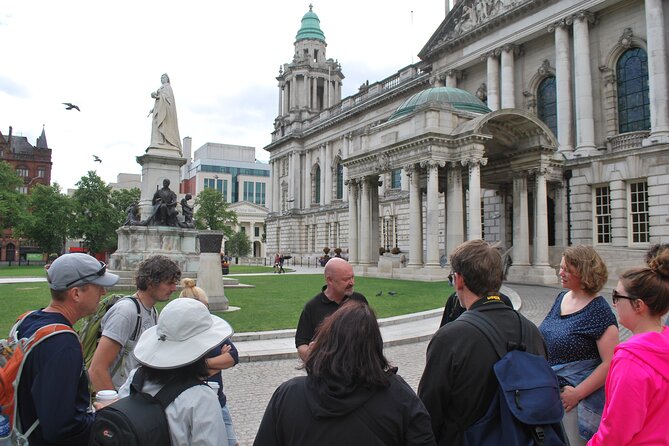
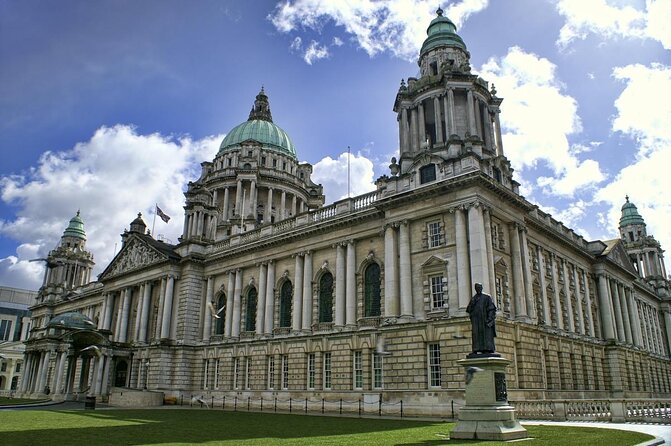
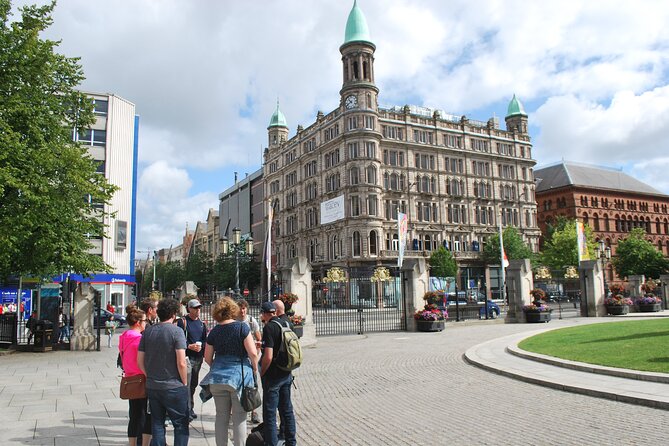
Meet your guide at 10:00 am at the front gates of Belfast City Hall in Donegall Square North. This is a practical starting point. You are in the middle of the city, close to public transportation, and the grand building gives the guide an immediate way to explain Belfast’s civic identity and development.
The first stop lasts about 15 minutes. Expect an introduction to the route and to Belfast’s story rather than a rushed photo stop. That matters because the city can seem compact at first glance, yet its politics, industry, religion, and culture are tightly connected. A good opening talk gives you something to watch for during the rest of the morning.
The tour returns to City Hall at the end, finishing at the Titanic Memorial Garden. You do not need to arrange transport between the beginning and end, which makes this especially handy if you are staying in central Belfast or using the walk as your first activity after arrival.
More Walking Tours in Belfast
- A History of Terror – Belfast City Centre Walking Tour
★ 5.0 · 2,883 reviews - Belfast Political Tour-Conflicting Stories Walking Tour
★ 4.5 · 459 reviews - Belfast Eclectic Walking City Center Experience, The Marti Way
★ 5.0 · 348 reviews
St Mary’s, Bank Square, and the city’s older layers
At Bank Square, the group pauses at St Mary’s Roman Catholic Church. The stop includes the church’s unusual grotto and the story of the original Belfast Castle, which once stood nearby. You will not be touring a long list of interiors here. Instead, the guide uses a small area to explain how Belfast changed and grew around its religious and civic landmarks.
This is one of the useful features of a walking tour. You see how buildings relate to one another rather than viewing each one as an isolated attraction. Belfast’s story is easier to follow when you are standing in the streets where different communities, institutions, and businesses developed side by side.
The stop lasts about ten minutes, so keep your attention on the guide rather than expecting a long visit inside the church. The value is in the context and the stories attached to the site.
Belfast Cathedral and the United Irishmen
The route then moves toward Belfast Cathedral, also called the Cathedral Church of St Anne, and into the Cathedral Quarter. The cathedral stop lasts about 15 minutes and introduces the United Irishmen and their role in the city’s development.
For a first visit, this is important groundwork. Belfast is often reduced to a few familiar subjects: the Troubles, shipbuilding, and the Titanic. Those topics matter, but the city’s earlier political and commercial life helps explain why Belfast became such an important place.
The guide’s job here is to connect people and events to the streets around you. The most praised guides, including Mark, Paul, James, and Steve, are described as clear, friendly storytellers who break difficult material into manageable pieces. That approach suits Belfast, where a single building can carry several layers of meaning.
Hill Street, street art, and Punk in Belfast
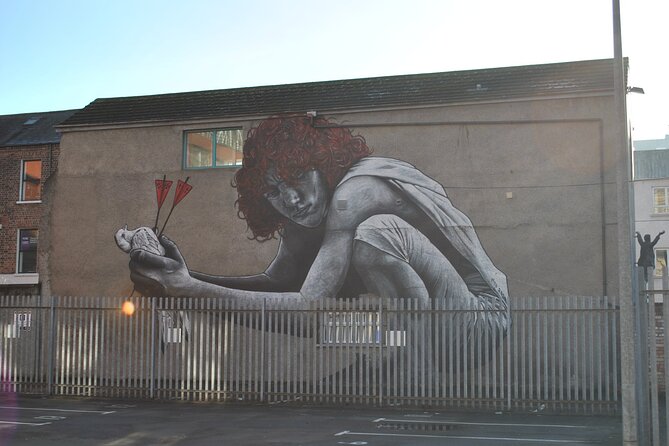
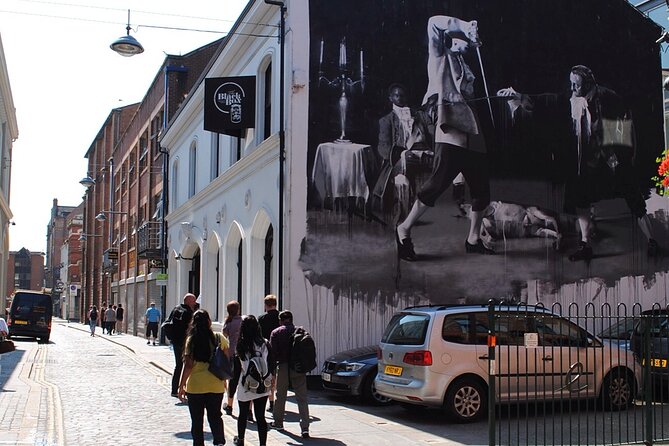
The Cathedral Quarter is one of the liveliest parts of the route. On historic Hill Street, one of Belfast’s last cobbled streets, you will see street art and hear suggestions for bars, restaurants, and nightspots.
The guide also explains the importance of Punk in Belfast during the Troubles. This is a welcome choice. It adds music and youth culture to a tour that could otherwise focus only on government, conflict, and memorials. The subject helps show how people created their own forms of expression during a difficult period.
The street art gives you something visual to enjoy while listening. It also makes this section feel less like a formal lecture. You are moving through a working part of the city, looking at art on walls and hearing about the cultural life connected to these streets.
The practical benefit is clear: take note of the recommendations that suit your own plans. Several guides have been praised for helping people decide where to eat or go afterward. Since the tour takes place in the morning, this section can help shape your afternoon and evening.
A different sort of outing around Belfast:
- Titanic Belfast Entrance Ticket: Titanic Visitor Experience Including SS Nomadic
★ 4.5 · 3,698 reviews - Cab Tours Belfast Famous Black Taxi Tours
★ 5.0 · 3,633 reviews - Game of Thrones and Giant’s Causeway Full-Day Tour from Belfast
★ 5.0 · 2,291 reviews - Private Black Taxi Belfast City Tour
★ 5.0 · 2,188 reviews
Customs House and Belfast’s public voices
At Customs House, the guide turns your attention to one of the city’s finest buildings and to the nearby Speaker’s Corner. You will hear stories about the strongest and weakest public speakers who once held forth here, along with the history of one of Belfast’s oldest surviving pubs.
This is a short stop, about ten minutes, but it adds character. The city’s history is not only made by famous leaders. It also comes through public arguments, local characters, drinking places, and the everyday places where people gathered.
I like this kind of stop because it keeps the tour from becoming a parade of major monuments. You get a sense of how Belfast functioned as a city, not just how it appears in a textbook.
The River Lagan, the Big Fish, and the Titanic cranes
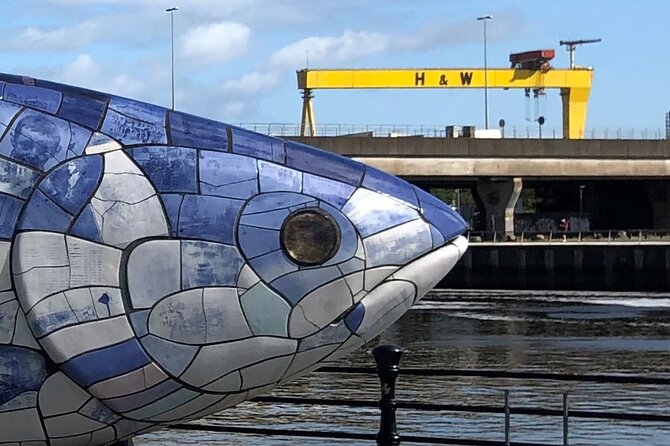
The walk continues along the River Lagan to the Big Fish, the well-known public sculpture also called the Salmon of Knowledge. The guide explains the legend behind the sculpture and points across the river toward Harland & Wolff’s yellow cranes, where the Titanic was built more than a century ago.
This section gives you one of the clearest visual links between Belfast’s past and present. The river helped drive the city’s growth, while shipbuilding made Belfast famous around the world. The cranes remain a powerful reminder of that industrial era.
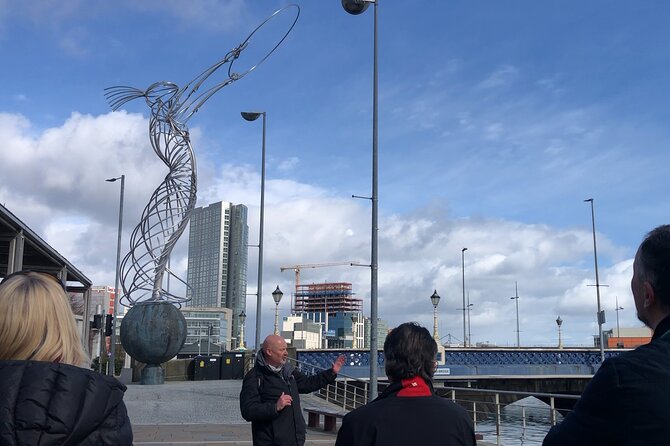
You will also see the Beacon of Hope, another public artwork. Its symbolism relates to Belfast’s resilience and recent regeneration. The tour does not treat the city as a place frozen in conflict or shipbuilding. It gives equal room to renewal, art, and the way Belfast presents itself today.
The Big Fish stop lasts about 15 minutes. It is a good place to listen, take photographs, and ask questions. The riverfront can be open and exposed, so your headset is useful here, especially if wind or nearby noise makes ordinary conversation harder to hear.
The leaning Albert Memorial Clock
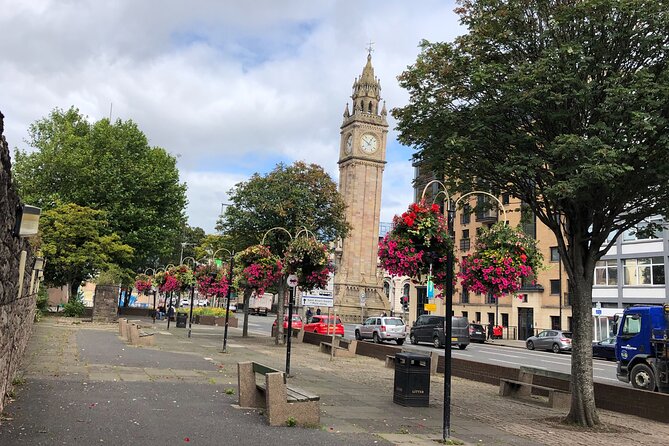
The Albert Memorial Clock Tower is Belfast’s answer to a leaning tower. At this 15-minute stop, the guide explains why the tower tilts and how Belfast got its name. You will also be shown the favorite pub of one of the city’s most famous footballers.
That last detail captures the tone of the walk. You are not only collecting dates and architectural facts. You are hearing local connections that can make the city easier to remember. The mixture of civic history, football, pubs, and public buildings gives the tour a human scale.
The clock tower also helps you understand Belfast’s relationship with the ground beneath it. The explanation for the lean is a small but memorable piece of engineering history, and it gives the guide another chance to show how local conditions shaped the city.
Belfast Entries and an outdoor art gallery
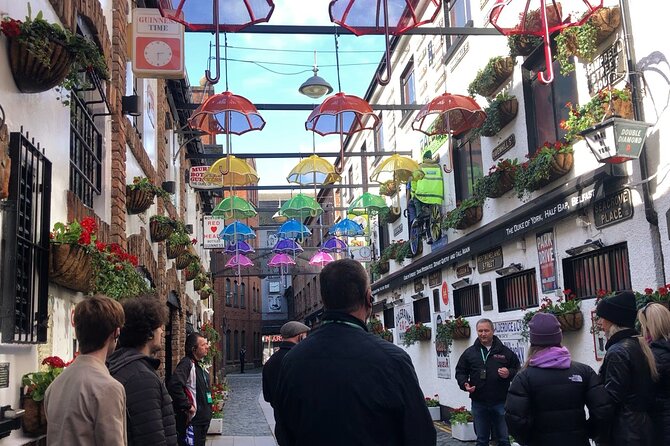
The Belfast Entries are at the center of the oldest part of the city. These narrow passageways have been turned into an outdoor art gallery, with dozens of pieces and stories connected to the area and the people who lived there.
This is one of the route’s most distinctive stops. A large civic building is easy to find on a map. Small lanes are easier to miss, especially if you are exploring alone for the first time. With a guide, you can pay attention to the art and hear why the area mattered over the centuries.
The stop lasts about 15 minutes, though the amount you take from it will depend on the guide’s stories and your own interest in the artwork. Ask questions here if you enjoy local details. The small scale of the entries makes this a pleasant contrast to the larger squares and riverfront.
The Spirit of Belfast and public art with a message
In the pedestrian precinct at the heart of the city, you will encounter the Spirit of Belfast sculpture and several other pieces of public art. The guide explains the sculpture’s meaning, its alternative name, and the stories attached to the historic buildings around it.
This part of the tour shows how Belfast uses public art to talk about identity and change. It also gives you a chance to look up from the practical business of moving through the city center. Public art can seem puzzling when you pass it alone. A local explanation can turn a strange shape into a memorable marker.
The route is not designed as a specialist art tour, so do not expect a long technical discussion of every work. Its strength is the link between art, local humor, buildings, and civic memory.
The Titanic Memorial Garden and a thoughtful finish
The final stop returns you to City Hall and the Titanic Memorial Garden. Here, the guide tells the story of the Titanic and some of the people who sailed on her. The statues in the grounds also provide a way to discuss notable citizens and their contributions to society.
Ending at the starting point is convenient, but it also gives the tour a satisfying shape. You begin with Belfast as a city and finish by bringing together shipbuilding, individual lives, public memory, and the people who helped shape the community.
The Titanic story is familiar around the world, so the local focus matters. You are not simply hearing that the ship was built in Belfast. You are hearing how the ship connects to the city and to the people remembered at City Hall.
How the history is handled
Belfast’s past is not light material. The tour includes the Troubles and other painful parts of Northern Ireland’s story. Several guides are praised for explaining these subjects in an approachable way, with Mark, Paul, Steve, James, and Chris all receiving specific praise for friendly delivery, clear answers, and a sense of humor.
That said, the experience may depend on the individual guide. One critical account found the discussion too focused on horrors, with events jumping between periods without enough explanation of causes and motivations. That is a fair caution. If you want a highly academic treatment of the conflict, this general city tour may feel too compressed.
For most first-time visitors, the broad approach is more useful. You get a foundation rather than a final answer. You hear about ancient origins, political events, the Troubles, music, art, commerce, shipbuilding, and life in Belfast today. The best guides also explain what to see next, helping you decide which subjects deserve more of your own time.
Pace, headsets, and the halfway break
The walk takes about three hours and covers a lot of ground. It is not described as strenuous, and the pace is generally easy to maintain, but it is still unsuitable for people with mobility issues. Wear comfortable shoes, arrive on time, and expect to remain on your feet for much of the morning.
A coffee and restroom stop comes around the halfway point. This is a small but valuable detail. It gives you a chance to sit, warm up, use facilities, ask questions, and chat before continuing.
The headsets are another practical plus. Outdoor city tours can be frustrating when the guide’s voice disappears into traffic or group chatter. Here, the equipment helps you keep listening while walking, and it was specifically praised for working well.
The maximum group size is 25 people. That is large enough for the tour to run efficiently but not so large that the route must feel like a procession. Some departures can be far smaller, creating a more personal experience.
Price, timing, and who gets the best value
At $36.05 per person, the tour offers solid value if you want a guided introduction to Belfast. There are no separate admission charges at the listed stops, and the fee covers about three hours with a local guide and headsets.
You are paying mainly for interpretation. You could walk past City Hall, the Big Fish, the clock tower, and the public art on your own. What you would miss is the connection between them, along with the stories about Belfast’s politics, people, music, pubs, and industrial past.
The tour is booked an average of 33 days ahead, so planning early makes sense if your schedule is fixed. Confirmation arrives when you book, and free cancellation is available up to 24 hours before the start time. If poor weather causes the operator to cancel, you are offered another date or a full refund.
The walk operates in all weather conditions, so bring suitable clothing. Belfast weather can change quickly, and the route includes outdoor stops along the river and in open city spaces.
Should you book the Best of Belfast Walking Tour?
I would book it if you are visiting Belfast for the first time and want a clear city-center orientation with real local color. It suits curious adults, couples, solo visitors, and anyone who wants history explained without spending the morning inside a museum.
It is also a good choice if you want practical help after the walk. Guides regularly offer directions and suggestions for bars, restaurants, nightspots, and other places to visit. The tour gives you enough background to make better choices with the rest of your day.
I would hesitate only if you dislike long walks, need frequent seated breaks, or want a narrowly focused specialist tour about the Troubles or Titanic. For everyone else, the combination of landmark buildings, small lanes, public art, industrial memory, and local storytelling makes $36.05 a reasonable price for a first morning in Belfast.
FAQ
Where does the Best of Belfast Walking Tour start?
The tour starts at the front gates of Belfast City Hall, Donegall Square North, Belfast BT1 5GS, UK.
What time does the tour begin?
The stated start time is 10:00 am.
Where does the tour finish?
The tour finishes back at Belfast City Hall, at the meeting point.
How long does the walking tour last?
The experience lasts approximately three hours.
What language is the tour offered in?
The tour is offered in English.
Are headsets provided?
Yes. Headsets are included to help you hear the guide outdoors.
What happens if the weather is poor?
The tour operates in all weather conditions, so you should dress appropriately. If the experience is canceled due to poor weather, you are offered a different date or a full refund.
How far in advance can I cancel?
You can cancel up to 24 hours before the experience start time for a full refund. Cancellations or changes made less than 24 hours before the start time are not accepted for a refund.
Recently added around Belfast
- Private Belfast Troubles Cab Tour Adventure 2hrs Personal Guide★ 5.0 · 55 reviews
- Giants Causeway private tour from Belfast★ 5.0 · 57 reviews
- Giants Causeway Tour from Belfast + FREE Belfast Mural Tour★ 5.0 · 59 reviews
- Belfast Titanic Museum and Sighseeing Tour★ 4.5 · 59 reviews
- Belfast’s Sensory Cocktail Experience with 4 Cocktails★ 5.0 · 61 reviews
- Belfast Music and Street Art Small Group Guided Experience★ 4.5 · 62 reviews
- Private Giants Causeway Tour From Belfast★ 5.0 · 67 reviews
- IRA Troubles Conflict Private Tour Museum Graves Murals and Political Analysis★ 5.0 · 67 reviews
Walking Tours, compared.
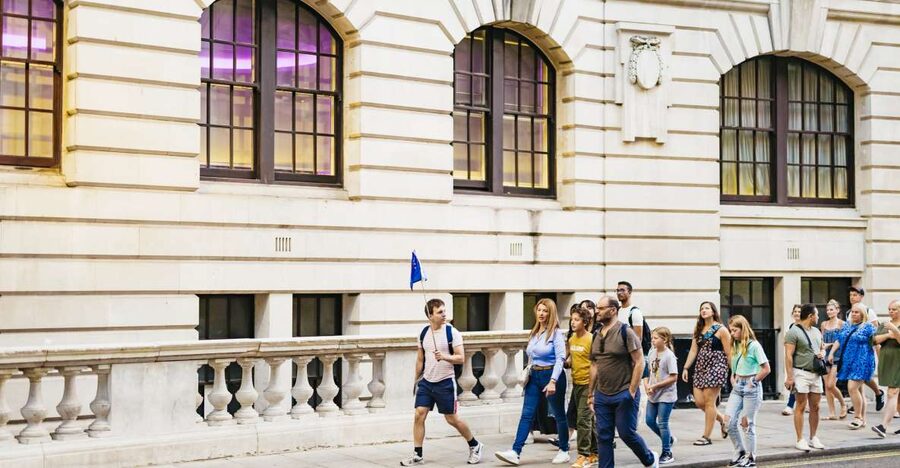
Magical London: Harry Potter Guided Walking Tour
Read our review →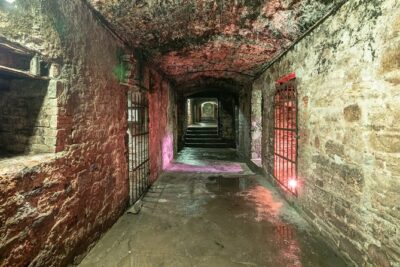
Underground Vaults Walking Tour in Edinburgh Old Town
Read our review →
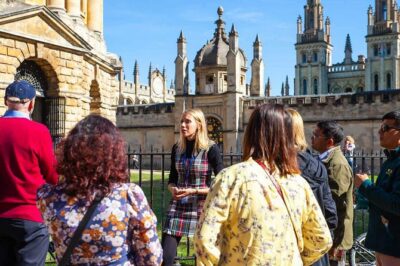
Oxford University Walking Tour With University Alumni Guide
Read our review →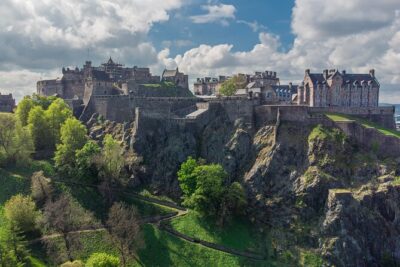
Edinburgh Castle: Guided Walking Tour with Entry Ticket
Read our review →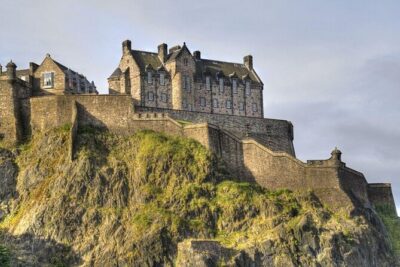
Edinburgh Castle Guided Walking Tour in English
Read our review →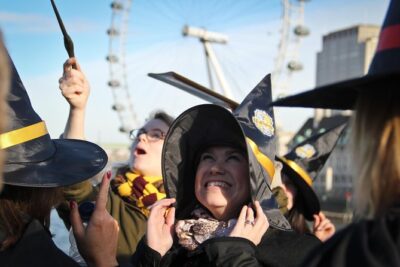
Tour for Muggles The Ultimate Harry Potter Walking Tour in London
Read our review →
University and City Walking Tour with Alumni Guide
Read our review →Browse the lists this tour appears in