
Reviewed · WALKING TOURS
Glasgow’s Music Mile Walking Tour
Music has shaped Glasgow’s streets for generations. This two-hour walking tour follows that sound from the Glasgow Royal Concert Hall to King Tut’s Wah-Wah Hut, with stories about famous bands, old theatres, local clubs, and the people who made the city’s music scene matter.
I like the route for two clear reasons: it takes you beyond standard sightseeing, and it gives you real places tied to performers such as Oasis, Blur, The Beatles, and The Rolling Stones. I also like the stop at Nice ’n’ Sleazy, where the group can pause for a drink and hear more stories. The main drawback is the walking itself, since the route includes steep inclines and stairs.
In This Review
- Key points to know before booking
- Why Glasgow’s Music Mile is worth your afternoon
- Starting at the Glasgow Royal Concert Hall
- The Pavilion Theatre and Glasgow’s show-business past
- Royal Conservatoire stories, from Bob Dylan to Doctor Who
- A proper pause at Nice ’n’ Sleazy
- King Tut’s Wah-Wah Hut and the finish under the stage lights
- The guides make the difference
- Who will enjoy this walk most
- How the price compares with the experience
- Should you book Glasgow’s Music Mile?
- FAQ
- How long is Glasgow’s Music Mile Walking Tour?
- Where does the tour begin?
- Where does the tour end?
- What time does the tour start?
- Is food or drink included?
- Is the route suitable for everyone?
Key points to know before booking
- King Tut’s finishes the tour: Depending on access, you may get to stand on the stage linked with early performances by major bands.
- Nice ’n’ Sleazy is more than a photo stop: The pause can last about 20 minutes, with time to buy a drink and hear stories about Glasgow’s club culture.
- Fiona and Felipe are praised guides: Fiona’s background as a music journalist brings extra depth, while Felipe is praised for his command of Glasgow music history.
- The route covers several music eras: Expect stories ranging from Houdini and Charlie Chaplin to Bob Dylan, Oasis, Depeche Mode, and The Killers.
- This is a small-group experience: The maximum group size is 26 people, which helps keep the storytelling personal.
- Comfortable shoes matter: The route is short in distance but not entirely flat, and it includes stairs.
Why Glasgow’s Music Mile is worth your afternoon
Glasgow is easy to appreciate through its buildings, museums, and grand public spaces. This tour gives you another way in. It shows how the city’s theatres, cinemas, concert halls, and modest clubs helped shape its creative life.
The route is called a Music Mile, but it is not only about rock bands. You hear about orchestras, traditional music, comedy, theatre, cinema, pop, punk, new wave, and country. That broad approach is one of its strengths. You do not need to know every band named along the way to enjoy it.
I especially like the way the tour connects famous performers with ordinary city streets. The stories are not limited to stars on a poster. They also explain how local audiences, club owners, promoters, and small venues helped musicians find a following.
At $27.06 per person, the price is reasonable for a two-hour guided walk in central Glasgow. There are no admission charges at the stops, so you are paying mainly for the guide’s storytelling and access to places you could easily pass without understanding. The value depends heavily on your interest in music, but the wide range of subjects makes this more than a narrow fan tour.
More Walking Tours in Glasgow
- Glasgow City Centre Walking Tour with Local Guide
★ 5.0 · 1,326 reviews - Glasgow Street Art Daily Walking Tour: 2pm
★ 5.0 · 648 reviews - Gander Walking Tours in Glasgow
★ 5.0 · 506 reviews
Starting at the Glasgow Royal Concert Hall
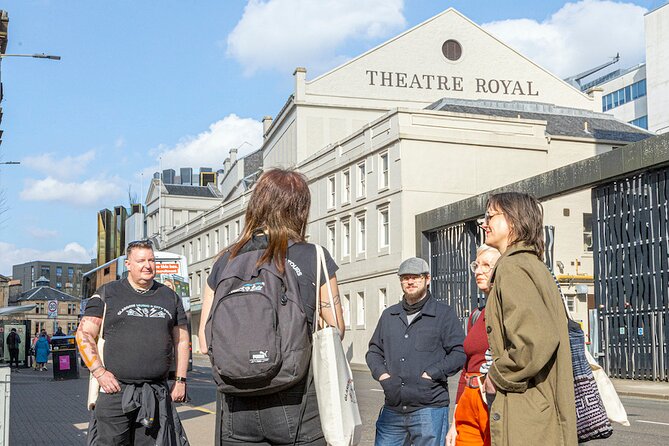
The meeting point is outside the Glasgow Royal Concert Hall at 2 Killermont Street. The tour begins at 2 p.m., and this is a useful central starting point for anyone already exploring the city center.
The concert hall is home to the Royal Scottish National Orchestra and Celtic Connections, described here as the world’s biggest winter music festival. That gives the opening stop a serious musical footing. You are not starting with a wall covered in famous names. You are starting with one of Glasgow’s major performance spaces and its continuing role in the city.
The guide also takes you back to the days of the Empire Theatre, which once stood nearby. The Empire is gone, but its reputation remains part of Glasgow’s story. Its audience was known for being among the most critical and passionate in Britain. That detail helps explain an important part of the city’s character: performers had to earn the room.
You spend about 15 minutes here. It is a short opening stop, but it sets up the tour’s main idea. Glasgow’s music identity grew through demanding audiences and a steady supply of places where people could perform.
The Pavilion Theatre and Glasgow’s show-business past
The next stop is the Pavilion Theatre, about a 10-minute visit. Its story broadens the tour beyond modern bands. Houdini and Charlie Chaplin performed here, as did Sydney Devine, Glasgow’s own rhinestone cowboy.
That mix is useful because it shows how entertainment in Glasgow has never fitted neatly into one category. Magic, comedy, theatre, country music, and popular song all belong in the same story.
The guide also brings up the former Odeon cinema. It was primarily a cinema, but it became an important stop for bands including The Beatles, Little Richard, and The Rolling Stones. For a music fan, this is the kind of detail that changes how you see an ordinary building. A cinema was not just somewhere to watch a film. It could also become a major stage.
This stop may be less exciting if you are expecting to enter a venue or see a preserved music exhibit. The value comes from the explanation, not from a formal attraction inside. Listen closely, and you begin to see the city center as a series of former performance spaces rather than just streets between shops.
Royal Conservatoire stories, from Bob Dylan to Doctor Who
The Royal Conservatoire of Scotland is the next stop, with about 10 minutes devoted to its connections. Here, the storytelling shifts toward training, performance, and people who went on to work across film, television, theatre, and music.
The guide brings up actors associated with The Hobbit, Outlander, and Doctor Who. Bob Dylan also enters the story as an unlikely fan of the bagpipes. That mix keeps the stop lively and avoids making the tour feel like a simple list of rock venues.
This part will suit you if you enjoy connections between music and the wider performing arts. It also adds context to Glasgow’s creative reputation. The city has not only produced bands. It has supported performers who move between stages, television sets, orchestras, and traditional music.
The stop is brief, so you should expect selected stories rather than a detailed tour of the conservatoire. There is no admission ticket included, and the focus is on what the building represents and the people linked with it.
A different sort of outing around Glasgow:
- Guided Celtic Park Stadium Tour
★ 5.0 · 3,136 reviews - From Glasgow: Oban, Glencoe, Highland Lochs & Castles Tour
★ 4.9 · 2,123 reviews - City Sightseeing Glasgow Hop-On Hop-Off Bus Tour
★ 4.5 · 1,873 reviews - From Glasgow: Glenfinnan, Fort William, and Glencoe Day Trip
★ 4.7 · 1,753 reviews
A proper pause at Nice ’n’ Sleazy
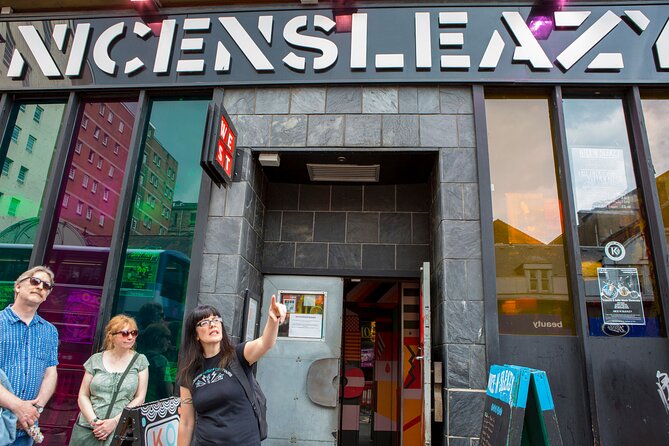
Nice ’n’ Sleazy is where the tour slows down. The visit lasts about 20 minutes, making it the longest scheduled stop. You have the chance to buy a refreshment, sit with the group, and hear stories about the Apollo and the changing sounds of Sauchiehall Street.
This is one of the tour’s strongest features. Nice ’n’ Sleazy is presented as a generous local venue that helps young talent develop. That gives you a look at the working side of music culture, where small clubs matter as much as famous concert halls.
The Apollo stories add another layer. The late venue is linked with Glasgow’s rock ’n’ roll legends, and the guide uses its history to explain how Sauchiehall Street served as the city’s night-time playground for decades. The street’s musical identity has changed over time, and this stop lets you hear about those shifts in a place that still feels tied to live music.
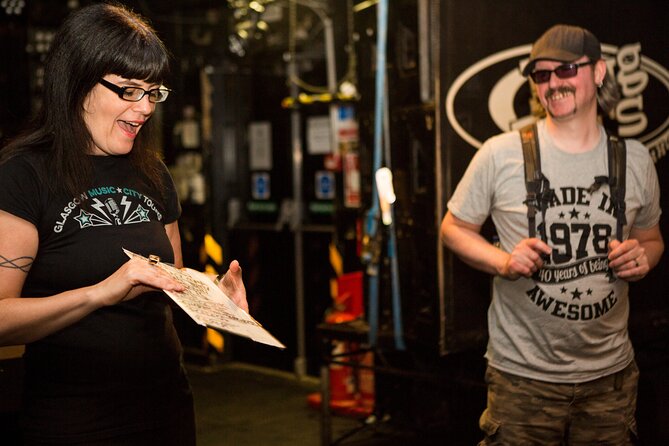
Fiona is especially well suited to this part of the walk. She has worked as a music journalist for 30 years, and her knowledge of Glasgow’s venues and bands gives the stories weight. She also allows people with their own memories of the city’s music scene to add to the conversation. That can make the stop feel less like a lecture and more like a shared exchange between a guide and music fans.
The practical point is simple: food and drinks are not included, so bring money if you want a refreshment. If you do not drink, the stop still matters because the stories continue inside the club.
King Tut’s Wah-Wah Hut and the finish under the stage lights
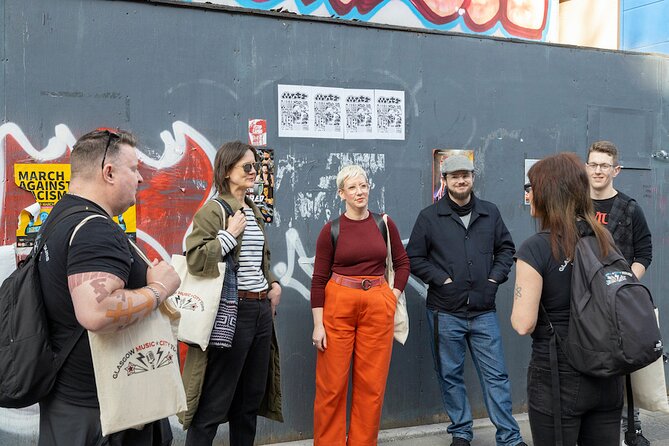
The tour ends at King Tut’s Wah-Wah Hut on St Vincent Street. This is the final major stop, and it is likely to be the highlight for anyone interested in modern British rock.
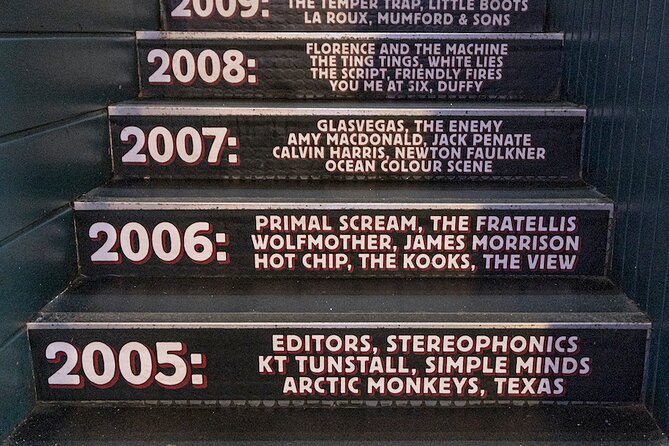
The venue is tied to the early footsteps of Oasis, Blur, and the Manic Street Preachers. Other acts associated with its story include The Killers. These bands played King Tut’s before reaching a much wider audience, giving the venue a special place in Glasgow’s music culture.
Depending on access on the day, you may be allowed inside and possibly onto the stage. That chance is not guaranteed, but when available it gives the tour a memorable finish. Standing beneath the lights of a small club where important bands once played is a more direct experience than looking at a plaque from the pavement.
The guide explains why King Tut’s mattered. It was not simply a room where established stars appeared. It helped give promising acts a place to build an audience. That makes the stop valuable even if you are not a fan of every band mentioned.
The tour ends here rather than returning to the starting point. Plan your afternoon around that. King Tut’s is at 272A St Vincent Street, so you can continue your evening nearby after the walk.
The guides make the difference
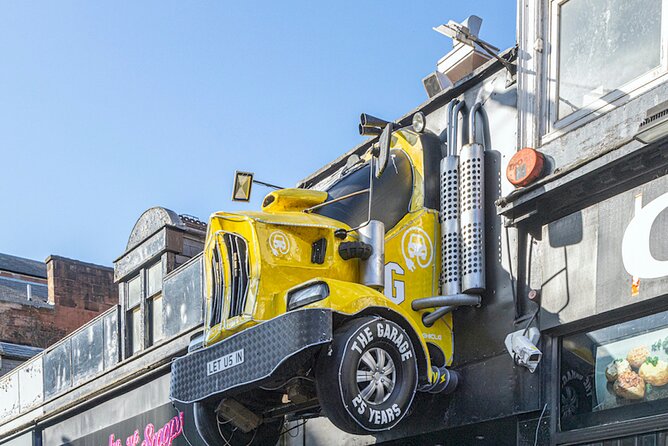
The strongest praise for this experience centers on the guides’ delivery and music knowledge. Fiona receives special attention for her long career as a music journalist. Her experience gives her more than basic facts, especially when discussing local venues, legendary shows, and the changing music scenes of the 1970s, 1980s, and 1990s.
Felipe is also praised for knowing Glasgow’s music story across different styles. That matters because the tour is not limited to one generation or genre. You may hear about orchestral music, traditional Scottish sounds, theatre, old cinema shows, new wave, punk, and major rock acts in the same afternoon.
I would book this tour for the guide rather than for access to buildings. The venues are the setting, but the stories are the main product. A strong guide can turn a former cinema or a street corner into a memorable part of Glasgow. A less engaging guide would leave you with only a list of names.
The maximum group size is 26 people. That is not an intimate private tour, but it is small enough for questions and shared stories. If the group includes older music fans who saw some of these acts in their early years, you may also hear personal memories that add to the atmosphere.
Who will enjoy this walk most
This tour is a natural fit for music fans, especially people interested in British rock, new wave, pop, traditional Scottish music, or live performance. It is particularly appealing if you grew up with music from the 1970s, 1980s, or 1990s, since many of the stories focus on that era.
You do not need to be an expert. The tour covers enough genres and personalities to keep a casual listener interested. If you know Glasgow only through its major sights, this offers a useful change of pace.
It may also suit you if you want a short guided activity rather than a full-day excursion. Two hours is long enough to build a story but short enough to fit around other plans. The 2 p.m. start leaves the morning free for museums, shopping, or a relaxed breakfast.
I would think twice if you dislike walking on inclines or using stairs. The route is not described as suitable for every mobility level, so contact Glasgow Music City Tours before booking if you have concerns. Service animals are allowed, and the tour operates near public transport.
The minimum age is 14 because of licensing laws. That means this is aimed more at teenagers and adults than young children. Wear weather-appropriate clothing and comfortable shoes. Glasgow weather can change, and the route includes outdoor walking between stops.
How the price compares with the experience
The $27.06 cost is fair if you value local interpretation. You could walk past the concert hall, Pavilion, conservatoire, Nice ’n’ Sleazy, and King Tut’s on your own, but you would miss the links between them and the people who performed there.
There are no included meals, drinks, or paid admissions. That keeps the base price clear, but you should allow extra money if you want a drink at Nice ’n’ Sleazy. The tour’s value comes from about two hours of guided stories, not from included extras.
The 100 percent recommendation rate and 4.9 rating from 69 reviews suggest strong satisfaction, with the most praised elements being the guides, the local music detail, and the access or possible access to King Tut’s stage. I would not treat the rating as a promise that every moment will suit every person. If your interest in music is limited, the stops may feel like a series of stories rather than essential sightseeing.
Booking 29 days ahead on average is a useful sign that you should not leave it until the last minute if your Glasgow dates are fixed. Confirmation arrives when you book, and free cancellation is available up to 24 hours before the start time. Changes or cancellations inside that window are not refunded.
Should you book Glasgow’s Music Mile?
I would book it if you want to understand Glasgow through its music venues rather than simply photograph its main buildings. The best parts are Fiona or Felipe’s storytelling, the relaxed pause at Nice ’n’ Sleazy, and the chance of seeing the stage at King Tut’s.
You should choose another activity if stairs, steep inclines, or two hours of outdoor walking would be uncomfortable. I would also skip it if you want a museum-style experience with exhibits and guaranteed indoor access.
For music fans, this is a good-value way to spend an afternoon. It gives you local stories, famous names, and a clear route through Glasgow’s creative past, ending at one of the city’s most important small venues.
FAQ
How long is Glasgow’s Music Mile Walking Tour?
The tour lasts approximately two hours.
Where does the tour begin?
It begins at the Glasgow Royal Concert Hall, 2 Killermont Street, Glasgow G2 3NW.
Where does the tour end?
The tour ends at King Tut’s Wah-Wah Hut, 272A St Vincent Street, Glasgow G2 5RL.
What time does the tour start?
The scheduled start time is 2 p.m.
Is food or drink included?
No. Food and drinks are not included, although you have the opportunity to buy a refreshment at Nice ’n’ Sleazy.
Is the route suitable for everyone?
Most people can participate, but the route includes steep inclines and stairs. Contact Glasgow Music City Tours in advance to discuss mobility concerns. The minimum age is 14, and service animals are allowed.
Recently added around Glasgow
- Charles Rennie Mackintosh Walking Tour: Saturdays 10am★ 5.0 · 60 reviews
- Glasgow Ghouls, Ghosts and Gruesome Tales Tour★ 5.0 · 63 reviews
- Private Glasgow West End Walking Tour★ 5.0 · 66 reviews
- St Andrews and the Kingdom of Fife from Glasgow★ 5.0 · 68 reviews
- Loch Lomond National Park & Stirling Castle Full Day Tour★ 5.0 · 68 reviews
- Culzean Castle, Robert Burns Country & the Ayrshire Coast★ 4.7 · 69 reviews
- Glasgow Ghost Hunt: The Soul That Got Away Exploration Game★ 4.0 · 71 reviews
- Oban and the West Highlands Day Trip from Glasgow★ 4.5 · 74 reviews
Walking Tours, compared.
Magical London: Harry Potter Guided Walking Tour
Read our review →
Underground Vaults Walking Tour in Edinburgh Old Town
Read our review →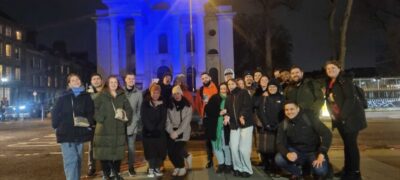

Oxford University Walking Tour With University Alumni Guide
Read our review →
Edinburgh Castle: Guided Walking Tour with Entry Ticket
Read our review →
Edinburgh Castle Guided Walking Tour in English
Read our review →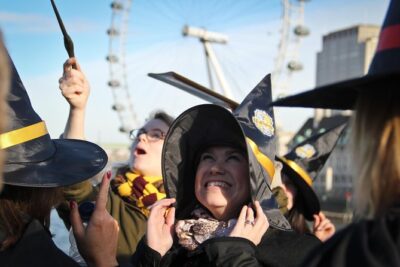
Tour for Muggles The Ultimate Harry Potter Walking Tour in London
Read our review →
University and City Walking Tour with Alumni Guide
Read our review →Browse the lists this tour appears in