
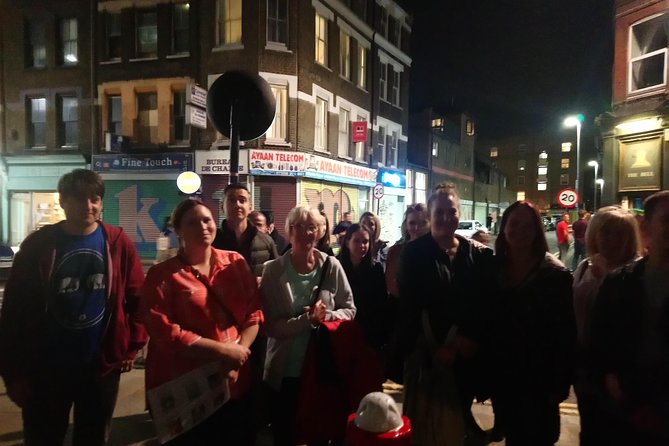
Reviewed · JACK THE RIPPER TOURS
Jack the Ripper Walking Tour with Expert Ripperologist
Dark stories walk well in London. This 2.5-hour tour traces the 1888 Whitechapel murders through streets, squares, pubs, and market lanes, using a costumed guide and clear historical images to connect today’s East End with its grim Victorian past. I like the strong focus on the victims and their surroundings, and I also like the way the guide carries a large backlit tablet showing photographs of the people and places involved. The main drawback is group size, which can reach 30 people and make some stops feel crowded.
I also appreciate the practical route. You meet outside Aldgate Station, follow a mostly continuous walk through the City and Whitechapel, and finish near Liverpool Street Station, so you do not need to keep checking a map. Guides such as Lindsey, Jenny, and Paul have received especially warm praise for clear storytelling and period context. Still, this is a serious murder tour with graphic material, limited toilet access, and more attention to victims and social conditions than to every possible suspect.
In This Review
- Key points to know before you book
- Why this Whitechapel walk is different
- Starting outside St Botolph’s Aldgate
- Mitre Square and the night of the double event
- Petticoat Lane and two police forces
- Goulston Street and the surviving clue
- Martha Tabram and the possible first victim
- The Frying Pan Pub and Mary Ann Nichols
- Hanbury Street and Annie Chapman
- Wilkes Street, Puma Court, and the Dear Boss letter
- The Ten Bells and Itchy Park
- Old Spitalfields Market and George Lusk
- Mary Kelly and the final stop
- Guides, storytelling, and visual material
- Group size, walking effort, and practical limits
- Who should book this tour?
- Should you book the Jack the Ripper walk?
- FAQ
- Where does the Jack the Ripper walking tour begin?
- Where does the tour end?
- How long does the tour last?
- How much does the tour cost?
- What language is the tour offered in?
- How many people can join the tour?
- Are photographs included?
- Is the tour suitable for children?
- Do I need to be physically fit?
- Can I cancel for a full refund?
Key points to know before you book

- The route follows real murder sites: You visit Mitre Square, Hanbury Street, Goulston Street, the Ten Bells, and other locations linked to the cases.
- The tablet presentation adds useful context: A 14-inch backlit tablet displays photographs of victims, crime sites, and the surrounding area, helping you picture a district that has changed greatly since 1888.
- The tour treats the women as people, not just clues: Much of the talk covers the victims’ lives, the poverty of Whitechapel, and the conditions that shaped the crimes.
- The walk crosses old police boundaries: Petticoat Lane marks the divide between the City of London Police and the Metropolitan Police, an important detail in understanding the investigation.
- Expect a full walking commitment: You will walk and stand for more than two hours, with very limited toilet access along the route.
- The group may be fairly large: The maximum is 30 people. A microphone is used, but a private option is available if you want more individual attention.
Why this Whitechapel walk is different
Many Jack the Ripper tours lean heavily on spooky language and suspect theories. This one gives more time to the victims, their neighborhoods, and the social conditions of late Victorian Whitechapel. That approach makes the tour more grounded and, in my view, more worthwhile.
You hear about extreme overcrowding, poverty, crime, and the daily struggle of people living on the breadline. The murders did not happen in a vacuum. The guide explains how lodging conditions, street life, alcohol, prostitution, poor policing, and the area’s maze of alleys shaped the story.
The cost is $23.61 per person, which is fair for a guided walk lasting around two and a half hours. You are not paying for entry to a major attraction, since nearly all the stops are viewed from public streets. You are paying for the guide’s research, the route, the visual presentation, and the ability to explain what you are seeing without stopping every few minutes to consult a phone.
The strongest value comes from the combination of place and storytelling. Reading about Mitre Square is one thing. Standing near it while hearing about Elizabeth Stride and Catherine Eddowes gives the case a clearer physical setting. The walk turns scattered names and dates into a connected route.
More Walking Tours in London
- Magical London: Harry Potter Guided Walking Tour
★ 4.7 · 22,044 reviews - London: The Original Jack the Ripper Walking Tour
★ 4.7 · 7,833 reviews - Tour for Muggles The Ultimate Harry Potter Walking Tour in London
★ 5.0 · 4,684 reviews
Starting outside St Botolph’s Aldgate
The tour begins outside St Botolph’s Aldgate, beside Aldgate Station on Aldgate High Street. The church was known as the Prostitutes Church because women once solicited on the island where it stood. That detail immediately places you in the social world the tour aims to explain.
The introduction takes about five minutes. It is brief, but useful. You get your bearings, meet the guide, and begin with the neighborhood rather than with a theatrical murder story.
From there, the group moves to Aldgate Square, beside the church. Here the guide describes Whitechapel in 1888 as overcrowded, poor, and troubled by crime and degradation. This is one of the tour’s best choices because it gives the murders a human setting before focusing on the crime scenes.
Mitre Square and the night of the double event
Mitre Street and Mitre Square are among the most important stops. The area sits just inside the City of London boundary, and the guide uses it to explain the murder of Elizabeth Stride, also called Long Liz.
Stride was the first victim killed on the night often known as the double event. Only about 45 minutes later, Catherine Eddowes was murdered nearby. The guide discusses both deaths and explains how the short gap between them shaped the investigation.
This section lasts around ten minutes. The tablet images are especially useful here. Instead of relying only on verbal directions, you can see photographs of the victims, the sites, and the wider area. The visual material is part of what makes this tour more than a walk past modern buildings.
The subject is disturbing. The photographs may be difficult to view, and you should not book this tour expecting a light ghost walk. The guide’s reported sensitivity toward the women is important, since the presentation aims to keep them from becoming mere props in a famous unsolved case.
Petticoat Lane and two police forces
The route continues toward Petticoat Lane Market, now called Middlesex Street. The stop is short, around five minutes, but the location matters because it marks the boundary between the City of London and the Metropolitan Police area.
In 1888, those were separate police forces. That division adds an important layer to the story. The killings happened in an area where jurisdiction, communication, and police responsibility could become complicated. The tour uses a simple street boundary to explain a major weakness in the investigation.
You do not need admission to the market for this part of the tour. The market area also gives you a change of pace from the darker crime locations, though the surrounding streets can be busy.
More Jack the Ripper Walks:
- London Jack the Ripper Guided Tour with Ripper-Vision
★ 4.5 · 4,840 reviews - London: Jack the Ripper Small Group Tour
★ 4.7 · 3,159 reviews - London Jack The Ripper Guided Walking Tour
★ 5.0 · 3,131 reviews - German Language : Original Jack the Ripper Tour
★ 4.6 · 1,805 reviews
Goulston Street and the surviving clue
At Goulston Street, the guide takes you to the doorway where the only clue associated with the killer’s route was found. The police followed the same general path that night while trying to catch him.
This stop takes about ten minutes. It is valuable because it focuses on evidence rather than legend. The case contains a great deal of speculation, but Goulston Street offers a specific physical point tied to the police search.
The guide explains the clue in its setting, which helps you understand why its location mattered. You are not just hearing the name of a street. You are seeing the kind of route the police had to cover after a murder in a crowded, poorly lit district.
Martha Tabram and the possible first victim
From Wentworth Street, you look toward Gunthorpe Street and the spot where Martha Tabram was found murdered on August 7, 1888, in George Yard Buildings. She is now considered the most likely first victim connected with Jack the Ripper.
This ten-minute stop shows how uncertain the case remains. The guide does not present every connection as proven fact. Instead, Tabram’s story helps explain how historians and researchers weigh dates, locations, methods, and patterns.
That distinction matters. If your knowledge comes mainly from films or dramatic television versions, this tour offers a more careful view. You get the known details, the disputed links, and the limits of the evidence.
The Frying Pan Pub and Mary Ann Nichols
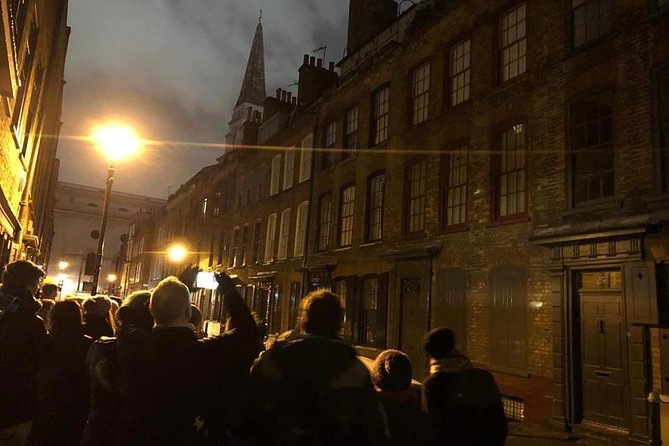
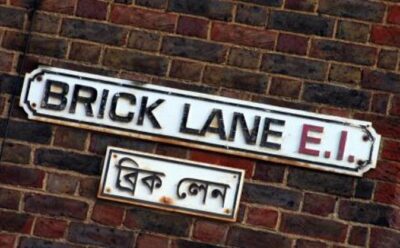
The route carries on to Brick Lane, stopping opposite the Frying Pan Pub at the corner of Thrawl Street. Mary Ann Nichols had her last drink there before walking down Whitechapel Road.
She was later murdered in Bucks Row, behind Whitechapel Station. The tour connects her final known movements with the wider route, giving you a stronger sense of how close these places were to one another.
This is a short stop, around ten minutes, but it is one of the more personal moments in the walk. You are not only learning where a body was found. You are following the last known steps of a woman whose life is often reduced to a single line in a case summary.
Hanbury Street and Annie Chapman
The walk continues up Brick Lane and turns into Hanbury Street. Annie Chapman was murdered in the backyard of number 29 Hanbury Street.
The guide spends about twelve minutes here. The location shows how the crimes took place close to ordinary homes and working streets. That contrast between daily life and sudden violence is central to the unease of the tour.
Hanbury Street also helps explain why photographs and historical comparisons are useful. Modern London can make the old scenes difficult to picture. The tablet images help bridge that gap without requiring you to imagine everything from a bare street corner.
Wilkes Street, Puma Court, and the Dear Boss letter
Wilkes Street is described as a street that has changed little since the 1800s. From there, the group makes its way toward Puma Court and hears about the Dear Boss letter.
This section moves away from the murders themselves and into the growth of the Ripper legend. Letters, publicity, public fear, and the killer’s supposed identity all helped turn a series of crimes into a lasting cultural story.
The stop is only about five minutes, so do not expect a long literary analysis. It works better as a link between the physical crime scenes and the public mystery that followed.
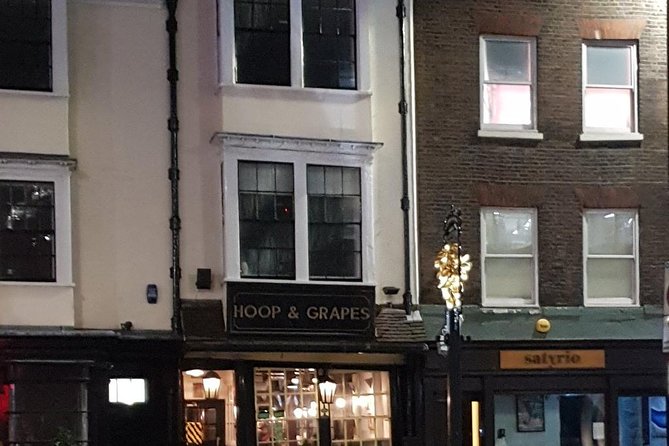
The Ten Bells and Itchy Park
Opposite the Ten Bells, you hear about the pub associated with Mary Kelly. You also view Christchurch Graveyard, known as Itchy Park, where homeless people would sleep during the day.
The Ten Bells is one of the tour’s most recognizable locations. Even if you know little about the case, its name often appears in accounts of Whitechapel and Mary Kelly. The guide uses it to discuss the area’s social life, not simply as a photo stop.
Itchy Park adds another layer. The story is not only about murder. It is also about homelessness, poverty, and the lack of safe places for people living on the margins. That wider focus is one reason I would choose this walk over a presentation focused only on suspects.
Old Spitalfields Market and George Lusk
Near Old Spitalfields Market, the guide stops in the entrance of the London Fruit and Wool Exchange. Here you hear about the letter sent to George Lusk, head of the Whitechapel Vigilance Group.
The group was formed as local fear grew and residents tried to protect themselves. The letter provides another example of how the murders affected people beyond the immediate crime scenes.
This is also a practical moment in the route. The market area is easier to recognize than some of the narrower streets, and it gives the walk a clear sense of progress toward its final stop.
Mary Kelly and the final stop
The tour ends in the square behind the London Fruit and Wool Exchange with the murder of Mary Kelly, described as Jack the Ripper’s last victim, killed on November 9, 1888.
The final section lasts around 20 minutes. It is a fitting end because Mary Kelly’s death is one of the most widely discussed parts of the case, and it brings the tour back to the human cost of the story.
From the finish, it is about a five-minute walk to Liverpool Street Station. Your guide directs you, and from there you have access to several Underground lines. Ending near a major station makes the tour easy to fit into a day of sightseeing.
Guides, storytelling, and visual material
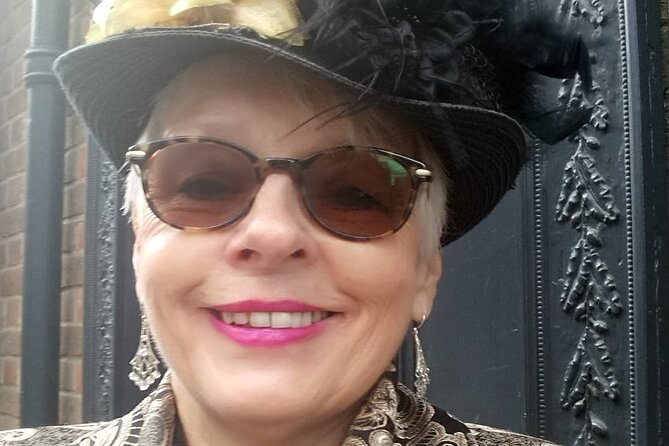
The guide makes or breaks a walking tour, and this experience has received particularly strong praise for its presenters. Lindsey is noted for years of experience, an upbeat manner, witty touches, and detailed research. Jenny is praised for punctuality, clear explanations, and period context. Paul has also been singled out for an excellent presentation.
The costumed presentation adds a little theater without changing the basic purpose of the walk. It helps create a period mood, though you should not expect a full dramatic performance with actors at every stop.
The tablet is a major asset. It is a 14-inch backlit screen, and the guide uses it to show photographs of the murder victims, locations, and surrounding streets. The images can be graphic, but they help you understand the evidence and compare past and present.
The most effective guides appear to balance drama with care. That matters here. The women involved were real people, and a good tour should make you think about their lives, not treat their deaths as entertainment alone.
Group size, walking effort, and practical limits
The tour allows up to 30 people. That is not a tiny group, and one session may contain 20 to 25 participants. A microphone is used so the guide can be heard, but you may still prefer to stay near the front at crowded stops.
If you want frequent questions, close personal attention, or more control over the topics covered, a private tour may suit you better. A larger group also means the pace may not feel perfectly tailored to every participant.
You should have moderate physical fitness. The tour involves walking and standing for more than two hours, and toilet access is very limited. Wear comfortable shoes and plan accordingly before you arrive.
The meeting point is outside Aldgate Station, Aldgate High Street, London EC3N 1AH. The tour is close to public transportation at both ends, which makes it easy to schedule around other London plans.
No children under 15 are allowed. Participants aged 16 or 17 must be accompanied by an adult. The content, including murder photographs, is not suitable for young children.
Who should book this tour?
I would recommend it to anyone interested in Victorian London, criminal investigation, social history, or the Jack the Ripper case beyond its Hollywood version. You will get the most from it if you want context and real locations, not just a spooky nighttime stroll.
It is also a good choice if you prefer a guide who discusses the victims with some sensitivity. The tour spends more time on the women and the conditions around them than on a long list of suspects.
You may want to skip it if graphic images upset you, if you cannot walk and stand for more than two hours, or if you want a small, quiet group. It is also less suitable if your main interest is an exhaustive review of every suspect theory. The guide does discuss suspects, especially toward the end, but the main focus remains on the victims, police work, and Whitechapel itself.
Should you book the Jack the Ripper walk?
At $23.61, this is good value for a guided route through some of London’s most important Ripper locations. The cost is modest, the route is easy to follow, and the ending near Liverpool Street Station is convenient.
Book it if you want a serious, visual, place-based account of the case, especially with a guide such as Lindsey, Jenny, or Paul. Skip it if you dislike graphic material or large walking groups. For everyone else, this is a thoughtful way to encounter Whitechapel, provided you remember that the real story belongs to the victims, not only to the unknown man who killed them.
FAQ
Where does the Jack the Ripper walking tour begin?
The tour begins outside Aldgate Station at Aldgate High Street, London EC3N 1AH.
Where does the tour end?
It ends at 66 to 68 Bell Lane, inside the square of the London Fruit and Wool Exchange on Brushfield Street. Liverpool Street Station is about a five-minute walk away, and the guide directs you there.
How long does the tour last?
The walking tour lasts approximately two hours and 30 minutes.
How much does the tour cost?
The listed price is $23.61 per person.
What language is the tour offered in?
The tour is offered in English.
How many people can join the tour?
The maximum group size is 30 people.
Are photographs included?
Yes. The guide shows photographs of the victims, murder sites, and the surrounding area on a 14-inch backlit tablet.
Is the tour suitable for children?
Children under 15 are not allowed. Participants aged 16 or 17 must be accompanied by an adult.
Do I need to be physically fit?
You should have a moderate level of physical fitness because the tour requires walking and standing for more than two hours. Toilet facilities are very limited along the route.
Can I cancel for a full refund?
You can cancel up to 24 hours before the experience start time for a full refund. Cancellations or changes made less than 24 hours before the start time are not accepted for a refund.
Recently added around London
- PRIVATE HIRE 45 min Speedboat Tour – Embankment/Westminster Pier★ 5.0 · 55 reviews
- Private Tour of London’s Historic Pubs★ 5.0 · 55 reviews
- From London: Glastonbury and Cheddar Gorge Guided Day Trip★ 4.8 · 55 reviews
- Gatwick Airport Taxi – Private Transfer to/from London★ 5.0 · 55 reviews
- London: Kew to Westminster River Thames Cruise★ 4.2 · 55 reviews
- London by Night – Tootbus Sightseeing Tour★ 3.5 · 55 reviews
- London: Tower of London After Hours Tour and Key Ceremony★ 4.8 · 56 reviews
- Private Round Trip Transfer between London Airports and Hotel★ 3.5 · 56 reviews
Jack the Ripper Tours, compared.
London Jack the Ripper Guided Tour with Ripper-Vision
Read our review →
German Language : Original Jack the Ripper Tour
Read our review →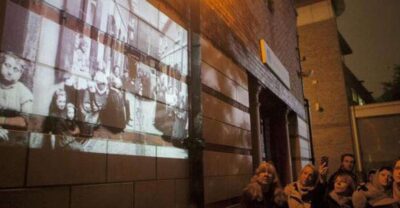
Jack the Ripper Walking Tour – Ripper Vision Tours
Read our review →
Ultimate Jack the Ripper : Guided Tour of London
Read our review →
Browse the lists this tour appears in