
Reviewed · JACK THE RIPPER TOURS
London: Jack the Ripper Museum Tickets
Dark history awaits in a narrow East End house. The Jack the Ripper Museum turns the murders of 1888 into a six-floor, self-guided visit filled with recreated crime scenes, Victorian objects, police evidence, and personal stories of the women who died. I like the strong attention given to the victims, and I like that you can move at your own pace rather than follow a fixed group. The main drawback is its size: many people finish in about 45 minutes, although a slower visit can last around 90 minutes.
I also appreciate the setting at 12 Cable Street, close to Tower Gateway, Tower Hill, and Aldgate East. The museum uses sound, wax figures, documents, and period rooms to create a creepy atmosphere without needing a long walking tour. It is a good fit for true-crime fans and history-minded visitors, but the graphic morgue material can be upsetting, and younger children may find some scenes too intense.
In This Review
- Key details before you go
- Finding the museum on Cable Street
- A six-floor route through 1888 London
- Mitre Square and the discovery of Catherine Eddowes
- Jack the Ripper’s sitting room
- Whitechapel Police Station and the evidence boards
- Mary Jane Kelly’s attic bedroom
- The morgue and the most graphic displays
- Victims, suspects, and the museum’s tone
- How long should you spend inside?
- Is $18.86 good value?
- Who will enjoy this museum most?
- Should you book the Jack the Ripper Museum?
- FAQ
- Where is the Jack the Ripper Museum?
- Which stations are closest to the museum?
- How long is the museum visit?
- Is transportation included?
- What can you see inside the museum?
- Does the museum contain graphic material?
- Is the museum open on Christmas Day?
- Can I cancel my booking?
- Is admission free for a disabled person’s companion?
Key details before you go
- Six floors of themed displays: Move through crime scenes, the suspect’s room, the police station, Mary Jane Kelly’s bedroom, and the morgue.
- Victims receive real attention: The museum presents the women’s lives, families, clothing, and possessions rather than treating the murders as a simple mystery game.
- Whitechapel Police Station recreated: Crime boards, letters, newspapers, and police equipment help explain how the investigation unfolded.
- Atmosphere comes from sound and waxwork scenes: Audio effects, dim period rooms, and realistic figures make the visit feel more like a stage set than a conventional museum.
- Allow 45 to 90 minutes: You can walk through quickly, but careful reading and listening make the visit longer.
- Admission costs about $18.86: That is reasonable for a central London attraction if you take your time, though it may feel high for a short visit.
Finding the museum on Cable Street
The Jack the Ripper Museum is at 12 Cable Street in London’s East End. The nearest underground and train stations are Tower Gateway, Tower Hill, and Aldgate East, so it is easy to add to a day around the Tower of London, the City, or Whitechapel.
Do not expect a grand museum entrance. The building can look more like an ordinary house from the street, which adds to the surprise when you step inside. The front desk staff explain the best route through the rooms, and the visit ends back at the same location.
There is no transportation included, so you make your own way there. That is not a major issue in London, but you should allow time to find Cable Street, especially if you are combining the museum with other East End sights.
More Museum Visits in London
- Tower of London and Crown Jewels Exhibition Ticket
★ 4.5 · 6,677 reviews - London: Chelsea Football Club Stadium and Museum Tour
★ 4.8 · 4,576 reviews - Chelsea FC Stadium Tours and Museum
★ 5.0 · 1,908 reviews
A six-floor route through 1888 London
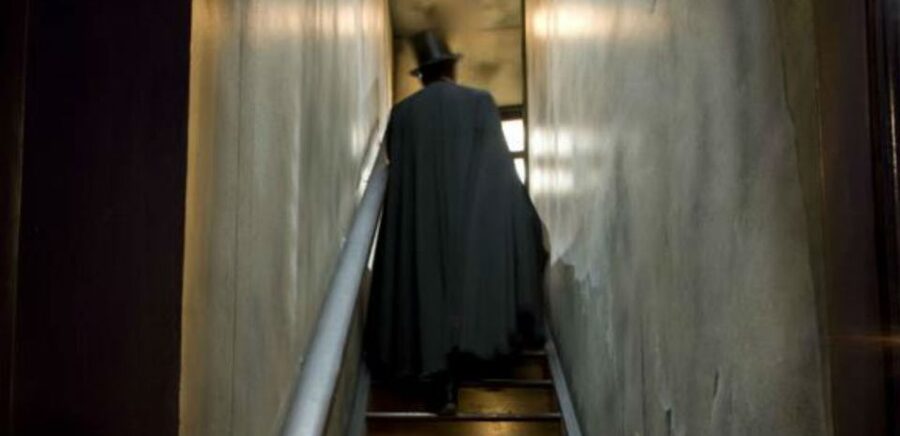
This is not a guided walking tour of Whitechapel. It is an indoor, self-guided museum visit arranged across six floors. You move from room to room, reading panels, looking at displays, and listening to sound effects.
The layout is compact. Some people will move through in roughly 45 minutes, while I would allow closer to an hour and a half if you want to read the material, examine the objects, and pause in the more serious sections.
The museum’s strength is its theatrical presentation. You are not simply looking at framed photographs. You see rooms built to suggest the period, wax figures placed within crime scenes, and walls covered with clues and documents. The approach is deliberately dramatic, so expect a mixture of historical information and horror attraction.
That balance will not suit everyone. If you want a strictly academic museum with extensive original collections and quiet interpretation, this may feel too staged. If you want a clear introduction to the case with a strong sense of place, the format works well.
Mitre Square and the discovery of Catherine Eddowes
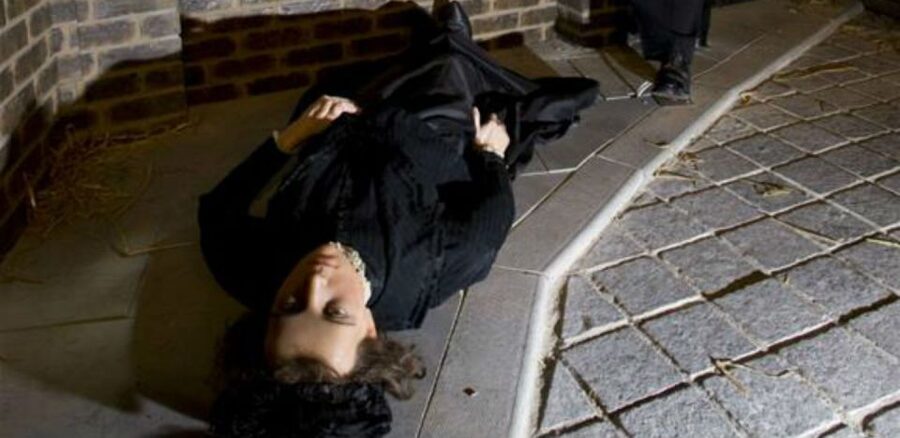
One of the first major scenes recreates Mitre Square, where Police Constable Watkins discovered the body of Catherine Eddowes. The waxwork scene shows Watkins finding her, creating one of the visit’s most unsettling moments.
This section gives you a sense of how sudden and alarming the discoveries were for the police. The museum does not present the murder as an abstract puzzle. It places you near the discovery and connects the crime to a specific woman and a specific location.
The scene is graphic in tone, even when you are not looking directly at the most disturbing material. Sound effects and lighting add tension, so you may want to move slowly and decide how much detail you wish to take in.
The recreated scene is also a good example of the museum’s overall method. It uses visual drama to get your attention, then provides information around the display. I found that combination useful for understanding the basic sequence of events, though the wax figures may feel too theatrical for some people.
Jack the Ripper’s sitting room
After seeing the crime scene, you enter a recreation of Jack the Ripper’s sitting room. Medical instruments, books, maps, letters, and Victorian Ripper memorabilia fill the room.
The point is not to prove the identity of the killer. Jack the Ripper was never definitively identified, and the room instead reflects the theories and objects connected with the case. It gives you a place to consider the investigation, the suspects, and the way the murders captured public attention.
One especially notable display is a drawing of a woman’s body on a metal bed, attributed to prime suspect Walter Sickert and signed in red ink. It is an unusual object, and it shows how the museum connects the mystery to the many people who have been proposed as suspects over the years.
This room is best approached with a skeptical eye. The collection contains compelling material, but a suspect-related object is not the same as proof. I like that the museum gives you clues and theories to consider, but you should not leave expecting a final answer to a case that remains unsolved.
More Tickets in London
- London: The London Eye Entry Ticket
★ 4.6 · 35,875 reviews - London: Tower Bridge Entry Ticket
★ 4.7 · 15,560 reviews - London: Westminster Abbey Entrance Ticket
★ 4.6 · 11,254 reviews - London: St Paul’s Cathedral Entry Ticket
★ 4.7 · 9,813 reviews
Whitechapel Police Station and the evidence boards
The recreation of Whitechapel Police Station is among the strongest parts of the museum. This was the center of the investigation, and the display shows crime-scene boards, newspapers, police artifacts, and the famous From Hell and Dear Boss letters.
The evidence boards help you understand how information was gathered and circulated in Victorian London. Newspapers shaped public fear, letters added confusion and publicity, and police records show the limits of an investigation carried out without modern forensic tools.
Several police items receive special attention. You can see the whistle used by P. C. Watkins to call for help after finding the body in Mitre Square, along with his notebook, handcuffs, and truncheon. These objects make the police response feel more immediate than a text panel alone.
You will also find original newspapers and other police material. The museum presents these as important Ripper-related items outside Scotland Yard’s private Crime Museum. That gives the police station room a stronger sense of importance within the visit.
I would spend extra time here. The crime scenes provide the shock, but this room supplies the framework. It helps you understand how the police worked, what evidence they had, and why the investigation became so difficult.
Mary Jane Kelly’s attic bedroom
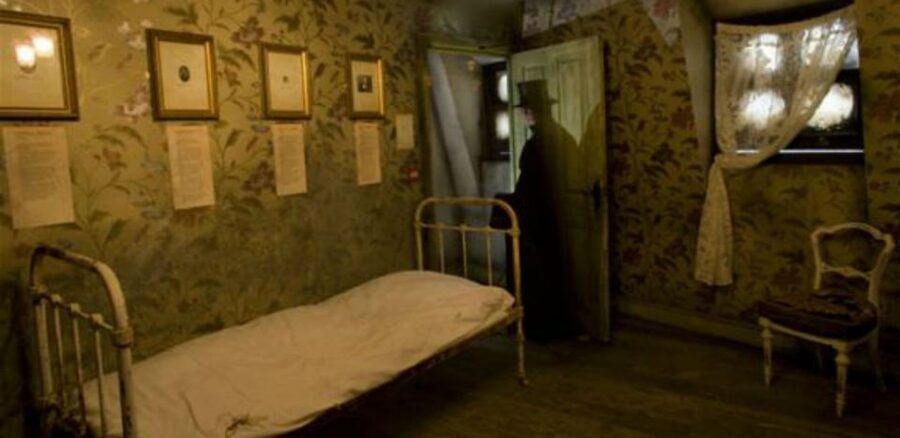
The attic contains a recreation of Mary Jane Kelly’s bedroom, associated with the most horrific of the murders. This is one of the museum’s most somber spaces.
The room includes a metal-framed bed with a straw mattress, domestic photographs, boots, bonnets, and the modest possessions of poor Victorian East End women. These details shift the focus away from the killer and toward the people who lived in difficult circumstances.
You also hear about the women’s lives and families. That personal material matters. Without it, the museum could easily become a collection of gruesome scenes built around the killer’s notoriety. Instead, the bedroom gives you a reminder that these were women with homes, relatives, daily routines, and possessions.
The sound design is especially effective here. A woman singing through a speaker creates a haunting atmosphere, and the effect lingers after you leave the room. It is theatrical, but it also helps the space feel less like a crime exhibit and more like a domestic room interrupted by violence.
This is not a cheerful stop, and you should not rush through it. If you are visiting with children, consider their age and tolerance for disturbing subjects. The museum is sometimes described as family-friendly, but the content is still about real murders and includes upsetting material.
The morgue and the most graphic displays
The final section is the morgue, where you can study autopsy photographs and read reports about the murders of the nine women associated with the Ripper case.
This is the most difficult part of the visit. The images are actual autopsy photographs, and the written reports describe mutilation and murder in direct terms. You can choose how closely to examine the material, but the room is designed to confront you with the physical reality of the crimes.
The morgue is not just there for shock value. It shows why the case became so notorious and why the victims’ deaths had such a lasting effect on London. Still, the display is graphic, and it may not be suitable for everyone.
If you are sensitive to medical images, you can spend less time here or move on quickly. The museum does not require you to study every photograph. That freedom makes the visit easier to manage for mixed groups, where one person may want detail and another may prefer to avoid it.
The basement also includes creepy mannequin displays. They add to the horror attraction feel, so you should expect a deliberate scare factor alongside the historical content.
Victims, suspects, and the museum’s tone
The museum’s best decision is its focus on the victims. You learn about the women’s lives, see references to their families, and view clothing and household items connected with poor Victorian East London.
That human focus gives the visit more weight. Jack the Ripper is the famous name, but the women are the reason the story matters. I found the domestic photographs and everyday possessions more affecting than the sensational displays because they suggest ordinary lives rather than treating the murders as entertainment.
At the same time, the museum is not a quiet memorial. It uses wax figures, dramatic room sets, sound effects, and horror-style presentation. You may hear a song in the attic, encounter mannequins in the basement, and find yourself walking through scenes built to create fear.
This mixed tone is the central thing to understand before booking. You get history, but you also get theatrical horror. The museum can be informative and atmospheric in the same visit, though the presentation will feel too sensational to some people.
Staff can add to the experience. The front desk team is described as friendly and helpful, with clear advice on the best route. Guides named Jasony and George have also been praised for adding social and historical context, welcoming questions, and turning the visit into more of a performance. Because the standard format is self-guided, do not assume a guide will be included with every admission.
How long should you spend inside?
The visit is valid for one day, with starting times shown when you check availability. Once inside, you can walk through the museum at your own pace.
For a quick look, plan on about 45 minutes. That is enough to see each floor and catch the main displays, but it leaves little time for reading. If you want to study the police evidence, listen to the audio, and think through the victim stories, allow 60 to 90 minutes.
The museum is small, so you will not need a full afternoon. That makes it useful on a packed London schedule. You can place it between nearby sights rather than building an entire day around it.
The small size is both an advantage and a limitation. You get a focused experience without miles of walking, but anyone expecting a large national museum may feel the admission price more sharply.
Is $18.86 good value?
At about $18.86 per person, admission is fair if you enjoy true crime, Victorian London, or atmospheric museums. The six-floor layout, themed rooms, sound effects, police objects, and graphic archive material give you more than a simple display of panels.
Value depends on your pace. If you race through in 30 to 45 minutes, the price may seem high for the size of the museum. If you spend 90 minutes reading and examining the exhibits, the cost becomes easier to justify.
I would also count the location. Because the museum is near Tower Gateway, Tower Hill, and Aldgate East, you can combine it with other East London sights and avoid paying for a separate excursion. You arrange your own transportation, but the central location keeps the planning simple.
Free cancellation up to 24 hours before the visit and a reserve-now, pay-later option make the booking less rigid. A person accompanying a disabled visitor receives free admission, which is a useful policy to know. The museum closes on Christmas Day.
Who will enjoy this museum most?
You are likely to enjoy the museum if you like:
- True crime and unsolved cases
- Victorian London
- Police investigations and old newspapers
- Waxwork displays and theatrical settings
- Short indoor attractions with flexible timing
- Dark tourism and horror-themed experiences
The museum also works well for visitors who want something unusual after the major London sights. It is not a conventional art museum, and it does not pretend to be one.
I would be cautious about bringing young children simply because the subject matter is violent and the morgue contains actual autopsy photographs. The age guidance is not specified here, so you will need to judge your own group carefully.
History fans may appreciate the police records and social context, but anyone seeking a complete account of Victorian East London should pair this visit with other historical sights. The museum offers a focused look at the Ripper case, not a full survey of the city.
Should you book the Jack the Ripper Museum?
Book it if you want a compact, atmospheric look at the 1888 murders and you are comfortable with graphic material. The strongest reasons to go are the victim-focused displays, the Whitechapel Police Station recreation, the period rooms, and the chance to explore without being tied to a fixed tour pace.
Skip it if you dislike wax figures, staged horror, or autopsy photographs. You may also find it poor value if you expect a large museum or a long guided experience.
For most true-crime fans, the $18.86 admission is reasonable, especially if you take your time and combine it with nearby London sights. Go for the police evidence and the human stories, not just the scare effects. That is where the museum offers its most worthwhile experience.
FAQ
Where is the Jack the Ripper Museum?
The museum is at 12 Cable Street, London E1 8JG, in Greater London.
Which stations are closest to the museum?
The nearest underground and train stations are Tower Gateway, Tower Hill, and Aldgate East.
How long is the museum visit?
Your admission is valid for one day, and you can check availability for starting times. The museum can take about 45 minutes to visit quickly, while a slower visit may last around 90 minutes.
Is transportation included?
No. The ticket includes museum admission only, so you arrange your own transportation to Cable Street.
What can you see inside the museum?
Displays include recreated crime scenes, a recreation of Whitechapel Police Station, Jack the Ripper’s sitting room, Mary Jane Kelly’s bedroom, police artifacts, original newspapers, letters, and a morgue room.
Does the museum contain graphic material?
Yes. The morgue includes actual autopsy photographs and reports describing the murders and mutilation of the nine women associated with the Ripper case.
Is the museum open on Christmas Day?
No. The museum is closed on Christmas Day.
Can I cancel my booking?
Yes. You can cancel up to 24 hours in advance for a full refund.
Is admission free for a disabled person’s companion?
Yes. The person accompanying a disabled visitor receives free entrance.
More Jack the Ripper Walks
- London: The Original Jack the Ripper Walking Tour
★ 4.7 · 7,833 reviews - London Jack the Ripper Guided Tour with Ripper-Vision
★ 4.5 · 4,840 reviews - London: Jack the Ripper Small Group Tour
★ 4.7 · 3,159 reviews - London Jack The Ripper Guided Walking Tour
★ 5.0 · 3,131 reviews
Recently added around London
- PRIVATE HIRE 45 min Speedboat Tour – Embankment/Westminster Pier★ 5.0 · 55 reviews
- Private Tour of London’s Historic Pubs★ 5.0 · 55 reviews
- From London: Glastonbury and Cheddar Gorge Guided Day Trip★ 4.8 · 55 reviews
- Gatwick Airport Taxi – Private Transfer to/from London★ 5.0 · 55 reviews
- London: Kew to Westminster River Thames Cruise★ 4.2 · 55 reviews
- London by Night – Tootbus Sightseeing Tour★ 3.5 · 55 reviews
- London: Tower of London After Hours Tour and Key Ceremony★ 4.8 · 56 reviews
- Private Round Trip Transfer between London Airports and Hotel★ 3.5 · 56 reviews
Jack the Ripper Tours, compared.
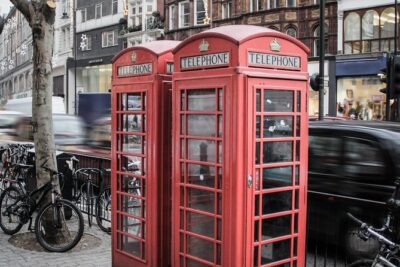
London Jack the Ripper Guided Tour with Ripper-Vision
Read our review →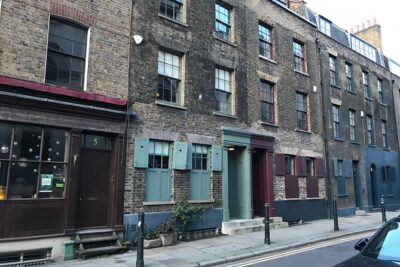
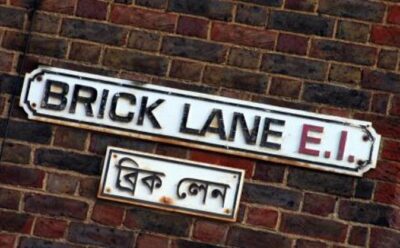
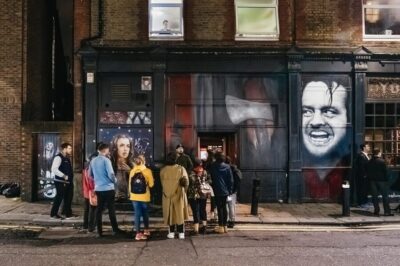
German Language : Original Jack the Ripper Tour
Read our review →
Jack the Ripper Walking Tour – Ripper Vision Tours
Read our review →
Ultimate Jack the Ripper : Guided Tour of London
Read our review →
Browse the lists this tour appears in