
Reviewed · JACK THE RIPPER TOURS
London – Jack the Ripper Small Group Tour
The murders begin in Whitechapel. This two-hour-15-minute walk with Richard Walker combines crime-scene detail, Victorian social history, and thoughtful theories about Jack the Ripper. I especially like the focus on the women who died and the small-group format. The main drawback is that you spend long stretches standing outdoors, and this is more historical than scary.
At $41.67, the tour offers good value if you want a serious, guided look at the case rather than a quick ghost story. The radio microphone and earphones are a smart touch, and the iPad images help connect today’s streets with Victorian Whitechapel. You should still wear comfortable shoes and expect a brisk walk of about 1.5 miles.
In This Review
- Key points about the Whitechapel night walk
- Why this Jack the Ripper tour feels different
- Starting opposite London Hospital on Whitechapel Road
- Buck’s Row and Polly Nichols
- Brick Lane, lodging houses, and the geographical theory
- Christ Church Spitalfields and the Ten Bells
- Old Spitalfields Market and Victorian poverty
- Spitalfields, Dorset Street, and Mary Kelly
- What the $41.67 price delivers
- Walking comfort, pace, and timing
- Who should book this walk
- Should you book Richard Walker’s Whitechapel tour?
- FAQ
- Where does the Jack the Ripper tour start?
- What time does the tour begin?
- How long does the tour last?
- Where does the tour finish?
- How far do you walk?
- How large is the tour group?
- Is the tour offered in English?
- Are headphones provided?
- Is admission to Christ Church Spitalfields included?
- Is the tour suitable for people with walking difficulties?
Key points about the Whitechapel night walk
- Victim-focused storytelling: The tour gives substantial attention to Emma Elizabeth Smith, Polly Nichols, Annie Chapman, and Mary Kelly, not just the unknown killer.
- Small group of up to 15: That is far more personal than the very large Jack the Ripper walks that fill the area.
- Clear audio equipment: A radio microphone and earphones help you hear Richard even beside busy roads.
- Visual help from an iPad: Historical images give you a better sense of buildings, streets, and people connected with the case.
- A serious, non-gory approach: Expect evidence, theories, and social history rather than theatrical scares.
- Easy end point: The walk finishes near Liverpool Street Station, with access to several Underground lines and the Elizabeth line.
Why this Jack the Ripper tour feels different
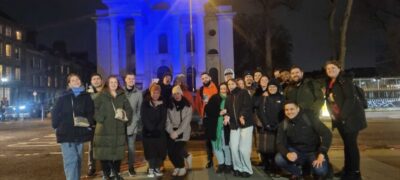
Jack the Ripper tours in London can be theatrical affairs. Some lean hard into blood, fog, sinister music, and the familiar image of a top-hatted killer stalking helpless women. Richard Walker takes another path.
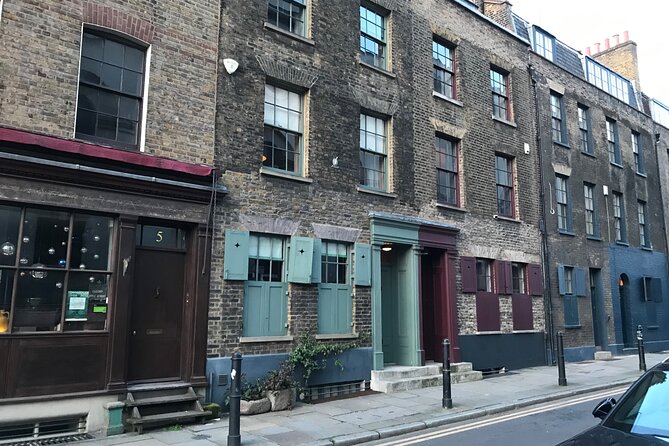
His walk is built around the known facts, the uncertain evidence, and the lives of the victims. You hear about the conditions in Whitechapel, the lodging houses where poor residents slept, and the assumptions made about the women after their deaths. That approach gives the story more weight and avoids turning real suffering into a simple horror show.
Richard is clearly passionate about the subject. His presentation draws on Scotland Yard’s geographical profile from 2008 and an FBI criminal profile created by Special Agent John Douglas in 1988. He also presents his own theories, but the useful part is that you can hear where fact ends and interpretation begins.
The walk suits you best if you enjoy history, true crime, and detective work. It is also suitable for older children who can handle the subject. It is not the right choice if you want a ghost tour or graphic murder descriptions.
More Jack the Ripper Walks:
- London: The Original Jack the Ripper Walking Tour
★ 4.7 · 7,833 reviews - London Jack the Ripper Guided Tour with Ripper-Vision
★ 4.5 · 4,840 reviews - London: Jack the Ripper Small Group Tour
★ 4.7 · 3,159 reviews
Starting opposite London Hospital on Whitechapel Road
The meeting point is at 279 Whitechapel Road, opposite the London Hospital. The tour begins at 7 p.m., when the neighborhood has taken on a different mood from its daytime character.
The first story concerns Emma Elizabeth Smith, described here as the first victim of the Whitechapel Murders. She died after being brutally attacked on April 3, 1888. This opening gives you an immediate connection between the modern street and the case’s earliest known events.
Richard begins with the setting as well as the crime. That matters because Whitechapel was not an isolated murder scene. It was a crowded East London district shaped by poverty, migration, lodging houses, markets, pubs, and hard daily work.
You receive a radio earpiece at the beginning, so you do not need to cluster tightly around the guide. The equipment is particularly useful beside traffic and other evening noise. Richard also uses an iPad to show images, adding a visual layer that a standard walking talk often lacks.
Buck’s Row and Polly Nichols
The next stop is Buck’s Row in Whitechapel, where Polly Nichols became the first victim in the set of murders usually linked with Jack the Ripper. Here, Richard treats the location as a crime scene rather than simply pointing at a modern street and reciting dates.
You examine when, where, and how the murder happened. Richard also introduces the first suspect and explains why that person has attracted attention. The value is in seeing how a theory is built from place, timing, witness accounts, and the behavior of the killer.
This section also shows one limit of the experience. You may spend a while standing in one place as Richard develops the evidence. One person specifically wished for more movement and more opportunities to sit. That is fair criticism, so plan on being comfortable on your feet.
The route does not recreate the original street in perfect form. Modern London has changed. Still, standing in the same general area can make the distances and escape routes easier to understand than reading about them in a book.
Brick Lane, lodging houses, and the geographical theory
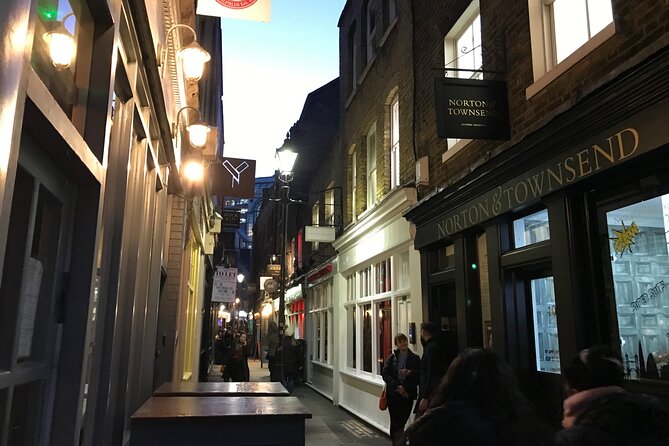
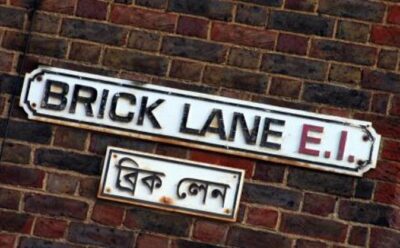
Brick Lane is now famous for curry restaurants and East London food culture. On this walk, it also becomes a way to understand the territory linked with the murders.
Richard explains that Brick Lane marked the eastern boundary of the area where all five victims lived at the time. You hear about Thrawl Street, which ran toward Commercial Street, and Wilmott’s Lodging House, where Polly Nichols stayed. Flower and Dean Street also enters the story, since the third and fourth victims lived there.
This is one of the strongest parts of the walk for anyone who likes maps and patterns. Scotland Yard created a geographical profile suggesting that the killer lived within a particular area. Richard compares that theory with the FBI profile and presents a second suspect who appears to fit both.
You are not simply handed a name and told that the mystery is solved. The appeal is seeing how investigators use geography to narrow possibilities, while recognizing that the case remains uncertain. If you have already read several books on Jack the Ripper, this analytical approach may give you something fresh.
Brick Lane itself can be busy, and the group may pause on a public street. Keep your attention on the guide and use the earpiece rather than expecting a quiet lecture hall.
A few more trips worth a look before you book
- London: The London Eye Entry Ticket
★ 4.6 · 35,875 reviews - From London: Harry Potter Warner Bros Studio Tour
★ 4.7 · 26,588 reviews - London: Westminster to Greenwich River Thames Cruise
★ 4.5 · 22,836 reviews - Magical London: Harry Potter Guided Walking Tour
★ 4.7 · 22,044 reviews
Christ Church Spitalfields and the Ten Bells
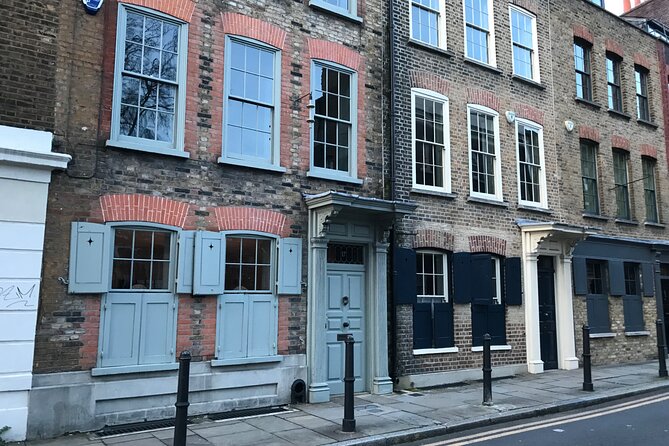
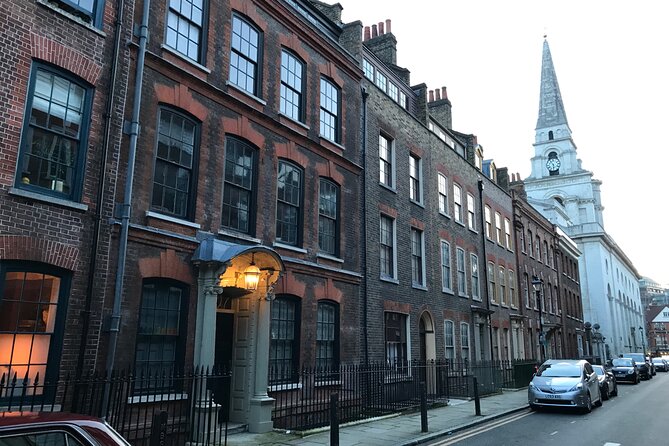
Christ Church Spitalfields provides a striking architectural pause. The church was designed by Nicholas Hawksmoor and faces the Ten Bells pub, a place closely tied to the story because the victims drank there.
This stop adds a useful reminder: the case unfolded within an ordinary community. Churches, pubs, markets, lodging houses, and narrow streets were part of daily life. The setting is not just background decoration. It helps explain how people lived, met, disappeared, and moved through the district.
Admission to Christ Church is not included, and the walk does not promise an interior visit. You see the building from the route and hear its connection to the case. The Ten Bells also has a strong reputation in Ripper lore, so Richard’s explanation helps separate the pub’s real connection from later storytelling.
Old Spitalfields Market and Victorian poverty
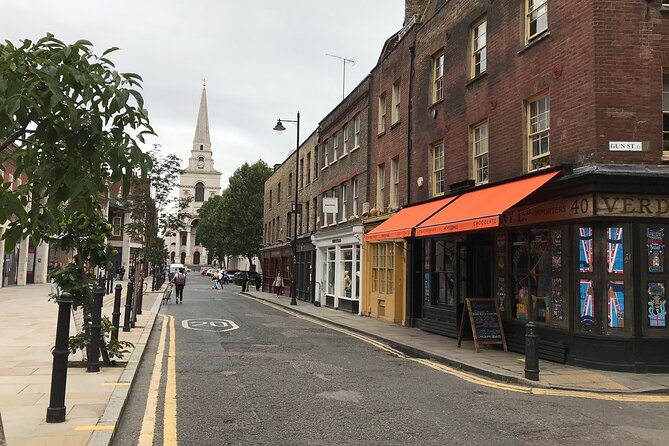
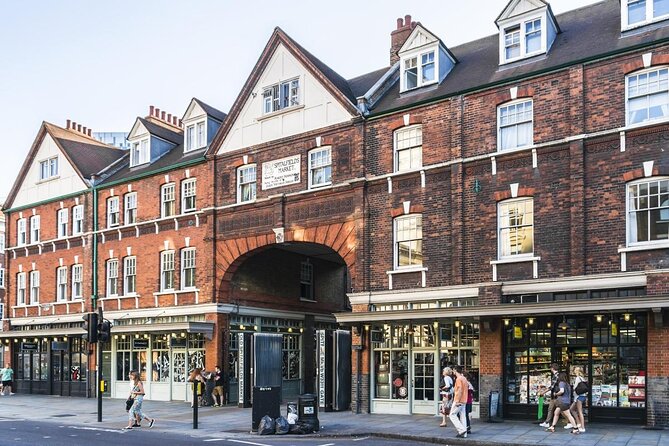
Old Spitalfields Market has served as a community center for centuries. It is also linked here with the American writer Jack London, who witnessed severe poverty in Victorian London.
This stop broadens the tour beyond murder details. You get a picture of the conditions that shaped Whitechapel: insecure housing, low wages, overcrowded lodging, and limited choices for people living on the edge. That context is vital because it helps you see the victims as people with difficult lives, not just names in a case file.
The market also gives the route a change of scene. After several crime locations and street discussions, a major community landmark helps tie the story to the wider history of East London.
Do not expect a museum visit or a long indoor break here. It is another outdoor stop, and the tour continues on foot.
Spitalfields, Dorset Street, and Mary Kelly
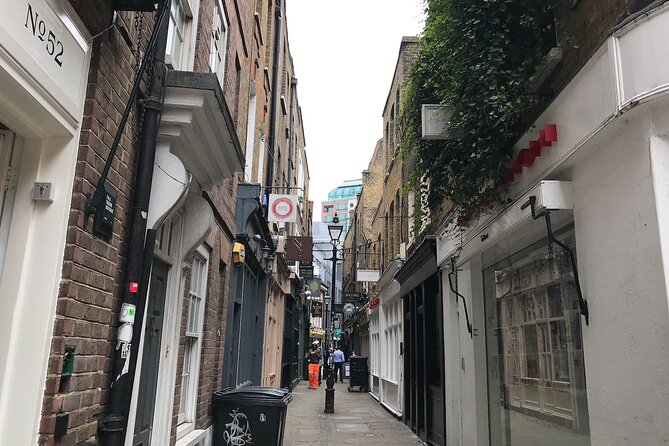
The final section takes you through Spitalfields, including the area once associated with one of London’s worst streets. Annie Chapman lived here until the night she was murdered, and Mary Kelly also lived and died in this part of the district.
Mary Kelly is presented as a different kind of victim, and her story leads to a third convincing suspect. Richard uses her case to question accepted ideas about the murders and the women involved. He also challenges the assumption that all the victims were definitively working as prostitutes, a point that can change how you understand the standard version of the story.
This part is likely to appeal to you if you prefer careful questioning over tidy answers. Richard is willing to examine eyewitness testimony and long-repeated claims rather than repeat the usual script.
It can also be the heaviest part of the walk. The subject matter concerns real violence and poverty, even though the tour avoids a sensational or graphic style. You should choose it for historical interest, not for light evening entertainment.
The tour ends at 126A Middlesex Street near Liverpool Street Station. That is a practical finish, especially if you are heading back across London. The Central, Circle, Hammersmith and City, and Metropolitan lines serve the station, along with the Elizabeth line.
What the $41.67 price delivers
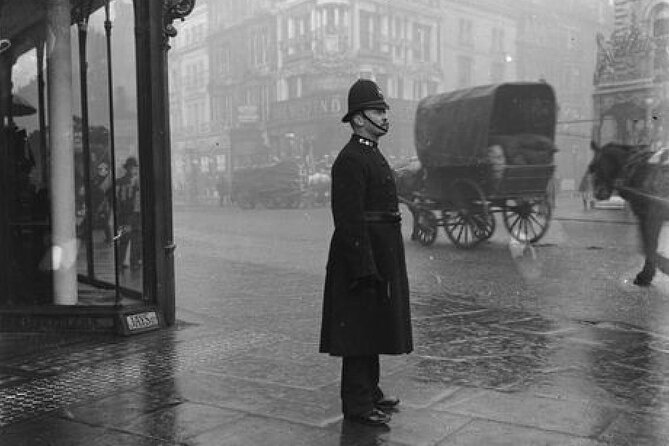
At $41.67 per person, this is not the cheapest way to hear the Jack the Ripper story. You can find free information online, read a book, or walk through Whitechapel independently.
The value comes from the route and the interpretation. Richard links several locations in a sensible order, uses images to fill in missing historical detail, and gives you a framework for judging competing theories. You also avoid the problem of getting lost while trying to match old street names with modern London.
The small group matters. The stated maximum is 15 people, though groups can be smaller. A group of four, eight, or 12 allows you to hear clearly and ask questions without the anonymous feel of a large crowd. You may pass much bigger groups during the walk, which makes the price difference easier to understand.
The audio system is another practical benefit. Richard only needs to speak into the microphone, while you listen through the earpiece. That means you are less likely to miss a key detail because of traffic or nearby groups.
Walking comfort, pace, and timing
The route lasts about two hours and 15 minutes and covers roughly 1.5 miles, or 2.5 kilometers. The distance is manageable for most people with moderate fitness, but the tour is not suitable if you have walking difficulties.
The bigger issue is not the distance. It is the amount of time spent standing while Richard explains a scene or theory. Wear supportive shoes and dress for London at night. The information does not stop simply because the pavement is cold or damp.
The 7 p.m. starting time works well for the subject and lets you see Whitechapel after dark. It also means you should arrange food before the tour or after it, since coffee and tea are not included.
The advertised language is English, and the tour uses a mobile ticket. Confirmation arrives at booking. Most importantly, check the meeting address carefully and arrive ready to begin at 7 p.m.
Who should book this walk
I would choose this tour if you want:
- A small-group experience instead of a crowd of 30 or 40 people
- More attention to the victims and their surroundings
- Competing suspects and theories explained in plain terms
- A guide who uses historical images and audio equipment
- A walk that connects crime scenes with Victorian social conditions
- A serious presentation without gore or ghost-tour theatrics
I would skip it if your main goal is fright. One disappointed participant expected a creepy, graphic Jack the Ripper experience and found the educational approach too restrained. That expectation mismatch is easy to avoid if you know what you are booking.
The pace may also frustrate you if you need frequent sitting breaks or prefer constant movement. Richard welcomes questions, but the experience can be more talk-based than interactive, depending on the group.
Should you book Richard Walker’s Whitechapel tour?
Yes, if you want a thoughtful Jack the Ripper walk led by a guide who has spent years researching the case. The strongest features are Richard’s enthusiasm, his attention to the victims, the small group, and the clear sound system.
Book it for context, evidence, and atmosphere. Do not book it expecting actors, jump scares, or a parade of gruesome details. At $41.67, it is a solid choice for true-crime readers, history fans, and curious visitors who want to understand Whitechapel rather than simply be frightened by it.
FAQ
Where does the Jack the Ripper tour start?
The tour starts at 279 Whitechapel Road, London E1 1BY, opposite the London Hospital.
What time does the tour begin?
The start time is 7 p.m.
How long does the tour last?
The walk lasts approximately two hours and 15 minutes.
Where does the tour finish?
It ends at 126A Middlesex Street near Liverpool Street Station.
How far do you walk?
The route covers about 1.5 miles, or 2.5 kilometers.
How large is the tour group?
The maximum group size is 15 people.
Is the tour offered in English?
Yes. English is the stated tour language.
Are headphones provided?
Yes. The tour includes a radio microphone and earphones so you can hear Richard clearly.
Is admission to Christ Church Spitalfields included?
No. Admission to Christ Church Spitalfields is not included.
Is the tour suitable for people with walking difficulties?
No. The experience requires moderate physical fitness and is not suitable for people with walking difficulties.
Recently added around London
- PRIVATE HIRE 45 min Speedboat Tour – Embankment/Westminster Pier★ 5.0 · 55 reviews
- Private Tour of London’s Historic Pubs★ 5.0 · 55 reviews
- From London: Glastonbury and Cheddar Gorge Guided Day Trip★ 4.8 · 55 reviews
- London: Kew to Westminster River Thames Cruise★ 4.2 · 55 reviews
- Gatwick Airport Taxi – Private Transfer to/from London★ 5.0 · 55 reviews
- London by Night – Tootbus Sightseeing Tour★ 3.5 · 55 reviews
- London: Tower of London After Hours Tour and Key Ceremony★ 4.8 · 56 reviews
- Palaces, Parliament & Power: A Walking Tour of London’s Royal City★ 5.0 · 56 reviews
Jack the Ripper Tours, compared.
London Jack the Ripper Guided Tour with Ripper-Vision
Read our review →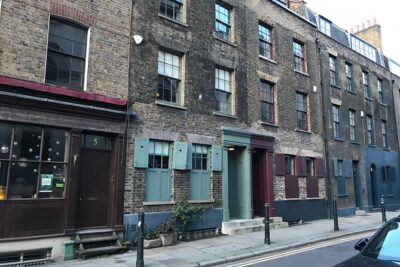
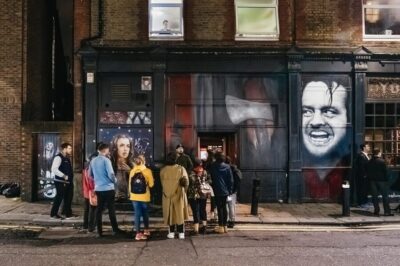
German Language : Original Jack the Ripper Tour
Read our review →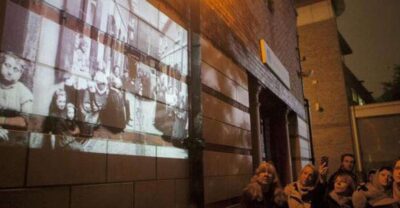
Jack the Ripper Walking Tour – Ripper Vision Tours
Read our review →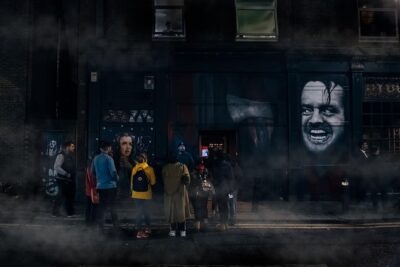
Ultimate Jack the Ripper : Guided Tour of London
Read our review →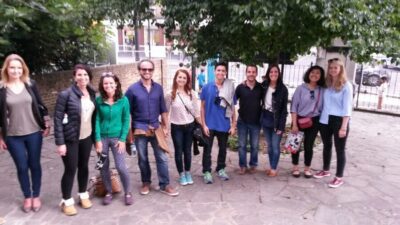
Browse the lists this tour appears in