
Reviewed · WALKING TOURS
London: Self-Guided Notting Hill Walking Tour with an APP
Notting Hill rewards slow walking. This two-hour audio route mixes film locations, pretty residential streets, Portobello Road, and lesser-known corners into an easy London outing. I like the freedom to start and stop the tour, and I like that the route goes beyond the famous blue door to show the area’s homes, mews, and changing character. The main catch is that you must install and download the separate Trippy Tour Guide app before you begin, and one French-language listener found the AI-generated voice awkward when it switched into English pronunciation.
I also like the low price of $14 per person, especially if you want a private-paced walk without joining a group. You get more than 20 narration points in six languages, with directions to both major sights and quieter streets. Just remember that this is an app-led walk, not a personal tour, so you will need a charged phone, headphones, water, and a reliable internet connection for setup.
In This Review
- Key points at a glance
- Starting at Notting Hill Gate
- Pembridge Crescent and Notting Hill’s old-world side
- Simon Close and Denbigh Terrace
- Elgin Crescent and Lansdowne Crescent
- Portobello Road and the market atmosphere
- The Hugh Grant blue door and the bookshop
- Electric and Notting Hill’s cinema tradition
- Ormrod Court, St Luke’s Mews, and Powis Mews
- Finishing at Westbourne Park Station
- How the app works in real use
- Is $14 a good value?
- Who should choose this Notting Hill walk?
- Should you book it?
- FAQ
- Where does the Notting Hill walking tour start?
- Where does the tour finish?
- How long does the walking tour take?
- Is a live guide included?
- Which languages are available?
- What should I bring?
- Do I need internet access?
Key points at a glance
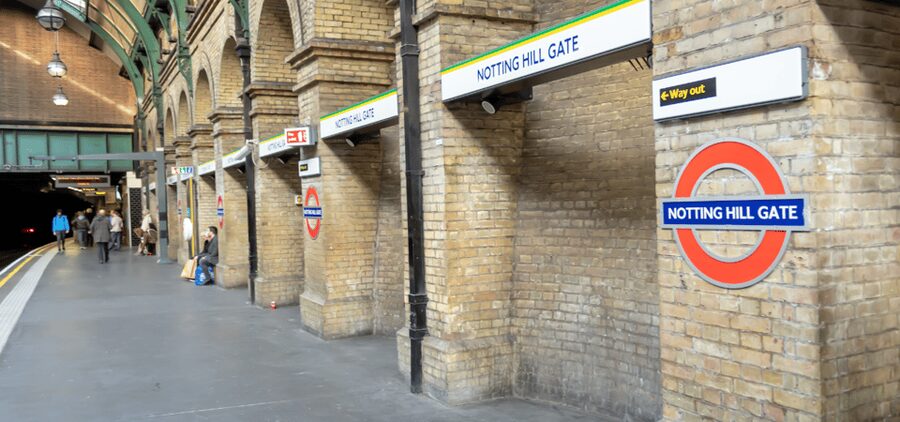
- Movie locations beyond the famous blue door: Stop for photos connected with the Hugh Grant film Notting Hill, plus locations associated with Love Actually.
- A two-hour route through changing Notting Hill: The walk links grand crescents, colorful streets, residential mews, and Portobello Road.
- Flexible audio in six languages: Choose English, Spanish, German, French, Italian, or Chinese, then pause, replay, or rewind as needed.
- More than 20 points of interest: The app provides spoken stories and directions rather than simply sending you from one photo stop to another.
- A strong value for independent walkers: At $14, the tour costs less than many guided outings, though entry fees and a live guide are not included.
- A little preparation matters: Download the tour over Wi-Fi before you reach Notting Hill Gate, since the app is separate from the GetYourGuide app.
Starting at Notting Hill Gate
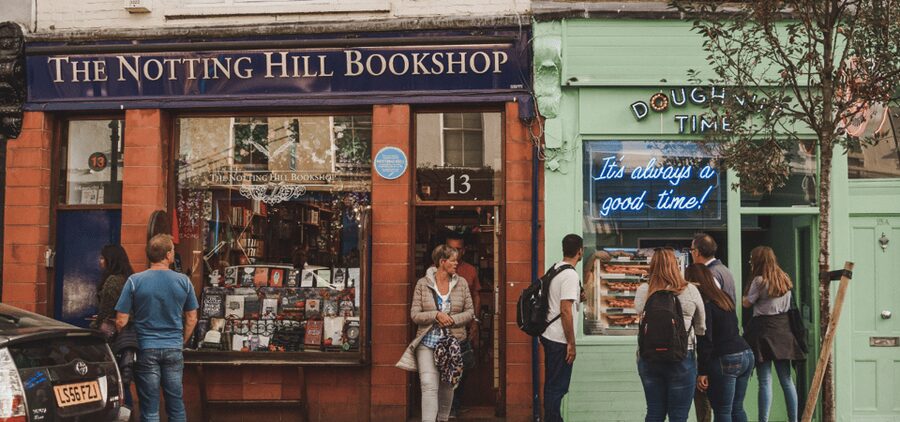
The tour begins at Notting Hill Gate, a practical meeting point for exploring the district on foot. You do not meet a guide here. Instead, once you reach the starting location, you open the Trippy Tour Guide app and begin the route.
That arrangement gives you control. You can start at the listed time, pause for a coffee or photo, and replay a section if you miss something. It also means the success of the outing depends partly on your phone. Download the app and tour while you have Wi-Fi, then check that the audio works before leaving your hotel.
The app uses automatic playback as you move along the route. I find that useful when walking, since you do not need to keep stopping to read a screen. Still, keep your headphones volume low enough to hear people, bicycles, and traffic. London streets are not a quiet museum corridor.
The walk is listed as two hours, but your actual time may stretch if you pause for photos, browse Portobello Road, or stop at a café. The route is best treated as a framework for exploring, not a race to collect every narration point.
More Walking Tours in London
- Magical London: Harry Potter Guided Walking Tour
★ 4.7 · 22,044 reviews - London: The Original Jack the Ripper Walking Tour
★ 4.7 · 7,833 reviews - Tour for Muggles The Ultimate Harry Potter Walking Tour in London
★ 5.0 · 4,684 reviews
Pembridge Crescent and Notting Hill’s old-world side
Pembridge Crescent introduces the district’s polished residential face. The route sends you away from the immediate station area and into streets where the architecture and front doors do much of the talking.
This is a good early stop because it sets up the contrast that defines Notting Hill. The neighborhood is known for cinema and shopping, but it is also a place of handsome homes and quiet corners. The audio commentary helps give those streets a purpose rather than leaving you to admire them without context.
I would take this section slowly. The value here is not one grand attraction. It is the sequence of details: house fronts, street curves, and the feeling of moving from a transport hub into a lived-in neighborhood. Since the tour passes residential property, be considerate with photography and keep voices down.
Simon Close and Denbigh Terrace
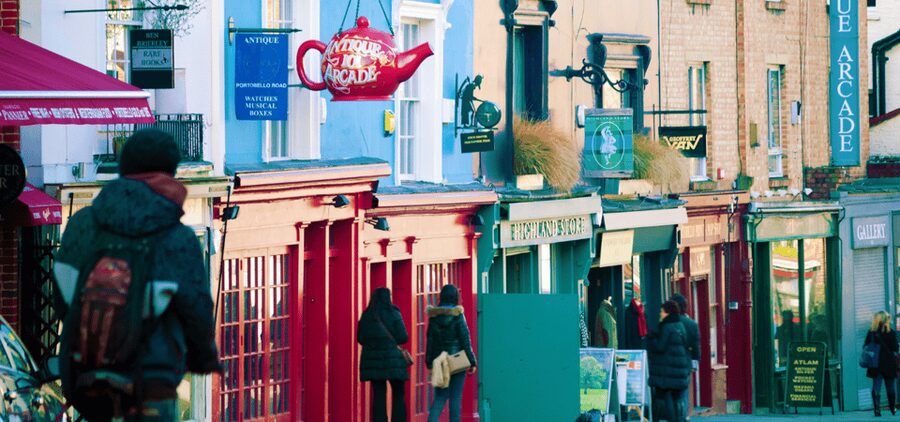
Simon Close provides a quieter change of pace. The route calls attention to this pretty spot, which is useful because a self-guided walk can otherwise pull you toward only the most obvious streets.
Next comes Denbigh Terrace, known for its old and attractive houses. These stops are well suited to people who enjoy city architecture but do not want a tour made up only of formal monuments. You get a closer look at the scale and style of Notting Hill’s residential streets.
The app’s directions matter here. A live guide naturally points out a turn, but on your own you can miss a small lane or enter the next street from the wrong end. Follow the route carefully, and glance at the map before leaving each narration point. If you wander, you can usually retrace your steps, but that may add time to the two-hour estimate.
Elgin Crescent and Lansdowne Crescent

Elgin Crescent brings more color and activity to the route. The description of this street as colorful and busy fits the shift in mood: after the calm of the residential stops, you get a more energetic view of the district.
Lansdowne Crescent adds a different architectural feature, its large arches. This is the kind of detail that makes the audio guide worthwhile. You might walk past an arch without knowing why it matters, while a short explanation encourages you to look up and pay attention to the shape of the street.
I like this middle section because it prevents the walk from becoming a film-location checklist. The movies are part of the appeal, but the route also asks you to notice the built environment. That makes the tour more useful for a first visit, when you want a sense of how the pieces of Notting Hill fit together.
A different sort of outing around London:
- London: The London Eye Entry Ticket
★ 4.6 · 35,875 reviews - From London: Harry Potter Warner Bros Studio Tour
★ 4.7 · 26,588 reviews - London: Westminster to Greenwich River Thames Cruise
★ 4.5 · 22,836 reviews - London: Madame Tussauds London
★ 4.6 · 20,915 reviews
Portobello Road and the market atmosphere

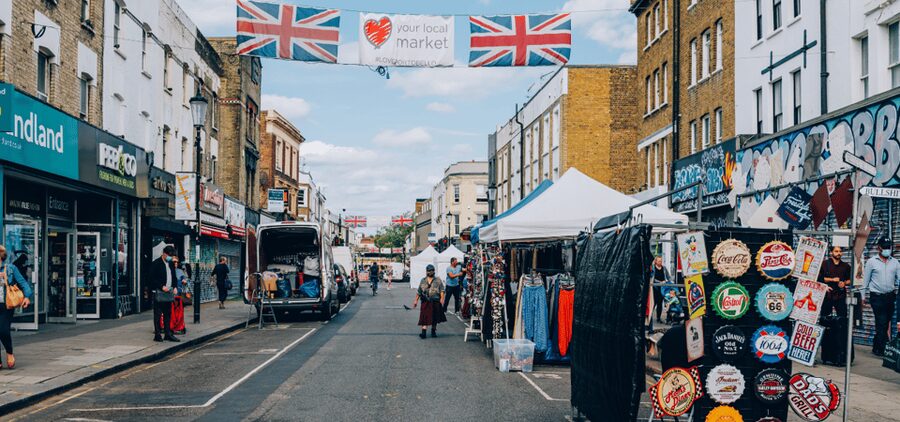
Portobello Road is the most openly commercial part of the walk. It is a major market hub, with a busy feel that contrasts sharply with Simon Close and the residential crescents.
The tour gives you a chance to see the street as part of Notting Hill’s identity rather than treating it as a quick photo stop. Depending on the day and timing, you might find stalls, shoppers, and shopfronts competing for your attention. The supplied information does not promise a particular market schedule, so check local opening details if the market is central to your plans.
This is also where I would allow extra time. Two hours is enough for the route at a steady pace, but browsing Portobello Road can easily extend your outing. The app lets you pause, which is helpful if you want to look at something instead of listening while walking.
Portobello Road may be the least peaceful section. If you prefer quiet streets, use the app’s stop and replay controls rather than trying to absorb every story amid the activity. If you like people-watching and the mix of old and new shops, this will likely be one of the most enjoyable parts.
The Hugh Grant blue door and the bookshop
The film connection is a major reason people choose this walk. You can stop for a photo near the iconic blue door or the bookshop associated with the Hugh Grant movie Notting Hill. The route also includes locations connected with Love Actually, giving film fans more than one screen-related reason to bring a camera.
These stops work best when you keep expectations realistic. You are seeing real streets and buildings, not a film set arranged for visitors. The surroundings may be busy, and some locations are private homes or active businesses. Take your photo, avoid blocking doorways, and remember that the appeal comes from recognizing the setting in an ordinary neighborhood.
I like the way the film stops sit within a broader route. You are not simply taken from one recognizable façade to another. The streets between them explain why filmmakers liked the district in the first place: the colorful homes, compact lanes, large crescents, and mix of public energy and private calm.
Electric and Notting Hill’s cinema tradition
The itinerary includes Electric, described as a place to experience classic cinema. The information does not include admission, so treat this as a point of interest rather than a guaranteed screening or included activity.
That distinction matters. The tour price covers the app and audio content, not entry fees. If you want to go inside Electric, check its current program and ticket prices separately. You may simply enjoy seeing the cinema as part of the walk, or you may decide to return later for a film.
This stop adds another layer to the movie theme. The route is not only about one romantic comedy. It presents cinema as part of the district’s public character, alongside markets, homes, and street life.
Ormrod Court, St Luke’s Mews, and Powis Mews
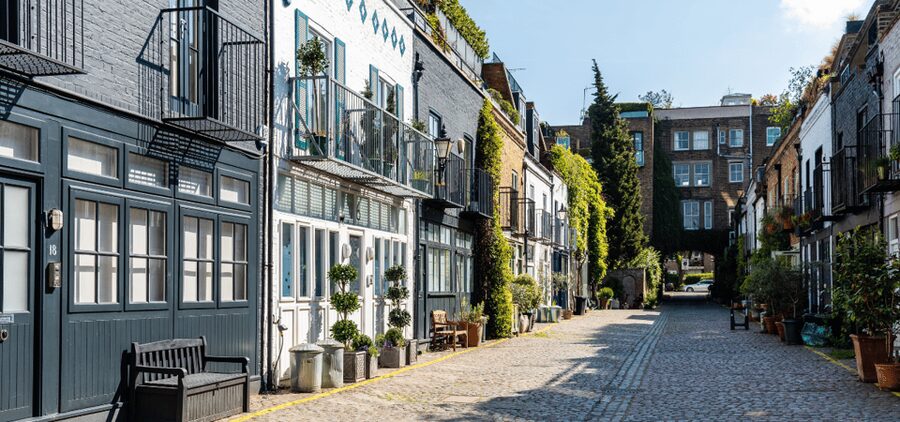
Ormrod Court brings the route to smaller, less obvious corners. The description emphasizes its tucked-away spots, and that is where the audio directions earn their keep. Without guidance, you could easily stay on the main streets and miss this kind of place.
St Luke’s Mews is one of the best-known stops for film fans because of its colorful houses and movie appearances. It is also a residential street, so the right approach is quiet admiration rather than a noisy photo session. The homes are part of someone’s daily life, not a theme park attraction.
Powis Mews supplies another dose of local history through the narration. Mews streets are valuable in a walking route because they show a different scale from the broad crescents. You move from grander streets to more intimate lanes, which helps you notice how varied Notting Hill can be within a short distance.
This final group of stops gives the tour its strongest sense of discovery. You are still close to the famous sights, but the route asks you to look for character in smaller places. I would save a little phone battery for this section, since the app continues to trigger narration as you walk.
Finishing at Westbourne Park Station
The tour ends at Westbourne Park Station, giving you a clear endpoint and an easy way to continue your London day. The finish is practical rather than ceremonial. You complete the route with a collection of film memories, market impressions, and residential streets rather than returning to the starting station.
That one-way design is useful if you are fitting Notting Hill into a larger plan. You do not need to retrace the whole route to get back to Notting Hill Gate. The exact time you reach Westbourne Park will depend on your pace and how long you spend at Portobello Road or the photo stops.
How the app works in real use
The Trippy Tour Guide app is separate from the GetYourGuide app. After booking, check your email for the access instructions and credentials, then download the tour over Wi-Fi before setting out.
The practical checklist is simple:
- Bring a charged smartphone.
- Download the app and route before arriving.
- Pack headphones and water.
- Keep your email instructions available during setup.
- Test the audio before you leave the starting point.
Stories play automatically as you reach different locations. You can start, stop, replay, and rewind them, which makes the format forgiving if a street is noisy or you need to pause for a photo.
The language choice is generous: English, Spanish, German, French, Italian, and Chinese are available. The French audio received a mixed assessment because the AI-generated voice sometimes pronounced French text in English after encountering an English word. If natural voice delivery matters greatly to you, English may be the safer choice if you understand it comfortably.
Is $14 a good value?
At $14 per person, this is a good low-cost way to get structure and commentary without paying for a private guide. The route includes more than 20 narration points, directions, and several recognizable movie locations, so the price is easy to justify for an independent visitor who wants more than a map.
The value is strongest if you plan to walk the whole route and listen to most of the commentary. If you only want the blue door and bookshop, you can find individual film locations without buying a tour. You are paying for the route design, the stories, and the help finding smaller streets such as Ormrod Court and the mews.
Remember the limits. There is no in-person guide, and entry fees are not included. You also supply the phone, headphones, and data or Wi-Fi needed for setup. Even so, the flexible format and low price make it a sensible choice for couples, solo visitors, and families who do not want to match a group’s pace.
Free cancellation up to 24 hours before the activity and the option to reserve now and pay later add useful flexibility. Check the available start times when booking, since the activity is offered at scheduled times even though the walk itself is self-guided.
Who should choose this Notting Hill walk?
I would recommend it to film fans, first-time visitors, independent walkers, and anyone who likes architecture mixed with local street life. It also suits people who want commentary in a language other than English, provided they are comfortable with the possible limits of an AI-generated voice.
You should choose a different option if you want a live guide who can answer questions, adjust the route, or explain what you are seeing in a personal way. You may also prefer another plan if phone-based tours frustrate you or if you do not want to prepare an app before leaving.
For families, the ability to pause and restart is useful. For serious market shoppers, allow more than two hours. For photographers, the route offers plenty of colorful façades and film-related stops, but residential courtesy is essential.
Should you book it?
Book this Notting Hill walk if you want an affordable, flexible route that combines movie locations with streets you might otherwise miss. The strongest parts are the clear progression from Notting Hill Gate to Westbourne Park, the more than 20 audio points, and the balance between famous sights and quieter mews.
Skip it if a personal guide is important to you, or if you expect every cinema and movie location to include admission. Download the app on Wi-Fi, start with a full battery, and treat the two-hour estimate as a baseline rather than a deadline. At $14, it is a practical way to get your bearings in Notting Hill while leaving room for your own discoveries.
FAQ
Where does the Notting Hill walking tour start?
It starts at Notting Hill Gate. You launch the tour in the Trippy Tour Guide app when you arrive at the starting location.
Where does the tour finish?
The route finishes at Westbourne Park Station.
How long does the walking tour take?
The stated duration is two hours. Stops for photos, shopping, or breaks may make your outing longer.
Is a live guide included?
No. This is a self-guided audio tour delivered through the Trippy Tour Guide app.
Which languages are available?
Audio is available in English, Spanish, German, French, Italian, and Chinese.
What should I bring?
Bring headphones, a charged smartphone, the downloaded app and tour, and water.
Do I need internet access?
You need a strong internet connection to install the app and download the tour. Wi-Fi is recommended for this preparation.
More Self-Guided Tours
- London: Emirates Stadium Entry Ticket and Audio Guide
★ 4.7 · 5,513 reviews - Westminster Abbey Entrance Ticket Including Audio Guide
★ 4.0 · 661 reviews - London: British Museum Audio Tour & Priority Entrance Ticket
★ 4.5 · 631 reviews - London: Churchill War Rooms Ticket & Political London Audio
★ 4.6 · 224 reviews
Recently added around London
- PRIVATE HIRE 45 min Speedboat Tour – Embankment/Westminster Pier★ 5.0 · 55 reviews
- Private Tour of London’s Historic Pubs★ 5.0 · 55 reviews
- From London: Glastonbury and Cheddar Gorge Guided Day Trip★ 4.8 · 55 reviews
- London: Kew to Westminster River Thames Cruise★ 4.2 · 55 reviews
- Gatwick Airport Taxi – Private Transfer to/from London★ 5.0 · 55 reviews
- London by Night – Tootbus Sightseeing Tour★ 3.5 · 55 reviews
- London: Tower of London After Hours Tour and Key Ceremony★ 4.8 · 56 reviews
- Private Round Trip Transfer between London Airports and Hotel★ 3.5 · 56 reviews
Walking Tours, compared.
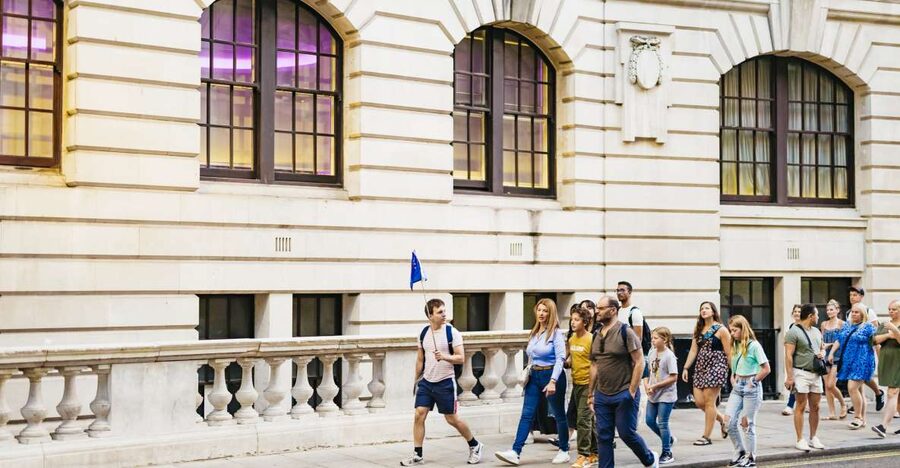
Magical London: Harry Potter Guided Walking Tour
Read our review →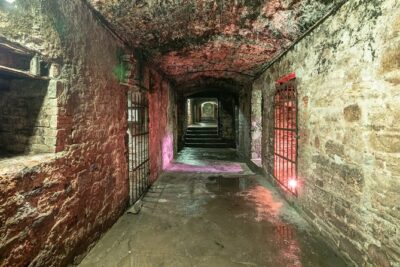
Underground Vaults Walking Tour in Edinburgh Old Town
Read our review →

Oxford University Walking Tour With University Alumni Guide
Read our review →
Edinburgh Castle: Guided Walking Tour with Entry Ticket
Read our review →
Edinburgh Castle Guided Walking Tour in English
Read our review →
Tour for Muggles The Ultimate Harry Potter Walking Tour in London
Read our review →
University and City Walking Tour with Alumni Guide
Read our review →Browse the lists this tour appears in