
Reviewed · WALKING TOURS
Private Walking Tour of Southampton
Southampton’s past is packed into a walkable old center. I like the private format, which lets your guide adjust the pace and answer your questions, and I like the range of subjects, from Tudor life and the Mayflower to Titanic memory and World War I. The main caution is timing: the published duration says 1 to 30 minutes, while the listed stops add up to about 55 minutes and guests describe the walk as lasting closer to a couple of hours.
You begin at the Bargate and finish in East Park, just off the main shopping streets. Guides such as James, Michelle, Lilly, Lillian, Sam, and others have been praised for turning dates and buildings into human stories rather than delivering a stiff speech. At $30.53 per person, this is particularly good value for a small group that wants context before exploring Southampton alone.
In This Review
- Five things to know before you book
- Starting beneath the Bargate
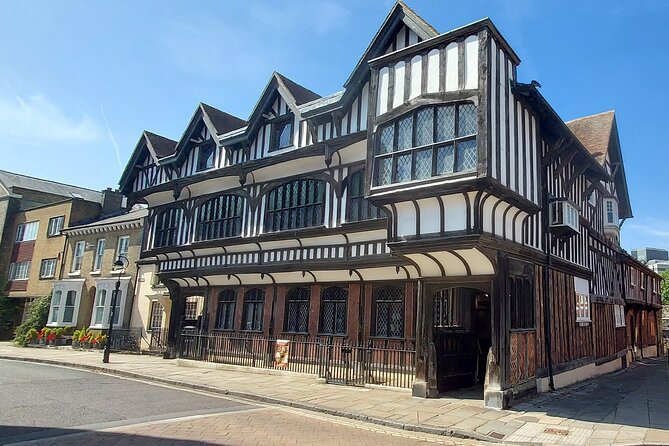
- Tudor House and Garden: Southampton’s oldest domestic chapter
- The Mayflower Memorial and Southampton’s place in a world-changing voyage
- Town Quay: from working harbor to cruise capital
- Holyrood Church and the Dolphin Hotel
- The Titanic Engineer Officers Memorial
- Southampton’s Cenotaph and the memory of World War I
- Isaac Watts in East Park
- How long does the walk really take?
- What the $30.53 price buys you
- Who will get the most from this private walk?
- Should you book the Southampton walking tour?
- FAQ
- Where does the private walking tour begin?
- Where does the tour end?
- How much does the tour cost?
- How long is the tour?
- Is the tour private?
- What language is offered?
- Is admission to Tudor House and Garden included?
- Is the tour suitable for people who prefer a slower pace?
- Can I cancel for a full refund?
Five things to know before you book
- The route links Southampton’s biggest stories: Tudor history, the Mayflower, the port, the Titanic, World War I, and local religious life all fit into one central walk.
- Your guide makes the difference: Travelusion Tours uses historians or expert guides, including guides described as holding PhDs or studying history and architecture.
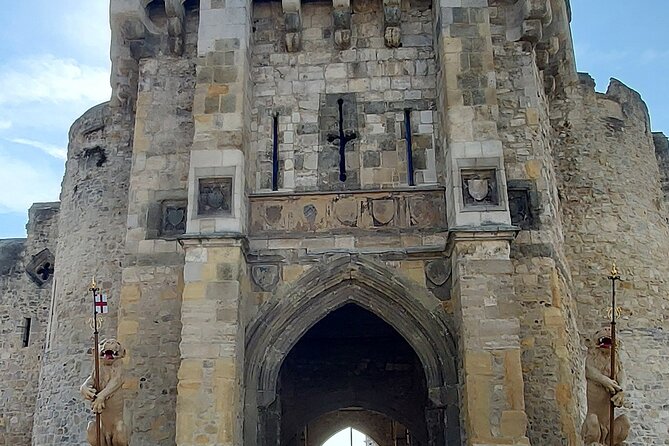
- The walk begins at the Bargate: This makes the meeting point easy to find near Southampton’s High Street and old city center.
- Most stops are free to view: The only listed admission charge is for Tudor House and Garden, and entry is not included.
- The pace can be personal: The private setup suits families, couples, and small groups, including people who need a slower walk.
- Plan for changing weather: The experience requires good weather and may be rescheduled or refunded if conditions are poor.
Starting beneath the Bargate
The Bargate is a strong place to begin because it immediately puts you in Southampton’s older core. From here, you are not being whisked between distant sights. The route unfolds on foot through a compact area, with the city’s walls, churches, memorials, port, and historic buildings forming a connected story.
A private tour matters here. Southampton’s history can feel scattered if you simply walk past a gate, a ruined church, or a memorial without knowing why it is there. Your guide can pause when a question comes up, spend more time on the subjects that interest you, or keep things moving if your group has a cruise departure to catch.
The guides praised most warmly are personable as well as well informed. James was described as making the walk feel casual and friendly, while Michelle was appreciated for speaking clearly, arriving early, and giving people chances to sit while she explained the city. Lilly and Lillian were praised for their warmth, energy, and ability to connect the past with present-day Southampton.
The route is not a grand architectural parade. It is better understood as a sequence of small discoveries. You will see some major landmarks, but the value comes from learning what happened around them and how those events affected local people.
More Walking Tours:
- Magical London: Harry Potter Guided Walking Tour
★ 4.7 · 22,044 reviews - Underground Vaults Walking Tour in Edinburgh Old Town
★ 4.5 · 8,506 reviews - London: The Original Jack the Ripper Walking Tour
★ 4.7 · 7,833 reviews
Tudor House and Garden: Southampton’s oldest domestic chapter
The first scheduled stop is Tudor House and Garden, where you hear about the building’s past and why its survival matters to Southampton. Admission is not included, so you should treat this as an exterior or introductory stop unless you arrange entry separately.
The five-minute estimate suggests a brief explanation rather than a long museum visit. That is useful if your main goal is a broad city introduction, but less satisfying if Tudor domestic life is your main interest. You will want to ask your guide how much time is available for the house itself and decide if you would like to return later.
This stop helps establish a useful theme for the entire walk: Southampton is not only a port city. It is also a place where ordinary buildings carry evidence of changing trade, politics, faith, and daily life. A guide who can explain the legacy of Tudor House gives you a better way to read the streets that follow.
The Mayflower Memorial and Southampton’s place in a world-changing voyage
At the Mayflower Memorial, your guide explains the importance of the voyage connected with Southampton. The memorial is free to view, and the planned stop lasts about five minutes.
That short pause can still be powerful. Southampton is often treated mainly as a modern cruise port, yet its maritime role reaches far beyond today’s ships. This memorial lets you connect the city with a voyage whose effects reached well beyond England.
Do not expect a full colonial history lecture here. The stop is one part of a wider walk, and the guide’s strength is likely to be in placing the event within Southampton’s own story. If this subject matters greatly to you, ask questions rather than waiting for a long formal presentation.
The route also benefits from this change of scale. You move from a historic house to a voyage with worldwide consequences, then onward to the working harbor. That progression shows how Southampton’s identity grew through movement, departure, and contact with the wider world.
Town Quay: from working harbor to cruise capital
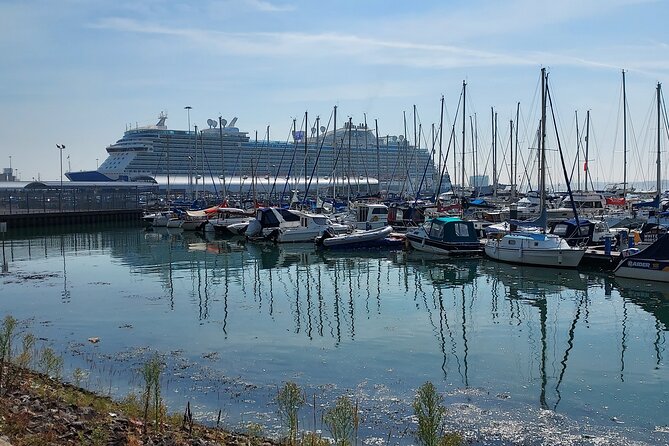
Town Quay is one of the clearest places to understand Southampton as a port. Here, the discussion turns to the harbor’s history and its modern role as one of the world’s leading cruise centers.
This is a particularly useful stop for people arriving by cruise ship. You will already have seen Southampton as a place of embarkation, but the guide helps explain why the port became so important. The experience gives you more than a quick look at the waterfront. It connects the port to the city’s economy and public identity.
The listed time is about ten minutes, making this one of the longer stops. That feels appropriate. A port is not just scenery. It shapes work, transport, immigration, departures, memorials, and the way a city presents itself.
The walk does not promise a ship tour or a harbor cruise. It is a history walk, so the emphasis is on explanation rather than getting out on the water. If your schedule is tight, Town Quay is still a useful orientation point before you continue through the old center.
A few more trips worth a look before you book
- Walk the Secrets of the Titanic
★ 5.0 · 391 reviews - Journey Through Winchester’s Past
★ 5.0 · 341 reviews - Southampton Port: London via Salisbury, Stonehenge & Windsor
★ 4.5 · 298 reviews - Luxury Sailing Experience Day with Champagne and Lunch or Dinner
★ 5.0 · 220 reviews
Holyrood Church and the Dolphin Hotel

The next section brings together two very different traces of Southampton’s past. You see the remains of Holyrood Church and the exterior of the Dolphin Hotel, noted as one of the city’s best examples of Georgian architecture.
Holyrood Church is a reminder that war and destruction are part of Southampton’s story. Its remains carry more weight when your guide explains what happened there and how the site fits into the city’s wider history. The stop is not simply about admiring old stone. It asks you to consider what a city keeps, loses, and remembers.
The Dolphin Hotel shifts the mood toward Georgian design and civic life. Since the tour views the exterior, you should not book this expecting an interior architecture visit. Still, an informed explanation can make a familiar facade worth a closer look.
Together, these two sights offer a useful contrast: one is a ruin shaped by loss, the other a surviving building associated with an earlier period of confidence and style. The scheduled ten minutes gives your guide enough time to tell both stories without turning the walk into a technical architecture lesson.
The Titanic Engineer Officers Memorial
The Titanic section is likely to be the emotional center of the tour. At the Titanic Engineer Officers Memorial, you learn about the engineers and about the disaster’s importance to Southampton.
The city’s Titanic connection is not a decorative footnote. The tragedy affected Southampton directly, and the memorial gives that connection a specific place. Guides such as Lilly have been praised for explaining the lasting local effect of the disaster and for revealing details that help you understand why the memory remains important.
The ten-minute stop is short, but the subject has enough weight to stay with you as you continue. You may find the focus on the engineers especially useful because it moves beyond the most familiar passenger stories and highlights the people who kept the ship operating.
This is also an example of why a private guide can be better than a self-guided stroll. You can ask about the memorial’s meaning, local reactions, or the wider role of Southampton in the Titanic story. The tour does not claim to replace a dedicated Titanic museum visit, but it gives you a strong local frame of reference.
Southampton’s Cenotaph and the memory of World War I
The next stop is the original Southampton Cenotaph. The guide explains how it served as a model for others and discusses World War I and its effects on the city.
This is a compact stop, listed at about five minutes, but it adds an important civic layer to the route. Memorials can become part of the street furniture if nobody explains them. Here, the focus is on how Southampton remembered its dead and how the war shaped the city.
The stop also makes the tour broader than a port and Titanic walk. Several guides have been praised for covering World War I and World War II when guests showed an interest in wartime history. You should ask questions if that is a major reason for booking, since the advertised route gives only a short formal stop for the Cenotaph.
The placement after the Titanic memorial is effective. Both sites deal with public grief, but they belong to different kinds of memory: one tied to a famous maritime disaster, the other to a citywide wartime sacrifice.
Isaac Watts in East Park
The walk concludes in East Park, where you see a statue of Isaac Watts, identified here as the father of English hymn writing. The listed stop lasts about ten minutes.
Ending in a park gives the tour a calmer finish after the port, memorials, and wartime sites. You are close to Above Bar Street and only a couple of minutes from the original meeting area, so the final location is convenient for continuing into central Southampton.
Isaac Watts also brings the story back to individual achievement and local identity. After hearing about ships, wars, churches, and public memorials, you finish with a person whose influence reached through English religious music.
This is not a grand finale with a panoramic view. It is a quiet closing point where you can ask for restaurant suggestions or ideas for the rest of your day. Guides have offered useful recommendations for lunch, pubs, and further sightseeing, which is one of the practical benefits of ending with time for conversation.
How long does the walk really take?
The published information needs careful reading. It gives a duration of 1 to 30 minutes, but the individual stop estimates total about 55 minutes. Several descriptions of the experience refer to a couple of hours, and one account describes a route from the Bargate southward before looping back north to the park.
I would not plan this as a tightly timed 30-minute activity. Contact the provider before booking if you need to meet a ship, train, or airport transfer at a fixed time. The route appears manageable, but the exact pace can depend on questions, walking speed, and how much detail your guide provides.
The private format is especially helpful for slow-paced groups. Lilly was specifically praised for matching a slower pace while still covering many points of interest. You should still wear comfortable shoes and allow extra time rather than treating the shortest published duration as guaranteed.
What the $30.53 price buys you
At $30.53 per person, the tour is reasonably priced for a private experience, especially if two or more people share the booking. You are paying for a guide’s time and interpretation, not for entry to a major museum or a large attraction.
Most of the listed stops are free to view. Tudor House and Garden is the exception, with admission not included. That keeps the basic price low, but you should budget separately if you want to go inside.
The strongest value comes from the personal attention. A standard group walk may give you a set script and a fixed pace. Here, you can ask about Titanic history, architecture, religious figures, wartime Southampton, or local food recommendations. For a first afternoon in the city, that guidance can save you from walking past important places without understanding them.
The value is less clear if you want a specialist tour devoted only to one topic. Titanic enthusiasts, military-history fans, or serious architecture students may want a longer focused experience. This tour works best as a broad introduction with room for questions.
Who will get the most from this private walk?
I would recommend it to you if you are visiting Southampton for the first time and want the city explained in one sitting. Cruise passengers can use it to make sense of the port before or after sailing, provided the timing is confirmed in advance.
It also suits couples, families, and small private groups that dislike crowded tours. The pace can be adjusted, and you can ask questions without worrying about holding up a large party.
Older people or anyone who prefers an easy walk may appreciate the relaxed approach and occasional opportunities to sit. The route is central and near public transportation, and most people can take part, but you should still account for time on foot.
You may want another option if you dislike historical explanation or want to spend most of your time inside museums. This experience is built around streets, exteriors, memorials, remains, and conversation. Its rewards come from context.
The tour is offered in English, uses a mobile ticket, and runs daily from 10:00 AM to 7:00 PM during the stated operating period. Service animals are allowed. Free cancellation is available up to 24 hours before the start time, while poor weather or failure to meet the minimum number of participants can lead to a new date or a full refund.
Should you book the Southampton walking tour?
Book it if you want a friendly, private introduction to Southampton’s past and present, especially if the Mayflower, Titanic, port history, or wartime memory interests you. The strongest reason to choose it is the guide-led storytelling, with names such as Michelle, Lilly, Lillian, James, and Sam repeatedly associated with clear explanations and a relaxed manner.
Skip it if you need a firmly timed 30-minute activity or if you want admission to Tudor House included. The duration information is inconsistent, so confirm the expected length before committing to a tight schedule.
For most first-time visitors, I think the price is fair. You get a compact route through the old center, a chance to ask personal questions, and a useful sense of why Southampton is more than a place to board a ship.
FAQ
Where does the private walking tour begin?
The tour begins at the Bargate, on High Street, Southampton SO14 2DJ, UK.
Where does the tour end?
It ends in East Park above Bar Street, Southampton SO14 7DW, UK. The park is a couple of minutes from the original meeting point and near the High Street.
How much does the tour cost?
The listed price is $30.53 per person.
How long is the tour?
The published duration says approximately 1 to 30 minutes, but the listed stop times total about 55 minutes. Descriptions of the walk also refer to an experience lasting closer to a couple of hours, so confirm the expected duration before booking.
Is the tour private?
Yes. Only your group participates in the activity.
What language is offered?
The tour is offered in English.
Is admission to Tudor House and Garden included?
No. Admission to Tudor House and Garden is not included. The other listed stops have free admission.
Is the tour suitable for people who prefer a slower pace?
Yes. The private format allows a personalized pace, and the experience is described as suitable for most people. A guide has also adjusted the walk for slow-paced seniors.
Can I cancel for a full refund?
You can cancel at least 24 hours before the start time for a full refund. Cancellations or changes made less than 24 hours before the start time are not accepted for a refund. If poor weather or the minimum number of participants causes cancellation, you will be offered another date or a full refund.
Recently added around the UK
- Cairngorms & Whisky Day Tour from Inverness Including Admission★ 5.0 · 55 reviews
- PRIVATE HIRE 45 min Speedboat Tour – Embankment/Westminster Pier★ 5.0 · 55 reviews
- From Edinburgh: Islay and The Whisky Coast 4-Day Tour★ 4.9 · 55 reviews
- Fantastic Creatures of Edinburgh, and where to find them!★ 4.5 · 55 reviews
- E-bike excursion exploring the Purbecks★ 5.0 · 55 reviews
- ‘A Wee Pedal’s’ Family Friendly Cycle Tour to Edinburgh’s Coast★ 5.0 · 55 reviews
- Private Tour of London’s Historic Pubs★ 5.0 · 55 reviews
- From London: Glastonbury and Cheddar Gorge Guided Day Trip★ 4.8 · 55 reviews
Walking Tours, compared.

Magical London: Harry Potter Guided Walking Tour
Read our review →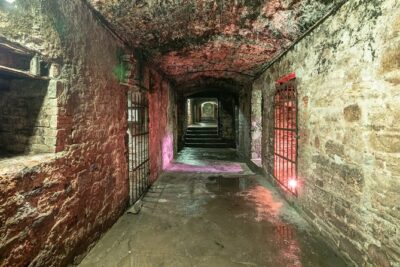
Underground Vaults Walking Tour in Edinburgh Old Town
Read our review →

Oxford University Walking Tour With University Alumni Guide
Read our review →
Edinburgh Castle: Guided Walking Tour with Entry Ticket
Read our review →
Edinburgh Castle Guided Walking Tour in English
Read our review →
Tour for Muggles The Ultimate Harry Potter Walking Tour in London
Read our review →
University and City Walking Tour with Alumni Guide
Read our review →Browse the lists this tour appears in