
Reviewed · STREET ART
The Original London Street Art Tour (French)
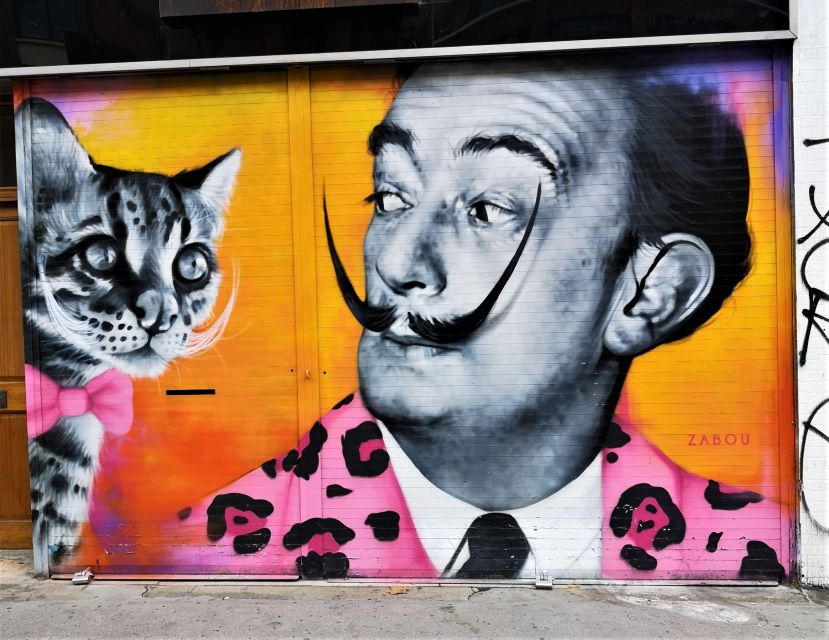
Street art changes fast here. This French-language walk makes East London’s shifting walls easier to read, taking you from Old Spitalfields Market through Brick Lane and Shoreditch. I like the focus on more than 40 artists and the way guides connect the paintings and tags to the area’s past. I also like that the route works for complete beginners, not only serious graffiti fans. The main thing to watch is the timing: the activity is advertised as 1.5 hours, while the description refers to a two-hour walk.
Guides such as Laura and Gabriel have earned especially warm praise for their humor, clear explanations, and ability to adjust to the group. One useful detail is that the guides are young artists themselves, which can add a practical view of technique and street-art culture. At $26 per person, this is a fair buy if you want context rather than a quick photo stop, though the short length means the walk has to keep moving.
In This Review
- Key points at a glance
- Why East London is the right setting
- Finding the white goat meeting point
- From Spitalfields into the East End
- Brick Lane: the route’s visual center
- Shoreditch and the art of looking up
- What the named artists add to the walk
- A short tour with a changing route
- Is $26 a fair price?
- Who will enjoy this French-language walk?
- Practical advice before you go
- Should you book The Original London Street Art Tour in French?
- FAQ
- Where does the French street-art tour meet?
- How long does the tour last?
- What language is the tour in?
- Which areas does the walking route cover?
- Which street artists might I learn about?
- Is the tour wheelchair accessible?
Key points at a glance
- Meet by the white goat statue: The starting point is at the statue with a white goat on top, near Old Spitalfields Market.
- Walk from Spitalfields to Shoreditch: The route links three of East London’s best-known areas for street art and alternative culture.
- See work by over 40 artists: Names include Banksy, ROA, Invader, Shepherd Fairey, Eine, Stik, Borondo, and Cranio.
- Take the tour in French: The live guide speaks French, making the art, slang, and local background easier to follow.
- Expect a changing route: Street art is temporary, so the exact works may differ from one visit to the next.
- Plan for a short urban walk: The listed duration is 1.5 hours, and the route is wheelchair accessible.
Why East London is the right setting
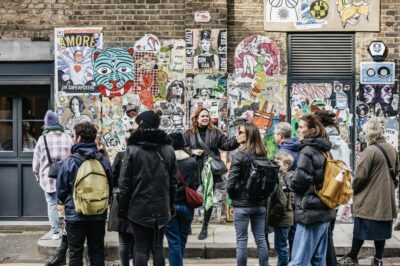
London has major museums filled with art behind glass. East London offers a different lesson. Here, art appears on shutters, brick walls, side streets, building fronts, and spaces that may look ordinary until a guide points them out.
That setting matters. Street art is not simply decoration placed along a sightseeing route. It is tied to public space, neighborhood identity, political ideas, humor, advertising, and the question of who gets to use a wall. A good guide helps you notice those layers without turning the walk into a lecture.
The route begins near the City of London, London’s old financial district, but quickly moves into the East End. That contrast gives the walk a useful shape. You start close to the polished center of business and head toward streets known for independent art, design, food, music, and nightlife.
You will not see a single permanent gallery. Instead, you get a record of a place in motion. A work may be painted over, weathered, removed, or replaced. The changing route is part of the point, although it also means you should not expect every named artist to appear on every departure.
A few more trips worth a look before you book
- London: Street Art and Graffiti Guided Walking Tour
★ 4.9 · 1,354 reviews - London Bike Tour: Landmarks, Secret Gems, Pub Stop & Street Art
★ 5.0 · 943 reviews - Shoreditch Street Art Tour London
★ 5.0 · 481 reviews
Finding the white goat meeting point
The meeting point is described as the statue with the white goat on top, just outside Old Spitalfields Market. This is the detail to keep in mind before you leave your hotel. Do not rely only on the broad name of the market, since the area has several entrances and plenty of foot traffic.
Old Spitalfields Market puts you near the edge of the City and the East End. It is a practical place to begin because you can reach it before the walk and continue exploring the neighborhood afterward. The tour provider is Alternative London, and the French guide meets you in this central East London setting.
The available information does not give a group size, so I would not assume an intimate private walk. Arrive with enough time to identify the correct statue and settle in. Since the route is on foot and lasts only 1.5 hours according to the activity details, late arrival could mean missing the opening context.
From Spitalfields into the East End
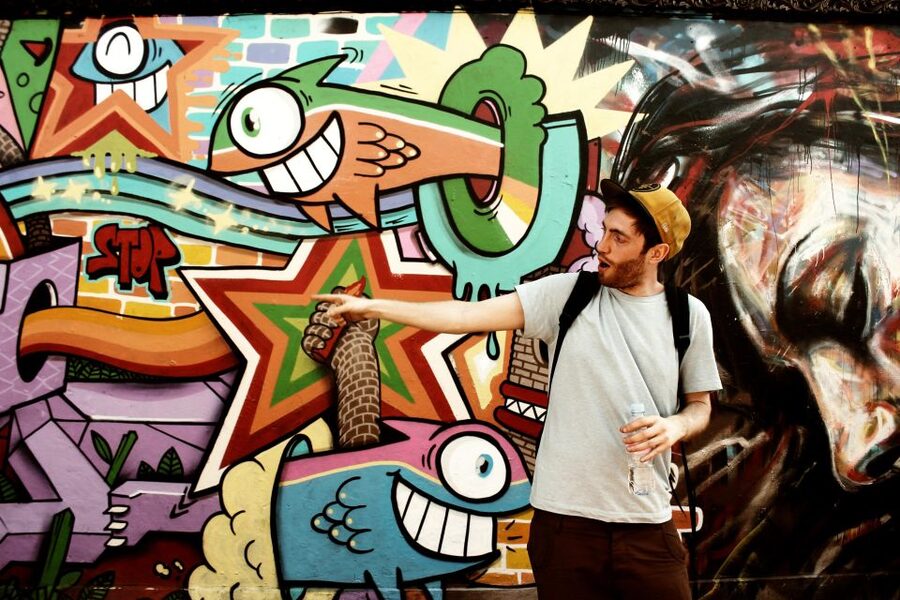
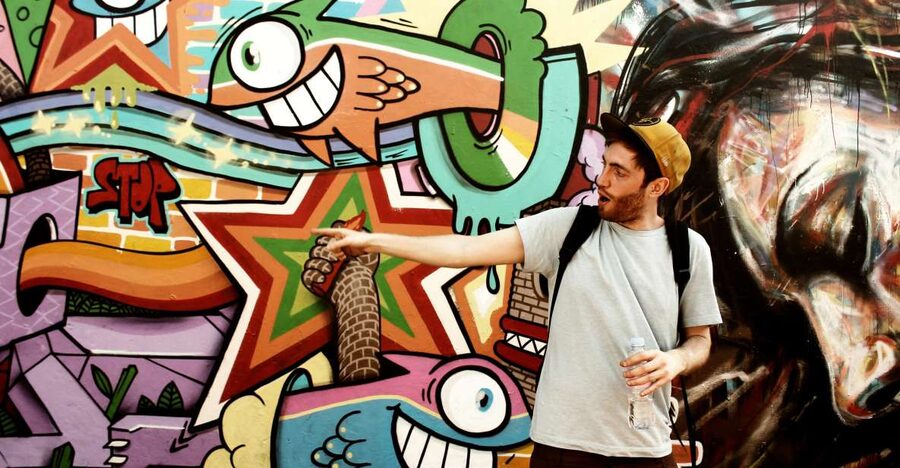
The first portion introduces the East End while you move through streets marked by layers of street art. This is where the guide’s role becomes important. Without help, you may notice color and scale but miss the difference between a commissioned mural, a quick tag, a stencil, a pasted image, and a work made with a more formal painting process.
The tour presents the area as both a neighborhood and a working art space. You learn about the history of the district while looking at current work. That combination is more useful than a list of artist names because it explains why this part of London became such a strong setting for urban art.
A French explanation is particularly helpful when the guide discusses small visual details. Street art often uses symbols, jokes, lettering, or local references that can be easy to miss if you are trying to translate on the spot. The guide can keep the walk moving while giving you enough background to understand what you are seeing.
The walk also appears suitable for people who do not know much about graffiti. A family group with children found the explanations accessible, and one first-time visitor considered the art techniques especially interesting. That suggests you do not need a specialist vocabulary to enjoy the experience.
Brick Lane: the route’s visual center
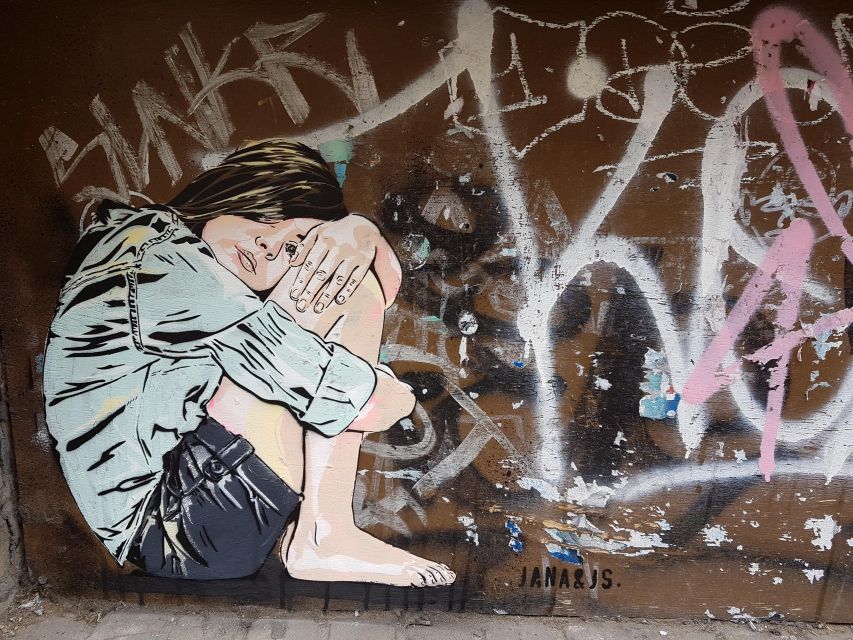
Brick Lane is likely to be the most familiar name on the route. It is known for its alternative character, and the street art here gives the walk much of its energy. You may see large images, small pieces tucked beside doorways, lettering, and works placed high above eye level.
Your guide points out work by artists connected with the area and explains how different approaches look on the wall. The named artists include ROA, Stik, Borondo, and Cranio, along with the better-known Banksy, Invader, Shepherd Fairey, and Eine.
The range is one of the tour’s best features. You are not being shown one artist’s style again and again. You get a sampling of figurative work, graphic images, tags, and different methods of applying paint or other materials. That variety gives you a better sense of street art as a broad field rather than one visual trend.
Brick Lane can also be visually crowded. There may be many competing signs, shopfronts, walls, and pieces close together. A guide helps you decide where to look, which matters when the best work is not always the largest work.
The drawback is that street art has no guarantee of permanence. A famous piece may have changed since your guide’s last departure. That uncertainty can disappoint anyone arriving with a fixed checklist of Banksy or Invader works. For me, the better attitude is to treat the named artists as a guide to the area’s culture, not a promise that every exact image will be present.
A different sort of outing around London:
- London: The London Eye Entry Ticket
★ 4.6 · 35,875 reviews - From London: Harry Potter Warner Bros Studio Tour
★ 4.7 · 26,588 reviews - London: Westminster to Greenwich River Thames Cruise
★ 4.5 · 22,836 reviews - Magical London: Harry Potter Guided Walking Tour
★ 4.7 · 22,044 reviews
Shoreditch and the art of looking up
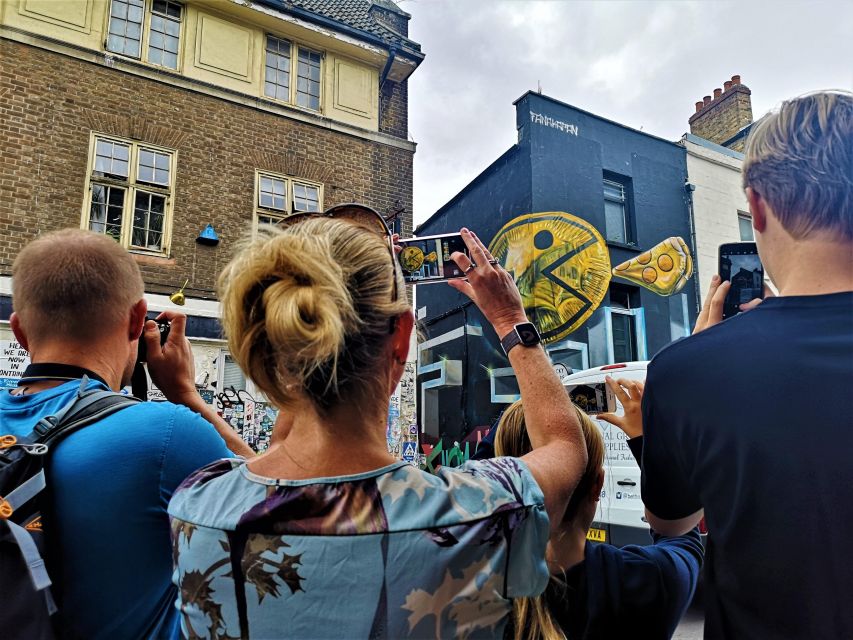
The walk continues toward Shoreditch, another major stop for East London’s street-art culture. The route is not only about walls at eye level. You might need to look up, check the edges of buildings, or notice work placed in narrow passages.
Shoreditch brings the walk into a fashionable part of East London where art, design, and street culture overlap. The point is not to separate the artwork from the neighborhood. You see how urban art sits beside shops, old buildings, modern businesses, and everyday city life.
The guide can also explain the difference between a tag and a more developed piece. That distinction is useful because a newcomer may see all writing on a wall as the same thing. The walk gives you a framework for judging scale, intent, method, and style without insisting that one kind of street art is automatically better than another.
I especially like the chance to hear about artists from someone who works in the field. The guides are described as young artists, and that can make the discussion feel closer to the working reality of public art. Laura has been praised for bringing passion and humor to the subject, while Gabriel has been praised for clear explanations and strong command of the area’s history and techniques.
What the named artists add to the walk
The artist list gives you an idea of the range you may encounter, but it is not a promise of a fixed gallery collection. Banksy brings instant recognition, while ROA is associated with striking animal imagery. Invader is known for pixel-like figures, and Shepard Fairey is connected with bold graphic design and political poster art.
Eine is another important name in London’s street-art story, especially for work built around lettering. Stik, Borondo, and Cranio add further variety, with different ways of handling figures, surfaces, and visual storytelling.
The benefit of seeing these names together is comparison. Instead of asking only if a piece is attractive, you can ask how the artist uses line, scale, repetition, humor, or the shape of the building. You may leave with a better eye for work you encounter elsewhere in London.
The guide’s explanations are a key part of the value. The paintings alone are free to see, but the tour gives you the background that turns a wall into a story. At the same time, I would not book this expecting a formal art-school course. The pace is brisk, and the information is designed for a walking audience.
A short tour with a changing route
The activity details list a 1.5-hour duration, while the main description calls it a two-hour walking tour. That difference is worth checking when you choose a departure. Either way, this is a compact experience rather than a half-day outing.
A short route works well if you are fitting it between other London plans. You can visit Spitalfields, Brick Lane, and Shoreditch without giving up an entire afternoon. It is also a good introduction before you explore the area on your own.
The tradeoff is simple: you will not see every corner of East London’s street-art scene. A guide may need to pass several works quickly, and there may not be time for long pauses at each stop. One participant felt the tour was almost too short, which is a useful warning if you want a slow, highly detailed art lesson.
Street art also keeps the experience fresh. Since works are regularly replaced or altered, a repeat visit can show you a different side of the neighborhood. That is a real advantage for returning visitors, but it calls for flexibility from anyone hoping to photograph a particular mural.
Is $26 a fair price?
At $26 per person, the price is reasonable for a live, French-language walk lasting around 1.5 hours. You are paying for the guide’s route planning, language skills, local background, and ability to identify work that you might otherwise walk past.
The value is strongest if you are new to street art or want to understand what you see rather than simply take pictures. The art itself is in public spaces, so you can explore the streets without paying for admission. The fee makes sense because the guide supplies interpretation and structure.
It is less compelling if you only want a self-guided stroll or already know East London’s artists well. You could walk through Brick Lane and Shoreditch on your own, but you would lose the French commentary and the chance to compare techniques with an artist-guide.
The booking terms also make the decision easier. You can reserve now and pay later, and cancellation is free up to 24 hours before the activity for a full refund. Wheelchair access is listed as available. Since the route is outdoors, wear shoes suited to city walking and check the exact start time before booking.
Who will enjoy this French-language walk?
I would recommend it most strongly to:
- French-speaking visitors who want cultural context without translating every explanation
- First-time visitors to East London
- Families with children who enjoy pictures, color, and short walking activities
- Adults curious about graffiti techniques and public art
- Visitors with limited time who want an introduction to Spitalfields, Brick Lane, and Shoreditch
- Repeat London visitors looking for a different side of the city
The tour also suits mixed groups. You do not need everyone to be an art expert. The clear explanations and attention to technique can keep beginners involved, while the range of artists gives more experienced viewers something to compare.
I would be more cautious if you need a guaranteed list of specific murals, dislike outdoor walking, or want a long stop at every piece. The art changes, and the compact schedule favors movement over extended discussion.
Practical advice before you go
Save the meeting-point description: the white goat statue near Old Spitalfields Market. The route information is clear about the neighborhoods but does not provide a detailed stop-by-stop map, so the guide’s direction will shape the walk.
Check the departure time and confirm the duration shown for your chosen date. The activity information gives 1.5 hours, but the longer description says two hours. That may reflect a difference in scheduling, so it is better to know what you have booked before planning a meal or museum visit afterward.
Choose this tour early in your East London plans if you can. The guide will introduce artists and visual ideas that may help you notice more when you later walk around Brick Lane or Shoreditch on your own. You can also continue exploring the area after the tour without needing another major transfer.
Most of all, keep your expectations flexible. A wall may be repainted, a work may be partly hidden, and a piece you hoped to see may no longer exist. The reward is not a fixed collection. It is learning how to read a changing city.
Should you book The Original London Street Art Tour in French?
Yes, if you want an easy introduction to East London’s art scene with a French-speaking guide. The combination of Spitalfields, Brick Lane, and Shoreditch gives you a strong sample of the area, and the focus on over 40 artists provides plenty of variety for the price.
Laura and Gabriel are names worth hoping for, given the praise for their passion, humor, clarity, and ability to explain techniques. Still, the tour’s real strength is the format: a young artist-guide helping you see public art with more attention.
Book it if the $26 fee fits your plans and you are happy with a short walk whose exact artworks may change. Skip it if you want a private, slow-paced art seminar or a guaranteed Banksy checklist. For most French-speaking visitors with a free 1.5 hours in East London, it offers useful context at a fair cost.
FAQ
Where does the French street-art tour meet?
Meet at the statue with the white goat on top, near Old Spitalfields Market in East London.
How long does the tour last?
The activity details list a duration of 1.5 hours. The tour description also refers to a two-hour walk, so check the confirmed duration and start time for your chosen date.
What language is the tour in?
The live tour guide speaks French.
Which areas does the walking route cover?
The route begins near Old Spitalfields Market, then continues toward Brick Lane and Shoreditch.
Which street artists might I learn about?
The tour includes discussion of Banksy, ROA, Invader, Shepherd Fairey, Eine, Stik, Borondo, Cranio, and many others. The route can change because street art is temporary.
Is the tour wheelchair accessible?
Yes, wheelchair accessibility is listed for this activity.
Recently added around London
- PRIVATE HIRE 45 min Speedboat Tour – Embankment/Westminster Pier★ 5.0 · 55 reviews
- Private Tour of London’s Historic Pubs★ 5.0 · 55 reviews
- From London: Glastonbury and Cheddar Gorge Guided Day Trip★ 4.8 · 55 reviews
- Gatwick Airport Taxi – Private Transfer to/from London★ 5.0 · 55 reviews
- London: Kew to Westminster River Thames Cruise★ 4.2 · 55 reviews
- London by Night – Tootbus Sightseeing Tour★ 3.5 · 55 reviews
- London: Tower of London After Hours Tour and Key Ceremony★ 4.8 · 56 reviews
- Private Round Trip Transfer between London Airports and Hotel★ 3.5 · 56 reviews
Street Art, compared.

London Bike Tour: Landmarks, Secret Gems, Pub Stop & Street Art
Read our review →
Landmarks & Secrets Bike Tour with Pub & Street Art
Read our review →
East End Street Art Tour and Spray Painting Workshop
Read our review →
Browse the lists this tour appears in