
Reviewed · HISTORICAL TOURS
Walkabout Durham History Tour
Durham tells its story on foot. This 90-minute Walkabout Durham History Tour links the city’s market square, medieval bridges, university buildings, riverbanks, and cathedral in one compact route. I like the way it gives you a quick sense of direction while also explaining why Durham developed around its castle, cathedral, river, and Prince Bishops.
I also like the guide-led, small-group feel, with a maximum of 20 people and plenty of room for questions. Peter is repeatedly praised for his friendly manner, local anecdotes, and ability to make facts and legends easy to follow. The main drawback is the route’s hills and uneven walking. If you are hoping to climb Durham Cathedral tower, that is not included either.
In This Review
- Five things to know before you book
- Starting in Durham Market Place
- Framwellgate Bridge and the first cathedral view
- The river path and Prebends Bridge
- St Cuthbert’s Society and Durham’s university Bailey
- St Mary the Less and the stories of the Bailey
- Bow Lane and the early story of St Cuthbert
- Palace Green and the doors of Durham Cathedral
- What the $22.20 price really buys you
- How demanding is the walk?
- The guide and the tone of the experience
- Who should book this Durham walk?
- Booking and cancellation details
- FAQ
- Where does the Walkabout Durham History Tour start?
- Where does the tour finish?
- How long does the tour last?
- What language is the tour offered in?
- How much does the tour cost?
- Is entry to the stops included?
- Are dogs allowed?
- Is the tour suitable for all ages?
- How many people can join the tour?
- Should you book the Walkabout Durham History Tour?
Five things to know before you book
- The route ends at Durham Cathedral: You finish at the main doors on Palace Green, not back at the Market Place.
- Peter is a major part of the experience: His storytelling, local knowledge, and open approach to questions receive especially strong praise.
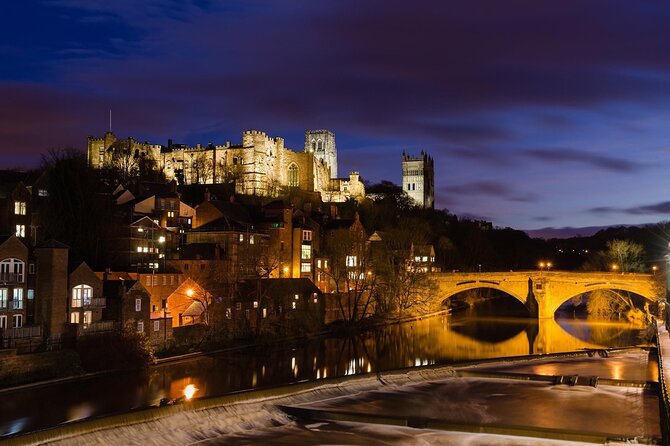
- You see Durham from several angles: The walk includes market streets, medieval bridges, the riverside, the university Bailey, and cathedral views.
- It lasts about 90 minutes: That makes it useful for a short stay or as an orientation walk on your first afternoon.
- Dogs are welcome: Service animals are allowed, and ordinary dogs are also invited.
- The walk is free to enter at every stop: Your $22.20 fee pays for the guided experience rather than admission to attractions.
Starting in Durham Market Place
The tour begins in Durham Market Place, at DH1 3NJ, right in the middle of the city. This is a practical meeting point because it is near public transport and easy to use as a central reference point during the rest of your stay.
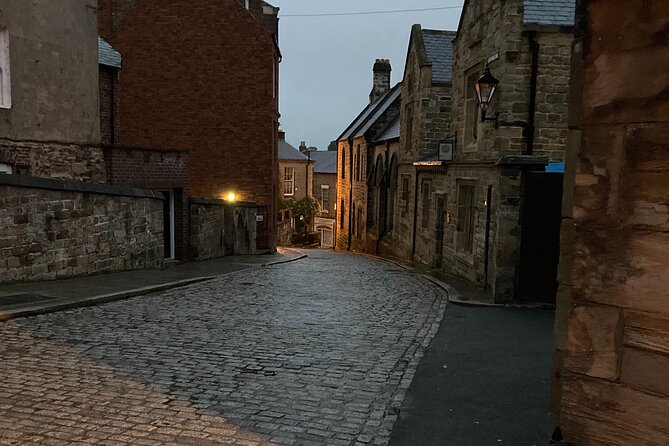
The opening 20 minutes introduce the city through its civic buildings and public memorials. You see the 19th-century Town Hall and Guildhall, St. Nicolas’ Church, and statues connected with Durham’s past. This is a good beginning because it starts with the city as a living place, not only as a backdrop for the cathedral.
Your guide explains the people who helped shape Durham and the wider county. The emphasis is not simply on dates. Peter’s style, based on the available comments about his tours, is to mix established facts with local stories and the occasional legend. That helps you understand why Durham’s identity reaches beyond one grand building on a hill.
I like this opening for another reason: it gives you a sense of the city’s scale. Durham is compact enough to cross on foot, but its streets can feel confusing at first. The tour quickly places the Market Place, river, university, castle, and cathedral into one mental map.
More History Tours:
- London Small Group Tour of Historical Pubs
★ 5.0 · 10,422 reviews - A History of Terror – Belfast City Centre Walking Tour
★ 5.0 · 2,883 reviews - Old Town Walking Tour History and Tales in Edinburgh
★ 5.0 · 2,168 reviews
Framwellgate Bridge and the first cathedral view
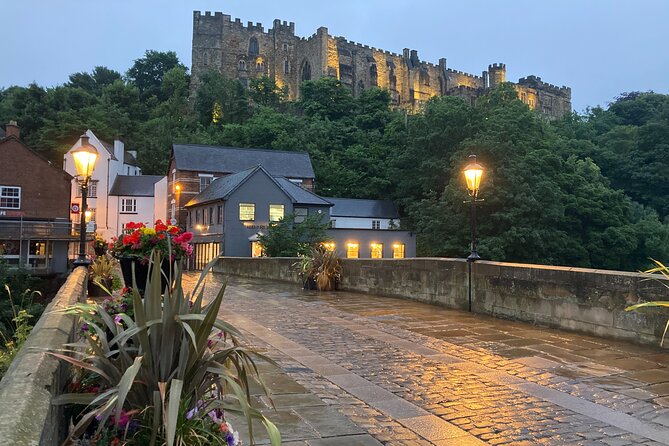
From the Market Place, the walk continues to Framwellgate Bridge. At about 15 minutes, this is one of the key stops on the route. It is described as the oldest of Durham’s bridges and offers a superb view toward Durham Castle and Durham Cathedral.
This is where the city’s setting begins to make sense. The river curves around the historic center, while the castle and cathedral rise above it. Your guide uses the view to explain Durham Castle, the Prince Bishops, and the unusual power once held by the churchmen who governed this part of northern England.
For me, this is likely one of the most memorable parts of the tour because the history and setting work together. You are not hearing about the castle from a distant street. You are looking directly at it from a bridge that has its own place in the city’s story.
The stop is outdoors and the view is weather-dependent. Rain or cold can affect how long you want to linger, so dress for northern England rather than relying on a sunny forecast. One person still found the tour worthwhile in rain and cold, but good shoes and a waterproof layer will make the walk much easier.
The river path and Prebends Bridge
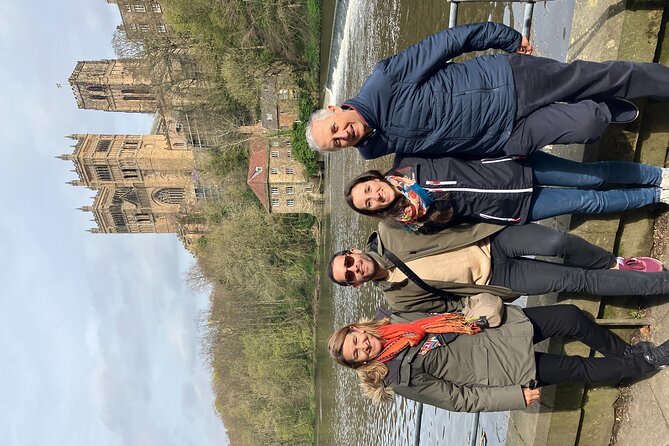
The route then follows the riverside toward Prebends Bridge. The walk between stops takes about five minutes, and the next stop itself is listed as around five minutes. Along the way, you hear about the city’s mills and riverbanks before reaching a classic view of the cathedral.
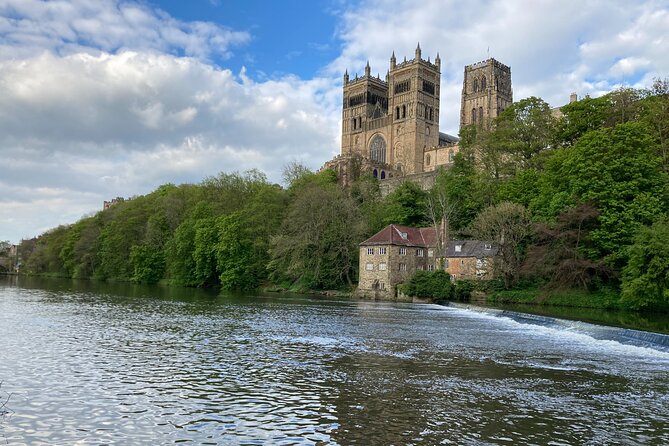
Prebends Bridge is a fine contrast to Framwellgate Bridge. At Framwellgate, you look toward the castle and cathedral from a busier urban approach. At Prebends, the riverside setting gives the cathedral a more dramatic and picturesque frame.
This section is also a reminder that Durham’s story is tied to working life as well as bishops, saints, and university colleges. The mills and riverbanks point to the practical use of the river. That balance matters. A tour that only discusses grand religious buildings can make a city feel like a museum. Here, the river helps connect the monumental center with everyday work.
The route beside the river is attractive, but it is still a walking tour, not a gentle sightseeing ride. You should expect changes in level and some uphill sections later. If you have limited mobility, ask the provider before booking about the current route.
St Cuthbert’s Society and Durham’s university Bailey
The next major section brings you toward St Cuthbert’s Society and Durham University. The tour takes about 15 minutes here, including the approach through the medieval city wall and the South Bailey.
This is where the walk turns from broad city history to the character of the university quarter. Durham University occupies the historic Bailey, and the setting makes it easy to see how old religious and civic spaces continue to serve modern institutions.
Your guide also explores Durham’s rivalry with the Scots. The medieval wall is not just a stone feature to photograph. It helps explain the city’s position in the north and the tensions that shaped its past.
The university buildings can be particularly useful for first-time visitors because they reveal how much of Durham’s center remains tied to colleges and historic foundations. You are not touring the university interior, but you are walking through a part of the city where academic life and medieval architecture sit close together.
The group size matters here. With a maximum of 20 people, the guide can usually keep the group together without making the walk feel like a large procession. The strongest praise for Peter focuses on his willingness to answer questions, so this is a good section to ask about the university, the Bailey, or the city wall.
A different sort of outing around the UK:
- London: The London Eye Entry Ticket
★ 4.6 · 35,875 reviews - From London: Harry Potter Warner Bros Studio Tour
★ 4.7 · 26,588 reviews - London: Westminster to Greenwich River Thames Cruise
★ 4.5 · 22,836 reviews - Magical London: Harry Potter Guided Walking Tour
★ 4.7 · 22,044 reviews
St Mary the Less and the stories of the Bailey
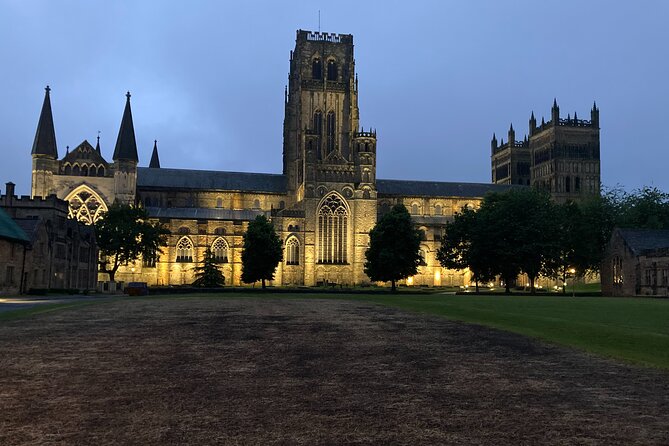
St Mary the Less is affiliated with St. John’s College and receives around 10 minutes on the route. The building offers a chance to look more closely at the architecture of the Bailey while hearing stories linked with Durham’s legends.
This stop is less about checking off a famous attraction and more about noticing details you might otherwise pass. A guide can explain why a church matters, how it connects with local stories, and how the buildings around it fit into the university quarter.
I especially like this kind of stop for visitors who have only one night in Durham. You get enough context to return later and explore at your own pace, rather than spending your whole visit wondering which doorway or lane has a story behind it.
The tour does not promise entry into every building. Much of the value comes from the explanation given outside, along the Bailey, and from the way the guide links separate sites into one account of the city.
Bow Lane and the early story of St Cuthbert
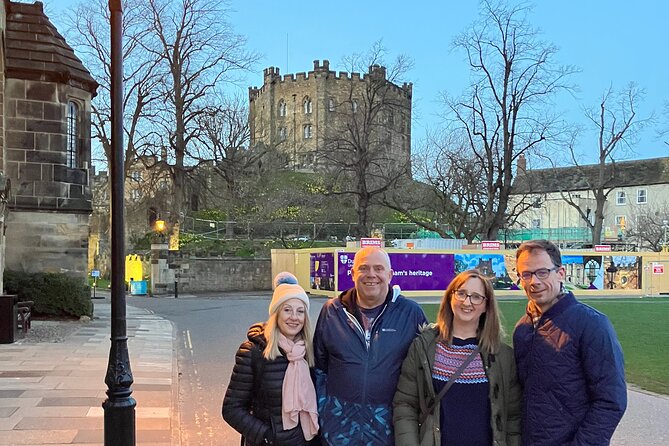
At Bow Lane, the group reaches the eastern side of the cathedral. This 10-minute section focuses on early medieval Durham, St. Cuthbert, and several Durham University colleges.
St. Cuthbert is central to understanding why Durham became such an important religious center. The tour uses this part of the route to connect the saint’s story with the buildings and streets around you, before continuing along the Bailey toward the top of Saddler Street.
This is a useful point in the walk because it shifts your attention toward the cathedral itself. Earlier stops show you the cathedral from across the river and from different approaches. Bow Lane brings you close to the historic core and prepares you for the final stretch across Palace Green.
Saddler Street also helps you get your bearings for the rest of your visit. You finish the walk knowing how the Market Place, Bailey, river, and cathedral relate to one another. That orientation is one of the tour’s best practical benefits.
Palace Green and the doors of Durham Cathedral

The final 15 minutes take place around Palace Green, in the heart of Durham’s UNESCO World Heritage site. Here, the guide discusses the buildings around the green, along with battles, tragedies, miracles, and the story of Durham Cathedral.
This is the natural climax of the route. You have already seen the cathedral from a bridge and from the river. Now you approach its main doors through the historic space that surrounds it.
Ending at Durham Cathedral, at DH1 3EH, is convenient. You can continue into the cathedral if it is open, arrange your own visit, or simply remain in the area and explore Palace Green. The guided tour itself ends at the main doors, so cathedral interior access is not part of the $22.20 price.
One clear limitation is that the cathedral tower is not included. A person who otherwise enjoyed the walk felt that adding the tower would have made it even better. That is fair, but tower access would also change the tour’s timing and cost. Think of this experience as an outdoor introduction that brings you to the cathedral, not as a complete cathedral visit.
What the $22.20 price really buys you
At $22.20 per person, the tour is priced as a modest guided introduction rather than an attraction package. There are no separate admission tickets at the seven stops, so you are paying for the guide’s time, route planning, historical research, and ability to make sense of the city.
That is good value if you are new to Durham and want context before exploring alone. In 90 minutes, you cover a lot of ground and see the city from several strong viewpoints. A self-guided walk might cost nothing, but it would not necessarily explain the Prince Bishops, the medieval wall, the university Bailey, St. Cuthbert, and the local stories in one connected route.
The value is strongest if you use the guide’s advice afterward. The tour includes tips on other things to see and do, and several comments point to the guide’s pub tour as another possible activity. If you have more time, ask Peter for suggestions at the end.
The price is less compelling if you only want to enter Durham Cathedral or climb the tower. This is not an admission ticket and does not replace a dedicated cathedral visit.
How demanding is the walk?
You should be comfortable walking for roughly an hour and a half, with stops along the way. The route includes riverside paths, city streets, bridges, the Bailey, and uphill sections. Durham is hilly, and that warning appears for good reason.
The tour is open to all ages, and most people can take part. Still, parents should consider the pace and the hills for younger children. Dogs are very welcome, which makes this more flexible than many city tours. Service animals are also allowed.
Wear shoes with a good grip. The route can be enjoyable in sunshine, but comments about rain and cold show that weather can shape the experience. There is no need to treat poor weather as an automatic reason to cancel, but you will get more from the river views and outdoor storytelling on a dry day.
The guide and the tone of the experience
Peter is the name most closely connected with the tour, and his role appears to be central. His strengths are a friendly manner, clear explanations, local anecdotes, and a willingness to let you ask questions. One comment also describes the guide as a former geography teacher, although the writer was unsure of his name at the time.
That background would fit this route well. Durham’s story is not only a sequence of royal or religious dates. It is also about terrain, bridges, the river, walls, movement, and the way the city’s buildings fit together. A guide who can connect place and history adds real value.
The tone seems relaxed rather than formal. You can expect facts, myths, charming stories, and time for questions. That makes the tour suitable if you enjoy conversation and explanation more than a fast list of dates.
The strongest praise centers on how quickly the 90 minutes pass. That is usually a good sign, but it also means the tour cannot cover every corner of Durham. Think of it as a well-chosen introduction, not an exhaustive study of the city.
Who should book this Durham walk?
I would recommend it most strongly to:
- First-time visitors who want to understand Durham’s layout quickly
- People staying only one night or a single afternoon
- History fans who enjoy local stories as well as major events
- Visitors who prefer a small walking group to a large coach tour
- Families and dog owners looking for a welcoming outdoor activity
- Anyone who wants practical suggestions for the rest of a Durham visit
It may be less suitable if you cannot manage hills, dislike outdoor tours in poor weather, or want a tour focused mainly on the cathedral interior. In those cases, check the walking requirements before committing.
Booking and cancellation details
The experience is offered in English and uses a mobile ticket. Confirmation is provided when you book, and it is commonly booked about 15 days ahead, so reserving early is sensible if your schedule is fixed.
Free cancellation is available up to 24 hours before the start time for a full refund. Changes or cancellations made less than 24 hours before the start are not accepted for a refund, and the cut-off follows local time.
FAQ
Where does the Walkabout Durham History Tour start?
It starts at Durham Market Place, Durham DH1 3NJ, in the historic center of the city.
Where does the tour finish?
The walk ends at the main doors of Durham Cathedral, Durham DH1 3EH, on Palace Green.
How long does the tour last?
The tour lasts approximately 1 hour and 30 minutes.
What language is the tour offered in?
The tour is offered in English.
How much does the tour cost?
The listed price is $22.20 per person.
Is entry to the stops included?
The listed stops have no admission charge as part of the walking route. The tour ends at Durham Cathedral’s main doors, and cathedral entry or tower access is not included in the described experience.
Are dogs allowed?
Yes. Dogs are welcome, and service animals are allowed.
Is the tour suitable for all ages?
All ages are welcome, and most people can participate. The route is hilly, so consider that before booking.
How many people can join the tour?
The maximum group size is 20 people.
Should you book the Walkabout Durham History Tour?
Book it if you want a friendly introduction to Durham that combines the city’s best viewpoints with clear historical storytelling. The route is short enough to fit into a busy visit, yet broad enough to connect the Market Place, river, bridges, university Bailey, and cathedral.
I would make it an early activity, especially if you are staying only one night. You will finish at the cathedral with a better sense of direction and useful ideas for what to see next. Just bring sensible shoes, prepare for hills, and do not expect cathedral tower access.
At $22.20, this is a fair buy for a compact, personal walking tour led by a guide who makes time for questions. If Peter is leading, his local stories and easy manner appear to be a large part of what makes this Walkabout Durham experience work.
Recently added around the UK
- Cairngorms & Whisky Day Tour from Inverness Including Admission★ 5.0 · 55 reviews
- PRIVATE HIRE 45 min Speedboat Tour – Embankment/Westminster Pier★ 5.0 · 55 reviews
- From Edinburgh: Islay and The Whisky Coast 4-Day Tour★ 4.9 · 55 reviews
- Fantastic Creatures of Edinburgh, and where to find them!★ 4.5 · 55 reviews
- E-bike excursion exploring the Purbecks★ 5.0 · 55 reviews
- ‘A Wee Pedal’s’ Family Friendly Cycle Tour to Edinburgh’s Coast★ 5.0 · 55 reviews
- Private Tour of London’s Historic Pubs★ 5.0 · 55 reviews
- Private Belfast Troubles Cab Tour Adventure 2hrs Personal Guide★ 5.0 · 55 reviews
Historical Tours, compared.
A History of Terror – Belfast City Centre Walking Tour
Read our review →
Old Town Walking Tour History and Tales in Edinburgh
Read our review →
Shadows of York: Ghost Walk and Horrible History.
Read our review →
Multi-Sensory Small-Group Historic Vaults Tour in Edinburgh
Read our review →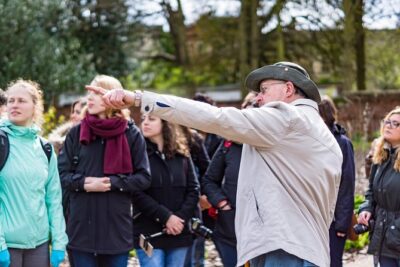
Browse the lists this tour appears in