
Reviewed · WALKING TOURS
Walking Tour around Spitalfields in the East End of London
London changes block by block. This small-group Spitalfields walk leaves central London behind for old markets, immigrant stories, medieval remains, and buildings with several lives. I like the careful focus on people who shaped the district, and I like the unusual finish: tea and cakes in an 18th-century drawing room.
The group is limited to five, which should make it easier to ask questions and stop for details. The main drawback is simple: you need to walk and stand for about two hours, and the $90.28 price is high for a short walking tour, even with the personal attention and tea included.
In This Review
- Key details that make this Spitalfields walk different
- Starting beside Christ Church Spitalfields at 2 p.m.
- Why a group of five changes the experience
- Christ Church and the first look at Spitalfields
- Meeting the people behind a Jewish institution
- The ancient market and its changing role
- A medieval survival and the Priory of St Mary Spital
- The brewery story through two women
- The famous thoroughfare and its uncertain future
- A building with three religious lives
- Eighteenth-century houses and Nicholas Culpeper’s herbs
- Tea, cake, and an 18th-century drawing room
- Is $90.28 fair for two hours?
- Who should book this walk?
- My booking verdict
- FAQ
- Where does the Spitalfields walking tour start?
- What time does the tour begin?
- How long does the experience last?
- Where does the tour end?
- How many people can join the tour?
- What language is the tour offered in?
- What is included at the end of the experience?
- Is the tour suitable for people who cannot walk or stand for two hours?
- Can I cancel for a refund?
Key details that make this Spitalfields walk different
- Small groups of no more than five: You get a more personal walk, with room for questions and a slower look at details.
- A district shaped by migration: The tour links Spitalfields to Jewish immigrants from Eastern Europe, Huguenot refugees, and later religious change.
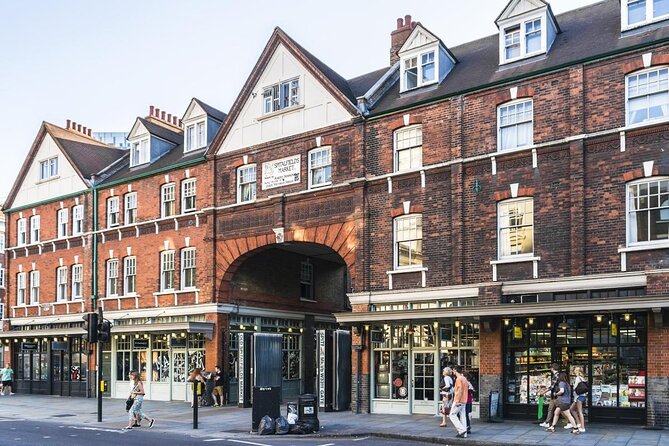
- Old and new London together: You move among an ancient market, a medieval survival, Georgian houses, a former brewery, and a disputed modern thoroughfare.
- Stories about real people: The guide brings the area alive through the lives of workers, residents, immigrants, and local figures.
- A rare indoor finish: The final 30 minutes take place in an 18th-century drawing room, with tea and cakes made from a 1720 recipe.
- A two-hour history lesson on foot: The pace suits curious walkers, but not anyone who has trouble standing or walking for that long.
Starting beside Christ Church Spitalfields at 2 p.m.
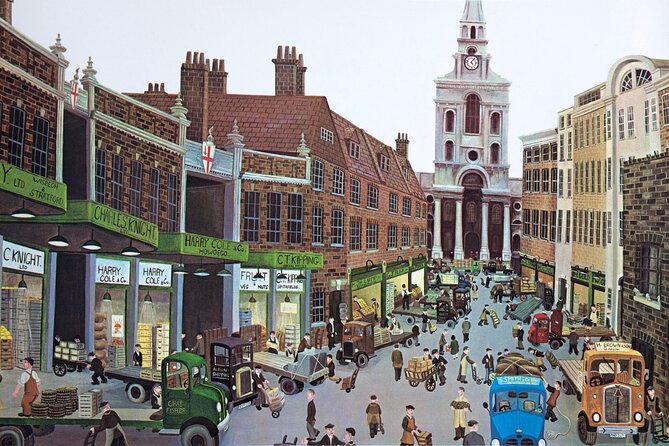
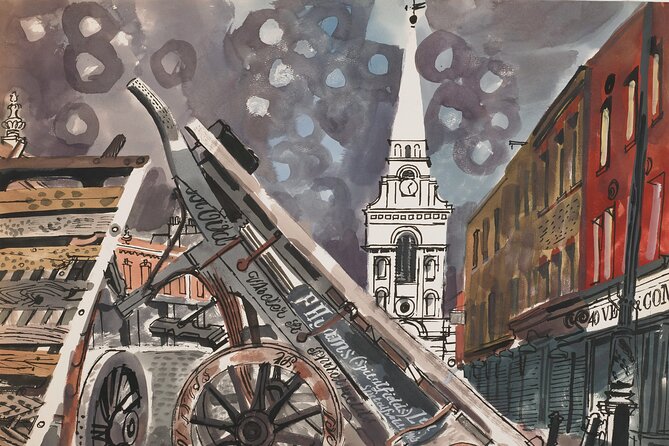
You meet at Christ Church Spitalfields on Commercial Street, London E1 6LY, at 2 p.m. That gives the tour a clear landmark and puts you right beside one of Nicholas Hawksmoor’s grand English Baroque masterpieces.
The church is more than a meeting point. It sets the tone for the whole afternoon. Spitalfields is a place where grand design, hard work, faith, trade, and immigration sit close together. You begin with a major architectural statement, then move into the smaller streets and stories around it.
I like this start because it makes the contrast plain from the first few minutes. The church has a formal, imposing presence. The surrounding district offers a much more mixed picture, with old commercial buildings, homes, religious sites, and changing streets.
The start time also works well for a day in London. You can spend the morning elsewhere, then reach Commercial Street for the afternoon walk. Since the activity ends back at the meeting point, you do not need to plan a complicated pickup or learn a new return point.
More Walking Tours in London
- Magical London: Harry Potter Guided Walking Tour
★ 4.7 · 22,044 reviews - London: The Original Jack the Ripper Walking Tour
★ 4.7 · 7,833 reviews - Tour for Muggles The Ultimate Harry Potter Walking Tour in London
★ 5.0 · 4,684 reviews
Why a group of five changes the experience
A maximum of five people is one of the strongest features here. Many London walking tours gather large groups around a guide, making it hard to hear, ask questions, or pause without blocking the pavement. This experience is built for a much smaller conversation.
That matters in Spitalfields because much of the interest lies in details. You may be looking at a building, a market, a street, or a surviving fragment while the guide explains what happened there. In a group of five, you have a better chance to stop and examine the place instead of simply following the umbrella to the next point.
The small size also supports the tour’s personal approach. One especially praised part is the guide’s research into individuals who lived in the area. That kind of material can be lost in a large group, where a guide must stick to a short script and keep moving.
You should still understand what small-group treatment does not mean. It does not turn a two-hour walk into a private half-day tour. The group can ask questions and receive more direct attention, but the route and timing remain fixed. At $90.28 per person, you are paying for intimacy and interpretation rather than a long list of admissions.
Christ Church and the first look at Spitalfields

The opening stop focuses on Nicholas Hawksmoor’s masterpiece of English Baroque. That gives you an architectural anchor before the tour moves toward the district’s social stories.
The church helps explain one of Spitalfields’ defining contrasts. A large church can tell you about wealth, power, and civic ambition. Nearby streets can tell you about workers, immigrants, trade, religion, and crowded urban life. I appreciate tours that use a building as a way into the people around it, rather than treating architecture as a stand-alone photo stop.
You will not spend the entire two hours inside major attractions. This is a street-level walk, so the pleasure comes from looking carefully and listening to the explanation. Bring your attention to façades, old routes, and the way buildings have been reused.
Meeting the people behind a Jewish institution
One stop introduces an institution created to minister to Jewish immigrants who came from Eastern Europe, in the area now known as Ukraine. The focus is not just on religious architecture. It is on the people whose lives were tied to the institution and the support it offered.
This is one of the more valuable parts of the walk because it gives Spitalfields a human scale. Migration can be reduced to dates and labels, but personal stories show why people moved, what communities built, and how faith shaped daily life.
The guide’s research into individual residents is especially important here. I would expect this section to reward listeners who enjoy social history more than those looking only for famous landmarks.
It also helps you see the East End as more than an old London backdrop. Its identity came from successive communities and the places they created. The tour connects those communities to specific buildings and streets instead of treating them as a footnote.
A different sort of outing around London:
- London: The London Eye Entry Ticket
★ 4.6 · 35,875 reviews - From London: Harry Potter Warner Bros Studio Tour
★ 4.7 · 26,588 reviews - London: Westminster to Greenwich River Thames Cruise
★ 4.5 · 22,836 reviews - London: Madame Tussauds London
★ 4.6 · 20,915 reviews
The ancient market and its changing role

The walk then tells the story of Spitalfields’ ancient market. Markets are useful windows into a city because they connect buildings to work, food, trade, and ordinary routines.
You learn how the market fits into the district’s development, then see it alongside newer uses of the area. The tour’s mix of old and new landmarks matters here. Spitalfields is not presented as a museum district frozen in one period. It is a place where old commercial patterns meet later changes.
You should expect interpretation rather than a shopping stop. Local treats are part of the experience, but the focus remains on the market’s story and place in the neighborhood. If you want a long opportunity to browse stalls, this is not designed as a market shopping tour.
Still, the market section adds useful texture. A church can show civic ambition, while a market reveals how people earned money and met daily needs. Together, the two stops give you a fuller sense of the district.
A medieval survival and the Priory of St Mary Spital
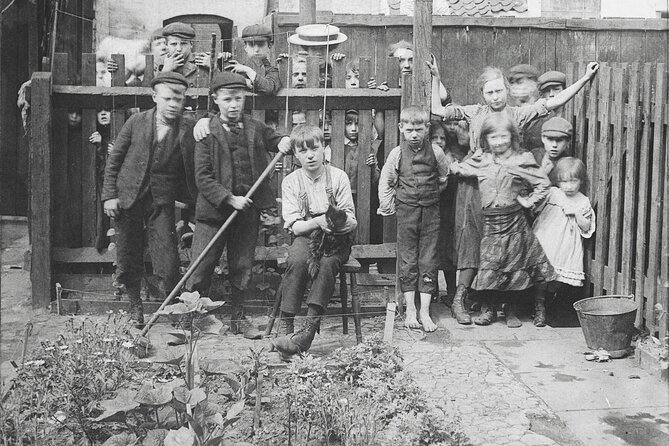
The guide reveals the purpose of an astonishing medieval survival, then visits the site of the Priory of St Mary Spital. These stops reach further back than the better-known Georgian and industrial stories in the neighborhood.
The priory gives Spitalfields its name and supplies an important earlier chapter. You are not simply walking through streets built in the 18th century. The area has older foundations, older institutions, and traces of a time when religious houses played a major role in urban life.
The wording of the stop suggests that the medieval survival may be easy to miss without explanation. That is exactly where a good guide earns the fee. A casual walk can pass a remnant without understanding why it matters. Here, the purpose and setting are part of the story.
This section may appeal most to you if you enjoy layered history. The walk does not treat one period as the whole answer. Medieval religion, later trade, immigration, brewing, and modern redevelopment all appear in the same compact district.
The brewery story through two women
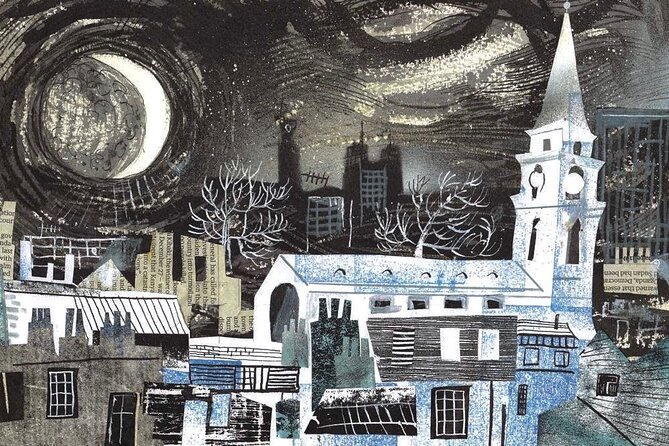
The brewery stop takes a different route into the past. Instead of describing the business only through owners, dates, or production, the guide tells its story through two women who worked there.
That choice is a real strength. Workplaces are often explained from the top down, with attention given to founders and wealthy figures. Focusing on two workers brings the story closer to daily life and gives you a sense of who kept the business running.
I would pay close attention here if you enjoy social history. The stop appears designed to show how a major local institution connected to individual lives. It also fits the wider method of the tour, which returns to personal stories rather than relying only on famous names.
The limitation is that the supplied details do not promise a brewery visit or tasting. You should treat this as a historical stop connected to the brewery’s story, not as a brewery tour. The local treats mentioned in the experience are separate from any brewery expectation.
The famous thoroughfare and its uncertain future
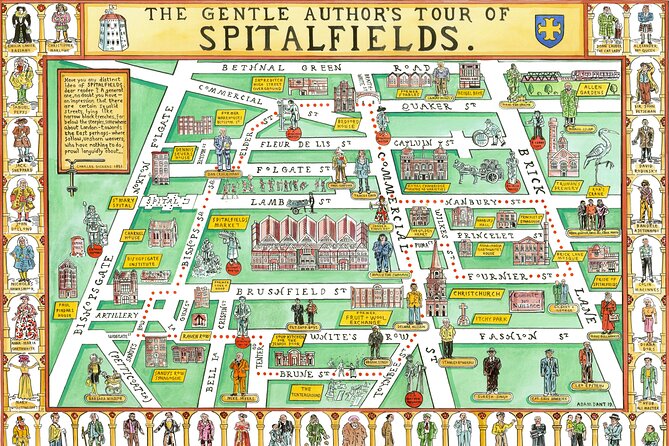
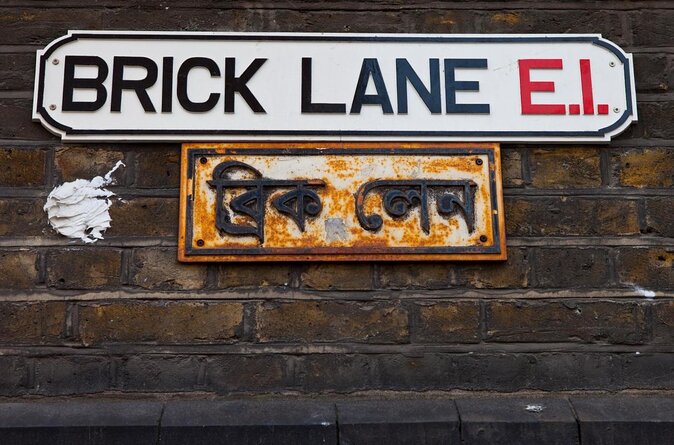
Another stop tells the story of a famous thoroughfare and the continuing controversy over its future. This adds a modern question to a walk that otherwise reaches into medieval and Georgian London.
The value here is that you get to think about Spitalfields as a living neighborhood. Streets change because of transport, development, commerce, preservation, and public debate. The guide connects the thoroughfare’s past to the arguments surrounding what should happen next.
I like this addition because it avoids the easy version of historic London, where every old building is admired but no one asks who gets to decide what survives. A street can be both a piece of heritage and part of a current argument.
You may find this section less satisfying if you want every stop to end with a neat answer. Ongoing controversy rarely does. The point is to understand the competing claims around a well-known route and see how Spitalfields continues to change.
A building with three religious lives
One of the most memorable stops concerns a building that began as a Huguenot Chapel, became a synagogue, and later became a mosque.
That sequence neatly captures the district’s changing communities. One building carries several chapters of migration and worship, each leaving its mark on the same address. You get a compact lesson in how London’s religious spaces can be adapted as populations shift.
This stop also makes the tour’s theme easy to grasp. Spitalfields is not interesting only because it has old façades. It is interesting because those façades have served different people and purposes over time.
Do not expect a full interior visit unless the guide specifically arranges one. The information provided supports a visit to the building and an explanation of its history, not guaranteed access inside. Even from the street, the succession of uses gives the stop unusual power.
Eighteenth-century houses and Nicholas Culpeper’s herbs
The tour also tells the story behind a set of fine 18th-century houses. These homes provide another view of Spitalfields, one connected to residents, status, design, and the district’s changing fortunes.
Rather than simply pointing out attractive façades, the guide explains why the houses matter. That approach helps you read the street as a record of who lived there and how the neighborhood developed.
Later, you visit the herb garden of the 17th-century herbalist Nicholas Culpeper. The garden adds a sensory and practical note to the walk. Herbs connect history to medicine, household use, and the work of a specific person.
This stop should appeal to you if you like small details that make a district feel particular. It is not the biggest landmark on the route, but it helps vary the experience. After churches, markets, institutions, and houses, the herb garden offers a closer look at plants and a working tradition.
Tea, cake, and an 18th-century drawing room
The final stop takes you back to a townhouse, where you can sit in an 18th-century drawing room overlooking Christ Church Spitalfields. The visit lasts 30 minutes, and tea and cakes baked from a 1720 recipe are included.
This is an unusually thoughtful ending. After two hours on foot, sitting down gives you time to absorb what you have seen. The room also returns you to the starting church, creating a satisfying sense of place rather than ending on an anonymous street corner.
The tea is not just a snack. It matches the setting and the period theme. A cake made from a 1720 recipe turns the final half-hour into part of the interpretation, while also giving your feet a break.
One practical point: tea and cakes do not make this a full meal. If you need lunch or dinner, plan that separately. Still, the included refreshment adds real value to a $90.28 experience, especially when paired with the private-feeling group size and indoor seating.
The finish is also where the tour’s gentle pace makes sense. The experience is not trying to cram every major East End sight into one afternoon. It gives you time to listen, walk, notice, and then sit down.
Is $90.28 fair for two hours?
At $90.28 per person, this is an expensive walking tour by ordinary London standards. You are not paying for a long route or a series of major admission tickets. The price needs to be judged against the small maximum of five people, the guide’s personal research, the included tea and cakes, and the unusual depth of the stories.
For someone who usually joins large city walks, the difference may be worthwhile. You get a quieter format and more opportunity to ask about the people and buildings along the route. The experience also offers a clear specialty: Spitalfields through layered local history, rather than London’s headline sights.
For a strict budget, the cost may be difficult to justify. You can walk around the East End on your own for far less. The tradeoff is that you would need to find the connections among the priory, market, religious communities, brewery, houses, and disputed thoroughfare yourself.
I would pay the price if you value interpretation and a small group more than quantity. I would skip it if you mainly want a quick orientation, lots of photo stops, or a long list of included attractions.
Who should book this walk?
I would recommend it to you if you enjoy local history, architecture, migration stories, religious history, and careful storytelling. It suits someone who wants to understand why a neighborhood looks and feels the way it does.
It is also a good fit if you have already seen London’s major central sights and want a different side of the city. The tour does not rely on grand attractions alone. It finds meaning in institutions, workers, houses, gardens, and reused buildings.
The format is less suitable if you cannot walk or stand for two hours. Most people can participate, and service animals are allowed, but the experience is not recommended for anyone with that mobility concern.
The tour is offered in English, so you should be comfortable following a spoken historical explanation. Since it depends on good weather, keep a little flexibility in your London plans.
My booking verdict
I would book this Spitalfields walk if you want a personal, story-led afternoon and can accept the high price. The most valuable parts are the human stories, especially the research into people who lived and worked in the district, plus the building that changed from Huguenot chapel to synagogue to mosque.
The 30-minute tea stop is a genuine bonus, not a gimmick. It gives the tour a warm ending and makes the two-hour format feel less rushed. Book it when you want to slow down and look closely, not when you want to cover half of London before dinner.
You can cancel for a full refund up to 24 hours before the start time. If poor weather or a failure to reach the minimum number causes cancellation, you are offered another date or experience, or a full refund.
FAQ
Where does the Spitalfields walking tour start?
It starts at Christ Church Spitalfields, Commercial Street, London E1 6LY, UK.
What time does the tour begin?
The stated start time is 2 p.m.
How long does the experience last?
The walking tour lasts approximately two hours. The final townhouse visit includes 30 minutes in an 18th-century drawing room.
Where does the tour end?
The activity ends back at the meeting point at Christ Church Spitalfields.
How many people can join the tour?
The maximum group size is five travelers.
What language is the tour offered in?
The tour is offered in English.
What is included at the end of the experience?
Tea and cakes baked to a recipe from 1720 are served in an 18th-century drawing room overlooking Christ Church Spitalfields.
Is the tour suitable for people who cannot walk or stand for two hours?
No. The experience is not recommended for people who cannot stand and walk for two hours. Most travelers can participate, and service animals are allowed.
Can I cancel for a refund?
Yes. You can cancel at least 24 hours before the experience start time for a full refund. Cancellations and changes made less than 24 hours before the start time are not accepted for a refund.
Recently added around London
- PRIVATE HIRE 45 min Speedboat Tour – Embankment/Westminster Pier★ 5.0 · 55 reviews
- Private Tour of London’s Historic Pubs★ 5.0 · 55 reviews
- From London: Glastonbury and Cheddar Gorge Guided Day Trip★ 4.8 · 55 reviews
- London: Kew to Westminster River Thames Cruise★ 4.2 · 55 reviews
- Gatwick Airport Taxi – Private Transfer to/from London★ 5.0 · 55 reviews
- London by Night – Tootbus Sightseeing Tour★ 3.5 · 55 reviews
- London: Tower of London After Hours Tour and Key Ceremony★ 4.8 · 56 reviews
- Private Round Trip Transfer between London Airports and Hotel★ 3.5 · 56 reviews
Walking Tours, compared.

Magical London: Harry Potter Guided Walking Tour
Read our review →
Underground Vaults Walking Tour in Edinburgh Old Town
Read our review →

Oxford University Walking Tour With University Alumni Guide
Read our review →
Edinburgh Castle: Guided Walking Tour with Entry Ticket
Read our review →
Edinburgh Castle Guided Walking Tour in English
Read our review →
Tour for Muggles The Ultimate Harry Potter Walking Tour in London
Read our review →
University and City Walking Tour with Alumni Guide
Read our review →Browse the lists this tour appears in