
Reviewed · HISTORICAL TOURS
A Walk Through Time: History of Liverpool Walking Tour
Liverpool’s story is written in stone. This 1-hour-50-minute walk links the Three Graces, medieval Liverpool, and the old docks, giving you a useful first look at how a small port became a world trading power. I like the clear focus on commerce and maritime history, and I like that local guides such as John and Julio add personal stories and Scouse humor. The main drawback is the fast pace and heavy amount of information, especially when wind, traffic, or a large group makes listening harder.
For $27.74, this is a strong-value introduction to central Liverpool. You see a lot without paying separate admission fees, and the historian-led commentary gives meaning to buildings you might otherwise pass without noticing. I would wear warm clothing and good walking shoes, since much of the route is outdoors and the riverside wind can be fierce.
In This Review
- Key points at a glance
- Starting beneath the Royal Liver Building
- Finding medieval Liverpool at St Nicholas’ Church
- Old Hall Street and the business of cotton
- Liverpool Town Hall and Georgian ambition
- Castle Street, Liverpool Castle, and the Queen Victoria Monument
- Liverpool ONE and the changing city center
- The Old Dock, built in 1715
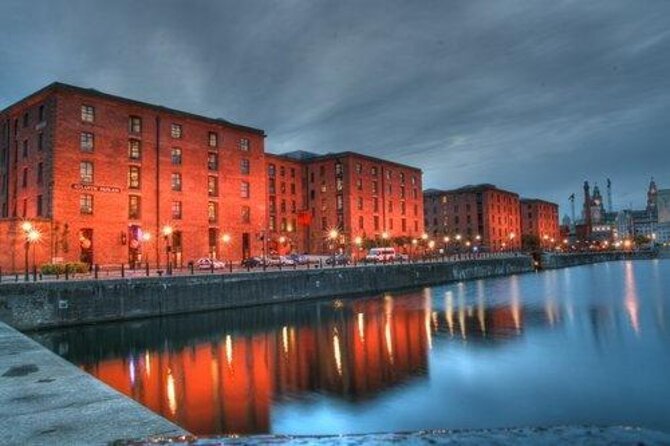
- Royal Albert Dock and Liverpool’s 19th-century power
- Returning to the Three Graces
- The guides make the difference
- What $27.74 really buys you
- Who should book this walk?
- Should you book it?
- FAQ
- Where does the Liverpool walking tour start?
- Where does the tour end?
- How long does the tour last?
- How much does the tour cost?
- What language is the tour offered in?
- Does the price include admission to the Royal Liver Building or Liverpool Town Hall?
- How large can the group be?
- Is the tour suitable for most people?
- What happens if the weather is poor?
Key points at a glance
- Liverpool’s rise is the main story: The walk explains how docks, cotton, Atlantic trade, and global commerce shaped the city.
- The route covers major landmarks: You visit the Royal Liver Building, Liverpool Town Hall, Castle Street, the Old Dock site, and Royal Albert Dock.
- John is a standout guide: His passion, local knowledge, humor, and ability to answer questions receive especially strong praise.
- The tour is history-heavy: Expect detailed explanations rather than a quick photo walk. The guide may speak quickly at times.
- It suits first-time visitors: The route gives you a helpful map of Liverpool’s historic center and waterfront early in your stay.
- Weather matters: The tour needs good weather, and the open waterfront can feel cold and windy.
Starting beneath the Royal Liver Building
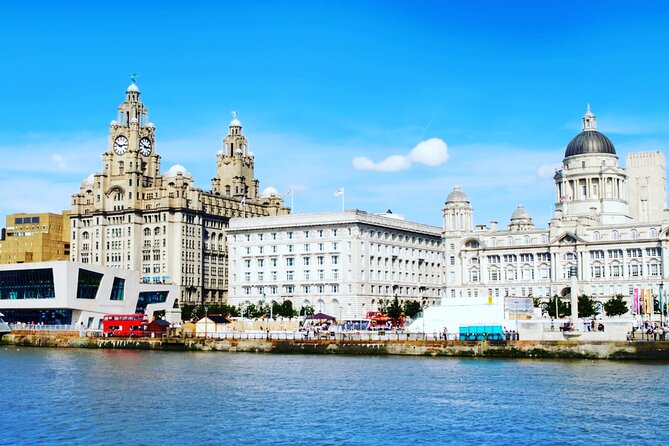
The walk begins at the Liver Building on Pier Head, beside the Mersey. This is an excellent starting point because the Three Graces immediately show you Liverpool at its grandest: monumental waterfront architecture built during the city’s years as an international port.
The first ten minutes are used for introductions and an explanation of the Three Graces. The Royal Liver Building is the best-known of the group, but the real value here is learning to read the waterfront as a record of Liverpool’s commercial power. You are not simply being shown a famous photograph spot. You are being given the opening chapter of the city’s story.
The tour is conducted in English and uses a mobile ticket. The group can reach up to 40 people, although one strong point in the feedback is the experience of being in a smaller group on some departures. A smaller gathering makes it easier to hear and ask questions. With a full group, position yourself near the guide from the start.
More History Tours in Liverpool
- Best Of Liverpool Heritage, History & Culture Guided Walking Tour
★ 5.0 · 539 reviews - History Guided Tour of Liverpool and the Beatles
★ 5.0 · 408 reviews - Liverpool: Haunted History Guided City Tour
★ 4.9 · 404 reviews
Finding medieval Liverpool at St Nicholas’ Church
From the waterfront, the route crosses the Strand toward Liverpool Parish Church Gardens. Here the focus shifts from grand Victorian buildings to the city’s medieval beginnings.
The site was once associated with St Nicholas’ Church, named for the patron saint of sailors. The tour uses this location to explain Liverpool’s origins in the 13th century, including the town’s creation in 1207. That change in scale is one of the walk’s best features. You move from the city Liverpool built through overseas commerce to the much smaller medieval settlement that came first.
You should not expect a long indoor visit or a formal museum stop. The admission is free, and the guide’s explanation is the main attraction. The value comes from seeing physical evidence in place while someone explains what it meant. This is also a good reminder that Liverpool did not begin with the docks. Its maritime identity reaches back much further.
Old Hall Street and the business of cotton
Old Hall Street brings the tour into the machinery of trade. The route passes historic buildings and the former Cotton Exchange, where goods and deals connected Liverpool with markets around the world.
The guide places Liverpool’s growth in the context of the cotton trade, explaining how the port overtook London in this field by the late 18th century. This section is especially useful if you want to understand why Liverpool has so many large commercial buildings. They were not built merely for show. They served a city handling cargo, money, insurance, shipping, and international business.
The darker side of that success is also addressed. Liverpool’s involvement in Atlantic trade and the transatlantic slave trade is part of the discussion. I appreciate that the tour does not treat the city’s commercial past as a simple success story. You get the achievements, but also the human cost behind them.
Expect a serious stretch of history here. The guide may cover dates, industries, institutions, and connections in quick succession. One person found the guide’s speed difficult, so you may want to ask for clarification if a point passes too quickly.
Liverpool Town Hall and Georgian ambition
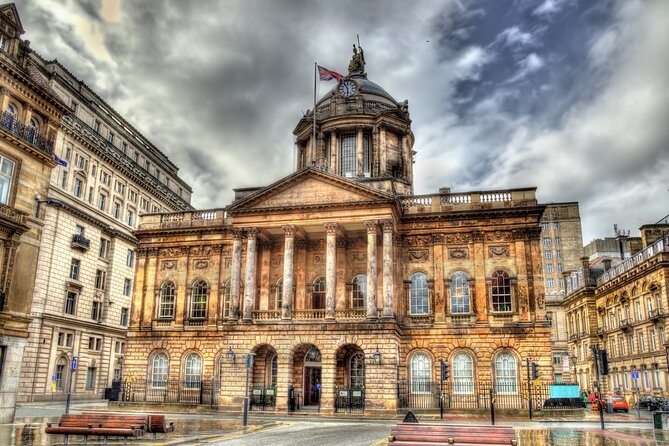
Liverpool Town Hall, built in 1749, provides another change in mood. Its architecture reflects the wealth and confidence of a city becoming a major port and commercial center.
The guide explains the building’s place in Liverpool’s development, rather than treating it as an isolated historic façade. That approach helps you understand how local government, trade, and civic pride grew together. The building’s grand appearance makes more sense once you know the money behind it.
Admission is not included, so the stop is primarily an exterior explanation. That is typical of this walk. You are paying for the guide’s interpretation and the route, not for entry into a series of attractions. If you want to see the interiors of the Town Hall or the Royal Liver Building, you would need to arrange that separately.
More Walking Tours in Liverpool
- Liverpool Ghost Walking Tour
★ 5.0 · 862 reviews - Beatles Famous Walking Tour Of Liverpool- Fully Guided
★ 5.0 · 751 reviews - Downtown Liverpool Walking Tour – In Spanish
★ 5.0 · 591 reviews - Liverpool: Beatles Highlights Walking Tour
★ 4.8 · 274 reviews
Castle Street, Liverpool Castle, and the Queen Victoria Monument
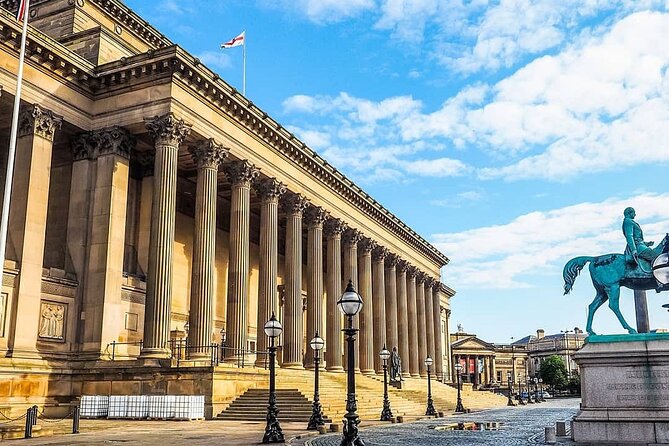
Castle Street is one of the most enjoyable parts of the route because the architecture itself becomes a timeline. Walking along the street, you see how Liverpool developed from a medieval town into a wealthy 18th-century port.
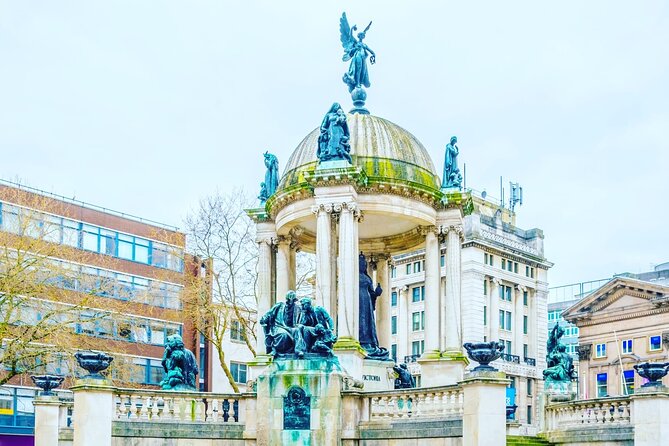
The guide discusses the former Liverpool Castle and explains why Castle Street mattered to the old town. The following stop at the Queen Victoria Monument continues that story, focusing on Liverpool’s growth into one of the planet’s leading ports by 1800.
This section rewards anyone who likes urban history. You are not confined to one museum room, and the buildings are not presented as disconnected sights. Streets, monuments, trade, and political power are tied together.
The Queen Victoria Monument is also listed as the end point at One Derby Square, at the bottom of Castle Street. There is a small point to check before booking: the route description also names the Royal Liver Building as the final destination for a closing look at the waterfront. The meeting information identifies the start as the Liver Building and the end as the Queen Victoria Monument, so confirm the exact finishing point for your departure.
Liverpool ONE and the changing city center
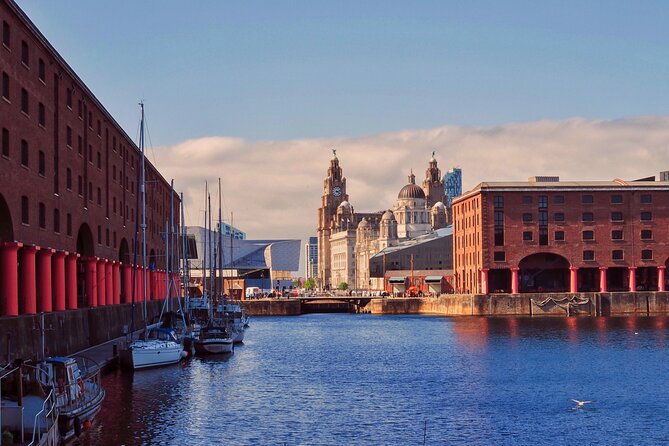
The route then passes through Liverpool ONE, the modern shopping and entertainment district. This is a deliberate jump into present-day Liverpool.
The guide points out the shops and attractions while explaining how this part of the city fits into its wider development. It is not a long shopping stop, and you should not expect time to browse. Instead, the area gives you a visual contrast with the older streets and dock buildings.
Some people may find this section less compelling than the medieval or maritime material. I see its purpose, though. Liverpool’s story did not stop when the port’s commercial role changed. The city continues to adapt, and Liverpool ONE represents that newer phase.
The Old Dock, built in 1715
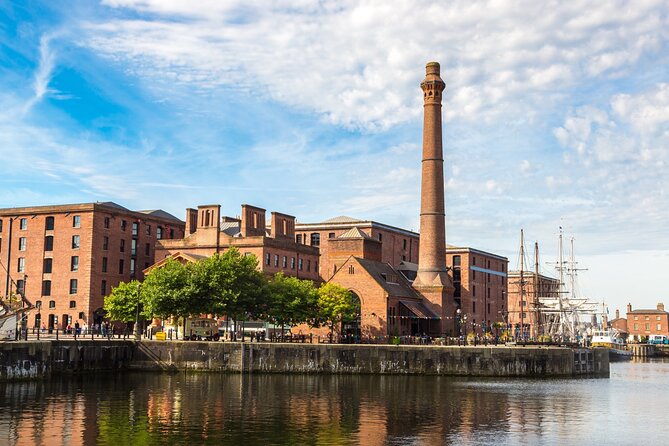
The Old Dock is one of the most important stops for understanding Liverpool’s rise. Built in 1715, it is described as the first commercial wet dock on the planet.
The guide explains how this dock changed the port’s efficiency. Before purpose-built wet docks, ships and cargo were more exposed to the limits of tides and river conditions. A dock designed for commercial use gave Liverpool a stronger advantage in handling trade.
This is the kind of stop that benefits from a guide. The physical remains are not necessarily dramatic to an untrained eye, but the story is enormous. Once you understand what the dock represented, the later scale of Liverpool’s waterfront makes more sense.
The stop lasts about ten minutes, so listen closely. The guide packs a lot into a short period, and it is worth asking questions if you want more detail about the dock’s construction or later development.
Royal Albert Dock and Liverpool’s 19th-century power
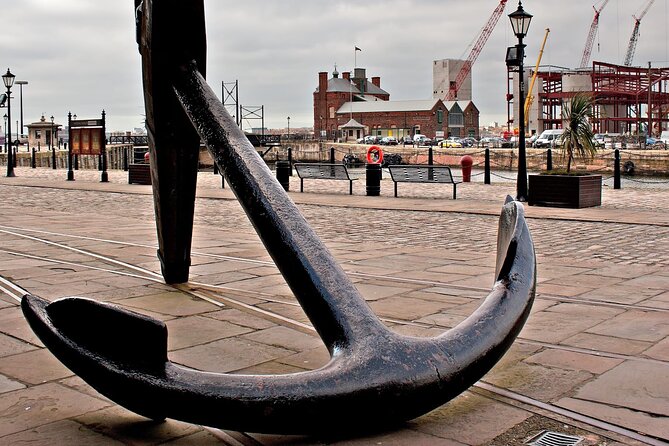
Royal Albert Dock brings you into the 19th century. Built in 1846, it became a major center of Liverpool’s commerce and remains one of the city’s most recognisable waterfront areas.
This is a strong visual part of the walk. The dock’s buildings, open water, and broad paths offer a clear sense of the scale of the port. The guide also covers Liverpool’s role during the First and Second World Wars, adding military history to the commercial story.
You may want to return here after the tour. Ten minutes is enough for an explanation, but not enough to explore every museum, gallery, restaurant, or waterfront corner in the area. The walk gives you the background. You can then choose where to spend more time.
The route is mostly outdoors, and this is where the weather can matter most. A cold day beside the Mersey can feel much colder than the forecast suggests. Wear a warm coat, and avoid smooth or uncomfortable shoes.
Returning to the Three Graces
The closing part returns to the Three Graces and Liverpool’s waterfront. This brings the walk full circle, from the city’s modern symbol back to the port that made Liverpool famous.
A final explanation of the waterfront is useful because you can now read it with more context. The Royal Liver Building is no longer just an attractive landmark. It sits within a larger story about shipping, trade, civic pride, war, and Liverpool’s changing place in the world.
The route’s design is one of its best qualities. You do not spend the whole time in one era. You move from medieval origins to 18th-century commerce, 19th-century docks, wartime Liverpool, and the modern city center.
The guides make the difference
The guide is the heart of this experience. John is praised repeatedly for his passion, clear narration, local connection, humor, and ability to answer questions. His enthusiasm appears to extend beyond the standard facts. Even people from Liverpool who had lived there for decades said they learned new things.
Julio is also described as engaging and well informed, especially as a guide for getting oriented at the start of a stay. The tour can work well as your first activity in Liverpool because it gives you a sense of where the major areas sit and why they matter.
The strongest praise centers on the guide’s ability to make difficult subjects accessible. Liverpool’s story includes trade, empire, slavery, industry, war, and civic development. A good guide can connect those subjects without turning the walk into a lecture. John’s use of humor helps keep the mood light, even when the subject becomes uncomfortable.
There is one practical caution. The amount of information is high, and the guide may speak quickly. Traffic and wind can also affect how clearly you hear. Stay near the front, ask questions, and do not be shy about requesting a point to be repeated.
What $27.74 really buys you
At $27.74 per person, I consider this good value if you want interpretation rather than entry tickets. The walk lasts nearly two hours and covers ten locations, with no separate admission charge for most stops.
The value is strongest for a first visit. You see the major landmarks, learn the city’s basic timeline, and finish with a better idea of which places deserve a longer visit. You also avoid spending your first day trying to piece Liverpool’s history together from plaques and guidebooks.
The price is less attractive if you want a relaxed stroll or a small private tour. The group limit is 40, and the schedule is tightly packed. This is a history lesson on foot, not a slow photo walk with long breaks.
Because the tour is offered in English only, you should be comfortable following spoken historical detail in English. The mobile ticket makes entry simple, but you still need to arrive at the Liver Building on Pier Head at the stated start time.
Who should book this walk?
I would recommend it to first-time visitors, history fans, architecture lovers, and anyone who wants to understand Liverpool beyond the Beatles. It is also a good choice if you have limited time and want a broad overview before exploring the docks, city center, and museums on your own.
Local residents can enjoy it too. The praise from long-time Liverpudlians suggests that the walk contains plenty of material beyond the obvious landmarks.
I would be more cautious if you dislike long explanations, struggle to follow fast speech, or want extensive time inside attractions. The route is outdoors, the information comes quickly, and the tour does not include admission to the Royal Liver Building or Liverpool Town Hall.
The tour has a 4.8 rating from 911 ratings, with 97 percent recommending it. That is a strong record, and the repeated approval of John’s delivery is important. Still, two late cancellations caused serious frustration, including one cancellation only 10 to 15 minutes before departure. These appear to be unusual, but if your schedule is tight, keep a backup plan and check for updates before leaving.
Free cancellation is available up to 24 hours before the start time. Changes or cancellations inside that window are not refundable, and poor weather can lead to a new date or a full refund. Service animals are allowed, public transport is nearby, and most people can participate.
Should you book it?
Book this walk if you want Liverpool’s waterfront and old streets to make sense. The guide’s stories are the main attraction, and the route gives you a clear account of how medieval Liverpool became a major port through docks, cotton, Atlantic trade, and global commerce.
I would choose it early in a Liverpool visit, preferably on a day with a good forecast. Wear warm layers, stand close enough to hear, and allow extra time afterward at Royal Albert Dock or the Three Graces. Skip it only if you prefer unstructured sightseeing or need a slow pace. For most people seeking a useful, affordable introduction to the city, this is money well spent.
FAQ
Where does the Liverpool walking tour start?
The tour starts at the Liver Building, Pier Head, Liverpool L3 1HU, UK.
Where does the tour end?
The meeting information gives the Queen Victoria Monument at One Derby Square, James Street, Liverpool L2 1AB, UK, as the end point. The route description also refers to a final visit to the Three Graces, so confirm the exact finish before departure.
How long does the tour last?
The experience lasts approximately 1 hour and 50 minutes.
How much does the tour cost?
The listed price is $27.74 per person.
What language is the tour offered in?
The tour is offered in English.
Does the price include admission to the Royal Liver Building or Liverpool Town Hall?
No. Admission is not included for the Royal Liver Building or Liverpool Town Hall. The other stated stops are listed with free admission.
How large can the group be?
The tour can have a maximum of 40 people.
Is the tour suitable for most people?
Yes. Most people can participate, and the tour is near public transportation. Service animals are allowed.
What happens if the weather is poor?
The experience requires good weather. If it is canceled because of poor weather, you will be offered another date or a full refund.
Recently added around Liverpool
- Beatles Ticket To Ride Half Day Tour Small Groups★ 5.0 · 60 reviews
- North Wales and Caernarfon Castle day-tour from Liverpool★ 5.0 · 64 reviews
- Ultimate Beatles Ticket To Ride Shore Excursion-Small Groups★ 5.0 · 67 reviews
- Beatles Liverpool Childhood Homes Tour exc National Trust tickets★ 5.0 · 67 reviews
- Liverpool: Silent Disco Adventure Tour★ 4.6 · 76 reviews
- Liverpool with a Local: Walking Tour (10:30am)★ 5.0 · 80 reviews
- Liverpool: Private Beatles Tour★ 4.8 · 85 reviews
- Liverpool: Junkyard Golf Tickets for 9 or 18 Holes★ 4.6 · 88 reviews
Historical Tours, compared.
A History of Terror – Belfast City Centre Walking Tour
Read our review →
Old Town Walking Tour History and Tales in Edinburgh
Read our review →
Shadows of York: Ghost Walk and Horrible History.
Read our review →
Multi-Sensory Small-Group Historic Vaults Tour in Edinburgh
Read our review →
Browse the lists this tour appears in