
Reviewed · HISTORICAL TOURS
Best Of Liverpool Heritage, History & Culture Guided Walking Tour
Liverpool tells its story on foot. This 2-hour-15-minute walk links old rope-making lanes, dockside monuments, Beatles landmarks, and grand civic buildings in one well-paced route. I especially like the citywide overview and the way local guides such as Mike, Pam, Carl, Allan, and Roy bring Liverpool’s past to life with humor and personal insight. The main drawback is that the walk covers a lot of ground, so some stops may receive only a short explanation.
I also like the finish at Mathew Street, where you can continue into the Cavern Quarter under your own steam. Just keep in mind that this is a history and culture walk first, not a full Beatles tour, and the route or individual stops can change on the day.
In This Review
- Five reasons this Liverpool walk earns attention
- Starting at the Bluecoat in central Liverpool
- From the Sailors Home Gateway to Liverpool’s working past
- Campbell Square and the old Bridewell
- Thomas Steers Way and the buried dock story
- Royal Albert Dock and the city’s maritime identity
- Meeting the Beatles at the waterfront statue
- The Three Graces and Liverpool’s grand waterfront face
- Castle Street and the route back into the city
- Liverpool Town Hall and centuries of civic life
- Exchange Flags, Nelson, and wartime Liverpool
- Derby Square and Liverpool’s vanished castle
- Ending on Mathew Street near the Cavern Quarter
- What the guides add to the walk
- Is the $31.90 price fair?
- Who should book this Liverpool walk?
- Final call: a strong first step in Liverpool
- FAQ
- Where does the Liverpool walking tour start?
- Where does the tour end?
- How long does the walking tour last?
- How much does the tour cost?
- Is the tour offered in English?
- Are food and drinks included?
- Is the Beatles Statue always included?
- Is the tour suitable for children?
- Can I bring a dog?
Five reasons this Liverpool walk earns attention
- It connects several sides of Liverpool: maritime trade, medieval Liverpool, civic power, popular culture, and the Beatles all fit into one route.
- The Royal Albert Dock gets proper context: you learn how the docks shaped the city, not just where to take waterfront photos.
- The Ropewalks reveal an older working Liverpool: Henry Street and Campbell Square offer a break from the better-known sights.
- The guides are the real strength: Mike, Pam, Carl, Allan, Roy, Colleen, Paul, Rob, Chris, and others are praised for clear explanations, local feeling, and good humor.
- The route is useful for a short stay: you finish near Mathew Street with a clearer sense of where to spend the rest of your time.
- The group limit is 20 people: that is small enough for questions, though hearing every comment may be harder in noisy streets.
Starting at the Bluecoat in central Liverpool
Meet your guide in front of the Bluecoat building on School Lane. The Bluecoat is a practical starting point because it sits in the city centre, near shops, restaurants, and public transport. You are not being sent to an out-of-the-way coach park or asked to find a remote meeting point.
The walk begins with the Bluecoat itself as your first visual marker. Admission is not required, and the opening stop lasts about five minutes. Use this moment to settle into the group, check your shoes, and ask where the tour will end.
The pace is designed for a moderate level of fitness. There are no hills or stairs listed on the route, but Liverpool has plenty of cobbles and uneven surfaces. I would wear comfortable shoes with a good grip and carry water. This is not a difficult walk, but more than two hours on hard paving can catch you out.
The tour is offered in English and uses a mobile ticket. Children under 16 must be with a responsible adult. Well-behaved dogs are allowed, although busy streets and a moving group may not suit every dog.
More History Tours in Liverpool
- A Walk Through Time: History of Liverpool Walking Tour
★ 5.0 · 911 reviews - History Guided Tour of Liverpool and the Beatles
★ 5.0 · 408 reviews - Liverpool: Haunted History Guided City Tour
★ 4.9 · 404 reviews
From the Sailors Home Gateway to Liverpool’s working past
The Liverpool Sailors Home Gateway is a short stop, but it gives the walk an early maritime note. The monument honors the Sailors Home, which served people connected with the sea. It also offers a good photo opportunity with a golden Liver bird.
That bird matters because Liverpool’s identity is tied closely to its waterfront and shipping trade. You will see the city’s symbols repeatedly during the walk, but this early glimpse helps frame what follows. The stop takes about five minutes, so expect a quick explanation and a photograph rather than a long talk.
Next comes Henry Street in the Ropewalks area. The name refers to the rope-making work once carried out here for sailing ships. This is one of the more useful parts of the walk because it helps you see Liverpool as a working port, not simply a city of famous buildings and Beatles memorabilia.
Allow about 15 minutes here. The narrow streets and older brickwork help explain how trades connected to shipping shaped the city centre. You may find this part especially rewarding if you enjoy urban details that are easy to miss when moving from one major sight to another.
Campbell Square and the old Bridewell
Campbell Square sits close to the Ropewalks and brings a different kind of story. The Bridewell, a converted Victorian gaol, gives the stop a slightly unexpected edge. You may even get a chance to see inside one of the original cells.
The stop lasts around ten minutes. Do not expect a full prison museum visit. The value comes from seeing how an old building has been reused and hearing how this corner of the city once functioned.
This is also a good example of the tour’s style. It does not race only between postcard sights. It pauses at places that reveal how Liverpool’s buildings changed purpose over time. If access to the cell is not possible, the exterior and surrounding square still form part of the story.
Thomas Steers Way and the buried dock story
At Thomas Steers Way, the focus returns to Liverpool’s maritime life. The area occupies the site of Liverpool’s first dry dock, and the large water fountain helps mark that connection. You can also look down through a porthole for a small but memorable view.
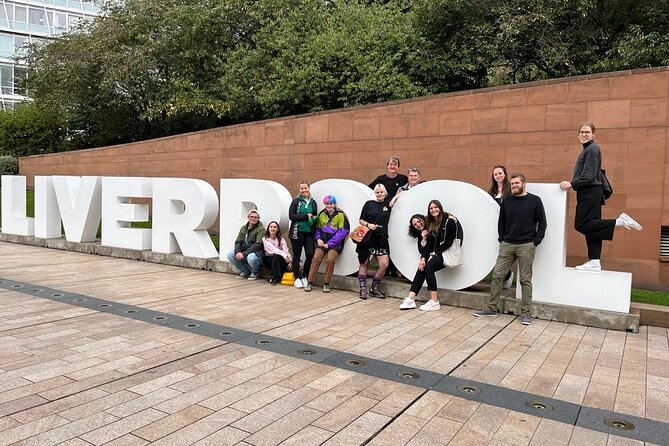
This stop lasts about ten minutes and includes one of the route’s easiest photo opportunities: the oversized LIVERPOOL sign. Its colors change with the season or special events, so the exact appearance may vary.
I like this stop because it makes the old dock system easier to picture. Modern paving and public art can hide the working port that once occupied the area. A guide who explains what used to be under your feet adds much more than a quick photograph beside a sign.
More Walking Tours in Liverpool
- Liverpool Ghost Walking Tour
★ 5.0 · 862 reviews - Beatles Famous Walking Tour Of Liverpool- Fully Guided
★ 5.0 · 751 reviews - Downtown Liverpool Walking Tour – In Spanish
★ 5.0 · 591 reviews - Liverpool: Beatles Highlights Walking Tour
★ 4.8 · 274 reviews
Royal Albert Dock and the city’s maritime identity
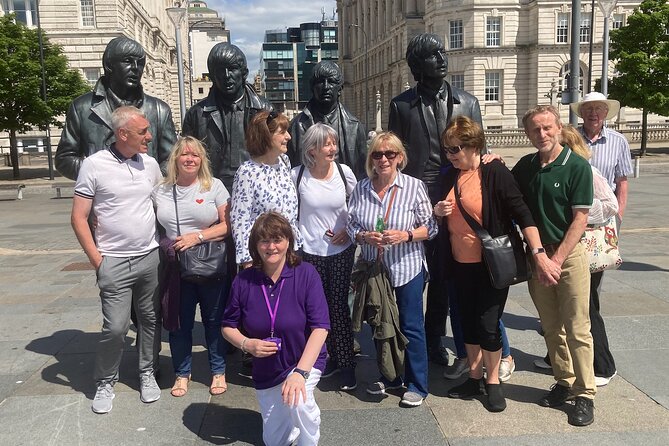
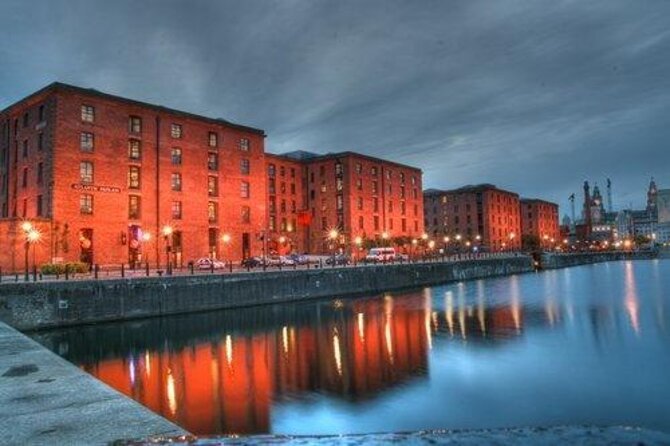
The Royal Albert Dock receives about 20 minutes, making it one of the longer stops. Here, your guide explains the dock’s role in Liverpool’s growth, along with the way the Titanic story became part of the city’s maritime identity.
You will also see a mix of old and new architecture along the waterfront. That contrast is useful. The dock is not just a preserved historic quarter. It is a place where Liverpool’s commercial past and modern city life meet.
A bronze statue of Bill Fury is another stop along the way. It has become a shrine for his fans, adding a piece of local popular culture to the port story. The statue may not be familiar to everyone, but that is part of the pleasure. You get more than a checklist of internationally famous sights.
The waterfront can be windy and wet, as one guide experience made clear. Mike Dowling was praised for keeping the walk engaging on a very wet and windy day. Liverpool weather can change quickly, so a waterproof layer is sensible even when the forecast looks kind.
Meeting the Beatles at the waterfront statue
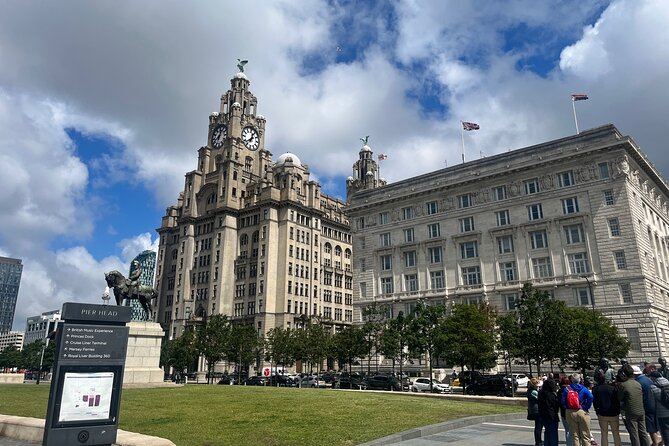
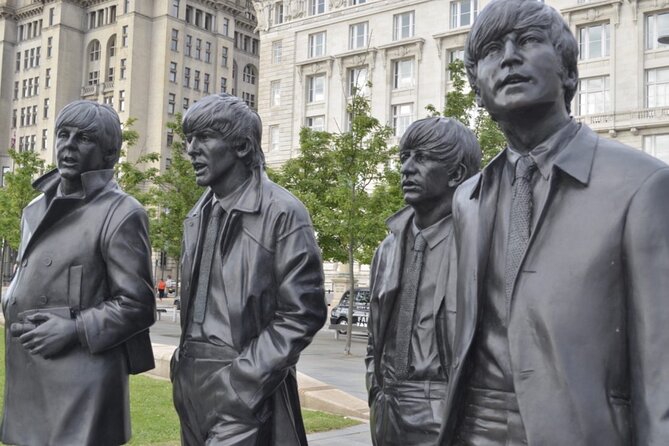
The Beatles Statue gets about ten minutes. It was sculpted by Andrew Edwards and gives you the classic chance to pose with the Fab Four.
This stop works well as part of a wider Liverpool introduction. You get the photo and some Beatles context, but the main subject remains the city as a whole. If your main goal is Beatles history, you will want the separate Beatles walking tour offered by the same company.
Access to the Andrew Edwards statue can occasionally be restricted. If that happens, the route may use alternative statues instead. That is worth knowing before you book, especially if a particular photograph is essential to your plans.
The Three Graces and Liverpool’s grand waterfront face
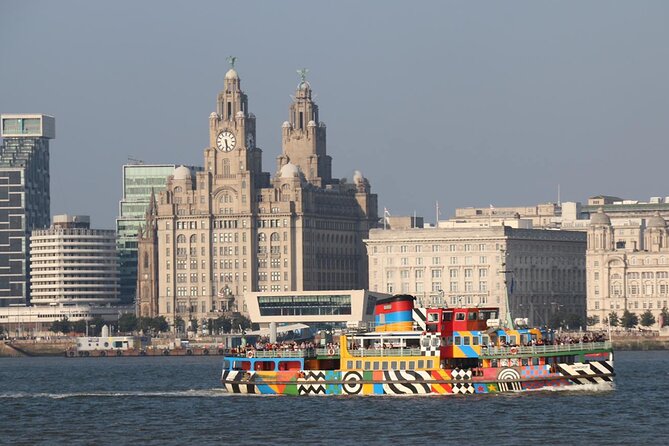
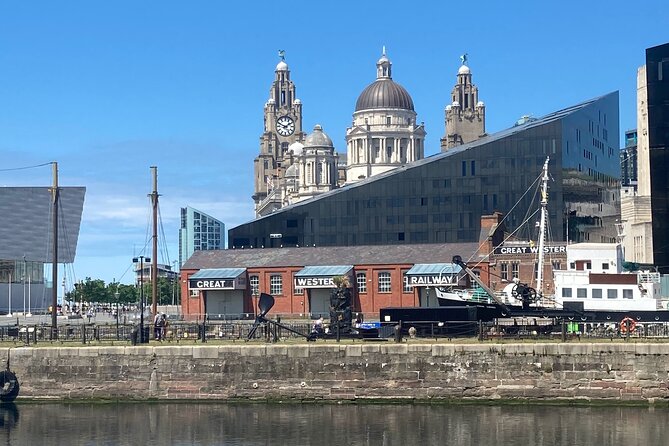
The Three Graces are among Liverpool’s most impressive buildings. The group includes the Cunard Building, the Port of Liverpool Building, and the Liver Building.
The tour spends about 15 minutes explaining their history and heritage. All three are Grade II listed buildings, and the Liver Building is closely tied to Liverpool’s identity through its famous Liver birds. The scale and decoration here show how seriously the city once presented itself as a major port.
This is one of the points where a local guide adds real value. From the pavement, the buildings can look like a single grand row. A clear explanation helps you separate them and understand their different roles.
The stop is also a strong photo break. Look upward, give yourself time to take in the details, and do not let the group move off before you have the picture you want. The walk has several good photo points, and this is one of the most important.
Castle Street and the route back into the city
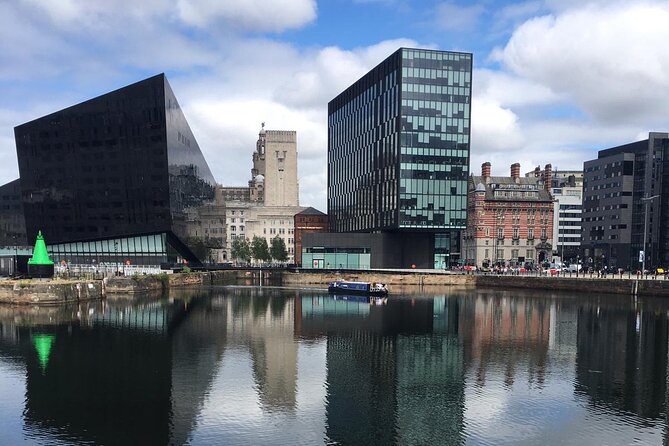
Castle Street shifts the mood from open waterfront to historic city centre. The street has links to medieval Liverpool, and its architecture helps you trace the city’s older layers.
About ten minutes are given to this section. You will not see a preserved medieval town in the full sense, but the route shows how traces of earlier Liverpool survive among later buildings. That change in scale is one of the strengths of the walk: the experience moves from docks and grand commercial buildings to streets where the city’s older foundations are easier to imagine.
Castle Street is also a useful orientation point. By now, you have moved through several districts and should have a better sense of how close the waterfront is to the central streets.
Liverpool Town Hall and centuries of civic life
The walk then heads toward Liverpool Town Hall, a Grade I listed building recognized as one of England’s finest surviving 18th-century town halls. The stop lasts around ten minutes.
Your guide also discusses earlier town halls, with a story reaching back to the 1500s. That added background matters because it places the current building within a much longer civic story. The point is not just to admire a grand facade. You learn how Liverpool represented its public life and authority over time.
This is an easy place to pause and ask questions. Several guides are praised for answering questions clearly, including Carl, who gave quick answers on a small tour, and Paul, who tailored explanations to the interests of the group.
Exchange Flags, Nelson, and wartime Liverpool
Exchange Flags forms a listed courtyard facing the Town Hall. Its history includes an important role during the Second World War, adding another chapter to Liverpool’s civic and military story.
The area also contains a large bronze monument to Nelson dating from the early 1800s. You get about ten minutes here. The courtyard gives the guide a contained space to explain the buildings, while the monument provides a strong visual focus.
This section may appeal to you if you like the way British cities preserve political, commercial, and military stories side by side. It is not as immediately famous as the waterfront, but it helps show how Liverpool’s center worked beyond the docks.
Derby Square and Liverpool’s vanished castle
Derby Square is the final major historical stop before the tour ends. Your guide explains that Liverpool Castle once stood here, while the square now features an imposing monument to Queen Victoria.
The stop is planned for about ten minutes. Because the castle no longer survives, this is a good place to listen closely and use your imagination. The square shows how a city can replace one symbol of power with another while keeping the location important.
One practical note: the route can change, and a past tour did not include Derby Square, the Queen Victoria monument, Mathew Street, or the Eleanor Rigby statue. The provider says operational issues can also block access to a location. You should treat the published route as a strong plan, not an absolute guarantee.
Ending on Mathew Street near the Cavern Quarter
The walk ends at the entrance to Mathew Street, a convenient central location. You can then explore the street and Cavern Quarter independently, including the Cavern Club area.
This finish is smart. You are not dropped far from the center after hearing about the Beatles. Instead, you can continue the music theme immediately, find a place for food or a drink, or walk back toward other central sights.
The tour does not include food or drink, so plan a stop afterward. Ending near Mathew Street gives you plenty of flexibility, but the tour itself is not a pub crawl and does not include admission to attractions.
What the guides add to the walk
The strongest pattern across the experience is guide quality. Mike Dowling is repeatedly praised for passion, humor, and clear storytelling. Carl is singled out for answering questions quickly and giving a strong first introduction to the city. Pam is praised for her extensive knowledge and warm delivery.
Other guides bring their own style. Roy is described as a proper Scouser with strong local feeling and Scouse humor. Allan uses photographs, keeps a good pace, and points out useful photo spots. Colleen has impressed regular Liverpool visitors with details they had missed even after years of knowing the city.
That variety can be a strength, though the exact style depends on who leads your walk. Some guides may offer more Beatles material, while others may focus more on maritime or civic history. On a small group, you may have more time for questions. The maximum group size is 20.
One useful criticism concerns sound. On a larger walk, it may be harder to hear questions asked by people at the back, and the tour does not mention audio headsets. Stay near the guide when possible, especially on busy streets.
Is the $31.90 price fair?
At $31.90 per person, the walk is priced as a modest orientation tour rather than a full attraction package. You are paying for a local guide and two-plus hours of structured sightseeing, with no food, drinks, or admission tickets included.
I think the value is strongest if Liverpool is new to you or if your time is limited. The route covers the Ropewalks, Royal Albert Dock, the Three Graces, civic buildings, Castle Street, and Beatles landmarks without relying on a vehicle or a separate transport plan.
The value is less clear if you only want Beatles sites. In that case, a dedicated Beatles walk may suit you better. You can also explore the central sights independently, but you would need to research the connections between them yourself.
The tour has a 5 out of 5 rating from 539 ratings, with 100 percent of participants recommending it. That points to a very consistent experience, especially around the guides and the amount learned in a short time.
Who should book this Liverpool walk?
I would choose this tour if you want:
- A first look at Liverpool before exploring alone
- A clear introduction to maritime, civic, and cultural history
- A walking route with strong photo stops
- Local stories rather than only famous landmarks
- A compact experience during a short city break
- A guide who can suggest what to do during the rest of your stay
It also suits repeat visitors. One person who had visited Liverpool many times still learned new details, while another local enjoyed discovering parts of the center afresh.
I would hesitate if you dislike group walking, need frequent indoor breaks, or want a tour devoted almost entirely to the Beatles. The route is outdoors, can be affected by poor weather, and includes cobbles and busy areas.
Free cancellation is available up to 24 hours before the start time. If the tour is canceled because of poor weather, you are offered another date or a full refund.
Final call: a strong first step in Liverpool
Book this walk if you want Liverpool to make sense quickly. The best part is not any single photo stop. It is the way the route links rope-making, docks, civic pride, wartime history, vanished buildings, and the Beatles into one readable story.
You should book it early if the city is central to your trip, since it is often reserved around 18 days ahead. Arrive ready for weather, wear shoes that can handle cobbles, and stay close enough to hear your guide. Then use the finish at Mathew Street to choose your next move: the Cavern Quarter, a meal, or more independent exploring.
FAQ
Where does the Liverpool walking tour start?
It starts in front of the Bluecoat building on School Lane, Liverpool L1 3BX.
Where does the tour end?
It ends at the entrance to Mathew Street in central Liverpool, near the Cavern Quarter and the Cavern Club.
How long does the walking tour last?
The tour lasts approximately 2 hours and 15 minutes.
How much does the tour cost?
The listed price is $31.90 per person.
Is the tour offered in English?
Yes. The tour is offered in English.
Are food and drinks included?
No. Food and drinks are not included.
Is the Beatles Statue always included?
The route normally includes the Beatles Statue, but access to the Andrew Edwards statue can sometimes be restricted. In that case, alternative statues may be visited.
Is the tour suitable for children?
Children under 16 must be accompanied by a responsible adult.
Can I bring a dog?
Well-behaved dogs are welcome, but you should consider that the walk includes busy areas and takes place with a moving group.
Recently added around Liverpool
- Beatles Ticket To Ride Half Day Tour Small Groups★ 5.0 · 60 reviews
- North Wales and Caernarfon Castle day-tour from Liverpool★ 5.0 · 64 reviews
- Beatles Liverpool Childhood Homes Tour exc National Trust tickets★ 5.0 · 67 reviews
- Ultimate Beatles Ticket To Ride Shore Excursion-Small Groups★ 5.0 · 67 reviews
- Liverpool: Silent Disco Adventure Tour★ 4.6 · 76 reviews
- Liverpool with a Local: Walking Tour (10:30am)★ 5.0 · 80 reviews
- Liverpool: Private Beatles Tour★ 4.8 · 85 reviews
- Liverpool City Centre Highlights Tour★ 5.0 · 88 reviews
Historical Tours, compared.
A History of Terror – Belfast City Centre Walking Tour
Read our review →
Old Town Walking Tour History and Tales in Edinburgh
Read our review →
Shadows of York: Ghost Walk and Horrible History.
Read our review →
Multi-Sensory Small-Group Historic Vaults Tour in Edinburgh
Read our review →
Browse the lists this tour appears in