
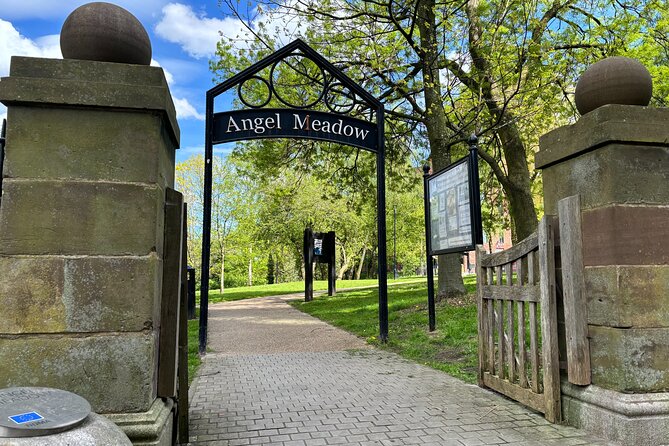
Reviewed · HISTORICAL TOURS
Angel Meadow Manchester History Tour with Author Dean Kirby
Manchester’s darkest corner tells a powerful story. This 90-minute Angel Meadow tour with author and historian Dean Kirby links the city’s Industrial Revolution to the people who paid its human cost. I like the small group of up to 15, which gives you room to ask questions, and I like the way Kirby uses the streets, park, and River Irk to bring a vanished district back into view. The main drawback is simple: much of old Angel Meadow has been redeveloped, so you’ll rely on storytelling and imagination as much as surviving buildings.
The tour costs $27.62 and begins at 2 p.m. near Sadler’s Cat on Hanover Street. I also appreciate that the guide points out good photo spots along the way and walks back with anyone who wants to return to the starting point. You should be ready for steps and a moderate amount of walking, and poor weather can lead to a cancellation or date change.
In This Review
- Key things to know before you go
- Why Angel Meadow matters to Manchester
- Meeting Dean Kirby at St. Michael’s Flags
- Walking along the River Irk
- Angel Meadow Park and the vanished slum
- The people behind Manchester’s industrial success
- A relaxed tour with room for questions
- What the $27.62 price includes
- Weather, walking, and practical planning
- Who should book the Angel Meadow walk?
- Should you book it?
- FAQ
- Where does the Angel Meadow tour begin?
- Where does the tour finish?
- What time does the tour start?
- How long does the experience last?
- How much does the tour cost?
- What language is the tour offered in?
- How large is the tour group?
- Is the tour suitable for people with limited mobility?
- Are service animals allowed?
- Can I cancel for a refund?
- What happens if the weather is poor?
Key things to know before you go
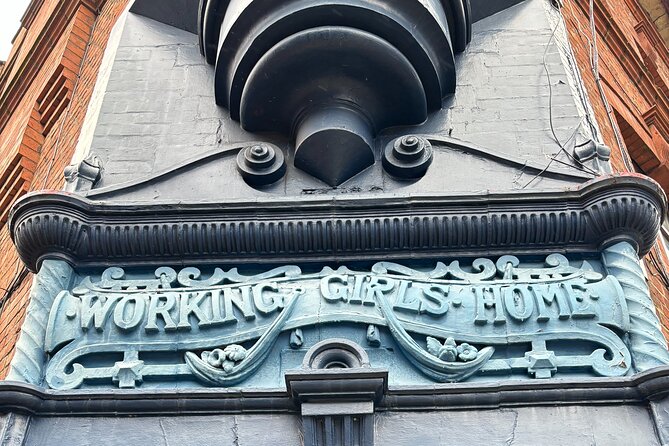
- Angel Meadow was once called Hell upon Earth: Friedrich Engels used those words for the area’s terrible poverty and living conditions.
- Dean Kirby leads the walk: He wrote Angel Meadow: Victorian Britain’s Most Savage Slum, a bestselling book about the district.
- The tour lasts about 90 minutes: It is long enough to build a clear story without taking up half your afternoon.
- The group is capped at 15 people: That makes it easier to hear the guide and ask questions.
- The route ends at Angel Meadow Park: You can continue exploring, walk six minutes to Shudehill bus station, or return with Kirby to the meeting point.
- Most of the old district is gone: New apartments and redevelopment now sit beside a few reminders of the former slum.
Why Angel Meadow matters to Manchester
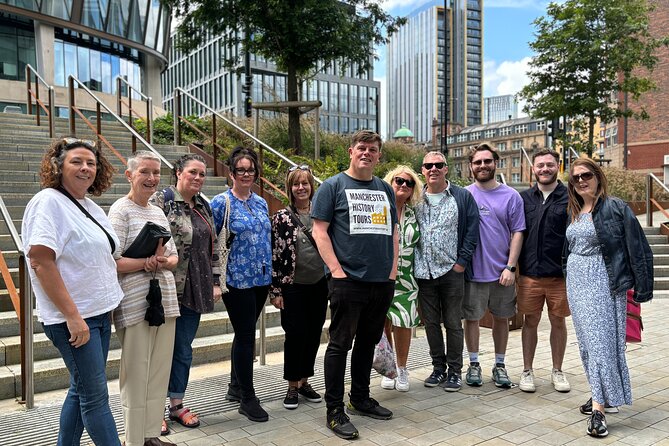
Manchester is often presented through cotton mills, grand civic buildings, canals, and commercial success. Angel Meadow gives you the other side of that story. Here, the Industrial Revolution was not an abstract economic change. It was a daily struggle for families living in crowded lodging houses and cellar dwellings beside the River Irk.
The district once held around 30,000 people. That number helps explain the scale of the problem. Angel Meadow was not a small pocket of hardship. It was a packed urban community shaped by poverty, industrial work, disease, poor housing, and constant pressure on families trying to survive.
The walk is valuable because it puts ordinary people back into Manchester’s story. You hear about families struggling to keep body and soul together, children connected with ragged schools, and gangs of scuttlers that made the streets feel unsafe. These details give the Industrial Revolution a human face.
You will not find a preserved Victorian neighborhood waiting intact. That is important to understand before booking. Redevelopment has changed much of the district, and some streets now look very different from the place described by Engels. Kirby’s skill as a writer matters here because the tour must recreate the past through explanation rather than a long line of original buildings.
More History Tours:
- Street Art: The Modern History of the Northern Quarter
★ 5.0 · 102 reviews - London Small Group Tour of Historical Pubs
★ 5.0 · 10,422 reviews - A History of Terror – Belfast City Centre Walking Tour
★ 5.0 · 2,883 reviews
Meeting Dean Kirby at St. Michael’s Flags
The walk begins at St. Michael’s Flags, near Sadler’s Cat on Hanover Street. The start time is 2 p.m., so you can fit it into an afternoon of sightseeing without giving up a full day. The meeting point is in central Manchester and close to public transportation.
The route then leads toward Angel Meadow Park and the River Irk. The change from a modern city street to a place associated with extreme Victorian poverty gives the opening a useful contrast. You are not simply looking at old architecture. You are learning how the city grew, who lived near its mills, and why this particular district gained such a grim reputation.
Kirby is a strong fit for this subject. He is not only a guide with an interest in the area. He wrote a book focused on Angel Meadow, so the tour reflects a sustained study of the district and its people. His approach is relaxed, with plenty of chances for questions. That matters on a subject that can otherwise become a string of dates and tragic facts.
The small-group format helps here. With no more than 15 people, you should be able to hear the guide without fighting through a large crowd. You can also ask for clarification when the story becomes complicated, particularly around the relationship between Manchester’s cotton wealth and the poverty found nearby.
Walking along the River Irk
The River Irk is one of the tour’s most meaningful settings. It was central to the lives of people in Angel Meadow, and the walk uses the river to explain why the area became so crowded and unhealthy.
As you walk, picture a district packed with lodging houses and cellar homes. Families were living close together because work and housing were tied to the rapid growth of the industrial city. The river was part of the setting, but it was also a reminder of how tightly people lived beside industry and poverty.
The route does not promise a preserved Victorian scene. Instead, the river helps establish a sense of place while Kirby fills in what has disappeared. This is where the tour’s storytelling does much of the work. You might look at an ordinary modern setting and then understand that it once held a far more crowded and desperate community.
I like this kind of historical walk because it asks you to read the city in layers. A road, a park, or a modern building may not look remarkable at first. Once you know what happened there, it becomes part of a larger story about work, housing, migration, family life, and urban growth.
You should wear comfortable shoes and expect some uneven movement through city streets and park paths. The tour is not recommended for anyone unable to manage steps, and a moderate level of physical fitness is required. The supplied information does not give a precise distance, so think of it as an active 90-minute walk rather than a quick talk at one location.
Angel Meadow Park and the vanished slum
Angel Meadow Park is both a destination and a useful place to reflect on what has changed. The route finishes beside the park entrance on Old Mount Street, at postcode M4 4GU. From there, Shudehill bus station is about a six-minute walk away.
The park offers a tree-lined setting in an area once associated with severe overcrowding. That contrast is part of what makes the stop effective. You are standing in a calmer modern space while hearing about a district remembered for conditions that Friedrich Engels called Hell upon Earth.
The tour also points toward streets where new apartments now sit beside former ragged schools. That mixture makes the story more complicated than a simple preserved heritage visit. Modern Manchester has not frozen Angel Meadow in time. It has built over much of the old district, leaving you to connect surviving traces with the guide’s account.
This can be a drawback if you want grand ruins, intact workers’ housing, or a museum filled with original objects. You will not get that here. You will get context, interpretation, and a sense of how quickly a city can replace the physical evidence of its past.
Kirby shows you the best places for photographs along the route, which is helpful in a neighborhood where the most important history may not be obvious in a picture. The strongest images may be less about a famous building and more about the contrast between the present-day park, modern apartments, and the story of the people who once lived nearby.
A few more trips worth a look before you book
- The Manchester City Stadium Tour
★ 5.0 · 4,176 reviews - Manchester: Canal & River Cruise
★ 4.4 · 3,761 reviews - Etihad Stadium: The Manchester City Stadium Tour
★ 4.8 · 3,096 reviews - From Manchester: North Wales, Snowdonia, and Chester Tour
★ 4.8 · 1,577 reviews
The people behind Manchester’s industrial success
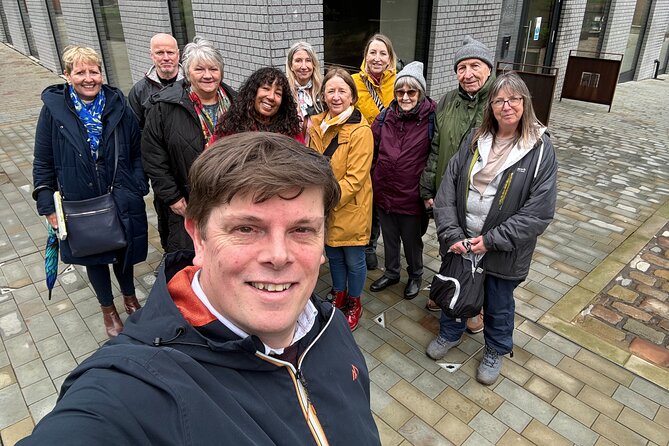
Angel Meadow helps correct the polished version of Manchester’s industrial story. Cotton mills and commercial wealth created opportunity, but that growth also depended on large numbers of workers living under punishing conditions.
The tour places about 30,000 people within that setting. You hear how families struggled in overcrowded lodging houses and cellar dwellings, while gangs of scuttlers added another threat to the streets. These details show that poverty was not only a question of low income. It shaped housing, safety, health, family life, and childhood.
The reference to ragged schools is especially useful. It reminds you that children in poor districts needed different forms of education and support from those available to wealthier families. The tour does not treat Angel Meadow as a collection of statistics. It follows the effects of poverty through the people and institutions that shaped daily life.
That human focus is the best reason to book. If you enjoy social history, urban history, or the less polished side of famous cities, you will get far more from this walk than from a standard sightseeing route. It also suits anyone who has already seen Manchester’s better-known industrial sights and wants to understand the lives behind them.
If your interest is limited to architecture, you may find the tour less satisfying. The area has changed too much for every stop to provide a clear Victorian view. You need to enjoy listening, asking questions, and building a picture in your head.
A relaxed tour with room for questions
The strongest praise for this experience centers on the guide’s style. Kirby explains the subject clearly, keeps the mood relaxed, and leaves time for questions. That is a good match for a difficult topic. Angel Meadow’s story includes poverty and suffering, but the walk is not presented as a grim lecture.
The chance to socialize with other people interested in history also adds value. A group of up to 15 is large enough to provide conversation but small enough to feel personal. You may find the setting particularly enjoyable if you prefer a guided walk to exploring historical sites alone.
Kirby’s book, Angel Meadow: Victorian Britain’s Most Savage Slum, gives the tour a strong foundation. You do not need to read it before arriving. Still, readers who enjoy the walk may want to use the book to continue exploring the area’s story afterward.
The guide’s role is especially important because so little of the old Angel Meadow remains. A less focused tour could leave you looking at redevelopment without understanding what once occupied the site. Here, the spoken account connects the modern city to its harsher Victorian past.
What the $27.62 price includes
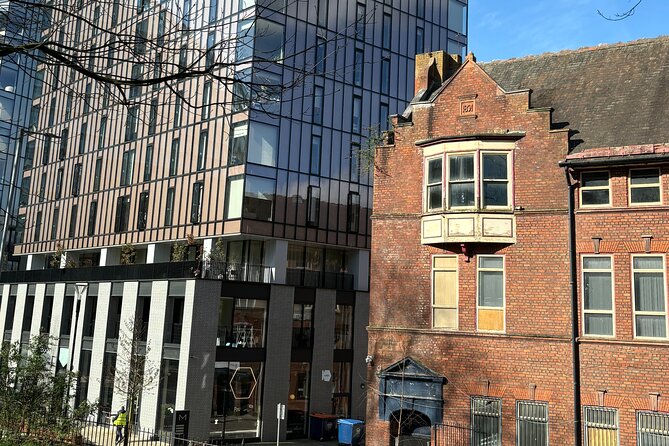
At $27.62 per person, this is reasonably priced for a focused 90-minute guided walk led by an author who has written a full book on the subject. You are paying for interpretation, local context, and the chance to ask questions rather than admission to a museum or access to a major monument.
That distinction helps you judge the value. If you want a large number of historic interiors or included attractions, this will not be the right kind of tour. If you value a specialist guide and a clear story about an overlooked part of Manchester, the price is easier to justify.
The tour also gives you the rest of the afternoon. After reaching Angel Meadow Park, you can continue exploring the area, walk to Shudehill bus station, or return with Kirby to the starting point. That flexible finish is useful if you are building a day around central Manchester.
It is also booked an average of 46 days in advance, so leaving it until the last minute may not work. A 100 percent recommendation rate and a five-star score from 65 reviews suggest strong demand, but the practical lesson is simply to reserve ahead if the date matters to you.
Weather, walking, and practical planning
This is an outdoor walk, and good weather is required. Manchester weather can change quickly, so bring suitable clothing and shoes even if the afternoon begins dry. If poor weather causes a cancellation, you are offered another date or a full refund.
You can cancel for a full refund up to 24 hours before the 2 p.m. start time. Changes made less than 24 hours before the start are not accepted, and the same 24-hour rule applies to refunds. The activity also requires a minimum number of people, so a cancellation is possible if that number is not reached. In that case, you are offered another date or experience, or a full refund.
Service animals are allowed. The tour is near public transportation, and the final location is close to Shudehill bus station. Do not book if steps are difficult for you, since the activity specifically requires the ability to negotiate them.
The meeting and finishing points are different. The walk begins near Sadler’s Cat, Hanover Street, Manchester M60 0AB, and ends beside Angel Meadow Park on Old Mount Street. Kirby will walk back with anyone who wants to return to the start, which removes some of the worry about finding your way back.
Who should book the Angel Meadow walk?
I would choose this tour if you want a serious but approachable look at Manchester’s working-class past. It suits history lovers, readers interested in the Industrial Revolution, and anyone who prefers a local story to a checklist of famous sights.
It is also a good choice if you enjoy asking questions. The small group and relaxed guide style give you a better chance to explore subjects that interest you, from housing and family life to street gangs and the role of ragged schools.
You may want to skip it if you have limited mobility, dislike outdoor walking, or need a tour built around preserved buildings. The modern redevelopment of Angel Meadow means you must be comfortable with an experience that relies heavily on words and imagination.
For most people with a moderate fitness level, the length is appealing. Ninety minutes is enough time for a proper historical account, yet short enough to combine with other Manchester plans.
Should you book it?
Book this Angel Meadow tour if you want to understand the human cost behind Manchester’s industrial wealth. Dean Kirby’s connection to the subject, the small group, and the steady pace make $27.62 good value for a focused history walk.
Go with realistic expectations. You will not see an untouched Victorian slum. You will walk through a changed neighborhood and use Kirby’s explanation to picture the crowded streets, cellar homes, schools, mills, and families that once shaped it. For an authentic look at an overlooked part of Manchester, that is precisely the point.
FAQ
Where does the Angel Meadow tour begin?
It begins at Sadler’s Cat on Hanover Street, Manchester M60 0AB.
Where does the tour finish?
It finishes beside the entrance to Angel Meadow Park on Old Mount Street, postcode M4 4GU.
What time does the tour start?
The tour starts at 2 p.m.
How long does the experience last?
It lasts approximately 1 hour and 30 minutes.
How much does the tour cost?
The listed price is $27.62 per person.
What language is the tour offered in?
The tour is offered in English.
How large is the tour group?
The maximum group size is 15 people.
Is the tour suitable for people with limited mobility?
You should have a moderate level of physical fitness and be able to negotiate steps. The tour is not recommended for anyone unable to manage steps.
Are service animals allowed?
Yes, service animals are allowed.
Can I cancel for a refund?
Yes. You can receive a full refund if you cancel at least 24 hours before the experience starts. Changes or cancellations made less than 24 hours before the start are not accepted for a refund.
What happens if the weather is poor?
If poor weather causes the tour to be canceled, you are offered a different date or a full refund.
Recently added around Manchester
- Manchester: Alcotraz Immersive Cocktail Experience Ticket★ 4.9 · 57 reviews
- Derbyshire & the Peak District from Manchester★ 4.5 · 64 reviews
- Manchester: Afternoon walking tour★ 4.8 · 66 reviews
- From Manchester: Lake District Sightseeing Day Trip★ 4.7 · 69 reviews
- Manchester: Food and Drinks Walking Tour★ 4.9 · 70 reviews
- Manchester: Silent Disco Adventure Tour★ 5.0 · 72 reviews
- Lake District from Manchester Including Lake Cruise★ 5.0 · 74 reviews
- Manchester Private Tour with a Local – Highlights & Hidden Gems★ 4.5 · 76 reviews
Historical Tours, compared.
A History of Terror – Belfast City Centre Walking Tour
Read our review →
Old Town Walking Tour History and Tales in Edinburgh
Read our review →
Shadows of York: Ghost Walk and Horrible History.
Read our review →
Multi-Sensory Small-Group Historic Vaults Tour in Edinburgh
Read our review →
Browse the lists this tour appears in