

Reviewed · HISTORICAL TOURS
Street Art: The Modern History of the Northern Quarter
Manchester’s walls tell a complicated story. This two-hour walking tour uses Northern Quarter street art to explain how a declining district changed after the 1970s, while keeping its focus on public space, social justice, and local voices. I like the ceramic art trail and the chance to spot film locations and artworks that rarely appear in standard city guides. I also like that 10% of profits support local causes.
The main consideration is that this is not a light sightseeing stroll. You will hear about gentrification, political influence, lost public space, and the forces that reshaped the neighborhood. That makes the tour more rewarding for curious visitors, but less suitable if you want only colorful walls and quick photo stops.
In This Review
- Key points about this Northern Quarter walk
- Why the Northern Quarter needs more than a street art checklist
- Starting at Shudehill at 11:00 a.m.
- The ceramic art trail and the power of public art
- Contemporary street art beyond the usual guidebook stops
- Hayley’s local perspective and the value of a real voice
- Gentrification, social justice, and the cost of change
- Film locations and details you could miss alone
- What the two-hour format gives you
- Who should book this Northern Quarter experience
- Should you book it?
- FAQ
- Where does the tour begin?
- What time does the tour start?
- Where does the tour finish?
- How long does the experience last?
- How much does the tour cost?
- How large can the group be?
- What happens if the weather is poor?
Key points about this Northern Quarter walk
- A 25-year story told through street art: See how public art helped change a district once marked by decline and empty buildings.
- A social and political tour: Expect discussion of gentrification, counterculture, social justice, and the loss of public space.
- Less obvious stops: The route includes artworks, streets, installations, and film locations that you might miss on your own.
- A local guide with personal insight: Hayley has been praised for her engaging explanations and her links to Manchester’s art scene.
- A small contribution to local causes: Ten percent of profits goes to worthy local organizations.
- Simple city-center timing: The walk begins at Shudehill at 11:00 a.m. and finishes near Black Dog Ballroom after about two hours.
Why the Northern Quarter needs more than a street art checklist
The Northern Quarter is now one of Manchester’s best-known areas for independent culture, food, nightlife, and street art. Yet the tour asks you to look past the polished version of the district.
Its story begins with decline. In the 1970s, the area lost business and attention after the opening of the Arndale Centre, Manchester’s first American-style shopping mall. The old streets and buildings no longer drew the same trade. By the early 1990s, Tony Wilson described the district as our Detroit, a sharp phrase that captured the scale of the evacuation.
That context matters because the art did not appear in a vacuum. Empty buildings and neglected streets created room for new ideas. Public art helped make the area feel active again, but the tour also asks who benefited from that change and what was lost along the way.
I appreciate that balance. It is easy to tell a simple story in which street art saves a neighborhood. This walk treats the subject with more care. Art can bring attention, visitors, and money, but those changes can also push up costs and alter the character of a place.
The Northern Quarter has the highest density of protected buildings in Manchester, adding another layer to the story. You are not only looking at murals and installations. You are also walking through a collection of older streets and structures that survived when the area was out of favor.
More History Tours:
- Angel Meadow Manchester History Tour with Author Dean Kirby
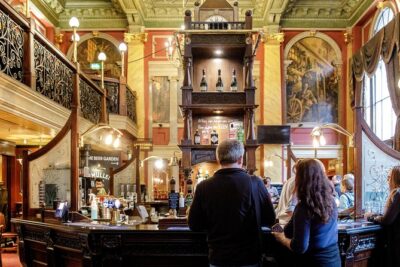
★ 5.0 · 65 reviews - London Small Group Tour of Historical Pubs
★ 5.0 · 10,422 reviews - A History of Terror – Belfast City Centre Walking Tour
★ 5.0 · 2,883 reviews
Starting at Shudehill at 11:00 a.m.
The tour begins at Shudehill, Manchester M4, at 11:00 a.m. This is a practical start point because the area is close to public transportation, and you can reach it without making a separate trip across the city.
The exact stop-by-stop route is not presented as a standard checklist, which suits the subject. The experience is built around the streets, art, and stories encountered along the way. You should expect a walking tour rather than a sequence of formal attractions with admission desks.
The group can include up to 30 people. That is not a tiny private walk, so your experience may depend partly on where you stand and how well you can hear. At the same time, a group of this size can suit a city walking tour because it keeps the price at $20.70 per person while still allowing questions.
Wear shoes you can walk in and bring clothing suited to Manchester weather. The experience requires good weather, and poor conditions can lead to a new date or a full refund. The tour also requires a minimum number of participants, so cancellation is possible if that number is not reached.
The ceramic art trail and the power of public art
One of the tour’s most distinctive features is its ceramic art trail. This is not simply a row of decorative pieces for quick photographs. It forms part of the explanation of how art helped draw attention back to the Northern Quarter.
Ceramic work also gives you a different way to read the area. Large painted walls are easy to notice, but smaller installations and public artworks can become part of the streetscape. Without guidance, you might pass them without understanding their role or even seeing them at all.
The trail shows how public art can change the feeling of a district without requiring a museum ticket. It places culture in everyday spaces, where people shop, work, walk, and meet. That makes the subject especially useful if you want to understand how a city uses art outside traditional galleries.
You will also hear about political influences around the art. That detail is important. Street art is not always neutral decoration. Choices about what gets displayed, which spaces are permitted, and how an area is promoted can reflect wider decisions about the city.
The tour appears to treat these works as part of a living argument. You are encouraged to consider who controls public space and how public art can support a community, attract investment, or become part of a marketing image.
Contemporary street art beyond the usual guidebook stops
The walk includes contemporary street art and streets that are not usually found in quick online lists. That is a strong reason to choose a guided route instead of simply searching for a few famous walls.
I like this approach because a checklist can make street art feel strangely static. You find a wall, take a picture, and move on. A guide can connect separate works to the area’s changing identity, helping you notice how the art fits the buildings and the people using the streets.
The route may also reveal pieces you have walked past before. One especially useful aspect of the experience is its focus on observation. Even someone who has lived in Manchester for many years could see familiar streets differently after learning what to look for.
The art is not presented as a single style. The tour includes installations as well as street art, giving you a broader idea of how creative work occupies public space. You should come prepared for discussion as much as photography.
If your main goal is to see the largest or most famous murals in Manchester, this may not be the ideal tour. Its appeal is less about collecting iconic images and more about understanding the Northern Quarter through works that support a wider story.
A few more trips worth a look before you book
- London: Street Art and Graffiti Guided Walking Tour
★ 4.9 · 1,354 reviews - London Bike Tour: Landmarks, Secret Gems, Pub Stop & Street Art
★ 5.0 · 943 reviews - Glasgow Street Art Daily Walking Tour: 2pm
★ 5.0 · 648 reviews - Shoreditch Street Art Tour London
★ 5.0 · 481 reviews
Hayley’s local perspective and the value of a real voice
Hayley is the guide most closely associated with this experience, and her style has been praised for being engaging, clear, and full of useful detail. Her strongest contribution appears to be the way she connects the art with the city’s past and present.
That matters on a subject that can easily become either too academic or too shallow. A guide who knows the area’s counterculture can explain why certain works matter without turning the walk into a lecture. Hayley’s anecdotes about the fish market add a more human side to the tour, showing how everyday places fit into the Northern Quarter’s story.
You can also ask for advice about where to eat and what else to see. That is useful because the tour finishes in the middle of the Northern Quarter, not at an isolated attraction. You can continue exploring afterward, stop for food, or use the information to shape the rest of your day.
The word anti-tour in the provider’s name gives you a fair sense of the approach. This is not designed as a polished, purely promotional account of Manchester. It gives attention to tensions and awkward questions, including what happens when counterculture becomes part of a district’s appeal.
Gentrification, social justice, and the cost of change
The most serious part of the tour is its discussion of gentrification. The Northern Quarter’s revival brought attention and activity, but change can affect rents, local businesses, residents, and access to public space.
You do not need a specialist background to follow this section. The street itself supplies the setting. As you move through the district, the guide can connect the visible art and architecture with less visible decisions about development and ownership.
I value this because it keeps the walk from becoming a feel-good story about urban renewal. A city can preserve old buildings and add attractive public art while still becoming harder for some people to afford. Those issues are not separate from the street art. They are part of the same process.
The discussion of social justice also gives the experience wider relevance. You are not only learning about one Manchester neighborhood. You are considering how cities decide who gets space, whose culture is supported, and how creative districts change once they become popular.
This is where the tour may divide opinions. Some people want a relaxed art walk and may find the political discussion heavier than expected. I see that as a feature, but you should choose this experience only if you are willing to give the subject your attention.
Film locations and details you could miss alone
The tour includes off-the-path film locations, another welcome change from a standard street art route. These sites add a layer of popular culture to the walk without taking over its main purpose.
Film locations can be easy to overlook because they often look ordinary when no cameras are present. A guide gives you the context needed to recognize why a particular street or building mattered on screen.
This part should appeal to visitors who enjoy seeing a city through several lenses at once. You get architecture, public art, local politics, and film history in the same two-hour route. The mix keeps the walk from feeling repetitive.
Still, the experience is not described as a dedicated film tour. If film locations are your top priority, you may want something more focused. Here, they work as supporting details within the larger story of the Northern Quarter.
What the two-hour format gives you
Two hours is a sensible length for this kind of walk. It gives the guide enough time to explain the area’s decline, revival, art, and current problems without taking up an entire day.
The route begins at 11:00 a.m., leaving you with plenty of time afterward for lunch, more sightseeing, or a self-guided return to favorite streets. Since the end point is Black Dog Ballroom at 52 Church Street, Manchester M4 1PW, you finish close to the heart of the area.
The walk is listed as free admission, meaning there is no separate attraction ticket included or required. The price of $20.70 pays for the guided experience, local interpretation, and the structure that helps you notice details you might otherwise miss.
For me, the value is strongest if you care about context. You are paying less for access to a monument and more for an informed reading of the neighborhood. If you would rather wander alone and photograph whatever catches your eye, the cost may feel less worthwhile.
A mobile ticket keeps the arrangement simple. Confirmation arrives at booking, and the experience is near public transportation. Service animals are allowed, and most people can participate, though the practical demands of a walking tour mean you should be comfortable spending about two hours on foot.
Who should book this Northern Quarter experience
I would recommend this tour to you if you enjoy urban history, public art, local politics, or the way cities change. It also suits repeat visitors and Manchester residents who have already seen the main sights but want a closer look at familiar streets.
You will get the most from it if you ask questions. The guide can offer advice about food and other places to see, and the subject opens naturally into discussion about art, planning, culture, and community life.
This is a good choice for visitors who want an experience with a local purpose. Ten percent of profits goes to local causes, so part of your payment supports work beyond the tour itself.
I would be more cautious about booking it for young children who need constant movement or for anyone expecting a purely cheerful sightseeing walk. The subjects are serious, and the value comes from listening and thinking as much as from taking photographs.
Should you book it?
Book this Northern Quarter street art tour if you want more than a collection of colorful walls. Its best features are the ceramic art trail, less obvious artworks, Hayley’s local stories, and the honest discussion of gentrification and public space.
The $20.70 price is fair for a two-hour guided walk, especially with 10% of profits going to local causes. Choose it for insight and conversation, not for a fast list of famous sights.
If the weather forecast is poor, wait for a better day. You can cancel for a full refund up to 24 hours before the 11:00 a.m. start, while cancellations or changes inside that window are not refundable. For curious visitors who want to understand why the Northern Quarter looks the way it does, this is a thoughtful and worthwhile way to spend a morning.
FAQ
Where does the tour begin?
The tour begins at Shudehill in Manchester, M4.
What time does the tour start?
The scheduled start time is 11:00 a.m.
Where does the tour finish?
The walk ends at Black Dog Ballroom, 52 Church Street, Manchester M4 1PW.
How long does the experience last?
The walking tour lasts approximately two hours.
How much does the tour cost?
The listed price is $20.70 per person.
How large can the group be?
The experience allows a maximum of 30 participants.
What happens if the weather is poor?
If poor weather causes cancellation, you will be offered a different date or a full refund. The same options apply if the minimum number of participants is not reached.
Recently added around Manchester
- Manchester: Alcotraz Immersive Cocktail Experience Ticket★ 4.9 · 57 reviews
- Derbyshire & the Peak District from Manchester★ 4.5 · 64 reviews
- Angel Meadow Manchester History Tour with Author Dean Kirby★ 5.0 · 65 reviews
- Manchester: Afternoon walking tour★ 4.8 · 66 reviews
- From Manchester: Lake District Sightseeing Day Trip★ 4.7 · 69 reviews
- Manchester: Food and Drinks Walking Tour★ 4.9 · 70 reviews
- Manchester: Silent Disco Adventure Tour★ 5.0 · 72 reviews
- Lake District from Manchester Including Lake Cruise★ 5.0 · 74 reviews
Historical Tours, compared.
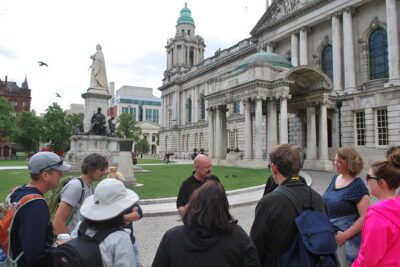
A History of Terror – Belfast City Centre Walking Tour
Read our review →
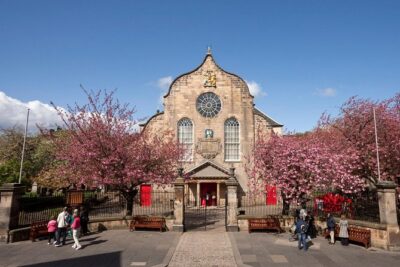
Old Town Walking Tour History and Tales in Edinburgh
Read our review →
Shadows of York: Ghost Walk and Horrible History.
Read our review →
Multi-Sensory Small-Group Historic Vaults Tour in Edinburgh
Read our review →
Browse the lists this tour appears in