
Reviewed · ROMAN BATHS TOURS
Bath: City Walking Tour with Optional Roman Baths Entry
Bath rewards a good first walk. This 90-minute to two-hour tour links Roman remains, Georgian grandeur, and Bath’s most famous streets in one tidy route. I like the way it gives you the city’s shape before you decide what deserves more of your time.
I especially like the mix of major sights and local stories, from Pulteney Bridge to the Royal Crescent. I also like the guides’ easy, personal style. George, Jamie, John, Tom, Ewan, Anna, and others are repeatedly praised for humour, patience, and strong local knowledge. The main consideration is that the Roman Baths visit is self-guided, not a continuation of the walking tour, and the optional entry can add another 1.5 to 2 hours.
In This Review
- Key points to know before booking
- A strong first look at Bath in two hours
- Bath Abbey and the city centre
- Pulteney Bridge and the River Avon
- The Roman Baths and the hot springs
- The Pump Rooms, Assembly Rooms, and Georgian ambition
- The Royal Crescent and the Circus
- How the guides shape the experience
- Price, timing, and overall value
- Who will enjoy this Bath walking tour?
- Should you book it?
- FAQ
- How long does the Bath walking tour last?
- What sights are included in the walking tour?
- Is entry to the Roman Baths included?
- Is the Roman Baths visit guided?
- What language is the tour conducted in?
- Where does the tour meet?
- Is a private group available?
- What is the cancellation policy?
Key points to know before booking

- Bath Abbey starts the story: Meet in the city centre and begin near one of England’s finest examples of perpendicular Gothic architecture.
- Pulteney Bridge is a film-famous viewpoint: Walk across its Palladian design, known to many from Les Misérables.
- The Royal Crescent and Circus explain Georgian Bath: You see grand architecture while learning how 18th-century wealth shaped the city.
- The Roman Baths option is separate: The guide leads you to the entrance, but inside you follow the audio guide at your own pace.
- Early departures can be especially pleasant: A 9 a.m. start may mean quieter streets and easier listening.
- Expect a proper city walk: One recent description notes an easy route with a small hill near the end, so sensible shoes are useful.
A strong first look at Bath in two hours
Bath can feel confusing at first. The centre is compact, but its story runs from Celtic and Roman settlement to 18th-century fashion, politics, and building projects. This tour gives you a useful framework before you explore alone.
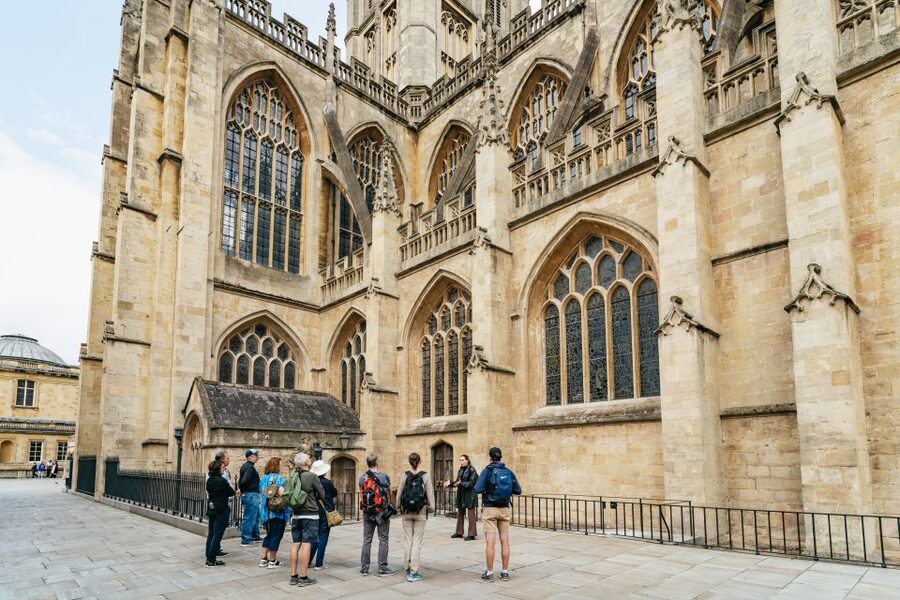
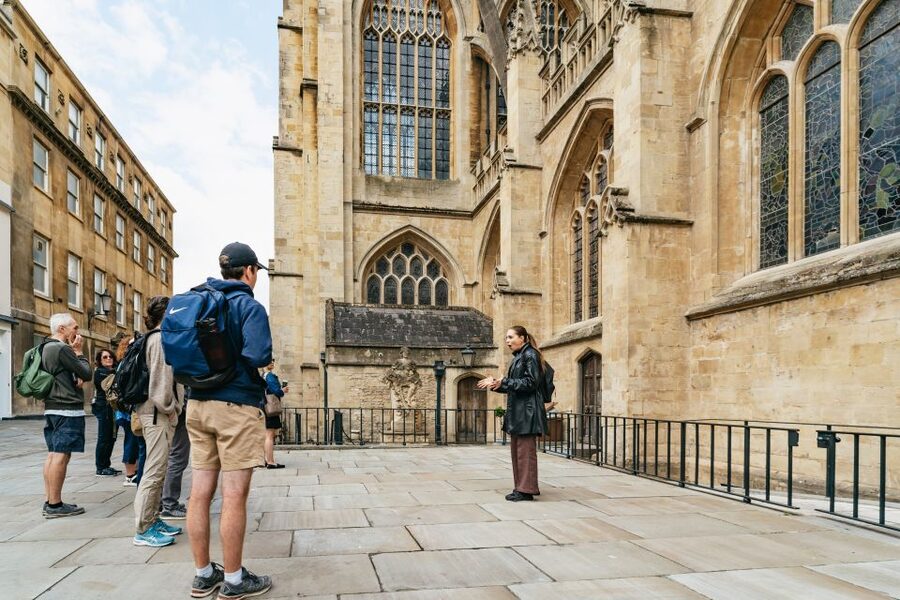
The walk begins at Bath Abbey, usually in the morning or afternoon. The exact meeting point can vary by the option you book, so check your confirmation carefully. Once the group gathers, the guide sets off through central Bath, connecting the major sights rather than treating them as isolated photo stops.
This is a good format if you have only one day in Bath. You get an overview of the city, then you can return to the places that caught your attention. A family group that included people familiar with the area as well as first-time visitors found the pace worked for everyone, which says something about the tour’s broad appeal.
The guides seem to be the heart of the experience. Tom is praised for his passion and clear explanations. Jamie is often described as funny, friendly, and good at involving the whole group. George brings facts and humour, while John is praised for his personal anecdotes and calm delivery. Ewan is noted for covering a lot without rushing.
That variety matters. A walking tour depends heavily on the person holding the umbrella, and here the guide usually does more than recite dates. You get stories, questions, local observations, and explanations of why Bath looks the way it does.
More City Tours in Bath
- Roman Baths and Bath City Walking Tour
★ 4.5 · 762 reviews - Bath: Guided City Walking Tour with Entry To The Roman Baths
★ 4.8 · 343 reviews - Bath Tootbus Hop-on Hop-off Sightseeing Bus Tour
★ 4.5 · 247 reviews
Bath Abbey and the city centre
Bath Abbey is a sensible meeting point because it places you right in the middle of the city’s Roman and Georgian core. The building is presented as a major example of perpendicular Gothic architecture, with the guide using it to introduce Bath’s long religious and civic story.
The walk also takes in the Pump Rooms, a building closely tied to Bath’s spa tradition, before moving toward the Upper Assembly Rooms. These places help explain how Bath developed into an 18th-century social centre for wealthy visitors.
The strength here is context. You are not simply told that a building is old or attractive. The guide shows how religion, health, fashion, and social life helped shape the city. That makes the later Georgian streets easier to understand.
Do not expect a full interior visit to every important building. One person specifically wished the tour had included access inside more of the key structures. That is a fair limitation. This is primarily an outdoor walking tour, so you should think of it as an introduction to Bath’s architecture, not a series of indoor visits.
The central streets can also become busy later in the day. One early-morning departure at 9 a.m. was particularly well suited to hearing the guide and taking in the city before it filled up. If you want the clearest views and the calmest pace, an early start is worth considering.
Pulteney Bridge and the River Avon
Pulteney Bridge is one of Bath’s most memorable stops. Its Palladian design crosses the River Avon, and its unusual shop-lined form gives it a character quite different from an ordinary bridge.
The guide uses the bridge to discuss Bath’s architecture and growth. You also get a good chance to see the relationship between the river, the city centre, and the grand buildings along the water.
The bridge has a strong screen connection too. It appeared in Les Misérables, which gives you an easy visual reference, but the real interest is architectural. The Palladian style favours balance, order, and classical proportion, all ideas that appear again in Bath’s Georgian buildings.
This stop is also useful for orientation. After seeing the bridge, you have a clearer sense of how the centre fits together. The route is on foot, and the tour covers a fair amount of ground, but several people describe the pacing as comfortable rather than hurried.
The Roman Baths and the hot springs
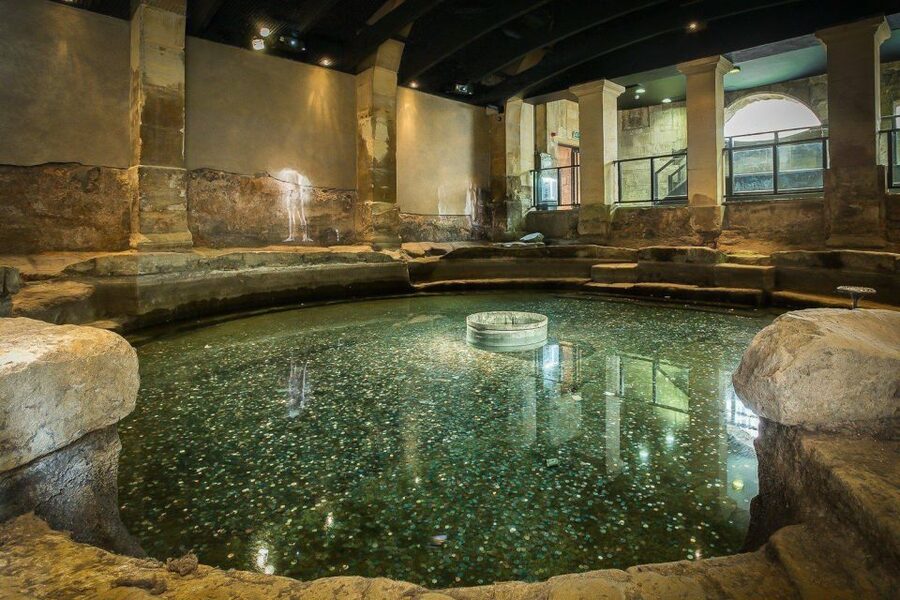
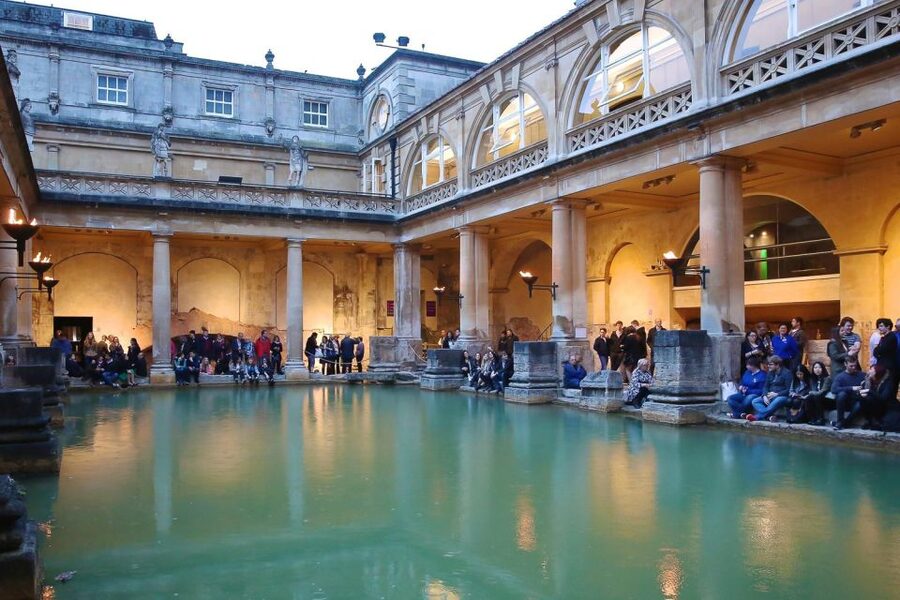
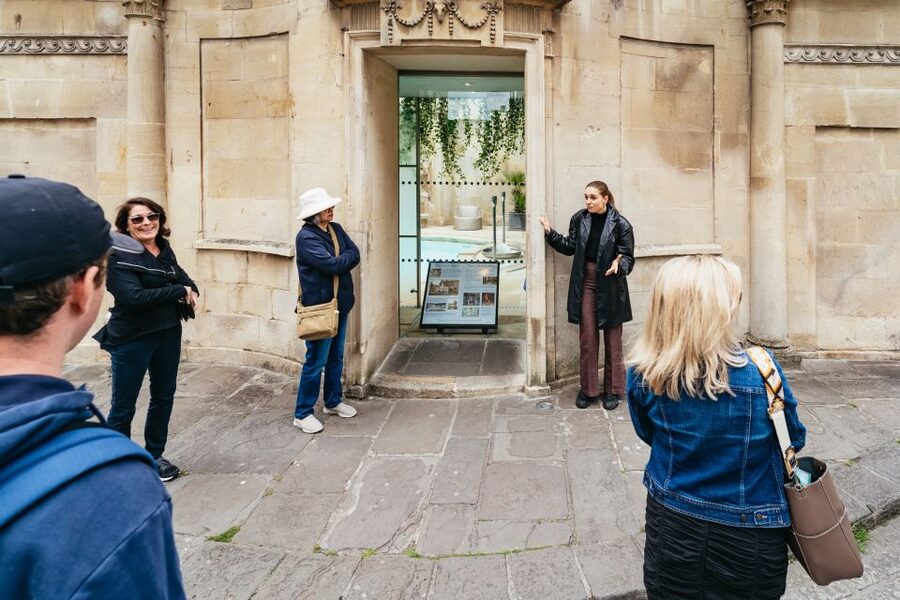
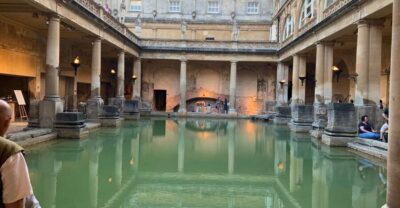
The optional Roman Baths entry adds the most obvious ancient attraction to the day. Your guide leads you to the Roman Baths, where you see objects and remains connected with Roman occupation and the geothermal springs beneath Bath.
The hot water is the key fact here. Bath’s springs made the site special long before the Georgian city took shape, and the Roman complex shows how people built around that natural phenomenon. The displays help you picture the baths as part of a functioning ancient settlement rather than just a collection of old stonework.
There is an important practical distinction. The walking guide does not continue through the Roman Baths. You receive entry if you choose that option, then use the audio guide inside. One visitor found the self-guided visit informative and considered the baths well worth the extra time. Another wished the city guide could have continued inside, since the guide’s explanations had been so effective outdoors.
The venue may also feel crowded. At busy times, it can be difficult to see every part of the baths comfortably. If the Roman remains are your main reason for booking, allow enough time and avoid treating the advertised tour length as the total duration. The walk lasts 1.5 to 2 hours, while the Roman Baths can require another 1.5 to 2 hours, making roughly 3.5 to 4 hours for both parts a sensible allowance.
If you only want the city walk, you can skip the entry option. If you have never visited Bath before, I think the combination makes better sense because the Roman site explains the beginning of the city’s story.
More Walking Tours in Bath
- Walking Tour of Bath with Blue Badge Tourist Guide
★ 5.0 · 1,877 reviews - Bath: Guided Walking Tour
★ 4.9 · 1,198 reviews - Best of Bath Walking Tours – Georgian Tour
★ 5.0 · 449 reviews - Bath: Bridgerton Filming Locations Walking Tour with Music
★ 4.7 · 416 reviews
The Pump Rooms, Assembly Rooms, and Georgian ambition
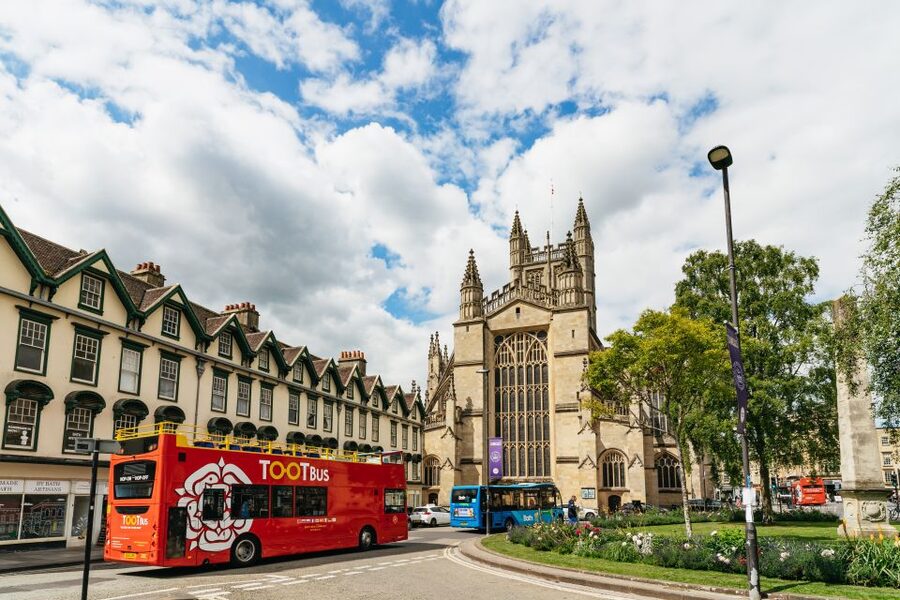
Bath’s Georgian identity comes into focus after the Roman section. The route moves from the central Pump Rooms toward the Upper Assembly Rooms, then on to the Royal Crescent and the Circus.
The Assembly Rooms represent the social side of 18th-century Bath. This was a city where wealthy visitors came not only for the springs but also to see and be seen. The guide’s job is to make that world understandable without turning the walk into a lecture, and the strongest guides do this with short stories and humour.
The buildings also reveal the planning behind Bath. The city was not shaped by one grand palace alone. Its character comes from streets, terraces, squares, and curved facades working together.
I find this part especially useful because it explains why Bath feels so different from many English cities. The architecture is not random. The materials, proportions, and repeated forms create a unified look, even when you are walking through several separate areas.
The Royal Crescent and the Circus
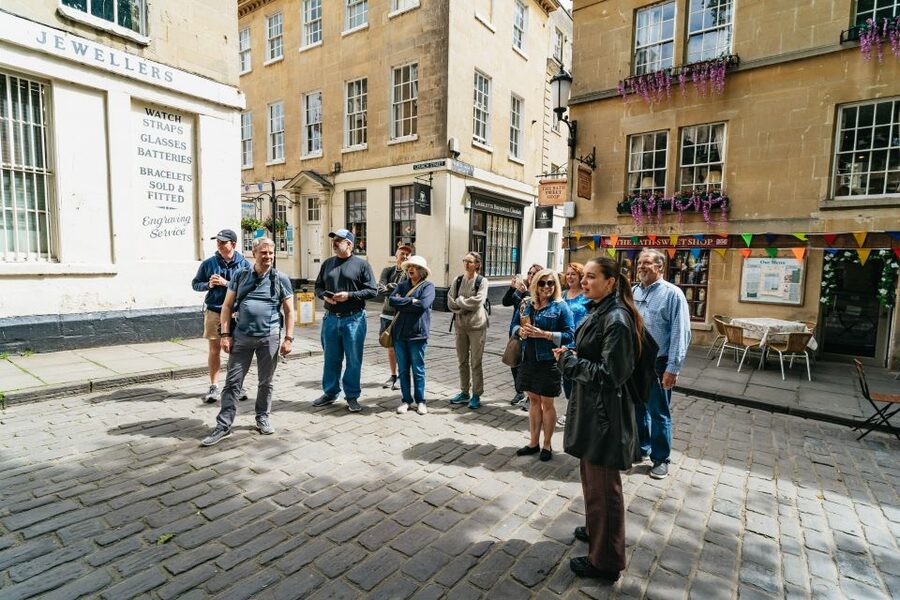
The Royal Crescent is the grand finale for many people. Its sweep of 30 Grade I listed houses is widely regarded as England’s finest example of Georgian architecture. From the outside, the crescent looks like one immense palace, though it is made up of separate homes.
The guide explains the building’s place in Bath’s development and the social world behind its polished facade. You will hear about the city’s growth, the people who shaped it, and the contrast between public elegance and private life.
The Circus provides a different architectural lesson. Its circular arrangement is more mysterious and inward-looking than the open sweep of the Royal Crescent. The guide uses the site to explain the thinking behind this architectural masterpiece, including how the buildings relate to one another.
These are not quick stops. You normally pause to look, listen, and take photographs, although the exact time depends on the group and guide. Anna, for example, was praised for explaining Bath’s architecture in detail, while Jamie was noted for his enthusiasm and willingness to answer questions.
The final part of the route includes a small hill, according to one account of the walk. It is not described as a demanding climb, but you should still wear comfortable shoes. Bath’s beauty comes with steps, slopes, and plenty of walking.
How the guides shape the experience
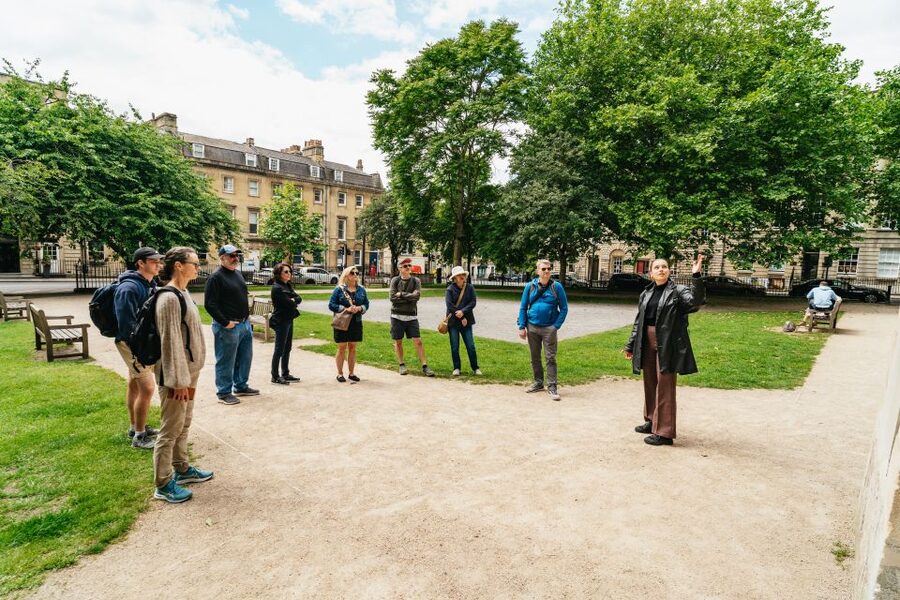
The most consistent strength is the guide. That is not a minor detail. A city such as Bath is full of famous facades, but a good explanation turns them into places with purpose and personality.
You might be led by George, Jamie, John, Tom, Ewan, Anna, William, Marcel, or another member of the local team. George is repeatedly praised for making Bath’s change from a small settlement to a grand Georgian city easy to follow. Jamie is singled out for energy, humour, and the ability to bring quieter people into the conversation.
John receives praise for personal stories and a pleasant speaking voice. That may sound small, but it matters on a walking tour. Clear delivery makes it easier to listen for two hours, especially outdoors.
There are minor differences between guides. One Jamie spoke very quickly because of his enthusiasm, and one early-morning group noted that headphones might have helped with a larger crowd. Neither point ruins the experience, but they show why a small group and a quiet start can improve the walk.
The guides also appear willing to adapt. One guide patiently dealt with a guest who had been given the wrong meeting point. Another gave a small group extra time. These details suggest a friendly service style, though your exact experience will depend on the guide assigned that day.
Price, timing, and overall value
At $26 per person, the walking tour is reasonably priced for a focused introduction to Bath. You are paying for a local guide, a carefully planned route, and a donation to Bath Abbey. That is good value if you would otherwise spend your first hours trying to work out the city by yourself.
The Roman Baths entry is an optional addition. The value depends on your plans. If you already intend to visit the baths, pairing the ticket with the city walk is convenient. If you are short on time or mainly want Georgian architecture, the walk alone may be enough.
The advertised duration is 1.5 to 2 hours. In practice, allow more time if you add the Roman Baths, as the interior visit is self-guided and can take another 1.5 to 2 hours. You also need time for photographs, questions, and your own later exploration.
The activity is non-refundable, so choose your date and time with care. English is the tour language, and private groups are available if you want a more personal format. The meeting point may change according to the option selected, so do not rely only on the general description.
Who will enjoy this Bath walking tour?

I would recommend it most strongly to first-time visitors, people making a day trip, and anyone who wants the major sights explained in a logical order. It also suits families and mixed groups because the guides use humour and questions rather than relying only on formal commentary.
It works well for visitors who like architecture but do not want a specialist lecture. You see the Abbey, bridge, Roman site, Pump Rooms, Assembly Rooms, Royal Crescent, and Circus, while the guide explains the forces behind Bath’s growth.
You may want something else if you require a fully guided Roman Baths visit. The optional entry comes with an audio guide, not the same person who led you through the city. You may also prefer independent wandering if you dislike keeping to a route or listening within a group.
For the best experience, I would choose an early departure if available. The 9 a.m. start has been especially effective for quiet streets, clear sound, and smaller groups. Bring shoes suited to steady walking, and allow four hours if you plan to take your time at the baths.
Should you book it?
Yes, if you want a well-organized introduction to Bath rather than a bare list of landmarks. The combination of Pulteney Bridge, Bath Abbey, the Roman story, and the city’s Georgian masterpieces gives you a useful picture of what makes Bath special.
Book the Roman Baths option if the ancient springs are high on your list, but remember that the interior visit is self-guided. Choose the walking tour alone if you mainly want orientation, architecture, and local stories.
At $26, the tour offers strong value, particularly with a lively guide such as George, Jamie, John, Tom, Anna, or Ewan. I would book it early in the day, listen closely, then use the rest of your time to revisit the places that made you stop and look twice.
FAQ
How long does the Bath walking tour last?
The walking tour lasts between 1.5 and 2 hours. If you add the Roman Baths, allow another 1.5 to 2 hours for the self-guided visit.
What sights are included in the walking tour?
The route includes Bath Abbey, Pulteney Bridge, the Pump Rooms, the Upper Assembly Rooms, the Royal Crescent, and the Circus. It also takes you to the Roman Baths if you select the entry option.
Is entry to the Roman Baths included?
Roman Baths entry is included only if you choose the option that includes it. The standard walking tour does not automatically include admission.
Is the Roman Baths visit guided?
The walking guide leads you to the Roman Baths, but does not continue inside. You explore the site with an audio guide.
What language is the tour conducted in?
The live tour guide speaks English, and the activity is listed as English-language only.
Where does the tour meet?
The usual starting area is Bath Abbey in the city centre. The exact meeting point may vary depending on the option you book, so check your booking details.
Is a private group available?
Yes. A private group option is available.
What is the cancellation policy?
The activity is non-refundable. Check your plans carefully before booking.
More Roman Baths Visits
- Bath: Roman Baths Entry Ticket with Audio Guide
★ 4.7 · 425 reviews - Bath: Bath Abbey and Discovery Centre Entry
★ 4.7 · 132 reviews - Roman Baths Entry and Walking Tour with Blue Badge Tour Guide
★ 5.0 · 58 reviews - London: Windsor, Stonehenge, Bath, and Roman Baths Day Trip
★ 4.5 · 5,131 reviews
Recently added around Bath
- Roman Baths Entry and Walking Tour with Blue Badge Tour Guide★ 5.0 · 58 reviews
- Discover Bath and Bridgerton with Music★ 4.6 · 64 reviews
- BATH: Private Walking Tour | Blue Badge Guide, 2h, £225 per group★ 5.0 · 66 reviews
- Exceptional Bath tour guide making your visit splendidly memorable.★ 4.5 · 69 reviews
- Jane Austen’s Bath And History Trail★ 5.0 · 77 reviews
- The ‘Hidden Cotswolds’ Shared Tour from Bath for 2-8 people★ 5.0 · 83 reviews
- BATH: 2-Hour Bath Walking Tour of Bridgerton Filming Locations★ 5.0 · 99 reviews
- Bath: Guided Relaxation and Sound Bath★ 4.8 · 108 reviews
Roman Baths Tours, compared.
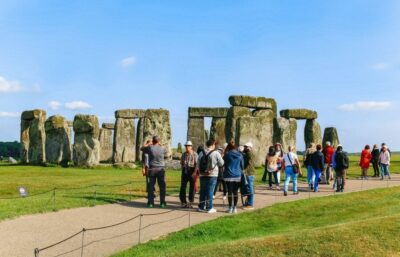
Windsor, Stonehenge, Bath, and Roman Baths Day Trip
Read our review →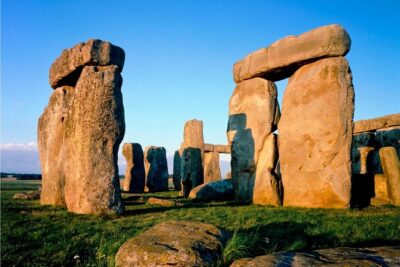
Stonehenge and Bath Day Trip from London with Optional Roman Baths Visit
Read our review →
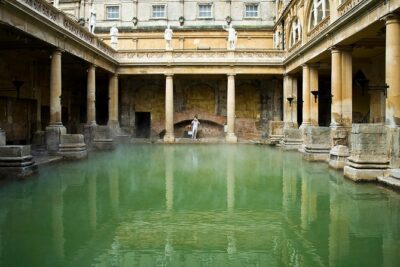

Stonehenge & Bath Day Trip with Optional Roman Baths
Read our review →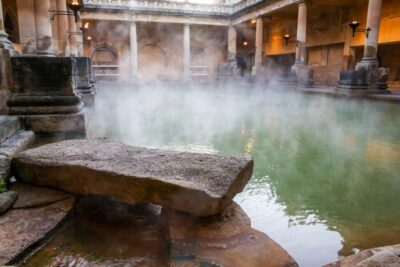
Guided City Walking Tour with Entry To The Roman Baths
Read our review →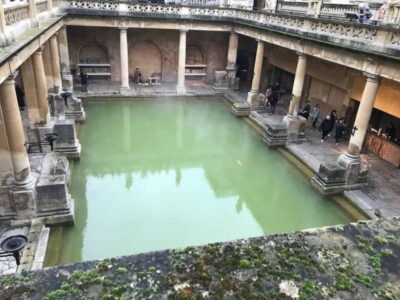
Stonehenge, Bath, Windsor and Roman Baths London Day Tours
Read our review →Browse the lists this tour appears in