
Reviewed · BELFAST TOURS
Belfast Troubles Tour: Walls and Bridges
Belfast’s past is written on its walls. This private walking tour connects City Hall, the Peace Wall, murals, old lanes, and the city’s wider story, giving you far more than a quick look at the Troubles. I like the local perspective, especially when guides such as Arthur Magee or Steve add personal memories to the history. I also like that the tour visits both sides of Belfast’s divided communities rather than reducing the city to one political story. The main drawback is clear: some material is graphic and upsetting, so this is not a light sightseeing stroll.
The tour costs about $33.29 per person and lasts roughly three hours. That is fair value if you want context, human stories, and a good walk through central Belfast. You should arrive ready to listen, ask questions, and cover a moderate amount of ground.
In This Review
- Key points to know before you go
- Why this Belfast walk is different
- City Hall sets the scene
- Modern Belfast appears beside older symbols
- The International Wall of Murals on Divis Street
- The Peace Wall explains division in physical form
- The Albert Clock leans into Belfast’s story
- Cathedral Quarter brings the city back to life
- Belfast Entries reveal the old city
- First Presbyterian Church complicates the usual story
- What the three-hour format gives you
- Price, group size, and practical value
- Who should take this tour
- My verdict on Walls and Bridges
- FAQ
- Where does the Belfast Troubles Tour start?
- Where does the tour finish?
- How long does the tour last?
- How much does the tour cost?
- What language is the tour offered in?
- Is the tour suitable for children?
- Can I cancel for a full refund?
Key points to know before you go
- Personal stories give the Troubles a human scale: Guides including Arthur and Steve explain the conflict through lived experience, not just dates and slogans.
- The Peace Wall is only one part of the walk: You also see City Hall, the Cathedral Quarter, Belfast Entries, murals, and the Albert Clock.
- The tour aims for balance: It visits Unionist and nationalist areas and discusses politics, religion, economics, music, and Belfast’s future.
- Plan on nearly three hours of walking: The pace is described as manageable, but you need moderate physical fitness.
- Graphic content is part of the experience: The minimum age is 14, and the tour is not designed for young children.
- Private does not mean entirely solitary: The activity can include up to 16 people, while still being described as a private tour with a dedicated guide.
Why this Belfast walk is different
Many Belfast tours focus almost entirely on murals and the Peace Wall. This one uses those landmarks as a starting point, then places them inside a much wider story about Belfast.
You begin among the grand civic buildings of central Belfast. From there, the route moves toward the International Wall of Murals and the Peace Wall before returning through the Albert Clock, Cathedral Quarter, historic passageways, and First Presbyterian Church. That arrangement matters. You first get a sense of Belfast as a city, then see the physical signs of division, and finally return to places that suggest a more complicated and shared identity.
I especially like the tour’s idea of walls and bridges. The walls are literal barriers between communities, but they also refer to the labels and assumptions people build around one another. The bridges point toward conversation and understanding. That theme gives the walk a hopeful direction without pretending the past was simple or fully settled.
The best guides appear to be central to the experience. Arthur Magee is repeatedly praised for combining humor, politics, social history, and direct personal stories. Steve is also singled out for clear explanations and firsthand memories. Guide availability may vary, but you should expect a strong personality rather than a dry recitation of facts.
A few more trips worth a look before you book
- Titanic Belfast Entrance Ticket: Titanic Visitor Experience Including SS Nomadic
★ 4.5 · 3,698 reviews - Cab Tours Belfast Famous Black Taxi Tours
★ 5.0 · 3,633 reviews - A History of Terror – Belfast City Centre Walking Tour
★ 5.0 · 2,883 reviews
City Hall sets the scene
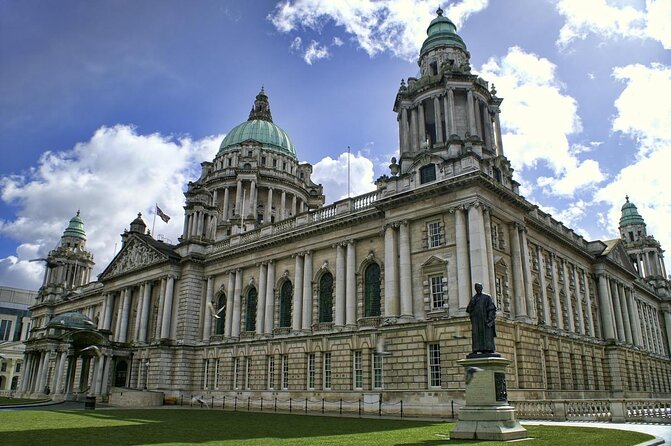
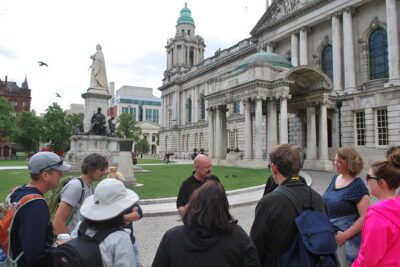
The tour starts at Belfast City Hall, one of the city’s most impressive buildings. Its dome rises 174 feet, and the interior uses three types of Italian marble along with Cipollino marble from Greece. Stained glass adds to the grand effect.
You spend about ten minutes here, with no admission charge. That short stop is useful because it places the later political story against Belfast’s civic and industrial background. The building makes a powerful first impression, and it is an easy meeting point in the center of town.
Do not expect a long interior visit or a formal architectural tour. The value comes from the guide explaining what the building represents and using it to establish Belfast’s public identity before the route moves into more difficult subjects.
Modern Belfast appears beside older symbols
The route also passes a modern sculpture by Dan George in the city center. It combines a Celtic design with references to engineering, industry, and Belfast’s communities.
The Big Fish and other central landmarks are part of the sightseeing mix, too. The Big Fish is an easy-to-spot modern marker along the route, while the Albert Clock gives Belfast an older and more eccentric symbol. These brief city-center stops keep the walk from becoming a single-topic political lecture.
I find that balance important. Belfast is not only a place of conflict memorials. It is also a working city with art, architecture, pubs, restaurants, industry, and a changing future. You get glimpses of all of that as the tour moves along.
The International Wall of Murals on Divis Street
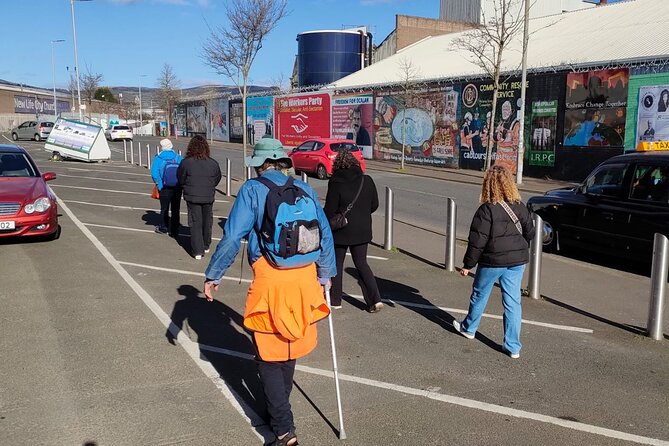
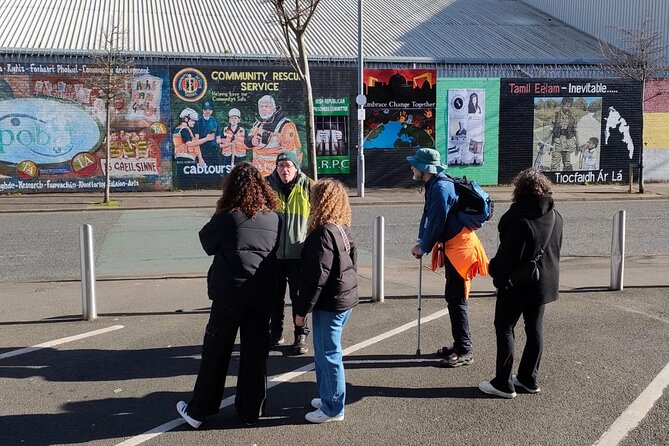
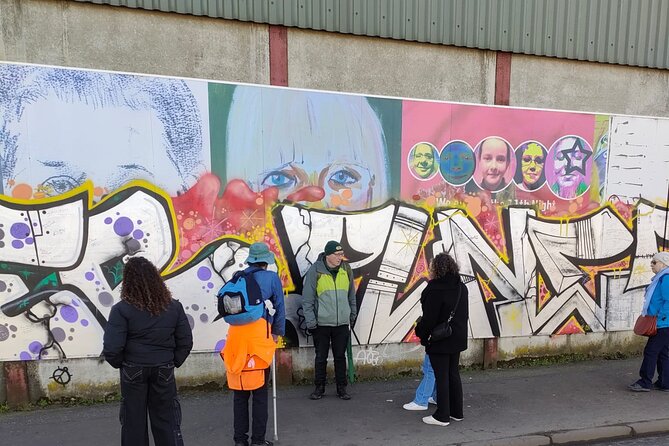
At the International Wall of Murals near the Peace Walls, the guide explains how murals functioned and still function as media. They carry political messages, commemorate events, express identity, and speak to people who may never read a newspaper or history book.
You have time to stop and look rather than simply pass by in a vehicle. That is one reason I prefer the walking format for this subject. A bus can show you a wall, but walking gives you time to notice its size, wording, symbols, and location within the neighborhood.
The subject can be emotionally demanding. Murals are not neutral decoration, and some images or stories may be hard to hear. Keep an open mind, and do not expect every issue to receive a neat answer.
A different sort of outing around Belfast:
- Game of Thrones and Giant’s Causeway Full-Day Tour from Belfast
★ 5.0 · 2,291 reviews - Private Black Taxi Belfast City Tour
★ 5.0 · 2,188 reviews - City Sightseeing Belfast Hop-On Hop-Off Bus Tour
★ 4.5 · 2,012 reviews - Giants Causeway & Castles Tour from Belfast: Guided tour
★ 5.0 · 1,432 reviews
The Peace Wall explains division in physical form
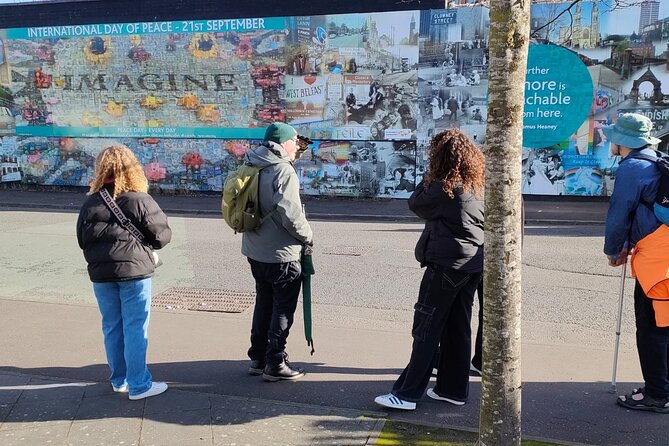
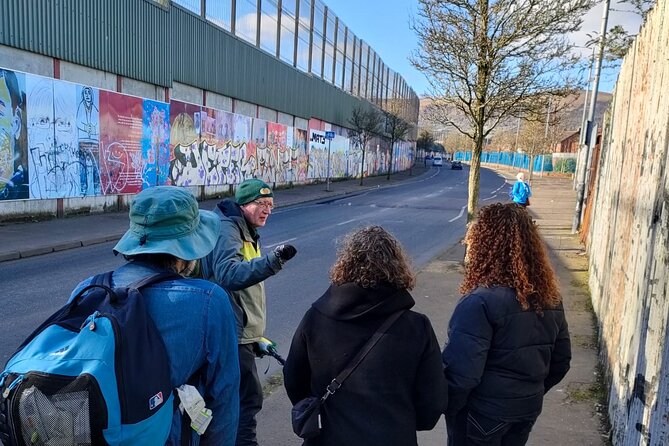
The Peace Wall is the emotional center of the tour. These barriers separate the two communities and rise about 16 meters high. Mesh on top was used to stop petrol bombs from being thrown across the divide.
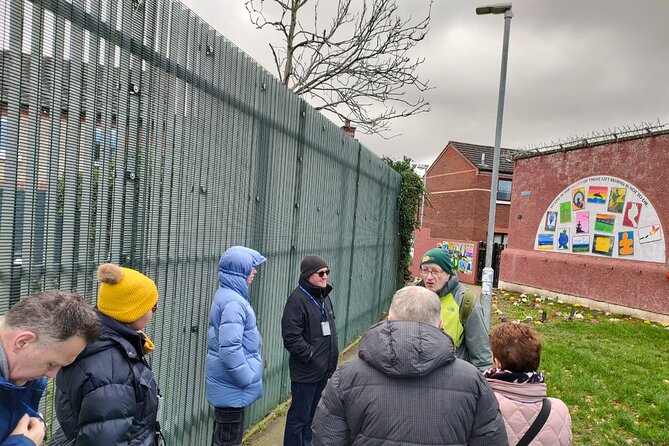
You get around fifteen minutes to photograph the wall and study it while the guide explains its purpose and background. That pause is valuable. The wall is not just a colorful photo stop. It is a reminder that an agreement ending widespread violence does not instantly erase fear, memory, or separation.
This is also where the tour’s title becomes most direct. A wall can protect, divide, or preserve distance. A bridge requires contact and some degree of trust. The guide’s role is to help you understand why these barriers existed and what they mean now, without turning the walk into a partisan speech.
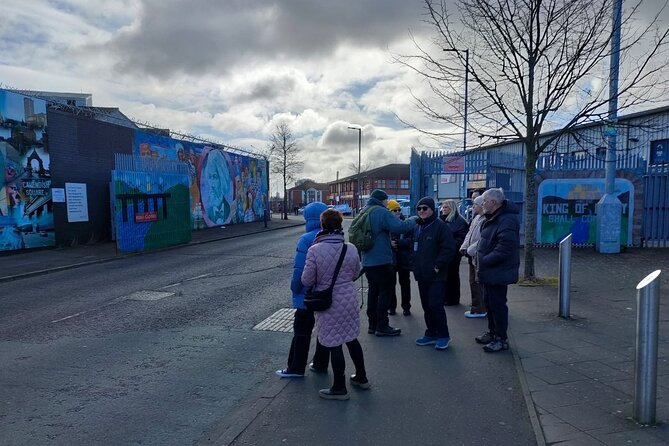
The walk covers both Unionist and nationalist areas. That does not make the story simple, but it does help you see why a one-sided account misses much of Belfast’s reality.
The Albert Clock leans into Belfast’s story
The Albert Memorial Clock Tower is Belfast’s answer to the leaning tower. It rises 113 feet and leans about four feet from the perpendicular.
The clock was built at the spot associated with the crossing point that helped establish Belfast. It includes a statue of Prince Albert and appeared in the film noir Odd Man Out, starring James Mason. The stop lasts only about five minutes, but it adds a memorable piece of local character to the route.
After the Peace Wall, this landmark provides a change of tone. You move from a structure designed to divide communities to a city symbol that is unusual, public, and shared. It is a small stop, but the guide’s local details make it worthwhile.
Cathedral Quarter brings the city back to life
The Cathedral Quarter is described as the newer heart of Belfast. Its cobbled streets, colorful murals, old entries, pubs, and restaurants give the area a more social feel.
You spend about ten minutes here. The guide connects the lanes and buildings to Belfast’s past, including important rock events, while also showing how the district has become a place for eating, drinking, and nightlife.
This part of the tour helps correct a common mistake. If you only visit the Peace Wall, you may leave with a picture of Belfast as permanently frozen in conflict. The Cathedral Quarter shows a city using old streets and industrial memories in a present-day setting.
Still, this is a walking tour with a serious purpose, not a food crawl or pub tour. You will see places to return to later, but there is no time built in for a meal or drink.
Belfast Entries reveal the old city
The Belfast Entries are historic passageways that are easy to miss if you walk alone. The route winds through them, passing locations connected with revolution, intrigue, and pubs.
This is one of the most rewarding details of the walk because it takes you away from the obvious landmarks. Belfast’s story is not only displayed on large walls and famous buildings. It also survives in narrow routes through the center, where older patterns of movement and city life are still visible.
You need to stay close to the guide here. These passageways are precisely the sort of places you might overlook without someone pointing them out.
First Presbyterian Church complicates the usual story
The tour ends at First Presbyterian Church on Rosemary Street, within sight of City Hall. Dating from 1783, the church has an elliptical interior and a strong connection to Irish political and religious history.
John Wesley preached from its pulpit and admired the unusual shape. Members of the congregation also took important positions in support of civil and religious freedoms. That background complicates the simple idea that Belfast’s past can be explained only as two religious groups permanently opposed to one another.
You have about ten minutes to look around and take photographs. It is a thoughtful ending because the church challenges standard assumptions about religion, politics, and identity. The route finishes only a few minutes from where it began, making the end point convenient for returning to central Belfast.
What the three-hour format gives you
The tour lasts between two hours and forty minutes and three hours, depending on the group and discussion. Several people say the time passes quickly, which makes sense: the route combines walking, storytelling, questions, city sights, and difficult history.
The format is best for people who want depth but not a full-day program. You get enough time at the Peace Wall and murals to understand their importance, while the central Belfast stops prevent the experience from becoming relentlessly grim.
The guide may use humor, but that does not mean the subject is treated lightly. Humor appears to help the group handle painful material and stay engaged. The strongest approach is to expect both seriousness and moments of levity.
Headsets have been used on the walk, helping you hear the guide clearly while moving through city streets. That can make a real difference, especially when the guide is speaking to a group or when traffic and general city noise compete with the discussion.
Price, group size, and practical value
At $33.29 per person, this is a reasonable price for a private guided walk lasting close to three hours. You are paying for access to a local guide, a carefully connected route, and explanations that would be difficult to assemble on your own in one afternoon.
The value is strongest if you are new to Belfast or have only a limited understanding of the Troubles. The guide provides the background needed to make the murals and Peace Wall meaningful rather than merely photographic.
The activity can have a maximum of 16 people. That is small enough for questions and personal attention, but do not assume it means a one-to-one tour. If you want to discuss a particular family, political, or historical question, ask during the walk or speak with the guide afterward when time allows.
You should book ahead, since it is commonly reserved about 18 days in advance. Free cancellation is available until 24 hours before the start time. If the minimum group size is not reached and the tour is canceled, you are offered another date or experience, or a full refund.
Who should take this tour
I would choose this tour if you want:
- A serious introduction to the Troubles from a Belfast native
- A walking route that includes both communities and central landmarks
- Personal stories alongside political and social history
- A smaller experience with room for questions
- A useful first tour before visiting other Belfast museums or sites
I would think twice if you want a cheerful city highlights walk, dislike graphic descriptions, or have trouble walking for nearly three hours. The minimum age is 14, and the tour is specifically not aimed at children.
You also need to accept that no three-hour walk can explain every part of the conflict. The guide’s strength is in giving you a clear framework, local perspective, and reasons to keep learning. It is an introduction, not the final word.
My verdict on Walls and Bridges
I recommend the Belfast Troubles Tour: Walls and Bridges for visitors who want to understand what they are seeing, not simply photograph a mural and move on.
The tour’s best features are its local guides, its balanced route, and its willingness to connect Belfast’s painful past with the city it is becoming. Arthur Magee receives especially strong praise for his storytelling, humor, and personal experience, while Steve is also noted for informative commentary and firsthand accounts.
Book it with an open mind and sturdy shoes. If you want only a quick look at the Peace Wall, a shorter sightseeing option may suit you better. If you want the walls explained, the assumptions questioned, and Belfast presented as a complicated city with a possible future, this walk is worth your time and money.
FAQ
Where does the Belfast Troubles Tour start?
The tour starts at Belfast City Hall, Belfast BT1 5GS, UK.
Where does the tour finish?
It ends at First Presbyterian Church on Rosemary Street, Belfast BT1 1QB, within sight of Belfast City Hall.
How long does the tour last?
The tour lasts approximately two hours and 40 minutes to three hours.
How much does the tour cost?
The listed price is $33.29 per person.
What language is the tour offered in?
The tour is offered in English.
Is the tour suitable for children?
The minimum age is 14. The tour is not aimed at children and includes graphic content.
Can I cancel for a full refund?
Yes. You can cancel at least 24 hours before the start time for a full refund. Changes or cancellations made less than 24 hours before the start time are not accepted for a refund.
Recently added around Belfast
- Private Belfast Troubles Cab Tour Adventure 2hrs Personal Guide★ 5.0 · 55 reviews
- Giants Causeway private tour from Belfast★ 5.0 · 57 reviews
- Giants Causeway Tour from Belfast + FREE Belfast Mural Tour★ 5.0 · 59 reviews
- Belfast Titanic Museum and Sighseeing Tour★ 4.5 · 59 reviews
- Belfast’s Sensory Cocktail Experience with 4 Cocktails★ 5.0 · 61 reviews
- Belfast Music and Street Art Small Group Guided Experience★ 4.5 · 62 reviews
- Private Giants Causeway Tour From Belfast★ 5.0 · 67 reviews
- IRA Troubles Conflict Private Tour Museum Graves Murals and Political Analysis★ 5.0 · 67 reviews
Belfast Tours, compared.
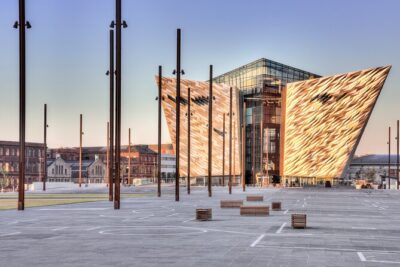
Titanic Belfast Entrance Ticket: Titanic Visitor Experience Including SS Nomadic
Read our review →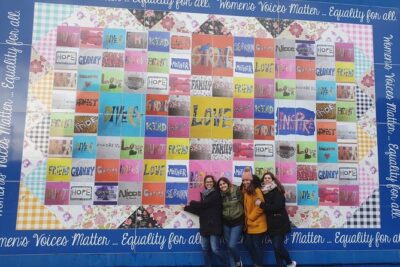
A History of Terror – Belfast City Centre Walking Tour
Read our review →
Game of Thrones and Giant’s Causeway Full-Day Tour from Belfast
Read our review →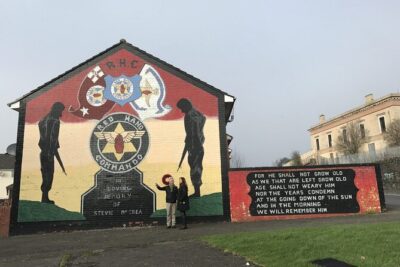
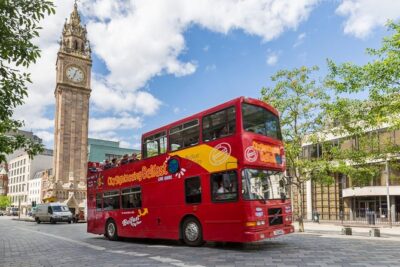
City Sightseeing Belfast Hop-On Hop-Off Bus Tour
Read our review →
Giants Causeway & Castles Tour from Belfast: Guided tour
Read our review →
Browse the lists this tour appears in