
Reviewed · WALKING TOURS
Guided Walking Tour Suspension Bridge Clifton Splendour & City.
Start above the city. This small-group Bristol walking tour begins at Clifton Suspension Bridge and works downhill through grand crescents, hidden viewpoints, Banksy art, old trade streets, and Bristol Cathedral. I like the route because it links the famous sights with places a bus cannot reach, and I like the personal touch of guide Mike, a Bristol resident of more than 40 years. The main point to consider is the amount of walking, especially if you have mobility limits or young children in tow.
You pay $34.72 per person for about two and a half to three hours, with a maximum of eight people. I also appreciate the supplied audio devices, since you can hear Mike clearly while walking. The route is packed with local stories, but it is not a gentle stroll: wear good shoes, carry water, and plan around Bristol’s famously changeable weather.
In This Review
- Five useful things to know before you go
- Why this Bristol route works so well
- Clifton Suspension Bridge and the Avon Gorge
- Royal York Crescent and Clifton’s grand side
- Victoria Square and the Battle of Boyces Avenue
- Goldney Hall and stories of faith and trade
- Brunel’s SS Great Britain from Clifton Wood
- Bristol Cathedral and College Green
- Frogmore Street, Banksy, and the Hatchet
- The Old City, sugar, guilds, and Edward Colston
- Mike’s guiding style and the audio equipment
- Is $34.72 good value?
- Walking demands, weather, and who should book
- Should you book this Bristol walking tour?
- FAQ
- How long does the Clifton Suspension Bridge walking tour last?
- Where does the tour start?
- Where does the tour finish?
- What time does the tour start?
- Is the tour suitable for people with limited fitness?
- What happens if bad weather cancels the tour?
Five useful things to know before you go
- Clifton Suspension Bridge begins the tour: You walk across the famous bridge and spend about 40 minutes taking in the gorge, engineering, and views.
- The route generally goes downhill: Starting at Clifton Observatory means you begin at the highest point and finish at College Green.
- Mike is the guide to look for: His four decades of living in Bristol give the tour a strong local voice, with history, jokes, and practical help.
- The group is limited to eight people: That makes it easier to hear, ask questions, and keep together on narrow streets.
- Banksy and Bristol’s difficult past both feature: You see street art while also hearing about sugar, trade guilds, and Edward Colston.
- The tour ends centrally: College Green, beside the Marriott Hotel at the bottom of Park Street, is a useful place to continue exploring.
Why this Bristol route works so well
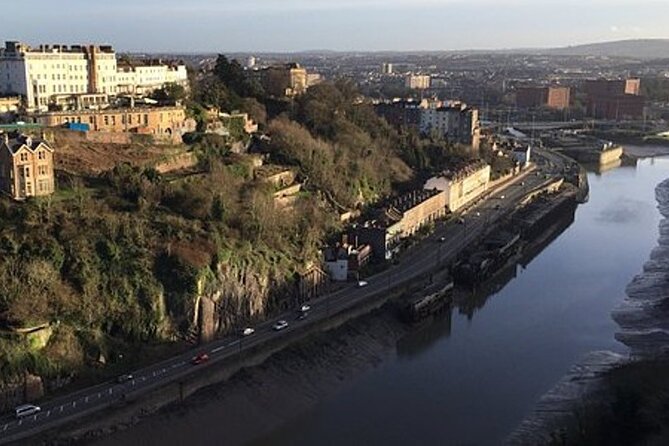
Bristol can be hard to read at first. Its sights are spread between Clifton, the Avon Gorge, the Floating Harbour, the old city, and the cathedral quarter. A standard bus ride might show you the big pieces, but it will skip the lanes, viewpoints, and small details that explain how the city fits together.
This tour solves that problem with a smart route. You start at Clifton Observatory, walk across the suspension bridge, then make your way through Clifton Wood and down toward College Green. From there, the walk continues through Frogmore Street and the Old City before ending near the Marriott Hotel.
I like the direction of travel. You begin at the maximum elevation, so the route generally loses height as it goes. That does not make the walk effortless, since there are streets, steps, and plenty of standing, but it is more sensible than climbing uphill for three hours.
The group size matters, too. With no more than eight people, Mike can keep the pace suitable for the group and answer questions without turning the walk into a public speech. The audio devices are a real help. Bristol can be noisy, and a guide who is easy to hear is worth more than another glossy photo stop.
More Walking Tours in Bristol
- Blackbeard to Banksy – The Ultimate Walking Tour of Bristol
★ 5.0 · 1,961 reviews - Air Raid Shelter + St. Nicholas Market Walking Tour
★ 5.0 · 1,950 reviews - Bristol: Blackbeard to Banksy Guided Walking Tour
★ 4.9 · 1,422 reviews
Clifton Suspension Bridge and the Avon Gorge
The tour starts at Clifton Observatory, Litfield Place, at 10:30 am. This is the place to arrive early, since the route begins with one of Bristol’s signature sights and the group needs to set off together.
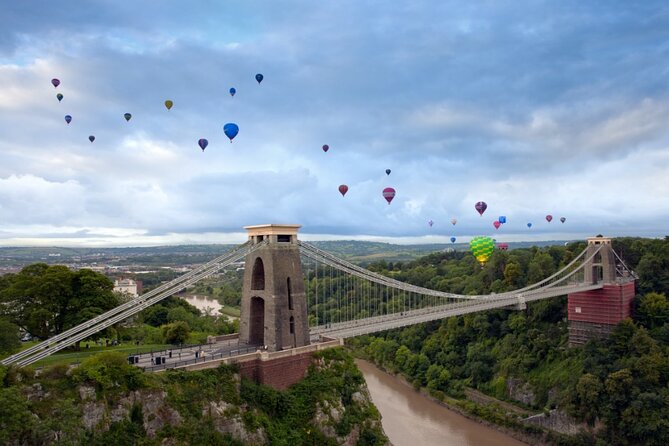
You walk across Clifton Suspension Bridge and hear about its design, construction, and place in Bristol’s identity. The bridge is not just a quick photo stop. Around 40 minutes are given to the area, which gives you time to look at the structure, take in the gorge, and hear why Brunel’s famous project remains such a powerful symbol of the city.
This is the strongest opening possible for a Bristol tour. You get height, open views, and a clear sense of why Clifton became such a prized part of the city. The bridge also gives you a useful first lesson in Bristol’s engineering story, which later connects with Brunel’s SS Great Britain.
The drawback is weather. The bridge is exposed, so wind and rain can make the first section uncomfortable. The operator says the experience requires good weather and may be moved or refunded if conditions are poor. Bring a waterproof layer even on a bright morning.
Royal York Crescent and Clifton’s grand side
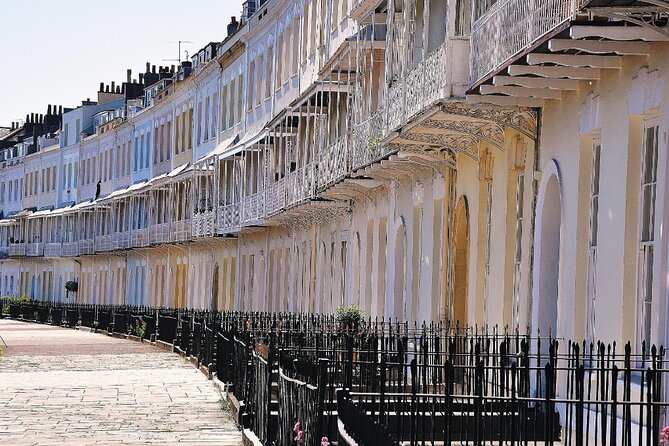
From the bridge, the route continues to Royal York Crescent, where you walk along one of Clifton’s most recognisable streets. The stop is brief, about 10 minutes, but it gives you a change of mood after the open space of the gorge.
Here, the focus is on Clifton’s architecture and the way the district developed as an elegant residential quarter. You are not simply driven past a row of impressive buildings. Walking lets you notice the scale of the crescent and the way the street presents itself from ground level.
This is also where the tour begins to show its advantage over a bus. A vehicle may point out Royal York Crescent, but you can stop, look, and hear the explanation without traffic sliding past your window. You also get time for photographs.
Victoria Square and the Battle of Boyces Avenue
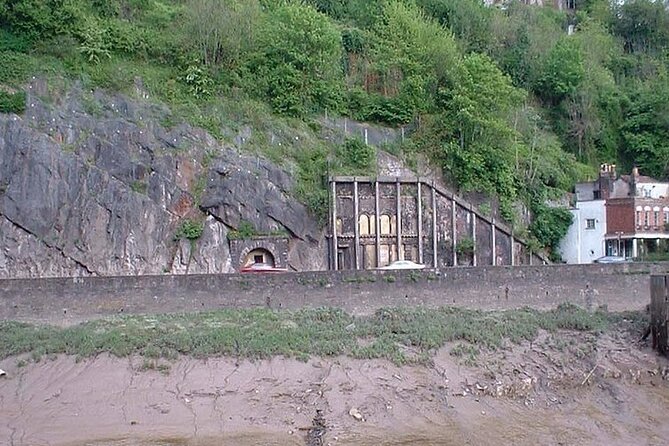
Victoria Square adds a more local layer to the morning. The stop lasts around 15 minutes and includes the Battle of Boyces Avenue, along with the former home of WG Grace.
The appeal here is the mix of public event and personal story. You get a glimpse of Bristol’s sporting and social life, rather than only its grand monuments. WG Grace is a name many people will recognise, and seeing where he lived helps connect a national figure with an ordinary street.
Mike’s approach appears best suited to people who enjoy questions and side stories. His style combines dates and events with amusing details, so the tour does not feel like a string of plaques read aloud. Families with older children and teenagers may find this section especially useful because it gives them more than architecture to latch onto.
A different sort of outing around Bristol:
- From Bristol: Stonehenge and Cotswold Villages Day Tour
★ 4.8 · 717 reviews - (9pm) The House Magicians Comedy & Magic Show – Smoke & Mirrors
★ 5.0 · 356 reviews - Bristol: Air Raid Shelter & St. Nicholas Market Walking Tour
★ 4.8 · 320 reviews - West Country Games – the most popular group activity in the South West!
★ 5.0 · 315 reviews
Goldney Hall and stories of faith and trade
The next stop is Goldney Hall, where Mike discusses Woodes Rogers and the Quakers. The visit takes about 15 minutes and broadens the story beyond Bristol’s buildings.
This part matters because Bristol’s past is not one neat tale. The city’s wealth grew through trade, shipping, industry, and links across the Atlantic. Stories of merchants, religious communities, and figures such as Woodes Rogers help you see the people and interests behind the city’s streets.
The tour does not appear to treat history as a parade of proud achievements. Later, you hear about sugar production and Edward Colston, so the morning includes uncomfortable parts of Bristol’s past as well as its engineering and art. That balance is important. You leave with a more useful understanding of the city than you would get from a purely celebratory tour.
Brunel’s SS Great Britain from Clifton Wood
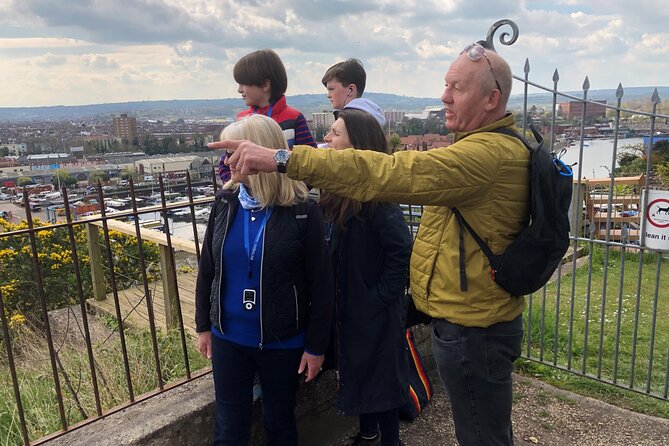
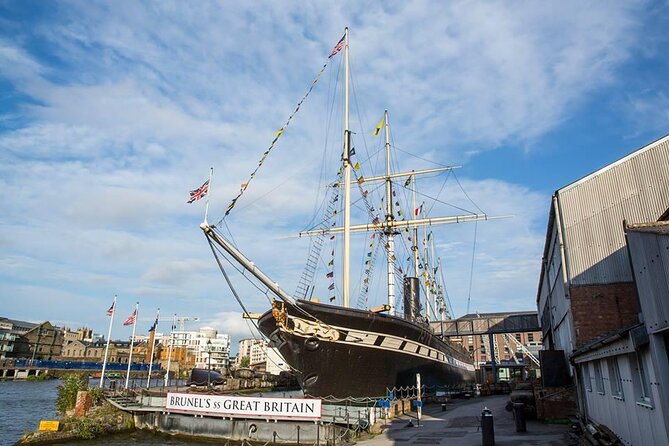
One of the most appealing details is the viewing point in Clifton Wood. From there, you look toward the Floating Harbour and Brunel’s SS Great Britain before walking down toward College Green. The stop takes around 20 minutes.
This viewpoint is described as little known, which is exactly the sort of detail that makes a walking tour worthwhile. You see the ship from a different angle instead of simply arriving at the museum entrance. The view also links several Bristol themes in one frame: Brunel, the harbour, shipping, and the city’s steep geography.
You do not enter SS Great Britain on this tour, and no admission tickets are included. That is not a flaw if you mainly want an introduction and a good viewpoint, but you should plan a separate visit if touring the ship is a priority.
The walk down toward College Green changes the pace. You have spent the opening section among Clifton’s heights and grand streets, and now the route brings you into the central city. The physical movement helps you understand Bristol in a way a static sightseeing loop cannot.
Bristol Cathedral and College Green
Bristol Cathedral is given about 15 minutes. The cathedral dates from the 13th century, and this stop also takes in St Mark’s Chapel and the Council House.
I would pay close attention here, even if you are not usually a cathedral enthusiast. The stop places religious buildings and civic power side by side, helping explain how the centre of Bristol developed. It is also a welcome pause after the longer walking sections.
The tour ends at College Green, beside the Marriott Hotel at the bottom of Park Street. This is a practical finish. You are not left at an isolated viewpoint or required to retrace the route. You can continue into central Bristol, stop for food, or use the location as a base for the rest of your day.
Frogmore Street, Banksy, and the Hatchet
Frogmore Street brings the tour into a more modern and slightly scruffier part of Bristol. You hear about Banksy’s Well Hung Lover, the Council House, the Hatchet pub, Harvey’s famous warehouse, and the Hippodrome.
This is where Bristol’s creative reputation comes into focus. Banksy’s work is not treated as a random photo opportunity. Mike explains the artist’s connection to Bristol and points out the work in its urban setting, alongside older buildings and working city streets.
The variety makes this section lively. One moment you are considering street art, then a pub reputed to be Bristol’s oldest, then a warehouse or theatre with its own place in the city’s story. I like that the route does not divide Bristol into tidy boxes labelled old and new. The city’s history is layered, and Frogmore Street shows that clearly.
Do not expect a museum-style presentation of Banksy. You are walking through the city, so the art is seen in context, with the possibility that urban surroundings and weather affect the experience. That is part of the charm, but it also means the stop is about interpretation as much as photography.
The Old City, sugar, guilds, and Edward Colston
The final section takes about 20 minutes and is the most historically serious part of the route. You pass one of Bristol’s last sugar factories, see more street art, go through the old city wall, hear about ancient trade guilds, and discuss the statue of Edward Colston.
This is valuable because it refuses to separate Bristol’s attractive centre from the wealth and power that helped create it. Sugar and overseas trade are part of the city’s story, and Edward Colston remains a difficult figure in Bristol’s public memory. A good guide should give you enough context to understand why the subject matters, rather than reducing it to a single opinion.
The old city wall and trade guilds add another layer. Bristol was not shaped only by famous engineers and wealthy merchants. Its civic life also depended on organised trades, local institutions, and the people who worked within them.
For me, this final section gives the tour its purpose. You have seen the bridge, grand Clifton streets, a cathedral, street art, and the harbour. Now you get the harder questions about who benefited from Bristol’s growth and how the city remembers its past.
Mike’s guiding style and the audio equipment
Mike is repeatedly praised for his local knowledge, friendly manner, humour, and ability to keep the group interested. He has lived in Bristol for more than 40 years, which gives him a natural connection to the places on the route.
That personal experience shows in the design of the tour. It includes lanes, back streets, viewing points, and details you could easily pass without noticing. Mike also uses visual aids, according to the tour information, which can help when a building, event, or historical figure needs more explanation.
The audio devices are one of the best practical touches. You can walk without crowding around the guide, and you are less likely to miss a sentence when crossing a road or moving through a busy area. The devices also help families and anyone who finds group tours hard to hear.
The strongest praise is for Mike’s ability to make history entertaining without losing substance. That matters in Bristol, where the subject can move quickly from Brunel and the bridge to Banksy, sugar, and Colston.
Is $34.72 good value?
At $34.72 per person, this is good value if you want a strong first look at Bristol rather than a single attraction. You get up to three hours with a local guide, a small group, audio equipment, and a route connecting Clifton with the central city.
There are no admission charges included because the tour is built around public places and exterior views. That keeps the price down, but it also means you are paying for the guiding, route planning, access to lesser-known viewpoints, and the stories that tie the sights together.
I would not choose this tour if you want long interior visits or lots of free time at each stop. The timing is brisk, with most stops lasting 10 to 20 minutes. I would choose it if you want to get your bearings fast and decide afterward which places deserve a longer visit.
The group limit of eight improves the value. A small group gives you a better chance to ask about a street, a building, or a historical detail that catches your eye.
Walking demands, weather, and who should book
You need a moderate level of fitness. The tour lasts roughly two and a half to three hours, and nature breaks are limited, so plan ahead before meeting at Clifton Observatory.
Comfortable shoes are essential. The route covers a bridge, residential streets, viewpoints, and central Bristol, with a long sequence of stops rather than one short walk. One family found the length right for an introduction but noted that the amount of walking could be hard for younger children or older people.
I think the tour suits:
- First-time visitors who want context before exploring alone
- Families with children old enough to manage a substantial walk
- Adults interested in engineering, art, architecture, and social history
- Visitors who prefer a small group to a large bus tour
- People who want to connect Clifton with the city centre in one morning
It may not suit you if you need frequent breaks, dislike outdoor tours in uncertain weather, or want to spend a long time inside Bristol Cathedral or SS Great Britain.
The tour is offered in English, and service animals are allowed. It is near public transport, but the exact transport journey is not provided, so check your route to Clifton Observatory before the morning begins.
Should you book this Bristol walking tour?
I would book it if you have one morning in Bristol and want more than a checklist of famous sights. The Clifton Suspension Bridge is the headline, but the real value is the route linking the bridge with Royal York Crescent, Victoria Square, Goldney Hall, the harbour view, Bristol Cathedral, Banksy, and the Old City.
Book with Mike if you enjoy local stories, visual details, and a guide who welcomes questions. The tour earns its price through the small group, clear audio devices, downhill route, and places you would be unlikely to find on your own.
Skip it if your priority is entering several attractions or avoiding a sustained walk. For most visitors with comfortable shoes and a free morning, it is a practical, lively introduction to Bristol, with enough difficult history and modern character to keep the city from feeling polished into a postcard.
FAQ
How long does the Clifton Suspension Bridge walking tour last?
The tour lasts approximately two hours and 30 minutes to three hours.
Where does the tour start?
It starts at Clifton Observatory, Litfield Place, Clifton, Bristol BS8 3LT, UK.
Where does the tour finish?
It finishes at College Green, beside the Marriott Hotel at the bottom of Park Street in Bristol.
What time does the tour start?
The stated start time is 10:30 am.
Is the tour suitable for people with limited fitness?
The tour requires a moderate level of physical fitness. Comfortable shoes are advised, and the route includes a substantial amount of walking.
What happens if bad weather cancels the tour?
If poor weather causes cancellation, you will be offered another date or a full refund. Free cancellation is also available when you cancel at least 24 hours before the start time.
Recently added around Bristol
- St Mary Redcliffe Church Bristol: Guided Tour★ 4.7 · 67 reviews
- Bristol: The Best Of Bristol, Guided Bike Tour★ 4.8 · 68 reviews
- Bristol Paddleboarding Tour★ 5.0 · 92 reviews
- Fun, Flexible Treasure Hunt Around Bristol with Cryptic Clues & Hidden Gems★ 5.0 · 101 reviews
- Fully guided Bristol Ghost Tours★ 5.0 · 130 reviews
- Stonehenge and Cotswold Villages Full-day Tour from Bristol★ 5.0 · 140 reviews
- Bristol: Self-Guided Sightseeing Audio Tour★ 4.4 · 151 reviews
- Bristol: Wake The Tiger Amazement Park Entry Ticket★ 4.3 · 156 reviews
Walking Tours, compared.
Magical London: Harry Potter Guided Walking Tour
Read our review →
Underground Vaults Walking Tour in Edinburgh Old Town
Read our review →
Oxford University Walking Tour With University Alumni Guide
Read our review →
Edinburgh Castle: Guided Walking Tour with Entry Ticket
Read our review →
Edinburgh Castle Guided Walking Tour in English
Read our review →
Tour for Muggles The Ultimate Harry Potter Walking Tour in London
Read our review →
University and City Walking Tour with Alumni Guide
Read our review →Browse the lists this tour appears in