
Reviewed · BELFAST TOURS
Iconic Belfast Black Cab Tour
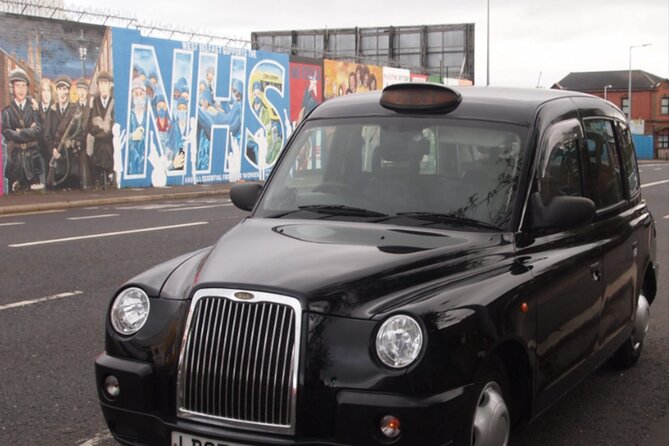
Belfast’s walls tell stories cars cannot. This private black cab ride brings you close to the city’s political murals and divided neighborhoods, with Hugh Jordan offering clear, balanced explanations. I like the personal scale, just your party in the cab, and the chance to sign the Peace Wall if you wish. I also like the way the route shows both Falls and Shankill traditions rather than presenting only one side. The main drawback is its short 90-minute length, which leaves little time for long stops or broad sightseeing beyond west Belfast.
At $97.05 per group of up to two, this is not the cheapest way to see Belfast, but the price makes sense if you want a private guide rather than a large group lecture. You should expect serious subject matter, including violence, imprisonment, hunger strikes, and sectarian division, though Hugh’s humor and easy conversation help keep the experience human.
In This Review
- Key points to know before you book
- Why a black cab is the right way to see west Belfast
- Divis Street and Divis Tower: starting in west Belfast
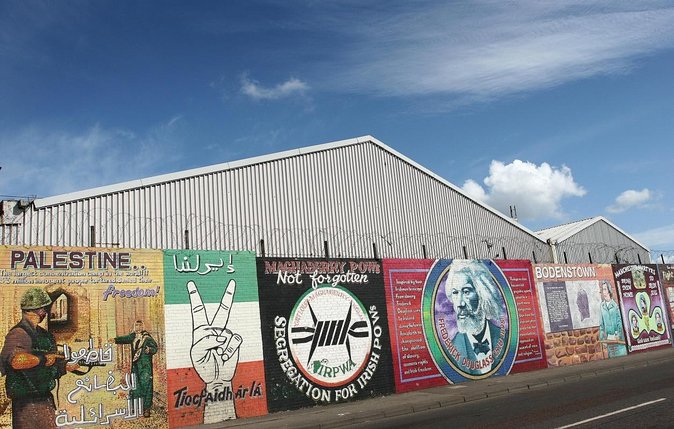
- The International Mural Wall: art with a political purpose
- The Peace Wall: a quiet stop with real weight
- The Bobby Sands Mural and hunger strike memorial
- Shankill Road: seeing the other side of the divide
- Hugh Jordan’s guiding style and the human side of the story
- Is $97.05 good value for two people?
- Who will get the most from this 90-minute tour?
- Should you book the Iconic Belfast Black Cab Tour?
- FAQ
- How long does the Iconic Belfast Black Cab Tour last?
- How many people can join the private cab tour?
- Which places does the tour visit?
- Can I sign the Peace Wall?
- Where can pickup take place?
- Is pickup available from the airport, port, or Titanic Belfast?
Key points to know before you book
- Private cab for up to two: You get the vehicle and guide to yourselves, so questions and conversation can shape the outing.
- Five focused stops: Divis Street, the International Mural Wall, the Peace Wall, the Bobby Sands Mural, and Shankill Road form a compact route through west Belfast.
- Balanced look at the Troubles: The tour presents Republican and Loyalist areas, symbols, and memories side by side.
- Hugh Jordan leads the experience: His local knowledge, personal stories, and calm approach are central to the tour’s appeal.
- Inner-city pickup only: Pickup is offered from selected hotels and central points, but not from the airport, port, Titanic Quarter, Queens Quarter, or many outer hotels.
- Book ahead: The average booking time is 71 days, so this is an outing to arrange early, particularly for a fixed Belfast schedule.
Why a black cab is the right way to see west Belfast
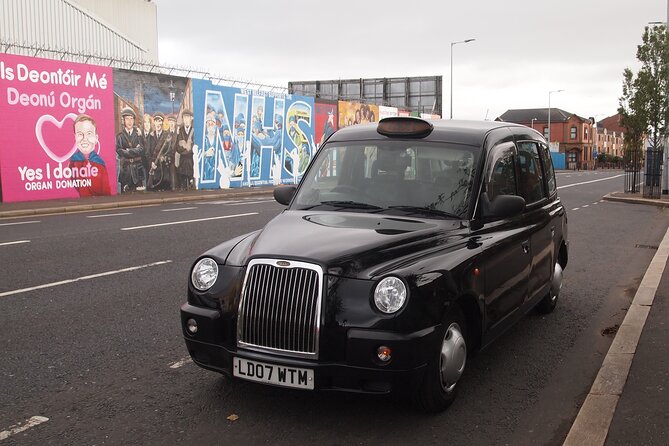
A black cab gives this tour a useful advantage: the vehicle can move through several neighborhoods while Hugh explains what you are seeing. You are not simply being driven past painted walls. You can ask why a mural is there, what its symbols mean, and how the area still relates to Belfast’s divided past.
The private format matters. In a large group, sensitive questions can feel awkward and the guide has to keep to a fixed speech. Here, you can pause, ask for clarification, or spend a little more time on a subject that interests you. For a family, couple, or two friends, this makes the 90 minutes feel more like a conversation than a standard sightseeing ride.
The cab also keeps the route practical. Belfast’s political murals are spread across neighborhoods rather than gathered in one museum. You will see the city through its streets, walls, towers, flags, and memorials. That setting gives the subject a directness that an indoor display cannot quite match.
Still, keep your expectations in check. This is not a full tour of Belfast. The focus is the Troubles and the communities most closely associated with that conflict. If you want Titanic Belfast, the city center, Queen’s Quarter, or a broad architectural tour, you will need another outing.
A few more trips worth a look before you book
- Titanic Belfast Entrance Ticket: Titanic Visitor Experience Including SS Nomadic
★ 4.5 · 3,698 reviews - Cab Tours Belfast Famous Black Taxi Tours
★ 5.0 · 3,633 reviews - A History of Terror – Belfast City Centre Walking Tour
★ 5.0 · 2,883 reviews
Divis Street and Divis Tower: starting in west Belfast
The first stop is Divis Street, where Divis Tower helps establish the setting. You have about 10 minutes here, enough to get your bearings and begin connecting the street in front of you with the political story Hugh tells.
Divis Street is useful as an opening because it places you in west Belfast rather than beginning with a detached overview. The tower and surrounding streets provide a visible introduction to the area. Hugh’s explanations help separate geography from stereotype, showing how local identity, housing, politics, and conflict have shaped this part of the city.
The stop is brief, so do not expect an extended walk or a detailed examination of every building. Its value comes from the explanation and the context. Listen closely at the start, because later stops make more sense once you understand the basic division between the communities and the events that hardened it.
The subject can be heavy, but the guide’s manner is important here. Hugh has been praised for asking questions, sharing personal anecdotes, and adding humor without treating the subject lightly. That balance helps you absorb difficult material without feeling as if you are being handed a political speech.
The International Mural Wall: art with a political purpose
A short time later, the cab reaches the International Mural Wall on Divis Street. You have another 10-minute stop, focused on local and international murals.
This is one of the most visually interesting parts of the route. The paintings are not decoration in the usual sense. They communicate political positions, solidarity, memory, identity, and changing attitudes. Hugh’s role is to explain the images rather than leave you guessing at the symbols.
You may find that the murals ask more questions than they answer. Some point to events in Northern Ireland, while others connect Belfast with struggles and causes elsewhere. Looking at them beside the surrounding streets shows how public art can act as a community noticeboard, memorial, and political statement all at once.
The limit is time. Ten minutes goes quickly, especially if you want photographs and an explanation of several paintings. I would pay attention first and take pictures second. The murals are easy to photograph, but the meaning behind them is what makes this stop worthwhile.
This part also sets up an important theme of the outing: Belfast is not telling one simple story. The city’s walls carry competing memories. Hugh’s balanced approach is especially valuable because he explains the arguments without pushing you toward a personal conclusion.
The Peace Wall: a quiet stop with real weight
The Peace Wall is the emotional center of the tour for many people. You have about 10 minutes at this Belfast interface, and you may sign your name if you wish.
The invitation to write on the wall gives you a small personal action in a place shaped by separation. You do not have to sign, and you may prefer simply to look at the wall and listen. Either choice is reasonable. The moment can feel moving because the wall is both a symbol of peace and a reminder that the division has not disappeared.
Hugh can explain the wall in relation to the streets and communities around it. That physical setting matters. A wall seen in a photograph is an object. A wall encountered in the middle of a neighborhood feels like part of daily life, which makes the political story more immediate.
This is also a good place to ask questions about the difference between a formal end to violence and lasting reconciliation. The tour information describes continuing civil unrest, and the stop helps you understand that peace does not mean every disagreement has been settled.
You should approach this moment respectfully. Signing your name may feel meaningful, but it is not a photo prop in the ordinary tourist sense. The wall carries personal and political significance for local people. A quiet attitude and careful listening are appropriate.
A different sort of outing around Belfast:
- Game of Thrones and Giant’s Causeway Full-Day Tour from Belfast
★ 5.0 · 2,291 reviews - Private Black Taxi Belfast City Tour
★ 5.0 · 2,188 reviews - City Sightseeing Belfast Hop-On Hop-Off Bus Tour
★ 4.5 · 2,012 reviews - Giants Causeway & Castles Tour from Belfast: Guided tour
★ 5.0 · 1,432 reviews
The Bobby Sands Mural and hunger strike memorial
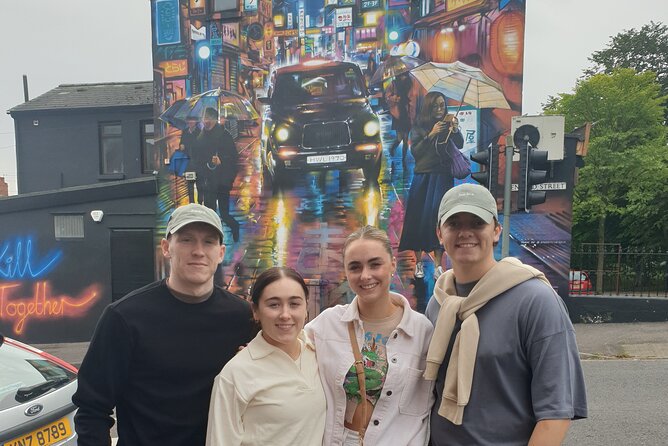
The next stop brings you to the Bobby Sands Mural and the Sinn Fein building, including a hunger strike memorial. The visit lasts about 10 minutes.
This is a concentrated stop, and it requires some historical preparation from the guide. Bobby Sands became a central figure in the Republican movement through the 1981 hunger strike. The memorial connects individual sacrifice with the wider political conflict, making the subject feel personal rather than abstract.
You do not need to arrive with a firm political view to benefit from this stop. The point is to understand why Bobby Sands remains such a powerful figure to some people and such a contested figure to others. A fair explanation should make room for both the human cost and the political meaning.
Several comments about Hugh’s guiding style point to his effort to keep the presentation factual and nonpartisan. That is especially useful here. A memorial of this kind can easily become a one-sided account, but the tour places it within the larger story of the Troubles and the experiences of both communities.
Expect a serious atmosphere. This is not the place for casual sightseeing chatter, though Hugh’s occasional funny story elsewhere on the route can give the whole outing a more natural rhythm. The mix of sober explanation and ordinary conversation is one reason the tour feels approachable rather than grim from beginning to end.
Shankill Road: seeing the other side of the divide
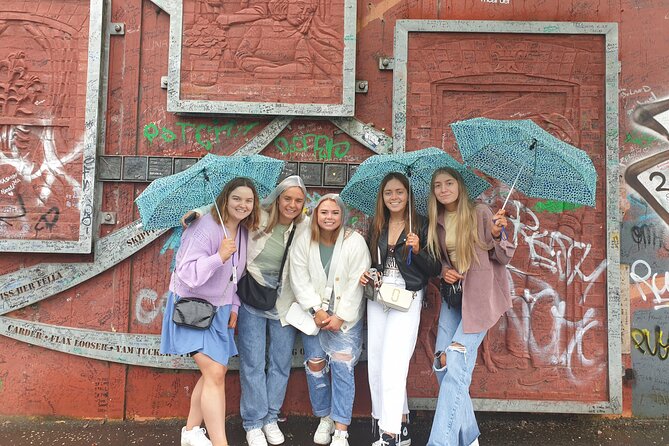
The final listed stop is Shankill Road, with about 15 minutes devoted to its political and cultural murals. This is the longest stop, and it completes the route by showing the Loyalist and Protestant side of Belfast’s divided identity.
The contrast with the Falls and Divis areas is central to the experience. Flags, murals, memorials, and local symbols communicate a different set of loyalties and memories. Hugh’s explanations can help you read those signs without reducing the community to a collection of political images.
The Shankill stop is particularly useful because it prevents the tour from becoming a tour of only one neighborhood’s pain. Seeing both sides gives you a better sense of why the conflict lasted so long and why the language of identity remains sensitive.
You may notice Union Jacks and different forms of British symbolism in the area. These details are not random decorations. They express allegiance and belonging, and Hugh can place them within the wider political story.
Fifteen minutes is enough for a focused look, but not a full walk through the district. The cab format means you see selected locations rather than every mural. That is a sensible tradeoff for a short tour, but anyone wanting a slower photographic outing may find the schedule brisk.
Hugh Jordan’s guiding style and the human side of the story
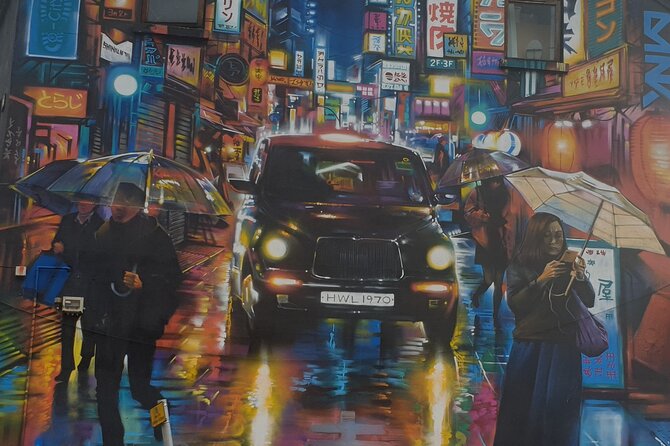
The guide can make or break a history tour, and Hugh Jordan is the heart of this one. He is repeatedly praised for being friendly, funny, patient, and well informed. More importantly, he explains the Troubles in a balanced way and answers questions without turning the ride into a political argument.
His local connection adds weight. The information describes him as someone who lived through the Troubles, and his personal anecdotes help connect public events with ordinary life. You may hear details that do not appear on a standard timeline, which can make the period easier to understand.
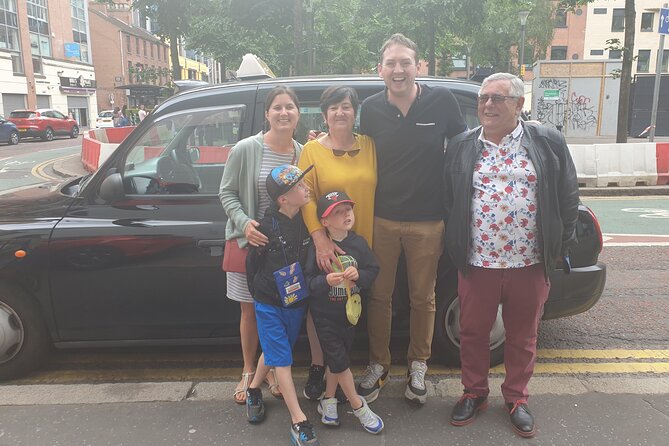
Hugh also appears willing to adapt. One family group with ages ranging from 31 to 69 found the tour engaging for everyone, and another group appreciated being taken back to its apartment afterward. A guide who asks what you want from the experience can adjust the emphasis, though the core route remains the same.
English is required at a good level. That matters because much of the value is in the spoken explanation, not just the murals. If you have hearing difficulties, mention them when arranging the tour. The provided information says hearing difficulties are noted, but it does not promise a specific accommodation, so it is wise to clarify in advance.
Is $97.05 good value for two people?
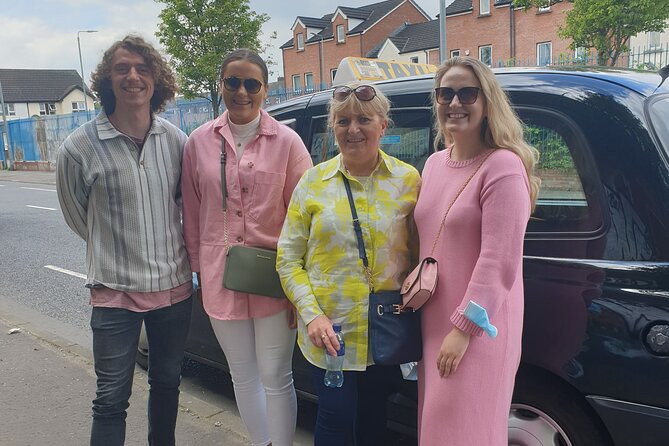
At $97.05 for a group of up to two, the cost works out to roughly $48.53 per person if both places are filled. You are paying for a private cab, an experienced local guide, and a direct route through some of Belfast’s most politically important streets.
That price is easier to justify if you value privacy and conversation. You are not paying only for transport. You are paying for interpretation, access to a local perspective, and the chance to ask questions without competing with a busload of strangers.
For one person, the value is less obvious because the same group price applies. For two people who want a serious introduction to the Troubles, it is a fair spend, particularly early in a Belfast visit when it can help you understand the city you see afterward.
The tour includes inner-city pickup, but not port, airport, Titanic Belfast, or Crowne Plaza pickup. Pickup is available only from selected hotels and prominent central points. If your hotel is not listed, select the nearest listed location. When no hotel is selected, the meeting point is outside Leonardo Hotel Great Victoria Street.
Do not assume that every city hotel is covered. Properties in the Titanic Quarter, Queens Quarter, cruise area, and locations more than half a mile from the city center may be excluded. Texting to change the pickup point up to 30 minutes before departure is allowed, but it is better to settle the meeting place early.
Free cancellation is available up to 24 hours before the start time. Changes or cancellations inside that window are not accepted for a refund.
Who will get the most from this 90-minute tour?
I would choose this outing if you want a clear introduction to Belfast’s recent political past without committing to a full day of museums and walking. It suits couples, friends, and small family groups who prefer an easy ride and plenty of opportunity to ask questions.
It also fits people with a strong interest in modern Irish history, civil rights, political art, or the lived experience of divided communities. The route is direct, the stops are meaningful, and the private cab keeps physical effort low.
Families can benefit, but parents should decide if younger children are ready for discussions of violence, hunger strikes, and sectarian conflict. Most people can participate, and service animals are allowed, but the subject matter is more important than physical difficulty when deciding if it fits your group.
I would not make this your only Belfast activity. Pair it with time in the city center, a visit to Titanic Belfast, or another attraction that shows a different side of the city. This tour explains a crucial part of Belfast, but it does not attempt to tell every story.
Should you book the Iconic Belfast Black Cab Tour?
Book it if you want to understand Belfast through its streets, murals, memorials, and still-visible divisions. The private setting, focused route, and Hugh Jordan’s calm, funny, nonpartisan style give you more than a drive-by look at the walls.
Think twice if you dislike difficult political subjects or want a relaxed general sightseeing ride. The tour is emotionally serious, the pickup rules are narrow, and 90 minutes is a tight schedule.
For two people staying near the city center, I consider it a strong choice and a fair use of part of your Belfast day. Arrange it early, confirm the pickup point, listen carefully at each stop, and treat the Peace Wall and memorials with respect. You will leave with a clearer sense of why Belfast looks the way it does, and why its past still matters.
FAQ
How long does the Iconic Belfast Black Cab Tour last?
The tour lasts approximately 1 hour and 30 minutes.
How many people can join the private cab tour?
The price covers one private group of up to two people. Only your group participates.
Which places does the tour visit?
The route includes Divis Street and Divis Tower, the International Mural Wall on Divis Street, the Peace Wall, the Bobby Sands Mural and hunger strike memorial, and Shankill Road.
Can I sign the Peace Wall?
Yes. You may sign your name at the Peace Wall if you wish.
Where can pickup take place?
Inner-city pickup is offered from selected hotels and prominent pickup points. If you do not select a hotel, the meeting point is outside Leonardo Hotel Great Victoria Street.
Is pickup available from the airport, port, or Titanic Belfast?
No. Airport, port, Titanic Belfast, Crowne Plaza Hotel, Titanic Quarter, Queens Quarter, cruise ship, and some outlying hotel pickups are not included.
Recently added around Belfast
- Private Belfast Troubles Cab Tour Adventure 2hrs Personal Guide★ 5.0 · 55 reviews
- Giants Causeway private tour from Belfast★ 5.0 · 57 reviews
- Giants Causeway Tour from Belfast + FREE Belfast Mural Tour★ 5.0 · 59 reviews
- Belfast Titanic Museum and Sighseeing Tour★ 4.5 · 59 reviews
- Belfast’s Sensory Cocktail Experience with 4 Cocktails★ 5.0 · 61 reviews
- Belfast Music and Street Art Small Group Guided Experience★ 4.5 · 62 reviews
- Private Giants Causeway Tour From Belfast★ 5.0 · 67 reviews
- IRA Troubles Conflict Private Tour Museum Graves Murals and Political Analysis★ 5.0 · 67 reviews
Belfast Tours, compared.
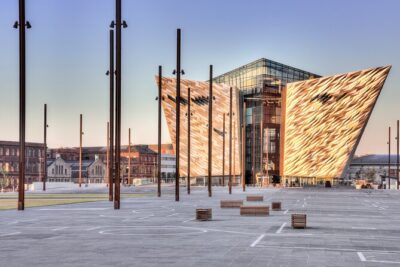
Titanic Belfast Entrance Ticket: Titanic Visitor Experience Including SS Nomadic
Read our review →
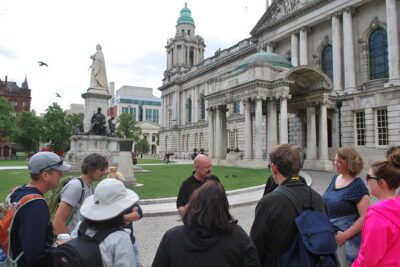
A History of Terror – Belfast City Centre Walking Tour
Read our review →
Game of Thrones and Giant’s Causeway Full-Day Tour from Belfast
Read our review →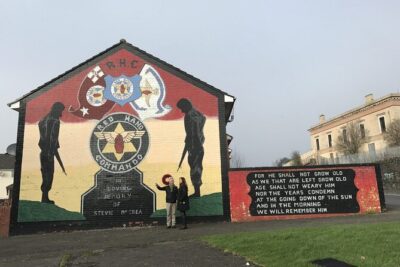
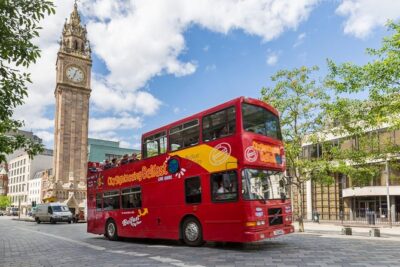
City Sightseeing Belfast Hop-On Hop-Off Bus Tour
Read our review →
Giants Causeway & Castles Tour from Belfast: Guided tour
Read our review →
Browse the lists this tour appears in