
Reviewed · MUSEUMS
London: British Museum Guided Tour
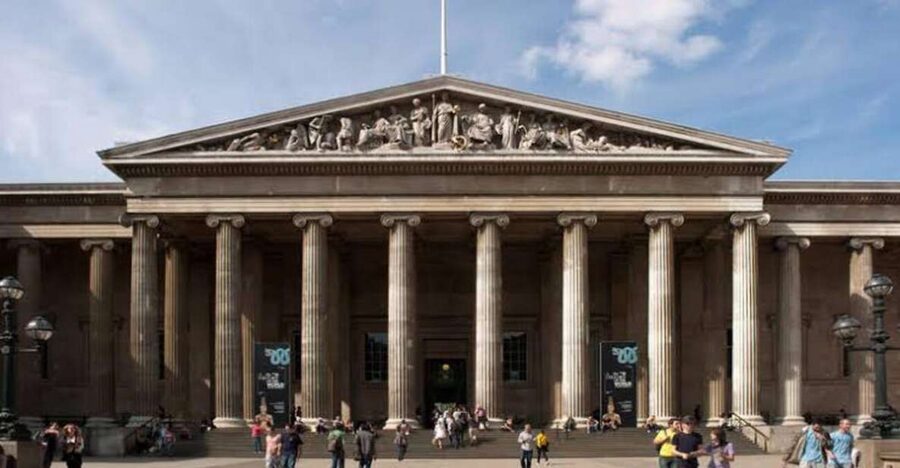
Ancient treasures need a good storyteller. This two-hour British Museum tour gives you a clear route through a famously huge collection, with standout stops including the Rosetta Stone, Egyptian mummies, the Parthenon Sculptures, and Sutton Hoo. I like the way a guide turns scattered objects into a connected story, and I like the modest $23 price, especially for a first visit. The main drawback is simple: two hours can only cover the highlights, and meeting instructions may require extra care.
The museum is free to enter in general, but this paid tour buys you structure, context, and a human voice in rooms that can otherwise feel confusing. Guides such as Joe, Denise, Paul, Filomena, and Dionysia have been praised for making the material lively and adjusting explanations for children and teens. Still, queues and changing meeting points can cause stress, so read your booking details closely and arrive with time to spare.
In This Review
- Key points to know before you book
- Why a guide helps inside this enormous museum
- Starting beneath the Great Court’s glass roof
- The Rosetta Stone and the breakthrough in Egyptian writing
- Ancient Egypt, mummies, and the human side of the collection
- Greek sculpture and the continuing Elgin Marbles debate
- Sutton Hoo and the story of Anglo-Saxon Britain
- The Assyrian Winged Bulls from Khorsabad
- How the guides shape the experience
- Pace, group size, and the practical side
- Is $23 good value for two hours?
- Who should book this British Museum tour?
- Final verdict: book for context, then stay to explore
- FAQ
- How long is the British Museum guided tour?
- What objects are included on the tour?
- How much does the tour cost?
- Is transportation included?
- What languages are available?
- Are headsets provided?
- Is the tour wheelchair accessible?
- Can I cancel the booking for a refund?
Key points to know before you book
- The Rosetta Stone is the anchor stop: You learn how this single inscribed stone helped scholars read Egyptian hieroglyphics.
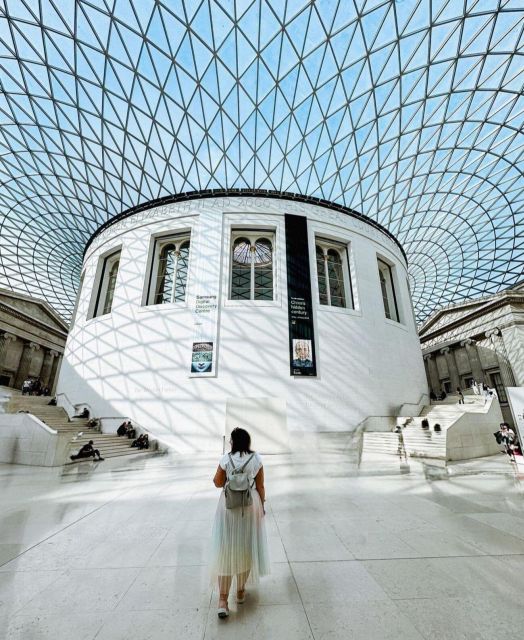
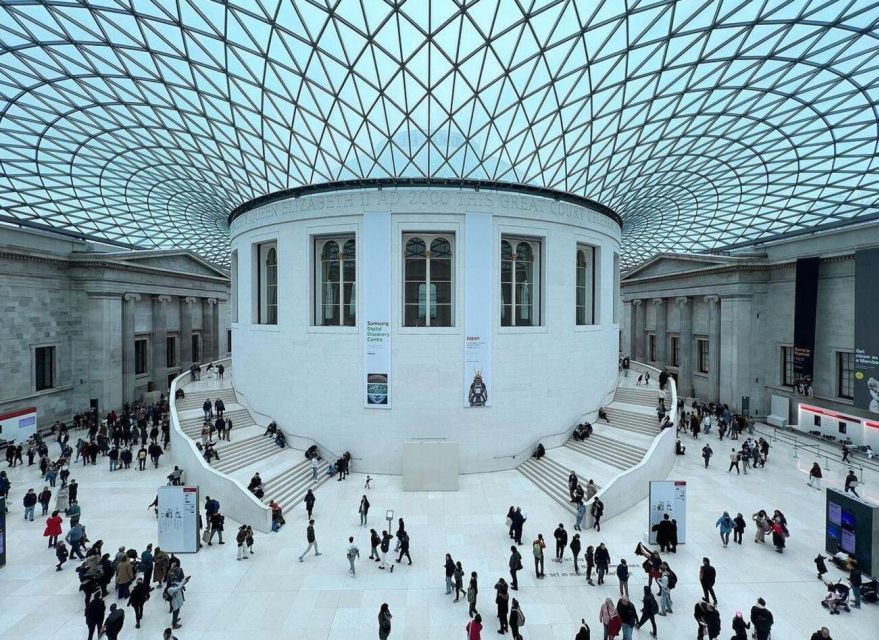
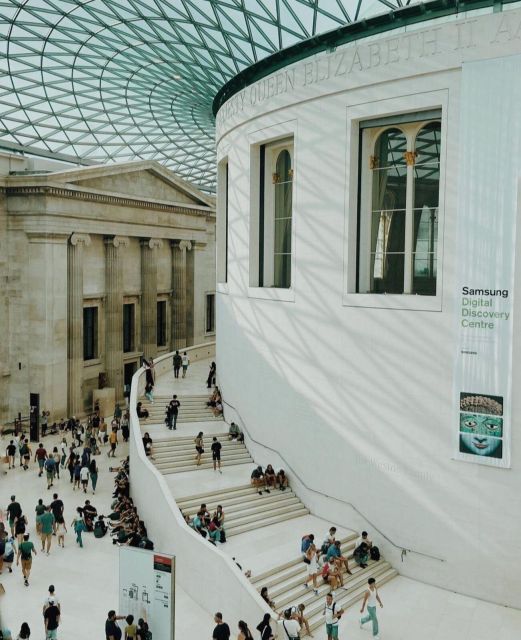
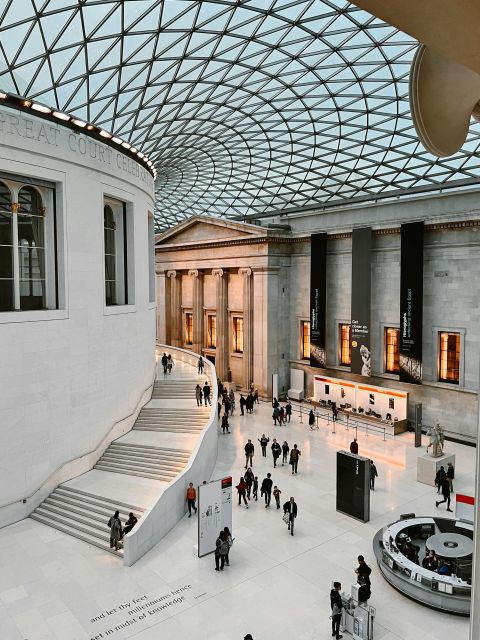
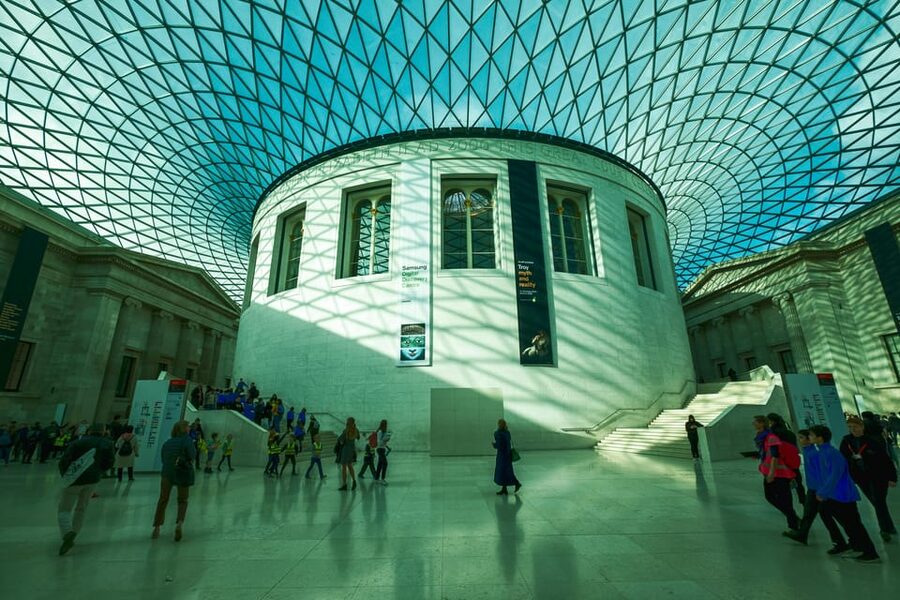
- The Great Court makes a dramatic beginning: Its glass roof and famous Reading Room provide one of London’s most memorable museum interiors.
- You see major objects, not every gallery: Expect Ancient Egypt, Rome, Greece, Sutton Hoo, and Assyrian winged bulls rather than a full museum tour.
- The guide makes the price worthwhile: Joe, Denise, Paul, Filomena, and others have been praised for clear explanations, humor, and strong storytelling.
- Two hours passes quickly: The route is efficient, but you will want extra time afterward for galleries you missed.
- Check the meeting point carefully: It may vary by booking option, and some visitors have found the entrance and queue instructions unclear.
Why a guide helps inside this enormous museum
The British Museum is not a quick look at a few famous paintings. It is a vast public museum covering objects from many cultures and thousands of years. Without a plan, you can spend a long time walking between rooms and still miss the pieces you most wanted to see.
That is the central value of this tour. You are not paying for entry to a private collection. You are paying for a route through the museum and for explanations that give each object a reason to matter.
I like this format for a first visit. A good guide can point out what to examine, explain why an object changed the study of the past, and connect one gallery to the next. Several guides have also used recurring themes, which helps the tour feel like a story instead of a string of unrelated displays.
The experience is conducted in English or Italian, according to the tour information. Commentary is also listed in German, French, Spanish, Italian, Russian, and Portuguese, so check the exact option you select. Headsets are provided for groups larger than six, a useful detail in crowded galleries where a guide’s voice can otherwise disappear.
More Museum Visits in London
- Tower of London and Crown Jewels Exhibition Ticket
★ 4.5 · 6,677 reviews - London: Chelsea Football Club Stadium and Museum Tour
★ 4.8 · 4,576 reviews - Chelsea FC Stadium Tours and Museum
★ 5.0 · 1,908 reviews
Starting beneath the Great Court’s glass roof
The Great Court is an ideal opening because it gives you an immediate sense of scale. The sweeping glass ceiling lets daylight fill the central space, while the famous Reading Room sits within it like a round, historic centerpiece.
Your guide may use this first stop to explain how the museum is arranged and how its collections fit together. That orientation matters. Once you understand the central court and the general direction of the galleries, you are less likely to lose valuable minutes searching for the next room.
The Great Court is also a good reminder that the building itself is part of the experience. You are not simply moving through display cases. You are entering a grand public institution designed to gather objects from across the world under one roof.
Do not expect to linger here for long. The tour has several major galleries to cover, and the guide’s job is to keep the group moving. If the ceiling is one of your main interests, return after the tour and take your time with photographs and the surrounding architecture.
The Rosetta Stone and the breakthrough in Egyptian writing
The Rosetta Stone is one of the essential stops. Its importance is not only that it is old or famous. The stone carries the same decree in three scripts, which gave scholars the comparison they needed to make progress with Egyptian hieroglyphics.
A guide can make this point much easier to grasp than a quick label beside the case. You learn that the stone acted as a bridge between known and unknown writing systems. The object becomes a record of a scholarly breakthrough, not just a dark slab behind glass.
This is also where a strong guide can help you look closely. The writing may seem hard to read at first, but the story gives you a reason to study the surface and understand what you are seeing.
The Rosetta Stone can attract a crowd, and you may not have much quiet time in front of it. That is one reason the tour format works well. The guide can explain the main idea while the group shifts position, rather than leaving you to fight for a perfect viewing spot and then work out the significance alone.
Ancient Egypt, mummies, and the human side of the collection
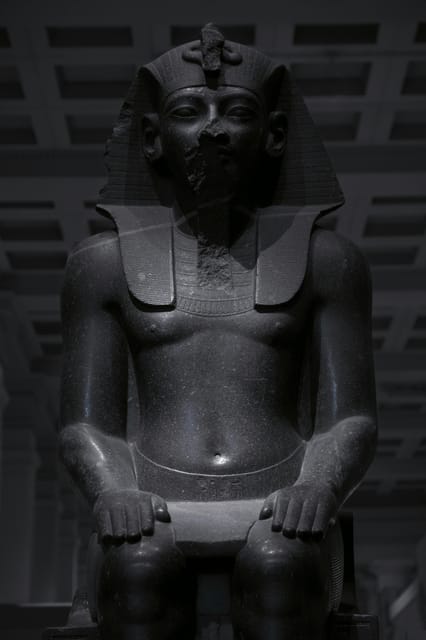
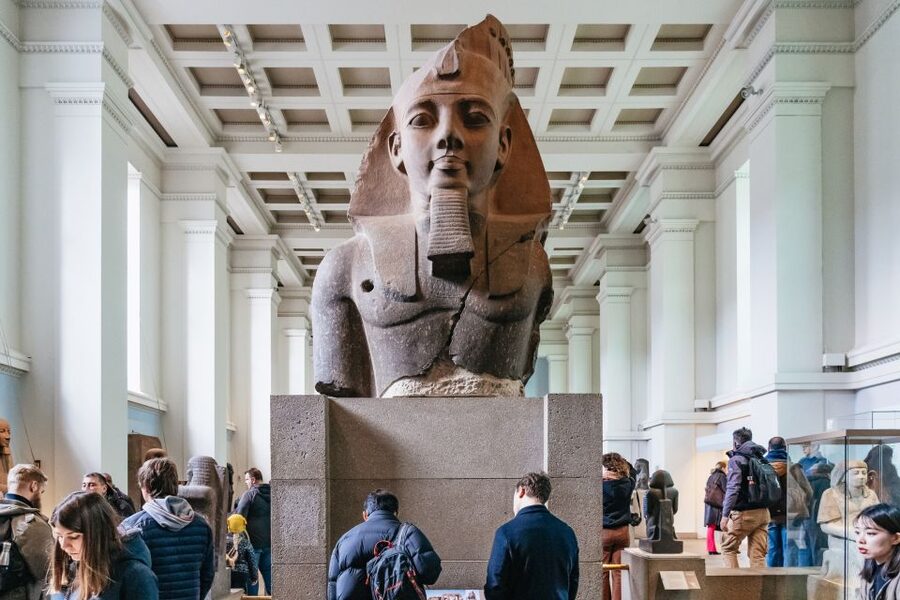
The Egyptian galleries provide some of the tour’s most memorable sights. You can expect to see mummies and other objects connected with burial, belief, and daily life in Ancient Egypt.
For families, the mummies can be a strong hook. One family found that an 11-year-old history fan followed the tour closely, while younger children were less interested until the sight of a 5,000-year-old body caught their attention. That sounds about right. Younger children may not follow every date and dynasty, but a guide can find one striking detail that brings them back into the story.
The best part of this section is the added context. A mummy is easy to treat as a spooky object. A guide can place it within wider Egyptian ideas about death, preservation, and the afterlife, giving you more to think about than the initial shock.
Families should be realistic about the pace. Some children will enjoy the gods, burial customs, and unusual objects. Others may find two hours of ancient material demanding. The tour is not designed as a children’s entertainment program, but guides such as Joe and Dionysia have been praised for adapting their stories to younger listeners and teenagers.
A different sort of outing around London:
- London: The London Eye Entry Ticket
★ 4.6 · 35,875 reviews - From London: Harry Potter Warner Bros Studio Tour
★ 4.7 · 26,588 reviews - London: Westminster to Greenwich River Thames Cruise
★ 4.5 · 22,836 reviews - Magical London: Harry Potter Guided Walking Tour
★ 4.7 · 22,044 reviews
Greek sculpture and the continuing Elgin Marbles debate
The Parthenon Sculptures, often called the Elgin Marbles, bring a different kind of discussion. These sculptures were taken from the Parthenon in Athens by Lord Elgin, who served as British ambassador to the Ottoman Empire.
The display is visually powerful, but the ownership question is impossible to ignore. A worthwhile guide should explain the basic background without pretending the controversy is settled. You can admire the skill and age of the sculptures while also considering how they reached London and why Greece has long sought their return.
This is one of the tour’s more valuable moments because it moves beyond dates and decoration. Museums are also about power, collecting, empire, and competing claims to cultural heritage. If you want only a quick list of famous objects, the stop may feel like a pause in the route. If you appreciate the questions behind museum displays, it adds real weight to the visit.
Do not expect an extended academic debate in a two-hour group tour. The guide must keep moving and cover several civilizations. Still, the Elgin Marbles offer a natural opportunity to ask a question, and the strongest guides have been praised for welcoming questions and explaining complex subjects in plain language.
Sutton Hoo and the story of Anglo-Saxon Britain
The Sutton Hoo burial objects add an important change of pace. After Egypt, Greece, and Rome, you turn to early medieval Britain and the remarkable material found in an Anglo-Saxon burial site.
The value of this stop is its reminder that Britain’s past was not separate from the wider world. Burial goods can reveal status, belief, craftsmanship, and long-distance connections. You might find the objects easier to relate to after seeing the grand monuments and royal imagery in earlier galleries because they show how smaller objects can also carry a large story.
A guide can help you notice details that a rushed walk might miss. The display is not simply about an old burial. It is about what archaeologists can reconstruct from objects left behind, and about the people whose lives are known through material evidence rather than written accounts.
Sutton Hoo may appeal especially to visitors who want more than the most famous Egyptian and Greek pieces. It gives the tour a stronger British connection and prevents the route from becoming a parade of Mediterranean and Middle Eastern treasures.
The Assyrian Winged Bulls from Khorsabad
The Winged Bulls from Khorsabad provide another striking change. These monumental figures were made for an Assyrian setting and were meant to project power and protection.
Their size makes them easy to remember, but the guide’s explanation is what turns the encounter into something useful. You can consider how ancient rulers used architecture and sculpture to impress people approaching their palaces. The figures also show how the museum collects objects that once belonged to very different political and religious worlds.
This stop suits visual learners. Even if you forget the dates later, you are unlikely to forget the scale and appearance of the sculptures. A guide can also connect them to the wider themes of kingship, guardianship, and the use of art to communicate authority.
As with the other stops, the limitation is time. You will probably receive a focused explanation rather than every detail about Khorsabad or Assyrian archaeology. That is a fair trade for a first look, but you should return later if this becomes your favorite section.
How the guides shape the experience
The strongest praise for this tour has focused on the guides rather than on the museum alone. That is important because the same route can feel flat with a hurried speaker and memorable with a good storyteller.
Joe has been praised for clear communication, efficient navigation, and an ability to keep both adults and children interested. One small group appreciated that he repeated key themes so everyone could follow the thread. Paul has been described as friendly, informed, and flexible when parts of the museum were closed. He also helped point people toward galleries they had missed after the main tour.
Denise has received warm comments for combining humor with strong explanations. Filomena has been praised for her passion, her willingness to answer questions, and her care with a visitor who used a cane, making sure there was somewhere to sit during explanations.
Dionysia made a particularly strong impression on a family with a reluctant teenager by adapting the material to the child’s interests. That is exactly the sort of adjustment you want in a museum tour. The guide should not simply recite facts. The guide should notice when a person is losing interest and find another way into the subject.
Names and assignments can change, so you cannot book with certainty around one particular guide. Still, the pattern is encouraging. The tour depends heavily on the person leading it, and the available guides appear to bring warmth, humor, and serious preparation to the job.
Pace, group size, and the practical side
The listed duration is two hours. That is enough for a strong introduction, not enough for the complete museum. Several people have wished the tour lasted longer, which is understandable given the number of galleries involved.
The best way to use the time is to treat it as a first pass. Let the guide show you the major objects, note the rooms you want to revisit, then continue independently after the tour if your schedule allows. One small group of six found that size particularly effective because the guide could communicate easily and cover ground without a large crowd.
The meeting point may change with the option you book. This deserves attention. Some visitors have been confused by instructions to meet inside or near the museum before the building was open, while others had difficulty finding one another during a long entrance queue.
I would not cut arrival time close. The museum entrance and group meeting process can take longer than expected, and the guide may be trying to reach you by phone. If you do not have mobile roaming, connect to Wi-Fi as soon as possible and save the meeting instructions before arriving.
Transportation is not included. You make your own way to the museum, and the booking details should tell you the precise meeting location for your selected time.
The museum is wheelchair accessible, which makes the guided format useful for anyone who benefits from a planned route and regular chances to pause. If you have specific mobility needs, confirm the meeting point and route details before booking.
Is $23 good value for two hours?
At $23 per person, I consider this a reasonable price for a first visit. The museum itself is public and generally free, so you are comparing the fee with the cost of exploring independently, not with a normal admission ticket.
The value comes from saving time and avoiding the common problem of museum overload. A guide helps you reach major objects without wandering, then gives you enough background to understand why they matter. If you have only one afternoon in London, that structure can be worth more than the price suggests.
The calculation changes if you already know the British Museum well or prefer to move at your own pace. Independent visitors can spend nothing on guiding and return to favorite galleries for as long as they like. You may also prefer reading labels quietly rather than keeping up with a group.
For a first-time visitor, a family with mixed interests, or anyone who feels lost in large museums, I think the fee is justified. It is especially good value if you stay afterward and use the guide’s suggestions to explore the rooms not covered during the two hours.
Cancellation terms appear in two forms in the supplied details, with full refunds listed for cancellation up to 24 hours in one place and up to 72 hours in another. Check the terms attached to your exact booking before paying, rather than relying on a general rule.
Who should book this British Museum tour?
I would recommend it to you if the museum is a priority but you do not want to spend your first hour figuring out the floor plan. It also suits visitors who enjoy stories, historical connections, and a guide who can answer questions as objects come into view.
Families can do well, especially when children already like history, mythology, archaeology, or unusual objects. The pace may test very young children, but an adaptable guide can make a real difference.
This is less suitable if you want a quiet, slow museum visit or if you already have a detailed list of galleries you plan to study. The tour follows a highlights route, so it cannot promise much time at every object.
Final verdict: book for context, then stay to explore
Book this tour if you want the British Museum to make sense quickly. The Rosetta Stone, Egyptian mummies, Parthenon Sculptures, Sutton Hoo objects, and Winged Bulls are a strong set of highlights, and the best guides make them feel connected rather than random.
I would arrive early, confirm the meeting point, and plan extra museum time afterward. At $23, this is a practical introduction for first-time visitors, particularly families and anyone who wants help finding the big stories in an overwhelming collection. If you prefer complete freedom and quiet study, go independently instead. For most first visits, though, a good guide is the difference between seeing famous objects and understanding why they matter.
FAQ
How long is the British Museum guided tour?
The tour lasts two hours. This is enough to see major highlights, but not enough to cover the entire museum.
What objects are included on the tour?
The route includes the Great Court and its glass ceiling, the Rosetta Stone, Ancient Egyptian mummies, the Parthenon Sculptures, Sutton Hoo burial relics, and the Winged Bulls from Khorsabad.
How much does the tour cost?
The listed price is $23 per person.
Is transportation included?
No. Transportation to and from the British Museum is not included.
What languages are available?
The live guide is listed as English or Italian. Commentary is also listed in German, French, Spanish, Italian, Russian, and Portuguese, so check the language option when booking.
Are headsets provided?
Headsets are provided for groups of more than six people.
Is the tour wheelchair accessible?
Yes, the activity is listed as wheelchair accessible.
Can I cancel the booking for a refund?
The supplied information lists free cancellation up to 24 hours in advance, while another notice gives 72 hours. Check the cancellation deadline attached to your exact booking, since no refund is available after the applicable cutoff.
Recently added around London
- PRIVATE HIRE 45 min Speedboat Tour – Embankment/Westminster Pier★ 5.0 · 55 reviews
- Private Tour of London’s Historic Pubs★ 5.0 · 55 reviews
- From London: Glastonbury and Cheddar Gorge Guided Day Trip★ 4.8 · 55 reviews
- Gatwick Airport Taxi – Private Transfer to/from London★ 5.0 · 55 reviews
- London: Kew to Westminster River Thames Cruise★ 4.2 · 55 reviews
- London by Night – Tootbus Sightseeing Tour★ 3.5 · 55 reviews
- London: Tower of London After Hours Tour and Key Ceremony★ 4.8 · 56 reviews
- From London: Cotswolds Guided Trip Including Bourton-on-the-Water★ 4.5 · 56 reviews
Museums, compared.

Liverpool Football Club Museum and Stadium Tour
Read our review →
Tower of London and Crown Jewels Exhibition Ticket
Read our review →
Chelsea Football Club Stadium and Museum Tour
Read our review →




Official tickets: Moco Modern & Contemporary Art Museum
Read our review →Browse the lists this tour appears in