
Reviewed · HISTORICAL TOURS
London: Medieval History Walking Tour from The Tower
London’s oldest stories still shape its streets. This two-hour walk links the Tower of London with Tower Bridge, Borough Market, Shakespeare’s Globe, and St Paul’s Cathedral, turning a string of famous sights into one connected story. I like the route because it mixes major landmarks with lesser-known remains, and I like the way guide Mick Priestley uses archive images and lively storytelling to show how these places once looked.
The main consideration is simple: you cover a lot of ground in two hours. Some stops receive only a short explanation, and there is no time to enter the Tower of London, HMS Belfast, the Globe, or St Paul’s. Still, at $24 per person, this is a strong-value introduction to riverside London, especially if medieval politics, religion, trade, and daily life interest you.
In This Review
- Key points at a glance
- Starting at Tower Hill beside the Tower of London
- Crossing Tower Bridge and meeting the HMS Belfast
- London Bridge, The Shard, and the old market quarter
- Southwark Cathedral and medieval religious life
- The Golden Hinde and Winchester Palace
- Shakespeare’s Globe and the working Thames
- The Millennium Bridge and the view toward St Paul’s
- What Mick Priestley does especially well
- Price, pace, and practical planning
- Who should book this walk?
- Should you book the Medieval History Walking Tour?
- FAQ
- How long does the London Medieval History Walking Tour last?
- Where does the tour meet?
- Where does the tour finish?
- Does the tour enter the Tower of London or other attractions?
- Is the tour wheelchair accessible?
- What language is the tour offered in?
- What should I bring?
Key points at a glance
- The route crosses Tower Bridge: You learn about the bridge’s construction while walking from Tower Hill toward the South Bank.
- Mick Priestley is the main attraction: His talks connect kings, churches, markets, shipping, and ordinary Londoners in a clear, entertaining way.
- You see famous sights and easy-to-miss remains: Winchester Palace, the Golden Hinde, Southwark Cathedral, and old riverside details add depth beyond the usual postcard stops.
- The walk covers major ground quickly: Expect a steady pace, with plenty of standing and walking over roughly two hours.
- It works well for repeat visitors: The route reveals places and stories you may have passed without noticing, even after several trips to London.
- It runs in all weather: Comfortable shoes and rain-ready clothing are essential.
Starting at Tower Hill beside the Tower of London
Meet outside the western exit of Tower Hill Underground station, near Trinity Square, the CitizenM Hotel, and the Tower Hill Tram burger van. Look for a guide holding a flagpole with a flag. That detail matters in this busy part of London, where several streets and exits can make a first meeting confusing.
The Tower of London provides an immediate sense of scale. Founded nearly 1,000 years ago, this fortress has served as a royal residence, prison, armory, and symbol of power. You do not go inside on this tour, so plan a separate visit if you want the Crown Jewels, the medieval rooms, or the famous ravens.
What you do get is a useful outside view and the political setting behind the building. The Tower was not simply a prison from storybooks. It helped control London, the river, and the kingdom. Starting here gives the rest of the walk a clear theme: power was built through walls, bridges, churches, trade, and access to the Thames.
Mick Priestley’s approach is a major strength. He is praised for explaining context rather than firing off isolated dates. His talks cover politics, religion, power struggles, and everyday life, with room for questions. He also carries a portfolio of historical pictures, which helps you compare modern London with older views and construction scenes.
More History Tours in London
- London Small Group Tour of Historical Pubs
★ 5.0 · 10,422 reviews - Soho Music & Historic Pubs Tour
★ 5.0 · 1,993 reviews - London: Historic Pubs of Central London Walking Tour
★ 4.9 · 1,065 reviews
Crossing Tower Bridge and meeting the HMS Belfast
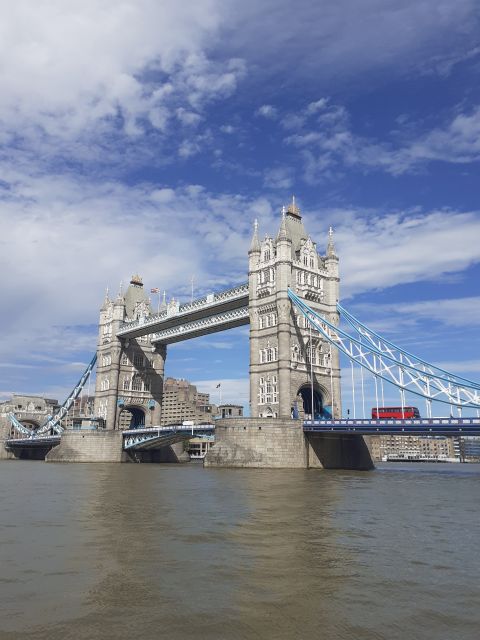
The walk then crosses Tower Bridge. This is not London Bridge, and the distinction is worth remembering. Tower Bridge is the ornate Victorian crossing beside the Tower, while London Bridge lies farther west near Borough Market.
From the bridge, you get a good view of the river traffic, the Tower, and the South Bank. The guide explains how the bridge was built, adding engineering and city planning to the historical story. The crossing is also a useful change of pace after the opening discussion, since you are moving through the city rather than simply looking at a building.
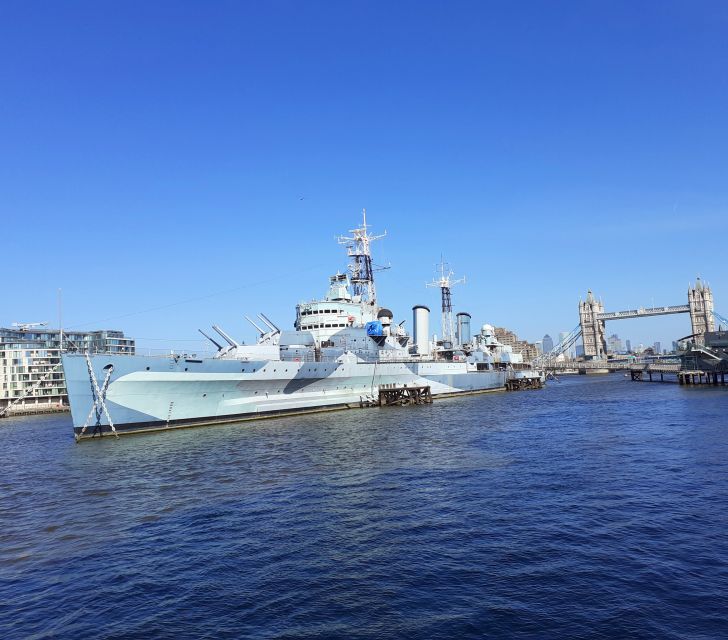
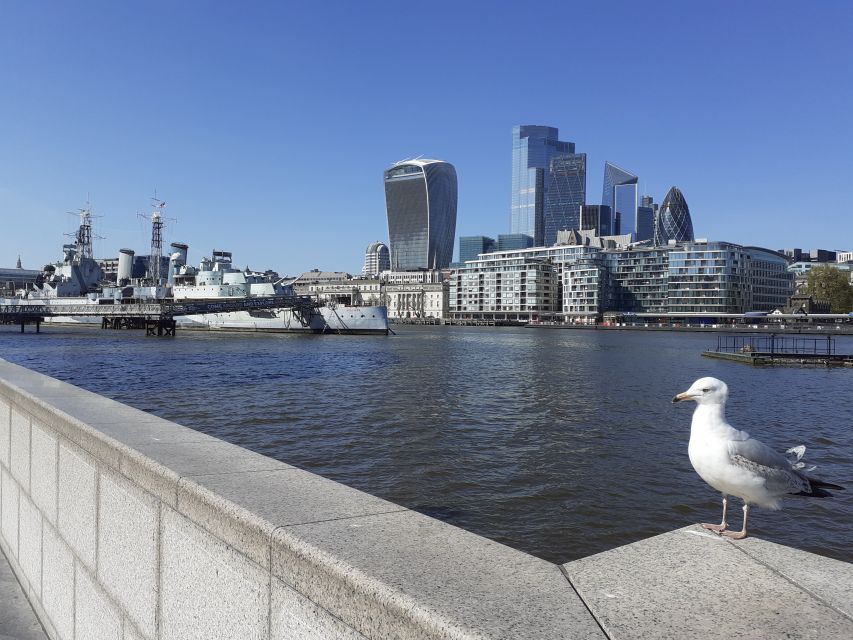
On the South Bank, the HMS Belfast gives the route a modern military chapter. This large warship took part in the D-Day landings during the Second World War. The tour covers the ship from outside, so you will need a separate ticket if you want to explore its decks and compartments.
This stop helps prevent the walk from becoming narrowly medieval. The Thames has carried soldiers, merchants, prisoners, performers, and cargo across many centuries. HMS Belfast shows that the river’s strategic role did not end with castles and medieval walls.
London Bridge, The Shard, and the old market quarter
The route continues toward London Bridge and the Borough area. London Bridge has been rebuilt many times, and its location has long connected the City of London with the southern bank. The modern crossing may look ordinary compared with Tower Bridge, but its position is central to the city’s growth.
The nearby Shard provides a sharp modern contrast. Its glass tower rises above an area shaped by much older buildings, churches, markets, and river trade. The tour uses this contrast well, showing that London is not a preserved medieval town. It is a modern capital built over older layers.
Borough Market is one of the most useful stops for understanding the practical side of old London. The market area is tied to food supply and movement across the river. You may be tempted to stop for a snack, but the two-hour schedule does not leave much time for browsing or eating during the tour.
I would save Borough Market for a return visit. It is an excellent place to explore after the walk, especially if you want to turn the historical explanation into a more immediate food stop. Keep track of the group, since this part of the route can be crowded and distracting.
Southwark Cathedral and medieval religious life
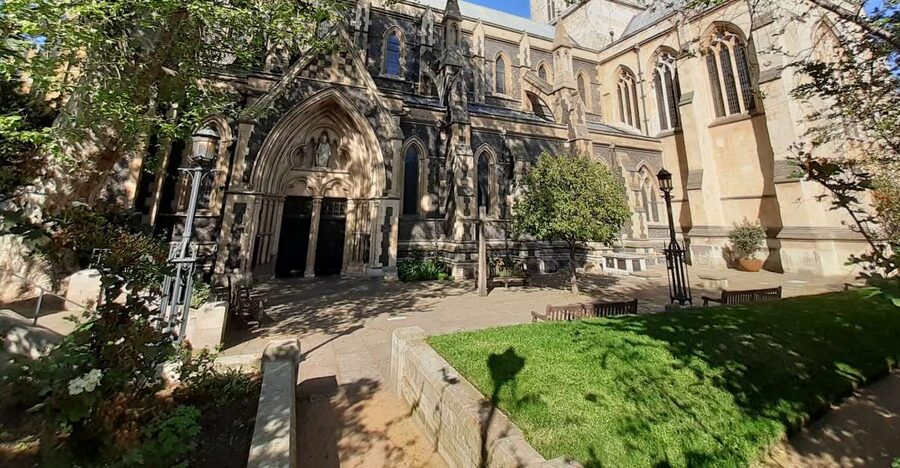
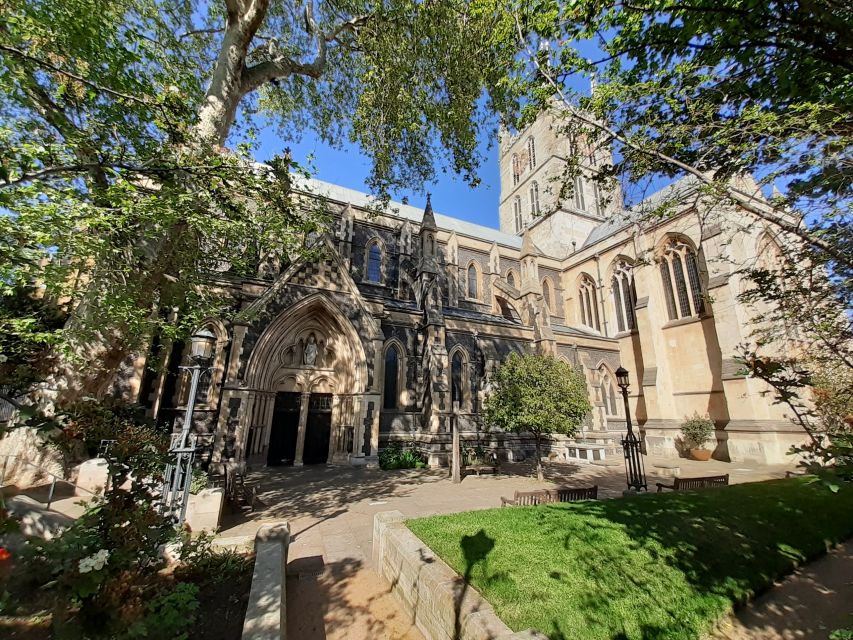
Southwark Cathedral brings the route into the religious world of medieval London. The building has roots reaching back many centuries and remains one of the important historic churches south of the Thames. Again, the tour views the cathedral from outside rather than taking you inside.
That limitation is worth knowing. You will hear why the church mattered and how it fits into the old Southwark district, but you will not have time for a full architectural visit or quiet interior inspection. If church history matters to you, return later when you can look around without keeping pace with a group.
The cathedral also helps explain how London was divided between the City and the southern bank. Southwark was not just an extension of the City. It had its own institutions, markets, entertainments, and reputation. Mick’s strength is making those connections understandable without turning the walk into a lecture.
More Walking Tours in London
- Magical London: Harry Potter Guided Walking Tour
★ 4.7 · 22,044 reviews - London: The Original Jack the Ripper Walking Tour
★ 4.7 · 7,833 reviews - Tour for Muggles The Ultimate Harry Potter Walking Tour in London
★ 5.0 · 4,684 reviews - London Jack The Ripper Guided Walking Tour
★ 5.0 · 3,131 reviews
The Golden Hinde and Winchester Palace
The Golden Hinde is a full-size replica of the ship associated with Sir Francis Drake. It adds a seafaring chapter to the route and recalls the period when England’s power was tied to exploration, privateering, trade, and naval competition.
You pass the ship rather than taking a full tour of it. That is another reason to treat this walk as an orientation rather than a collection of museum visits. It points you toward places worth returning to, then gives you enough background to decide which ones deserve your time.
Nearby Winchester Palace is one of the route’s more rewarding stops. The surviving medieval remains belonged to the residence of the bishops of Winchester, who held major influence in England. Only part of the palace survives, surrounded by later streets and buildings, so it is easy to miss without someone pointing it out.
This is exactly the sort of place that makes the walk worthwhile. A grand palace once occupied this part of Southwark, yet modern London gives little hint of its former importance. The remains are not vast, but the story is large. You begin to see how church leaders, royal officials, merchants, and entertainers all occupied the same narrow riverside district.
Shakespeare’s Globe and the working Thames
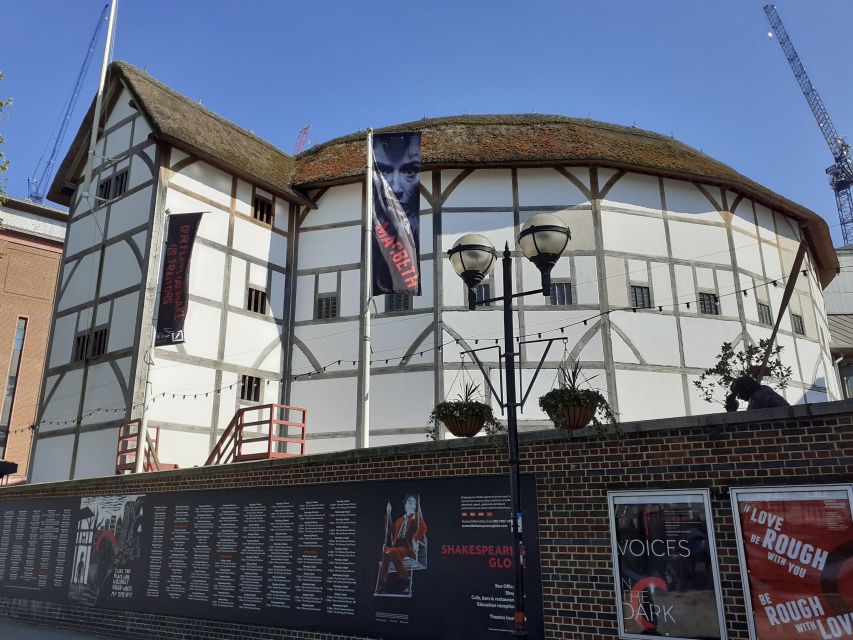
Shakespeare’s Globe is the route’s most familiar cultural stop. The present theatre is a reconstruction, but its position near the historic Bankside entertainment district connects you with the world of Shakespeare and early modern London.
The tour does not include a performance or an interior theatre visit. Instead, you hear about the area where audiences gathered and where theatre became a major part of London life. This works well for anyone who wants context before booking a Globe tour or performance.
The riverside walk is particularly effective here. The Thames was both a barrier and a highway. People crossed it by boat, carried goods along its banks, and used its wharves to reach markets and entertainment. The river also separated social worlds while linking them economically.
You should expect plenty of photo opportunities, but not always a quiet view. The South Bank is popular, and the path can become crowded. Several people praised Mick’s ability to keep the group together and maintain attention in busy areas, which is useful on a route with constant foot traffic.
The Millennium Bridge and the view toward St Paul’s
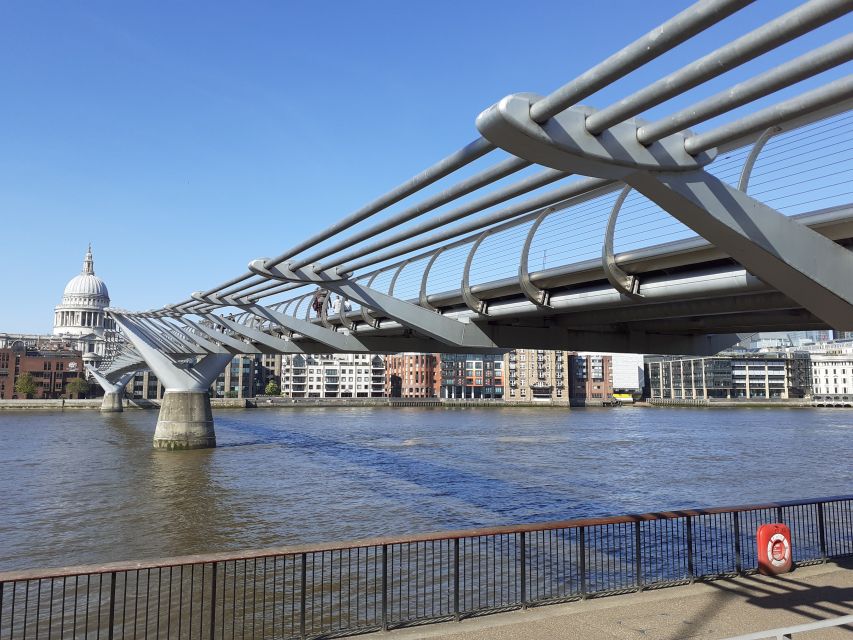
The final stretch brings you along the Thames toward the Millennium Bridge and St Paul’s Cathedral. The bridge supplies a modern architectural counterpoint to the older churches, palaces, and markets behind you.
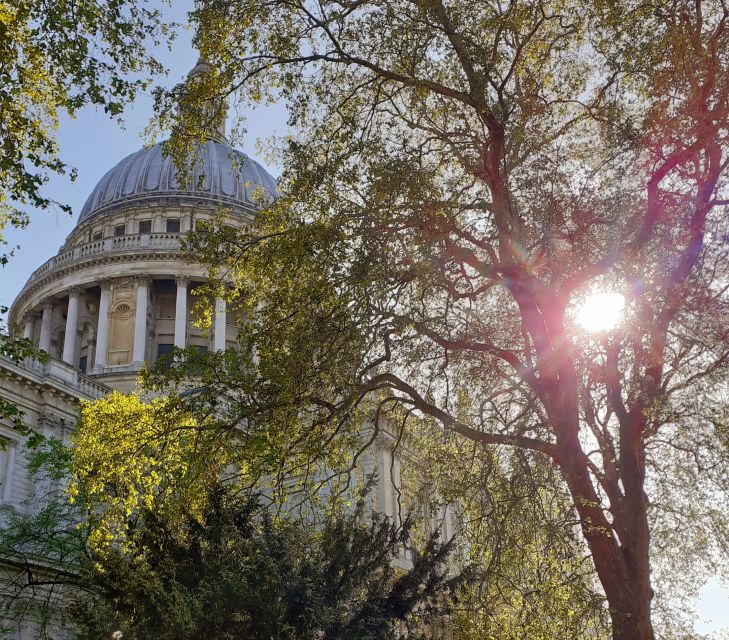
From the riverside and the bridge area, St Paul’s provides a memorable finish. Sir Christopher Wren’s cathedral belongs to a later period than the medieval focus of the tour, but it helps show how London rebuilt and reshaped itself after disaster and change.
The walk ends around EC4M 8AD, near St Paul’s. This is a useful finish because you can continue sightseeing in the City, visit the cathedral separately, or use nearby public transport. The tour does not include entry to St Paul’s, and you should allow extra time if you want to see the interior, crypt, or dome.
The route’s final sequence is one of its best teaching tools. You move from medieval foundations to Shakespeare’s London, wartime Britain, Victorian engineering, and modern design. London’s story becomes less like a list of dates and more like a city constantly rebuilding over itself.
What Mick Priestley does especially well
The guide receives the strongest praise for his command of detail and his way of telling a story. That does not mean the tour is dry or academic. Mick is also described as funny, relaxed, friendly, and theatrical, with a style that keeps the history moving.
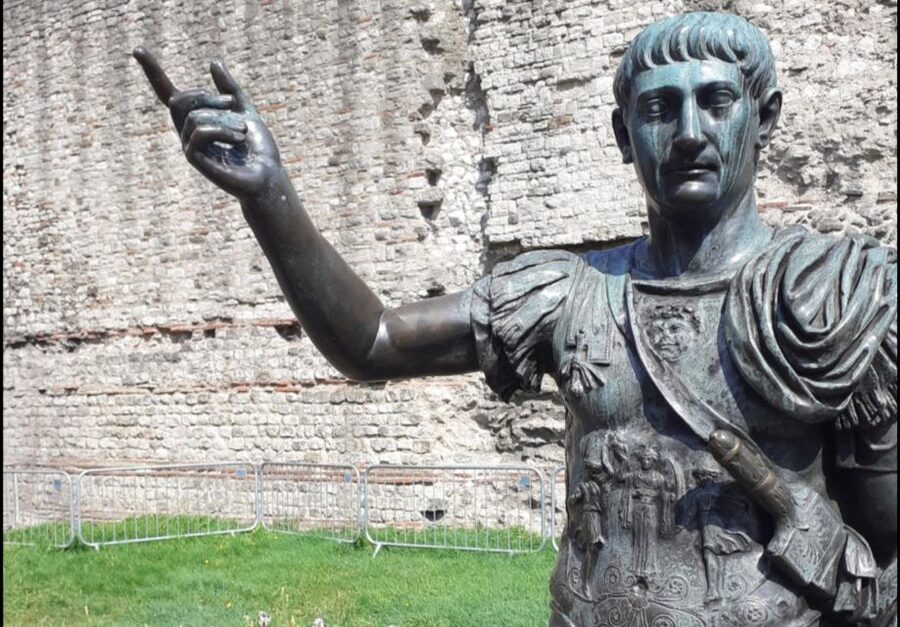
His use of archive pictures is a smart touch. A surviving wall or altered street can be hard to understand when you see only its present form. Old images of buildings, construction work, and historic figures give you a clearer sense of what changed.
The question-and-answer side of the tour also matters. Mick is comfortable with detailed questions and niche subjects, and he expands on topics instead of shutting them down. For you, that means the tour can feel more like a conversation than a fixed speech.
The pace is generally well judged. Several people found it easy to follow, while families with children were given enough care to keep everyone together. In hot weather, the guide moderated the speed, though you should still expect two hours on your feet.
Price, pace, and practical planning
At $24, this is good value if you want a guided overview of central London’s riverside history. You see the outside of at least a dozen major sights and lesser-known places, while a guide provides connections you would not get from simply following a map.
The value is strongest for first-time visitors and repeat visitors who want a historical framework. It is less suitable if you want long stops, museum entry, or detailed architectural study. You are paying for interpretation and route design, not admission tickets.
The walk is wheelchair accessible, according to the tour information. Still, the route includes public streets and busy riverside areas, so check current conditions if you have specific mobility needs. The duration is two hours, but the distance feels substantial because the tour covers Tower Hill to the area near St Paul’s.
Wear comfortable shoes. Bring clothing for the forecast, and assume the tour will operate in rain or shine. An umbrella or waterproof layer can make the difference between enjoying the stories and worrying about the weather.
English is the only tour language listed. The booking terms allow free cancellation up to 24 hours before departure, and you can reserve while paying later, which helps if your London schedule is still changing.
Who should book this walk?
I would choose this tour if you enjoy history, want a strong first look at the Tower and South Bank, or have already seen the main sights but missed the small remains between them. It is also a good choice for families and mixed-age groups because the stories, photos, and frequent landmarks give everyone something to follow.
It suits curious visitors more than people seeking a leisurely stroll. The route is not punishing, but you will walk and stand for much of the two hours. If your priority is shopping at Borough Market, entering several attractions, or taking long photographs, plan those activities before or after the tour.
Should you book the Medieval History Walking Tour?
Yes, if you want London explained rather than simply displayed. The $24 price is modest for a two-hour route that covers the Tower of London, Tower Bridge, HMS Belfast, London Bridge, Borough Market, Southwark Cathedral, Winchester Palace, Shakespeare’s Globe, the Millennium Bridge, and St Paul’s.
Book it early in your London schedule if possible. Mick Priestley’s explanations can help you choose which places deserve a return visit and give familiar sights a sharper meaning. Just arrive ready to walk, dress for the weather, and remember that the tour is an outdoor history lesson, not a series of interior visits.
FAQ
How long does the London Medieval History Walking Tour last?
The tour lasts two hours. The route begins at Tower Hill and finishes near St Paul’s Cathedral in the EC4M 8AD area.
Where does the tour meet?
Meet outside the western exit of Tower Hill Underground station, near Trinity Square, the CitizenM Hotel, and the Tower Hill Tram burger van. Your guide will hold a flagpole with a flag.
Where does the tour finish?
The walk finishes near St Paul’s Cathedral, in the EC4M 8AD area.
Does the tour enter the Tower of London or other attractions?
The tour provides guided sightseeing outside the listed landmarks. Entry to the Tower of London, HMS Belfast, Shakespeare’s Globe, St Paul’s Cathedral, and other attractions is not included.
Is the tour wheelchair accessible?
Yes, the activity is described as wheelchair accessible.
What language is the tour offered in?
The live tour guide speaks English, and English is the listed tour language.
What should I bring?
Bring comfortable shoes and clothing suited to the weather. The tour operates in all weather conditions, including rain.
Recently added around London
- PRIVATE HIRE 45 min Speedboat Tour – Embankment/Westminster Pier★ 5.0 · 55 reviews
- Private Tour of London’s Historic Pubs★ 5.0 · 55 reviews
- From London: Glastonbury and Cheddar Gorge Guided Day Trip★ 4.8 · 55 reviews
- Gatwick Airport Taxi – Private Transfer to/from London★ 5.0 · 55 reviews
- London: Kew to Westminster River Thames Cruise★ 4.2 · 55 reviews
- London by Night – Tootbus Sightseeing Tour★ 3.5 · 55 reviews
- London: Tower of London After Hours Tour and Key Ceremony★ 4.8 · 56 reviews
- Private Round Trip Transfer between London Airports and Hotel★ 3.5 · 56 reviews
Historical Tours, compared.
A History of Terror – Belfast City Centre Walking Tour
Read our review →
Old Town Walking Tour History and Tales in Edinburgh
Read our review →
Shadows of York: Ghost Walk and Horrible History.
Read our review →
Multi-Sensory Small-Group Historic Vaults Tour in Edinburgh
Read our review →
Browse the lists this tour appears in