
Reviewed · HISTORICAL TOURS
Roman Ruins to Blitz Bombings: A Walking Tour of London’s Fiery History
London has burned, been rebuilt, bombed, and rebuilt again. This walking tour connects those layers in a compact route from the Tower of London to St. Paul’s Cathedral, using famous landmarks and easy-to-miss corners to explain how the city changed.
I like the small maximum of 15 people, which gives you a better chance to hear the guide and ask questions. I also like the mix of Roman, medieval, Great Fire, and Second World War history. The main drawback is physical: this is a long walking tour, and the short stop times mean you must keep moving. It is not a good choice if you have mobility issues.
Tom receives especially warm praise for his clear storytelling, strong knowledge of London, and willingness to suggest other places to visit after the walk. The tour is offered in English, costs $27.78 per person, and has earned a five-star rating from 190 reviews, with 100 percent recommending it.
In This Review
- Key points about this London history walk
- From the Tower of London to London’s changing story
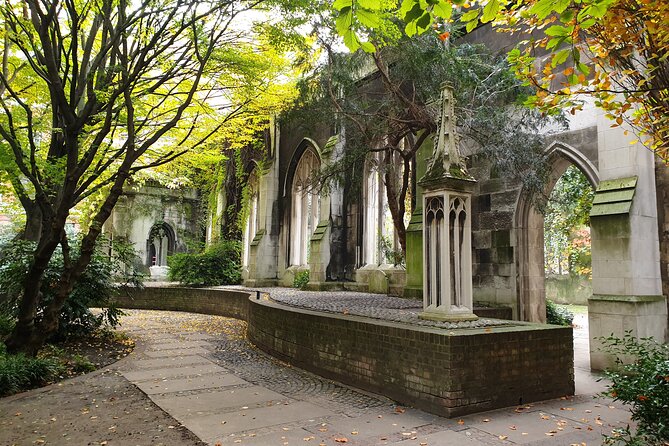
- St. Dunstan in the East, a church turned into a garden
- The Monument and the Great Fire of 1666
- London Stone and the legends of the city
- The Bank of England Museum and London’s financial core
- Guildhall and the City of London’s civic story
- St. Paul’s Cathedral and Christopher Wren’s rebuilding
- What $27.78 buys you
- The pace, group size, and practical demands
- The guide can make or break the experience
- Who should book this walk?
- Booking details that matter
- Should you book Roman Ruins to Blitz Bombings?
- FAQ
- How long does the walking tour last?
- How much does the tour cost?
- Where does the tour begin?
- Where does the tour end?
- What language is the tour offered in?
- How many people can join the tour?
- Are attraction admission tickets included?
- Is entry to St. Dunstan in the East free?
- Are service animals allowed?
- Can I cancel for a full refund?
Key points about this London history walk
- Seven major stops in about two hours: The route links the Tower of London, St. Dunstan in the East, the Monument, London Stone, the Bank of England Museum, Guildhall, and St. Paul’s Cathedral.
- History told through destruction and renewal: You move from Roman traces and medieval power to the Great Fire of 1666 and the Blitz.
- A small group capped at 15 people: That size should make it easier to follow the guide and ask questions.
- Tom is a highly praised guide: His storytelling, enthusiasm, and practical suggestions are a major part of the tour’s appeal when he leads it.
- Tickets are not included: The tour fee covers the guided walk, but admission charges at the Tower of London, the Monument, the Bank of England Museum, Guildhall, and St. Paul’s Cathedral are not included.
- A serious walking commitment: The route ends at Ye Olde Cheshire Cheese on Fleet Street, after roughly two hours on foot.
From the Tower of London to London’s changing story
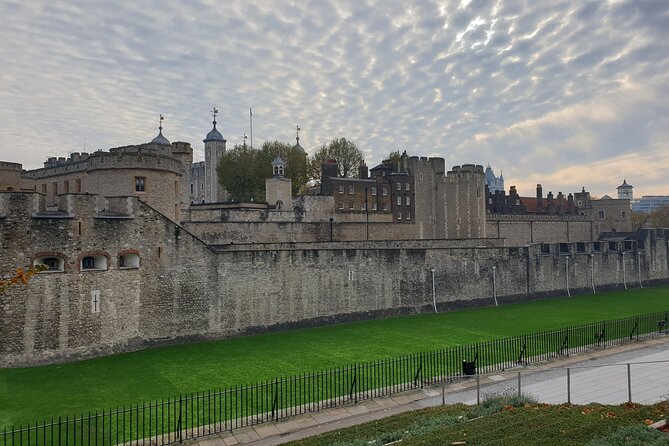
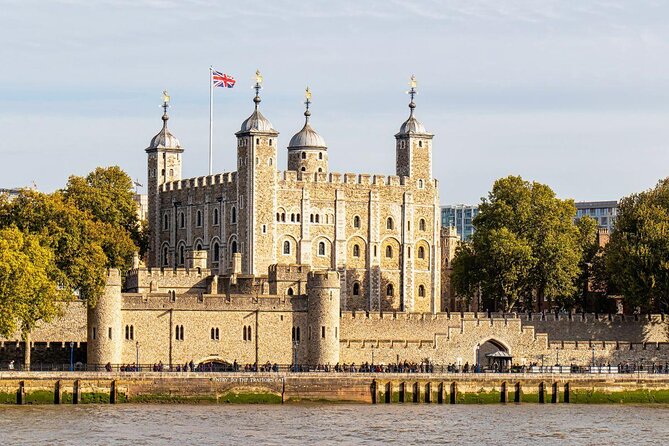
The tour begins at 38 Trinity Square, close to the Tower of London. This is a fitting starting point because the Tower is one of London’s great symbols of royal power, imprisonment, ceremony, and survival.
You stop outside or near the Tower for about five minutes. That is enough time for a focused introduction, but not enough for an interior visit. Admission is not included, so you should treat this as an exterior history stop unless you plan to return separately with a ticket.
The Tower is described as Europe’s oldest surviving royal palace. That label gives the guide plenty to work with, but the real value here is how the building anchors the rest of the walk. London’s story is not told from one grand monument alone. It is built from walls, streets, churches, financial institutions, and scraps of older stone.
Starting here also helps you understand the City of London as a place of power. The route soon leaves royal history behind and shifts toward church ruins, fire, banking, civic government, and war. That change is one of the tour’s best features.
More History Tours in London
- London Small Group Tour of Historical Pubs
★ 5.0 · 10,422 reviews - Soho Music & Historic Pubs Tour
★ 5.0 · 1,993 reviews - London: Historic Pubs of Central London Walking Tour
★ 4.9 · 1,065 reviews
St. Dunstan in the East, a church turned into a garden
St. Dunstan in the East is one of the most memorable stops because its remains show how destruction can create a different kind of public space. The medieval church was badly damaged during the Second World War, and the surviving shell now forms a garden.
The scheduled stop is about five minutes, and entry is free. You will not need to buy a ticket or plan a separate admission. The guide can use the ruined walls to explain both the church’s older past and the impact of wartime bombing on London.
This stop should appeal to you if you like history that feels physical rather than abstract. A ruined wall can make the Blitz easier to picture than a long explanation alone. At the same time, five minutes is brief. You should not expect time for a long solo wander or detailed photography session.
The route’s focus is not only on famous buildings. It is also on what remains after catastrophe. St. Dunstan in the East sets up the later stop at St. Paul’s Cathedral, where Christopher Wren’s rebuilding work represents another answer to urban destruction.
The Monument and the Great Fire of 1666
The Monument to the Great Fire of London marks one of the city’s most important disasters. The Great Fire of 1666 destroyed a large part of London, and the Monument gives the guide a clear point from which to explain what happened and how the city responded.
The stop lasts around five minutes. Admission is not included, so the tour does not promise a climb or interior visit. If you want to enter, you will need to arrange that separately, but the guided stop still gives you useful context without adding another ticket to the tour price.
I like this part of the route because it connects history to city planning. London was not simply damaged and then restored exactly as before. Fire changed the way people thought about buildings, streets, and the future shape of the city.
The Monument also gives the walk a strong chronological rhythm. You have moved from royal authority to a medieval church and then to a major seventeenth-century disaster. The guide’s job is to keep those periods connected without burying you in dates. One five-star account specifically praised the tour for giving enough information without overwhelming the group, which is useful if you want substance but not a classroom lecture.
London Stone and the legends of the city
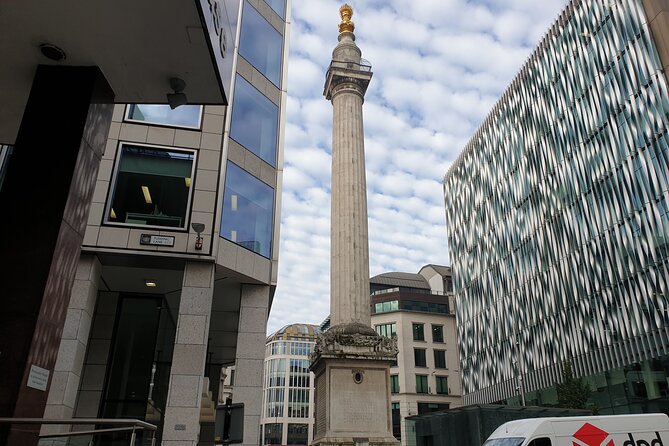
London Stone is a small stop with a large dose of mystery. It is a stone to which remarkable legends have been attached, and the tour uses it to show how London’s identity is shaped by stories as much as by official records.
The stop is free and lasts about five minutes. You should not expect a large monument or a lengthy visit. The appeal is the contrast: after the broad public history of the Great Fire, you pause at a much smaller object whose meaning has grown through legend.
This is the kind of stop that can change how you walk around London afterward. You begin noticing that major streets and grand buildings are only part of the city’s past. Some historical points are modest and easy to pass without a second thought.
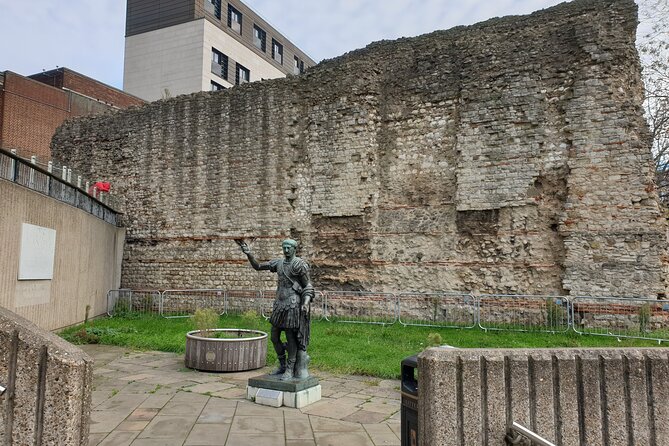
The guide’s storytelling matters especially here. A stone cannot explain itself, so the experience depends on clear context and a good sense of proportion. Tom is praised for bringing ordinary-looking places to life and for pointing out side attractions that include Roman ruins and artifacts in free museums. That suggests this tour can help you see more in the streets after it ends.
More Walking Tours in London
- Magical London: Harry Potter Guided Walking Tour
★ 4.7 · 22,044 reviews - London: The Original Jack the Ripper Walking Tour
★ 4.7 · 7,833 reviews - Tour for Muggles The Ultimate Harry Potter Walking Tour in London
★ 5.0 · 4,684 reviews - London Jack The Ripper Guided Walking Tour
★ 5.0 · 3,131 reviews
The Bank of England Museum and London’s financial core
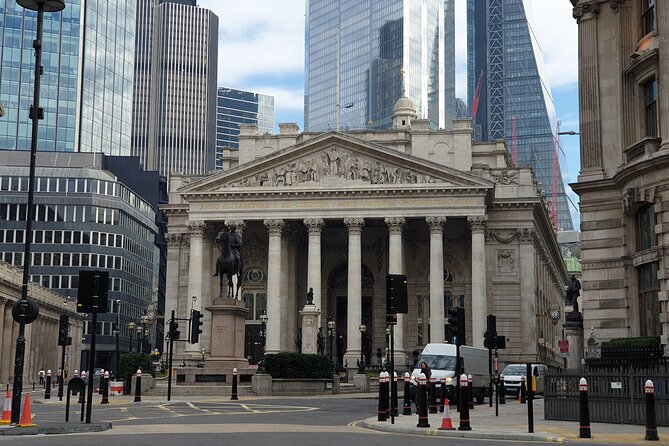
The Bank of England Museum introduces another side of London: money, banking, and national finance. The Bank of England is the United Kingdom’s central bank, and its presence helps explain why this part of London has long mattered beyond its royal and religious buildings.
The stop lasts about five minutes, and admission is not included. The tour fee covers the guide, not entry to the museum. If you want to explore the exhibits, you will need to allow extra time outside the walking tour.
This is a useful stop for readers who want more than tales of kings and battles. London’s power also comes from trade, finance, and civic institutions. The museum adds that economic layer to the route.
The short timing is both a strength and a limit. You get a clear introduction without losing momentum, but you will not receive a full museum visit. I would view the stop as a preview. If the subject interests you, return later and explore at your own pace rather than trying to squeeze it into the group walk.
Guildhall and the City of London’s civic story
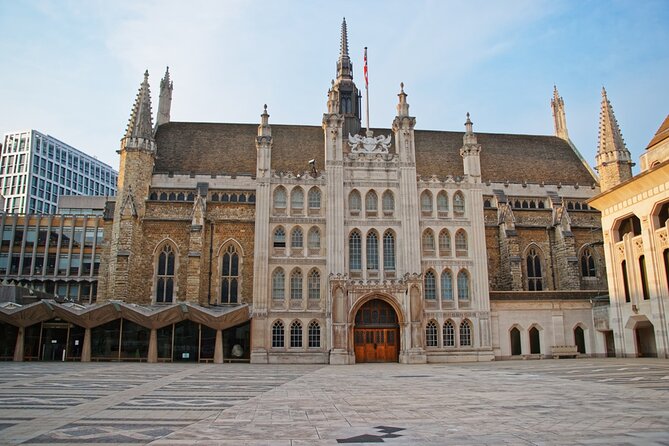
Guildhall is a fifteenth-century hall and the home of the Corporation of London. The stop brings the route into the city’s civic past, showing that London was governed through institutions as well as through the monarchy.
The scheduled visit is around five minutes, and admission is not included. The building may interest you most if you want to understand how the City of London developed its own political and commercial identity.
This part of the tour is a reminder that the City is not simply a cluster of old buildings. It is a historic district with its own civic structure. The guide can help you connect Guildhall to the financial and religious sites already seen on the walk.
Again, the format favors explanation over exploration. You will get a guided look and a concise account, not an extended interior tour. That works well if your goal is to build a framework for London history in two hours. It works less well if you prefer to linger at every stop.
St. Paul’s Cathedral and Christopher Wren’s rebuilding
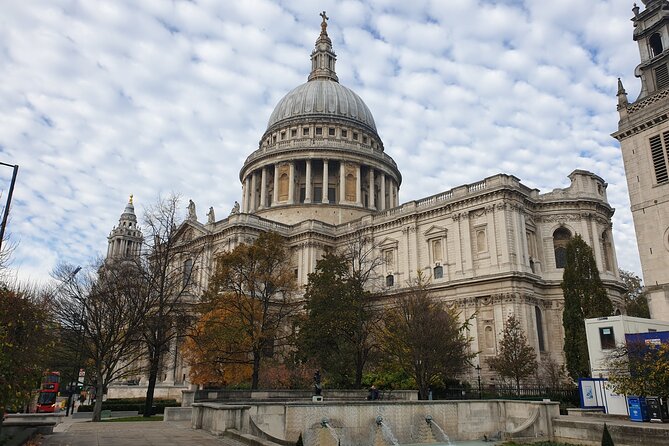
The tour ends at St. Paul’s Cathedral, the great seventeenth-century cathedral designed by Christopher Wren. It is a fitting final stop because Wren’s work links the Great Fire to the rebuilding of London.
The stop lasts about five minutes, and admission is not included. You should not assume the tour includes entry to the cathedral. Instead, expect the guide to explain its place in the city’s story and perhaps point out details worth returning to see.
St. Paul’s gives the walk a strong closing image. You have seen a wartime church ruin, a monument to fire, civic buildings, and financial institutions. The cathedral shows how London answered destruction with a major new architectural vision.
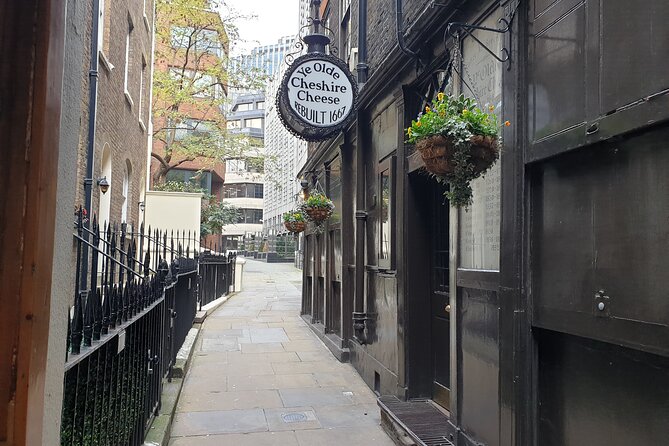
The end point is outside Ye Olde Cheshire Cheese, at 145 Fleet Street, not far from Blackfriars Station. That is practical if you want to continue sightseeing, find a meal, or use public transport. The pub itself is not listed as an included part of the tour, so think of it as the meeting point for the conclusion rather than an organized final stop.
What $27.78 buys you
At $27.78 per person, this is a reasonably priced way to get a guided introduction to central London’s past. You are paying for about two hours with an expert guide, a planned route, and interpretation that ties seven stops into one story.
The value is strongest if you want orientation. London can feel like a pile of unrelated landmarks when you first arrive. This walk gives you a sequence: royal power, medieval worship, wartime ruin, fire, legend, banking, civic government, and cathedral rebuilding.
The price does not include admissions. That matters because several stops list a ticket charge or possible paid entry. You should budget separately if you want to enter the Tower of London, the Monument, the Bank of England Museum, Guildhall, or St. Paul’s Cathedral.
Still, the tour can save you from spending money blindly. The guide’s introductions help you decide which places deserve a longer visit. One especially useful feature is the advice about side attractions, including free museums with Roman ruins and artifacts. Those suggestions may add value after the official walk ends.
The pace, group size, and practical demands
The tour lasts about two hours and has a maximum of 15 people. That is small enough for a more personal feel without the cost of a private tour. You should have a better view of the guide and a reasonable chance to ask questions.
The pace deserves serious attention. One account described it as an extremely long walking tour and advised against it for anyone with mobility issues. The schedule gives only about five minutes at each listed stop, which means much of the experience is spent walking between locations and listening while the group moves.
Wear comfortable shoes and arrive ready to keep moving. The tour is near public transportation at both ends, with the start at Trinity Square and the finish near Blackfriars Station. The exact route between the stops is not specified, so you should not plan tight connections or another timed activity immediately afterward.
Most people can participate, and service animals are allowed. The practical message is simple: this is an active city walk, not a seated lecture or a hop-on, hop-off outing.
The guide can make or break the experience
The strongest praise goes to Tom. He is described as engaging, enthusiastic, and able to make history feel alive. His approach seems to mix clear explanations with room for questions, which helps keep the walk from becoming a string of dates and names.
You may also appreciate the personal suggestions at the end. Tom is praised for recommending other places to visit and local spots to enjoy afterward. That kind of advice can be more useful than a generic list because it grows out of the route you have just walked.
No tour guide is guaranteed for every departure, so you should not assume Tom will lead your particular date. Still, his strong reputation gives you a useful sense of the experience’s intended style: conversational, informed, and focused on making overlooked details worth noticing.
The tour is offered in English only. That is important if you need another language or prefer a multilingual presentation.
Who should book this walk?
I would choose this tour if you are interested in London’s past but want more structure than simply wandering from landmark to landmark. It suits first-time visitors who want a historical map of the City, as well as repeat visitors who have seen the main sights but missed the smaller points along the way.
It is especially good for:
- History enthusiasts who enjoy Roman, medieval, royal, financial, and wartime subjects
- People who prefer a small group to a large city tour
- Visitors who want guide suggestions for free museums and nearby sights
- Anyone who likes short stops linked by a clear historical theme
- Visitors with a half-day available in central London
I would hesitate if you have mobility limitations, dislike walking, or want extended time inside museums and landmarks. You may also prefer a private or slower tour if you want to stop for photographs, sit down often, or ask lengthy questions at every location.
Booking details that matter
You receive confirmation when you book, and the experience uses a mobile ticket. The tour is offered in English, and the group can include no more than 15 people.
Free cancellation is available if you cancel at least 24 hours before the local start time. Cancellations made less than 24 hours ahead are not refunded, and changes inside that window are not accepted.
The walk begins at 38 Trinity Square, London EC3N 4DJ. It ends outside Ye Olde Cheshire Cheese at 145 Fleet Street, London EC4A 2BP, near Blackfriars Station. Check both points before you leave, since the start and finish are in different parts of central London.
The experience is often booked well ahead, with an average booking time of 37 days before the tour. That does not guarantee every date will sell out, but it is a good reason to reserve early if your London schedule is fixed.
Should you book Roman Ruins to Blitz Bombings?
Book it if you want a lively historical framework for central London and are comfortable walking steadily for two hours. The price is fair for a small-group guided route, and the combination of major landmarks, ruins, legends, fire, finance, and wartime history gives the tour more range than a standard sightseeing stroll.
Skip it if you need frequent rests, want interior visits included, or prefer to spend a long time at each attraction. For the right reader, this is a practical first-day history walk that helps London’s streets make more sense. Tom’s praised storytelling is an added reason to book, but the core value remains the route itself and the way its stops connect London’s disasters, institutions, and rebuilding.
FAQ
How long does the walking tour last?
The tour lasts approximately two hours.
How much does the tour cost?
The listed price is $27.78 per person.
Where does the tour begin?
The meeting point is 38 Trinity Square, London EC3N 4DJ, UK.
Where does the tour end?
The tour ends outside Ye Olde Cheshire Cheese at 145 Fleet Street, London EC4A 2BP, near Blackfriars Station.
What language is the tour offered in?
The tour is offered in English.
How many people can join the tour?
The maximum group size is 15 travelers.
Are attraction admission tickets included?
No. Admission tickets are not included for the Tower of London, the Monument to the Great Fire of London, the Bank of England Museum, Guildhall, or St. Paul’s Cathedral.
Is entry to St. Dunstan in the East free?
Yes. Admission to St. Dunstan in the East is free.
Are service animals allowed?
Yes. Service animals are allowed.
Can I cancel for a full refund?
Yes, if you cancel at least 24 hours before the experience start time. Cancellations made less than 24 hours before the start are not refunded.
Recently added around London
- PRIVATE HIRE 45 min Speedboat Tour – Embankment/Westminster Pier★ 5.0 · 55 reviews
- Private Tour of London’s Historic Pubs★ 5.0 · 55 reviews
- From London: Glastonbury and Cheddar Gorge Guided Day Trip★ 4.8 · 55 reviews
- London: Kew to Westminster River Thames Cruise★ 4.2 · 55 reviews
- Gatwick Airport Taxi – Private Transfer to/from London★ 5.0 · 55 reviews
- London: Tower of London After Hours Tour and Key Ceremony★ 4.8 · 56 reviews
- London by Night – Tootbus Sightseeing Tour★ 3.5 · 55 reviews
- Private Round Trip Transfer between London Airports and Hotel★ 3.5 · 56 reviews
Historical Tours, compared.
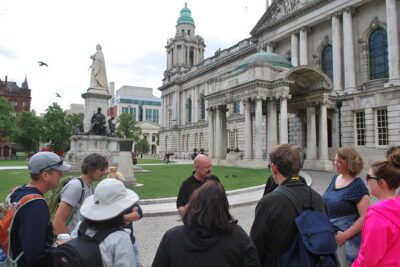
A History of Terror – Belfast City Centre Walking Tour
Read our review →
Old Town Walking Tour History and Tales in Edinburgh
Read our review →
Shadows of York: Ghost Walk and Horrible History.
Read our review →
Multi-Sensory Small-Group Historic Vaults Tour in Edinburgh
Read our review →
Browse the lists this tour appears in