
Reviewed · CANTERBURY TOURS
Silver Ring Workshop in Kent, England
A scrap of silver becomes a keepsake. I like the private setting and the fact that Annie lets you make real choices about your design. I also like that you use proper workshop skills, from sawing and forging to soldering and polishing, rather than simply decorating a ready-made ring. The main catch is simple: the advertised price does not include the silver, so add £10 to £30 per ring at the end.
This is a three-hour beginners session at a gallery and studio on Castle Street in Canterbury. You leave wearing a ring you made yourself, though the designs must stay fairly simple. That rules out signet rings, but it keeps the class manageable and gives you time to learn each stage without rushing.
In This Review
- Key Points Before You Book
- Starting at 10 a.m. on Castle Street
- Choosing a Design That Can Be Finished in Three Hours
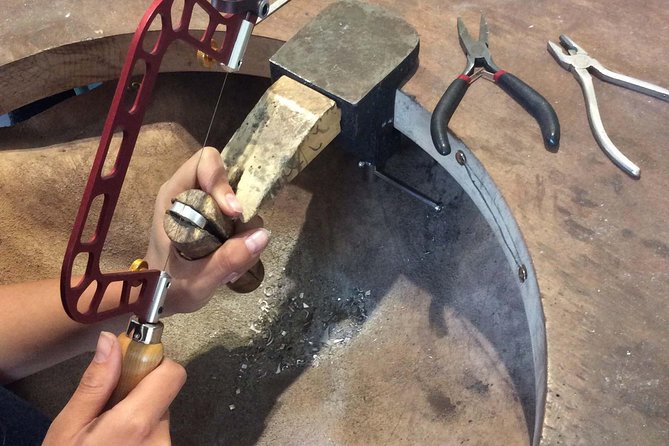
- Sawing the Silver to Length
- Adding Texture and Personal Marks
- Using Heat to Anneal and Shape the Ring
- Soldering the Join
- Filing, Buffing, and Polishing
- Annie’s Teaching Style
- What the Price Really Covers
- Who Will Enjoy This Canterbury Activity
- Planning the Workshop Around Canterbury
- Is the Silver Ring Workshop Worth Booking?
- FAQ
- Where does the silver ring workshop take place?
- How long does the workshop last?
- What days is the workshop available?
- Is the workshop suitable for beginners?
- Can I make a signet ring?
- Is the silver included in the price?
- What techniques will I learn?
- Is this a private activity?
- Can I cancel for a full refund?
Key Points Before You Book
- You make the complete ring yourself: Annie demonstrates each stage, then you repeat it on your own piece.
- The workshop is private: Only your group takes part, making this a good choice for couples, friends, or a meaningful gift.
- The process is hands-on: You saw, texture, stamp, anneal, forge, solder, file, buff, and polish the silver.
- Annie receives the highest praise: Her patient, calm teaching helps beginners feel comfortable with tools and heat.
- Your final cost is higher than the headline price: The $131.95 booking price is per person, with $10 to $30 extra for silver materials.
- Sessions run Thursday to Saturday: The usual time is 10 a.m. to 1 p.m. at 76 Castle Street in Canterbury.
Starting at 10 a.m. on Castle Street
The workshop begins at 10 a.m. at 76 Castle Street, Canterbury, CT1 2QD. You return to the same place when the session ends, so there is no complicated route or second meeting point to manage.
The location is in the heart of Canterbury, inside a gallery and studio set in an attractive old building. It is close to a multi-storey car park and near public transport, which matters if you are fitting the class into a day of sightseeing. Arrive with enough time to find the building and settle in, since the first stage involves choosing a basic design and measuring your finger.
Annie welcomes you with coffee or tea and supplies an apron. That small touch sets the tone. This is not a loud, crowded production class. It is a calm workbench session where you can ask questions and get help as you go.
The experience is private, and sessions for one or two people generally last between two and three hours. The listed time is 10 a.m. to 1 p.m., so plan around three hours rather than assuming you will be finished quickly.
A few more trips worth a look before you book
- London: Traditional English Scone Making and Tea Workshop
★ 5.0 · 702 reviews - York: Chocolate Bar Making Workshop at York Cocoa Works
★ 4.7 · 401 reviews - Surf Lesson
★ 5.0 · 349 reviews
Choosing a Design That Can Be Finished in Three Hours
You begin by discussing basic ring designs and measuring your finger. This is an important part of the workshop because a ring that looks simple still needs to fit correctly and survive several rounds of shaping and finishing.
You can personalise the piece with pattern, texture, or stamped marks. That gives you room to make something personal without requiring advanced jewellery skills. You might choose a plain band, add a surface texture, or stamp a small design into the silver.
The limit is worth understanding before you book. This is a beginners workshop, and the ring designs stay simple. You cannot make a signet ring, and the session is not designed for elaborate stones or complex settings. If your ideal ring has a large sculpted face or detailed decoration, this will not be the right class.
For most people, the simple format is a benefit. Annie can spend time showing you why each step matters, and you have a fair chance of finishing a wearable piece during the session. The best design is likely one with a personal mark or texture rather than a complicated shape.
Sawing the Silver to Length
Once you have settled on the design and measured your finger, you saw the silver to length. This is the first point where the material changes from a plain strip into your ring.
Annie demonstrates the tool and guides you through the cut. Beginners often find this stage more demanding than expected because the work requires care and control. You are not simply bending a strip around your finger. You are preparing the exact amount of metal needed for a properly sized band.
This hands-on approach is one of the strongest reasons to book the class. You are involved from the beginning, rather than arriving at the finishing stage and claiming a ring that was mostly made by someone else.
Adding Texture and Personal Marks
Next comes the creative stage. You can pattern, texturise, and stamp the silver before it is shaped into a ring.
The order matters. It is easier to add marks while the silver is still a flat strip, so you can work on the surface with control. Once the piece is curved and joined, some areas become harder to reach.
This is also where your ring begins to feel individual. Two people can start with similar strips of silver and end with very different pieces. One person may choose a subtle texture, while another may stamp a more obvious pattern.
You will have choices, but not unlimited options. The class works best when you accept the beginner format and focus on making a clean, wearable band with one or two meaningful details.
A different sort of outing around the UK:
- London: The London Eye Entry Ticket
★ 4.6 · 35,875 reviews - From London: Harry Potter Warner Bros Studio Tour
★ 4.7 · 26,588 reviews - London: Westminster to Greenwich River Thames Cruise
★ 4.5 · 22,836 reviews - Magical London: Harry Potter Guided Walking Tour
★ 4.7 · 22,044 reviews
Using Heat to Anneal and Shape the Ring
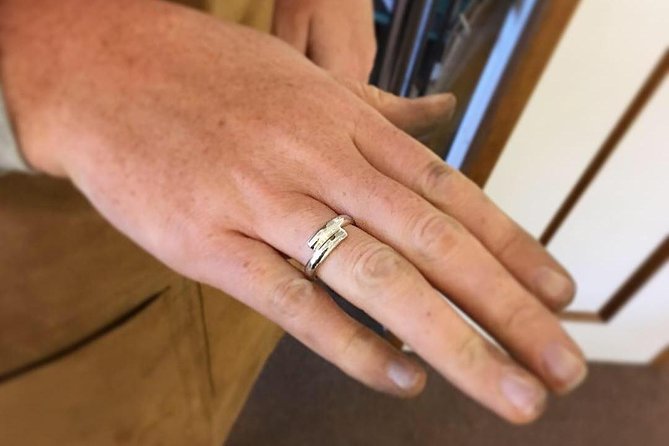
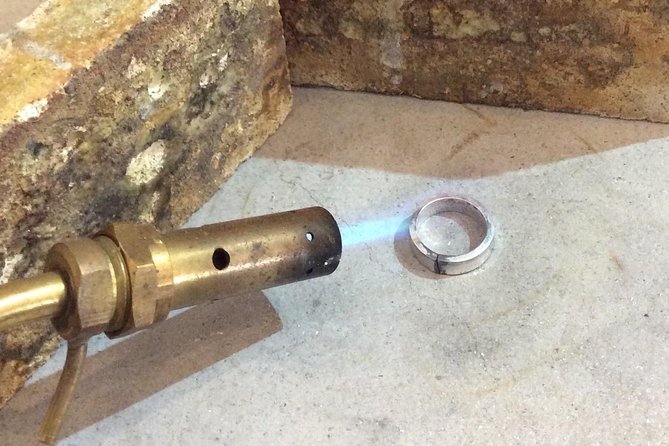
Before the silver can be formed, it needs to be annealed. Annie explains why this is necessary and teaches you how to use the torch.
Annealing softens the metal so it can be shaped without making it too hard or brittle. It is a proper silversmithing skill, and learning the reason behind it makes the workshop more useful than a simple craft activity. You are not just following instructions. You learn what the heat is doing to the material.
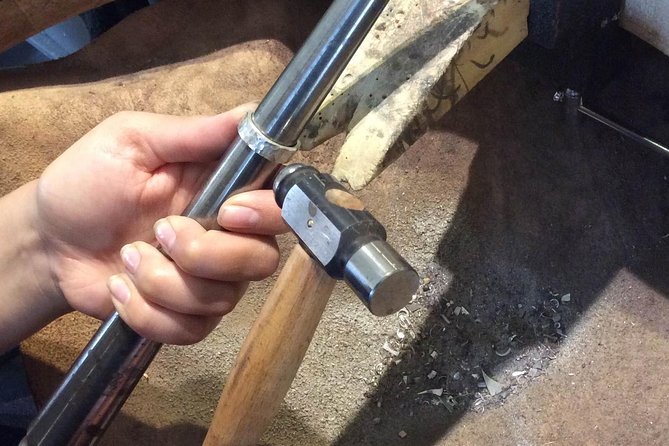
You then forge the ring into shape and saw it to size. Forging gives the band its curve, while the final cut prepares the ends to meet for soldering.
Working with a torch may sound intimidating, especially if you have never used one. The teaching style is designed for beginners, with Annie demonstrating each process before you try it. Her calm instructions and willingness to repeat a step are important here. You should still expect to pay attention and work carefully, but you do not need previous metalworking experience.
Left-handed participants should be comfortable asking for adjustments. One left-handed participant needed to move to Annie’s workbench for a particular process, and it was handled without fuss. That suggests the setup can accommodate different working styles, though the workshop details do not promise a dedicated left-handed bench.
Soldering the Join
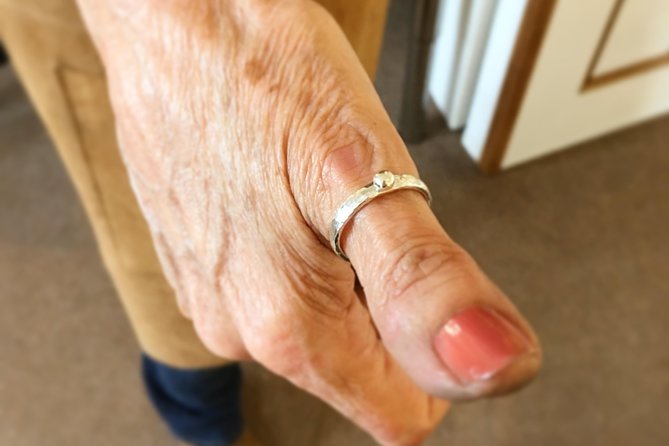
With the ring shaped and cut to size, you are ready to solder the join. Annie explains how the process works, then you use the torch to join the two ends of the band.
This is the moment when a strip becomes a ring. It also requires the most care, since the join must be clean and secure before the surface is finished.
You may find this stage especially satisfying because the work begins to look like jewellery rather than raw material. It also gives you a better sense of the labour behind handmade silver pieces. One participant said the experience changed how they understood the price of finished jewellery after seeing how many manual stages were involved.
The session is not a lecture. You perform the work yourself, with Annie demonstrating on her own piece and then guiding you as you copy the process. That teaching method helps you understand each action without leaving you to guess what comes next.
Filing, Buffing, and Polishing
After soldering, the join needs to be cleaned. You use metal files to smooth the area, remove rough edges, and blend the surface.
This part takes patience. A ring can look finished from a distance while still having scratches or a visible solder line close up. Annie teaches you how to clean the join, buff scratches, and polish the full ring.
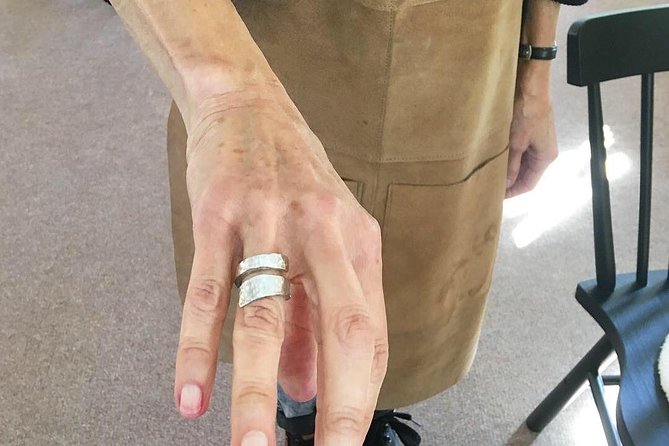
The final polishing is the payoff. A dull silver strip becomes a bright band that you can put on before leaving the studio. The change is striking because your hands have handled every stage.
Do not expect factory-perfect results from a first attempt, and do not book this if you want a completely effortless souvenir. Small variations are part of the appeal. Your ring may show the texture and decisions you made during the process.
Annie’s Teaching Style
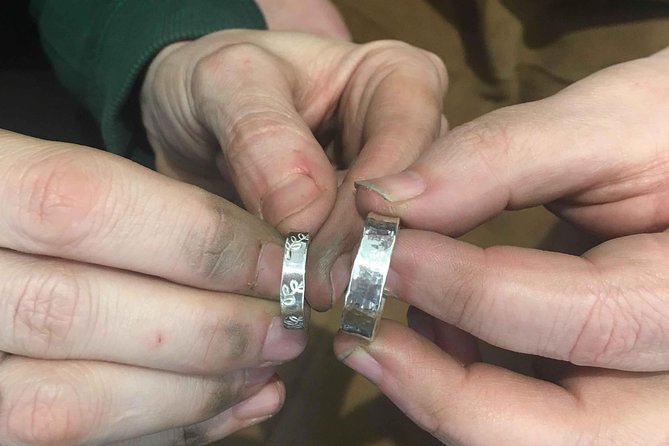
Annie is the key to the experience. She is described as patient, kind, encouraging, and clear, with a teaching method built around demonstration and repetition.
She works on her own ring first, showing how to use the tools and complete each stage. You then apply the same technique to your piece. That makes the class easy to follow without talking down to you.
The pace is also flexible. Annie takes time to answer questions and lets you work through the process rather than pushing everyone through a fixed assembly line. Coffee and tea are available during the session, adding to the relaxed feel.
That patience matters most during the torch work, forging, and finishing. Beginners need room to ask the same question twice, adjust their grip, or file a little more carefully. The workshop appears particularly suited to people who want instruction and encouragement rather than a fast, polished demonstration.
What the Price Really Covers
The listed price is $131.95 per person. That covers the private workshop, guidance, apron, and coffee or tea, but not the silver itself.
Materials add $10 to $30 per ring, depending on the finished weight. The minimum additional cost for a basic ring is $10, so the practical total begins at about $141.95 per person and rises from there.
That is not a budget craft class, but the value is more than the metal. You receive several hours of personal instruction, use workshop tools, learn real techniques, and take home a ring made through your own work. A basic silver ring purchased in a shop may cost less, but it will not carry the memory of sawing, forging, soldering, and polishing it yourself.
The extra materials fee is reasonable as long as you expect it. It is the most important price detail to note before booking. If you are buying the workshop as a gift, tell the recipient that the silver is paid for separately at the end.
Who Will Enjoy This Canterbury Activity
I would choose this for couples, close friends, family members, or solo visitors who want a creative break from standard sightseeing. Several people have used the experience to make anniversary rings, replacement wedding rings, or matching pieces.
It also works well as a gift. The finished object is useful, personal, and easy to carry home. You are not just taking a photograph of Canterbury. You are leaving with something connected to the day.
The workshop suits most people because it is designed for beginners. Service animals are allowed, and most people can participate. Still, you need to be comfortable handling tools, working with metal, and using a torch under instruction.
You should skip it if you want a complex design, a signet ring, or a class with no additional costs. You should also avoid squeezing it into a tight schedule, since the process can take up to three hours.
Planning the Workshop Around Canterbury
The Thursday through Saturday schedule gives you a few useful options, but it is not a daily activity. Sessions run from 10 a.m. to 1 p.m., so you can spend the afternoon exploring Canterbury after the ring is finished.
The Castle Street meeting point is convenient for a city visit, with public transport nearby and a multi-storey car park close to the studio. Since the activity ends at the starting point, you do not need to arrange a separate pickup.
This is a good rainy-day plan, too. The work happens indoors, and the three-hour format gives you a solid block of time away from the usual sightseeing route. Book well ahead if your dates are fixed, since this experience is often reserved around 80 days in advance.
Confirmation is sent within 48 hours, subject to availability. Free cancellation is available up to 24 hours before the start time. If you cancel or request changes inside that 24-hour window, you will not receive a refund or be able to change the booking.
Is the Silver Ring Workshop Worth Booking?
Yes, if you want a personal Canterbury experience and are happy with a simple ring design. The strongest reason to book is the combination of genuine hands-on work and patient instruction from Annie.
The price makes sense for a private class with materials and refreshments, but remember to add $10 to $30 for silver. I would book this for an anniversary, birthday, special trip, or thoughtful gift, especially if the finished ring matters as much for its story as for its appearance.
I would not choose it for elaborate jewellery design or a quick drop-in activity. For everyone else, this offers a rare kind of souvenir: one you cut, shaped, joined, cleaned, and polished yourself.
FAQ
Where does the silver ring workshop take place?
The workshop starts at 76 Castle Street, Canterbury, CT1 2QD, England. It also ends at the same meeting point.
How long does the workshop last?
Sessions for one or two people usually last between two and three hours. The listed session runs from 10 a.m. to 1 p.m.
What days is the workshop available?
It is offered Thursday through Saturday, from 10 a.m. to 1 p.m.
Is the workshop suitable for beginners?
Yes. The class is designed for beginners, with simple ring designs and step-by-step instruction from an experienced silversmith.
Can I make a signet ring?
No. The workshop keeps designs simple, and signet rings are not included.
Is the silver included in the price?
No. Silver materials cost an additional $10 to $30 per ring, depending on the finished weight. The minimum cost for basic materials is $10.
What techniques will I learn?
You will learn how to saw the silver, add patterns or stamped details, anneal the metal, use a torch, forge the ring into shape, solder the join, file the surface, buff scratches, and polish the finished ring.
Is this a private activity?
Yes. Only your own group participates in the workshop.
Can I cancel for a full refund?
Yes, provided you cancel at least 24 hours before the experience start time. Cancellations and changes made less than 24 hours before the start time are not accepted for a refund.
Recently added around the UK
- PRIVATE HIRE 45 min Speedboat Tour – Embankment/Westminster Pier★ 5.0 · 55 reviews
- Cairngorms & Whisky Day Tour from Inverness Including Admission★ 5.0 · 55 reviews
- From Edinburgh: Islay and The Whisky Coast 4-Day Tour★ 4.9 · 55 reviews
- Fantastic Creatures of Edinburgh, and where to find them!★ 4.5 · 55 reviews
- E-bike excursion exploring the Purbecks★ 5.0 · 55 reviews
- ‘A Wee Pedal’s’ Family Friendly Cycle Tour to Edinburgh’s Coast★ 5.0 · 55 reviews
- Private Tour of London’s Historic Pubs★ 5.0 · 55 reviews
- From London: Glastonbury and Cheddar Gorge Guided Day Trip★ 4.8 · 55 reviews
Canterbury Tours, compared.
Official Canterbury Guided Walking Tour – 11.00 Tour
Read our review →
Canterbury Cathedral: Entry Ticket with Audio Guide
Read our review →
Official Canterbury Guided Walking Tour – 14.00 Tour
Read our review →
Cultural Homestay Exploring London, Oxford and National Parks
Read our review →
Browse the lists this tour appears in