

Reviewed · HISTORICAL TOURS
St Andrews Tours: Town, Golf and Old Course History
A golf pilgrimage with much more to it. This 1-hour-45-minute walk links St Andrews town history with the story of golf, led by a local author who knows the place from the inside. I like the strong mix of university, cathedral, castle, and Old Course history, and I like that the tour ends at the Swilcan Bridge, where you can take the classic St Andrews photo.
The price is appealing too, at $27.78 per person, especially since the guide covers several major sights without charging admission at each stop. The main catch is the brisk walking and strict English requirement. You cross part of the Old Course at your own risk, and this is not a good fit if you need a walking frame, have a leg injury, or move slowly.
In This Review
- Key things to know before you book
- Starting at T-Squared Social on North Street
- St Salvator’s College and Scotland’s oldest university
- Cathedral ruins and the Morris family graves
- St Andrews Castle and the road toward golf
- Forty minutes beside the Old Course
- The famous Swilcan Bridge finish
- How much value do you get for $27.78?
- The guide makes or breaks the experience
- Walking, weather, and practical limits
- Who will enjoy this St Andrews walk?
- Should you book it?
- FAQ
- Where does the tour start?
- Where does the tour finish?
- How long does the walking tour last?
- What language is the tour conducted in?
- Is the Old Course included?
- Can children join the tour?
- What happens if bad weather cancels the tour?
Key things to know before you book
- A local author leads the walk: Richard, one frequently praised guide, has written seven or eight books about St Andrews and spent more than eight years as a caddie.
- The town story comes before the golf story: You learn about the university, cathedral, castle, religion, and local figures before reaching the Old Course.
- The Old Course visit lasts about 40 minutes: This is the largest part of the walk, with attention to golf’s development and the course landmarks.
- The finish is at Swilcan Bridge: The tour ends beside the famous bridge on the Old Course, with time for photographs, except on tournament days.
- The pace is active: Expect roughly 1 hour 45 minutes on foot, with no place to leave golf clubs, strollers, or other bulky items.
- Sunday can be especially useful: One guide specifically advised booking Sunday, when no golf is played on the Old Course and the course becomes open for public walking.
Starting at T-Squared Social on North Street
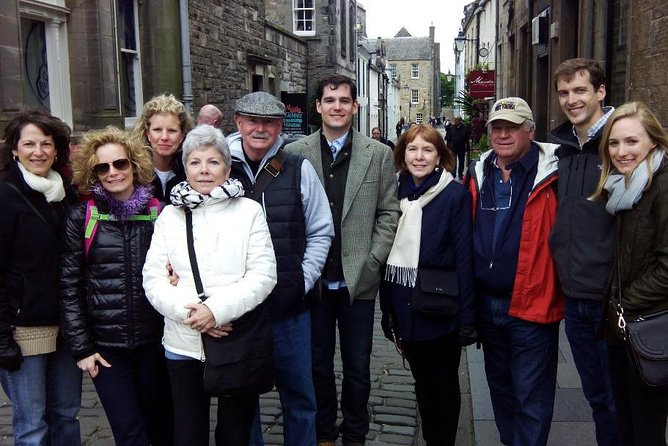
The meeting point is T-Squared Social at 117 North Street, a modern bar and restaurant connected with Tiger Woods and Justin Timberlake. It includes virtual golf and other sporting activities, so it is an amusingly on-theme place to begin a walk about the world’s most famous golf town.
You only spend about two minutes here, and admission is free. Think of it as a clear meeting point rather than a full stop on the tour. If you arrive early, the venue gives you something golf-related to look at, but the real story begins once the guide leads you into the older heart of St Andrews.
The tour is offered in English, and a fluent command of English is required. That point matters. The guide moves through names, dates, local references, and golf terms, so slow translation or occasional interpretation will not work well for someone who cannot follow English comfortably.
Groups can reach a maximum of 20 people. That is still small enough to hear a guide in normal conditions, though a group of seven, as one participant experienced, will feel more personal and easier for questions and photographs.
More History Tours:
- London Small Group Tour of Historical Pubs
★ 5.0 · 10,422 reviews - A History of Terror – Belfast City Centre Walking Tour
★ 5.0 · 2,883 reviews - Old Town Walking Tour History and Tales in Edinburgh
★ 5.0 · 2,168 reviews
St Salvator’s College and Scotland’s oldest university
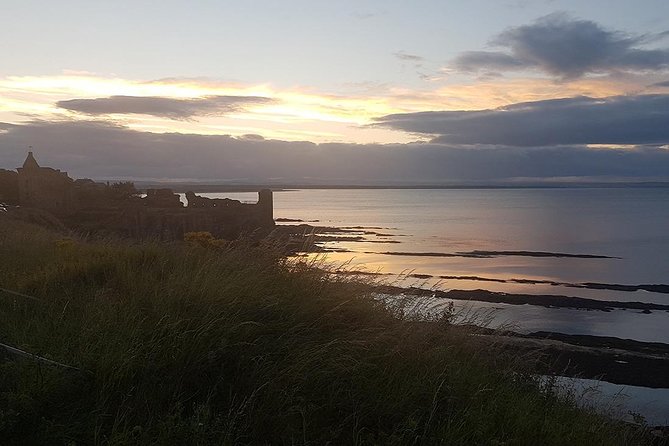
The first substantial stop is the University of St Andrews, founded in 1413. You visit the area around St Salvator’s College and the University Chapel, learning how Scotland’s oldest university fits into the town’s story.
The visit lasts about 10 minutes, which is enough for orientation and a few key facts rather than a full university tour. I like this early stop because it prevents the experience from becoming a golf-only outing. St Andrews is not simply a course with a town attached. Its academic and religious institutions helped shape the place you are walking through.
The university also gives you a useful sense of the town’s scale. The old center is compact, and the walk links major sites without the need for a bus or taxi between them. You will want comfortable shoes, since the route keeps moving and does not pause for long at every building.
A good guide adds local details here rather than reciting dates. Richard is often singled out for explaining the town in a lively way, with humor and practical context. The strongest praise for the tour focuses on this ability to connect facts to places, so you understand not only what a building is, but why it matters.
Cathedral ruins and the Morris family graves
St Andrews Cathedral is the next major stop, with about 20 minutes devoted to its ruins and surrounding historic ground. The remains give you a strong visual break from the university buildings and bring the town’s religious past into view.
The stop also connects directly with golf. You pay your respects to important figures including Old Tom Morris, Young Tom Morris, Allan Robertson, and Jamie Anderson. For golfers, this is a meaningful link between the people who shaped the game and the town where its story developed. For non-golfers, the cathedral and old cemetery provide a historic setting even if you do not know a mashie from a mashie niblick.
This is one of the places where a local guide earns the ticket price. A sign can identify a ruin, but it cannot easily explain how religious St Andrews, the university town, and the golf center grew alongside one another. The walk makes those connections in a way that is easier to remember.
You should not expect a long interior visit or a formal museum experience. The tour is outdoors and time is shared among several locations. If you like lingering over gravestones, architectural details, or photographs, you may wish to return later on your own.
St Andrews Castle and the road toward golf

The route continues to St Andrews Castle, once a bishop’s palace. You spend about 10 minutes learning about its former role before walking toward the Old Course.
The castle stop is brief, but it helps widen the picture again. St Andrews carries religious and political history as well as golfing fame. The ruins give the guide another setting for explaining how the town developed before golf became its calling card.
As you walk from the castle toward the course, the subject shifts to Tom Morris, Allan Robertson, and the beginnings of the Open Championship. This transition is one of the best features of the tour. You do not simply arrive at the Old Course and hear a list of famous holes. You follow the story through the people who helped turn local play into an organized international sport.
The guide’s background can make this section particularly useful. Richard is described as a local author and former caddie, with more than eight years spent carrying clubs and watching the game up close. That combination gives him a practical connection to golf, not just a collection of historical dates.
A few more trips worth a look before you book
- St Andrews Must-Sees Daily Walking Tour (11am & 2pm)
★ 5.0 · 478 reviews - St Andrews: Golf Origins and Old Course History Tour
★ 4.7 · 322 reviews - St Andrews: Top Sights Guided Walking Tour
★ 4.7 · 223 reviews - St Andrews: Town, Golf, and Old Course History Tour
★ 4.7 · 162 reviews
Forty minutes beside the Old Course
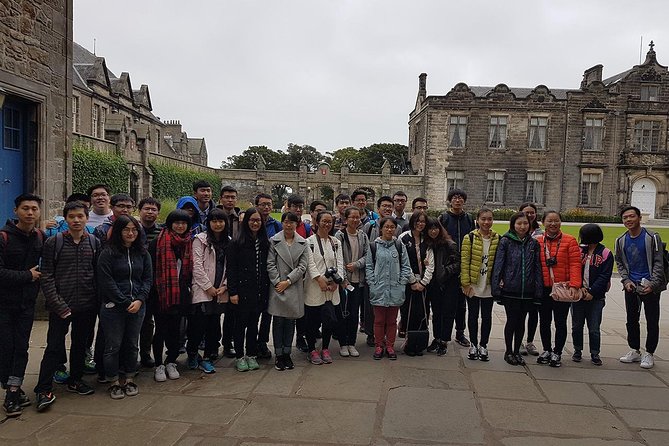
The Old Course receives the longest stop, about 40 minutes. Here the guide explains the development of golf and the course, along with nearby landmarks associated with the game.
For a golfer, this is the main event. You learn how the course changed over time and how familiar features fit into the larger story. You may also gain a better understanding of why St Andrews carries such weight in golf culture, even if you are not playing a round.
The walk does not include a round of golf. You are seeing the course from the public walking route and learning its history. That distinction is important when judging the $27.78 price. You are paying for interpretation and access to the story, not for playing privileges or a private course tour.
Part of the route crosses the first and 18th fairway. You do this at your own risk and must watch for golf balls during live play. That warning is practical, not decorative. Keep your eyes open, follow the guide’s directions, and do not assume that a historic site is free from normal sporting hazards.
Sunday may be the most relaxed day for this portion. The Old Course is not played on Sunday, and one participant recommended using that day because the course becomes a public park for walking. The tour still provides the historical explanation, while the lack of live play can make it easier to appreciate the fairways and take photographs. Tournament days are an exception to the usual finish at Swilcan Bridge.
The course can also be enjoyable for someone who does not play golf. The walk explains how the game developed, but it also gives you a feel for the town’s identity and its public spaces. Several strong comments specifically point out that the experience works for non-golfers because the town and religious history receive serious attention.
The famous Swilcan Bridge finish
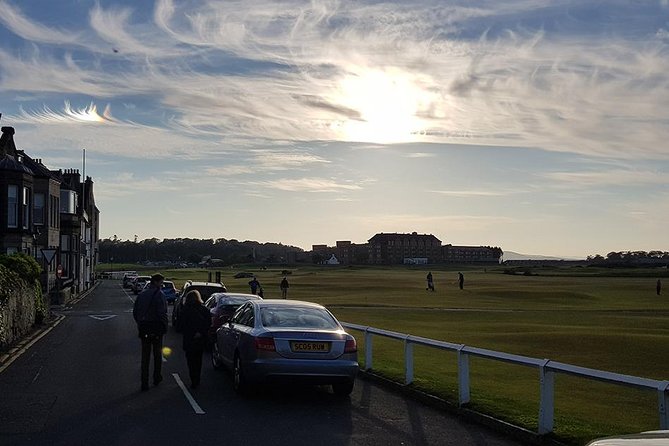
The tour ends at Swilcan Bridge on the Old Course, at 17 The Links. You have about 10 minutes for the bridge, nearby buildings, and photographs.
This is a smart ending. After hearing about the town and the course, you reach one of St Andrews’ most recognizable landmarks with enough context to understand why the photograph matters. The guide may also take pictures for you, a small but useful service when you are traveling as a couple or group and want everyone in the frame.
The ending point is not back at T-Squared Social. You finish in the heart of the golf course, so plan your next move from the Old Course rather than assuming you will be escorted back to the starting point.
The bridge finish is excluded on tournament days. If this photograph is essential to your plans, check the date before booking. You can still receive the town and golf history, but the final stop may change when course activity restricts access.
How much value do you get for $27.78?
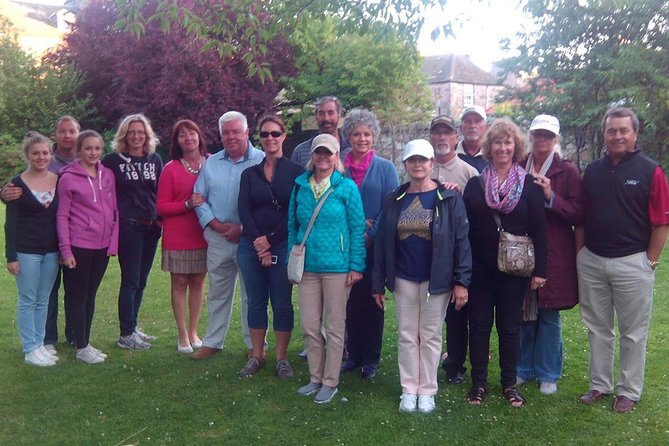
At $27.78 per person, this is a low-cost way to get oriented in St Andrews. You receive a professional English-speaking local guide, a route through the university area, cathedral, castle, Old Course, and Swilcan Bridge, plus nearly two hours of explanation.
The value comes from what would be hard to assemble on your own in a short visit. You could walk past the cathedral, university, and Old Course independently, but you might miss the links between religious St Andrews, the university, early golf, the Open Championship, and the people buried around the cathedral.
It is also useful early in a visit because it gives you a map of the town. The walk finishes with suggestions for what to do afterward, and one guide recommended Jiggers for fish and chips near the 17th hole. That sort of local tip can help you use the rest of your day without spending much more.
The price does not cover entry into paid attractions, and the stops are viewed from the walking route. If you want to enter St Andrews Castle or Cathedral and spend hours inside, you will need separate time and arrangements. For a guided overview, the price is strong. For a full attraction-by-attraction tour, it is not designed to be that.
The guide makes or breaks the experience
The most praised part of this walk is the guide. Richard receives repeated approval for his humor, local knowledge, golf background, and ability to explain town history as well as the course. He is described as a walking encyclopedia, an author, a former caddie, and a guide who can answer questions about both St Andrews and golf.
That praise comes with one useful caution: guiding styles differ. One person found the pace fast and the guide somewhat impatient, while another described the walking pace as easy. Your experience may depend on the group size, the weather, and who leads your departure.
There was also a serious complaint about a restroom request. The participant felt the guide was rude and left the walk. You should plan ahead and use facilities before the start, since this is a timed group walk and the guide may not be able to pause the whole group. Still, basic courtesy matters, so this is worth keeping in mind when choosing a tour built around a fixed route.
Overall, the guide’s role is more than delivering information. The best version of this experience feels like a local showing you how the town fits together. The author and caddie background gives the golf section authority, while the local connection adds detail to the university, cathedral, and castle.
Walking, weather, and practical limits
This is an outdoor walking activity requiring a moderate level of fitness. It is not suitable for people with walking difficulties, hip or knee problems, sprained ankles, walking frames, crutches, or mobility scooters.
It is also not suitable for baby strollers or carriages, and there is nowhere to store those items. The same rule applies to golf clubs and other bulky equipment. Make arrangements before you arrive, and do not expect the guide to hold your belongings during the walk.
Service animals are allowed, and the meeting point is near public transportation. Children under five are free, but the activity is not suitable for children under two. The English requirement is firm, so families should consider whether every participant can follow a fast-moving spoken history tour.
Weather affects the experience. The tour requires good weather, and a cancellation for poor conditions brings an offer of another date or a full refund. You can also cancel for a full refund if you do so at least 24 hours before the start time. Changes or cancellations inside that 24-hour window are not accepted.
Wear shoes suited to steady walking and dress for exposed outdoor conditions. The route includes old ruins, streets, open course areas, and a fairway crossing, so comfort and attention matter more than looking ready for a formal dinner.
Who will enjoy this St Andrews walk?
This tour suits you best if you want a compact introduction to St Andrews and prefer a person explaining what you see. Golfers will appreciate the Old Course history, the Morris family connections, the Open Championship story, and the chance to finish at Swilcan Bridge.
You do not need to play golf. The university, cathedral, castle, cemetery, and religious history receive enough attention to make the walk worthwhile for a mixed group. It is especially useful when one person has dreamed of seeing the Old Course and another cares more about Scottish history.
You should reconsider it if you want a slow photographic walk, a fully private experience, or long indoor visits. The group may include up to 20 people, the pace can feel brisk, and the tour stays focused on interpretation rather than admission to each major attraction.
A private St Andrews Town, Golf and Old Course Walking Tour is also available through the same provider if you want more control over the pace and questions. The shared walk is the better bargain, while a private option may suit a family or group with specific interests.
Should you book it?
Book this tour if you want the Old Course story placed in the wider story of St Andrews. At $27.78, it offers unusually good value for nearly two hours with a local guide, and the route covers the town’s most important historic settings before ending at the famous bridge.
I would choose it for golfers who are not playing the Old Course, first-time visitors who want a clear orientation, and non-golfers traveling with devoted golf fans. Pick a Sunday if your schedule allows and you want the best chance to walk the course without tournament restrictions.
Skip it if walking is difficult, English is not comfortable for everyone in your party, or you need a flexible restroom and photo schedule. For most able walkers, though, this is a lively, affordable way to understand why St Andrews matters both as an ancient Scottish town and as the home of golf.
FAQ
Where does the tour start?
It starts at T-Squared Social, 117 North Street, St Andrews, KY16 9AD, UK.
Where does the tour finish?
The tour finishes at Swilcan Bridge on the Old Course, 17 The Links, St Andrews, KY16 9JE, UK.
How long does the walking tour last?
The tour lasts approximately 1 hour and 45 minutes.
What language is the tour conducted in?
The tour is conducted in English, and all participants need a fluent command of English to follow it.
Is the Old Course included?
The walk visits the Old Course and includes about 40 minutes of golf and course history. It does not include playing a round of golf.
Can children join the tour?
Children under five are free. The activity is not suitable for children under two.
What happens if bad weather cancels the tour?
If poor weather causes cancellation, you will be offered another date or a full refund. You can also cancel at least 24 hours before the start time for a full refund.
Recently added around the UK
- Cairngorms & Whisky Day Tour from Inverness Including Admission★ 5.0 · 55 reviews
- PRIVATE HIRE 45 min Speedboat Tour – Embankment/Westminster Pier★ 5.0 · 55 reviews
- From Edinburgh: Islay and The Whisky Coast 4-Day Tour★ 4.9 · 55 reviews
- Fantastic Creatures of Edinburgh, and where to find them!★ 4.5 · 55 reviews
- E-bike excursion exploring the Purbecks★ 5.0 · 55 reviews
- ‘A Wee Pedal’s’ Family Friendly Cycle Tour to Edinburgh’s Coast★ 5.0 · 55 reviews
- Private Tour of London’s Historic Pubs★ 5.0 · 55 reviews
- From London: Glastonbury and Cheddar Gorge Guided Day Trip★ 4.8 · 55 reviews
Historical Tours, compared.
A History of Terror – Belfast City Centre Walking Tour
Read our review →
Old Town Walking Tour History and Tales in Edinburgh
Read our review →

Shadows of York: Ghost Walk and Horrible History.
Read our review →
Multi-Sensory Small-Group Historic Vaults Tour in Edinburgh
Read our review →
Browse the lists this tour appears in