
Reviewed · HISTORICAL TOURS
St Andrews: Town, Golf, and Old Course History Tour
Golf began here in memorable fashion. This 105-minute walking tour connects St Andrews town, its university, cathedral ruins, and the Old Course in one tidy route. I like the way it gives golfers plenty of course history without leaving non-golfers behind, and I like the finish at the Swilcan Bridge, where you can take the classic St Andrews photograph. The main drawback is the pace: you cover a lot of ground, and one recent group found it hard to keep up when the guide spoke quickly.
The tour costs $27 per person, which is a fair price for a live historian guide and a broad introduction to St Andrews. English fluency is essential, and this is not a gentle stroll for anyone with mobility problems. Wear good shoes, watch the weather, and arrive early, because the guide will leave at the appointed time.
In This Review
- Key points at a glance
- Why this St Andrews walk works for golfers and non-golfers
- Starting at T-Squared Social on North Street
- St Salvator’s College and the university story
- St Salvator’s Chapel and the older town
- Cathedral ruins, graves, and the Bishop’s Palace
- Walking the Scores toward the Old Course
- The Old Course, from the first tee to the 18th green
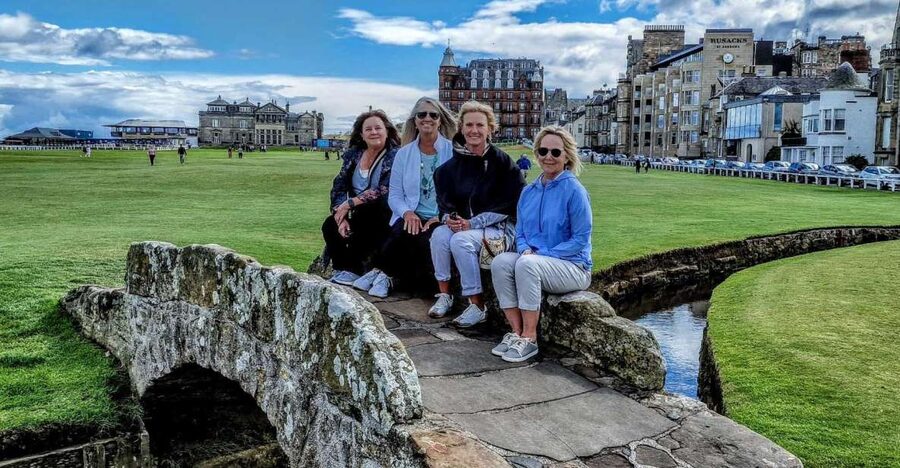
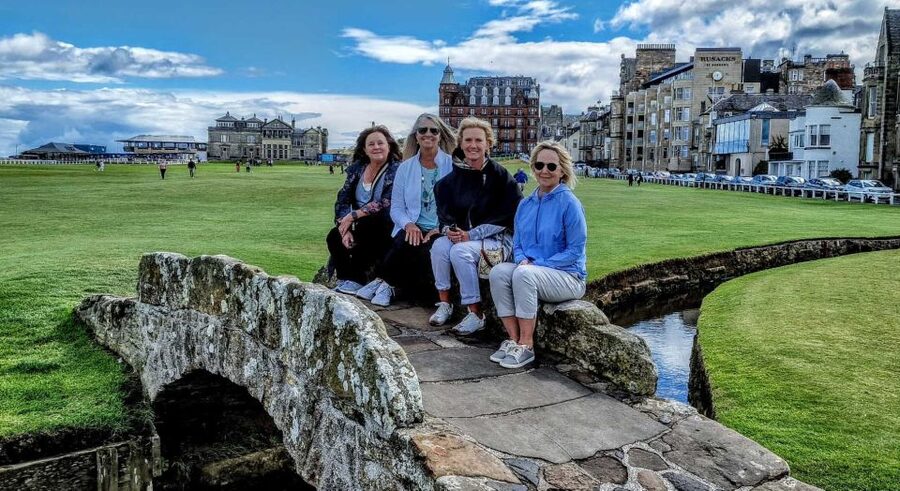
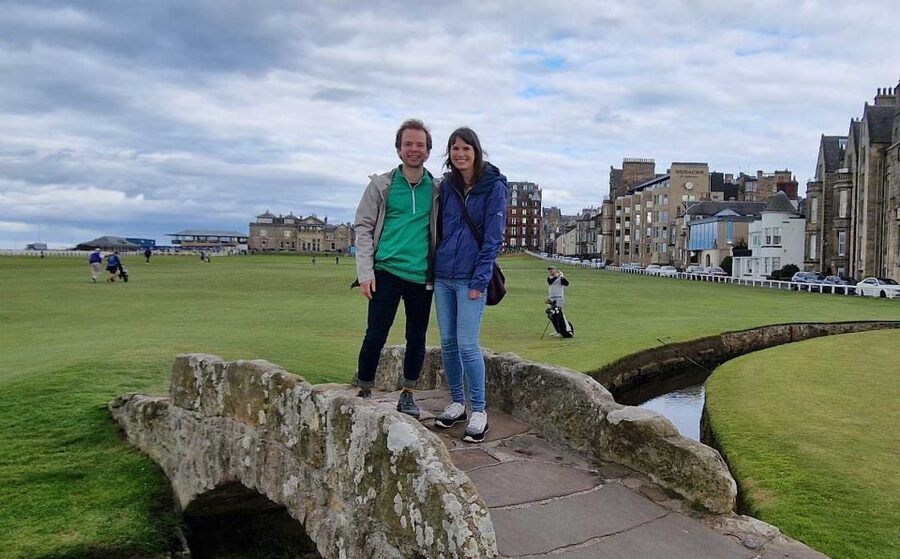
- The Swilcan Bridge photo finish
- Price, pace, and practical value
- Who should book this tour?
- Should you book St Andrews: Town, Golf, and Old Course History?
- FAQ
- How long does the St Andrews tour last?
- Where does the tour start?
- Where does the tour finish?
- Is the tour conducted in English?
- Does the tour include the Old Course?
- Can I take a photograph on the Swilcan Bridge?
- Is the tour suitable for people with mobility impairments?
- Can I bring luggage or golf clubs?
- Are children allowed on the tour?
- What should I wear and bring?
Key points at a glance
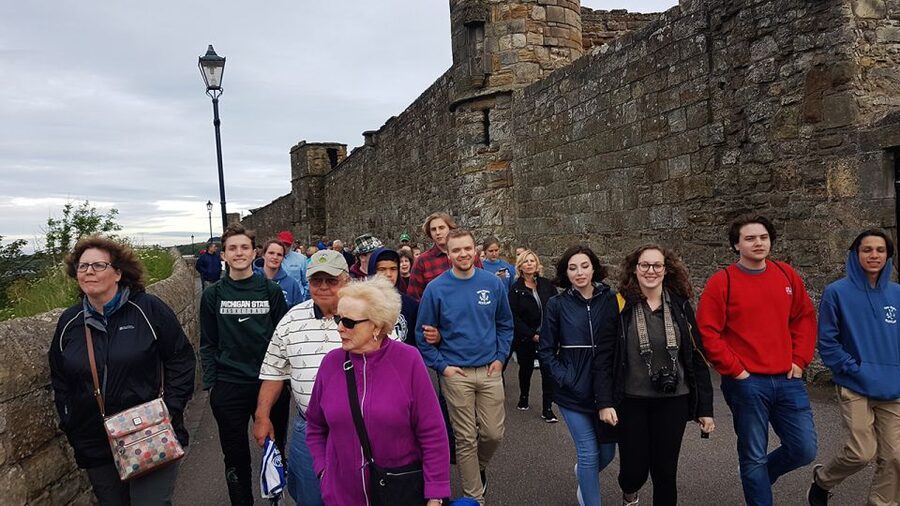
- The Old Course finish matters: Walk beside the 18th green, 1st tee, and first fairway, then pose on the Swilcan Bridge when tournament play does not prevent access.
- Golf and town history share equal billing: You hear about the Open Championship and golf’s development alongside the university, William and Kate, cathedral ruins, and local stories.
- The cathedral grounds add depth: The ruins include graves linked to golfing pioneers such as Old and Young Tom Morris, Allan Robertson, and Jamie Anderson.
- The route is active: Expect about two hours of walking in practice, even though the stated duration is 105 minutes.
- English is required: Slow speech or translation is not considered suitable for this tour, so book only if everyone in your group can follow spoken English comfortably.
- The guide shapes the experience: Richard and Jim are praised for clear explanations, humor, and strong knowledge of both St Andrews and golf.
Why this St Andrews walk works for golfers and non-golfers
St Andrews can be tricky to understand on a first visit. The town is not simply a golf destination with a famous course attached. The university, medieval religious buildings, royal connections, student life, and golf all overlap in a compact area.
This tour makes those connections clear as you walk. You do not just hear a list of dates, names, and sporting records. You see the places where the story happened, then move on to another landmark that explains a different part of St Andrews.
Golf fans get the course landmarks they came to see. You hear how the game developed here, how the Open Championship took shape, and why St Andrews became known as the Home of Golf. Non-golfers still get the university, chapel, cathedral, castle, local personalities, and stories about William and Kate.
I especially like that the route avoids making golf feel like a closed club. One couple booked it mainly for the golfer in their party, yet the non-golfer enjoyed the university and older parts of town just as much. That is the right balance for families and mixed groups.
The guide is a major part of the value. Richard is repeatedly praised for an engaging style, humor, clear speech, and personal experience around St Andrews. Jim is also described as a strong source of golf and local history. Guides can change, but the experience clearly depends on having someone who can connect facts with stories rather than reciting a script.
More History Tours:
- London Small Group Tour of Historical Pubs
★ 5.0 · 10,422 reviews - A History of Terror – Belfast City Centre Walking Tour
★ 5.0 · 2,883 reviews - Old Town Walking Tour History and Tales in Edinburgh
★ 5.0 · 2,168 reviews
Starting at T-Squared Social on North Street
Meet outside the main entrance of T-Squared Social at 117 North Street, St Andrews, KY16 9AD. The meeting point gives the guide a chance to mention Tiger Woods and Justin Timberlake’s new bar and restaurant, along with a little about the Dunhill Championship.
That opening is a useful reminder that St Andrews is still a working modern town. The tour is not locked in the medieval past, and it does not treat golf as something found only in old photographs. Current sporting and business connections sit alongside centuries of history.
Arrive early. This is not advice to treat casually. The tour starts on time and does not wait for late arrivals, even if you are only a minute behind. If you miss the start, you may need to contact the local provider before the scheduled departure to ask about another available tour, with no guarantee that one will run later that day.
There is no place to leave luggage, golf clubs, baby carriages, scooters, or other bulky items. Bring only what you can carry comfortably for the entire walk.
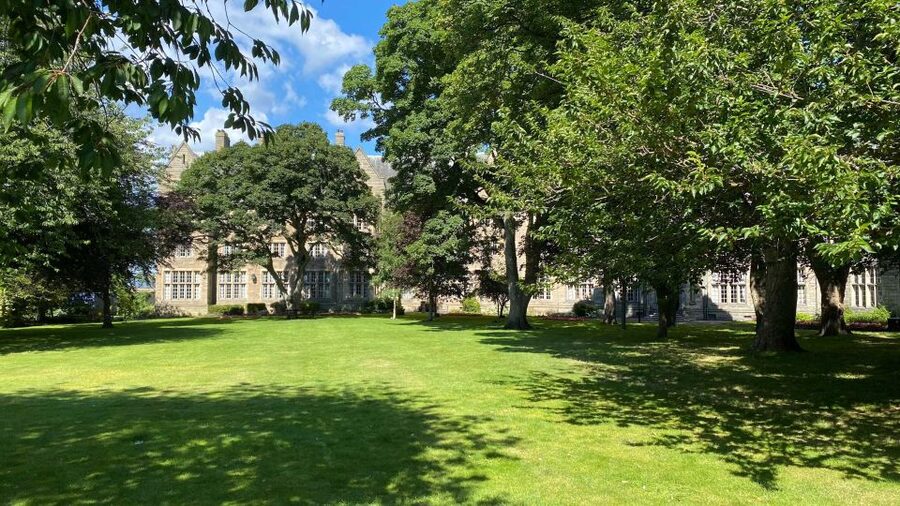
St Salvator’s College and the university story

From North Street, the walk heads toward St Salvator’s College and its quadrangle. You hear about Scotland’s oldest university and the way the university shaped St Andrews.
This is one of the best parts for non-golfers. The university gives the town a youthful, lived-in feel, while its buildings add an important layer to the local story. The guide also brings in William and Kate, who met while students in St Andrews, and points out places connected with their time there.
You hear about the first year they spent in a residence in town. The Netflix series The Crown also came to St Andrews, giving the guide another way to explain how the town has been presented to a modern audience.
The university section works because it is tied to what you are seeing. You are not merely told that St Andrews has an old university. You pass through its historic spaces and hear how student life, royal connections, and the town’s identity fit together.
Expect to keep walking rather than stop for a long indoor visit. The experience is a guided town walk, not a museum tour, so the value comes from the guide’s explanation and the setting around you.
St Salvator’s Chapel and the older town
The route includes St Salvator’s Chapel, an ornate part of the university area. The chapel helps show how much older St Andrews is than its golf fame suggests.
You may also get a look inside one of the town’s less obvious places. Exact access can depend on conditions, but this short glimpse adds variety to the route. It breaks up the outdoor walking and gives you another view of St Andrews beyond the main streets.
At this point, the tour begins to knit the town together. The university, chapel, cathedral, and golf are not separate attractions scattered across a large area. They are part of one compact story, and walking between them helps you see that.
Traffic and street noise can occasionally make it hard to catch every word. Stay close to the guide, especially at road crossings and busy points. One participant particularly enjoyed the information but wished the guide had paused more often where traffic was loud.
A few more trips worth a look before you book
- St Andrews Must-Sees Daily Walking Tour (11am & 2pm)
★ 5.0 · 478 reviews - St Andrews: Golf Origins and Old Course History Tour
★ 4.7 · 322 reviews - St Andrews: Top Sights Guided Walking Tour
★ 4.7 · 223 reviews - St Andrews Old Course History Tour, for the Golfer
★ 4.5 · 150 reviews
Cathedral ruins, graves, and the Bishop’s Palace
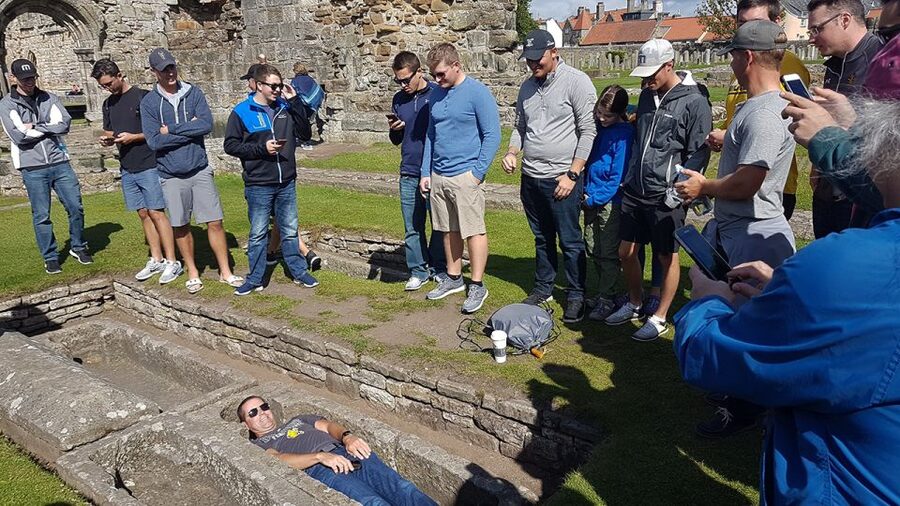
The cathedral grounds are the emotional center of the town portion. The cathedral is now a ruin, but its scale still hints at the wealth and importance St Andrews once held as a major religious center.
The grounds also connect directly to golf. You hear about 124 noted golfers buried there, including several figures central to the sport’s early story: Old Tom Morris, Young Tom Morris, Allan Robertson, and Jamie Anderson.
For golf fans, these graves put familiar names in a real place. Instead of treating early golf as a string of champions and dates, the guide shows you where some of its pioneers lie. For non-golfers, the cathedral remains worthwhile because the ruins explain St Andrews as a religious and political center long before modern tournaments made the town famous.
The nearby Bishop’s Palace adds another strong visual stop. Its ruins point to former Catholic wealth and power in Scotland. You pass by the castle area for photographs and scenic views rather than taking part in a full interior visit, so set your expectations accordingly.
You will not have unlimited time in the graveyard or cathedral grounds. One participant wished for a longer stop there, and that is understandable. The tour covers a lot in less than two hours, so the guide must keep the group moving.
Walking the Scores toward the Old Course
After the cathedral and palace, the route follows the Scores, where you see attractive Victorian university buildings, the Principal’s House, and the residence associated with William and Kate’s first year as students.
This section is a pleasant change from the ruins. It shows the university’s continuing presence and gives you a sense of how the town’s grand buildings face toward the coast and course area.
You should be ready for a steady walk from one end of the town toward the Old Course. The route is not difficult because of steep climbs, based on the information provided, but it is long enough that comfortable shoes matter. People who need frequent rests or have trouble walking on city streets should choose another way to see St Andrews.
The guide may add personal stories about playing or caddying around St Andrews. Those details can make the transition to the Old Course more vivid, especially if you want to understand the place as a lived sporting environment rather than a set of famous holes.
The Old Course, from the first tee to the 18th green
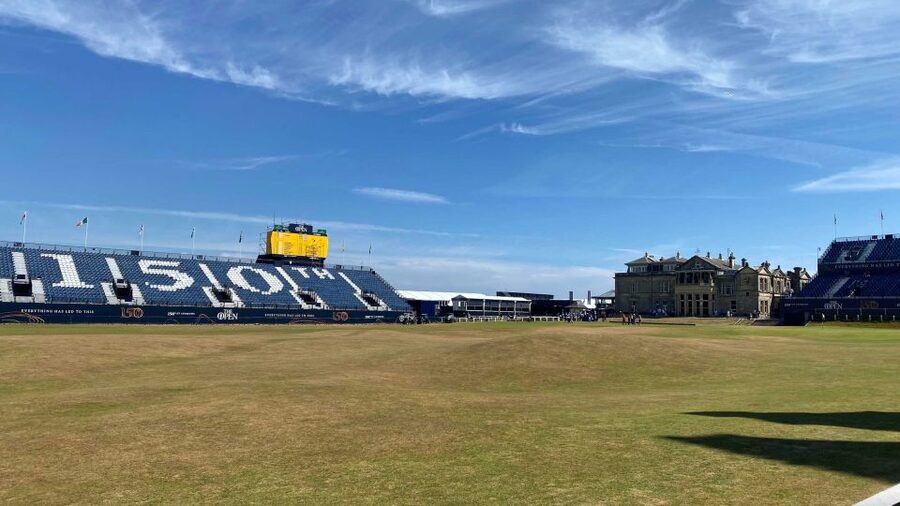
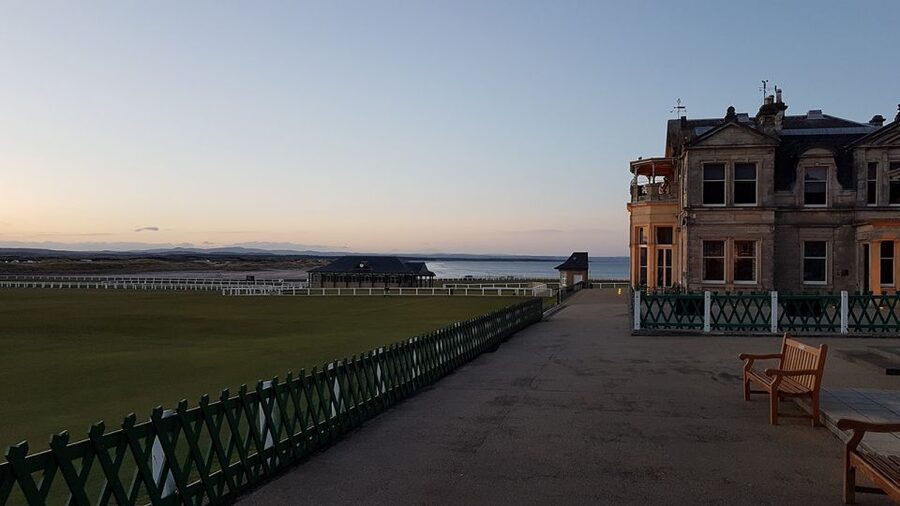
The final major section brings you to the Old Course. You walk by the 18th green, 1st tee, and first fairway while hearing how golf took shape in St Andrews.
The guide explains how the Links came to have 18 holes and covers some of the oddities that helped shape the game. You also hear about the early Open Championship and the buildings that overlook the course.
This part is about orientation as much as history. Golf television shows you dramatic moments, but it does not always explain how the course fits together. Standing near the first and 18th holes helps you understand the flow of the course and why certain spots became famous.
You may also hear memorable golfing moments and stories drawn from the guide’s personal connection with the course. The result is more useful than simply taking a photograph outside the Old Course sign. You leave with a sense of how the course developed and why its features matter.
There is an important safety point here. The route includes walking by and across the 1st and 18th fairways. You do so at your own risk, and you must watch for golf balls during live play. Keep children close, pay attention to the guide, and do not assume a famous course is a quiet public park.
The Swilcan Bridge photo finish
The tour ends at the Swilcan Bridge, the small stone bridge that has become one of the most recognizable photo spots in golf.
You can have your picture taken there when tournament conditions do not close or restrict access. This is a thoughtful finish because it gives the tour a clear payoff. Golfers get a lasting image from the Old Course, while non-golfers can still enjoy the setting and the ritual of standing in such a famous place.
The guide may take photographs for your group. Richard is praised for producing several good family photographs, which is useful when nobody wants to be left out of the picture.
Tournament days are the exception. If you visit during a major event or another period of restricted access, do not count on the bridge photograph. The walk and explanation can still be worthwhile, but the signature photo may not be possible.
Afterward, you can continue to the Jigger Inn or Old Course Hotel for a drink, meal, or a look back toward the course. The tour does not include that stop, but it is a natural place to continue the afternoon. Do not drink during the tour itself, and anyone under the influence of alcohol may be removed without a refund.
Price, pace, and practical value
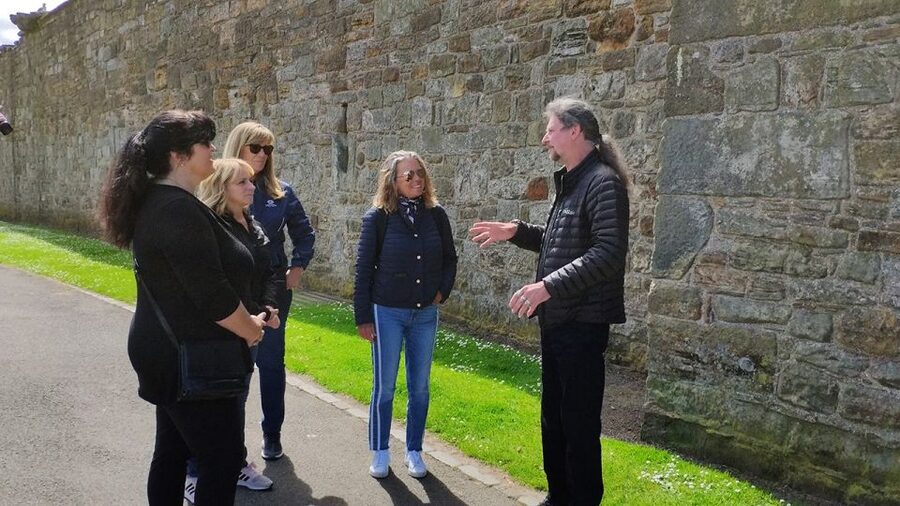
At $27 per person, this tour offers good value if you want one guide to connect several St Andrews sights. Paying separately for a golf-focused explanation and a general town walk would likely take more time and planning, while this route gives you both in 105 minutes.
The value is strongest for first-time visitors. You get a town orientation, useful background, course landmarks, and a photo opportunity in one outing. It also works well as an early activity, since you can use the guide’s information to make sense of the town during the rest of your stay.
The tradeoff is depth. You see the cathedral grounds, but you do not linger for as long as a dedicated cathedral visit. You walk the Old Course edges and fairways, but this is not a round of golf, a caddie experience, or an interior course tour.
The actual walk can run close to two hours, according to one participant, so plan around that possibility. The group may include up to 13 people, and a larger group can make it harder to hear or stay near the guide. If you are concerned, position yourself close to the front and ask the guide to repeat anything lost to traffic.
Who should book this tour?
I would choose this for a golfer visiting St Andrews for the first time, especially if a partner or family member wants more than golf talk. It is also a strong pick for anyone who enjoys history, royal connections, old buildings, and local stories but still wants to see the Old Course.
You should be comfortable walking steadily for around two hours and following an English-speaking guide. The experience is not suitable for wheelchair users, people with mobility impairments, or those using walking frames, crutches, mobility scooters, or baby strollers.
Children under 16 must be with an adult. Children under five are free, but the tour is not suitable for children under two. Assistance dogs are allowed, while other pets are not.
Should you book St Andrews: Town, Golf, and Old Course History?
Book it if you want a compact, story-led introduction to St Andrews that gives golf and town history fair space. The cathedral graves, university buildings, royal stories, and Old Course landmarks make this much more than a quick photo stop.
Skip it if you need a slow pace, extensive time at each site, or a fully accessible route. Also skip it if nobody in your group can follow English easily.
For most first visits, $27 is a sensible spend. You get the best results by arriving early, wearing comfortable shoes, keeping close to the guide, and treating the Swilcan Bridge photograph as a bonus rather than a guarantee on tournament days.
FAQ
How long does the St Andrews tour last?
The stated duration is 105 minutes. You should allow close to two hours, since the walk may last longer depending on the group and pace.
Where does the tour start?
Meet outside the main entrance of T-Squared Social at 117 North Street, St Andrews, KY16 9AD.
Where does the tour finish?
The tour finishes at the Swilcan Bridge beside the Old Course.
Is the tour conducted in English?
Yes. The live guide speaks English, and all participants need a fluent command of English. Speaking slowly or translating is not considered suitable for this experience.
Does the tour include the Old Course?
The route visits the Old Course area and includes the 18th green, 1st tee, and first fairway. It is a guided walking tour, not a round of golf.
Can I take a photograph on the Swilcan Bridge?
You can have your photograph taken there when access is available. The photo opportunity is excluded on tournament days.
Is the tour suitable for people with mobility impairments?
No. The experience is not suitable for people with mobility impairments or wheelchair users. Mobility scooters, walking frames, and crutches are also not allowed.
Can I bring luggage or golf clubs?
No luggage drop is available. You cannot leave luggage, baby carriages, scooters, or golf clubs during the tour.
Are children allowed on the tour?
Children under 16 must be accompanied by an adult. Children under five are free, but the tour is not suitable for children under two.
What should I wear and bring?
Bring comfortable shoes and clothing suitable for the weather. You should also stay alert for golf balls while walking near or across the fairways during live play.
Recently added around the UK
- Cairngorms & Whisky Day Tour from Inverness Including Admission★ 5.0 · 55 reviews
- PRIVATE HIRE 45 min Speedboat Tour – Embankment/Westminster Pier★ 5.0 · 55 reviews
- Fantastic Creatures of Edinburgh, and where to find them!★ 4.5 · 55 reviews
- E-bike excursion exploring the Purbecks★ 5.0 · 55 reviews
- From Edinburgh: Islay and The Whisky Coast 4-Day Tour★ 4.9 · 55 reviews
- ‘A Wee Pedal’s’ Family Friendly Cycle Tour to Edinburgh’s Coast★ 5.0 · 55 reviews
- Private Tour of London’s Historic Pubs★ 5.0 · 55 reviews
- From London: Glastonbury and Cheddar Gorge Guided Day Trip★ 4.8 · 55 reviews
Historical Tours, compared.
A History of Terror – Belfast City Centre Walking Tour
Read our review →
Old Town Walking Tour History and Tales in Edinburgh
Read our review →
Shadows of York: Ghost Walk and Horrible History.
Read our review →
Multi-Sensory Small-Group Historic Vaults Tour in Edinburgh
Read our review →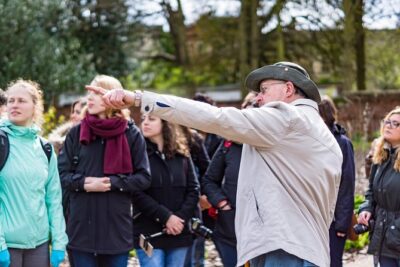
Browse the lists this tour appears in