
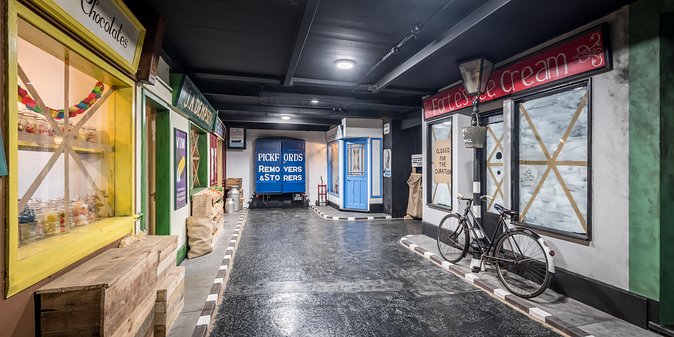
Reviewed · SELF-GUIDED TOURS
Western Approaches Self Guided Tour
History hides beneath Liverpool. The Western Approaches Museum takes you below the city center into a former World War II command bunker, where British forces tracked convoys, studied enemy movements, and helped protect the Atlantic supply route. I like the authentic wartime rooms and the freedom to explore without a guide setting the pace. The annual pass is another strong point, since one admission allows free returns for 12 months.
The museum is close to Liverpool Town Hall and about a five-minute walk from Albert Dock, though the entrance can be easy to miss. I also like the hands-on touches, including typewriters, teleprinter machines, uniforms, and traditional games. The main drawback is that much of the display depends on written panels and static exhibits, so visitors hoping for the highly theatrical presentation found at London’s Churchill War Rooms may find this experience quieter and less polished.
In This Review
- Key points to know before you go
- Why Liverpool mattered in the Battle of the Atlantic
- Finding the entrance near Liverpool Town Hall
- Walking into a bunker left behind after the war
- The Map Room, the museum’s main event
- Telephones, teleprinters, and the people behind the operation
- The WRNS and WAAF story
- How long to allow and how to use the self-guided format
- How the museum compares with London’s Churchill War Rooms
- Is the $24.26 admission good value?
- Who should book this experience?
- Should you book the Western Approaches Museum?
- FAQ
- Where is the Western Approaches Museum?
- How long does the self-guided tour take?
- Is admission to the museum included?
- Can I return to the museum after my visit?
- What are the museum’s opening hours?
- Is the tour guided?
- Are there stairs into the bunker?
- Can I cancel for a refund?
Key points to know before you go
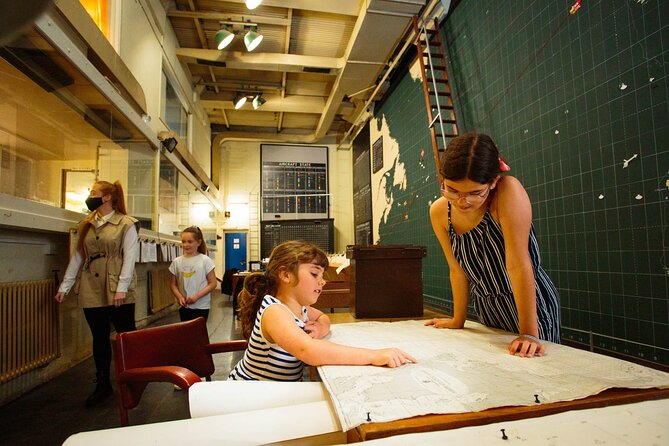
- The Map Room remains as it was left in 1945: This is the museum’s centerpiece, with its large plotting map and wartime workstations still arranged as the nerve center of the operation.
- You explore at your own speed: Allow one to two hours, though the wealth of detail can easily keep you there longer.
- The bunker sits beneath Liverpool’s center: It is close to the Town Hall and within walking distance of Albert Dock, but street signs may not make the entrance obvious.
- A rare telephone connects the story to London: The museum has one of only two surviving wartime phones with a direct link to the War Cabinet in London.
- The admission works as an annual pass: You can return free within 12 months, which improves the value for anyone spending extra time in Liverpool.
- Expect stairs into the bunker: The entrance is at street level, followed by steps down into the underground museum.
Why Liverpool mattered in the Battle of the Atlantic
The Western Approaches were the sea routes west of the British Isles. During World War II, these waters carried the food, fuel, weapons, and raw materials Britain needed to continue fighting. German submarines tried to cut those routes, making the safe movement of merchant convoys a matter of national survival.
Liverpool was central to that effort. The port connected Britain with the Atlantic supply system, and the underground headquarters gave military planners a protected place to watch convoy routes and coordinate responses to enemy attacks.
That context makes this museum more than a collection of old offices. You are looking at the place where information was gathered, checked, plotted, and passed on while ships and crews faced danger at sea. The work was often methodical rather than dramatic, but small errors could have serious consequences.
The bunker also shows how much of the operation depended on women. WRNS and WAAF personnel worked alongside commanders and other staff, handling communications, plotting movements, and supporting the daily running of the headquarters. The women’s displays are one of the more memorable parts of the visit, especially because they add human detail to what could otherwise feel like a room full of maps and military paperwork.
A few more trips worth a look before you book
- London: Emirates Stadium Entry Ticket and Audio Guide
★ 4.7 · 5,513 reviews - Westminster Abbey Entrance Ticket Including Audio Guide
★ 4.0 · 661 reviews - London: British Museum Audio Tour & Priority Entrance Ticket
★ 4.5 · 631 reviews
Finding the entrance near Liverpool Town Hall
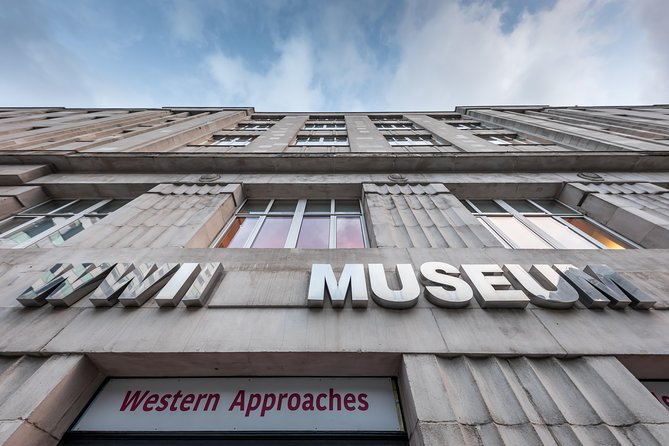
The museum entrance is at street level, close to Liverpool Town Hall. From Albert Dock, the walk takes about five minutes, making the museum easy to pair with the waterfront, the Museum of Liverpool, or a city center sightseeing day.
The location is central, but finding the door may take a little attention. Liverpool’s street markings are not always clear, and the entrance does not announce itself like a major public museum. I would use the address carefully and allow a few extra minutes rather than rushing from another attraction.
Once inside, you buy or confirm admission before heading down the stairs into the bunker. That change in level helps set the mood, but the steps matter if you have limited mobility. The information provided says the experience requires a moderate level of physical fitness, and visitors should expect stairs down into the underground rooms. Service animals are allowed, and the site is near public transportation.
The museum is open daily from 10 a.m. to 6 p.m. The self-guided format means you do not need to arrive for a particular departure time within those hours. That is useful if you are fitting the bunker around Liverpool’s other sights.
Walking into a bunker left behind after the war
The first part of the experience introduces the Battle of the Atlantic with a short film. It gives you the basic story before you enter the rooms, which is helpful if naval history is not already familiar territory.
From there, you move through a network of corridors and work areas. The bunker contains roughly a dozen rooms, each focused on a different part of the wartime operation. Some rooms show communications equipment. Others explain convoy monitoring, military planning, or the people who worked underground day and night.
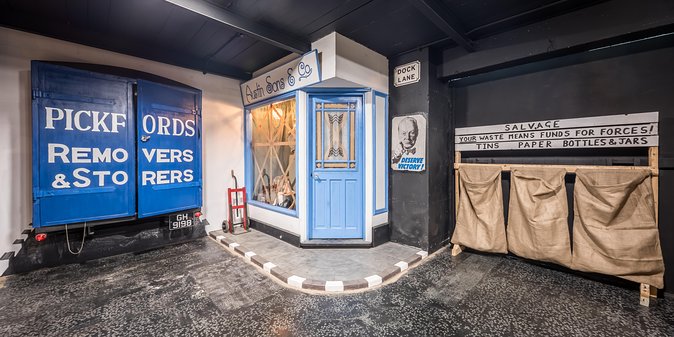
The strongest quality here is the feeling of original use. Several rooms look as if work stopped and the doors were closed at the end of the war. The setting is not simply a modern gallery built to imitate an old bunker. You can walk along the corridors, sit at desks, examine equipment, and picture staff working under pressure in a sealed underground headquarters.
That authenticity does much of the storytelling. The rooms are not lavishly decorated, and the bunker can feel plain. Yet the plainness is part of the point. This was a workplace, not a visitor attraction. You see the practical surroundings in which important decisions were made.
The Map Room, the museum’s main event
The Map Room is the heart of the Western Approaches Museum. It was the command center where staff tracked shipping routes and enemy positions across a huge map laid out on a table.
Accuracy was vital. The people working here had to plot vessel locations correctly so the Royal Navy could respond, protect convoys, and locate enemy submarines. The room captures the scale of that task. You are not just looking at a framed map on a wall. You are standing beside the large working surface where the Atlantic campaign was monitored in real time.
The Map Room has been kept in the condition in which it was left when the bunker closed on August 15, 1945. That date gives the room a powerful sense of finality. Staff did not redesign it for a later generation. The arrangement reflects the working headquarters at the close of the war.
Look closely at the map, desks, ladders, and surrounding walls. The room can feel visually busy, and it rewards patience. If you rush through, you may see only a large table and a lot of markings. Take time to think about what the symbols represented: ships at sea, threats beneath the water, and decisions that had to be made with incomplete information.
Some displays, including the battle craft blackboard and maps showing craft locations, would benefit from more explanation. The museum provides written information, but the experience does not always explain every object through audio or interactive media. You may need to read carefully and make connections for yourself.
A different sort of outing around Liverpool:
- Liverpool: Liverpool Football Club Museum and Stadium Tour
★ 4.8 · 10,764 reviews - Beatles Magical Mystery Tour
★ 5.0 · 9,266 reviews - Liverpool: “Blue Route” – City & Beatles Tour
★ 5.0 · 8,562 reviews - Liverpool: City & Beatles Tour with Live Guide & Live Music
★ 4.8 · 5,249 reviews
Telephones, teleprinters, and the people behind the operation
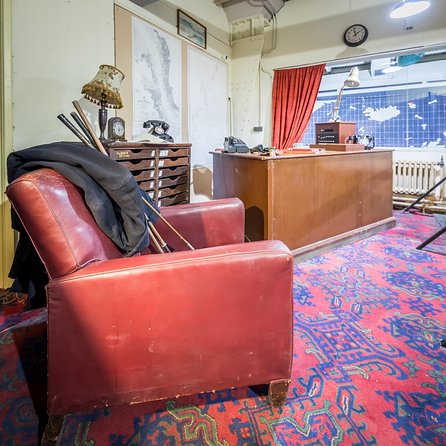
The bunker’s equipment helps turn the broad military story into something concrete. You can see the telephone exchange and examine the tools used to pass information around the headquarters.
One especially unusual item is one of only two surviving wartime telephones with a direct connection to the War Cabinet in London. It is a small object with a large implication. A secure phone line linked the Liverpool command center to the highest level of British government, showing how closely the local operation was tied to national decision-making.
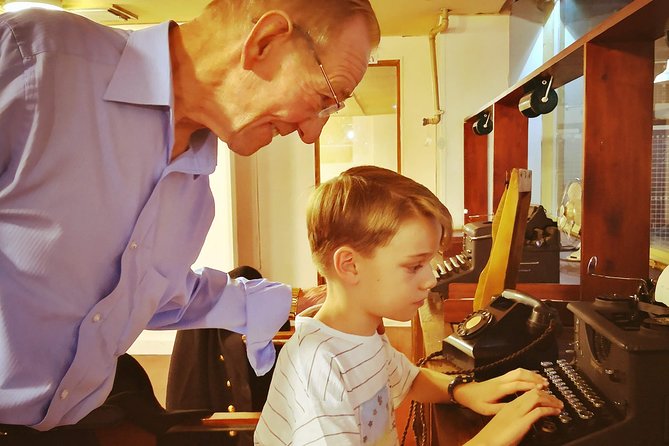
Other displays focus on the communication systems used to monitor convoys and report findings. Typewriters and teleprinter machines help you imagine the clerical work behind the maps. You can sit at some desks and interact with selected equipment, which gives children and adults a break from reading panels.
Uniforms are also available to try on. This is one of the museum’s more approachable features, particularly for families. It gives younger visitors a physical connection to the people who worked in the bunker instead of leaving the story entirely at the level of dates and military terms.
The museum has an engaging mix of serious historical material and simple hands-on details. Still, it is not an action-packed attraction. You will find only a handful of videos, and many exhibits are static. I would approach it as a place for careful looking, not as a fast-moving themed experience.
The WRNS and WAAF story
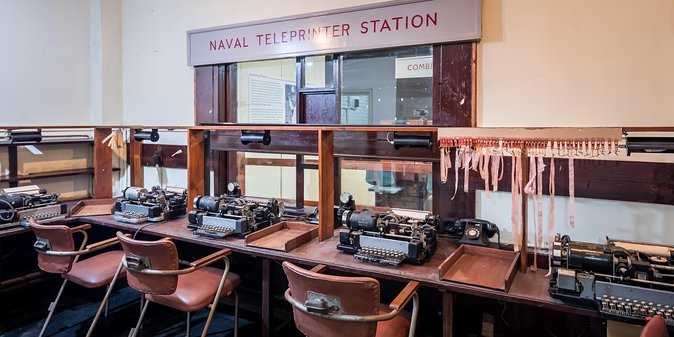
The military command structure can easily overshadow the ordinary staff who made the headquarters function. The displays connected with the WRNS and WAAF help correct that imbalance.
Women worked in communications, plotting, administration, and other roles that demanded accuracy and endurance. Their work was essential, yet it is often less familiar than the stories of ships and commanders. The dedicated women’s displays add a welcome human side to the museum.
I found this section particularly valuable for families and anyone who wants more than a straightforward account of naval strategy. It helps you picture the daily routine: long hours, repeated messages, careful calculations, and the pressure of knowing that information might affect ships far out in the Atlantic.
The bunker itself also tells part of that story. Its narrow passages and workrooms show how many people shared an underground workplace. You can get a sense of the repetitive, concentrated nature of the job, even without a guide narrating each scene.
How long to allow and how to use the self-guided format
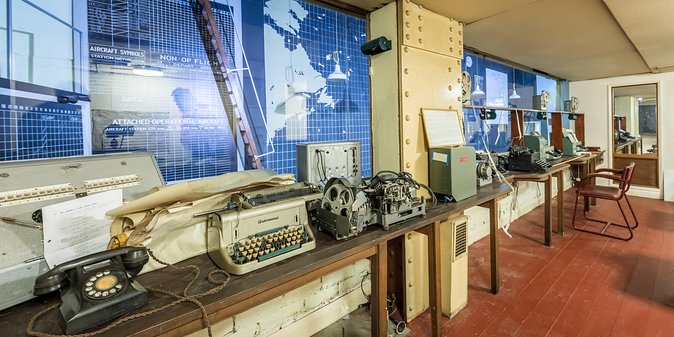
The stated visit time is one to two hours. I would allow at least 90 minutes if you want to read the displays and spend time in the Map Room. People interested in World War II history may stay closer to two hours, especially if they examine the equipment and watch the film at the end.
There is no guided tour to keep you moving. That is a benefit if you prefer to stop at a detail, reread a panel, or let children try the interactive objects. It also means you need to manage your own attention. The museum gives you the setting and the information, but it does not constantly direct your eye toward the most important object in each room.
A sensible order is to watch the introductory film, follow the rooms in sequence, and then spend extra time in the Map Room before continuing to the final room. You might want to keep a little energy for the closing area, since it offers a film about life in Liverpool during the war and traditional games.
Hot drinks are available there at wartime prices. That is a small but pleasant touch, especially after walking through the bunker. It also gives you a place to pause and think about what you have seen instead of stepping straight back into the modern city.
How the museum compares with London’s Churchill War Rooms
It is useful to set expectations. The Western Approaches Museum is smaller and less polished than the Churchill War Rooms in London. The London attraction uses a highly developed presentation, while Liverpool relies more on original spaces, written explanations, and preserved equipment.
That difference does not make the Liverpool museum unimportant. In some ways, the less theatrical approach suits the subject. You are walking through a real operational bunker, and the Map Room has not been recreated from scratch. The experience feels more like an historic workplace than a large-scale show.
The trade-off is that you may have to work harder to understand the displays. The battle maps and blackboards are intriguing, but they do not always explain themselves. Audio commentary, more short films, or interactive map features could make the story easier to follow.
If you have already visited the Churchill War Rooms, you will recognize the general idea of a wartime command center, but the Western Approaches site adds Liverpool’s specific role in the Atlantic campaign. If this is your only World War II bunker visit, it remains a worthwhile stop, especially if you value original surroundings over polished presentation.
Is the $24.26 admission good value?
At about $24.26 per person, this is not the cheapest small museum visit. The value depends on how seriously you take the subject and how much time you give it.
For a quick 30-minute look, the price would feel high. For a full one-and-a-half to two-hour visit, with access to the preserved bunker, Map Room, equipment, uniforms, film, games, and hot drinks area, the cost becomes easier to justify. The included annual pass improves the deal further. You can return free within 12 months, which is useful if you are staying in Liverpool for a while or expect to come back.
I would especially consider the pass valuable if you like museums that reveal more detail on a second visit. The first visit can be about understanding the layout and major story. A return visit lets you slow down in the Map Room, reread the panels, and spend more time with the WRNS and WAAF material.
The admission is also easier to justify for families with children who enjoy pressing buttons, trying uniforms, playing games, and moving through real rooms. Adults who dislike text-heavy museums may find the price less attractive unless the bunker setting itself is a major draw.
Who should book this experience?
I would choose this museum if you are interested in World War II, naval history, Liverpool, military communications, or the often-overlooked work of women in wartime service. It also fits well into a city center day because it is near the Town Hall and Albert Dock.
Families can enjoy the practical exhibits, though younger children may lose interest during the longer written sections. Adults should be prepared for a museum that asks you to read and observe rather than simply follow a dramatic presentation.
The self-guided format suits independent visitors. You can move quickly through familiar material or spend time on the rooms that matter most to you. If you prefer a guide to explain every map and object, this may feel under-supported.
Book with care if your schedule is uncertain. Free cancellation is available when you cancel at least 24 hours before the start time, but changes or cancellations inside that window are not accepted for a refund. Since the experience is open daily from 10 a.m. to 6 p.m., you have useful flexibility on the day itself.
Should you book the Western Approaches Museum?
Yes, if you want to understand Liverpool’s role in the Battle of the Atlantic and appreciate original wartime spaces. The untouched Map Room, direct-link telephone, communication equipment, and displays about WRNS and WAAF personnel give the visit real substance.
I would not book it expecting a large, cinematic attraction. The presentation can be text-heavy, and some displays need more explanation. But if you allow enough time and enjoy making sense of a place through its rooms, maps, and objects, the museum offers a memorable look at the quiet work behind a major wartime campaign.
The annual pass makes the decision easier. A single visit gives you a solid introduction, while a return visit can reward anyone who wants to study the details more closely. For history-minded visitors in Liverpool, this underground headquarters is worth putting on the schedule.
FAQ
Where is the Western Approaches Museum?
The museum is beneath Liverpool city center, close to Liverpool Town Hall. It is also about a five-minute walk from Albert Dock.
How long does the self-guided tour take?
The visit takes approximately one to two hours. You can explore at your own pace, and visitors interested in the details may spend closer to two hours.
Is admission to the museum included?
Yes. Admission to the Western Approaches HQ Museum is included with the experience.
Can I return to the museum after my visit?
Yes. Admission includes an annual pass, allowing free return visits within 12 months.
What are the museum’s opening hours?
The museum is open Monday through Sunday from 10 a.m. to 6 p.m.
Is the tour guided?
No. This is a self-guided visit, so you can move through the bunker without a set group schedule or guide.
Are there stairs into the bunker?
Yes. The entrance is at street level, followed by steps down into the underground bunker. A moderate level of physical fitness is recommended.
Can I cancel for a refund?
Yes, if you cancel at least 24 hours before the experience start time. Cancellations or changes made less than 24 hours in advance are not refunded.
Recently added around Liverpool
- Beatles Ticket To Ride Half Day Tour Small Groups★ 5.0 · 60 reviews
- North Wales and Caernarfon Castle day-tour from Liverpool★ 5.0 · 64 reviews
- Beatles Liverpool Childhood Homes Tour exc National Trust tickets★ 5.0 · 67 reviews
- Ultimate Beatles Ticket To Ride Shore Excursion-Small Groups★ 5.0 · 67 reviews
- Liverpool: Silent Disco Adventure Tour★ 4.6 · 76 reviews
- Liverpool with a Local: Walking Tour (10:30am)★ 5.0 · 80 reviews
- Liverpool: Private Beatles Tour★ 4.8 · 85 reviews
- Liverpool: Junkyard Golf Tickets for 9 or 18 Holes★ 4.6 · 88 reviews
Self-Guided Tours, compared.

Emirates Stadium Entry Ticket and Audio Guide
Read our review →
Westminster Abbey Entrance Ticket Including Audio Guide
Read our review →
British Museum Audio Tour & Priority Entrance Ticket
Read our review →
Golden Tours York Hop-on Hop-off Open Top Bus Tour with Audio Guide
Read our review →

Canterbury Cathedral: Entry Ticket with Audio Guide
Read our review →
Churchill War Rooms Ticket & Political London Audio
Read our review →
Windsor Castle Tour from London with Transportation & Audio Guide
Read our review →Browse the lists this tour appears in