
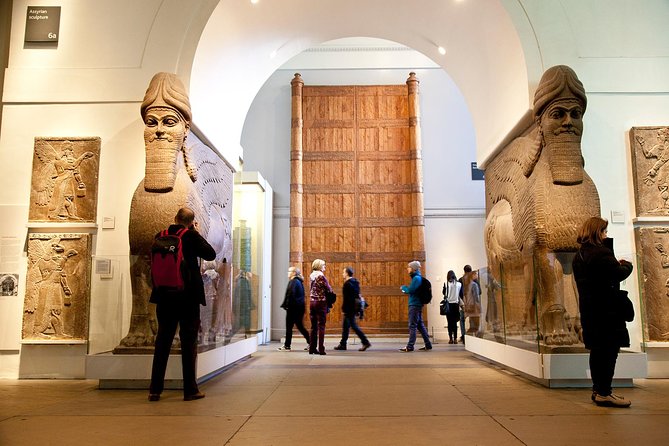
Reviewed · MUSEUMS
British Museum Highlights Private Tour in London including the Rosetta Stone
The British Museum can swallow a whole day. This private highlights tour makes the collection manageable by leading you to major treasures such as the Rosetta Stone, the Parthenon Frieze, Egyptian mummies, and Sutton Hoo artifacts. I like the direct route and the chance to ask questions as you go. I also like that you can request extra attention for subjects that interest you, from ancient Egypt to Anglo-Saxon England.
The main concern is time. The museum holds more than eight million objects, while this tour covers its key sights in a compact visit. The price, about $141.56 per person, is also a serious consideration when museum admission itself is free. You are paying for guidance, structure, and personal attention, not for entry.
In This Review
- Key points at a glance
- Why the British Museum needs a plan
- Meeting at Montague Place
- The Rosetta Stone and the Egyptian Rooms
- The Parthenon Frieze and Greek sculpture
- Sutton Hoo and Anglo-Saxon England
- How the private format changes the visit
- Duration, walking, and pace
- Price and what you are really buying
- What the ratings suggest about guide quality
- Who should book this tour?
- Should you book it?
- FAQ
- Where does the British Museum tour meet?
- Where does the tour end?
- How long does the experience last?
- Is museum admission included?
- Is this a private tour?
- What language is the tour offered in?
- Can I bring a baby stroller?
- Can I cancel for a full refund?
Key points at a glance
- The Rosetta Stone: See the real stone that helped scholars decipher Egyptian hieroglyphs.
- A private guide: Your group has one guide, giving you room to ask questions and shape part of the visit.
- Major Greek treasures: Examine the Parthenon Frieze, removed from the Acropolis in Athens.
- Egyptian galleries: Learn why death, burial, and the afterlife mattered so much in ancient Egypt.
- Sutton Hoo artifacts: Encounter remarkable Anglo-Saxon objects from a famous ship burial.
- A compact museum plan: Useful if you have only part of a day and do not want to wander through 70 galleries alone.
Why the British Museum needs a plan
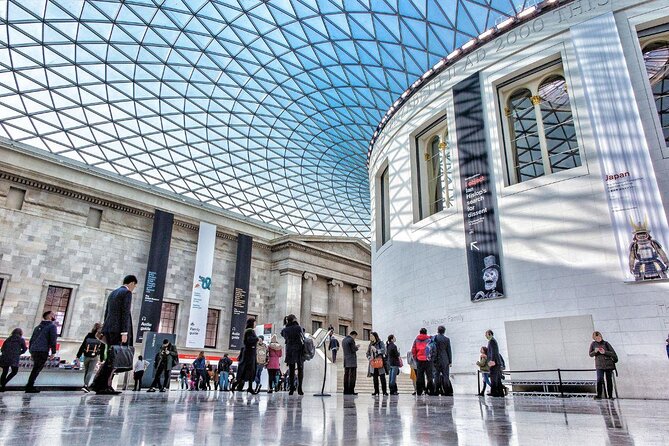
The British Museum is free to enter, but free does not mean simple. Its collection covers roughly two million years of human history, spread across 70 galleries and nearly one million square feet. Without a plan, you can spend a great deal of time finding rooms rather than studying objects.
That is where this tour earns its keep. Your guide leads you between sections that span different periods and cultures, explaining why each object matters before moving on. You get a route through the museum rather than a random series of impressive-looking rooms.
I would not treat this as a complete visit. No two-and-a-half-hour route can do justice to a museum of this size. Think of it as an orientation and highlights walk, followed by your own time to return to anything that caught your attention.
The experience is offered in English and is private, so only your group participates. That matters when you want to pause, ask for clarification, or spend a little longer with an object. Several guides have earned particularly strong praise, including Rob, Norma, Trudy, Guy, and ZoZo. The most effective guides appear to combine facts with stories and keep the pace moving.
More Museum Visits in London
- Tower of London and Crown Jewels Exhibition Ticket
★ 4.5 · 6,677 reviews - London: Chelsea Football Club Stadium and Museum Tour
★ 4.8 · 4,576 reviews - Chelsea FC Stadium Tours and Museum
★ 5.0 · 1,908 reviews
Meeting at Montague Place
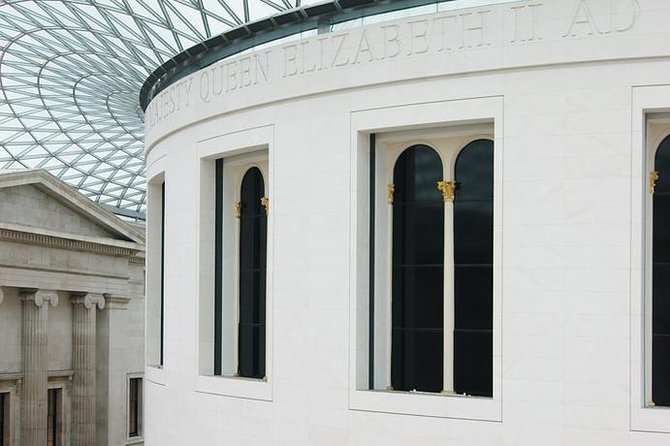
The meeting point is Montague Place by the museum’s north entrance, marked by stone lions near the doorway. Your guide is supposed to hold a sign, and confirmation is sent at booking.
This is one detail to take seriously. Some people have had trouble finding the guide, especially when the meeting information was not specific enough or an older hotel name caused confusion. I would arrive early, read the meeting instructions closely, and keep the local contact number available. The museum has several entrances, so heading to the wrong side of the building can cost you precious time.
The tour ends back at the meeting point. Hotel pickup and drop-off are not included, and neither are food or drinks. The museum is near public transportation, which makes it practical to reach from central London.
The Rosetta Stone and the Egyptian Rooms
The Rosetta Stone is the star for many people. You may know the name from language-learning software, but here you see the actual ancient stone associated with the deciphering of Egyptian hieroglyphs.
A guide adds useful scale and context. Instead of simply reading a label, you can ask how the stone helped scholars compare different scripts and why its discovery changed the study of ancient Egypt. That kind of explanation is especially useful if you arrive with only a general idea of what the object is.
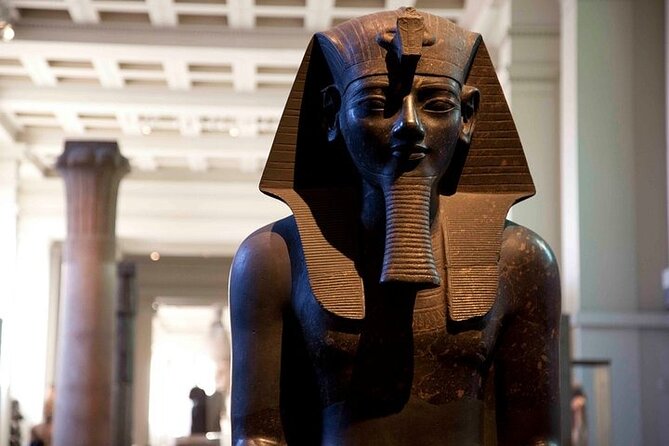
The Egyptian galleries form another central part of the route. You can expect statues, burial objects, and mummies, along with an explanation of how ancient Egyptians viewed death and the afterlife. The subject is more than a display of preserved bodies. It connects religion, burial customs, daily life, and the way people hoped to prepare for what came after death.
This section may be the most rewarding part of the tour for anyone interested in ancient Egypt. It can also be crowded and warm, according to the experience of some groups. The route involves a fair amount of walking, so comfortable shoes are sensible.
The Parthenon Frieze and Greek sculpture
The Parthenon Frieze gives the tour a powerful change of pace. This long sculpted work once formed part of the Acropolis in Athens. It is just over three feet high and stretches about 525 feet, making it difficult to grasp from photographs alone.
Your guide can help you look beyond the sheer size. You may be encouraged to notice the procession, figures, movement, and surviving details rather than simply checking off another famous object. The surrounding Greek collection adds further examples of sculpture and ancient culture.
The museum’s possession of Parthenon material is also tied to continuing questions about ownership and cultural heritage. The supplied information does not promise a detailed treatment of that debate, so ask your guide if the subject matters to you. A private format gives you a better chance of raising questions that a fixed group lecture might skip.
The Greek rooms can become crowded, particularly on busy days. A guide helps you find the important sections, but you should not expect long, quiet contemplation at every stop.
A different sort of outing around London:
- London: The London Eye Entry Ticket
★ 4.6 · 35,875 reviews - From London: Harry Potter Warner Bros Studio Tour
★ 4.7 · 26,588 reviews - London: Westminster to Greenwich River Thames Cruise
★ 4.5 · 22,836 reviews - Magical London: Harry Potter Guided Walking Tour
★ 4.7 · 22,044 reviews
Sutton Hoo and Anglo-Saxon England
Sutton Hoo provides a welcome connection to the British Isles. The objects come from an Anglo-Saxon burial site and include artifacts linked to a ship burial.
The story is remarkable because the objects survived for centuries, along with the threat of grave robbers and the ordinary damage of time. A guide can turn a case of metalwork and burial goods into a story about power, ceremony, belief, and early English society.
This stop also broadens the tour. The British Museum is famous for Egypt and Greece, but Sutton Hoo reminds you that the collection includes important material from Britain itself. If your interests lean toward medieval or early English history, tell the guide at the beginning so this section receives the attention it deserves.
How the private format changes the visit
A private guide is the clearest reason to choose this experience over wandering alone. You can ask why an object is important, request a simpler explanation, or connect a display to something you already know.
Guides praised most highly have been described as friendly, patient, enthusiastic, and able to explain the museum’s architecture as well as its objects. Trudy, in particular, has been singled out for bringing exhibits to life and handling crowded school groups well. Rob has also been praised for giving just the right amount of information and helping people understand what to see after the tour.
That last point is important. A good museum tour should not leave you dependent on the guide. It should show you where the major rooms are, explain the basic layout, and help you choose what to explore next. Several people have found the tour most useful as a first pass, then stayed to visit additional galleries independently.
The private setting also allows some flexibility. The route includes the headline objects, but you can express an interest in a particular culture or display. The exact balance depends on your guide and the time available, so do not assume every request can be added.
Duration, walking, and pace
The overall duration is listed as approximately two hours and 30 minutes, while the itinerary describes about one hour and 30 minutes inside the museum. That difference is worth clarifying before you book, since the actual amount of guided time affects the value considerably.
Either way, this is a fast look at a huge collection. You will walk between galleries, stop for explanations, and move on before every room has had time to settle in. Some people enjoy that energy. Others find the pace too brief and prefer a full day with an audio guide or museum map.
The experience is generally suitable for most people, but it is not designed for baby strollers. One account also notes that the route can be tiring because of walking and stairs. The supplied information says wheelchair availability is limited, so check directly before booking if anyone in your group uses a wheelchair.
If you have only half a day in London, the brisk pace is an advantage. If the British Museum is your main reason for visiting London, I would plan extra time afterward rather than treating the tour as the entire museum experience.
Price and what you are really buying
At about $141.56 per person, this is expensive for a museum whose general admission is free. The fee covers a professional English-speaking guide and all tour fees and taxes, but not refreshments or transportation.
You are paying for efficiency. The guide can reduce the time spent studying a map, locating galleries, and deciding which famous objects deserve priority. If you have one day in London, that saved time may be worth more than the admission price.
The value is strongest for first-time visitors, families who need a clear route, couples who prefer conversation to an audio device, and anyone who feels overwhelmed by large museums. It is weaker for repeat visitors who already know the collection or for people happy to wander for several hours at their own pace.
Group discounts may be available, although the exact savings are not stated. Since the activity is private, ask how the price changes with your party size. A larger group may find the per-person cost easier to justify, while a solo visitor faces a much steeper bill.
What the ratings suggest about guide quality
The overall rating is 4.3 out of 5 from 104 ratings, which points to a generally successful experience with some real inconsistencies.
The strongest praise focuses on the guides. People value clear explanations, good storytelling, patience, and the ability to point out the museum’s most important objects without flooding the group with facts. The best guides help you understand not only what you are seeing but why it matters.
There are also serious service complaints. A few people had trouble locating the guide, and one person reported that the guide did not appear at the meeting point. Another account described unclear speech, incorrect information, and conduct that seemed to ignore museum rules concerning artifact lighting. These are not minor concerns.
The provider responded to one complaint by apologizing, saying it would investigate the guide’s conduct and reinforce museum rules. That response is encouraging, but it cannot guarantee the quality of a particular guide on your date. Clear meeting arrangements and prompt contact with the operator are wise safeguards.
Who should book this tour?
I would choose this tour if you want a guided introduction to the British Museum and have limited time. It is also a good fit if you want to ask questions rather than listen through headphones, or if a large museum makes you unsure where to begin.
Families may appreciate the focused route, especially if children need a sense of progress. History fans should benefit from the links between Egypt, Greece, and Anglo-Saxon Britain. People with one full day can use the tour as a guided first chapter, then explore alone afterward.
I would hesitate if you want to examine many objects in detail, move slowly, or spend most of your visit in one collection. The museum is too large for a short tour to cover more than a small portion. You may get more value from free entry, a museum guide, and several unhurried hours on your own.
The tour offers free cancellation up to 24 hours before the start time. Changes or cancellations inside that window are not refunded, so keep that deadline in mind when arranging a tight London schedule.
Should you book it?
Book it if your priority is seeing the Rosetta Stone, Parthenon Frieze, Egyptian mummies, and Sutton Hoo without getting lost. The private format, direct route, and chance to question a guide can make a free but intimidating museum feel much easier to handle.
Skip it if you have plenty of time, enjoy self-guided museum visits, or cannot justify paying $141.56 for guidance inside a free institution. For the right person, this is an efficient introduction, not a complete British Museum visit. Plan to stay afterward and follow your own interests.
FAQ
Where does the British Museum tour meet?
The meeting point is on Montague Place by the museum’s north entrance, near the stone lions by the doorway.
Where does the tour end?
The activity ends back at the meeting point.
How long does the experience last?
The tour duration is approximately two hours and 30 minutes. The itinerary lists about one hour and 30 minutes for the museum visit, so confirm the timing when booking.
Is museum admission included?
The tour includes admission fees listed by the operator. General entry to the British Museum is free, but this experience charges for the private guided service.
Is this a private tour?
Yes. Only your group participates in the activity.
What language is the tour offered in?
The tour is offered in English and includes a professional English-speaking guide.
Can I bring a baby stroller?
No. Baby strollers are not permitted on the tour.
Can I cancel for a full refund?
Yes, if you cancel at least 24 hours before the experience start time. Cancellations or changes made less than 24 hours beforehand are not refunded.
Recently added around London
- PRIVATE HIRE 45 min Speedboat Tour – Embankment/Westminster Pier★ 5.0 · 55 reviews
- Private Tour of London’s Historic Pubs★ 5.0 · 55 reviews
- From London: Glastonbury and Cheddar Gorge Guided Day Trip★ 4.8 · 55 reviews
- London: Kew to Westminster River Thames Cruise★ 4.2 · 55 reviews
- Gatwick Airport Taxi – Private Transfer to/from London★ 5.0 · 55 reviews
- London: Tower of London After Hours Tour and Key Ceremony★ 4.8 · 56 reviews
- London by Night – Tootbus Sightseeing Tour★ 3.5 · 55 reviews
- Private Round Trip Transfer between London Airports and Hotel★ 3.5 · 56 reviews
Museums, compared.

Liverpool Football Club Museum and Stadium Tour
Read our review →
Tower of London and Crown Jewels Exhibition Ticket
Read our review →
Chelsea Football Club Stadium and Museum Tour
Read our review →




Browse the lists this tour appears in