
Reviewed · MUSEUMS
British Museum London Guided Tour Semi-Private 8ppl Max
A great museum needs a game plan. This 2.5-hour British Museum tour keeps the group to eight people, giving you a far better chance to hear the guide and ask questions than on a large group outing. I especially like the carefully chosen route through famous pieces such as the Rosetta Stone, the Mummy of Katebet, and the Lewis Chessmen. I also like the way guides such as Ivo, Jake, James, Laurence, Steph, and Guy bring in the museum’s difficult questions about empire, ownership, and looted objects.
The main drawback is simple: the British Museum is enormous, and this tour can only show you a selection. The pace also calls for moderate fitness, and the experience is not available to people using wheelchairs or with walking disabilities. At $108.44 per person, it is not a bargain in the usual sense, but the small group and time saved can make it worthwhile for a first visit.
In This Review
- Key points to know before you book
- Why a small group matters inside the British Museum
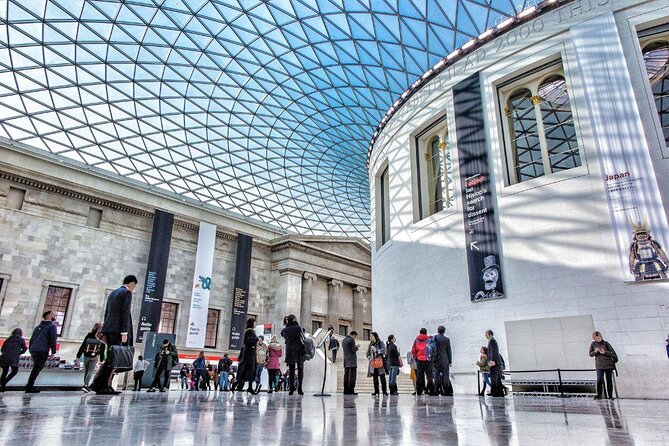
- Meeting your guide at Great Russell Street
- The first galleries: making sense of a huge collection
- The Rosetta Stone and the power of one famous object
- The Mummy of Katebet and ancient Egyptian belief
- The Lewis Chessmen and a change of pace
- Assyrian reliefs and the museum’s harder questions
- What the guides add to the experience
- Timing, crowds, and the physical demands
- Is $108.44 good value?
- Who should book this British Museum tour?
- Cancellation and practical booking notes
- Should you book it?
- FAQ
- How long does the British Museum guided tour last?
- How many people can join the semi-private tour?
- Is a private tour option available?
- Where does the tour begin?
- Where does the tour end?
- Is hotel pickup included?
- Are temporary exhibitions included?
- Can people using wheelchairs join the tour?
- What should I bring to the museum?
- Can I cancel for a full refund?
Key points to know before you book
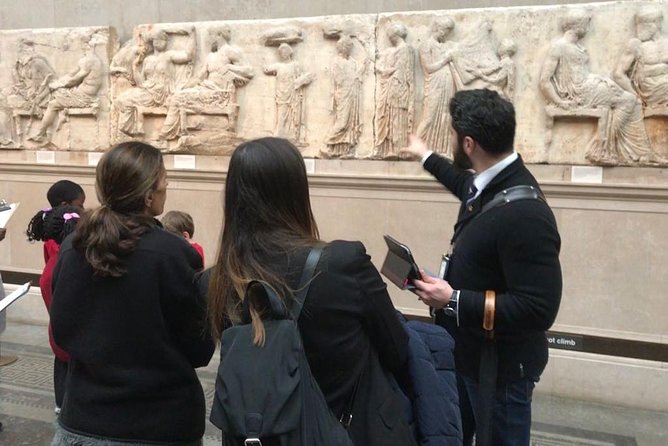
- Eight people maximum: The semi-private group never exceeds eight people, unless you choose the fully private option.
- A focused 2.5-hour route: You see major works without trying to cover all eight million objects in the collection.
- Strong guide-led storytelling: Ivo, Jake, James, Laurence, Steph, Guy, Darcy, Matilda, and others have been praised for wit, clear explanations, and thoughtful answers.
- Important ethical context: The tour can address how objects entered the museum, including controversial and disputed acquisitions.
- Several departure times: You can choose a start time that fits around other London plans.
- Plan for security and walking: Small bags are allowed, but large bags and suitcases are not. Comfortable shoes matter.
Why a small group matters inside the British Museum
The British Museum holds about eight million objects covering 6,000 years of human history. That figure is impressive, but it is also a warning. You can walk through the doors, admire the Great Court, and then spend an hour wandering without finding the pieces you most wanted to see.
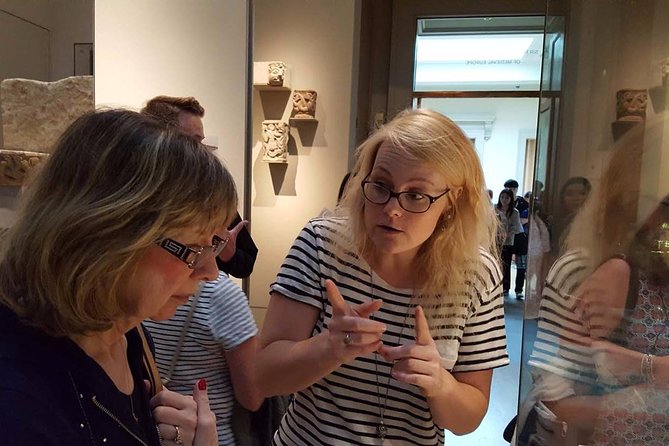
A small group changes the experience. With no more than eight people, your guide can keep the group together in crowded rooms and speak without shouting. Andy was praised for moving smoothly through busy areas while still making sure a family saw the displays that mattered to them. That is exactly where a small group earns its keep.
You also have a better chance to ask a real question. A guide can explain a detail, shift the emphasis toward your interests, or spend a little longer with an object that catches your attention. The private upgrade offers more flexibility, but the semi-private format should suit most couples, families, and small groups who want personal attention without paying the full private-tour price.
More Museum Visits in London
- Tower of London and Crown Jewels Exhibition Ticket
★ 4.5 · 6,677 reviews - London: Chelsea Football Club Stadium and Museum Tour
★ 4.8 · 4,576 reviews - Chelsea FC Stadium Tours and Museum
★ 5.0 · 1,908 reviews
Meeting your guide at Great Russell Street
The tour begins at the British Museum, Great Russell Street, London WC1B 3DG. It ends back at the same meeting point, so you will need to arrange your next stop from there rather than expecting a hotel transfer.
The museum is near public transport, and the operator recommends using a taxi or Uber if you need a direct ride. Build in time to arrive at the meeting point before the selected start time. One useful warning from the practical side of the experience is not to be late. The tour has a fixed schedule, and the guide cannot simply restart the route for one delayed person.
You should also carry a mobile phone with the number provided at booking, including the country code. The operator says it is imperative to provide a mobile number, likely so the guide or company can contact you if there is a meeting-point issue.
Security can slow entry. Do not bring a suitcase or large bag. Only handbags and small, thin backpacks are permitted through museum security. An umbrella is also sensible for London, especially since you may be waiting outside before entry.
The first galleries: making sense of a huge collection
The opening introduction gives you a broad picture of the museum and its collections. You are not simply shown old objects one after another. The guide sets up a story about human creativity, belief, power, warfare, trade, and survival across thousands of years.
That framing matters. Without it, a museum this large can feel like a warehouse of disconnected treasures. A good guide gives each room a purpose and helps you understand why one object matters beyond its age or beauty.
The tone appears to be serious but approachable. The route can move from ancient societies and fallen empires to medieval games and modern questions about cultural ownership. Guy, for example, was praised for making the experience work for teenagers by mixing strong information with humour. That balance is useful for families, since a two-and-a-half-hour museum visit can otherwise test everyone’s patience.
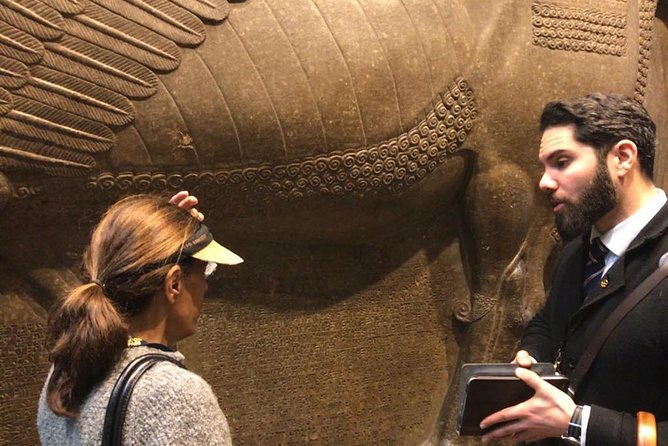
The tour is not limited to the most famous objects. James included the Assyrian galleries and the lion-hunt reliefs, which were singled out as especially memorable. These scenes show royal power and hunting in a way that feels immediate, even after more than two thousand years. They also help you see how the museum’s collection extends well beyond Egyptian mummies and Greek sculpture.
The Rosetta Stone and the power of one famous object
The Rosetta Stone is one of the core stops. You will see the actual inscribed stone, not the language-learning company with the similar name. The guide explains why its inscriptions were so important and places it within the wider story of deciphering ancient Egyptian writing.
The value here is not just seeing a famous object and taking a photograph. The guide gives you a reason to look closely. You can better understand why the stone became such a key to reading hieroglyphs and why it remains one of the museum’s essential stops.
This is also a good point to pay attention to crowd movement. The Rosetta Stone is popular, and you may need to share the viewing area with other people. A guide who knows how to position a small group can help you see the object without losing the thread of the explanation.
A different sort of outing around London:
- London: The London Eye Entry Ticket
★ 4.6 · 35,875 reviews - From London: Harry Potter Warner Bros Studio Tour
★ 4.7 · 26,588 reviews - London: Westminster to Greenwich River Thames Cruise
★ 4.5 · 22,836 reviews - Magical London: Harry Potter Guided Walking Tour
★ 4.7 · 22,044 reviews
The Mummy of Katebet and ancient Egyptian belief
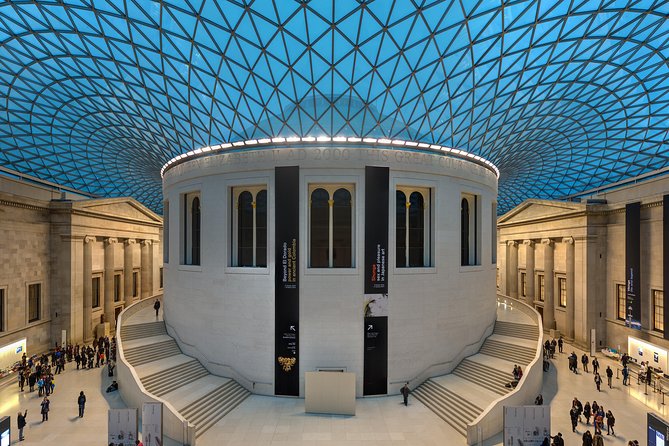
The Mummy of Katebet provides a more personal encounter with ancient Egypt. Rather than treating the mummy as a spooky attraction, the guide places it within Egyptian ideas about death, identity, ritual, and the afterlife.
This kind of stop shows why a guided visit can offer more than a list of dates. The object is connected to a person, a society, and a set of beliefs. You begin to see the mummy as evidence of how people prepared for death and expressed hopes for what came next.
The museum has many Egyptian objects, so the guide’s selection is useful. You will not have time to examine every case, and you do not need to. The point is to leave with a few clear examples that help you understand the wider collection.
The Lewis Chessmen and a change of pace
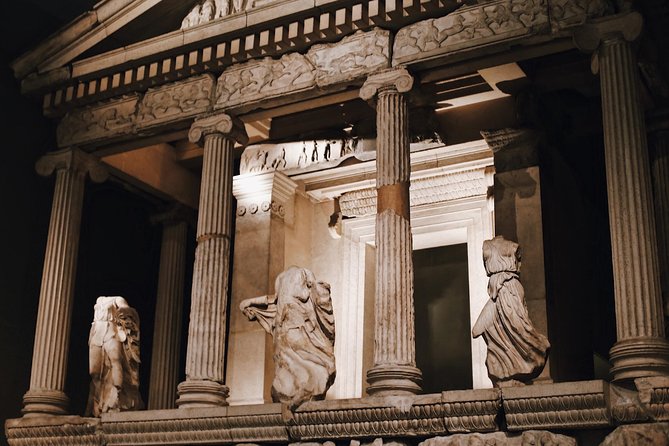
The 12th-century Lewis Chessmen bring the tour into the medieval world. Their small size and expressive faces make them easy to enjoy, but they also open the door to questions about medieval society, games, craftsmanship, and status.
This is a welcome change after the monumental scale of ancient reliefs and Egyptian objects. You are looking at pieces made to be handled and used, not only displayed. The chessmen remind you that museum collections can reveal ordinary habits and personal amusement as well as religion and royal power.
The exact selection can vary during the year because some collections and rooms may change. If one gallery is unavailable, the guide may adjust the route. That flexibility is helpful, though it means you should not treat every listed object as an absolute guarantee on your date.
Assyrian reliefs and the museum’s harder questions
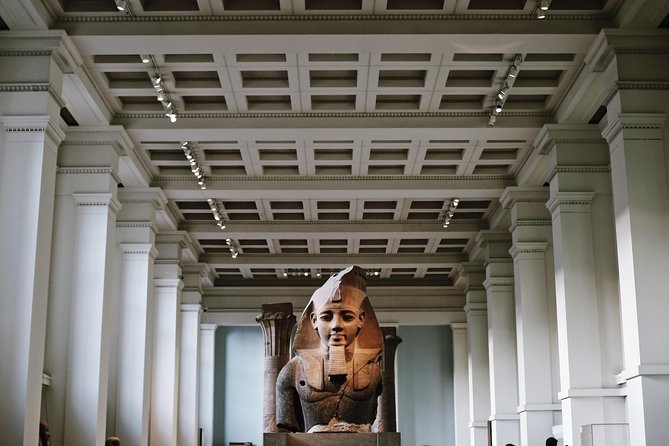
The Assyrian lion-hunt reliefs are among the strongest examples of art serving political power. They show royal authority, ceremony, and violence with remarkable detail. James’s route included this section, and it was praised as a particularly enjoyable part of the visit.
The tour also has room for a more honest conversation about the museum itself. Jake was praised for discussing how objects came into the collection and for not avoiding controversial subjects. Another guide, Eleisha, was appreciated for giving a contemporary view while answering questions about disputed or looted treasures with care.
That is important at the British Museum. The collection is not only a record of ancient cultures. It is also a record of modern collecting, colonial power, archaeology, and changing ideas about who should control cultural objects. The quality of this part of the tour will depend on your guide, but the experience clearly allows space for it.
If you only want quick photographs of famous objects, a self-guided visit may be enough. If you want context about ownership and the museum’s role in shaping the collection, a guide-led route offers much more.
What the guides add to the experience
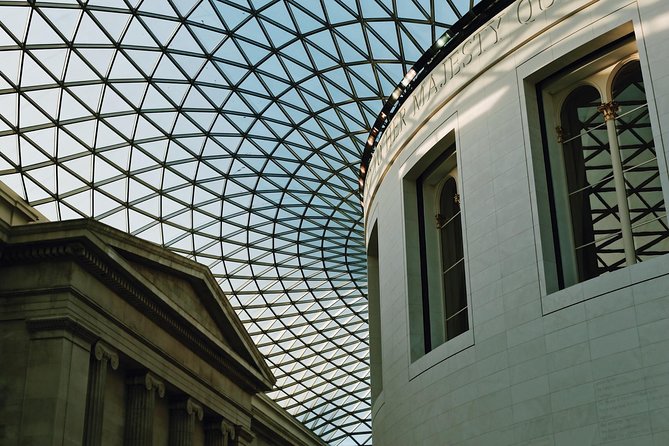
The strongest feature is the quality of the individual guides. Ivo is praised for turning details into stories and helping the objects feel alive. Jake is described as friendly, candid, and able to answer questions about both the artifacts and the museum. James combines humour with strong subject knowledge, while Laurence is praised for showing the best of the museum within the time available.
Steph appears more than once in the feedback. She is described as engaging, well informed, and able to captivate a full group of eight. She also sent follow-up material after one visit, which is a pleasant extra rather than a guaranteed feature.
Other praised guides include Darcy, who kept a two-hour visit entertaining while covering major sights, Matilda, whose lively presentation made people wish the tour lasted all day, and Guy, whose humour worked well with teenagers. Becky was praised for making the visit feel alive through stories and a thoughtful choice of objects.
Guide quality can never be completely guaranteed in advance. Still, the repeated praise points to a consistent strength: the guides do more than recite labels. They explain significance, welcome questions, and adjust their approach to the group.
Timing, crowds, and the physical demands
The experience lasts about 2 hours and 30 minutes. That is long enough to see a useful selection but short enough to fit into a packed London day. You can choose from several start times, which helps if you are also planning Westminster Abbey, the Tower of London, or an evening theatre show.
Do not expect a quiet museum. The British Museum can be crowded, especially around famous objects and during busy holiday periods. The small group helps your guide keep control, but it cannot remove the crowds. Andy’s ability to move a family through packed areas is the sort of practical skill that matters here.
Wear comfortable shoes. The tour involves walking through galleries for much of its duration, and the operator requires a moderate level of physical fitness. It is not suitable for people with walking disabilities or people using a wheelchair. Some rooms require very quiet voices or restrict speaking, so your guide will explain the rules before entering.
Temporary exhibitions are not included. If a special exhibition is your main reason for visiting, you will need a separate ticket or another arrangement.
Is $108.44 good value?
At $108.44 per person, this is a premium way to visit a museum that otherwise offers general admission without a charge. You are paying for the guide, the planning, the small group, and the chance to use limited time well.
The price makes the most sense if this is your first visit, if you have only one free museum slot in London, or if your group wants interpretation rather than a silent walk through galleries. It is also useful for families and small groups who may struggle to agree on where to go in such a large building.
The value is weaker if you enjoy reading every label at your own pace or plan to spend most of the day in the museum. A self-guided visit gives you freedom and costs less, though you will need to plan your own route.
Group discounts may be available, and there is a private upgrade if you want a more personal itinerary. The included services are the semi-private tour and professional guide. Hotel pickup, drop-off, gratuities, and temporary exhibitions are not included.
Who should book this British Museum tour?
I would recommend it to first-time visitors who want the essential highlights without feeling lost. It suits adults, families with older children, and small groups who enjoy stories, historical context, and frank discussion of difficult museum issues.
It is especially useful if you have just a few hours in London. The guide helps you avoid spending your best museum time on corridors and galleries that do not match your interests.
I would hesitate if you need wheelchair access, have difficulty walking for 2.5 hours, want a completely private pace, or dislike fixed routes. You should also skip it if a temporary exhibition is your main goal, since that is not included.
Cancellation and practical booking notes
You can cancel up to 24 hours before the start time for a full refund. Changes or cancellations made less than 24 hours before the experience are not accepted for a refund.
A minimum of two people is required for the tour to operate. If that minimum is not met, you will be offered another date or experience, or receive a full refund. The museum can also close or delay opening without warning. If opening is delayed by more than one hour, an alternative may be offered, but the operator states that refunds or discounts will not be provided in those circumstances.
Should you book it?
Book this tour if you want the British Museum to make sense, not merely to see it. The eight-person limit, focused route, and consistently praised guides such as Ivo, Jake, James, Laurence, Steph, and Guy give you a strong way to meet the museum’s greatest objects in a limited amount of time.
Do not book it expecting to cover the entire collection or move at your own pace. For most first-time visitors who value clear stories and smart routing, the $108.44 cost is justified. For repeat visitors with a precise list of rooms to see, a self-guided visit may offer better freedom.
FAQ
How long does the British Museum guided tour last?
The tour lasts approximately 2 hours and 30 minutes.
How many people can join the semi-private tour?
The semi-private tour has a maximum of eight people.
Is a private tour option available?
Yes. You can upgrade to a fully private tour when booking.
Where does the tour begin?
The tour begins at the British Museum on Great Russell Street, London WC1B 3DG.
Where does the tour end?
The activity ends back at the British Museum meeting point.
Is hotel pickup included?
No. Hotel pickup and drop-off are not included. The operator recommends using a taxi or Uber.
Are temporary exhibitions included?
No. Temporary exhibitions are not included in the tour price.
Can people using wheelchairs join the tour?
No. The tour is not available for people using wheelchairs or those with walking disabilities.
What should I bring to the museum?
Bring a mobile phone with the number supplied at booking, including the country code. Comfortable shoes are recommended, and large bags or suitcases are not allowed inside. Only handbags and small thin backpacks can pass through security.
Can I cancel for a full refund?
Yes. You can cancel at least 24 hours before the start time for a full refund. Cancellations or changes made less than 24 hours before the start time are not accepted.
Recently added around London
- PRIVATE HIRE 45 min Speedboat Tour – Embankment/Westminster Pier★ 5.0 · 55 reviews
- Private Tour of London’s Historic Pubs★ 5.0 · 55 reviews
- From London: Glastonbury and Cheddar Gorge Guided Day Trip★ 4.8 · 55 reviews
- Gatwick Airport Taxi – Private Transfer to/from London★ 5.0 · 55 reviews
- London: Kew to Westminster River Thames Cruise★ 4.2 · 55 reviews
- London by Night – Tootbus Sightseeing Tour★ 3.5 · 55 reviews
- London: Tower of London After Hours Tour and Key Ceremony★ 4.8 · 56 reviews
- From London: Cotswolds Guided Trip Including Bourton-on-the-Water★ 4.5 · 56 reviews
Museums, compared.

Liverpool Football Club Museum and Stadium Tour
Read our review →
Tower of London and Crown Jewels Exhibition Ticket
Read our review →
Chelsea Football Club Stadium and Museum Tour
Read our review →




Browse the lists this tour appears in