
Reviewed · MUSEUMS
British Museum & National Gallery of London Semi-Private 8ppl Max
Ancient stones, royal portraits, and one smart route. This five-and-a-half-hour London museum tour links the British Museum with the National Gallery, giving you a clear path through two enormous collections instead of leaving you alone with a map and several thousand possible rooms. I like the small group cap of eight, and I like the way the guide focuses on major works while adding lesser-known objects along the way. The main drawback is the pace: two world-class museums in one day means highlights, not a full visit.
The experience costs $201.01 per person, with an optional private upgrade. That is a serious price when both museums normally offer free general admission, but you are paying for direction, interpretation, and time saved. The tour also involves a fair amount of walking, does not suit wheelchair users or people with walking disabilities, and leaves lunch, transport, and gratuities to you.
In This Review
- Key points to know before booking
- Why this two-museum plan works
- Starting with 6,000 years at the British Museum
- The Rosetta Stone and the problem with famous objects
- What the British Museum visit does not include
- The lunch break between Bloomsbury and Trafalgar Square
- Seeing European painting at the National Gallery
- Jan van Eyck, Van Gogh, and the art of looking closely
- How the small group changes the day
- Price, value, and the private upgrade
- Walking, access, and practical limits
- Who should book this London museum tour
- Final verdict: book for direction, not total coverage
- FAQ
- How long does the tour last?
- What time does the tour begin?
- Where does the tour begin?
- Where does the tour end?
- How many people can join the semi-private tour?
- Is lunch included?
- Are museum admission tickets included?
- Is hotel pickup or drop-off provided?
- Is the tour wheelchair accessible?
- Can I cancel for a full refund?
Key points to know before booking
- Two major museums in one morning and afternoon: Spend about two and a half hours at each museum, with a lunch break between them.
- Eight people maximum: The small group makes it easier to hear the guide, ask questions, and keep moving through crowded galleries.
- A guide turns famous objects into stories: Expect context for the Rosetta Stone, Lewis Chessmen, Van Gogh’s Sunflowers, and Jan van Eyck’s Arnolfini Portrait.
- Start at 10:00 am near the British Museum: The tour begins at Stop W on London’s New Oxford Street area and ends at Trafalgar Square.
- Lunch is not included: You leave the first museum for a break, then meet again for the National Gallery.
- Private touring is available: Choose the upgrade if you want more control over the pace and subjects.
Why this two-museum plan works
London’s biggest museums can swallow a day. The British Museum covers 6,000 years of human history, while the National Gallery contains more than 2,300 European paintings from the 13th through the 19th centuries. Without a plan, you can spend half your visit locating the famous pieces and the other half wondering what you missed.
This tour gives you a strong first visit. The guide selects objects that tell larger stories about people, power, religion, science, and artistic change. You are not expected to know the difference between an Assyrian relief and a medieval chess piece before arriving. The explanations are meant to give you enough background to look at each object with purpose.
I especially like the pairing. The British Museum asks how civilizations lived, traded, worshiped, fought, and recorded their ideas. The National Gallery asks how European artists represented people, faith, nature, and social status. Taken together, the day moves from ancient artifacts to paintings without feeling like two unrelated museum stops.
Still, you need realistic expectations. Two and a half hours in either museum is enough for a strong introduction, not enough to see everything. If you already have a long list of specific rooms or artists, a self-guided visit or private tour may serve you better.
More Museum Visits in London
- Tower of London and Crown Jewels Exhibition Ticket
★ 4.5 · 6,677 reviews - London: Chelsea Football Club Stadium and Museum Tour
★ 4.8 · 4,576 reviews - Chelsea FC Stadium Tours and Museum
★ 5.0 · 1,908 reviews
Starting with 6,000 years at the British Museum
Meet your guide at 10:00 am near the British Museum, at Stop W, London WC1B 3BP. The meeting point is close to public transportation, but hotel pickup is not provided. Plan to arrive with your phone charged, since the company requires a mobile number with country code when you book.
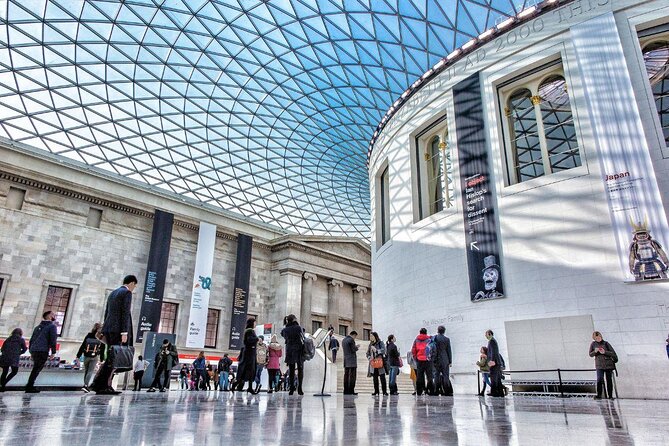
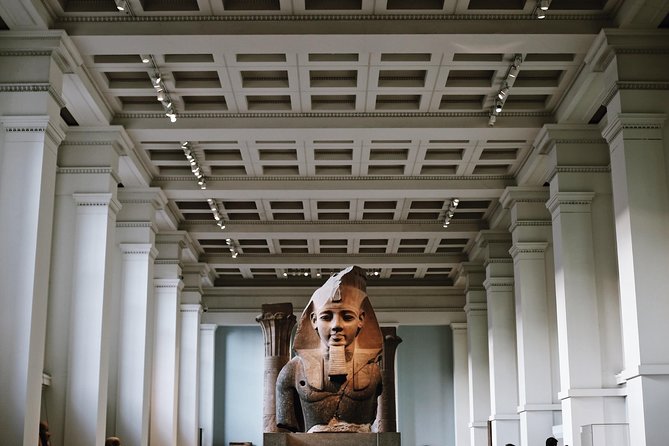
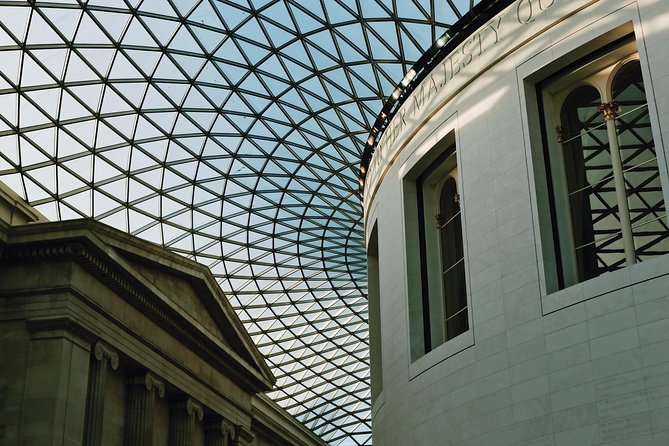
The British Museum portion lasts about two and a half hours. Your guide leads you through selected galleries rather than attempting a grand march through every collection. That matters here. The building is large, and its holdings range from Egyptian mummies and Greek sculpture to Asian art, medieval objects, and artifacts from the Americas.
A useful tour at this museum does more than point at the famous pieces. It explains why an object was made, how it was used, and what it reveals about the society behind it. The guides on this experience have been praised for making ancient objects understandable and for drawing attention to pieces that are easy to miss when you are hunting only for the Rosetta Stone.
The Rosetta Stone and the problem with famous objects
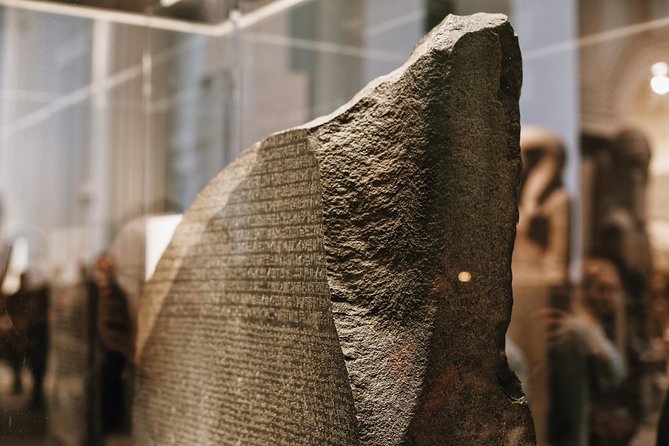
The Rosetta Stone is the obvious headline. It is the actual inscribed stone, not the language-learning software, and it helped scholars read Egyptian hieroglyphs by presenting the same decree in three scripts. A guide can explain why that matters without turning the moment into a dry lecture.
You will also see the Mummy of Katebet, a vivid link to ancient Egyptian beliefs about death and the afterlife. The Lewis Chessmen offer a very different encounter. These medieval carved figures are small, expressive, and oddly personal, which makes them easy to remember after a morning of monumental objects.
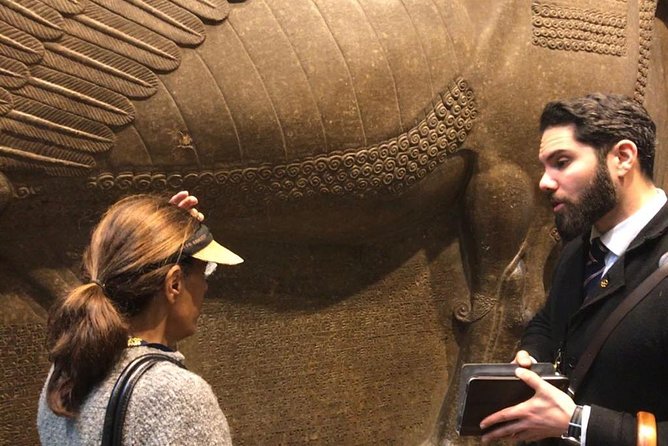
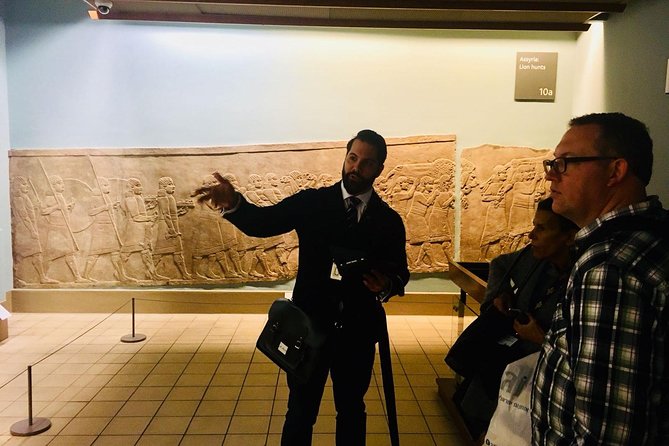
The planned selection also includes Assyrian lion-hunting reliefs dating from the seventh century BC and Samurai armor. That range is part of the museum’s appeal. In a single walk, you move between royal power, military skill, ritual practice, domestic life, and entertainment.
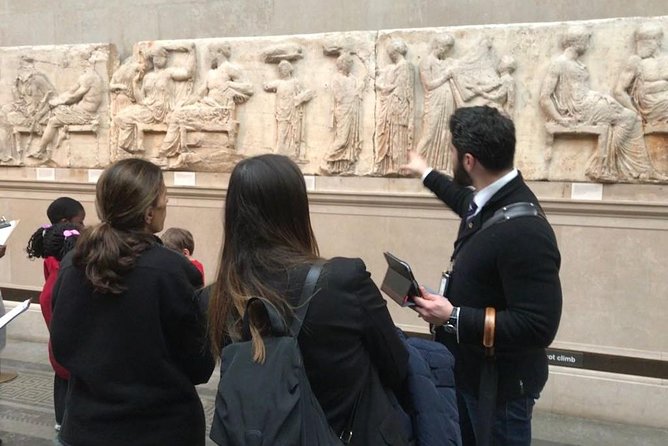
The guide’s role is most useful when the room is full or the object is behind glass. You get a concise explanation, then a reason to look again. Several guides, including Stephanie, Matilda, Becky, Jamie, Sheldon, and Craig, have been praised for combining historical detail with a lively delivery. Guide assignments can vary, so do not assume you can receive a particular person unless the operator confirms it.
What the British Museum visit does not include
General admission to the British Museum is listed as free, so the cost of the tour is not buying a museum ticket in the usual sense. It pays for the guide and the small-group format.
Temporary exhibitions are not included. Museum rooms and collections can also change during the year, and the museum may occasionally close without advance warning. If opening is delayed by more than an hour, an alternative may be offered, but the stated policy does not promise a refund or discount for such changes.
Security rules matter. Large bags and suitcases are not allowed inside, and only handbags or small, thin backpacks are permitted through security. Some rooms require quiet or restrict speaking, so your guide may explain the material before entering rather than talking inside.
A different sort of outing around London:
- London: The London Eye Entry Ticket
★ 4.6 · 35,875 reviews - From London: Harry Potter Warner Bros Studio Tour
★ 4.7 · 26,588 reviews - London: Westminster to Greenwich River Thames Cruise
★ 4.5 · 22,836 reviews - Magical London: Harry Potter Guided Walking Tour
★ 4.7 · 22,044 reviews
The lunch break between Bloomsbury and Trafalgar Square
After the British Museum, you leave the site for lunch at your own expense. The tour description does not include a restaurant booking or set menu, so treat this as a flexible break rather than a hosted meal.
The pause is useful. Five and a half hours of museum walking can wear you down, and the National Gallery demands a different kind of attention. Use lunch to sit, drink water, and reset your eyes before looking at paintings.
You are responsible for getting to the National Gallery after the break. The experience does not include hotel pickup or drop-off, and the suggested options are a taxi or Uber. Because the tour ends at Trafalgar Square, you can continue sightseeing from central London rather than returning to your hotel.
Seeing European painting at the National Gallery
The second half lasts about two and a half hours and begins at the National Gallery in Trafalgar Square, London WC2N 5DN. The guide starts with a brief orientation, then takes you through selected works from the collection.
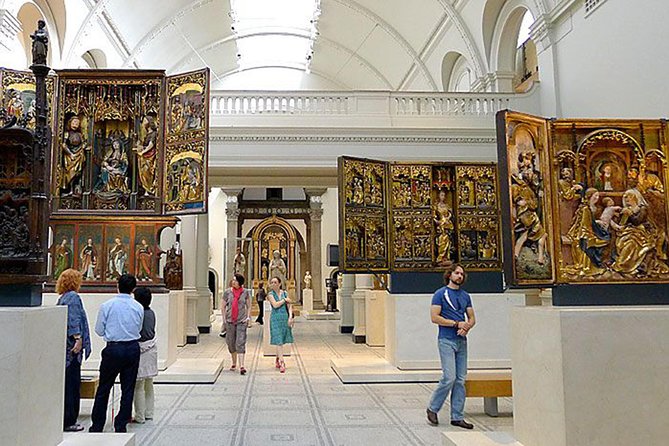
The National Gallery spans European painting from the 13th to the 19th centuries. That time range lets your guide show how subjects and techniques changed. You may move from religious images and carefully arranged portraits to scenes shaped by light, modern life, and looser brushwork.
The best part of this format is the attention to how paintings work. You are not only told that a picture is important. You are encouraged to notice composition, symbols, materials, facial expressions, and the choices an artist made.
Jan van Eyck, Van Gogh, and the art of looking closely
Jan van Eyck’s Arnolfini Portrait, painted in 1434, rewards patience. It depicts a Bruges merchant and his wife, but the details around them raise questions about wealth, marriage, domestic life, and religious meaning. A guide can point out clues that are difficult to read from a quick glance.
Van Gogh’s Sunflowers gives you a later and more familiar subject. The painting is not simply a vase of flowers. Its color, brushwork, and surface show how Van Gogh pushed paint toward a more expressive role. Seeing it after earlier European works helps you recognize the changes taking place across centuries.
The route also includes artists such as Leonardo da Vinci, Botticelli, Monet, Rembrandt, Vermeer, and Seurat. You might not spend equal time with every name, and the exact rooms can shift because of renovations or loans. The point is to build a working framework, so you leave able to recognize differences in period, technique, and purpose.
One particularly strong feature of the guide style is the use of questions. Guides such as Eli have been praised for asking people to examine a painting and form an opinion before giving the historical explanation. That approach makes art feel less like a school test and more like a conversation.
How the small group changes the day
The maximum group size is eight. That is small enough for the guide to keep everyone together without shouting across a gallery, and small enough for questions to receive proper attention.
A larger group would often mean standing at the back, missing comments, or waiting for a long line of people to gather before moving. Here, the experience is more personal. One family group also praised the format for working well with children, while another found that a private group of five felt much like a personal class.
The small size cannot solve every problem. A participant who asks many extended questions can slow the route, especially in a museum with a fixed schedule. If you need complete control over the pace, the private option is worth considering.
Price, value, and the private upgrade
At $201.01 per person, this is not a bargain museum admission deal. Both museums provide free general admission, and an independent visit costs far less if you are willing to plan your own route and read the room signs.
The value appears in three places:
- Time: You get to major works quickly instead of navigating enormous floor plans.
- Meaning: The guide connects objects and paintings to the people and periods behind them.
- Small-group access: You can hear the explanation and ask questions without being part of a large crowd.
I would consider the price fair for a first visit if you have limited time in London, feel unsure about art, or want one organized day with both museums. It is less attractive if you enjoy wandering alone, have already studied the collections, or plan to spend several days at each museum.
The private upgrade is best for families, couples, or friends with specific interests. It should give you more flexibility and personal attention, though the provided details do not state the private price or exactly how much the route changes.
Walking, access, and practical limits
This is a walking-heavy experience. You need a moderate level of physical fitness, and the tour is not available to people with walking disabilities or those using a wheelchair. That limitation is important because the schedule covers two large museums and a transfer between them.
Wear appropriate clothing for museum entry and bring only a small bag. Comfortable shoes matter more than dressing up, though some sites may require suitable attire.
The tour is offered in English only. Confirmation arrives at booking, and the experience requires at least two people to operate. If the minimum is not met, you are offered another date or experience, or a full refund.
Free cancellation is available if you cancel at least 24 hours before the local start time. Changes made inside that window are not accepted, and the amount paid is not refunded for a late cancellation.
Who should book this London museum tour
I would choose this experience for a first-time London visitor who wants the essential works without spending hours planning. It also suits couples and families who want a guide to keep the day moving, and anyone who feels more comfortable asking questions in a small group.
It is particularly useful if the Rosetta Stone, ancient Egypt, European painting, or famous works by Van Gogh and Van Eyck are high on your list. The guide adds the most value when you want context, not just a photograph.
I would skip it if you need wheelchair access, want to focus on temporary exhibitions, or prefer a slow museum day. Art students and repeat visitors may want a private tour built around their own subjects instead.
Final verdict: book for direction, not total coverage
Book this tour if you want two major London museums explained clearly in one day. The strongest part is the combination of a small group and guides who bring art and ancient objects to life, with Stephanie, Matilda, Becky, Jamie, Craig, Eli, and others receiving especially strong praise for their delivery and insight.
Do not book it expecting to see every gallery. You will get a focused route, a lunch break, and a useful foundation in five and a half hours. For many first visits, that trade is worthwhile. You leave with fewer famous names floating around your head and more sense of why the objects matter.
FAQ
How long does the tour last?
The tour lasts approximately five hours and 30 minutes, including a lunch break.
What time does the tour begin?
The tour starts at 10:00 am.
Where does the tour begin?
The meeting point is near the British Museum at Stop W, London WC1B 3BP, UK.
Where does the tour end?
The tour ends at the National Gallery in Trafalgar Square, London WC2N 5DN, UK.
How many people can join the semi-private tour?
The group has a maximum of eight people. At least two people are required for the tour to operate.
Is lunch included?
No. Lunch is taken during the break between museums and is at your own expense.
Are museum admission tickets included?
General admission to the British Museum and National Gallery is listed as free. Temporary exhibitions are not included.
Is hotel pickup or drop-off provided?
No. Hotel pickup and drop-off are not included. Taxi or Uber is recommended.
Is the tour wheelchair accessible?
No. The experience is not available for people with walking disabilities or those using a wheelchair. A moderate level of physical fitness is required.
Can I cancel for a full refund?
Yes. You can cancel at least 24 hours before the local start time for a full refund. Cancellations or changes made less than 24 hours before the start time are not accepted.
Recently added around London
- PRIVATE HIRE 45 min Speedboat Tour – Embankment/Westminster Pier★ 5.0 · 55 reviews
- Private Tour of London’s Historic Pubs★ 5.0 · 55 reviews
- From London: Glastonbury and Cheddar Gorge Guided Day Trip★ 4.8 · 55 reviews
- Gatwick Airport Taxi – Private Transfer to/from London★ 5.0 · 55 reviews
- London: Kew to Westminster River Thames Cruise★ 4.2 · 55 reviews
- London by Night – Tootbus Sightseeing Tour★ 3.5 · 55 reviews
- London: Tower of London After Hours Tour and Key Ceremony★ 4.8 · 56 reviews
- Private Round Trip Transfer between London Airports and Hotel★ 3.5 · 56 reviews
Museums, compared.

Liverpool Football Club Museum and Stadium Tour
Read our review →
Tower of London and Crown Jewels Exhibition Ticket
Read our review →
Chelsea Football Club Stadium and Museum Tour
Read our review →




Browse the lists this tour appears in