
Reviewed · BIRMINGHAM TOURS
Digbeth, Public Art & Peaky Film
Art tells Birmingham’s story in bold color. This two-hour walking tour links the Bullring, St. Martin’s Church, Digbeth, and the Custard Factory with Birmingham’s past and present. I like the mix of public art and local history, and I like that guide Jonathan Berg brings an author’s eye to the streets. The main drawback is pace: you cover a fair amount of ground, so this suits you best if you are comfortable walking steadily.
The live audio receiver is another smart touch. You can hear Jonathan on busy streets and set your own volume, which makes it easier to stop for a mural without losing the commentary. Bring wired earphones with a 3.5 mm jack, or pay £1 for a pair. The group can reach 35 people, so the audio system matters.
In This Review
- Key points before you book
- Why Digbeth makes such a good walking tour district
- Starting beside the Bull statue
- Passing St. Martin’s Church
- One hour among Digbeth’s murals and old streets
- The Custard Factory and Birmingham’s creative side
- Centenary Square, Grand Central, and the wider city picture
- Why the live audio system is useful
- Jonathan Berg’s role in the experience
- Price, group size, and practical value
- Who should book this walk?
- Should you book the Digbeth, Public Art & Peaky Film tour?
- FAQ
- Where does the tour start?
- What time does the tour begin?
- How long does the experience last?
- Where does the tour finish?
- How much does the tour cost?
- Is the tour offered in English?
- Do I need to bring earphones?
- How many people can join the tour?
- Can I cancel for a full refund?
Key points before you book
- See Digbeth through its public art: Murals and graffiti appear in unexpected places, giving this former industrial district a strong visual identity.
- Meet local author Jonathan Berg: His commentary connects Birmingham’s origins, art, architecture, and modern culture.
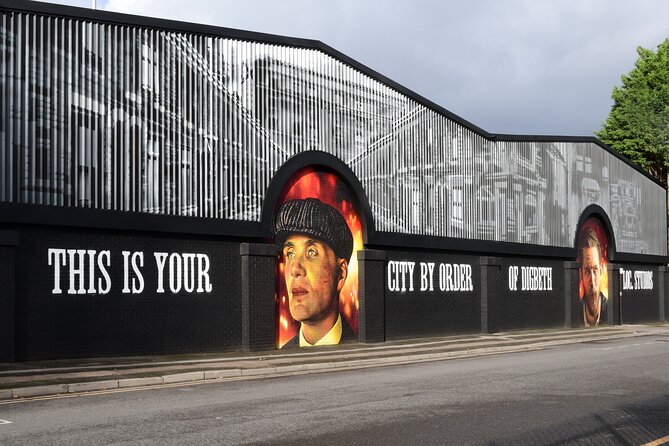
- Follow the Peaky Blinders connection: Digbeth’s atmospheric streets are linked with the backdrop for the Peaky Blinders feature film.
- Use the audio receiver wisely: You can hear the guide even if you pause briefly to study a wall painting.
- Start and finish at the Bullring: The central meeting point makes this easy to fit around shopping, dining, or other city sightseeing.
- Pay a modest price for local context: At about $19.43 per person, the tour offers two hours and fifteen minutes of guided walking without extra admission fees.
Why Digbeth makes such a good walking tour district

Birmingham is easy to reduce to shopping centers, major roads, and grand civic buildings. Digbeth gives you a different view. It brings together old industrial Birmingham, working streets, creative spaces, public art, and the city’s growing screen profile.
That contrast is the reason I find this tour appealing. You are not simply looking at polished landmarks. You are walking through an area where older buildings and newer art share the same streets. Jonathan’s job is to explain how those layers fit together.
The tour begins near the Bullring, one of Birmingham’s best-known shopping areas, then moves toward Digbeth. This route helps you get your bearings quickly. You start in the busy city center and soon reach a district with a more atmospheric feel.
The public art is not treated as decoration alone. Jonathan explains the difference between graffiti and street art, and he helps you begin noticing individual styles. You may not remember every artist’s name, but you should leave with a better sense of how to look at murals rather than simply walk past them.
A few more trips worth a look before you book
- Entry ticket to Hoo Zoo and Dinosaur World in Telford
★ 5.0 · 591 reviews - Cadbury World Entry Ticket
★ 3.0 · 524 reviews - Birmingham Walking Tour: Canals, Victorians & Today (1:30pm)
★ 5.0 · 346 reviews
Starting beside the Bull statue
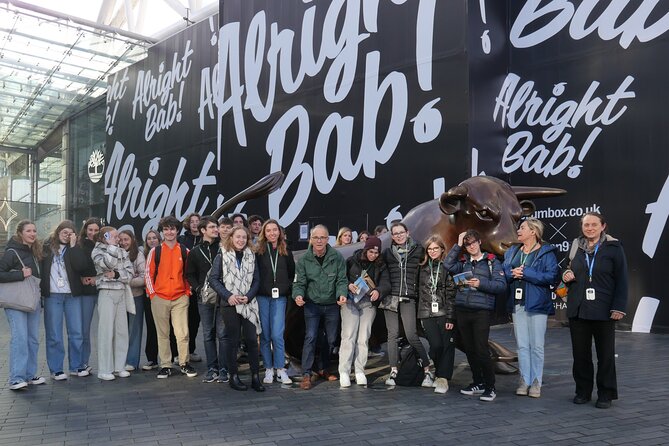
The meeting point is by the Bull statue at the Bullring Shopping Centre walkway. The tour starts at 10:30 a.m., and this is a practical place to meet because it is central and easy to recognize.
The first stop lasts about five minutes. That may sound brief, but it is enough to gather the group and set the scene before walking onward. The Bullring is also useful for anyone arriving by public transport or planning to continue with shopping after the tour.
You do not need an admission ticket for this stop. The tour takes place outdoors, so arrive ready to walk rather than expecting a formal indoor visit.
Passing St. Martin’s Church
The next short stop is St. Martin’s Church in the Bull Ring. You walk past this historic church rather than spending a long period inside it. Even so, its position helps show how old Birmingham’s central core sits beside modern retail development.
This is a good example of the tour’s method. It does not try to turn every stop into a long lecture. Instead, it uses landmarks to connect the city you see now with the city that developed around them.
If you enjoy detailed church interiors, this brief pass may feel too short. If you prefer a moving tour with several themes, the stop keeps the route flowing.
One hour among Digbeth’s murals and old streets
Digbeth is the main event. You spend roughly one hour walking its streets, learning about Birmingham’s beginnings and seeing how the area is changing today.
The setting matters. Digbeth has the kind of atmospheric streets that work well on screen, and parts of it will form the backdrop for filming the Peaky Blinders feature film. The tour uses that connection without making it the whole story. You still get Birmingham’s urban past and its current art culture.
I like the way these subjects reinforce one another. A wall mural can point you toward a local artist. A street can raise questions about industry and city growth. A Peaky Blinders reference adds popular culture, but the walk remains grounded in the actual place.
This is also where Jonathan’s local knowledge becomes most useful. He is a Birmingham author, and his enthusiasm for the city is a major part of the experience. The commentary is described as lively, humorous, and open to questions. That makes a difference in an area where the meaning of a building or mural may not be obvious at first glance.
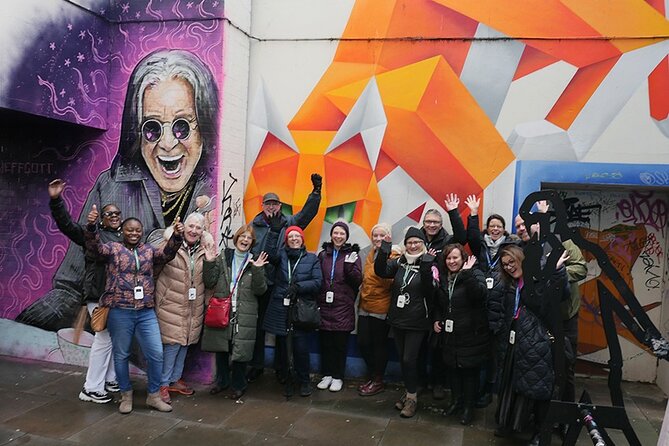
The street art itself is likely to be the biggest draw for many people. The paintings can be large, detailed, and easy to miss if you do not know where to look. One benefit of walking with a guide is that you are directed toward pieces you probably would not find on your own.
The route can be fast paced. Jonathan has been described as a speedy walker, and the tour covers plenty of ground in a limited time. You should be ready to keep moving, while still having chances to stop, ask questions, and look closely at the art.
Rain does not necessarily ruin the experience, since much of the value comes from the streets and the guide’s commentary. Still, this is an outdoor walking tour, so sensible clothing and shoes are worth considering. The published guidance calls for a moderate level of physical fitness.
A different sort of outing around Birmingham:
- Discovering Birmingham 2 hour Walking Tour to the Jewellery Quarter
★ 5.0 · 333 reviews - Birmingham Slogging Gangs Walking Tour with Edward Shelby
★ 4.5 · 306 reviews - Birmingham City Centre Daily Walking Tour (10:30am & 2pm)
★ 5.0 · 265 reviews - Birmingham: Cadbury World Entry Ticket
★ 4.4 · 230 reviews
The Custard Factory and Birmingham’s creative side
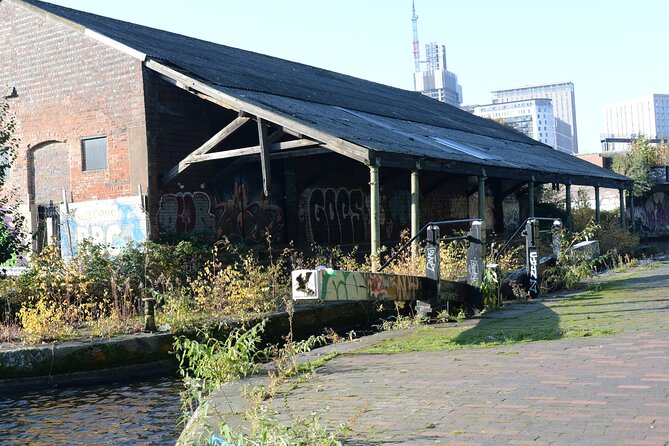
The tour spends about 15 minutes at the Custard Factory. This is one of Digbeth’s best-known creative areas and takes its name from the former Birds custard production site.
The Custard Factory is described as bohemian, with graffiti art appearing in unexpected places. That phrase captures the appeal: you are not looking only at commissioned pieces in a neat gallery setting. Art turns up on walls and around spaces that were shaped by industry.
A 15-minute stop is enough to introduce the area and point out notable work, though it will not allow an exhaustive survey of every mural. If you are serious about photography, you may want to return later on your own with more time.
That is one of the tour’s strengths. It gives you a useful first look without pretending to cover every corner of Digbeth. You can return to your favorite paintings after the walk, now knowing which parts deserve a closer look.
Centenary Square, Grand Central, and the wider city picture
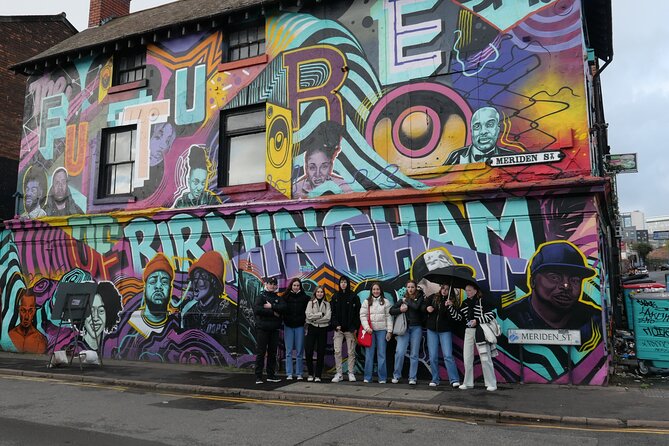
The experience also includes Centenary Square and Grand Central as part of its Birmingham exploration. These locations broaden the tour beyond Digbeth and help place the district within the modern city.
Grand Central represents the practical, contemporary side of Birmingham, while Centenary Square connects with the city’s public civic spaces. The tour’s larger theme is the movement from Birmingham’s early growth to its present-day identity, and these city-center locations help show that change.
The route is not simply an art crawl. It is a guided introduction to how Birmingham presents itself, how older areas are reused, and how public art has become part of the city’s character.
Because the tour lasts about two hours and fifteen minutes, these broader stops are handled as part of a moving walk rather than as long, separate visits. You should book it for context and commentary, not for an in-depth inspection of every site.
Why the live audio system is useful
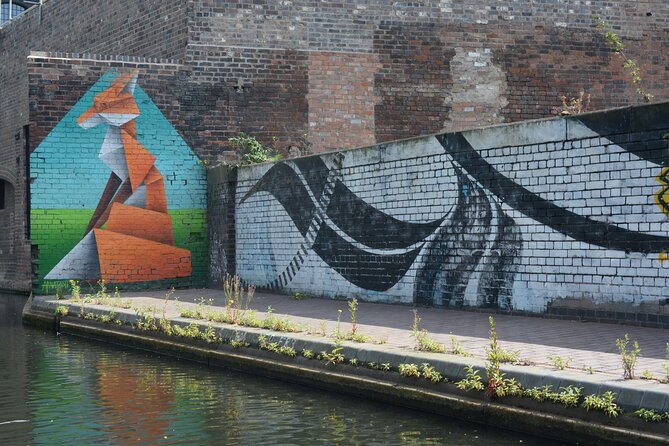
The tour supplies a live audio receiver. You need to bring earphones with a 3.5 mm jack, or you can receive a pair for a £1 donation to the charity connected with the tour.
This is not just a minor convenience. On a city walk, people naturally spread out while taking photographs or looking at murals. The audio system lets you hear Jonathan while standing a little apart from the group, and you can adjust the volume yourself.
A past participant specifically found the system helpful on busy streets and appreciated being able to choose a personal volume level. That is particularly useful here because the tour moves through active urban areas rather than quiet museum rooms.
The equipment does add one small task before you arrive. Check your earphones in advance. Modern wireless earbuds will not work with a 3.5 mm receiver unless you have the right connection, so traditional wired earphones are the safest choice.
Jonathan Berg’s role in the experience
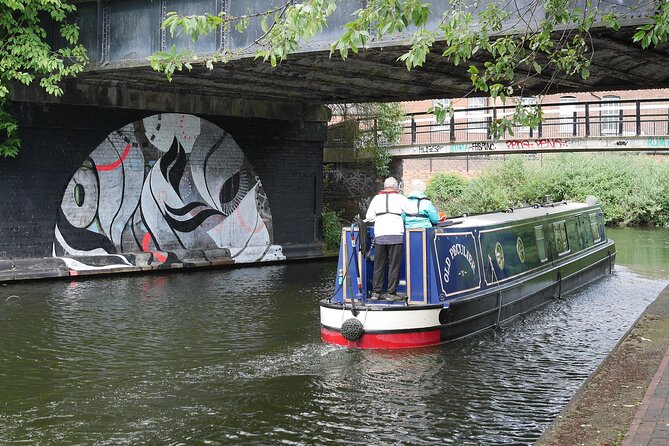
A good street-art walk depends on more than finding colorful walls. You need someone who can explain why the art matters and how it fits the city.
Jonathan Berg is a local author and guide, and his passion for Birmingham is central to the tour. His approach combines facts, humor, and conversation. He encourages questions and has been praised for keeping the walk lively while explaining Birmingham’s development.
That personal style should suit you if you enjoy a guide who talks with the group rather than delivering a dry list of dates. It also helps local residents see familiar streets differently. The tour has attracted people who have lived in Birmingham for years but knew little about Digbeth’s art culture.
The guide may be supported by another member of the team when numbers are high. That can help keep a larger group together, especially during busy periods.
Price, group size, and practical value
At about $19.43 per person, the tour is reasonably priced for two hours and fifteen minutes of live guiding. There are no attraction admission fees at the listed stops, so most of what you pay goes toward the guide, organization, and audio equipment.
The value is strongest if you would not confidently find Digbeth’s best public art alone. A free self-guided walk can show you the streets, but it may not explain Birmingham’s origins, identify artistic styles, or connect the area with the Peaky Blinders feature film.
The maximum group size is 35 people. That is not a small private walk, but the receiver should make the guide easy to follow. If you prefer intimate tours with long one-to-one conversations, the group may feel larger than ideal.
The tour is offered in English and uses a mobile ticket. It begins and usually ends at the Bullring, which keeps the logistics simple. You can continue shopping, eat nearby, or make your way to another Birmingham sight without arranging a second transfer.
Free cancellation is available if you cancel at least 24 hours before the 10:30 a.m. start time. Changes or cancellations made inside that window are not accepted for a refund.
Who should book this walk?
I would recommend it most strongly to:
- People interested in street art and public murals
- First-time visitors who want a wider view of Birmingham than the main shopping streets
- Fans of Peaky Blinders who also want local context
- Birmingham residents looking at their city with fresh eyes
- Readers, photographers, and art lovers who enjoy a guide’s interpretation
- Anyone who prefers a lively walk to a formal museum visit
It may be less suitable if you have difficulty walking at a steady pace or want lots of free time at each stop. The route covers ground, and the art can tempt you to pause longer than the schedule allows.
You should also remember that this is not a dedicated film-location tour. Peaky Blinders is one thread in a larger story about Digbeth, public art, and Birmingham’s past and future.
Should you book the Digbeth, Public Art & Peaky Film tour?
Book it if you want Birmingham explained through its streets rather than reduced to a shopping trip. The combination of Digbeth’s murals, the Custard Factory, local history, and Peaky Blinders gives the walk a clear sense of place.
I especially like the audio system, the central meeting point, and Jonathan Berg’s role as a local author. The main caution is the brisk pace and group size. Bring compatible wired earphones, wear comfortable shoes, and arrive ready to keep moving.
For about $19.43, this is a strong-value introduction to a part of Birmingham you might otherwise pass through without understanding.
FAQ
Where does the tour start?
The tour starts by the Bull statue at the Bullring Shopping Centre walkway in Birmingham, B5 4BU.
What time does the tour begin?
The scheduled start time is 10:30 a.m.
How long does the experience last?
The tour lasts approximately two hours and fifteen minutes.
Where does the tour finish?
It usually finishes back at the Bullring Shopping Centre.
How much does the tour cost?
The listed price is about $19.43 per person.
Is the tour offered in English?
Yes. The tour is offered in English.
Do I need to bring earphones?
You should bring earphones with a 3.5 mm jack for the live audio receiver. Earphones can also be supplied for a £1 donation to the charity.
How many people can join the tour?
The maximum group size is 35 people.
Can I cancel for a full refund?
Yes, if you cancel at least 24 hours before the experience start time. Cancellations or changes made less than 24 hours in advance are not accepted for a refund.
Recently added around Birmingham
- Birmingham: Legoland Discovery Centre Entry Ticket★ 4.1 · 74 reviews
- Birmingham: Victorian Canals and Modern-Day Birmingham Tour★ 4.7 · 92 reviews
- Alton Towers Resort: Entrance Ticket★ 4.2 · 96 reviews
- Skip the Line: House and Garden Admission Ticket★ 4.5 · 122 reviews
- Birmingham: Guided City Center Walking Tour (10:30am & 2pm)★ 4.8 · 147 reviews
- From Birmingham: Stonehenge & Bath Day Tour★ 4.6 · 158 reviews
- Fun, Flexible Treasure Hunt Around Birmingham with Cryptic Clues & Hidden Gems★ 5.0 · 167 reviews
- Birmingham: Winterbourne House and Garden Admission Ticket★ 4.7 · 199 reviews
Birmingham Tours, compared.

Entry ticket to Hoo Zoo and Dinosaur World in Telford
Read our review →
Birmingham Walking Tour: Canals, Victorians & Today (1:30pm)
Read our review →
Discovering Birmingham 2 hour Walking Tour to the Jewellery Quarter
Read our review →
Birmingham Slogging Gangs Walking Tour with Edward Shelby
Read our review →
Birmingham City Centre Daily Walking Tour (10:30am & 2pm)
Read our review →

Browse the lists this tour appears in