
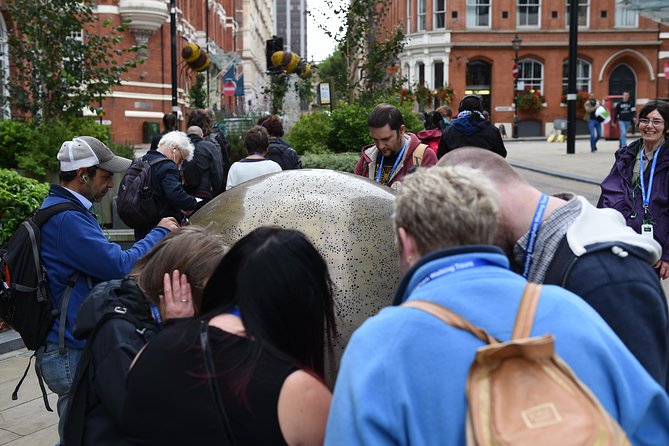
Reviewed · WALKING TOURS
Discovering Birmingham 2 hour Walking Tour to the Jewellery Quarter
Birmingham reveals itself on foot. This two-hour walk links the modern city centre with the Jewellery Quarter, using back streets, squares, canals, and landmarks that a coach cannot reach. I like the unusual canal approach into the Jewellery Quarter, and I like the way the guide connects old buildings with Birmingham’s current redevelopment. The main consideration is weather, since the tour runs outdoors and only a little time is spent inside.
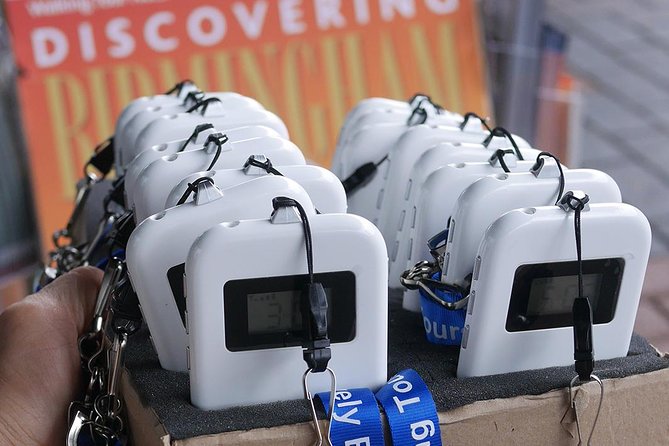
The walk also has a useful audio receiver, so you can hear the guide without staying shoulder to shoulder with the group. Guides such as Jonathan Berg, Bernard, Ann, and Maria bring different personalities to the route, with humour, historical objects, and stories about the city. The group can reach 40 people, so this is not a private stroll, but the receiver helps keep the commentary clear.
The two-hour length is easy to fit into a first day in Birmingham, though the pace and outdoor setting call for comfortable shoes and a coat if rain is likely. You return to the Library of Birmingham, making it simple to continue sightseeing afterwards.
In This Review
- Key points at a glance
- Starting with Birmingham’s modern face at Centenary Square
- Taking the canal route into the Jewellery Quarter
- Seeing the Georgian church from the street
- Birmingham Cathedral and Burne-Jones glass
- St Chad’s and the cost of putting cars first
- Returning through Victoria Square and Chamberlain Square
- Why the guide makes the price worthwhile
- Weather, walking, and group size
- Who should book this Birmingham walk?
- Should you book the Discovering Birmingham walk?
- FAQ
- Where does the tour start?
- Where does the tour end?
- What time does the tour start?
- How long does the walking tour last?
- What is the price?
- Is the tour offered in English?
- Is an entry ticket needed for the tour?
- Does the tour run in rainy weather?
- Can the route change?
- How far in advance can I cancel?
Key points at a glance
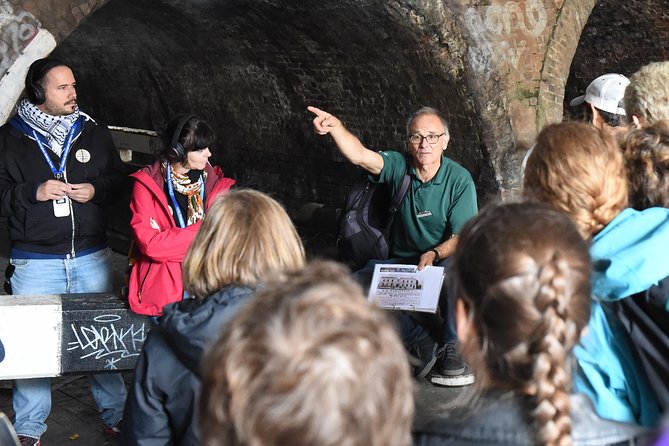
- A secret-feeling canal entrance: The route reaches the Jewellery Quarter by an unusual canal path that even some local residents have never used.
- A city walk, not a landmark checklist: Squares, alleys, churches, post-war roads, and new buildings help you understand how Birmingham changed.
- Strong local storytelling: Jonathan Berg is known for witty commentary, props, public-art knowledge, and a clear affection for Birmingham.
- Useful for locals and first-time visitors: The route can reveal overlooked details even if you already know the city centre.
- Good value at $20.80: You get two hours with a local guide, an audio receiver, and an introduction to several major areas without extra entry fees.
- A fully outdoor experience: Rain does not normally cancel the walk, and icy weather may lead to a changed route.
Starting with Birmingham’s modern face at Centenary Square
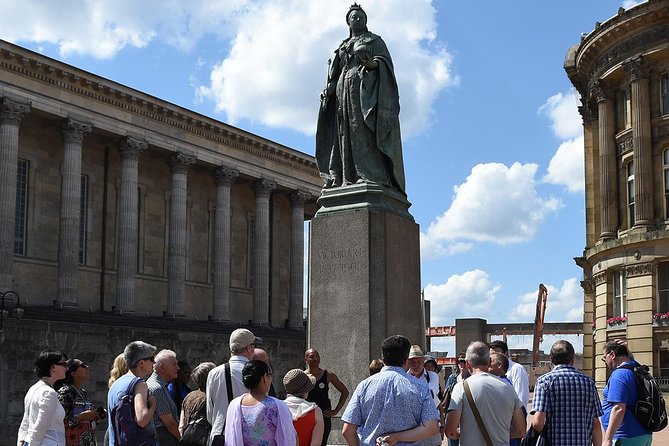
You meet at the Library of Birmingham in Centenary Square at 1:30 pm. This is a practical starting point, close to public transport and surrounded by some of the city’s most recognisable modern buildings.
The opening 20 minutes use the square to explain Birmingham through what you can see around you. That approach works well because you are not asked to memorise a list of dates before the walk has begun. Instead, the guide can point to the buildings and public spaces in front of you, then show how they fit into the city’s wider story.
Centenary Square also gives the guide room to introduce the group before heading into narrower streets. With up to 40 people, this opening area is more comfortable than a cramped alley. The audio receiver matters here, too. You can move slightly to one side for a photograph or a better view without losing every other word.
I would arrive a few minutes early. The meeting point is specifically at Library of Birmingham, Centenary Square, Birmingham B1 2ND, UK. The tour ends at the same place, so you do not need to plan a cross-city journey after the final stop.
More Walking Tours in Birmingham
- Birmingham Walking Tour: Canals, Victorians & Today (1:30pm)
★ 5.0 · 346 reviews - Birmingham Slogging Gangs Walking Tour with Edward Shelby
★ 4.5 · 306 reviews - Birmingham City Centre Daily Walking Tour (10:30am & 2pm)
★ 5.0 · 265 reviews
Taking the canal route into the Jewellery Quarter
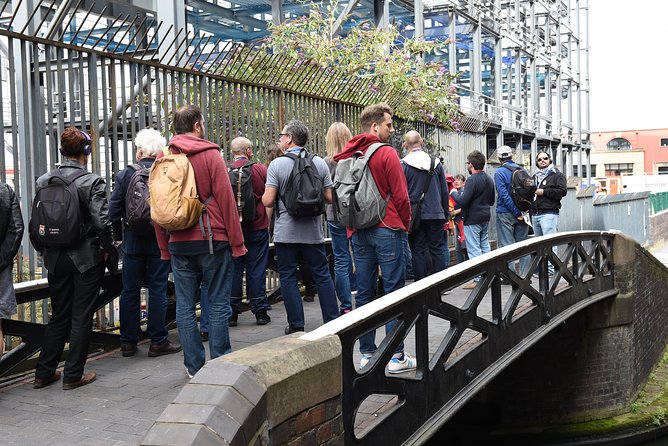
The most distinctive part of the walk is the entry into the Jewellery Quarter. Rather than simply following a main road, the group uses a lesser-known canal route. It is described as a secret route that even locals do not usually take, and that gives this section a real sense of discovery without requiring a long detour.
The 30-minute Jewellery Quarter section explains how the area developed from Georgian times. You learn about the businesses that formed there and how the district is now finding a place within modern Birmingham. This helps you see the Quarter as more than a collection of jewellery shops or attractive old façades.
I like this part because it joins physical setting with economic history. Narrow routes and canal edges make more sense once you understand why businesses developed in this part of town. The guide also points out how the present-day Quarter is changing, so you are not given a frozen picture of Birmingham’s past.
The route may be especially useful if you have already walked through the Jewellery Quarter on your own and felt you were missing the connections. One local participant had lived in Birmingham for decades and still crossed a canal bridge for the first time on this walk. That tells you something important about the route: it is not only for people seeing Birmingham for the first time.
Seeing the Georgian church from the street
The walk pauses outside the church often associated with the Jewellery Quarter. This is a 1779 example of Georgian architecture, and the focus here is on the exterior.
Do not expect a long interior visit at this point. The value comes from seeing the building in its setting and hearing how it fits into the district’s development. Since the stop is brief and admission is not required, the tour keeps moving rather than turning into a formal church visit.
That arrangement suits a two-hour city walk. You get a visual pause and a useful architectural detail without spending too much of the limited time indoors. If you want to study the church carefully or attend a service, you will need to return on your own.
Birmingham Cathedral and Burne-Jones glass
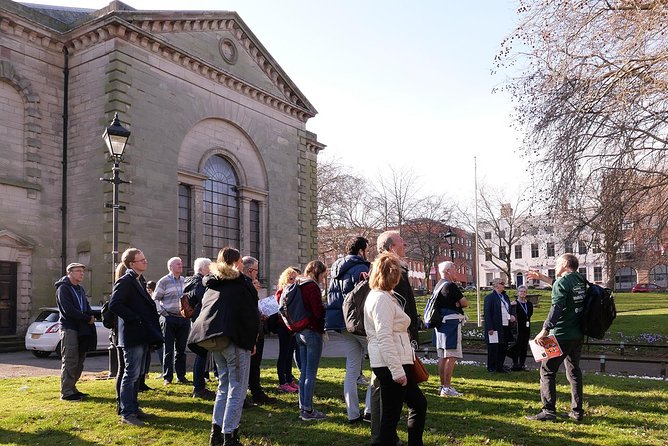
The next major church stop is Birmingham Cathedral, described as a fine English Baroque building. The scheduled look is short, about five minutes, but the guide may take you inside when time allows and when no conflicting event is taking place.
The possible interior visit matters because of the Edward Burne-Jones stained glass. It is one of the strongest artistic details on the route, but you should treat it as a possibility rather than a promise. Timing and events can affect access.
This is a good example of the tour’s balance. You receive an introduction to important buildings, but the walk does not pretend that every site can receive a full guided visit in two hours. If the cathedral is open and the schedule permits, you may get an extra look inside. If not, the exterior and the guide’s explanation still keep the route moving.
The guide’s storytelling style appears to be a major part of the experience here. Jonathan Berg has been praised for combining facts with humour and for making the tour interactive. Props and historical objects sometimes appear from his bag, which he jokingly treats as a museum on the streets. Those touches can make architectural stops easier to remember.
A different sort of outing around Birmingham:
- Entry ticket to Hoo Zoo and Dinosaur World in Telford
★ 5.0 · 591 reviews - Cadbury World Entry Ticket
★ 3.0 · 524 reviews - Birmingham: Cadbury World Entry Ticket
★ 4.4 · 230 reviews - SEA LIFE Birmingham Admission Ticket
★ 3.0 · 218 reviews
St Chad’s and the cost of putting cars first
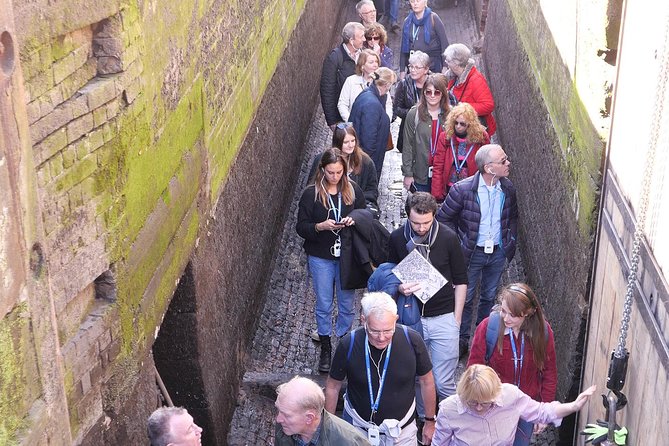
The route then views St Chad’s from the inner ring road. This is less picturesque than a quiet square, but it gives the walk a useful edge. You are asked to consider the effects of post-war redevelopment, when Birmingham planned heavily around the car.
The stop does not simply celebrate old buildings. It raises a question about how the city was rebuilt and whether that redevelopment was planned well. Looking at St Chad’s from beside a major road makes the issue concrete. You can judge the relationship between the church, traffic routes, and later city planning for yourself.
I value this kind of stop because it avoids turning Birmingham into a tidy postcard. The city has attractive historic buildings, but it also has roads and redevelopment schemes that changed how people move through the centre. A guide who addresses both sides gives you a more honest understanding of the place.
The drawback is comfort. A road-side viewpoint is not likely to be the calmest part of the walk, and the group remains outdoors. Still, it adds an urban-planning lesson that many standard sightseeing walks leave out.
Returning through Victoria Square and Chamberlain Square
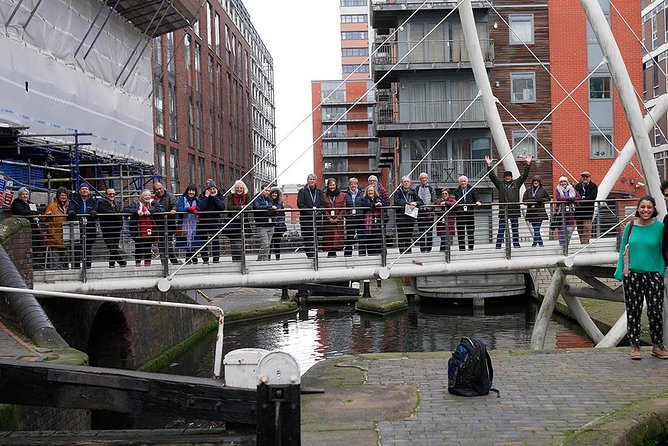
After the cathedral areas, the route heads back toward the Library of Birmingham by way of several important squares. Victoria Square is allocated about 10 minutes, giving you time to look at St Philip’s Cathedral and the surrounding city centre.
This return journey helps tie the route together. You have seen the Jewellery Quarter’s older commercial setting, then considered churches and transport planning, and now you are back among civic spaces that show Birmingham’s changing public face.
Chamberlain Square receives a shorter five-minute stop. The square has been renovated, and the guide explains how the modern city is being reorganised for the future. That makes it a useful counterpoint to the Georgian church and cathedral. You see Birmingham as a city still being adjusted, not simply preserved.
The walk ends back at the Library of Birmingham. That is handy if you want to continue around Centenary Square, visit the library, or make your own way to another central sight. It also gives you a clear finish rather than leaving you at an unfamiliar edge of town.
Why the guide makes the price worthwhile
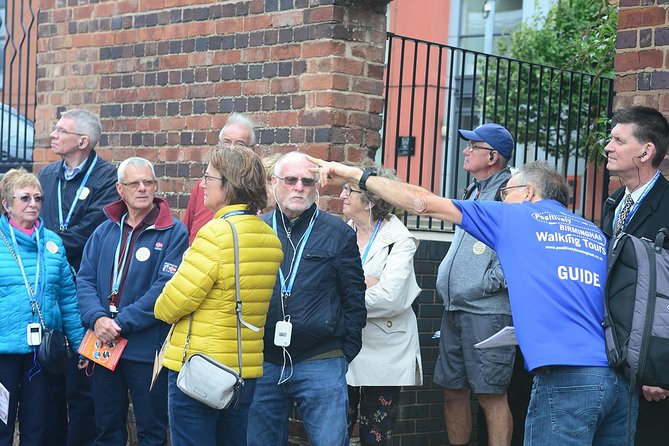
At $20.80 per person, the tour is priced like a modest city introduction rather than a major attraction. There are no additional entry tickets required, so the cost mainly pays for the guide’s time, route planning, commentary, and the audio equipment.
For me, the value comes from the connections. You could walk between many of these areas for free, but you would not automatically know why the canal route matters, how the Jewellery Quarter developed, or what to make of St Chad’s beside the inner ring road. The guide turns a walk into a way of reading the city.
The strongest feedback centres on the guides’ personality and delivery. Jonathan Berg is repeatedly described as witty, enthusiastic, and able to mix funny stories with serious information. Bernard has also been praised for keeping the mood cheerful during persistent rain. Ann and Maria have led the walk as well, with a relaxed and enjoyable style.
Jonathan’s interest in public art adds another layer. He has written a book about Birmingham’s public art, and one tour included a free book and map that helped people continue exploring after the walk. You should not assume that a book is included on every departure, but the guide’s wider work helps explain why public spaces receive such close attention.
A 4.9 rating from 333 reviews and a 100 percent recommendation rate suggest that the experience has been consistently well received. Those figures do not remove the need to consider weather, walking ability, or group size, but they support the view that the tour delivers more than a basic orientation walk.
Weather, walking, and group size
This is a two-hour walking activity with a moderate physical requirement. The route includes streets, squares, canal-side sections, and city roads, so comfortable shoes are sensible. The information provided does not give a precise distance or step-free route, so anyone with mobility concerns should contact the provider before booking.
Tours generally go ahead in poor weather. Bring a suitable coat or umbrella if rain is forecast. That policy can be a plus if you have a tight Birmingham schedule, but it also means you should not book this expecting an indoor alternative.
I would dress for the forecast rather than the season. Rain can make a two-hour walk feel much longer, even when the guide is doing everything possible to keep the mood light. In icy conditions, the route may be adapted for safety.
The maximum group size is 40 people. That is fairly large for a walking tour, especially in narrow passages. The supplied audio receiver is therefore more than a minor extra. It lets you hear the guide even when you are not standing directly beside them.
Service animals are allowed, and the starting point is near public transport. Confirmation is provided when you book. Free cancellation is available up to 24 hours before the start time, but changes or cancellations inside that period are not refunded.
Who should book this Birmingham walk?
I would recommend it to first-time visitors who want a fast but thoughtful introduction to central Birmingham. It gives you a useful map in your head, connecting Centenary Square, the Jewellery Quarter, the cathedral area, Victoria Square, and Chamberlain Square in one outing.
It also suits people who prefer buildings, streets, and local stories to a formal museum visit. The route is especially good for anyone curious about architecture, public art, canals, city planning, or the way old business districts adapt to modern life.
Local residents can benefit too. The route includes side paths and viewpoints that even long-time Birmingham residents may not have used. It is also a good staycation choice for someone who thinks they already know the centre.
Families with older children may enjoy the props and fun facts, though the two-hour walk and outdoor format may be tiring for very young children. The audio equipment should help, but the group size means you may need to stay alert and keep close enough to follow the route.
You may want a different experience if you need long interior visits, a small private group, or a tightly planned accessible route. The church and cathedral stops are mainly brief exterior views, and entry inside Birmingham Cathedral depends on time and events.
Should you book the Discovering Birmingham walk?
Book it if you want Birmingham explained through its streets rather than reduced to a list of major sights. The unusual canal entry, the Jewellery Quarter story, the honest look at post-war planning, and the return through the city squares give you a strong two-hour introduction for $20.80.
I would book early if your dates are fixed, since the experience is typically reserved about 21 days ahead. Choose a dry afternoon if you can, wear good shoes, and arrive ready to listen rather than rush from photo stop to photo stop.
This is not a full tour of every Birmingham attraction. It is better than that for the right visitor: a compact walk that helps you notice what is already around you. If you want local perspective, lively stories, and a route with a few surprises, it is an easy recommendation.
FAQ
Where does the tour start?
It starts at the Library of Birmingham in Centenary Square, Birmingham B1 2ND, UK.
Where does the tour end?
The walk ends back at the meeting point at the Library of Birmingham.
What time does the tour start?
The stated start time is 1:30 pm.
How long does the walking tour last?
The tour lasts approximately two hours.
What is the price?
The listed price is $20.80 per person.
Is the tour offered in English?
Yes, the tour is offered in English.
Is an entry ticket needed for the tour?
No entry tickets are required. The tour includes outside views, and the guide may enter Birmingham Cathedral if time allows and no event prevents access.
Does the tour run in rainy weather?
The tour normally tries to operate in adverse weather. You should bring a suitable coat or umbrella if rain is expected.
Can the route change?
Yes. The route may be adapted in icy conditions, and the cathedral visit may depend on time and conflicting events.
How far in advance can I cancel?
You can cancel up to 24 hours before the experience start time for a full refund. Cancellations or changes made less than 24 hours before the start time are not refunded or accepted.
More 2-Hour Experiences
- Dochgarroch: Loch Ness and Caledonian Canal 2-Hour Cruise
★ 4.7 · 1,959 reviews - Loch Lomond: Island Discovery 2-Hour Cruise
★ 4.6 · 1,576 reviews - Loch Ness and Caledonian Canal 2-Hour Cruise from Dochgarroch
★ 4.5 · 1,158 reviews - London: Ghastly Ghosts 2-Hour Walking Tour
★ 4.9 · 794 reviews
Recently added around Birmingham
- Birmingham: Legoland Discovery Centre Entry Ticket★ 4.1 · 74 reviews
- Digbeth, Public Art & Peaky Film★ 5.0 · 91 reviews
- Birmingham: Victorian Canals and Modern-Day Birmingham Tour★ 4.7 · 92 reviews
- Alton Towers Resort: Entrance Ticket★ 4.2 · 96 reviews
- Skip the Line: House and Garden Admission Ticket★ 4.5 · 122 reviews
- Birmingham: Guided City Center Walking Tour (10:30am & 2pm)★ 4.8 · 147 reviews
- From Birmingham: Stonehenge & Bath Day Tour★ 4.6 · 158 reviews
- Fun, Flexible Treasure Hunt Around Birmingham with Cryptic Clues & Hidden Gems★ 5.0 · 167 reviews
Walking Tours, compared.
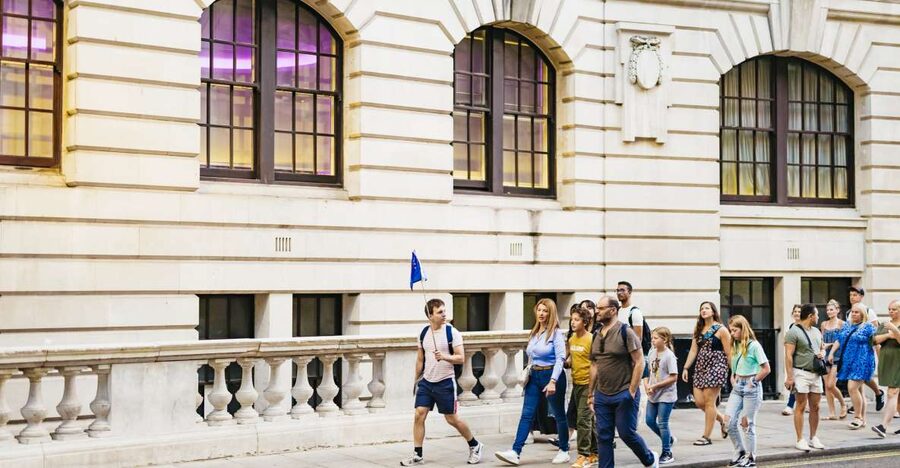
Magical London: Harry Potter Guided Walking Tour
Read our review →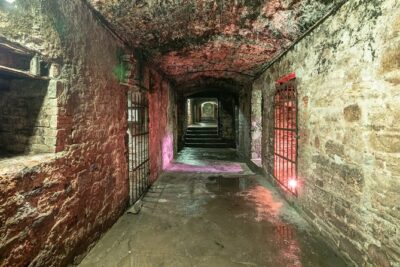
Underground Vaults Walking Tour in Edinburgh Old Town
Read our review →
Oxford University Walking Tour With University Alumni Guide
Read our review →
Edinburgh Castle: Guided Walking Tour with Entry Ticket
Read our review →
Edinburgh Castle Guided Walking Tour in English
Read our review →
Tour for Muggles The Ultimate Harry Potter Walking Tour in London
Read our review →
University and City Walking Tour with Alumni Guide
Read our review →Browse the lists this tour appears in