
Reviewed · MUSEUMS
Explore Biblical Artifacts at the British Museum
Ancient stones tell living stories. This small-group British Museum tour links Egyptian, Assyrian, Greek, Persian, Babylonian, and Roman objects with people and events named in the Bible. Guide David builds a clear timeline from Joseph and Moses to Jesus and Paul, using museum displays and specific Bible passages.
I like the study notes and Bible verses sent before the tour, and I like the practical offer of folding stools for the long museum walk. The group is limited to 10 people, which gives you room to ask questions. The main drawback is focus: this is not a general British Museum introduction, so people wanting a broad tour of world art may find the biblical approach narrow.
The advertised price is $77.50 per person for roughly three to four hours. That is a fair spend if you want guided interpretation, but harder to justify if you prefer wandering alone or already know the museum well. Plan it as a half-day appointment, then leave the rest of your London day open.
In This Review
- Key points before you book
- Why this British Museum tour feels different
- Starting with Egypt, Assyria, and Greece
- The Roman rooms and the world of Jesus and Paul
- David’s teaching style and the value of the study material
- A small group, but not a private museum
- How much time should you set aside?
- Is $77.50 good value?
- Who should book it?
- Practical tips for a smoother visit
- Should you book this British Museum experience?
- FAQ
- Where does the tour start?
- Where does the tour finish?
- How long does the experience last?
- How much does the tour cost?
- What language is the tour offered in?
- How large is the group?
- Which museum galleries are included?
- Can I cancel for a full refund?
Key points before you book
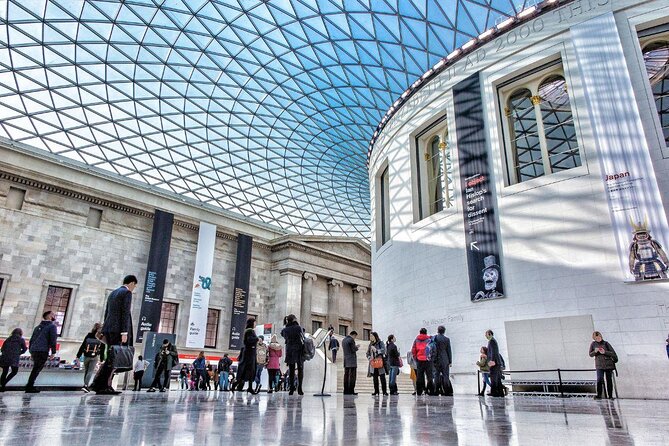
- A Bible-based route through major galleries: See Assyrian lamassu, Egyptian pharaohs, Greek sculptures, Roman rulers, and objects linked to the world of Jesus and Paul.
- David is the guide to look for: His strength is connecting names, dates, rulers, artifacts, and Bible passages into one understandable sequence.
- The group has a maximum of 10 people: This is small enough for questions and personal discussion without the feel of a large museum herd.
- Bring or download a Bible app: YouVersion is recommended, and it should work in airplane mode so you can check passages inside the museum.
- Folding stools can save your legs: You can pick one up at the museum and carry it along if standing on hard floors for several hours is difficult.
- Allow more than the official time if you ask lots of questions: One group stayed close to five hours, though the published estimate is three to four.
Why this British Museum tour feels different
The British Museum can be overwhelming. Its rooms cover thousands of years, several continents, and far more objects than you can absorb in one visit. Without a plan, you may admire a carved king or a wall panel, read a few lines, and move on without knowing how it fits into the biblical world.
This tour gives you a fixed thread. David uses the Bible as the organizing tool, then shows you objects connected with the empires, rulers, and cultures that surround its stories. That approach gives familiar names a physical setting. Joseph is considered in relation to Egypt, Jonah and Hezekiah in relation to Assyria, and Paul in relation to the Greek and Roman worlds.
You do not simply hear a Bible story and then look at an unrelated display. The point is to place the text beside objects from the period and ask what the artifact tells you about power, religion, writing, warfare, trade, and daily life. For a Bible reader, that can make names that once felt remote much easier to picture.
The approach also has value if you are not a Christian or do not accept every biblical interpretation. You can treat the tour as a guided study of how ancient texts connect with archaeology and imperial history. The experience presents a biblical lens, so you should book it expecting that perspective rather than a neutral survey of museum scholarship.
More Museum Visits in London
- Tower of London and Crown Jewels Exhibition Ticket
★ 4.5 · 6,677 reviews - London: Chelsea Football Club Stadium and Museum Tour
★ 4.8 · 4,576 reviews - Chelsea FC Stadium Tours and Museum
★ 5.0 · 1,908 reviews
Starting with Egypt, Assyria, and Greece
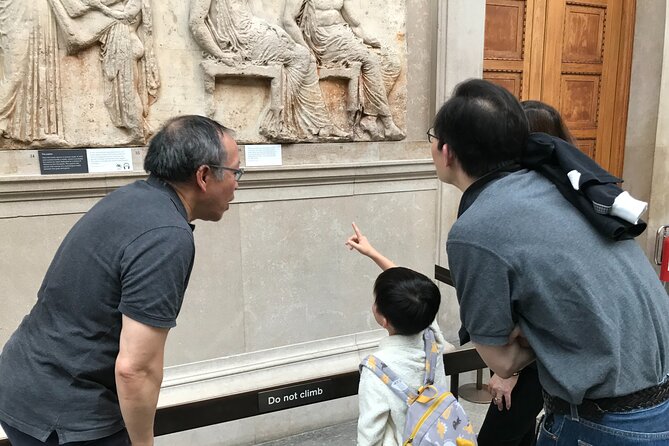
The route begins on the ground floor in the Egyptian, Assyrian, and Greek galleries. These are strong opening rooms because they provide large objects, clear political themes, and a useful sense of scale.
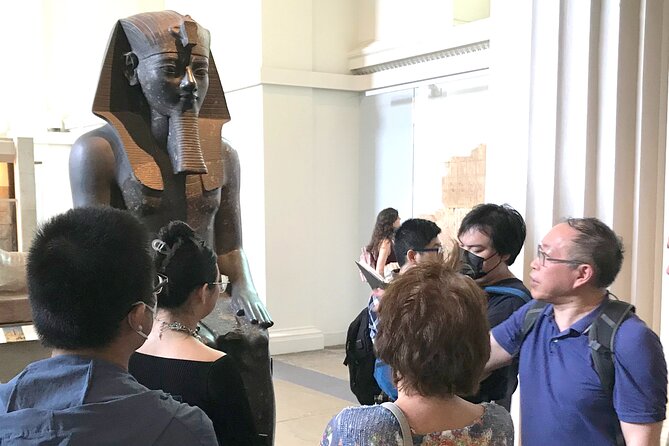
Egypt brings you into the world associated with Joseph and Moses. The museum’s statues of pharaohs show how rulers presented themselves: immense, formal, and almost beyond ordinary human scale. David uses these objects to set the scene for Egypt’s power and to connect the biblical timeline with the civilization familiar from the Old Testament.
The Assyrian rooms offer some of the tour’s most memorable sights. The 40-ton lamassu, winged protective creatures with human and animal features, make a powerful impression before any explanation begins. Their size tells you something about imperial confidence. Their placement at palace entrances also helps you understand how rulers used art to intimidate and impress.
Assyria is tied to several biblical figures and events, including Jonah, Ahab, and Hezekiah. David’s method is to move between the display and the relevant passages, putting names in the same frame as palace sculpture, relief work, and royal imagery. This is where the tour’s timeline work matters most. Instead of treating every king as an isolated figure, you get a sense of changing empires and pressure on smaller kingdoms.
The Greek galleries add another layer. You will see sculptures from the Parthenon temple in Athens, among the most famous objects in the museum. Their direct connection is not always a Bible story in the same way as Assyrian material, but Greece matters for the wider setting of the New Testament and for Paul’s travels and audience.
The drawback of this first section is simple: the museum is busy, and some rooms can feel warm. One family found the heat uncomfortable for a younger teenager. Comfortable shoes, water, and a willingness to pause will help.
The Roman rooms and the world of Jesus and Paul
After a break, the tour continues upstairs into the Roman galleries. Here the focus shifts from Old Testament empires to the political and cultural setting of Jesus and Paul.
Roman objects can make the New Testament feel less abstract. You may see portraits of emperors and coins connected with the period. One especially memorable detail is the chance to view Roman coins bearing the faces of leaders who were present around the time of the crucifixion. A coin is small, but that is part of its power: it was handled, exchanged, and carried through ordinary life under Roman rule.
David also connects Roman material with Paul’s journeys and writings. The Greek galleries remain relevant here because Greek was central to communication across much of the eastern Roman world. That helps explain why Paul’s letters and public arguments belong to more than one cultural setting.
This section is valuable because it moves the tour from grand ancient kingdoms to the political machinery that shaped the New Testament. You look at emperors, coins, and public objects, then consider how people in Judea and the wider Mediterranean world lived under Roman authority.
The route may also include Persian and Babylonian galleries, depending on time and your preferences. That flexibility is useful, especially if your interests lean toward the Old Testament. It also means the exact balance of rooms can change. If Babylon or Persia matters greatly to you, say so early and ask David how much time is available.
David’s teaching style and the value of the study material
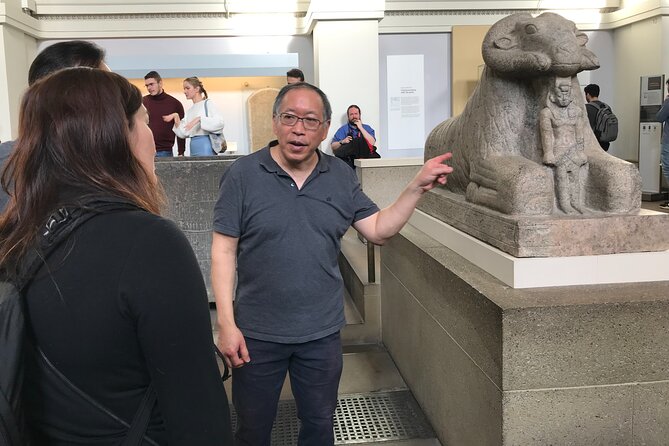
David’s greatest strength is organization. The museum has too much information, and he turns it into a sequence you can follow. He gives a historical frame at the beginning, then returns to it as the route moves from Egypt and Assyria through Greece and Rome.
He also encourages active participation. Instead of delivering a nonstop lecture, he may ask you to look up a passage in your Bible app and compare the words with the object in front of you. This makes you pay attention to details that you might otherwise miss.
The Google Doc of study notes is more useful than a simple packing reminder. It gives you material to read before the tour and something to revisit afterward. Several people found the preparation helpful, especially when the tour moved quickly through different periods. You do not need to be a Bible scholar, but reading the notes in advance will help you recognize names and follow the timeline.
Download a Bible app that works without an internet connection. YouVersion is specifically suggested, and airplane mode is recommended for use inside the museum. Also check your email and your Viator or Tripadvisor app after booking, since important messages may arrive there.
David’s follow-up is another nice touch. He has sent extra references after tours, including clarification on points discussed during the visit. One example involved a video showing how a Persian king’s rhyton was used to pour wine. That kind of follow-up can turn a three-hour visit into an ongoing study rather than a memory that fades on the flight home.
A different sort of outing around London:
- London: The London Eye Entry Ticket
★ 4.6 · 35,875 reviews - From London: Harry Potter Warner Bros Studio Tour
★ 4.7 · 26,588 reviews - London: Westminster to Greenwich River Thames Cruise
★ 4.5 · 22,836 reviews - Magical London: Harry Potter Guided Walking Tour
★ 4.7 · 22,044 reviews
A small group, but not a private museum
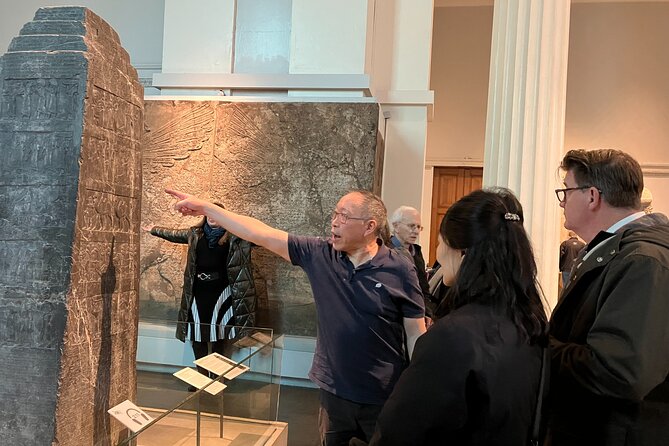
The maximum group size is 10. That is a strong middle ground. You get a guide who can address questions, but you are still in a public museum where other people are moving through the galleries.
Small groups matter here because the tour depends on discussion. You may want to ask why a ruler is linked to a particular passage, how a date fits the biblical timeline, or what a small detail on a relief means. A group of 10 gives those questions a reasonable chance of being heard.
The museum itself remains shared space. You cannot expect every display to be quiet or empty, and the route may need to change if a gallery closes early. David has adjusted the order when needed, which helps protect the main themes. Still, keep your expectations realistic: this is a guided walk through a major public collection, not a private viewing.
The optional stools are a practical advantage. Three or four hours on museum floors can be tiring, especially when the tour stops for detailed explanations. Pick up a folding stool if you prefer to sit while listening. It may look a little odd at first, but comfort beats pride after the second hour.
How much time should you set aside?
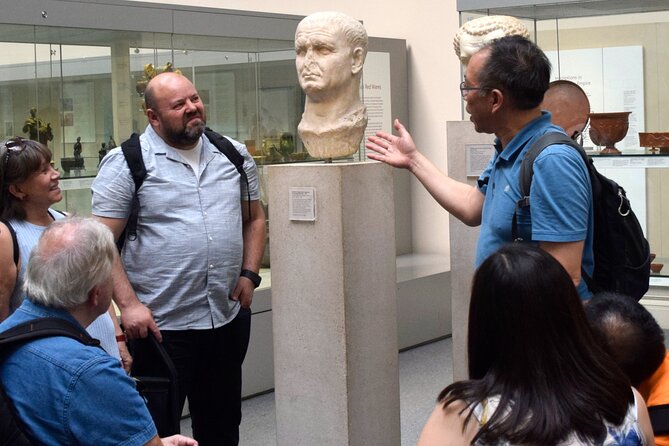
The official duration is about three to four hours. Treat that as a half-day commitment, not a quick morning activity. The route includes several major gallery groups, and the Bible references add time to each stop.
You will begin at the British Museum on Great Russell Street and finish back at the meeting point. The activity description lists admission ticket free, while the experience itself is priced at $77.50 per person. Check the booking details carefully so you understand exactly what your payment covers.
Some groups finish within the planned time. Others stay longer because of questions and side discussions. One visit lasted close to five hours, with the guide explaining details such as the reading direction of an Egyptian cartouche, markings on bronze city gates, and the coins used in the time of Jesus.
That variation is worth keeping in mind when planning lunch, theater tickets, or another timed attraction. I would not place a tight appointment immediately afterward. Give yourself room to finish without watching the clock.
The tour is not recommended immediately after a long-haul flight. That advice makes sense. You need to listen, remember names, follow dates, and stand or walk through large rooms. Jet lag can turn a fascinating lesson into a blur.
Is $77.50 good value?
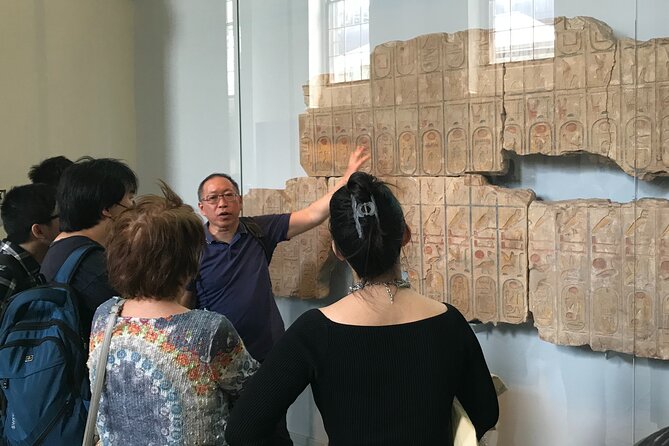
At $77.50 per person, this is not the cheapest way to enter the British Museum. Its value depends on what you want from the visit.
If you would otherwise wander for an hour and leave confused by the collection, the fee can be worthwhile. You are paying for a chosen route, a clear timeline, biblical cross-references, and a guide who knows how the galleries fit together. The small group also gives you more attention than a large coach tour.
The price is harder to defend if you only want to see the museum’s headline objects quickly. You can view the lamassu, Egyptian statues, Parthenon sculptures, and Roman displays without this tour. The fee makes sense when interpretation is the main product.
I would also consider the after-use value. The study notes remain useful, and the Bible references give you a way to continue looking at the objects after the tour. If the visit encourages you to study the Old and New Testaments with more context, the experience offers more than a single afternoon of sightseeing.
Group discounts are available, which may improve the calculation for families or church groups. The tour has also worked well for older children and teenagers, though a younger teen may struggle if the museum feels warm or the discussion runs long.
Who should book it?
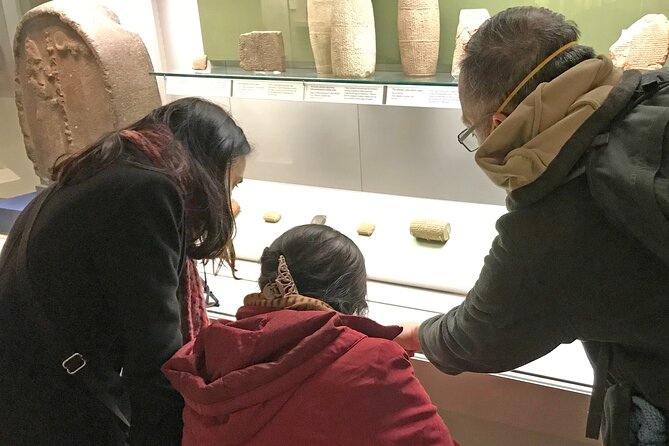
This is best for people who already have an interest in the Bible, ancient history, archaeology, or the relationship between sacred texts and material evidence. It suits readers who enjoy pausing over one object and asking what it tells us about the people who made and used it.
It can also work for families with older children and teenagers. The clear timeline helps, and David’s humor keeps the subject from becoming dry. Still, several hours in galleries is a serious commitment. Younger children may not have the patience for the full route.
You should also book it if you want a focused first visit to the British Museum. A first independent visit can feel like trying to read ten books at once. This tour gives you a route and a reason to care about the rooms you enter.
I would hesitate if your main interest is art history, world cultures outside the biblical world, or a fast look at the museum’s famous objects. You may prefer to explore independently and return to the biblical galleries at your own pace.
The tour presents history through a Christian and biblical frame. That is its purpose, not a minor feature. Bible believers may find that frame encouraging and personal. Skeptics can still benefit from the historical setting, but should expect interpretation alongside the artifacts rather than a purely secular museum lecture.
Practical tips for a smoother visit
- Read the Google Doc before you arrive. It will make unfamiliar names easier to follow.
- Install the recommended apps and check messages after booking.
- Download a Bible app that works in airplane mode. YouVersion is suggested.
- Bring water and wear comfortable shoes.
- Ask about a folding stool at the museum if standing is uncomfortable.
- Keep the rest of your day flexible in case discussion pushes the tour beyond four hours.
- If Persia or Babylon is a priority, tell David early, since those galleries are optional when time allows.
- Avoid scheduling this right after a long-haul arrival.
The meeting point is the British Museum, Great Russell Street, London WC1B 3DG. The tour ends back at that meeting point. It is near public transportation, service animals are allowed, and most people can participate.
Free cancellation is available up to 24 hours before the start time for a full refund. Cancellations or changes made less than 24 hours before the start time are not accepted for a refund, and the cut-off follows local time.
Should you book this British Museum experience?
Book it if you want the British Museum to function as a visual Bible study. David’s gift is not just naming objects. He links rulers, empires, coins, statues, and reliefs into a timeline that makes the biblical world easier to picture.
Skip it if you want a general introduction to every part of the museum or prefer complete freedom to linger. For the right audience, though, $77.50 buys structure, personal guidance, useful study material, and a focused half-day with a maximum of 10 people. Schedule it when you are rested, prepare with the notes, and leave your afternoon free.
FAQ
Where does the tour start?
The tour starts at the British Museum, Great Russell Street, London WC1B 3DG, UK.
Where does the tour finish?
The activity ends back at the British Museum meeting point.
How long does the experience last?
The planned duration is approximately three to four hours. Some visits may run longer when the group asks many questions.
How much does the tour cost?
The listed price is $77.50 per person. Group discounts are available.
What language is the tour offered in?
The tour is offered in English.
How large is the group?
The maximum group size is 10 people.
Which museum galleries are included?
The route begins with the Assyrian, Egyptian, and Greek galleries on the ground floor, then continues to the Roman galleries upstairs. Persia and Babylon may be included if time and group preference allow.
Can I cancel for a full refund?
Yes. You can cancel at least 24 hours before the experience start time for a full refund. Cancellations or changes made less than 24 hours before the start time are not accepted for a refund.
Recently added around London
- PRIVATE HIRE 45 min Speedboat Tour – Embankment/Westminster Pier★ 5.0 · 55 reviews
- Private Tour of London’s Historic Pubs★ 5.0 · 55 reviews
- From London: Glastonbury and Cheddar Gorge Guided Day Trip★ 4.8 · 55 reviews
- London: Kew to Westminster River Thames Cruise★ 4.2 · 55 reviews
- Gatwick Airport Taxi – Private Transfer to/from London★ 5.0 · 55 reviews
- London: Tower of London After Hours Tour and Key Ceremony★ 4.8 · 56 reviews
- London by Night – Tootbus Sightseeing Tour★ 3.5 · 55 reviews
- Private Round Trip Transfer between London Airports and Hotel★ 3.5 · 56 reviews
Museums, compared.

Liverpool Football Club Museum and Stadium Tour
Read our review →
Tower of London and Crown Jewels Exhibition Ticket
Read our review →
Chelsea Football Club Stadium and Museum Tour
Read our review →




Browse the lists this tour appears in