
Reviewed · HISTORICAL TOURS
Liverpool: A Walk Through Time: Full History Walking Tour
Liverpool’s story starts beside the river. This two-hour walk links medieval beginnings, maritime trade, empire, architecture, and modern city life in one well-paced route. I love the clear timeline, which helps you understand how Liverpool grew from a small trading town into the second city of the British Empire. I also like the focus on buildings and streets, not just famous names.
At $22 per person, the tour offers strong value if you want a useful first look at central Liverpool. The main consideration is pace: you cover a lot of ground and history in two hours, so this is an overview rather than a detailed visit inside every landmark.
In This Review
- Key points at a glance
- Why this Liverpool history walk works
- Starting beneath the Royal Liver Building
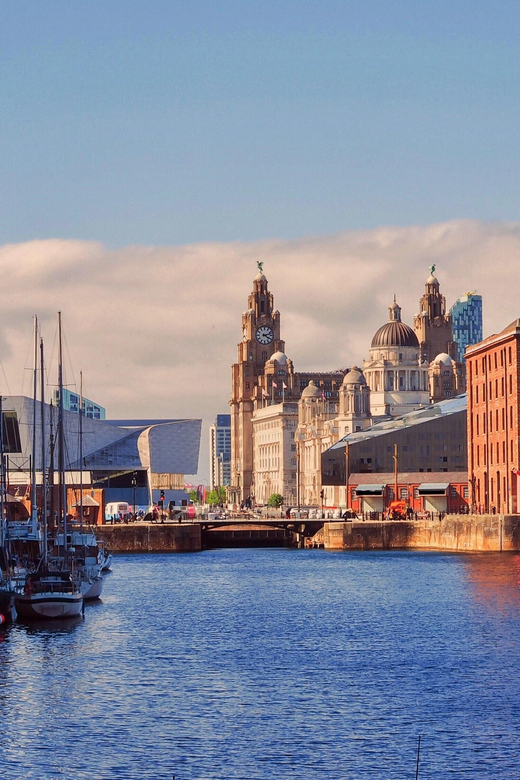
- Liverpool Waterfront and the Three Graces
- Liverpool Parish Church and Chapel Street
- Old Hall Chambers, Town Hall, and Castle Street
- The Old Dock and Liverpool ONE
- Royal Albert Dock and the city’s maritime identity
- A timeline that reaches the modern city
- How much walking and how the pace feels
- Is $22 good value?
- Who should book this walking tour?
- Should you book it?
- FAQ
- How long does the Liverpool history walking tour last?
- Where does the tour begin?
- Where does the tour finish?
- What language is the tour conducted in?
- Is the walking tour wheelchair accessible?
- Can I cancel the tour for a refund?
Key points at a glance
- Follow Liverpool’s story from 1207 to today, with the city’s growth explained through trade, technology, shipping, railways, and civic ambition.
- Meet outside the Royal Liver Building, at the black gate facing the river, an easy starting point on the waterfront.
- See major landmarks up close, including the Town Hall, Castle Street, Liverpool ONE, the Old Dock, and the Royal Albert Dock.
- Expect a guide-led history lesson with personality, especially if your guide is John, whose academic background and lively delivery receive repeated praise.
- Look above street level, where architectural details reveal Liverpool’s changing fortunes and civic pride.
- Finish on Castle Street, well placed for continuing into the city centre after the walk.
Why this Liverpool history walk works
Liverpool can be easy to misread. Many first-time visitors arrive thinking mainly about the Beatles, football, and the waterfront. Those subjects matter, but they are only part of the city’s story. This walk gives you the larger picture: how a river, a port, commercial ambition, and new technology changed Liverpool and much of northern England.
I like the way the route uses real places as the chapters of the story. You are not listening to a long talk in one square. You move from the Royal Liver Building to older streets, civic buildings, shopping areas, and the docks. Each change of setting gives the next part of the story a physical anchor.
The guides also seem to make the material accessible. John is frequently praised for explaining complicated events in a clear voice, connecting local developments with world history, and answering questions in detail. One guide, Dave, is also praised for his academic background and storytelling. Guides can vary, but the experience clearly depends heavily on having someone who can make dates and economics feel human.
The possible weakness is the amount of ground covered. You will hear about several centuries in a short time. If you want to enter buildings, study museum displays, or linger for photographs, you will need to return to the places that catch your attention.
More History Tours in Liverpool
- A Walk Through Time: History of Liverpool Walking Tour
★ 5.0 · 911 reviews - Best Of Liverpool Heritage, History & Culture Guided Walking Tour
★ 5.0 · 539 reviews - History Guided Tour of Liverpool and the Beatles
★ 5.0 · 408 reviews
Starting beneath the Royal Liver Building
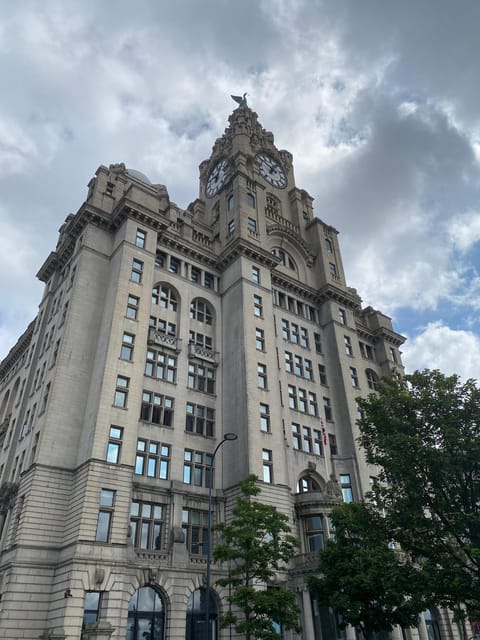
Meet outside the Royal Liver Building, at the black gate by the entrance facing the river. This is a practical meeting point because it puts you directly among Liverpool’s best-known waterfront buildings, with the river providing an immediate sense of why the city developed here.
The Royal Liver Building is one of the first major landmarks used to explain Liverpool’s identity. Its history connects to the city’s commercial rise and its confidence as a port. Your guide discusses the building before leading you onward, so you begin with a landmark that is both visually imposing and tied to the city’s working past.
Take a moment to look carefully rather than simply taking a photograph. The tour places real value on architecture, and several people who enjoyed it came away noticing details they would otherwise have walked past. A guide may point out features that help you read the building as evidence of civic pride, trade, and the wealth generated by the port.
The meeting spot faces the river, so arrive with enough time to find the black gate. The experience is in English, and the guide speaks to the group while walking between stops. A clear voice matters here, and this is one area repeatedly praised.
Liverpool Waterfront and the Three Graces
From the starting point, the walk opens onto the waterfront. This is where Liverpool’s international role becomes easiest to picture. The river was not just scenery. It was the route that connected the city to trade, migration, industry, and political power.
The Royal Liver Building forms part of the famous group of waterfront buildings often called the Three Graces. The tour uses this setting to explain Liverpool’s commercial importance and the institutions that helped direct its growth. You get more than a postcard view. You learn why these buildings were placed here and what their scale was meant to communicate.
The waterfront section is especially useful early in your visit because it gives you bearings. After the tour, you can return to photograph the buildings, visit nearby attractions, or simply watch the river traffic. The walk does not depend on a single viewpoint, so poor weather may affect comfort more than the substance of the tour.
Liverpool Parish Church and Chapel Street
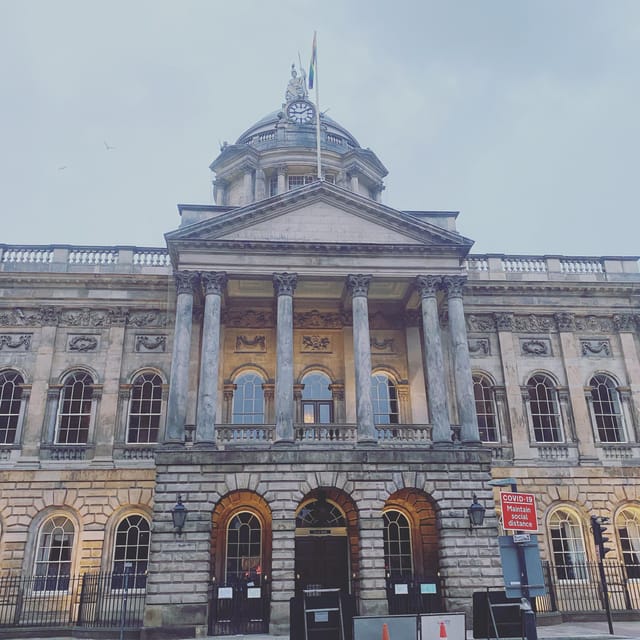
The route continues past Liverpool Parish Church, also known as Our Lady and Saint Nicholas, and through the surrounding gardens. This stop adds an older, more local layer to the story. The church and its setting help show that Liverpool did not begin as a grand imperial port. It developed over time from a smaller settlement with medieval roots.
The gardens provide a change from the large waterfront structures. Here, the story can shift from global trade to the people and institutions that shaped daily life. The point is not simply to identify an old church. It is to understand how the early town related to the river and how its civic centre changed as commerce expanded.
Chapel Street continues that connection between old Liverpool and the port. The route is short enough to keep the story moving, but it gives you a chance to see how different periods sit close together. This is one reason a walking tour works better than a bus overview for Liverpool’s centre. You notice changes in scale, materials, street width, and building purpose as you go.
More Walking Tours in Liverpool
- Liverpool Ghost Walking Tour
★ 5.0 · 862 reviews - Beatles Famous Walking Tour Of Liverpool- Fully Guided
★ 5.0 · 751 reviews - Downtown Liverpool Walking Tour – In Spanish
★ 5.0 · 591 reviews - Liverpool: Beatles Highlights Walking Tour
★ 4.8 · 274 reviews
Old Hall Chambers, Town Hall, and Castle Street
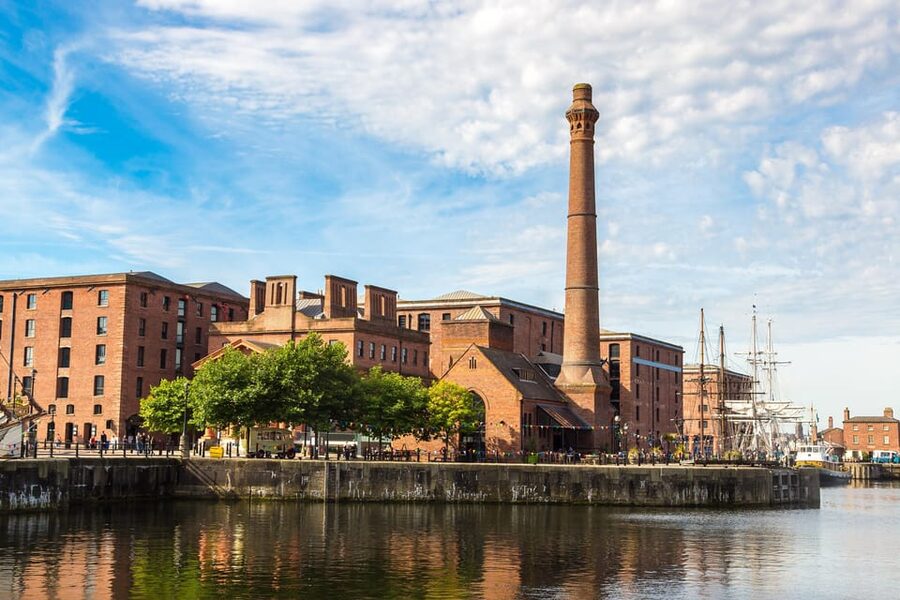
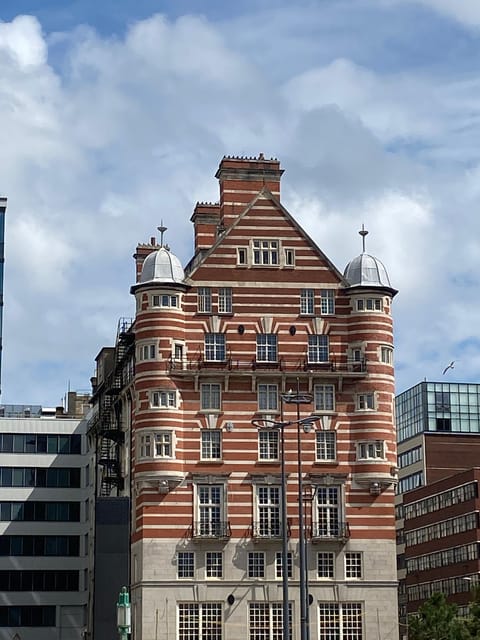
The walk then reaches the civic heart of the city, including Old Hall Chambers, Liverpool Town Hall, and Castle Street. This part is valuable because it explains how commercial success was turned into public display. Liverpool’s leaders did not merely build warehouses and docks. They also created grand civic spaces that projected status and confidence.
Castle Street is one of the route’s most rewarding sections for people who enjoy architecture. Look up as you walk. Decorative stonework, façades, monuments, and the arrangement of the street all help tell the story of a city that wanted to be taken seriously on a world stage.
The Town Hall adds another layer. Your guide explains the city’s development through the people, decisions, and trade systems that helped Liverpool grow. The story is not presented as a string of isolated dates. It links geography with technology and commerce, showing how the port’s success affected the wider north of England and the United Kingdom.
This is also the section where questions can make the tour feel personal. John is particularly praised for handling detailed questions and for using dry humour while discussing difficult or complicated subjects. If you have a specific interest in shipping, railways, empire, architecture, or local food, ask. The guides appear happy to connect the main story to individual interests.
The Old Dock and Liverpool ONE
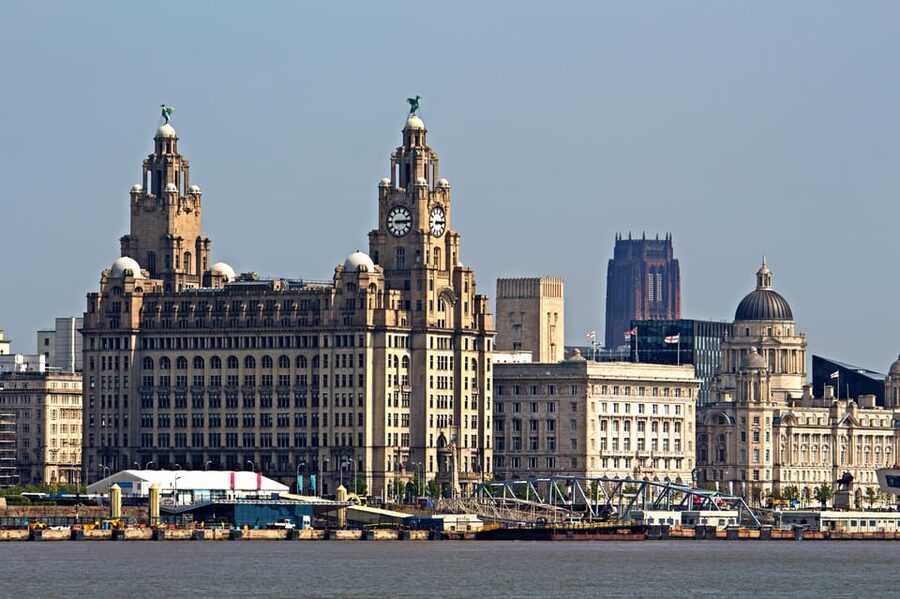
The route passes through Liverpool ONE before reaching the Old Dock. At first, a modern shopping district may seem an odd stop on a history walk. In fact, it helps you see how the city keeps rebuilding itself around earlier layers.
Liverpool ONE represents modern commercial Liverpool, while the Old Dock points back to the infrastructure that allowed the port to handle ships and goods more effectively. Placing the two close together gives the tour a useful contrast. You can see how a working port area became part of a modern retail and leisure centre.
The Old Dock is especially important for understanding Liverpool’s growth. A port needs more than a riverbank. It needs planned facilities, investment, labour, and technology. The tour uses the site to explain the practical changes that helped Liverpool move beyond its medieval beginnings.
This stop may be less visually dramatic than the waterfront buildings, but it is one of the most useful for understanding cause and effect. You begin to see that Liverpool’s rise came from a series of changes, not one lucky accident.
Royal Albert Dock and the city’s maritime identity
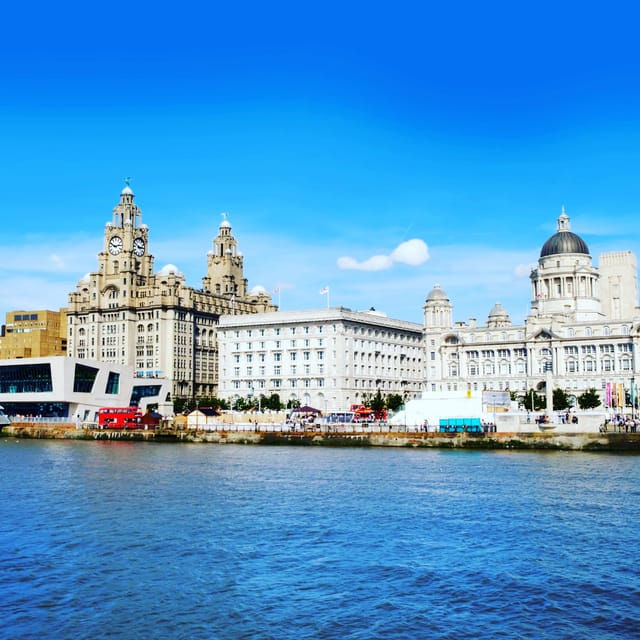
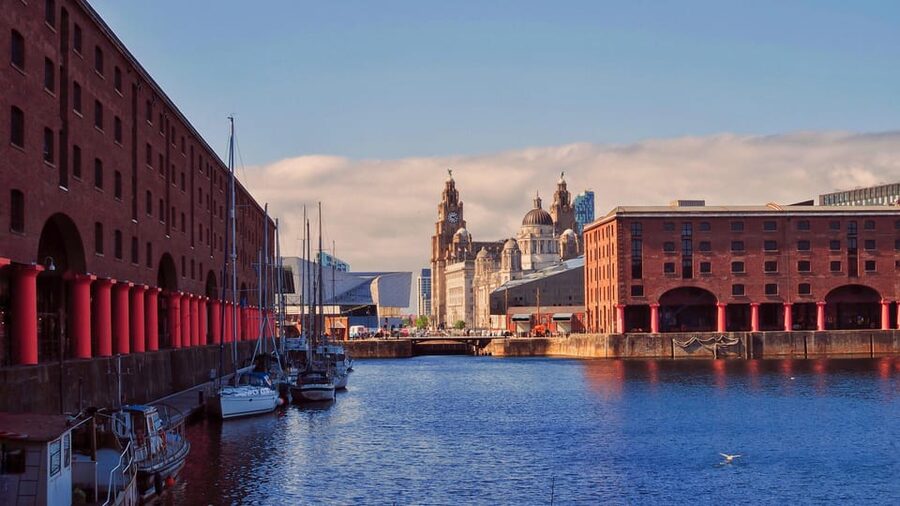
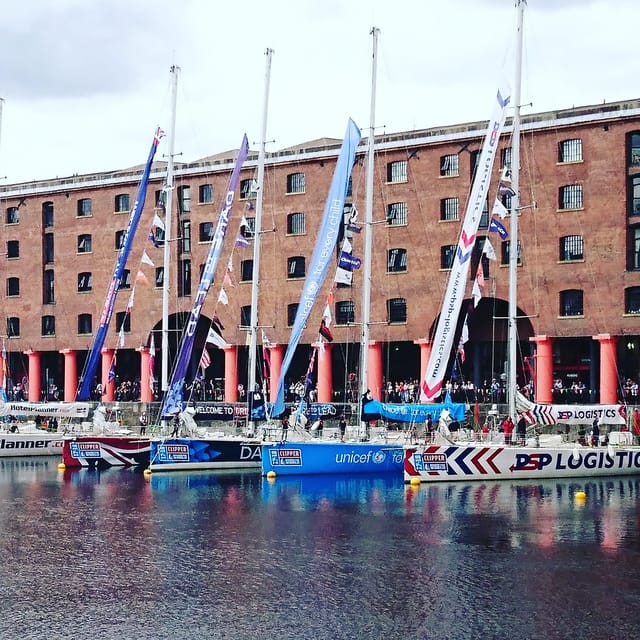
The Royal Albert Dock brings the route back to Liverpool’s maritime character. Its large brick buildings and waterfront setting make the past easy to picture, even as the area functions as a modern visitor district.
Your guide explains how the docks fit into Liverpool’s wider economic story. The emphasis is not only on attractive architecture. You learn how dock construction, shipping, trade, and the city’s links with the wider world helped Liverpool become a major commercial centre.
The dock is a good place to pause and look around, though the tour still has a schedule to keep. You may want to return later if you plan to visit museums or spend time by the water. This walk introduces the setting, but it does not replace a full museum visit.
I also appreciate that the route gives maritime history more space than a typical city introduction. One of the strongest themes is Liverpool’s role as a point of global trade and the effect that role had on local life. The story reaches beyond the city itself, explaining how Liverpool helped shape the north of England.
A timeline that reaches the modern city
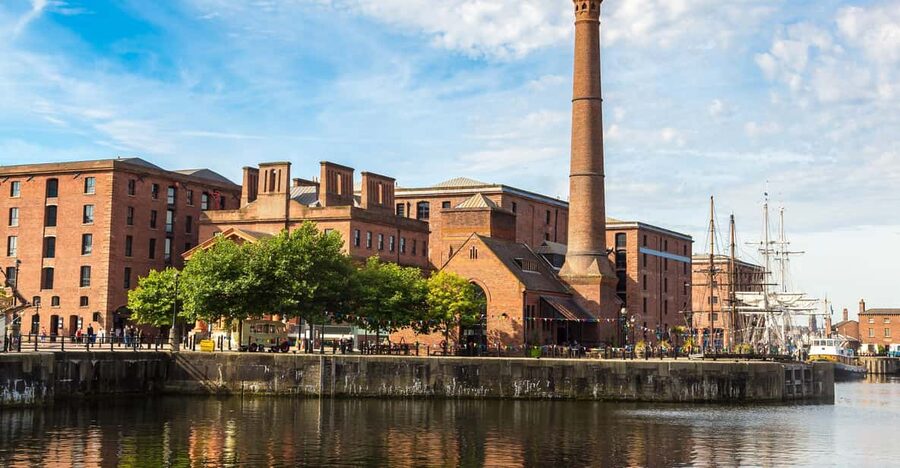
The tour covers Liverpool from 1207 to the present day. That is a huge span for two hours, but the timeline gives the walk its purpose. You follow the city’s movement from medieval trading town to major port, then through industrial and civic expansion, and finally into its modern identity.
The best part is the way the guide links events and processes. Instead of asking you to memorise disconnected dates, the walk shows how geography, trade, transport, technology, and political power affected one another. A teenager who begins doubtful may find the connections easier to remember than a standard lecture of names and years.
The tour also helps correct a narrow view of Liverpool. You will hear about maritime and rail history, culture, architecture, and the city’s changing economy. The Beatles are not the whole story here, and that is a strength for anyone who wants a broader introduction.
Because the subject matter includes empire and global trade, the walk may touch on difficult parts of Liverpool’s past. The guide’s role is important in handling those subjects with context and care. The strongest accounts of the experience praise the guides for bringing empathy and humour to serious topics rather than treating history as a simple list of achievements.
How much walking and how the pace feels
The advertised duration is two hours. The route begins at the Royal Liver Building and finishes on Castle Street, so you do not return to the starting point. That finish is useful because you can continue into central Liverpool for food, shopping, or more sightseeing.
You should expect continuous outdoor walking with regular stops for explanation. The tour is wheelchair accessible, which makes it a practical choice for many visitors, although the route’s comfort will still depend on weather and how long you prefer to remain standing.
The pace is described as manageable, with the guide checking that the group is keeping up. Still, two hours is not enough time for long breaks at each landmark. Wear comfortable shoes and bring clothing suited to changing Merseyside weather. Keep your camera ready, but listen first. The value comes from understanding what you are seeing.
The group can ask questions during the walk. That makes the experience more flexible, but it can also affect how much ground you cover. If your group is especially curious, some sections may receive more attention than others.
Is $22 good value?
At $22, this is a sensible spend for a first visit. You receive a live English-speaking guide and a route that connects the waterfront, older streets, civic buildings, a modern shopping quarter, and two important dock areas.
The value is strongest if you use the walk as an orientation. After two hours, you should know which places deserve a second visit and have a better idea of how central Liverpool fits together. The guide can also suggest other places to see and, in one memorable example, recommend where to try scouse, Liverpool’s traditional dish.
It is less valuable if you want entry to attractions. This is a walking tour, not a museum package or an interior tour of every landmark. You are paying for explanation, local context, and the chance to ask questions while seeing the city itself.
The flexible booking terms help if your plans are uncertain. You can cancel up to 24 hours before the tour for a full refund, and you can reserve now and pay later. Check the available starting times when booking, since schedules can change. One person had a time change that was inconvenient at first but ended up fitting their plans better.
Who should book this walking tour?
I would choose this for a first visit to Liverpool, especially if you want more than Beatles trivia. It suits history fans, architecture fans, families with older children, and anyone who wants the city explained before exploring alone.
It is also a good fit for people who like to ask questions. The strongest guides appear to welcome interaction rather than deliver a fixed speech. John, in particular, is praised for answering questions fully, speaking clearly, and keeping the group involved for the entire walk.
You might choose something else if you dislike outdoor tours, need frequent seated breaks, or want extensive time inside individual attractions. You may also prefer a specialist tour if your main interest is only music, football, food, or maritime museums.
For most visitors, the broad scope is the point. You leave with a working story of Liverpool and a list of places worth exploring next.
Should you book it?
Book this tour if you want Liverpool to make sense quickly. For $22, you get a well-planned route, a strong overview from 1207 to today, and a guide who can connect grand buildings with trade, technology, and everyday city life.
I would book it near the start of a Liverpool stay, then revisit the Royal Albert Dock, waterfront, Town Hall area, or any museum that catches your attention. The only real caution is pace. You will hear a lot and walk steadily, but you will not study every stop in detail.
If your ideal city tour combines clear history, local stories, architecture, and room for questions, this is an easy recommendation.
FAQ
How long does the Liverpool history walking tour last?
The tour lasts two hours.
Where does the tour begin?
Meet outside the entrance of the Royal Liver Building, at the black gate facing the river.
Where does the tour finish?
The tour finishes on Castle Street.
What language is the tour conducted in?
The live tour is conducted in English.
Is the walking tour wheelchair accessible?
Yes, the activity is listed as wheelchair accessible.
Can I cancel the tour for a refund?
Yes. You can cancel up to 24 hours in advance for a full refund.
Recently added around Liverpool
- Beatles Ticket To Ride Half Day Tour Small Groups★ 5.0 · 60 reviews
- North Wales and Caernarfon Castle day-tour from Liverpool★ 5.0 · 64 reviews
- Beatles Liverpool Childhood Homes Tour exc National Trust tickets★ 5.0 · 67 reviews
- Ultimate Beatles Ticket To Ride Shore Excursion-Small Groups★ 5.0 · 67 reviews
- Liverpool: Silent Disco Adventure Tour★ 4.6 · 76 reviews
- Liverpool with a Local: Walking Tour (10:30am)★ 5.0 · 80 reviews
- Liverpool: Private Beatles Tour★ 4.8 · 85 reviews
- Liverpool: Junkyard Golf Tickets for 9 or 18 Holes★ 4.6 · 88 reviews
Historical Tours, compared.
A History of Terror – Belfast City Centre Walking Tour
Read our review →
Old Town Walking Tour History and Tales in Edinburgh
Read our review →
Shadows of York: Ghost Walk and Horrible History.
Read our review →
Multi-Sensory Small-Group Historic Vaults Tour in Edinburgh
Read our review →
Browse the lists this tour appears in