

Reviewed · MUSEUMS
London: British Museum Guided Tour
Great museums need a game plan. This two-hour British Museum tour gives you one, taking you from Egyptian pharaohs and the Rosetta Stone to the Parthenon sculptures, Roman artifacts, Sutton Hoo, and a moai from Easter Island. I like the sharp focus on major objects and the chance to hear the stories behind them from a licensed guide.
I also like the value at $39 per person, especially if you find huge museums tiring or confusing. The main drawback is noise: one visitor found it hard to hear the guide in crowded galleries, so a small group or quieter time matters.
In This Review
- Key points at a glance
- Why a guided visit helps in this enormous museum
- Meeting inside the British Museum
- Ancient Egypt and the Rosetta Stone
- Ancient Greece and the Parthenon sculptures
- Roman mosaics, statues, and engineering
- Sutton Hoo and early English life
- Hoa Hakananai’a and objects from far away
- What the guides do best
- Group size, timing, and pace
- Who should book this tour?
- Is the $39 price worth it?
- My verdict: book it for a first visit
- FAQ
- How long is the British Museum guided tour?
- How much does the tour cost?
- Where do I meet the guide?
- How do I receive my entry tickets?
- What languages are available?
- Is the tour wheelchair accessible?
Key points at a glance
- A fast route through world culture: In two hours, you see major objects from Egypt, Greece, Rome, Anglo-Saxon England, Easter Island, and more.
- The Rosetta Stone anchors the Egyptian section: Your guide explains why this object helped scholars read hieroglyphics.
- The Parthenon sculptures come with context: You can consider both their artistic importance and the arguments over their removal from Greece.
- Sutton Hoo adds an early English chapter: Anglo-Saxon treasure brings the story closer to home.
- Guide quality is central: Filomena, Stuart, Rebekka, Tara, Lucia, and Maya have all received strong praise for making the museum easier to follow.
- Plan for communication needs: The tour may run in English, French, or Italian, and it can be conducted in two languages at once if demand requires it.
Why a guided visit helps in this enormous museum
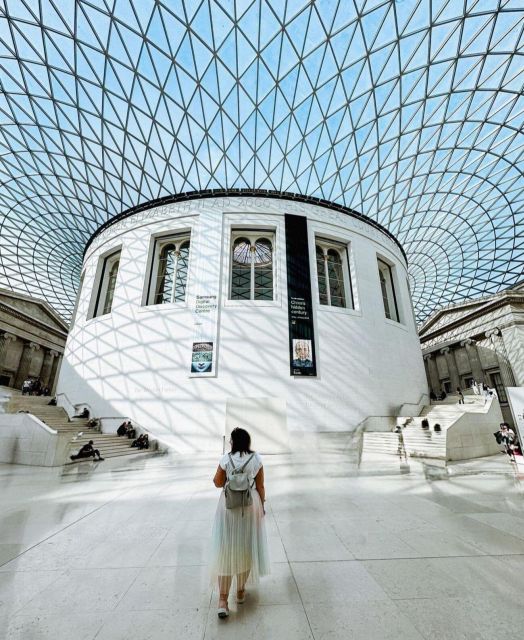
The British Museum is free to enter, but free does not mean simple. Its collection is huge, its galleries cover thousands of years, and a first visit can leave you wandering from case to case without a clear sense of what matters.
This tour solves that problem with a brisk route through famous objects. You are not trying to read every label or cover every room. Instead, you get a selected story about how people lived, worshipped, ruled, traded, recorded information, and represented themselves.
I think that is the tour’s strongest purpose. It is not designed for the visitor who wants to spend half a day with one civilization. It is for you if you want a useful first orientation, a guide to the museum’s headline pieces, and enough background to continue exploring alone afterward.
The price is reasonable for that service. At $39, you are paying for the guide’s time and interpretation rather than admission to the museum itself. A self-guided visit costs less, but you also take on the work of planning a route and deciding which objects deserve your attention.
More Museum Visits in London
- Tower of London and Crown Jewels Exhibition Ticket
★ 4.5 · 6,677 reviews - London: Chelsea Football Club Stadium and Museum Tour
★ 4.8 · 4,576 reviews - Chelsea FC Stadium Tours and Museum
★ 5.0 · 1,908 reviews
Meeting inside the British Museum
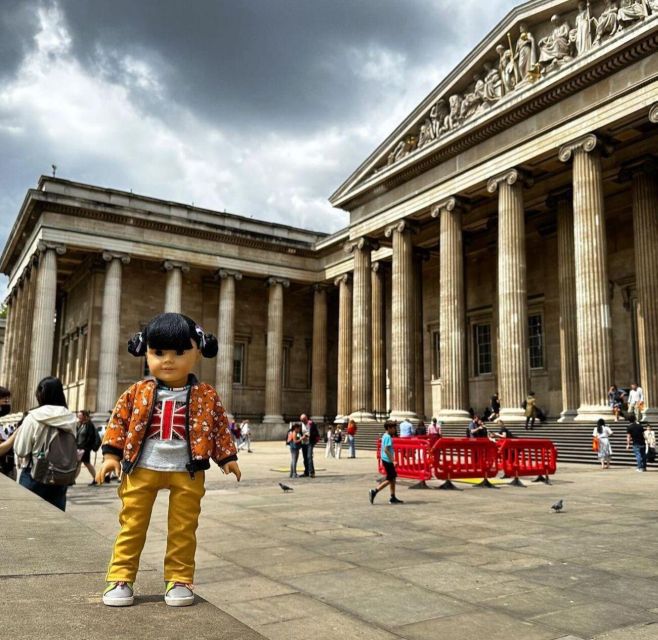
You meet your guide on the stairs in front of the museum portals, near the pillars, after passing security. This detail matters. The meeting point is not outside the gates, so do not wait on the pavement and wonder where everyone has gone.
Entry tickets are supplied about one to two hours before the tour, normally through WhatsApp. If you do not use WhatsApp, you can contact the provider by email to receive the tickets. Keep an eye on your messages on the day, and arrive with enough time to get through security before looking for the guide.
The tour includes express security access, but it does not include transportation. You make your own way to the museum, and the activity ends inside the museum after the guided route.
Wear comfortable shoes. Two hours on hard museum floors can feel longer than two hours in a café, and the tour moves between galleries rather than settling in one place.
Ancient Egypt and the Rosetta Stone

The route begins with ancient Egypt, a smart choice because the Egyptian galleries offer some of the museum’s most recognizable objects. You can expect to see relics connected with pharaohs, religious practice, writing, and burial traditions.
The key stop is the Rosetta Stone, the object that helped scholars decipher Egyptian hieroglyphics. Its importance is not just visual. The stone carries the same decree in different scripts, allowing researchers to compare them and begin reading a writing system that had long puzzled scholars.
A guide adds much more here than a label can. You can learn how written language links political power, religion, and daily administration. The Rosetta Stone becomes more than a famous slab behind glass. It becomes a practical clue in the history of translation.
Egypt is also a strong opening section for families. Children can connect with mummies, pharaohs, and mysterious symbols, while adults get the wider explanation. Maya received particular praise for keeping both children and adults engaged while summarizing the museum in a limited time.
The compromise is time. You will not study every Egyptian room, inscription, or statue. If Egypt is your main interest, use the tour to identify the galleries you want to revisit after the group finishes.
Ancient Greece and the Parthenon sculptures
The Greek section brings the tour to the Parthenon sculptures, often called the Elgin Marbles. These sculptures once formed part of the Parthenon in Athens and are among the museum’s most debated holdings.
Their artistic importance is only part of the story. You will also encounter the question of ownership and removal, an issue that continues to shape public discussion between Britain and Greece. A good guide can help you look at the marble figures while also explaining why the display is controversial.
This is one place where the tour’s interpretive value is especially useful. You are not simply told that the sculptures are famous. You are encouraged to think about empire, archaeology, preservation, national identity, and the rights of modern institutions to hold objects taken in earlier periods.
Stuart was praised for addressing disputed objects such as the Greek marble and Benin Bronzes rather than brushing the difficult parts aside. That makes a difference. A museum visit feels more honest when the guide explains how objects arrived in a collection, not only why they are beautiful.
The Greek galleries also introduce philosophy, art, and inscriptions connected with the ideas that shaped Western thought. You should expect a selective overview, not a full course in Greek civilization. The goal is to link visual art with the society that produced it.
A different sort of outing around London:
- London: The London Eye Entry Ticket
★ 4.6 · 35,875 reviews - From London: Harry Potter Warner Bros Studio Tour
★ 4.7 · 26,588 reviews - London: Westminster to Greenwich River Thames Cruise
★ 4.5 · 22,836 reviews - Magical London: Harry Potter Guided Walking Tour
★ 4.7 · 22,044 reviews
Roman mosaics, statues, and engineering
The Roman section shifts the story from Greek artistic ideals to an empire known for administration, military power, building, and engineering. You can see mosaics, statues, and objects showing how Roman culture represented gods, heroes, emperors, and ordinary life.
The guide’s job here is to make connections. Roman art borrowed heavily from Greece, but Rome used images and architecture to communicate authority across a large empire. A statue is not simply a statue. It can show status, religious duty, political loyalty, or the way an emperor wanted to be remembered.
Mosaics are especially good for a guided explanation because their small pieces can seem decorative at first glance. A guide can point out patterns, subjects, and the work involved in placing the materials. You may also hear how Roman images traveled across the empire and adapted to local settings.
This part of the tour can feel quick because the itinerary covers so much ground. If Roman history is your passion, you might want another visit devoted to the Roman galleries. For a first look, though, the stop gives you a clear place in the museum’s larger story.
Sutton Hoo and early English life
Sutton Hoo offers a welcome change of scale and subject. Instead of looking to the Mediterranean world, you turn to early England and the Anglo-Saxon treasures found in a ship burial.
The objects provide clues about leadership, craft, trade, warfare, and ceremony. Even without knowing the details of Anglo-Saxon society, you can see how the burial goods point to status and connections beyond England.
This is a valuable stop because it prevents the tour from becoming a parade of Egypt, Greece, and Rome. The British Museum’s collection is global, but Sutton Hoo shows that important stories are also tied to the land now surrounding London.
Your guide may explain how the objects were discovered and what archaeologists infer from them. That makes the display feel less like a collection of isolated treasures and more like evidence from a particular community and period.
The available information does not promise every Sutton Hoo object or a long stop in the gallery, so keep your expectations realistic. You will get a concise introduction and can return later if this is the section that catches your attention.
Hoa Hakananai’a and objects from far away
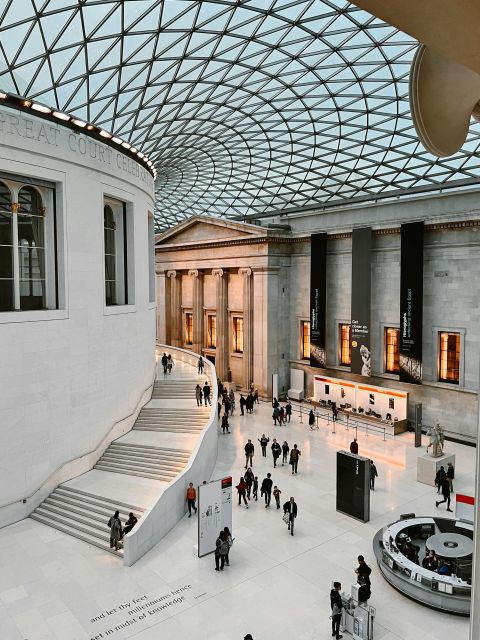
Another memorable stop is Hoa Hakananai’a, a moai from Easter Island. The carved figure carries a strong spiritual presence, but the important point is also cultural context. This is not just a large stone sculpture from a remote island. It represents the beliefs, skills, and identity of a particular society.
A guide can help you consider how a museum object changes meaning when it is removed from its original place. That question connects Hoa Hakananai’a with the Greek sculptures, Egyptian material, and other objects in the building.
The final part of the route widens the view again with artifacts from around the world. You get a sense of the museum’s global reach and the variety of ways human communities have made art, tools, ritual objects, and records.
This broad approach is exciting, but it also creates the tour’s main limitation. Two hours is enough to introduce many major pieces, not enough to give each culture equal treatment. I would think of this as a well-planned first circuit, followed by a slower return to the galleries you liked best.
What the guides do best
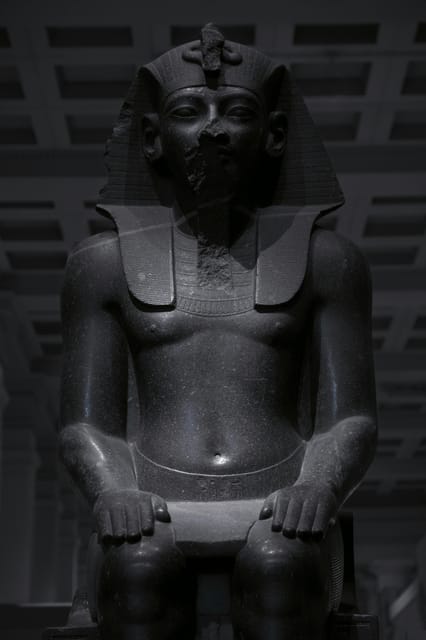
The strongest praise goes to the guides’ ability to make a difficult museum easier to navigate. Filomena is repeatedly described as warm, attentive, enthusiastic, and full of detail. One small group found the experience so personal that it felt almost like a private tour.
Stuart also receives strong approval for his detailed explanations, humor, and care when discussing objects with contested origins. He was especially appreciated by people who wanted both the famous sights and a few less-visited pieces.
Other guides named in the feedback include Tara, Rebekka, Lucia, and Maya. Tara was praised for giving a large amount of information and pointing out what to see afterward. Rebekka helped make the museum’s size less intimidating, while Lucia was praised for clear explanations. Maya did a particularly good job balancing adults and children.
Guide quality can vary by date, and the guide assigned to your tour is not guaranteed. The languages offered are English, French, and Italian. Depending on demand, the tour may operate in two languages at the same time, so ask yourself how comfortable you are following explanations in a shared-language group.
One practical issue deserves attention: sound. A visitor found it difficult to hear in crowded rooms because of building noise and a guide who was not loud enough. If hearing every word matters to you, stay close to the guide and consider asking at the start about positioning. The tour information does not promise a microphone or earbuds.
Group size, timing, and pace
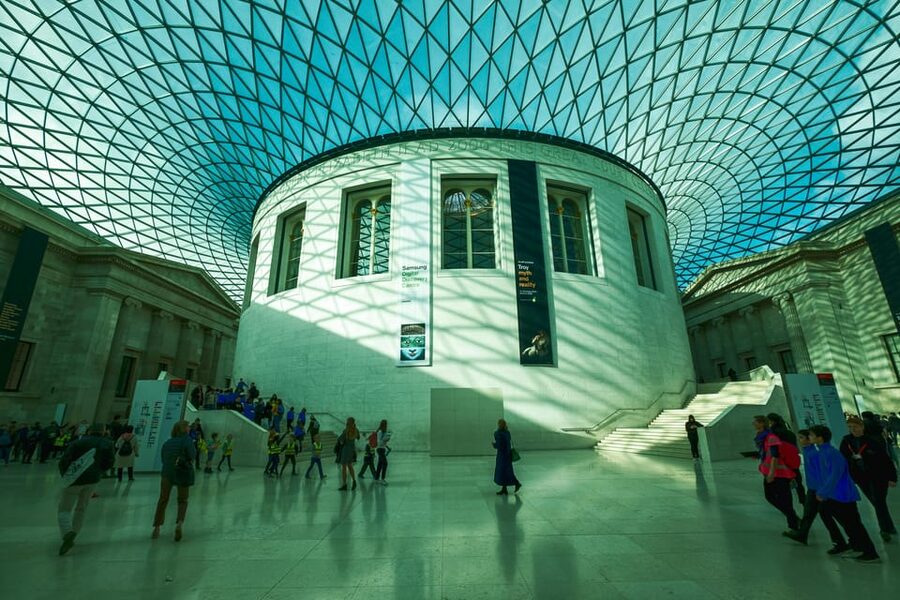
The standard duration is two hours. Several bookings became almost private experiences because only one couple or a very small number of people attended. That can make the route more flexible and allow more questions, but you should not book expecting a private tour every time.
The pace is purposeful. You will move between galleries, stop for explanations, and continue before one object turns into a twenty-minute seminar. This works well if you want to see the museum’s main landmarks in a limited window.
January and other off-peak periods may feel calmer. One visitor specifically found a January Saturday less crowded and recommended choosing quieter times when possible. That advice is useful for two reasons: the museum is easier to navigate, and it is easier to hear a soft-spoken guide.
On busy days, the famous galleries can be noisy. Give yourself a little breathing room by arriving prepared and staying near the group. Comfortable shoes and weather-appropriate clothing are sensible because you may wait outside or move through large public spaces before and after the tour.
Who should book this tour?
I would choose this tour if you have two hours, want the famous objects, and prefer a clear route over wandering. It is especially useful for a first visit, families, and anyone who finds large museums overwhelming.
It also suits you if you like history with a point of view. The best parts are not only the objects themselves, but the links between them: writing and power in Egypt, art and political identity in Greece, empire in Rome, burial and status at Sutton Hoo, and cultural ownership across the museum.
You may prefer to visit alone if you enjoy reading every label, changing direction on a whim, or spending an hour with one small exhibit. The tour’s strength is selection, so its weakness is that it cannot give equal time to everything.
The tour is wheelchair accessible, and free cancellation is available up to 24 hours before the start for a full refund. You can also reserve now and pay later, which helps if your London schedule is still changing.
Is the $39 price worth it?
For a museum with free general entry, $39 may seem like an unnecessary add-on. I think the value depends on how you use your time.
If you arrive without a plan, the guide can save you from wandering through countless rooms and reading labels until your attention gives out. The fee also buys interpretation, historical links, and a route through objects that are easy to miss when you are on your own.
The price is less attractive if you already know the collection well or enjoy slow, self-directed museum visits. You could enter independently and return several times for no admission fee. But for a short London stay, the guide’s ability to organize the visit can justify the cost.
My verdict: book it for a first visit
I would book this British Museum tour if I wanted a lively introduction to the collection without spending half a day planning a route. The Rosetta Stone, Parthenon sculptures, Roman works, Sutton Hoo treasures, and Hoa Hakananai’a give you a strong cross-section of the museum.
Book it for an off-peak time if you can, arrive inside after security, and keep close enough to hear. If your main goal is quiet study, skip the tour and explore independently. If you want the museum’s biggest ideas explained clearly in two hours, $39 is a fair price.
FAQ
How long is the British Museum guided tour?
The tour lasts two hours. Starting times vary, so you need to check availability for the date you want.
How much does the tour cost?
The listed price is $39 per person. General museum entry is free, while this fee covers the guided experience.
Where do I meet the guide?
Meet on the stairs near the pillars in front of the British Museum portals, after passing the security check. The meeting point is inside the gates, not outside.
How do I receive my entry tickets?
Tickets are supplied one to two hours before the tour, normally through WhatsApp. If you do not have WhatsApp, you can contact the provider by email to receive them.
What languages are available?
The tour is offered in English, French, and Italian. Depending on demand, the guide may conduct the tour in two languages at the same time.
Is the tour wheelchair accessible?
Yes, the activity is listed as wheelchair accessible. Transportation is not included.
Recently added around London
- PRIVATE HIRE 45 min Speedboat Tour – Embankment/Westminster Pier★ 5.0 · 55 reviews
- Private Tour of London’s Historic Pubs★ 5.0 · 55 reviews
- From London: Glastonbury and Cheddar Gorge Guided Day Trip★ 4.8 · 55 reviews
- London: Kew to Westminster River Thames Cruise★ 4.2 · 55 reviews
- Gatwick Airport Taxi – Private Transfer to/from London★ 5.0 · 55 reviews
- London by Night – Tootbus Sightseeing Tour★ 3.5 · 55 reviews
- London: Tower of London After Hours Tour and Key Ceremony★ 4.8 · 56 reviews
- Palaces, Parliament & Power: A Walking Tour of London’s Royal City★ 5.0 · 56 reviews
Museums, compared.

Liverpool Football Club Museum and Stadium Tour
Read our review →
Tower of London and Crown Jewels Exhibition Ticket
Read our review →
Chelsea Football Club Stadium and Museum Tour
Read our review →




Browse the lists this tour appears in